Ask More Questions, Build Deep Relationships with Martin Morales of 1st Choice
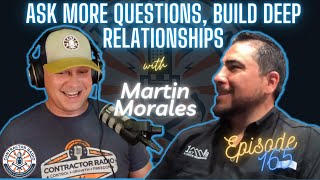
Martin Morales, CEO of First Choice Roofing & Construction, talks about building a $10-11M company by asking questions and prioritizing relationships over transactions. He started in roofing around 2010 after selling a prior business, grew from residential insurance work into commercial and multifamily projects, and credits hiring the right people and honest, slow growth as keys to scaling.
Questions this video answers
June 2010 (Martin and his partner started the company then).
About 14 years (statement given in the interview).
About $10–11 million.
Approximately 40 employees ('literally actual employees, about 40 employees').
43 years old (stated in the interview).
Chapters
Hey, everybody, it is Jim Johnson here, your host with Contractor Radio where we're here to help you get better at what you do as a contractor. Whether you're just starting out or looking at growing, maybe expanding, scaling. We like to bring on others that have done what you're trying to do to help you get better at what you do. Our goal is to help you get control of your business so that you can then grow that business and hopefully do what you wanted to do whenever you started that business, which is to gain some personal and financial freedom with this vehicle that you have as a business to stop being an employee of it and start owning that business. In other words, work on it, not in it. Today I am super pumped because I have a friend on. I have a friend that I had the honor of being able to coach over the years. He was one of our very first clients here at Contractor Coach Pro. He's done a lot of amazing things. He is the president, owner, CEO, all things magnificent at First Choice Roofing and Construction in Spring, Texas. Martin Morales, welcome to the show, man. Good to have you on.
Appreciate it, Jim. I appreciate it. Long we've had this relationship, so I'm kind of honored to be here. So I appreciate you, man. I know you've done big things, too.
So you've done some awesome stuff and, and you have some things about you that make you a very special person. We're going to talk about that here in a few minutes. But just so the listeners and the people watching on YouTube kind of know who Martin is, why don't you bring us up to speed a little bit? Like, how'd you get started in the trades? And then give us a little bit of the idea of how this whole First Choice roofing and construction thing evolved.
Gotcha. Yeah, I, we've been in business now going on 14 years and it's been, I would say, a long road, but we've taken the slow, easy, but consistent approach. I know there's a lot of companies that have been doing things a lot faster than we have, but I think that the slow and steady wins the race. That's kind of been our, our mindset. So, you know, when we, me and my business partner, we've been friends for, I don't know, 20 something years now. And I used to own a business and once I sold that business, I went to work for my business partner's father as a construction manager, my business partner's father company. He also built houses and did light industrial commercial construction. And when, you know, I started working with them. I was basically a superintendent and started getting into the construction industry and just learned a lot about, you know, construction in general. Not so much roofing. Roofing wasn't, you know, I didn't know a bunch about roofing, but it was a part of what we did, right. So, you know, we hired contractors to build the homes and. And, you know, we definitely had to have a good roofing contractor. But new construction roofing is totally different than, you know, reroofing in residential. So I started. I became a construction manager for my business partner's family's company. And from there, when building went soft in like 2007, 2008, I had a friend of mine that was actually working for one of the large residential roofing companies here in the Houston metropolitan area. We would go to lunch with a friend of mine who was a sales manager at this company, and I would see the things that they were doing. I was watching them pull up these, what, you know, aerial views of these houses, and I just thought it was intriguing, right. So that. That basically came to be an eagle view, right. So I started taking a look at what they were doing, and they were making good money doing it. And, you know, building went soft. You know, we were developing land and subdividing lots, and nobody was picking up lots. And we were building houses at the same time and also doing light industrial commercial construction. But the market just, you know, collapsed. So things were slow. And, you know, my buddy, you know, called on me again. He said, hey, whenever you have an opportunity, come and check out what we're doing. I know you're kind of intrigued with what, you know, we were doing because of when we would meet up, you kind of took an interest to it. And, you know, if you get some time and it's just not quite, you know, you know, you're quite not doing what you, you know, financially, what you need to be doing, come and talk to me. So everything was slow. And I went ahead and made that, you know, that push to go over there and talk to him. And still while I was working there, I, you know, gave it a shot. And all of a sudden, you know, I started doing extremely well in residential, the residential re roof market. So I started off at a company that all they did was residential insurance work. And that's basically where my roofing career started.
So.
After a short amount of time, because I was doing so good at this roofing company, I had to break off from my business partners now business partner from his family's business, and I focused on roofing I was there for about a year and a half and you know, they. I didn't really give get a bunch of education at that company. It was basically hop in a truck, let's ride around and let's go knock on some doors and let me show you some hell damage, you know, or some wind damage or whatever the case. I kind of took a different approach. I mean, I really took to talking to people knocking on doors, and that's all I did was knock on doors. I was knocking on doors five, six, seven days a week. Sometimes I would talk to customers on Sunday, sometimes if they invited me over. And I did extremely well. I mean, I made anywhere from 10, 20, 30, $40,000 every other week sometimes. And I know that just from my persistent efforts I really produced. I always like to say that I feel that I would still be at that company today if they knew how to treat their people. That worked for them. Basically. We had an issue to where, like I said, they didn't give us any leads. So all I had was a referral base. And my direct supervisor, who was my friend, come to find out he was taking my referrals and running them for himself. And so that didn't go out too well. And I just went ahead and stepped away from him. And at that time, I'd already had a small general contracting company. I was already doing a bunch of exterior work for homeowners, and I just stepped away from that company and I went into doing roofing for myself. And that was sometime in early 2010. So in June of 2010, me and my now business partner went in cahoots and we started First Choice roofing and construction. And we started off in the residential insurance space, I mean, just like everybody else, not. But a year later, I got an opportunity to take it, take a look at a commercial building. And from there I just felt that I really wanted to educate myself on commercial roofing. And I really ran with it. And for about five to six years from that time, maybe seven years from that time, I really focused on the commercial aspect of the business.
And.
And that was my bread and butter, dealing with private investment companies, companies that owned and managed their own buildings. And right from that, that point, I saw that there's value in the relationships that I had made and truly building relationships with companies that own and manage their own portfolios. And that did very, very well for us. And the residential roofing aspect of it kind of took a backseat. And then at some point we actually talked and we tried to go down that road and Then a hailstorm fell in our backyard and. And we just kind of went and gravitated to that. And at one point, I think I told you, I don't even think I'm gonna mess with this hill.
You know, I remember that.
Yeah, I wasn't even going to mess with it, but our phone would not stop ringing. It literally fell on top of us. And there was just so much work that I couldn't. I couldn't push it away. So our residential side, you know, did very well at that time, but we weren't even prepared for it. And we actually, you know, I feel that we could have did two to three times the amount of business, maybe even more, if we were prepared and had our processes and procedures in place at that time. And we didn't. But we did a good job and we made quite a bit of money. So it really helped us to take that next step in our business. And at that point, you know, in about 2015, 2000, no, 2016, I decided I wanted to give new construction residential and new construction commercial a try. And at first it didn't go so well. Dealing with general contractors and trying to go after new construction, residential work, it's not easy, but one of the biggest things that I've come to find over this course of time, and now we do a lot of new construction residential, and we do a lot of commercial, multifamily, new construction work. The biggest thing I say that's given us these opportunities and have held these contractors in our good graces is the relationships that I have, and that's probably one of the biggest things that I can recommend if somebody's trying to get into that space, is you have to build a relationship with your client. It's not just throwing a bid at the wall or going on to, you know, these different sites that you can take plans off of and. And I square foot or whatever the case, and just throw out, you know, numbers. There's a lot to it. And if you don't have a relationship with your client, you're. You're just basically throwing something at the wall to see if it sticks. And a lot of the times, even if you are the low bidder, they're going to use your number to have their guy, right? Their guy that they have a relationship with. They're basically going to say, hey, look, I got this bid, and all right, we'll do it for that. So we lost out on a lot, but we had to learn the hard way. But in this time, you know, in 2017, 2018, the stars aligned and it truly was, you know, a blessing that I started doing work for DO Horton and they gave me an opportunity and I had been doing some work for some other smaller builders, but DL Horton finally gave me that opportunity and I've been going after that business for almost two years and I finally got that opportunity. And because I wanted it so bad, and I see the value and what it could do for my business, I truly hunkered down and I built a team of infrastructure and built an infrastructure to facilitate, you know, volume business. And that's one of the, my claims to fame or one of the things that I'm the most proud of is that we built some processes and procedures in the team that I have that help facilitate the business that we've done with these new construction residential builders and these general contractors. And it hadn't, if it wasn't for my team, you know, we wouldn't, we wouldn't be where we're at basically. So basically I went from residential re roof insurance work, diving into construction, commercial roofing, existing maintenance, repairs and replacements, so then shifting the majority of our business into new construction and, and now I'm trying to gain back more of that existing business because we feel like we're missing out a lot. Even though we do quite a bit of it, we see that there's a lot of value in that. But right now our new construction, residential and commercial side are doing very well.
I really hate interrupting these videos, but I've got some important information for you. If you haven't tried out Atlas shingles, you should because they put you first as a contractor. They want to give you a competitive advantage out in the field so that you can win more sales and be more profitable. Check out Atlas in your local area, find your local rep, get hooked up with them today and start making more money tomorrow. Yeah, it's a pretty awesome story. You worked for him at one point doing general contractor type work. And I noticed something as you were talking. There's two main themes to what you're talking. I want the people that are listening and the people that are watching to really hone in on that. Number one is you asked lots of questions, you're a question asker. And when you're into something you like, keep digging, keep digging, keep digging. For example, like the guy that was the first guy you went to work with in the insurance stuff, he noticed that you were asking lots of questions, he noticed that you were interested in what it was and then as you got into it, you kept asking more questions. You got into a little commercial stuff and like, okay, I'm asking questions about that. Like, you're a big person on, like gaining information and kind of a sponge for that. Is that something that's always been that way for you?
Yeah. I mean, ultimately, if I'm not getting my hands dirty, then I'm not truly going to know about it. Right. So when I got into the commercial space, excuse me, I actually did the repairs myself. I actually. The very first repair that I got awarded on that very first commercial building, I did the repairs myself and I did have some guys that were with me that. That were going to help me do it. But I did the repairs myself because I wanted to understand and know exactly what it was going to take. Of course, I had some guidance from manufacturer reps and I asked them a lot of questions. I wanted to get more training, I wanted to know about the products. And I really jumped in and tried to not only get my hands dirty, but also educate myself because nobody was going to know more about what I'm trying to put out there and put what I'm trying to sell, basically more than me. Right. Because I can't go in and talk to somebody intelligently and make them feel like, you know, like I don't know what I'm talking about.
It's a common theme with anybody that I've ever talked to that's successful, that's mastered something that they have a specialty in. They are like sponges for information. They're constantly looking to get better at it. They don't ever think they've, like, achieved perfection and just sit back on things. They're constantly still going after it. And it's something I've always noticed about you from the very first time we ever met. You were drilling me from day one. And I don't think we started like day one.
Like, we.
There was a lot of. We were courting, we were dating a little bit to see if I had any value to you. And you were great at asking those questions. And I just think that's something that the people that are. That pay attention to our show, they should see as like a common theme. As we've interviewed so many contractors and. And technology companies, marketing companies, the ones that are really good, man, they are into what it is that they do. They ask tons of questions. They know it from inside and out. They know it from the application to the sales to the production. They know all facets of it. So whenever they're talking to somebody else, they're fully capable of talking about Any part of the situation. That's great. The other thing I noticed that whenever you were talking was, I think you said this word about 15 times. Relationships and how important they are, especially in that commercial world. And you actually talked about in the residential world that you were going out, you were meeting people five, six, seven days a week and those people were leading to other people for you. You were making great money. And then whenever you got into the commercial part of it, you were after these private investment companies that their own properties, which I think is a brilliant tactic by the way. And the idea that you knew that the relationship was the important part. And you're persistent, like you're super persistent with sticking with like Dr. Horton. Took two years to get that. Where does that come from? Why the relate? Because I've noticed it from the other side, like the people you're involved with. Chris Rochester, your partner, fantastic guy with numbers, knows finances good as anybody that I've met out there. But he'll bend over backwards for you. I mean he's, he's ready to go to war with you, which is unbelievable. You've brought on a new vice president, Jason Laverick, and same type of thing. This guy like sold a company for a tremendous amount of money. We're talking nine figure numbers and he wants to come be a vice president of your company. That's that relationship thing with you. Why is that so important?
I don't think that you can truly give value to people if you don't have a strong relationship, you know, and, and I don't think you're going to get, you know, valuable business. I mean, the business will come. You have to be a real person. And I think that's what we do best is, you know, we're not trying to just make a buck, you know, we're trying to put food on the table. And I'm responsible about, for about literally actual employees, about 40 employees. And I have to make the right decisions. And you know, if I'm not a real, true, honest, sincere person, I wouldn't be doing those people any justice. And one of my mottos is, and I tell everybody in the company is that if you don't see opportunity here, then you need to move somewhere where you do feel that you have opportunity. So just, it's just ingrained in me for some reason that I just, I recognize that the relationship is going to be one of the strongest benefits or one of the strongest attributes or one of the strongest things that I need to do to ensure that we continue to grow the Business with those clients. And now, you know, some of my clients, they're not. I just don't have a good relationship with them. They're like family, and we. Nobody touches their roofs. I have one, you know, my longest. That. That very first roof that I got on commercial. Well, it wasn't my first roof, but the. The very first commercial private investment company that I did work for that I was doing repairs for on my own. And now, you know, I've been doing business for them for about 11, 12 years, and they don't allow anybody to touch anything. Having to do that revolves around roofing. And. But we're like family now. It's not. It's not, you know, just, you know, we're the roofer. No, that's. That's. Martin. That's. You know, we're like family. They support my family. They support my company's family, and vice versa. We take care of them, and they know that they can rely on me because we have that type of a relationship, and it's really important.
So I have a question about this relationship, because there's a few different schools of thought on it. Do you believe in having just a whole bunch of relationship knowing everybody under the sun, or do you believe in it, like, just some key relationships that really bring value?
Yeah, like, just like I said earlier, I mean, you know, you can go and bid all the work in the world, right? What we've done is we've aligned ourselves with people that we know that do good business and work really, really hard to build those relationships with those. I'm not trying to bid for everybody. I don't want to do work for every last builder. I don't want to do work for every last gc, And I don't want to do work for every residential or commercial client, because not all good. Not all business is good business. And we've learned that the hard way as well. So we try to, you know, turn away business sometimes if it just doesn't make sense. And they're not people that want that relationship. I had somebody tell me it's from a company that we. We're trying to do business with, because in the grand scheme of things, they're a really, really good company. I know a lot about them, and they. They do a lot of work in Texas.
And.
And, you know, I was having a conversation with a construction vice president, and he's like, well, look, man, you know, I was telling him. I was like, look, you know, my goal is to build a relationship with you. I mean, I need to be the one that you can depend on at all times. Like, look, I'm not really so big on the relationships, you know, because I just need somebody who's going to come in and do the job. I was like, well, that's exactly what I'm talking about. That is a relationship. You need somebody that you can depend on. And I recognize that and I know how to do that best. So there's nobody better for you and your project. And this is a multimillion dollar project. There's nobody a better fit for your project than me, because I'm going to care about it. Because I truly value your business and I truly value the relationship. You know, I'm not just trying to give you the lowest bid. You know, if I can get, you know, to a place that, that works for the both of us, then that's where I need to be. But I probably won't be your lowest bid and hopefully you can value that. And when you can see through our relationship that you can trust and count on me, then that little bit of that might not be the lowest bid. That little bit of a difference there. It's going to be valuable to you because at the end of the day, it might cost you more using the other guy.
So if I go over.
Yeah, we're still in talks with that while we've been bidding quite a few projects with them. But they, you know, in multi family, they, these we bid out, you know, it might be a year and a half before we actually, from the first time that we actually bid it to the time they actually break ground.
Yeah, it's one of the biggest challenges, especially when you're working with those builders that do, you know, volume houses or volume multifamily. It kind of comes down to a price thing. Their answer to a big corporation. The bottom line is important. And you hear it all the time. Like there's so many contractors that don't go after it because it just becomes a price war. It's like, who the cheapest, who they're going to get. And what you're telling me is, well, if you're persistent enough to build that relationship, they might create a little bit of value there that might actually make it worth it.
Yeah. And we've honed in on, you know, where that threshold is at.
Right.
We understand that we have to be super competitive, but still be able to offer the service and still be able to be compensated to be able to offer the level of service that we provide. And, you know, I can, you know, smoosh up with the best of them. And I could talk to the best of them and the highest and you know, the majority of the time I'm able to get that opportunity. And once they see what we do, they're, they're okay with, you know, even if there is a little bit of a difference.
So, so just so everybody understands how important this type of thing is, the building of relationships. What kind of revenue did you guys do last year?
Last year I think we're somewhere around 10 or 11 million.
That's not bad. Eight figure company. Welcome to the 1%. Only 1% of contractors achieve an eight figure company. So something to be proud of. Oh, here I am interrupting you again. But this is an important message you do not want to miss because it's about AI AI and sales. Could you imagine having every sales call recorded, analyze, tell you what's winning, share it with everybody else so they can start winning. Everybody's closing percentages go through the roof. If you haven't heard of real A voice, you need to go check out REALA today in the comments below. These relationships that you have, are they business relationships? I noticed you mentioned family, right. And relationships have a arc to them. There's knowing somebody that's really. And all things are in relationship, right? Like there's I'm in relationship to this computer sitting in front of me, right. So there's knowing people that's like step one of a relationship, like I know you, you know me and knowing of somebody. But then there's like actual relationship where we have some back and forth. But then I think it gets deeper than that. I think there gets friendship, fellowship, family, like those types of things. Have you ever thought about the depth of that and what that looks like in your relationships with the people you work with?
Yeah, absolutely. I mean to kind of give you an example, the purchasing manager for DL Horton. I'm going to go meet with him here in a little bit. Him and his wife, me and my wife and meet with him and his wife. We know each other's families. They've been over to our house for, you know, family events and we've been over to their house for family events. We, we have just crossed paths in a way that you're. Who would you rather do business with? Somebody that you actually can, you know, completely rely on and trust, but then also somebody that you have a personal relationship to the point to where they can trust you around their family? I mean, yeah, we, we. I want to be able to build that relationship and be that person that they trust me. Around their family because I feel that, you know, I have a big heart and my family has a big heart and I like to associate my people associate with people that, that are, are like minded and like minded in my faith. Right. And like minded in the things that we do. And you know, I want to, I want to make their lives easier and hopefully give them, you know, at least from my perspective, a less lesser of a stressful, you know, situation when it comes to my trade that they have to deal with on a daily basis. So yeah, I do like, I do like taking those relationships to the next level because I think it's super impactful. Because if they can, if they can trust me around their family, well, they definitely can trust me with their work.
That's a given, right? Yeah. That's something else I've noticed about you. And you really just kind of brought it out because you mentioned it, you mentioned faith. Right. Like there's this, I have a faith and so do they, so our relationship's a little bit tighter. I've also noticed that you attract folks like that. I mentioned Jason earlier, but also Renee, Renee's got really strong. Is that, is that a core value of your business or of you personally that you apply into your business or is it just who you are?
In a sense, it's just who I am, but it is a core value at the same time because there are principles and a mindset that my faith basically structures my lifestyle, it structures the way that I do business, it structures how, you know, I, I live with my family and with my children and the way that we do things. And I think it just attracts, you know, the certain type of people as well. In the roofing industry, there's all kinds of people. Right. And a lot of them aren't real faith based, but, but the majority of the people that are in my company and they also respect my faith as well, you know, and they respect what we, the foundation that we built our company on. And that's a big part of it. So it has, I think that God has just put those people in my lives in, in my life and it's just attracted more.
Man, that's so cool. And it's interesting because that core value that is part of you, but you also apply to your business. It explains why you're where you are because you had a very familiar story. You said, I went to work for this guy, I was interested in his thing. When I was doing the insurance thing, I was doing just fine, I'm making good money and I'd probably be there today if he had treated me differently. Yeah, there was something in that treatment that didn't work out very well. And we hear this all the time. We, you know, we didn't get paid a bonus. It always comes down to that person on the other side not treating somebody how you would deem. Right. As an individual. How important is that to you? Like with your own people?
Yeah, I mean, like I said earlier, you know, I always tell everybody, you know, I want you to be happy in the place that you're at, and if you don't see any potential for growth, you know, I want you to be happy and I want you to find that place. And if this isn't it, I urge you to move on. You know, so we have to be a unit, we have to be like minded, we have to be a team and we have to be on the same wavelength. So, you know, it's super important. You know, I want everybody in my company to have a great experience. I mean, we only get one life. So I want them to enjoy their time where they spend the most time, and I want them to get out of being at this company because we're family. And I have a big responsibility to take all these people and their families and help them to have opportunity and, and put them in a good place. You know, I wouldn't be a good steward of my own company if I didn't, you know, try to keep them in mind and put them first. Of course, I think that in doing all that, the business will come, the money will come. I don't have any financial struggles. I don't have anything. And it's just happened. And that's been one of the biggest things. People always ask me, like, how have you done what you've done? And you know, I'm like, well, to be honest, even when I started out at that roofing company, I. I just did what I do. I didn't have some big plan, I didn't have some big, you know, idea. I just did what I did and it just happened. But I think that just the way that, you know, I treat people and the way that I, the type of people that I try to surround myself with, I think it just all came together and I think that the Lord kind of put that together for me and that's all I can really, you know, say.
Yeah, he's pretty amazing at that kind of stuff. Your foundation of faith is what I.
Didn'T, I didn't, I didn't put a plan. The plan was already there, so. And I'm just trying to be. I'm just trying to be a good steward and. And really use my company to help others as well.
That's such a cool. You said something there that was powerful, and I want people to, like. I want to repeat it because I wrote it down. It was so good. Enjoy the time where you spend the most time.
Right.
I don't think we understand that responsibility as business owners that these people that work for us, they're spending 8, 9, 10 hours of their day with us. Now, if they sleep eight hours a day, that means that 16 to 18 hours of the day, they're either sleeping or working. So they are spending the most time with us. How do you create. How do you create opportunity for those people, that it is an enjoyable place?
That's a good question. And that's kind of.
It's a challenge, isn't it?
Yeah. I mean, it's just trying to help everybody see, you know, the different aspects of what we do and how they can better themselves and, you know, through, you know, education and providing them with the tools that we can that not a lot of others do, you know, and it's kind of like that old mindset that I started out in is just, hey, come right along with me. Right? We put a lot back into the company before we take a dime out of the company.
We.
We make sure that everybody else is taken care of. And I don't take a lot out of the company. You know, we. I'm. I have an end goal, right? And that end goal, I don't have a retirement. This is my retirement. So I think, you know, I look at the bigger picture and make sure that my people are taken care of, and I want them to feel that they have security. That's number one. And the decisions that I make in the relationships that I'm out, you know, making with. With my clients, that's just a reflection of who I am and what I'm trying to do for my company and then also for the people in my company. I don't know if that answers the question, but.
No, it absolutely does. It's really good answer, actually, because I was like you. I didn't ever want somebody to leave my business for the same reason I left. I got stiffed on a bonus. Somebody didn't keep their word to me. I'd probably still be there today. I loved it there. I love the people. I love what we have built. We had built something pretty amazing, and somebody didn't keep their word. And it's just one of Those like, that's non negotiable for me. Keep your word and I don't want anybody to ever leave. And I talk about that with my team. I talk about our core values and how important they are and how I'm going to do right by them. As long as they do right by us, I'm going to do right by them at all times. I hate interrupting these videos, but this thing is something that every contractor should have. It's companycam. It is the one piece of software every home service contractor should use to document their jobs. Every picture you ever take is associated to the address you took it. It's like Instagram. For every project that you have, give a link to the homeowner, share it to them while you're doing your inspection and win more sales. If you want to find out more about CompanyCam, check the description below. Save a few bucks by following our link. So we've talked about a lot of the good stuff, right? Like how things grew and the amount of time you invest in yourself and in others and how much care you give towards your people. What have been some of the challenges or obstacles on this road over the last 13 years that you might say, hey, if I shared this, it might help somebody else avoid it. People, people, people is where it starts, right?
Yeah, it's like, you know, so at one point I had about 12 or 14 residential roofing outside salesmen and we tried to go and put this process together and, you know, we tried to provide everything and it just, it didn't work out. You know, just one bad, you know, Apple just ruined the bunch, you know, and I was really disheartened by it. But it's just, I think really taking the time to find the right people is super, super important and being able to vet them properly and ensure that you made the right decision or the best possible decision to bring somebody on. You know, we, one of the biggest things that, the problems that we've had that we've recognized is just bringing somebody on to try to see, see if they're going to work out. Well, you know what we need to really put a little bit more time and effort into, you know, the hiring process. And that's one of the things that has really been difficult, especially on the residential side. That's why we lacked some on the residential side. We still do good business on the residential side, but we're about to do a whole lot better because we're about to truly focus on it. And it is a big, it's the, it's the number one thing on my list to do right now is to truly build a residential sales division, not just a team. We're not just hiring on everybody. We want somebody that's gonna be at the helm and lead properly, and then hopefully not. Hopefully, we're going to give these people opportunity and show them how to generate and make sure that we support that.
Yeah, I'd rather. I'd much rather have five superstars than 20 role players.
Right? Yes. So people have been difficult, but I would say that it was probably on us. We did not give the proper attention. We felt that we were. We were putting a lot of time and effort into it, but it still just wasn't right. So, you know, getting with somebody like you and your company that can actually consult SALT and, you know, and that's been around, you know, over a thousand contractors, I think is super important. And that's what I'm doing, you know, so I'm trying to build that side of my business, and I have to seek. I've sought out, you know, professional, you know, consultation, because just in. In me, by myself. I mean, I don't have the time to do it now.
Now we just pray we don't have another storm hit us right now so we can get things finished that we're working on.
It already happened. We just had two storms. I'm not worried about it because this time is going to be right. I'm not gonna. I'm not gonna waste any more time and going down the road and just.
Not that changed for you. Right. Like when we first met, I felt you were passionate about what you were doing and you were very invested in it. And you, You. You had all the passion in the world, but there's something a little bit deeper this time around. This, like, hey, I just want to do what's motivating that.
I just don't have any more time to waste. You know, I'm 43 years old. I know I'm not old, but I'm not young either at the same time. Right. But I have an opportunity right now to do something that's on another level. And I've learned a lot. You know, I have. I have a unique situation where we have income coming in, we have good, strong relationships. I have a commercial, you know, vice president. I have an executive vice president. I have, you know, my business partner. I have a good admin staff. I have production manager, I have account managers, and then I have salesmen on top of that. Then I have estimators as well. Then we have Our own in house technicians, we have a shop foreman. We have all these people that, that are part of our infrastructure that help us do what we need to do. And I'm just not going down that road and just slapping it together ever again. I don't have to do that.
I think that was awesome. Like you, he nailed it. You're like, I have all the foundation I need to actually the thing I want now, which is super cool. Like I think so many miss. I think somebody have to kind of go through the experience to kind of come to the realization of it. There's also this thing of like sometimes we can be a little too nice. Especially people, big relationship builders. Like whenever I get invested with something, man, I'm invested 100% and I want to see them succeed. And sometimes that can change my empathy into sympathy sometimes. And I tend to be a little too kind. I see that a lot in our industry. Have you experienced anything like that?
That's a good point. I'm glad that you said that because that's been a real big thing about. I think I've been too nice. Me and my business partner have been too nice. I mean we're an interest free bank basically, right? Because we've helped out pretty much every last person since the time that we've started to now every person with something or another. And we, I guess you could almost call us an enabler. We've enabled people to not push because we've enabled, you know, and I think that's a big downfall. I think, you know, there was something that you told me the other day is that, you know, we, you ha. It has to be black and white and you have to, you cannot enable somebody. And I don't remember the exact words that you said, but you know, it's.
Well, if you enable them, they become dependent.
Dependent. Yeah.
And when they become dependent on you providing for them, that's the opposite of what a business should be. They're, they're the providers and they need to understand that especially as salespeople, that they're providing for everybody else. So we have to kind of hold them to these standards and, and if we actually love them like truly, like the heart of somebody like you and me, if we really love somebody, they'll be hard on them too. I mean, I've been hard on my kids because I want them to be successful. Why wouldn't I apply that same logic to the people that work on me? Because I look back at all the people that have had an impact on me, man, they were the hardest people on me, they're the ones that put the most effort into me, pushed me the hardest, believed in me the most, didn't allow me to have excuses. And those type of things pushed me to master and be better at what I do. Those are the ones I actually have. There was lots of folks that were enablers and entitlers of me too. And I was like, okay, I can take advantage of that if I want to. But it didn't work out. Right? Yeah.
Another, you know, just point to that. That's why I hired an executive vice president to be that buffer between me and everybody else, because I'm too nice. And somebody comes and asks, it's like I'm enabling them and I got, I gotta stop this, right? So that's one of the reasons why, you know, in the, the company and infrastructure that we have, I just couldn't take on that role. And I can't, I couldn't take on a residential sales manager role, of course. I mean, I have too much stuff going on, first and foremost, but I'm just, I'm too nice, I guess, if you will. And a lot of times people take your, your kindness for weakness and they take advantage of that. And that's been one of the hardest things that we've had to deal with is we, we've just overly helped people and it's, it's enabled them to a point to where it's almost like we're a crutch. So I think that's been a big downfall on our residential side of our thing, of our company.
Well, I have no doubt the experience you've gone through, the person that you are, who you attract and what you've learned here over the last few years, you guys are going to kick some tail. Is going to be pretty awesome to watch. You've already kicktailed pretty awesome on the commercial side, the new construction side. Now it's time to, like, hone in. And now we got these three divisions, right? This company becomes valuable. This thing that you talked about, you said this is my retirement plan. That's what you're building towards. It's super awesome to watch. Glad to play a small part in it, but really, you guys are the ones that do the hard work. We just give the advice as you need it and the tools when you need them. And it's been cool to watch. Mark, if you were going to give somebody one piece of advice, like, they're, they're, they're new. They're trying to, like, make that first leap that take that next step in growth. Maybe they're pushing up against a million dollars trying to take that next step. What would you. What would you give them the advice to do?
Just really look at your. The people that you surround yourself with, the team that you build. One of the things that took us to the next level was, you know, really building a team to end process, processes and procedures. And then, of course, right after that would be the relationships. Be real to yourself. Don't overextend yourself. Don't take on too much and take it slow, because I think in that slow growth, you're. You're going to get more out of it than if you just try to completely jam a whole bunch of. And, you know, and it's just not going to. From my perspective, anyways. I think the slow growth has been good. And I'll tell you this much right now, we're projected to almost double our revenue this year and probably almost triple our revenue in the next year. The next two years of my business are going to be the most impactful, but it didn't come overnight. So just trying to really look at things very closely, to build those processes, procedures, and put the right people in place is probably one of the biggest things that I can. That I can say and. And be honest with yourself and be. Be honest with the people that. That work with you and for you, because, you know, those are the people that are going to help you build your business, and you don't want to lose them.
Well, we're. We're bumping up against the clock here. I know you've got an important meeting that you got to get to. You actually handled a text right before we hopped on. I want to make sure that we. We help you keep that meaning, because that's your word. Super cool to have you on. Martin. Thank you for being here. Thank you for being who you are and can't wait to work with you some more. Work with you early on. Did some good there. Now let's. Let's take it home.
I'm excited, too, so I appreciate you, Jim. Thank you very much.
All right, brother, we'll let you go and we'll see you, I think, this coming week. So we're in good shape.
Sounds good. All right.
And I'm excited to have Jason. We're gonna have Jason. We're gonna talk to him about something completely different, but. Yeah, that's awesome.
He's got some good things to say for sure.
Awesome. Yeah, people will not want to miss that one.
Yeah.
All right. Hey, thanks Martin, have a good one. Go kick butt. Go build that relationship even deeper. And we'll talk to you later this week.
All right, Jim, thank you for everything. Appreciate it.
All right, everybody, that was Martin Morales with First choice roofing and construction. What an amazing interview. This. This idea of being a question asker, asking lots of questions so that you can start to master something. When you become a master of something and you apply this idea of building relationships and building them deep, not wide. It's not how many you have, it's how good they are. Watching him do that over these years has been awesome to watch. That's why I wanted to get him on the show, wanted you guys to see how important that is, to see this growth that they've done and how they've grown each aspect of their business. Very intentional, not half cognized, Just running out there going crazy. Tried that once, didn't go so hot. And back to do it again and do it right on the residential side. Super great. That's our episode for today. I hope you got something out of it. If you're a contractor and you're trying to figure this stuff out and you need somebody to walk beside you to help guide you along so that you build that business that you are after and you know that you can do, you're just missing a bit of knowledge. That's where we come in. Go to our website, contractorcoachpro. Com. Scroll down a little bit on the page and click Take assessment or in the show notes, the assessment should be there as well. Take that assessment.










