Attracting Top Talent with Technology with Paul Sanneman
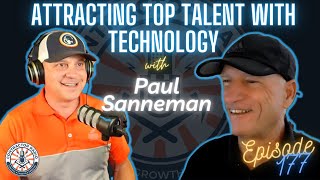
Paul Sanneman, founder of Contractor Staffing Source, explains how technology and AI speed up construction hiring. He debunks myths like only recruiting when you need someone, and walks through the actual steps: job ads, fast response times, assessments, background checks. He also warns about AI risks and cybersecurity.
Questions this video answers
400 people for 200 contractors.
95% of the people work out (95% retention/fit).
Approximately 200 resumes per hire (they go through about 200 applicants to find one).
About 20–21 people working in the company.
About $50,000 per bad hire (approximate).
Chapters
Hey, everybody, it's Jim Josin here, your host with Contractor Radio and the head coach at Contractor Coach Pro, where we help contractors lead their businesses better so they can grow their businesses and scale them. And ultimately, the main goal, to find personal and financial freedom to do what they want with who they want, when they want. If you need help with any of that, check us out@contractorcoachpro.com you can take our assessment. It'll be in the show notes down here. And we'll actually do a free coaching call with you. We won't charge you anything, and it'll be a coaching call, not a sales pitch. We're going to talk about the two or three things that will probably help you grow your business the fastest right away. And if you like coaching, want to be a client, wonderful. If you don't, at least we served you well that day. Today, I am pumped. We have a. We have a coach on. It's not often that I get to have coaches on, and I think I want to get more of them because this guy's giving me some juice. We've been talking a couple times over the last few weeks, and it's always nice to learn from somebody that's, like, done this for a long time. He's been a coach for 40 years. That's a long time of being a coach. And I have a feeling he might have learned a little bit. But he also is the founder of Contractor Staffing Source. So all this coaching kind of led to this recruiting problem that we all have as contractors. We talk about it all the time. It's a topic on our show all the time. But I think I finally found the guru. I think I found the guy that actually understands the problem from a contractor perspective, has done the business coaching and has actually invested in creating a system that guarantees your recruiting. And so, without further ado, I don't even want to waste any more time. Hey, we want to get Paul Sanoman, the founder of Contractor Staffing Sources. And Paul, welcome to the show, man.
Okay, thanks. Well, it's Paul Sanneman, but you're close. There we go. And I'm probably the only guy you know that's coached a lot longer than you, right?
There's some other ones out there. John Maxwell has gotten you back.
Actually, I've been coaching for 40 years. I've worked with like 15, I think 15, 1800 clients, all between a million and 50 million. And I think last count, I had 150,000 hours in coaching some stupid number, right?
What do they say? 10,000 hours to get good at something. Right.
Well, what happens after 100,000 hours?
I don't know. He must be amazing, right?
Still doing it.
So tell us a little background, Paul. Like what? Because you're doing this recruiting thing now? Why not? Still the coaching. And what was the natural progression?
The problem with coaching is 40 clients takes 40 hours a week. Right. My wife really said, you know, can't you do something else? But that wasn't really got it started. What started was I've been coaching a long time and I could get my clients from million to 10 million. I probably did it 100 times or way more. But they couldn't find their employees because it just was, you know, they didn't know how to do it. I said, how hard can it be to find employees? I mean, how tough is that? So what I did was I went out and got some really good applicant tracking system, which is a thingy software you need. And I found some good recruiting software in the way of assessments and that kind of thing. Well, my first choice was give it to my clients and they totally screwed it up. It's like the no time.
You mean a contractor didn't go out and execute?
So what happens? I gave them all this stuff and they would, you know, put an ad in and call somebody a week later. Right. You need to call people in minutes, not days. Right. So I started contractor staffing Source. And that was a few four years ago. We now have, I think, 21 people. 20, 20, 20 people working in the company. We last year we hired 400 people for 200 contractors. We got a 95% chance of people staying. I think the key is mostly always just construction. That's it. But, you know, I've actually made it happen. That's to me what's exciting because, you know, people talk about doing something, but the fact that we hire 10 to 15 people a week, we go through a couple thousand resumes a week. It takes us 200 resumes to find a guy. On the average, we've been actually able to find contractors, quality people in a large scale, which I'm excited about. And they work out. 95% of the people work out.
That's a business coach right there. He knows how to create a business out of something and make it scalable and make it work. That's pretty cool. And so you hear a lot nowadays about how difficult it is to recruit, hire, lack of loyalty, millennial suck. Like, you hear all this, like, let.
Me give you some interesting statistics. Okay, well, first, you know, Jim, Sam, the World's worst employee is one that's not bad enough to fire or good enough to keep. And I'm sure we all have those, right? I mean, your listeners. Think about it right now. Who do you have who fits that category? And, Jim, there's a really easy way to figure out. So let's say the contract position, this podcast. Let's say everybody had to leave. You started a new business, right? It's crossed down. For whatever reason, you got everybody gone. Now the question is, who would you hire back and who would you not hire back? I believe anybody you don't hire back, you should fire.
I couldn't agree more. That's an ongoing assessment with any business owner or a leader of a. A department in a business. Like, would I hire you again today? Like, that thing is, should always be running through your mind.
And I had a client the other day, said when he asked somebody to do something, he doesn't want to hear, maybe he wants to hear, hell yeah. Right.
So is that the kind of people you hire? The hell yes. People?
Yeah, absolutely.
Yeah. Favorite answer I ever got on that.
We've actually got a way of defining culture, which is great. We've got this great assessment. Let me talk a couple things interesting. I found out the average worker in construction is 43 years old. The average. The fact that 40% of all workers in the industry are between 45 and 64. So we have an aging workforce. And the sad part is, like, there's something like, you know, 40% leaving and 10 to 15% coming in, which is why it's getting harder to find people. The other thing, we've got the gig economy, right? People would rather go to work for, you know, whatever, some kind of driving service. Right?
Oh, you can mention them. Uber.
And, you know, they get independence they don't feel when they. The whole gig economy didn't used to exist. Right. And the other thing that's sort of weird is that people are getting weaker than they used to be. I mean, there's some statistics I'm reading here that what's happening if the average person. I think I looked at the statistic here in the last. In 19, whatever. At 85, the average strength of somebody, like, bonking on, you know, arm strength was like 117 pounds. Now it's 98. Wow. So all those people are hanging on the computer. My son's an example. He spends six hours a day on the computer. Right. So they don't want to go into the workforce. Kids, software, it's really hard. So the thing Is I would say, you know, how do you find people? You know, we figured out a way to do it, and it's interesting. I'm going to give you some. I'm going to call the hiring myths, if you're okay with that. Okay. These are the.
I want to hear them. This is going to be great.
Okay. These are the hiring myths. I see it first. Only recruit when you need someone. People believe that when you need somebody, you recruit him. You're dying to turn it off. It's like, only market. We need a new client. Right. And we both know that if you market all the time and you recruit all the time, you have awesome clients because you got a good demand. You got awesome employees because you're recruiting all the time. This is an easy industry. But if your clients suck or your employees do the same, I say you're screwed. That's fine. Apply. But you know what I mean? You're in trouble because you're always dealing with difficult clients and always dealing with difficult employees. So it makes this industry really hard.
Yeah. So we have the.
Keeps you in business, right, Jim?
That's true. Like, you've heard the comment before. Abc, right? Always be closing. We're like, abr always be recruiting. Like, all the time. Anywhere you are, you're always telling people about what you do, why you do it, how valuable it is to them. One of the best things I ever had said to me, I always had this question, like, you know, would it motivate you to know that you could make $100,000 a year if you were in this industry in a sales capacity? And the best answer I ever got from a guy was like, hey, man, I will strip down naked, run in the center of the busiest intersection in town, and spend a sign around if I can make $100,000 a year. I'm like, that's the guy I want to hire.
That's the guy you want to hire. So what happens is the other one is another myth. Employees are expensive. I've had a lot of people say, I'm not going to pay that guy 100. I mean, it's interesting. We recruit all over the United States and Canada. I can find a killer project manager in Mountain home, Arkansas, for 70,000 a year. That same killer project manager is 160,000 here in San Francisco. Same guy.
Yeah. Well, sometimes when I hear that myth of, you know, hiring is expensive, it's this. It costs us money, so much time, and anybody we ever lose right now.
Statistic for you, Jimmy, the loss. They've done A bunch of research on this. The cost of an average bad employee, bad hire is about 50,000, give or take.
That's like setting $50,000 on fire every time somebody walks out the door.
Every time you hire the wrong person. And most people are really not good at hiring people, so they tend to.
Do that a lot. Why do they hire the wrong people? What happens? How does that get to there?
Well, they don't know what they're doing. I mean. Do you go work on your own car anymore, Jim?
No. Well, I take that back. I have a Jeep. So like all the add on stuff. Yeah, like I'm into that. But none of the computer?
No, you have to have a computer. Your car won't talk to you. You got to plug in a computer. The computer gives you this whole information. You got to operate on the computer. Right?
Right.
You can't just go in and fix stuff. So the thing is, most contractors don't have a clue on how to recruit. There's a lot of technology out there, but they don't have it. So employees are expensive. You only make money as a contractor if you have employees.
There's a lot of truth to that.
And the more employees you have, the more money you make if you do it right. So there's no better investment than a good employee. I mean. But I'll tell you, this is funny. I can get a contractor to go buy, I don't know, a backhoe, 100 grand, no problem. Want to get them to buy some software, buy some coaching? I don't think so.
That thing that could make you more money, like instantly. No, I don't want to do that.
Yeah, right. Because it's not tangible. It's like employees. You gotta understand, as a contractor, the most guys I know that make the most money, most contractors I know that are killing are knocking down a million dollars a year. I've got guys that are doing that. Anybody who's decent is 50,000. Now, I'm gonna diverge for a second. Okay, I just came up. The problem in this industry is that people are. It doesn't pay fairly like architects. Highest risk, most education, least amount of money. A good architect will make maybe 200 grand a year. Right now if you got a good general contractor. Most of my guys that are doing well make 3 to 500,000 if you're a client's contractor.
Right.
A subcontractor who has his act together. I went someplace and nobody spoke English. He knocked down a million a year. So it's like, it's not fair. It's like the people at the top are the most risk. That's why architects have a resentment against contractors. I can understand.
Yeah, there's probably some truth to that. Have you ever heard the concept of knowing the value of each employee? For example, for every employee I have, we need to generate this number of revenue. Do you have any, like, do you believe in that?
I believe it depends on the company. I mean, I believe the more employees you have, the more money you make. If they're the right employees and you have the right company. There's. There's another myth going on, is people think they can do it themselves. And I mean, it's funny. They'll hire an electrician, they'll hire a plumber, they'll hire an auto mechanic, they'll hire a cpa, but somehow they magically think that they can do the recruiting themselves. How hard can this be? I put an ad in. Indeed. You know, I call somebody, two weeks later, he has a warm body. I hire him because I'm desperate, because I got a project, a project manager. I hire the guy and he cost me $50,000 because he can't lay out a foundation. But that, you know, it's like, it's that way in the industry. So people, for some reason think they magically can do the recruiting themselves if they subcontract everything else.
Yeah. Like we used the number earlier. You gave the stat. It costs $50,000 every time somebody quits for you. So if you can do something quickly again.
The world's worst employee is the one that's not bad enough to fire, good enough to keep. What happens is they lower the entire standards of your. Of your business. Right.
Well, I think you could do some math. You could just literally look over the last year, how many employees have you had? How many have you lost? If it's more than the number you just gave me, which was 95% of the people that you guys hire work out. So if it's. I'm only keeping 60%, it's absolutely worth the investment, Right.
There's no context.
Yeah.
Another myth is, well, is recruit within the construction industry.
Aren't we supposed to.
During the pandemic, Right? It was awesome. Because what happened is the hospitality industry went in the tank, Right? It just. So think of a wedding planner, right? A wedding planner has to get a bunch of flaky people together at the right place at the right time. They got the band, they got the flower person, they got all these sort of semi flaky industries. They've all got to show up. It's all got to look good. The mother in law and the bride have to be happy and it's got to come off as a big success and looks great. Doesn't it sound like a remodeling project to you?
A little bit. A little bit.
And they want to do that. And they're cheap. I mean, that industry doesn't pay much. So we took a lot of wedding planners and made them office managers and what do you call it, you know, architecture coordinators. And they just killed it. Go ahead.
I really hate interrupting these videos, but I've got some important information for you. If you haven't tried out Atlas shingles, you should, because they put you first as a contractor. They want to give you a competitive advantage out in the field so that you can win more sales and be more profitable. Profitable. Check out Atlas in your local area, find your local rep, get hooked up with them today and start making more money tomorrow. Well, I sit there and I go, like, do I really want to spend all the time that it takes to figure all that stuff out? How to write a great job description. How to write the right ad that gets people to respond. How to go through a resume and actually identify good or bad. How to, like, assess the assessments that we're getting? Because we want them to do those assessments.
If you know what they are.
Yeah, most people don't do assessments at all. But if you do, how much of that do you have to read?
I mean, our assessments all know more about than your mom. I mean, it's a deep size of logical assessment. We do that with everybody. We do video interviews, we do background checks. We do, you know, the normal process, which you should do in hr, which I had to learn. And most contractors don't know. Here's another myth. Hire fast and fire slow. That's a disaster. Because you hire somebody because he's a warm body. You need him because the project's behind you. Put him on board. Now he shows up late, he's not the right guy. But you can't fire him because you got anybody else. You fire slow kills an organization. And the last one, which I would like to submit is recruiting is a project that ends. Ooh, yeah, because what happened?
We got to hire our sales staff this year. We're going to do that from February through April and we're done. Right?
Right. I mean, the thing is. But look at a contractor's point of view, right? Everything's project based. That's a beginning, has a middle and has an end. So why wouldn't recruiting. It's a mindset they bring into it. I mean, I teach a lot of contractors how to, you know, get work from architects. It's been very successful. I took it a lot of companies from 2 million to 20 million just with that. But the thing is they have no patience. Contractors are, you know, immediate reinforcement. So they meet an architect once the guy doesn't sign up and they're done. I say you're gonna have to meet him six to eight times. It's gonna take a year before they send you a job. But when they do, it's a big job. And if they, you know, they already have a girlfriend and it's not you. But if you can change the girlfriend and you become the new girlfriend, it's a gift that keeps on giving. So these are some of the myths and to go with the, you know, we're gonna call the realities here is that it's just the opposite of those, right? I mean, you should always be recruiting. Employees aren't expensive. You shouldn't do it yourself. Recruit out of construction industry, hire fast, fire slow. And recruiting is not a project that ends. So I mean, if they just learn this from this podcast, I think it'd be useful.
So I understand it. Contractors are not good at it. Sorry, contractors. Sorry listeners. It's the truth. You guys are just not great at. Now there is a unique few. There's a unique few out there that are charismatic. People want to work for them and they're good leaders and all that stuff. Like they just have this knack for being able to find people, get people to come in, hire them up. It tends to be those people though. The one sore spot for them is retention. They don't retain very well. They hire a bunch of people and it's just this army, but it's constant.
Turnover because they didn't hire the right people. You got to match value. I mean we do a whole thing on values, clarification. So what happens is we have an assessment give people, tells you whether you're honest, whether you, you know, to blame others, your self response for that kind of stuff, you're the right person. You've got to hire into the corporate culture because if someone comes in, the worst employee who's the one that's performed, but it's not a culture fit. It kills an organization.
So, so how do. Okay, so you're right where I wanted you to be there. How did you solve that? Like, how did you solve like if you had brought on a client, ensuring that you have this corporate Values, culture, aspect of things covered so that when they come in, they stay.
That comes through hiring the right people. And we have. That's. We have this whole, you know, like, values assessment. We do a lot of assessing the right people, and we can tell you their values before you hire them.
Are you. Well, are you assessing the company you're doing work for? Like, you assess them first so you fit them in.
I mean, first you have. Because some people say, you know, need to know and nice to know are two different things, right? It's different for each company. So you've got to assess the value. Some people are Christian, some people are Buddhist. You know, I mean, it doesn't matter.
They can still be good people. They can still be good people.
So the thing is, you've got to match the values. Like, Chick Fil A is a great company, right? They're Christian. If you're not a Christian, you're not getting Chick Fil A. It's just the way it works, right? So they have a value system that it ties in. So you first got to figure out what the value system is. You got to know your value system. Then you got to hire into the value system, and you got to make sure that they can perform and have the same values.
So how do you do that with the clients that you work with? How do you, like, do you just ask them a question? What are your core values? Or what does that look like?
Well, no, we do an assessment for the people in the company. So literally, you can objectively determine core values with the right instrument. And then we determine their core values by assessing the people in the company. And then we can hire to that same core value match by giving the potential employees the same assessment we gave the company.
Do you assess everybody or just the people that I want more of?
Probably just the people you want more of.
That would be what I would do. Yeah. I think I'd want to know kind of in a general sense, like, what is the makeup of my company? You know, how they communicate? What kind of learning styles are they? You know, how do they carry themselves? But from a values aspect of things, I would be like, okay, who are my best people? That's the ones I want to do.
And you look at, I mean, maybe they show up on time, they tell the truth, Maybe the four agreements, you know, you do your best. You need find people that. First you have to identify your core values, which some people know, right? And then once you've got those core values, you recruit to the core values, because that's the Hardest thing to evaluate when somebody coming in.
Right?
Because it's easy, you know, can you draw a straight line? Can you pass an IQ test? I mean, that stuff's not too hard. Right. But the question is, you know, how do you define honesty with this interesting honesty question? I'm going to ask this question to you, Jim. Okay, here we go. You're loyal to your boss, right? And your boss says, this product, he wants you to tell the client the product is going to be delivered in two weeks. He says, go tell Ms. Jones it's going to be here in two weeks. You know it's going to be four weeks. He knows it's going to be four weeks. What do you do?
Sorry, boss. I'm going to set the right expectations with my client because I would actually like to get a referral at some point. And if I set the expectation, they'll be okay with it. It's not how long is it? It's what can I expect?
But you wouldn't lie, Right. If you say it's two weeks, you're playing out one, right?
Oh, yeah. I could never do that.
If you're saying two to four weeks, you sort of COVID your bed. And if you say four weeks, you're telling the truth, Right? So it's those kind of questions when you ask people you can get to their core values.
Yeah. So I took your personality test, like that part, I was kind of like, yeah, I kind of got that figured out, what I am. I wonder if this thing's accurate. It was dead on. I cannot wait to take this other assessment, this one that's like, okay, what would you do in this situation? I'm interested to find out what my values are. I'm pretty sure. But maybe it knows more than I know.
And I'll tell you. And the thing that's also come along. My new best friend is ChatGPT.
Oh, yeah? Why?
Well, because, you know, it's only been around for six months, right? Eight months, like new. But it used to take us forever to write key performance indicators. If people know what those are like, you know what, how do you evaluate employee? There's usually three behavioral performance indicators and three performance. Those take forever to write a really good job ad. Takes a while to write all this stuff. ChatGPT seconds. I can write a performance evaluation. I can write key performance indicators. In fact, we baked in AI to our applicant tracking system. So you press a button, it'll write the job ad for you perfectly.
That's so wild that that's that way these days because there are things that should be like that. Like this thing that we just do all the time. Okay, let's use some technology to make that thing go. Or this thing that we're always assessing, taking a bunch of time. Can we take most of that, if not all of it out of the equation? So that's a question I have for you. So you said you go through 2000 applicants. Is the AI going through it? Going, hey, no, we're working on that.
We literally have the AI look at every application and then we do with a person. We have like 15 people that do nothing but read applications all day. And AI still sucks at it.
Okay. So we still got some human component to it that's good.
It's good at writing job ads, and we can go over those. It's good at writing key performance indicators. It is not good at screening resumes. So literally, we have to go through. We go through an average of 200 applicants to get one person on the average. My guess is most people lifting this podcast do not go through to. An applicant finds applicants to find data. Their patient runs thin. Patients run thin.
Right.
But that's. We went through 80,000 applicants to hire 400 people, but all the 400 people stuck. I mean, they all stuck. It was all good. So this is the technology. I mean, you would not go out and dig a ditch. Most ditches with a shovel. You would use a backhoe, right? Well, we've got the backhoe. You're using a shovel. It's just technology, Right, Right. Or you wouldn't use a nail gun. I mean, use whatever. For project management, you want to use some kind of like, you know, project manager software. This job Trader Procore or whatever. There's all this technology out here. And I've dragged contractors through technology for four years. Sort of got. I'm old enough before cell phones, right? So I remember I used to have a radio in my car. So the guy would, you know, I tell contracting the cell phone, he goes, the cell phone is going to disturb my piece of mind in the truck. I'm not going to sell them. And then when email, they said email was a fact. It was going to die, right? So they like an email. Websites. I don't need a website. I just do a good job. And the world Visa pathway to my door. And then, you know, then project management software, like, no, I don't need that stuff. I mean, unless you're just dumb. If you're not using a good project manager software system bookkeeping, it ties into QuickBooks. All this technology. So HSLI guys and ladies, you guys as contractors or.
I'm going to ask you a question that I asked my guest last week because he was in the technology world. They did expense tracking using AI and auto updating everything. It was really cool what they did. And I said, well, when does it get to be too much? When does it get to be like, okay, I'm just technology overwhelm. And I'm spending so much money on technology that it just doesn't justify it anymore.
After 40 years of doing this, I guarantee, guarantee contractors are never going to maybe somebody else. Contractors fight technology as a group. There may be some exceptions, but most of them fight technology as a group. Now my big things with AI right now. The AI unfortunately has a lot of. It's sort of like the abortion. There's like both sides of the scale. There's an AI that AI is going to destroy the world. It's Skynet, we're all going to die, right? There's AI, it's going to razor world. We just hang out and eat bananas and hang out at the pool because it'll take every shot. There's two points of view, actually. AI works great in recruiting because it's a good tool. AI works good for. It's a lot of things that AI can do. I suggest all your people learn how to use ChatGPT. It'll write letters, it'll write performance evaluations, it'll even do scheduling with CSI codes. It's amazing, but a little bit off subject. I do have one fear of AI, which my IT guy brought it out last week and I go, oh crap, you know what it is?
What's that?
AI makes hackers a lot better.
Yeah, I've been getting some and I'm like, I had to message my entire team, like, do not open that thing that just came through Instagram.
You want a quick AI real story that might be interesting?
Sure.
Okay. So one of my clients, right? Who, no offense, contractor, besides doing recruiting. Well, they don't use technology well. They don't have really good cybersecurity as a group. So my client or person I know, you know what happens. He sends an invoice, right? And you know he doesn't get paid by this bank, right? Well, what happened was somebody broke in. He didn't know it because they were good. They were monitoring their email. They found an email going to the bank from the accounting department. They sent an email that says, you know, you're a couple numbers off on the routing number. Could you please change the routing number for this $100,000, no problem. So they change the routing number. It goes to some Swiss bank. It's gone forever. Right now the contractor says, you never paid me. The bank says, yes, we did. Here's a question. Whose fault is it? Is it the bank's fault for cashing a forged check, so this bank for actually not having the right routing number, or is it the contractor's fault for not having the cyber security that stops that kind of stuff?
Yes, it's both of their fault.
They're now going to court. Right.
And nobody's going to win the attorneys.
That guarantee that the attorneys are going to win for sure.
Here's my view on AI. AI is like a lot of things. You mentioned a bunch of technology and how everybody's always pushed back from it. The early adopters are usually the ones that jump on it, and that's what pushes it forward. And then the crowd kind of gets behind it and that kind of thing, Right. The reality is all of these things are neutral. They're not good or bad.
It's like a nice. Right?
It's us, we're the good or the bad. Who do we use it wisely or do we use it nefariously? So I'm not going to judge AI as the bad thing. I would judge the human condition as the thing that probably leads to the inappropriate use of something. So if you're a contractor today, you know, out there doing contracting, what would be the top two or three things you would do that maybe aren't technology based? Maybe aren't recruiting based to, like, set things up well so that you can recruit?
Well, I got a couple of the best recruiting practices I can list them for, if you're interested.
Sure.
Okay. One, you've got to write the job ads, right?
So where do people mess up on that?
They don't. They're boring. They don't show the values of the company. AI is probably way better than. So you can use ChatGPT, write your job ads, which you need to do where you post them. We posted on 288 job boards, plus LinkedIn plus Facebook. We search Facebook research, we search LinkedIn. We do a whole thing to make sure the right people show up. Most contractors place an ad in. Indeed. They call some guy a week later, respond within hours, not within days. First place. Everybody looking for a job is not just applying to you and the first person back. Just like sales, right? You got to get back because you're selling your company. You got to get back right away.
It's the same thing.
So you got to get back right away or you're in trouble. We have, you know, whatever, 15 people scanning pipelines. 24 7. We're back to people within hours. I remember one contractor, he was a production builder, a production framework. He had a thousand people working for him. And we hired 354 contractors and 354 framers in two months.
Wow.
Nobody spoke English. Everything was in Spanish. We responded in five minutes when somebody went on Facebook and said they were interested. It takes that kind of effort, that was pretty super effort to find the right people. So you've got to respond in hours. Next, screen your candidates. Use assessments. We've got an awesome one. Go find some really good assessments. You know, use an applicant tracking system. There's some out there. I mean, use the technology that allows you to scale what you're doing. So get back quickly. You can assess the people, do video interviews, really do a great job of screening the people. And you need to do reference checks. You need to. Background checks. I had this strange story. One of my clients hired a bookkeeper that embezzled him. All right, well, the bookkeeper that embezzled him ended up embezzling, so. Right. He took her to court, never got any money, so he hired another bookkeeper. You ready for this? The second bookkeeper embezzled him too. She got fired from her last job for embezzling, but he never did the background check. And the DA said, I'm sorry, dude, not my fault.
So funny story. I could be that guy. That happen. And like, you know, early in my career, I didn't understand the value of that stuff. I always went, I'm a good judge of character. I've got good instincts, and we're good. I've hired all these Dr. Phil said.
How'S that working for you?
Yeah. After you get, after you get burnt a couple of times, you're like, okay, I'm no more of that. Right. But then how do you do it? Like, how do you do reference checks and background checks and all that other good stuff? That's just that much more time, that much more challenge.
Technology does all that stuff. Right? But if you want to, you know, dig a, dig a ditch with a shovel, I can't stop you. But I highly recommend the backup. Right.
Yeah. I really hate interrupting these videos, but I needed to take a moment to tell you about Moment Finance. They are the technology company that makes financing simple and easy for your clients. If you're not offering financing right now, did you know that you're missing out on 20 to 30% of the sales that you can make. And then a company like Moment teaches you actually how to sell financing. Don't miss out on those opportunities to make more money doing what it is that you do by being able to close more sales. Check out Moment Finance down the link below. We'll see you later. You know, this has been great. It's been really good because there's still some things where it takes the human to understand what it is that's going on with this applicant, but that we can speed a lot of it up with the use of AI and technology and tracking. I really like the concept of this speed to lead type thought process because that speaks to a contractor. Contractor knows that a lead calling in, I gotta get them right now, because if I don't, they're gonna go off to somebody else. We have to think of our new hires as that. And especially, like, you think about it, the ones that are talented and really good have all the qualifications, all that good stuff. They're not gonna last very long. I better get them like, right.
They last a day or so. The first thing, everybody who you hire is already has a job.
Yeah.
Guaranteed. But they don't have a job now. You don't want to hire them.
That's another one of those myths. I think you could add that to your list. People that are looking for a job, don't have a job. No, I think it's the other way around.
So first, so the guy's looking for a job, happens to, you know, because his wife said, hey, your boss is an idiot, blah, blah, blah. She shows him a LinkedIn ad or, you know, something in Facebook. She goes, hey, check this out. Maybe you should check it out. Like, okay, Martha, I'll give it a shot. He'll make one phone call or email inquiry and he's done. If you don't get back to him within an hour, you are screwed.
Wow, that's crazy. It's unbelievable that we don't look at it like that. And I know you're on a time limit today, so I don't want to bump up against who's coming up next for you. I would like to be aware of other people's time too. Paul, this has been great. If people wanted to get a hold of you, we're going to, we're going to be putting a link in the show notes down below. But is it contractorstaffingsource.com is that how they get a hold of you?
Contractorstaffingsource.com they click on that can actually I still talk to people when they call. I'm the guy. You have about 25 people that work for us, but I'm still the guy that talks to clients in the beginning. Be happy to talk about what you can do. Our model is a little different. We charge a monthly fee. We don't charge a percentage of first year salary. Like last year I'd have done 10 million as opposed to 2 million because you know, we run 3 or 4% maybe of the client's salary. By the time you average it all out, the average recruiter will charge 15 to 20%.
Yeah, that was one of the reasons why we had John. Like it's you pay a monthly fee, you should always be recruiting, but you pay a monthly fee, however many people you pay.
My biggest business mistake. You ready for this, Jim? Okay. I figured I could convince contractors they should always be recruited. Now when they're a coaching client, we're good because I can constantly in first, who's online, who's on bench and we build a bench. You know, what's going on, who can we get Sometimes let's picture I tell that you're not recruiting, right? You have a, you know, $4 billion construction company and you build residential and remodels and some high end homes, right? Some guy applies for you who's going to quit your competition across town. He's a killer guy. He knows every architect in town, he knows every sub in town. He's a legend in the industry. For whatever reason, he decides his own boss is an idiot and he wants to work with you. After 10 years you can hire this guy.
Maybe I got to see first does he fit my values.
But I mean, it's crazy, right? So there's always room for the right person. And so that's why I was recruiting. But unfortunately way my business worked out is a lot of people turning on turn us on and off like a light switch, right? They turn us on, they hire all the people and they turn us off. So I'm not credibly succeeded at that. Maybe by partnering with sending the coaching company, I can have a coach involved.
Because unless we're talking about that, we're talking about that.
Unless somebody else who's constantly reinforcing, like if you have a, if you have a coach or you have a personal trainer, you're more likely to use the gym, right? Not that the gym isn't a good idea, not that you're not fat, whatever, right? But if you have a personal trainer, you'll be held accountable to show up.
I know you get results faster.
There ain't no doubt about it. A lot faster. Right? I mean, how do you get in shape, eat less exercise? There's no magic. Right. So the thing is with recruiting, anything else, if you've got somebody who's saying, let's build a bench, let's see who's out there, let's market all the time, let's recruit all the time, you're much more likely to do it if you turn it on. Get your two guys. You're going to fall back in your old habits and say, oh, I got my guy, I got my big project. I'm done marketing, I'm done recruiting. Which is a bad decision.
Well, I feel like this. If we can get the more. What I would call monotonous stuff squared away. So this recruiting thing, like, it's. It's this thing we should always be doing. So it's kind of a bit of a monotonous thing. Process. That's another monotonous thing. Get those things under control. Then all the coaching becomes about taking advantage of opportunities, filling a gap, and taking market share, expansion, and growth.
It's not about survival.
Yeah. It's a. It's a. It becomes a whole different animal than just problem solving all the time. Let's solve problems that don't even exist yet or are creative and innovative to take advantage of the opportunities that exist for us.
You're saying, Jim, most people are too busy making a living to earn any.
Money, too busy making a living to be growing. It's one of those things I've just been so dedicated to my entire life is how do I learn something new every day? It's one of the reasons why I had you on today. I learned some new things. I did not know that there are more people. Well, I knew there was more. I didn't know how much more. I didn't know. 40. I think he said 43% are leaving and 10% are coming in. That's like, man, that should scare the crap out of people and that. So things are going to have to change in the way that we hire people. We're gonna actually have to make this look enticing, too. Which is more enticing, driving an Uber around or being up on a roof hammering nails? I can see why somebody might drive an Uber.
I think our job, my job as a recruiter and your job as a coach is to make sure that our clients can do well in the next 10 years. Because the good news is you can't outsource driving in it, people have tried, but you're going to have to show up and fix stuff. So the industry, it's going to happen. Remodeling, building. People are going to have to hire contractors. They have to. Right. But you just want to make sure that you've got the best team, the best marketing, the best coach. So you're the person they hire.
Yeah, I agree 100%. 1. I don't have anything to disagree with that. Paul, it's been awesome having you on the show. I want to get you back. In the future, I want to talk a little bit more about the details of recreating. Maybe we'll do a webinar. You want to do a webinar together?
We'll do a webinar. I'm about for that.
Yeah, let's. Let's do a webinar. We'll. We'll do it for free. We'll teach some people, like, hey, you want to go do this stuff? Here's exactly how to do it. And if that's not something you want to do and you want us to do it for you, that'd be great too. But that way we share some strong value.
I'd be happy to show anybody how to do it, because if I show a lot of people how to do it, some people are going to say, I'll do it, which is fine with me. But a certain percentage, you're going to go, wow, this is way too much work. Why don't you do it for me? And that makes my business awesome.
All right, so like I said, we're going to put a link down in the show notes to get to you guys. If you come through our show and through our link, you're going to get a special deal. So that's cool. I cannot tell you about that. It's pretty cool. I'll let Paul tell you all about that when he gets you online. Go do a demo. This thing is freaking fire. I mean, there's a whole, like, technology software thing that walks everybody right down.
I'll show how to do them themselves for free. I'll give them a course on how to do it. I mean, we had no problem showing you how to do it, but just do it, right?
Yeah. As somebody willing to train you, like, go do it on your own, you know what that tells you? I mean, really true. Like, we do the same thing. This is. We're not trying to pull the wool over. We're telling you that it's hard. Like, you're not probably going to go do it without us. And so. But it's there. Those of you that are the membership.
To the gym will work. If you show up every day and make it happen.
You got that personal trainer calling you and you're paying a few extra bucks, guess what? You're showing up, right? Hey, great show today, Paul. Thank you for being on contractorstaffingsource.com.
That'S it.
We'll catch you next time.
Thanks a lot. Appreciate having you, Jim.
Yeah, no problem, man. Good having you on. All right, everybody. That was contractor staffing source Paul Saneman from. He's the founder of it. 40 years of coaching people, seeing this gap that was out there, like people just not good at recruiting. Invested a lot of time, money, energy into ensuring that he created something that was highly valuable and did work. I mean, a stat of 95% of people sticking, that's a pretty crazy number. Would be worth your while. Go click the link, do a demo. That doesn't hurt anybody to do a demo. And whenever it comes to software and vendor resources and third parties and stuff, my advice is always the same. If they don't make you money or save you time, don't hire them. That's just how simple it is. So if they don't do one of those two things, you shouldn't have them. I wouldn't have had him on the show if I didn't think he did. Looking forward to possibly doing some things with those guys. It looks like a lot of fun to get you guys all the people you need in a time where it's been very difficult to hire folks. Thank you guys for hanging out with us on this episode. I'm Jim Johnson. This is Contractor Radio. This is where we help contractors lead better so they can grow bigger, so they can find that personal financial freedom that they want. Go to contractorcoachpro.com, click on the assessment and hang out with us for an hour and we'll talk to you about how to grow your business. It's been good having you here. We'll see you on our next episode. Peace out.










