Big Results with Relationship Selling with Josh VanDusky
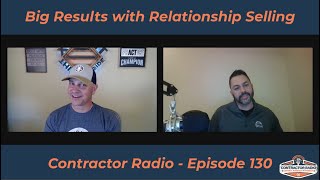
Josh VanDusky from Atlas Shingles talks relationship selling for contractors. He covers staying top-of-mind through service contracts, newsletters, and personalized gifts, plus non-traditional revenue streams and the value of peer events like Top Rep.
Chapters
Foreign. Hey, everybody, it's Jim Johnson here, your host of Contractor Radio with another awesome episode. We've been kind of on this track of talking about sales quite a bit here lately, and a lot of that is because it's one of the key components of the success or failure of our business. We can't sell the jobs, there's nothing to produce, nothing to collect, and nobody gets paid. And so we want to make sure that we give you every advantage to be successful out there in the field. And I have an amazing guest today. I've had the opportunity to get to know this guy over the last couple years, and he brings an inordinate amount of sales skill and knowledge and practice into play. I'm excited about having him on, and I'm also excited about our new relationship with with Atlas. We've always had a great relationship, but we wanted to just take it a little bit deeper. And they've come on as a premier partner and we're a premier partner with them. And what that means is we're integrating what Atlas does into what we do because we believe that it gives a strong advantage to the contractor out there in the field when it comes to proprietary offerings and what we do. So it was super awesome to get that done with them. It's super awesome to have one of their folks on today. I think he's going to bring an immense amount of value to you. But before we get there, we might as well kick off this relationship with an amazing word from them as our sponsor and super excited about that sponsorship and just this relationship continuing to grow, because that's what it's all about, relationships.
The Atlas Pro plus Contractor program is designed to help you build your business. It gives you tools and resources, training, industry insights, bonus structures, technical knowledge, the brand power and science of 3M Scotchgard, and what we think is the best product and warranty in the industry. Become part of the family that is succeeding and growing their businesses.
We went from nobody ever heard of us to the number one roofing company in our region. And we've gone from 12 roofs a.
Year to 2035, and we did over 400 last year.
We're on track right now to do 1,000 roofs this year.
You'll begin earning Atlas bucks and rewards as you move up to even greater reward levels. Become an Atlas Pro today.
So, speaking of Atlas pros, let's bring on one of Atlas's pro members of their team, Josh Vandeski. Welcome aboard, man. Good to have you.
Hey, Jim. Great to be here. Super, super excited. I'M just, you know, so happy that we were able to partner with you and, and your brand contractor coach problem. I really am.
Yeah. I. I think the big part of that is just cultural alignment. Like, we're so serious about helping contractors be better and do better and achieve what they're after, which is this idea of some freedom from their business so they can work on their business, do what they want with who they want, when they want. Atlas fits that. You guys are really supportive of your contractors with your ATLAS Pro program as well as several other. Just your team and their engagement with the contractors that you have, the events that you put on. I had the honor of being at your ATLAS Pro event, which was super cool, and you guys just go above and beyond to help your contractors, and that kind of fits us. So I'm looking forward to taking this. Really. We've been with Atlas for about four or five years now in a tight relationship, but even growing that further is something that's an honor to be a part of with you guys.
Awesome. Yeah, I agree immensely.
So now that we've done the love fest here. Yeah, we're here to do a podcast. Yeah. So. So just give us a little background. Like, you know, where were you before and what kind of brought you into Atlas, why you had Atlas and what is your role there as biz dev manager? What does that actually mean?
Yeah, so, yeah, I started, I actually worked eight years with Citigroup. I designed infrastructures in Manhattan for, for trading floors. And it was a 9 to 5, you know, running out to the city every day and getting home at 7:30 at night. And I told my wife, I said, if I do this one more time, I. I don't think I'm gonna come home. I think I'll just, I'll just stop on the bridge and take a leap off. So I had an opportunity to get into the solar business, which was emerging back in, you know, 2014, 2015. I had an opportunity and we as we're totally where today solar and roofing are kind of this meshed market. Right. And ultimately got into roofing because of the solar. And I spent five years building a company from the ground up as a marketing and sales director. Then I went out on my own and opened up my own company. And, you know, entrepreneurship, as great as it is, I'm not the most, I would say, organized person when it comes to business.
You sound like our clients. Maybe we should have done some coaching.
Is that really, guys, I'm better at the sales portion than running the business. I Would say for myself. So yeah, had the opportunity to come to Atlas and I've been with Atlas for three years now as business development manager more recently. And I absolutely am. You know, I'm addicted to this industry. I love this industry. I love everything about it. The camaraderie, the, just the nature of this industry. I mean, you know, millionaires are made every day in this industry and there's just so much opportunity for anyone to get in this industry and, and really make, make a really good life for themselves.
So yeah, it's something that I've noticed this idea of being a tradesperson of any kind that doesn't just roofing, it's all of them, painting, fencing, whatever it is, less and less people are going into those particular industries which kind of takes down the level of competition, raises what we can charge for it and creates a unique opportunity that almost kind of in reverse like old school becoming new new school and being extremely profitable because I have a skill set that not as many people have. Do you see it going that way too?
Yeah, I mean, absolutely. I mean there's definitely less, you know, people, younger people getting into this industry. I, I know there's a lot of chatter out there in the, you know, Internet sphere about it and it gives a great opportunity for those who are in that industry in, in those trades now. They're really, you know, be lucrative in, in the, in this field because there's less competition out there and there's more opportunity for them to grow as, as a, a large scale business. You know, there I think right now what separates a million dollar and a $10 million business is that there is less competition out there and you have the opportunity to really take a stronghold of a market and, and, and run with it. So.
I got a lot I want to ask. Whenever I do these interviews I get curious about things. Let's take a step back for a second. You said you were doing infrastructure for trade floors. What does that mean? Like, is that like where they sit or is it how their computers work? What does that look like?
So it was infrastructure design when networking. So network security, server rooms, data centers. So essentially interior architecture when it comes to technology. And I worked with electricians and carpenters and people in that field. So essentially it was in the construction field and then the leap to a solar technology from technology. That was essentially my path was technology and then solar. And then I just, you know, out of nowhere I was like, wow, I can actually sell too. And I was like wow. And got into the sales field and, and started to train people how to sell. And so it was a very interesting path. I would say definitely not what I decided to do when I was younger, but I wouldn't, I wouldn't change anything for the world because like I said, I truly love being in this industry.
So I always find it interesting when we talk about sales with people, it's not like a normal career path. It's not like, hey, I'm going to go to college to be a salesperson of any kind. Like, I just doesn't. That's. I don't think there's actually a, a college course for that that I've checked. You know, there's business, there's marketing, there's all of that kind of stuff, but like a true sales course. And, and you said you kind of discovered something that you could sell. How did you discover that?
Well, so funny that you said that because I actually just had this conversation with my wife because my wife has been in sales for the last about 15 years now, and my wife went to college to become a teacher. And we had the conversation the other day that no one ever tells you about sales. Like you don't learn about sales when you're in school or as an option right. In your career. And she was really lucrative as a salesperson and still is today in a non traditional format of what she's doing currently. But I said, I like what you do, I like the money you make. I want to try that. And she says, well, it's not that easy. And I said, but I have you as my muse to learn from. And yeah, I went out and I sat down, my first homeowner. And you know, I was nervous and you know, it was a very interesting experience, but I think I really took to it very genuine. I just, I wasn't trying to close them. I was trying to get to know them. I was trying to understand the whole process. So I was asking a lot of questions about them because, you know, I really wasn't a polished salesperson yet. And I want to close in my first sale and I just continue that, just getting no people and, you know, sitting down with homeowners and understanding what their needs are and what they want and what, what they're looking for and listening and it just grew from there.
What's your wife's name? I've never asked before.
Melissa.
Melissa. Did you and Melissa come to any kind of like, solution of why they don't talk about it, teach it? It's not really a career option?
No, we really didn't. We, we Spoke on the fact that it's a. One of the most lucrative types of worlds you can be in or occupations. Right. Sales. But yeah, we never came to a conclusion of why it's not discussed. I mean, like you said, there's marketing and business management and business administration and, and all these different, you know, salesy types of courses. But specifically how to be a salesperson. There's no degree in the world. I mean that's, you know, people like you can, I think, are experts in it, where you can give the degree to a lot of these contractors out there that are looking for, you know, that, that direction, that, that training, that official kind of, you know, you're a salesperson now, go get them.
So yeah, it's kind of why we created this whole top rep thing that we do where we teach contractors all across the nation on how to sell. Like giving them an education, actual course on closing deals, which isn't something that I could get necessarily in a, in a, in a classroom setting. And I always wonder like, do they not talk about it? Do they not push it? Do they not? Like these teachers in school, they have to know like, dude, that guy's cut out for sales for sure. Like, he's the class clown. He's always getting in trouble, that guy. Right. I wonder if they don't push it or think of it as an option because their perception of what it is isn't a truly valuable like position or calling in life. What do you think?
Yeah, I mean, I think, yeah, in some instances, you know, you're not punching a clock in sales, right. You're, you're essentially, a lot of times you're writing your own check. And I think from that flexibility of, of being in sales in, in, in most industries, it's looked, it's looked upon as not a real position. Right. You're not, it's not a 9 to 5. You're not sitting at a desk, you're not adding data into your, you know, spreadsheet. You're out there and you're, you're selling yourself, you're selling your product, you're selling your business. You're selling, you know, the owner of your business or the brand of the business or whatever the case may be. You're out there writing, you know, writing your own paycheck, painting your own canvas. And so I think that that traditional kind of, this is an occupation. It's, you know, I don't think they really, it's not perceived that way by most, I guess, academics.
Yeah, I think I got really lucky I almost tripped into it. And if, you know, when I put all the dots together, now that I'm older and kind of can look back, I kind of always had the, whatever talent for it, but not necessarily the skill. And I tripped into it. Once somebody went, hey, he's got a little bit of talent for that. They said, let's apply some skill. That's got me all kinds of training. Everything you can ever possibly go to for that type of stuff, every certification you can get. It created a dynamic where I can kind of write my own ticket. Like, I have this opportunity, this skill set now that nobody can ever take away from me, that I can apply to just about anything and be pretty successful. And you mentioned how we're selling all the time. It's something that we're doing constantly, every day, all day long. And every interaction we ever have, we are trying to, for lack of a better term, prove to the other person that's on the other side of the conversation that we're worthy of having the conversation with. We can add value to that conversation, and if they're having problems, that we can help them with their solution, which I think, like, shouldn't that be something that we teach in school? It seems like that would be highly valuable skill for the rest of our lives.
I mean, it's almost. If you would think that would be a psychology course even, right? I mean, that, you know about human interaction. Because you're right. We sell ourselves every day. And it. We sell ourselves on job interviews, we sell ourselves in budding relationships. We sell ourselves constantly. So it is a. It's almost embedded in all human beings. It's just those who take it and make a career and run with it that separate, you know, the salespeople from the people that could be salespeople.
I think that was interesting that you said that to the psychology thing, because I never quite put the two together back then. But my daughter is going through a master's right now, thank goodness. And her master's is in psychology and specifically corporate buying psychology. Like, why do people buy things? And I went, oh, that's interesting. Like, I didn't even know that was a thing, really. And so we start talking about things back and forth. I'm like, why are you getting a master's degree? I could have just taught you there. These are all things that I've had to learn over time, like why people buy things. That would be pretty cool to come in and sit down on this class. But she had a lot of insight that, you know, scientifically, she Applied what came naturally, which was super cool to kind of have those conversations in psychology. Now when it comes to sales for you, is there anything like you believe strongly in? Like you got to have this perfect process or this perfect system or this presentation thing or. Or what is it that like if you had a core thing that you. I'm going to hold on to that and that's going to be what everything else built off of, what would that be?
So I think the overall structure in my. This is my just opinion is it's branding, credibility, reputation and process. Right. Those I think are the four foundational things that you need to establish with a brand. A good brand you can build credibility or partnering yourselves with a good brand you can build credibility with. Credibility gives you opportunity to sit down with customers and talk to them and close those deals. That builds your reputation. And then once you've, you know, close that sale and continue to build that reputation, that process just cements that reputation so you can start all over again. And your reputation will be because I mean listen, we're in this space, we know what the number one lead that we're all looking for and that's that customer referral, right? So if you have a great brand, great reputation, great credibility and you have a really strong process that really just make that customer happy, make them feel that they made the right choice, they're going to go and sing your praises from the rooftops next to that. I mean I would think it's really relationships. So it's super important to really establish a. From. From out the gate, a great relationship. And it's from just the basics, right? Being properly dressed, having a name badge, wearing clean socks and asking if you should take off your shoes. Noticing the little league trophy on the mantle and saying, hey, my son or my nephew also plays. What league do they play for? You know, the, the oil Elvis painting and start singing Elvis songs. Whatever the case may be, building that. That reputation and not forced. I mean that rapport not forced to it. It should be natural. You should. To be a successful salesperson, you have to be a people person and generally like to get to know people and be genuine about it. I think if it's forced, it comes off too salesy. So there's a balance there too.
So yeah, it's a. That's a bit of an experience thing, right. For some people. Like you got to gain the experience to kind of understand how to build rapport. Because some people aren't naturally people people, right? Like I know that I wasn't. Whenever I First started, like, I have this ability to have a conversation with folks, but I wasn't really a people person per se. I wasn't the popular kid in school. I can remember being absolutely frozen in speech class, like, absolutely. I could not even speak. And so there was a lot of discipline and work that went into that side of things to put some skills in play. But some people are just naturally, like, they're friendly people and you like them from the second you start talking to them. Is that a sign of something that you're looking for when you're looking in salespeople, or can they be successful without that?
Yeah, I mean, I think sales definitely can be trained, right? I think if you suffer from very bad social anxiety, it may be a little bit more difficult. You know, if you have like a medical condition when it comes to social interactions, it may become difficult. But I think that, you know, listen, money drives, really drives. And if you're interested in making money and building relationships will allow you to make money, I think it can be trained. I think people with natural talent, it just comes easier to them. But I think anyone can learn sales and if they're. They have drive. One of the things when I used to hire a sales reps and ask them, you know, what drives you? And if they didn't say money, I don't want to do anything with you. All right? Because money should be a driver. And money, you know, success and money should really allow anybody to want to grow as a salesperson, learn those skills. And I think it can be learned. I mean, very few, maybe not. But again, some just comes naturally, right? My wife is a natural salesperson. She's very personal. She'll walk up to somebody in a supermarket and spark of a conversation. Me, I will not. I put my head down, I grab my jar of pickles and I go to checkout line. But once I'm on stage and I'm presenting or I'm sitting down with a homeowner in my, you know, past, you know, I. I'm able to see the focus, say, this is how I'm successful. I want to be successful. I'm going to, you know, go through the process that I built, you know, in my sales process and, and get to know this person and hopefully provide them with a, with a solution that they're looking for.
So relational sales seems to be really the point of focus. What do you do to create, like you mentioned a few things like, hey, you see the baseball trophies, that type of thing. Talking about what are some of the key things like, could you identify what those key things you are looking for to build a relationship right away with people so that they have confidence in you, build that rapport that you need?
Yeah. I mean, I think first, unless they're pressing you, don't go immediately to business. Right. I mean, have. Have some human interaction first. I think that's important to establish just that I'm a human being. You are a human being. Even though I'm here to sell you something, I'm a consumer just like you. I have the same concerns that you have as a homeowner, as a customer. And again, I can't emphasize enough to be genuine about it. So unless they're like, hey, give me the numbers, you know, those kind of guys, you know, really go in and just try to get to know them. Second would be to really ask questions and listen to the answers. I think we ask a lot of questions, and I think we. We kind of gloss over the answer. Sometimes the answers are the important things. Right. So ask a lot of questions. See what. What their pain points are, what their concerns are, you know, what they're looking for in this transaction. And I think those are two fundamental things. Because you're showing genuine concern. Because if I ask you a question and you give me the answer and I can go back five minutes later and I say, oh, you know, Mr. And Mrs. Homeowner, you mentioned this earlier, that this was a concern of yours. It shows that I'm listening, that I'm genuinely concerned with their situation, and I think it goes a long way.
So I always thought of sales as like a recipe, right? Give me. Give me the ingredients. Give them to me in the order that I need them and how much of each, so that in the end I get the result that we're looking for. I want this secret sauce, this cool thing. That's my thing at the end. It's one of the reasons why we teach top rep the way we do is that there's these six phases, and it's what you're doing, how you're doing it, and why you're doing it that really applies to any contractor sales process. Whatever they're using as their proprietary, unique, whatever they're selling doesn't really matter as far as even their trade. It's this thing I'm trying to accomplish according to a recipe. As we go through, do you feel like you have a recipe like that, or do you think people may be disserviced by not understanding that recipe? Is there any kind of recipe that you see that leads to Being successful.
Yeah. I mean, there is a. I think a fundamental base recipe, but I think, you know, sometimes you have to throw away the measuring comps and put a pinch of this and a splash of that. Right. Depending on the situation. So, yeah, I mean, there are fundamentals, and I think that if you're not sticking to the fundamentals as a principle to your business or your sales cycle, you're. You're. You're looking at possible failure. I'm not going to say 100% of time, because there are just people that do things off the wall and are successful at it. But I think for the majority, there is a baseline, but I think it's not a. It's not a cookbook recipe. I think there's. There's room for interpretation there. Sometimes depending on you as the salesperson. Right. What. What your approach is, your personality, and I think who you're potential customer or client is, too. Right. You have to adapt to the person that you're speaking to constantly. And I think that's why that initial beginning point where you're building rapport, getting to know them, you get to understand that person you're dealing with. So you can manipulate that pitch. You can kind of put a little dash of this and a little extra of that in there to make it make more sense for that. For that person in that situation.
Yeah. Selling to who they are, not necessarily who you are. Right. We've got different buying personalities. We teach that there's four different ones. General manager, coach, superstar, role player. But it's the basic four personality types that you hear a lot out there. And that's where I talk about, like, this recipe has this core format to it. It's like, hey, this and this, then this and this, then this. There's components in each one of those pieces of the recipe. But I'm going to have to give certain amounts of those components or ingredients each time, depending upon the personality of the buyer that I'm dealing with. Now, some people are like, get to the point. Some people are, hey, let's hang out. Some people are like, I don't know how to make a decision. You got all of that kind of stuff going on. And like you said early on in that conversation, I need to figure out who that is. And usually the best way to do that is by sharing, like you said, as well, more of those human aspects of us. I'm a human being, you're a human being. I got to stop being a salesperson. You got to stop being my buyer. Let's start being People for a couple of minutes here and figure out what that personality is and then sell to it. Because if you, if you say I have one format, like, I'm going to follow this format. This is my recipe, and I'm going to talk about all the features and benefits and all that stuff, and I'm dealing with somebody that's a, what we call a superstar personality. Just tell me the good stuff, man. You start getting me into all those details, I'll be like, check out. Right, right. So understanding those behaviors and that personality type is absolutely key. It's a big part of, like, how we take that framework and top rep and apply it to the various personalities at our event. And then, then on top of that, timing is everything too. Right, right. The timing and the buying cycle makes a big difference. Am I, am I redoing my house after coming out of winter and I'm going to be doing a home makeover, or am I needing to do something with my house because I've procrastinated, waited, winter's coming and I got to solve some problems. And that's why we have the top rep and top rep. Rush, do you see those differences out there? Whenever you're dealing with contractors or helping contractors do what they do from a sales perspective? Do you see how that dynamic changes at different times of the year?
Yeah, yeah, absolutely. I mean, and it's not even different times a year. It's even different markets, different. Just situational experiences in, in where they live, such as storms or, or, or whatnot. But yeah, I mean, you know, I'm, I'm from the Northeast, so we're, we're pretty much 100 retail. We take off in November through February. Right. So it's a lot easier to have conversations in, in those winter months when there's snow on the roof. I mean, some guys are melting it off, but it's a lot easier. But yeah, absolutely. And it's really, I think for us, though, from, from, from a manufacturing standpoint, it's easier for us to understand those circumstances. What stances, when is the good time to speak to them because of these different variables in different markets. In the north with weather, in the south with storms, in the Midwest with hail. Right. We can kind of be more proactive with that. I think from their standpoint, it's a little bit more difficult. Right. And just to expand on what you said, too, financial is another thing. Right. With a lot of these homeowners, we. You don't know what financial standpoint they're in. They could need A roof and a major repair because it has to be done, but fiscally it's just not feasible for them. And, you know, obviously financing comes into that, or it could be the flip side. And you know, Uncle Eddie just died and left you a million dollars and you're going to rent on the whole house. Right. You don't know. So I think from us it's easy to see, but for a contract it's a lot more difficult. So they got to really feel that out for really understanding where that customer's going with their situation.
Yeah, it's interesting for you guys and for us, for that matter, we kind of have our blinders off. We see bunches of contractors and bunches of situations in different seasons and different markets and different circumstances. But a contractor in his own little silo has a bit of blinders on that in their own business. They're not seeing what everybody else is doing. That's one of the other cool things about that top rep event is they get to come out and hang out with other contractors, see what they're dealing with, and find out they're not alone. Number one, like, we have a lot of common same problems, but also there's some nuance and some difference maybe in the same industry, like roofer to roofer, but there's also like roofer to water filtration guy. He's got something unique and different. So when you take those wires and one of them. Most valuable things I ever found out about sales is just because I sell this one thing doesn't mean I shouldn't go and find out how to sell everything. You know, me selling health club memberships really has nothing to do with selling a Boeing 757. One of the most valuable conversations I ever had in my entire life was talking with a guy that sold Boeing 757s and the relationship building and follow through and follow up, that was necessary to execute. That was amazing to me. But the payoff was also quite amazing and so interesting to see. Like, what pieces of that can I pull from that and apply to what I do?
Right.
I think going to those type of events and being around others that do what you do just naturally, like you've been to a couple of our events. Have you seen that happen?
Yeah, yeah, absolutely. And I think what's unique about your event too is that you're. There's a lot of contractors coming in from all different markets. So you're getting a little bit of everybody's kind of perspective across the country. I was down in Dallas and I met a contractor that I know from New Jersey. So yeah, you see you get a little bit of everything because you know, again, you know, there's different markets, there's store markets, there's retail markets, guys that are heavily relying on insurance. But you don't have to sell that one thing. And I'm a big believer in non traditional revenue streams. I think there's a lot of opportunity for a lot of contractors out there to sell, you know, service contracts and things of that, that nature where they could, you know, gain more to their bottom line. So putting the blinders on and being, having that tunnel vision, you know, I, I think opportunity like top rep where you can go and you can sit down and you know, guys that are doing full, you know, full restos and doing siding and decks and you know, you get an idea of what they're doing, their market. I mean that's, that's valuable, you know, and you can take that and, and as this industry look at solar, right, Perfect example, right. It's, it's almost getting very woven in with each other. That's a different sales than roofing, totally different sales sale. So you know, that might be in your port, in your, your offerings one day or in your brochure or you know, in, in on your website. So talking to guys that are doing that, getting a feel for that, I mean, I think it's, it's, it's good stuff. So.
Yeah, you mentioned something there that I kind of piqued my interest. You said you're a big fan of non traditional revenue streams and you, you just kind of quickly said, you know, like service contracts. First off, are there any other additional revenue streams? And then tell us more about what that might look like.
Yeah, I mean it really depends on you as a contractor. I mean if you are strictly a roofing contractor, that limits you. So if you want to stick in that realm, because that's what, you know, obviously a cert, an annual service contract if you want to. And it doesn't have to be one. Right. You can do a seven year, five year or three year, one year, whatever the case may be, be where you're going out inspecting the roof on an annual basis to make sure everything is good for the homeowner. Biannual roof cleanings where you're getting debris off the roof. Right. If they have, they have low hanging trees if you. Gutter cleanings, if you're in that world. Right. So I, I think there's a lot of opportunity for roofers to make additional revenue streams from their homeowners. And the best part of that is anything that you're doing that you're going to do an annual checkup with your homeowner gives you an opportunity to ask for a referral. And that's my favorite thing about it. You knock on the door, I'm here for your annual checkup. I'm just going to go jump on the roof, take me 20 minutes, show them the pictures, say everything looks great. If you have any friends, family, remember, here's a couple of my cards. I know I give you a $50 for every referral or nothing at all, whatever the case may be. But I think that's a great opportunity to kind of reposition that one and done sale. With roofing in a retail market, store market, you might see the same guy 10 times in a lifetime. But in a, in a retail market to have constant touch points with that, that homeowner.
Yeah, let's, let's come back and talk about, I'm gonna talk a little bit more about these non traditional revenue streams and sales channels. Sometimes we call them what some of the other options might be. I wanna maybe even dig in a little bit more on some specifics on what you're talking about. But we got bills to pay. We just talked about referrals. So let's hear a word from one of our sponsors. Get the referral.
Who doesn't love getting more referrals? GTR will make your referral game stronger than ever with our four step process. First, engage with customers through job status updates and push notifications. Then motivate your advocates to send referrals and earn rewards. Third track and manage all of your results, your your company's dashboard and finally, sit back and enjoy achieving up to 40 times ROI. GTR is the number one referral platform for contractors. So book your demo today@getthereferral.com all right.
We are back with Josh Vanduski, the business development manager for Atlas Shingles. Once again, great to have you here. And we're kind of talking a bit about the non traditional revenue streams and, and service contracts and kind of how those could get implemented into somebody's business. And this idea that it gives you opportunity for referrals also gives you opportunity to stay in front of them. Anything else that people can do to stay in front of their customer more than just, you know, the organic stuff they put on their Facebook page that doesn't get looked at anything there that you can help these guys out with?
Yeah, I mean there's, there's, there's Tons of opportunity. I mean, I, I did this towards the end of my, my first business. We would actually get the homeowners birthdays and we would send them birthday cards as, as corny. Some would say that that is, it's, it's a nice notion. And I mean, I get them from casinos and too, and it's always nice. But, you know, that's a way to do it. If you do any local events, right, make sure, oh first, you know, I, I get the, the stuff on Facebook, but make sure you're coming, customers are following you on Facebook, and they're on all your social platforms there with you. But if you're doing any events, even like a home show, reach out to the homeowner and say, hey, did you know there's a local home show going on? I just want to let you know, I noticed that you were in the middle of doing other renovations and there'll be great guys there. I can actually recommend so and so for you. Or if you're just looking for some petunia bushes or whatever the case may be, you know, come out to the home and garden show. I'll be there and stop by and I'll buy you a cup of coffee. Whatever the case may be, it doesn't have to be a one done sale. It really has to do with how far and beyond you want to go with your customers because again, they have those, they're that golden goose. They're going to lay those golden eggs for you because you're going to build that relationship and that rapport with them where I think there's a study that says that, I remember it's somewhere around 70 or 80% better close percentage when it comes to a family or a friend recommendation versus a, a just a organic lead generation. So it's important, you know, and there's, there's other things that you can do and you know, if you're in the neighborhood helping out another homeowner, just knock on the door and stop by and say, hey, you know, I just want to stop by saying I'm helping out your neighbor and I just want to thank you for the referral. And, and here's a box of donuts. Whatever the case may be, just find a way to be in their face because they're gonna be your greatest asset in the long run.
Yeah, it's always a big thing that we, you know, as I own my own contracting business and now coaching contractors and doing sales training, we really harp on and focus that first 90 days of building your network, write down everybody you know, Write down everybody you know. That could be a value. Write down everybody you know that is in business. Then let them know what you do and be consistent about letting them know what you do. Whether that's quarterly, monthly, sometimes weekly. You know, people do it a variety of different ways, but if people. If I'm not top of mind of the network that I have, when somebody talks to my network, they're not going to think of me for that new roof or that new deck or that whatever it is that you do. And so some of the ways that we've found to be successful with that, creating a little newsletter. And newsletters are easy because you can leverage the power of information that's out there. Like, hey, I know we did your roof, but I saw this cool thing about taking care of your lawns in a drought. Like, we're dealing with a drought down here in Texas. And sending that out as part of your newsletter. Sending it out that, hey, you have a special going on in some other trade that you do and why that trade might be important in introducing them to those service contracts or service programs or maintenance programs through those contacts, just letting people know. Even letting people know, like, your success story of the week. This. Hey, we really helped this homeowner through this thing. We wanted to let you know how. And having that on YouTube and your Facebook is always important, but keeping it in your communications with your actual customer base keeps you top of mind, which will then get you more referrals. Do you see it same way?
Yeah, no, absolutely. I mean, so let me actually flip this on you and ask you this question. What? How did you send these newsletters out to the customers? Was it digital? Were you mailing them out or.
Well, it depends on what. I've been at this a while. So we used to mail them. That would be one of the things. Like, we'd mail them once a quarter order. Just the update. We actually did something very similar to you with the whole birthday card thing, right? We did a card that came with a small cake. So it was like this. You've probably seen nothing. Bunt cakes now, like, those things exist. They didn't exist back then. We actually had these made for us. They were a small cake. And the concept was have your cake and eat it too. And kind of played off of that a little bit. I still use that terminology a lot with people. And we didn't call it birthday either. We call it happy cake day to have your cake and eat it, too. And just making it a bit unique and different. Whenever you put that different spin on it like that, it sticks out. Like if I just say happy birthday and I got a cool little card, other people will do things like that. How can I take that concept that's been successful? Just put enough of a twist on it that it sticks out. I also have always thought that paying attention, you pay attention in that sales process, you're going to find out something about people. You're going to find out about their kid that plays baseball or their aunt that's sick, or they like to go watch movies, or they're pet lovers or something. You're going to find out about them. How do you take that thing that's important to them and figure out, finish what you do with some impact? And we always call it finishing with a flourish. That whenever we were done and we would collect the final check, we would give them something that was very personal for me. I can remember this guy was into. He was into fishing lures and like the old, you know, wooden fishing lures that were carved and hand painted and all that stuff. Collected them. I asked him about it. I had long conversations with him about it because it was interesting to me, too. I like to fish. And so when we're getting done, like, I gotta finish with this guy, I gotta do something with the lure thing. Hopped on ebay. I'm looking at him like, that looks pretty cool. It's like five lures in this little picture case for 25 bucks. So I bought it, had it sent to me, took it out to him, sat down, got paid up. When we got done with the project, I said, hey, you know, it's been a great experience. It's been really awesome getting to know you. And the thing that really stuck out about me getting to know you is the fact that you collect lures. So I got you. So I don't know if it's any good or not, but I got you something. And here you go. So he opens it up and he looks at it and his eyes get like this big around. I like what's going on. He goes, well, those three I've got, I already got those. But these two I've been looking for forever. That one's worth $1200. That one's worth $1600.
Really?
That's awesome. A little bit of like, oh, my goodness. But that guy has never forgotten about me since that day. We still talk, we still have conversations. And that network becomes invaluable because you never know when you're going to need somebody that's of Value in your network and surrounding yourself with solid people is important. I always get this thing of like, is that scalable though? How far can I scale that? This word of mouth, my network referrals, you hear them all kind of lumped into. Do you believe it's scalable?
Within reason. I mean, if you're out there buying, physically buying 1200 laws, I don't think it would be that scalable. But yeah, I mean, because as you scale as a business, you, I mean, essentially you grow in manpower and you grow in operational capacity. And I think it is scalable to the sense where, you know, obviously everyone is not going to be that receptive. Right. It's the chosen few that you get that response from that you're going to continue to do that with. And you might do some sincere sentiments to some of the other customers, but everyone is not going to get on board with that. So if, you know, with the process of elimination of those who are like, super receptive and will literally roll out the red carpet everywhere they go for, for you, as, as, you know, you and your business, those are the ones that, you know, you'd focus on and continue that. You know, continue that. So I think, you know, you gotta look at it like in the sense that if you're not generating those organic leads, you're generating them somewhere else, right? And those are gonna cost money. So if you understand what your acquisition cost, overall roi, you can do the math easily. And if it's a $30 chotchki or trinket that's going to get you a $20,000 sale versus $2,000 in AdWords for that month, that's, that's, that's, you know, that's a big, big scale shifter. So I think, you know, if you're sincere about it and you really, really generally want to grow that network, I think it's scalable. You just have to have the, to drive and, you know, make sure, you know, the, the what you're gifting is, is within reason for the most part.
So, yeah, you know what? I've, as we've done this for a little bit now, what I've found is it's hard for the business to scale it, to put it into this practice that's repeatable and pretty much guaranteed you're going to get this result from it. But I do believe it's scalable by the individual. Not every individual is cut out for building a huge network. But the ones that are, I mean, I got a guy that comes to mind, he's been doing this now for 22 years approximately somewhere in there I hired him 24, I've been at 24, so 20, about 22 years. And Guy hasn't knocked a door or run a company, generated lead in 10 years because everything comes from his network and is way more than he can actually manage. And he's been really strategic about it, like aligning with the right networking partners. He goes out and finds people that are aligned with what he does and there's a win win for the two of them. Keeping great contact with all the clients that he's ever sold over the years. And what he's found is like he has more leads than he can actually handle. And the Guy sells about 5 to 6 million dollars a year in residential business by himself. You know, his wife helps him with some paperwork and stuff like that, but really by himself. And that's because everybody that comes to him, that 70 to 80% that you were talking about there closes because there are referrals or at least social proof of his success raises his closing percentage dramatically. So he doesn't have to see as many people to have extraordinary results. That's why I think networks are so important and understanding how to build that skill set of building relationship getting books or anything that you're like. I'm a big fan of that book that helps with this.
From a sales book? Not really. I don't really read a lot on sales. I'm more of a, a YouTube, you know, sales guru kind of video watcher guy.
Who do you like to watch?
Well, I mean Jordan Belfor is just, you know, he's the quintessential, I mean.
Think that was, there's that northeast coming out of here.
Yeah, he was the, I, I mean I, I watched his seminar probably back in. Wow, that must have been 2009, I think it was, or 10. It was. And it's just, you know, and things like mirroring and vocal patterns. It's, it's just, there's a science to it. It really impresses, impresses me. You know, Gary Vee is another guy that I really admire now. He's really coming up in that space of just understanding human beings and human nature and book wise, you know, I'm more of a fantasy book Stephen King guy. That's, I like to, I don't want like mixed business with pleasure. So I, I, I like my, my books for, for fantasy. But yeah, I've been to a couple of, you know, multi presenter seminars. I've heard guys, you know, a lot of motivational guys, guys like Ed, my lad, and speak and things of that nature. So. But yeah, I would say, you know, for me, the northeast guy. Yeah, Jordan Bell, you know, Belfor is probably that guy because he really breaks it down to a, you know, a very. And listen, his reputation is passed is one thing, but you know, he breaks it down to a real science of understanding human nature, which I really, really like. So.
Yeah, that's a, that's an interesting thing that you said. Well, setting his history aside, like he's got some value here. Yeah, I think there's a lot of that and a lot of, you know, you may not necessarily like the, the deliverer, but you cannot discount the content. I'm not going to mention any names, but I have several like that way. But that piece right there was really important. And over time you grab a bunch of those pieces, put them all together and say, this is what I believe in. That's really kind of what Top Rep has become is this concept between Chuck Toki, who kind of comes heavy from the retail world, traditional sales training, background, closing, running a larger $180 million roofing business and getting high performing salespeople there. With myself and my background and having 10 locations, 170 salespeople at any point in time, we had to be pretty good at teaching people how to, how to be successful and then taking those two different perspectives and smashing them together into this one. Like we had some battles. I believe in that. Well, I believe in this. And it's like some of that and then through good conversation going, I kind of see your point on that. And I think that happened both ways for us and really created something like incredible. The concept of learning and adding in a bit of competition to it a little bit more. That was just like we said we should try this. We had never seen it done before.
Right.
And that has been maybe one of the most impactful things are those dog fights and learning from that. Like, well, human behavior would tell us the more we focus, the more we concentrate on something, the more we ingrain it. When are we going to focus the most? We focus the most when we're competing. We're trying to win. And so that concept, do you pay attention to stuff like that, like leaderboards and Top Rep and stuff like that? Does Atlas do anything like that internally?
Yeah, I mean, you know, Atlas is not traditional sales. Right. We're a manufacturer and we're more into relationships. Obviously, you know, we, our contractors are our customers if you really want to look at it. We spend as much time with distribution as we do contractors. We're very, very dedicated to relationships that we build with contractors, but it's really, it's really, you know, it's more about relationships with us, really. And, you know, I onboard all the new sales reps that come to Atlas with my counterpart, Josh Acher, and one of the main. The first things I think out of the gate we tell them is that you're not a sales rep, you're a relationship manager. You know, the sales comes second to the. That relationship because it's really, that's. That's what it is. You know, from, from our position, we, we know who we are as a manufacturer. We know the advantages we bring to the market. We know why we're different and why we can make our customers different. It's really about explaining that to them in that human interaction. Right. Not trying to sell them. Right. Not trying to get them to immediately go out there and start slinging Atlas on roofs. It's really about letting them understand the advantages, how we can help scale their business from a. From a feature standpoint, how we can scale their business from a value standpoint and how we're there, like we're really interested in their success. And just, for example, you know, why we partner with you, right? You're an added value to Atlas that we can say that, you know, Jim Johnson is a fantastic human being that is going to help you, you know, grow and scale your business. And this is how he does it. And, you know, you meet, you know, we have very similar values when it comes to that. And that's just one of the ways that we build relationships. We're focused on the relationship more, the sales. Oh, do we have top sales reps? But that comes second. I mean, but yeah, yeah.
You know, I always look at, is it a byproduct or is it the focus? That was really good, Josh. And actually, it's one of the reasons why we want to help. One of the best parts about partnering with you guys, we're going to create some unique content just for Atlas Pro contractors that will help them sell more at higher profits, help them run their businesses more effectively and find that fruit freedom that they've been chasing since they started the whole thing. And so we're, we're excited to help you guys out with that. Josh, it's been, it's been a really good interview. I want to first off say thanks for, thanks for being here today.
Yeah, no, thank you. I really appreciate it, Jim. I, you know, I can't express how much I'm looking forward to Philly to come top rep. I was down in Dallas. I really enjoyed it. You, Chuck, Ethan put on some show and really enjoyed it. And I think, you know, the feedback I got from at least my friend who was there, my contractor up in North Jersey said was fantastic stuff. So really excited. Can't wait to get to Philly, hang out, you know, eat some people.
I'm pretty excited about the being in Phil. Like, Philly was purposeful for a couple different reasons. One was it's the city most associated with freedom, I think, like the Liberty Bell, Freedom hall, all that good stuff. Right. And that's kind of what we're all chasing as entrepreneurs and even as salespeople. I would like to have some freedom in my life so that I can enjoy all this hard work that I'm putting in. So there's that aspect of it, but there's this whole stereotype with folks from the Northeast a little bit harder, a little bit more, crush it a little bit like that feel to it. And Philly, of all cities has that reputation. Like, being a fan of the other team, you just don't go to. To the game. Right, Right. We're actually looking like, are the Phillies playing that night, and who are they playing against? I'm going to wear that jersey. Go see what it's like.
Oh, yeah. I would not do that. I give you any advice. I would not do that.
Okay. So as a.
As a Mets fan, I can tell you from experience.
Yeah. And we're actually going a day early to take in some of the, you know, the. That's, like, what Philly has to offer. But we understand it's a different market. It's unique in its approach. It's unique in the expectations, unique in the personalities of the buyers. And we want to talk about some of that. We want to share that world with maybe the rest of the world out there, that there are techniques from that that actually work and work really, really well. Have you found that, like, to be different, like, Northeast is kind of its own unique little.
Well, yeah, I mean, even, you know, more so, like, the Phillies of the world in the Central new jerseys and the New York cities actually had someone who was from rural Pennsylvania come out to the city and said, I didn't really think that people are like that. I'm like, oh, yeah, they're just like that. Yeah, it's. There's a. There's a shell, I think. And things are a lot faster, too. You have to really make your point with a lot less. I don't want to Use the word, but a lot less fluff, let's say, you know, yeah, everybody's, you know, let's go. Time is money, kind of. And yeah, I think it's skepticism. Right. I think they're more just. They're eyeing you up and you here to scam me, you know, and so. Yeah, I think so. And I'm used to it because this is my market and I think it's different animal. And you know, the one thing about the Northeast, though, it's, it's, it's pretty much 100% retail. You know, this is a retail market and, and so more so than ever, you have to understand that sales process because you are, you're selling people. I mean, there's, there's, you know, insurance shops here or there, and. But we're not dealing with storm damage. You know, the hurricanes are few and far between, so hail is, you know, half inch, if at best. So it's really, it's a strong retail market. So the value that top rate rep can bring, I think is, is, is tremendous up here.
So, yeah, really excited for it. What's the best piece of advice you've ever gotten for sales?
The best piece of advice I ever got for sales? Drink the tea. I'll explain it really quick. Had. I had a sales rep who, and he taught me this. And, and he, he met a, a homeowner who went overseas and just came back and he's talking about a roof and solar, and he had tea he brought with him and he said, would you like a cup of tea? And he said, sure. He said it was absolutely the worst tasting thing he ever had in his entire life. He said it literally was. He. He didn't even know how. He did not just immediately projectile. When the homeowner asked him if you want another cup, he said, absolutely, absolutely delicious. So, and I took that from him and I spun it into drink the tea. Because, you know, you're there to really, you know, build a relationship and close, you know, close a sale and, you know, get that homeowner to trust you. And if you spit out the tea, you're. It's going to be a struggle. So that's, that's my advice. Drink the tea.
I like it. That's. That's really good. Yeah, I've had a, had a couple of cakes that I didn't like at all, but. Yeah, that's great. Like that type of thing. That's pretty good. Drink the tea. I'm going to remember that one. Hey, Josh, thank you very much for being on today. Thanks to all of you at Atlas and just your continued belief in us and this new horizons in our relationship together. Excited for what we're going to be doing over the next years and long into the future with us and Atlas. So thanks a lot for being here today.
Absolutely. Thank you so much for having me. I really. And you know, it's mutual from all of us at Atlas.
So awesome. If you can hold on for just a second, I'll be right back with you. We'll get everybody else out of here. All right. Hey guys, that is our episode today. Some of the key points that I think you should have as a takeaway. Building relationships obviously is key. I think we hear that all the time in sales, but truly it's a relationship. Relationship isn't a one time interaction, it's multiple times over time building. And I look at it as a couple of different things. You have your zealots, they like absolute believers in you. They're going to do everything they can. They're always going to remember you because they just liked you so much that they're going to refer people to you naturally. But then you have your could be followers like if you just stayed in front of them a little bit with some interaction. Whether that's an email newsletter that's valuable to them, not a marketing piece. Your organic social media, your connection with them through social media where you could stay in front of them and stay with your message of what it is that you do and why you do it and why you're so passionate about it. Become top of mind to them. You build out this big wide network, it's hard to stop. The other thing that I took from that was drink the tea. That was really awesome. I like that he saved it to the end. But this idea that we're selling to a personality and a personality that believes certain things like certain things acts in a certain way, we've got to sell to their solution, not to our solution. We may believe that this is the absolute best thing in the world to buy this thing, but it might not be the right fit for them. So we want to make sure that we provide the right solution for them. It'll build a stronger relationship that down the road they become one of those zealots for you. Thank you very much for being here today. If you are interested in coming and getting more training and getting the best training on the planet. This cutting edge approach to sales methodology, psychology and easy to follow flight plan that puts you in position to make you the logical choice for your client. That in the end, the only choice they have is to say, yes, I have to have you. And you're tired of selling on price. Go check out topreptraining.com that is our website for top rep. You can go learn more there. You can get registered there. We're going to be doing the event at Live Casino there in Philadelphia. And come stay with us. There's rooms there. Come hang out, be a part of the event just during the two days on the 23rd. No. Yeah, 23rd and 24th. Or 24th, 25th. I'm not even sure. Go check it out. It's one of those. I think it's 23rd and 24th for the event. Get registered. If you are listening to the podcast today, I'm going to give you a coupon code just for listening to podcasts today. Rush 100 r u s h 100. Save you $100 per attendee that you send. We'd love to see you there. We'd love to help you sell more at higher profits with less effort and become that person that whenever you walk into the grocery store, they love to see you because you gave them the solution that solved their biggest problem, that was causing them the most stress and fear in a way that they felt was fair and equitable and highly valuable. We look forward to seeing you. Thanks for joining us here at Contractor Radio. We'll be back next week with another episode.
If you're a window installer, you deserve a simple choice. Anderson 400 series windows. They're the windows contractors trust the most, based on a 2022 survey of U.S. contractors. Probably because they have fewer callbacks and extra peace of mind. And thanks to shortened lead times, they're available faster. At Contractor Radio, we believe in promoting the best, like Andersen 400 series windows. So request a quote today at andersonwindows.com.










