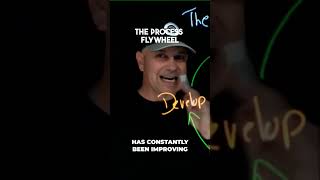
Jim Johnson explains a "process flywheel" for building a thriving system: repeatedly document processes, delegate them, diagnose/analyze performance, develop improvements, and re-document—creating a continuous loop of improvement that prevents teams and systems from degrading. He frames this as an ongoing cycle observed in his 27-year sales process experience: document, deploy, test, analyze, enhance, and repeat.
Chapters
And so what this does is it creates a bit of a flywheel. So we document things, we delegate them, which allows us to diagnose or analyze them, which then allows us to develop them or improve them, and then ultimately document them again and improve and improve and improve over time. This flywheel is going to be the thing that is constantly evolving, doesn't ever stop doing what it's supposed to do, which is to grow and improve. If we get complacent and leave it as it is, our teams will start to break down over time. Our systems will break down over time. We will start to be passed by everybody else out there. I know that my sales process, over a 27 year of being in the industry, is constantly been improving and getting better and being refined because we document it, we get it out there into the world, and people use it. Then we diagnose what's working and test things and analyze things to make sure that they're working at the fullest they can be. And we look at what people are doing out there in the real world on their own, that are maybe some additions that we could put. And so we start to develop a new piece of that process, document it, and just keep doing that. And our system gets healthier and healthier and healthier, continuing to grow.