Building a 7 Figure Business with Family
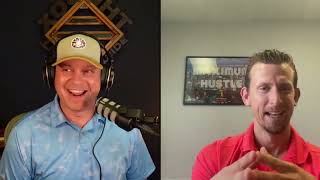
A podcast-style YouTube interview hosted by Jim Johnson with guest Tom Self (owner of Proliance Public Adjusters and General Contractors). They discuss the pros and cons of working with family, how family dynamics can strengthen relationships, and the importance of clear company culture, holding people to standards (including firing for culture misfit), and knowing financial numbers to scale a business. The episode closes with host remarks about Tom's businesses and locations.
Questions this video answers
Jim Johnson
Tom Self
Proliance Public Adjusters and General Contractors
Chicago, Illinois and Indianapolis, Indiana
June 27, 2023
Chapters
What's it like working with family?
I absolutely love it. I love it. It's had its challenges, for sure, but to me, it's absolutely worth it. And the challenges have actually grown my relationship with my family. Like, it's. It's actually made it where I get to be more real with them because I had grown up, you know, with a lot of, like, surface level stuff, kind of back to the caring what people think. You know, I. My family is very, very, like, by the book, black and white, and I'm very much gray, like, trying to push around things. And I've always tried to make them proud. And I've. I've, you know, haven't always been 100% myself with them. So, like, in business, like, I've always been real good at separating business and separating family and once again, and always putting the relationship above the business, so there's never any risk there. But my parents have been able to see my growth and me just growing with, you know, not allowing people's judgments to really affect me as much and, like, a lot of transparency, even if it's hard things to hear. So we've just all been growing so much together, and it's been so, so beautiful. Like, I don't know if this would have happened the same way that it would if I wasn't constantly, like, in these tensionous situations with them.
That's pretty cool. It's not easy to work with family because the lines get blurred, right? We got business here and we got family over there, and then the family type stuff starts to come into the business, create some drama. Maybe there's some. Maybe there's some belief by the family member that maybe they could get it easier because their family. Have you ever dealt with any challenges like that?
Yeah, 100%. Yeah. I mean, without a doubt those things come up, and that just pushes me to be a better leader and to not let those things happen. Like, we have to take business very seriously. We have to be ethical. We have to be transparent. We have to do what's right. Like, we can't do favoritism and those types of things. And I get to have those conversations with my family. So it teaches me to be a much better leader working with family, because I do feel that it's harder. Like, it's harder for me to have a tough conversation with a family member where I can hurt their feelings. Right. Versus someone that isn't my family member. It's just. It is easier, I think.
Has it had any effect on, like. Because you'll hear Things like, oh, they're getting special treatment because they're family and stuff like that from the rest of the team. Have you seen any of that or. I don't think so because I know your family well. Like, you guys outwork everybody else.
Yeah, yeah, I've never really gotten too much of that. Like, we're very in that regard, like, positive. Our core values are care, honor, accountability, maximum impact and positivity. Like, we've never struggled with care. And I have been a pretty good leader with positivity. Like, that's something that just comes so naturally to me. And I feel that that's kind of translated through the whole company, so we don't really hear any of those things. The accountability has been the hard part. And you're right, like my family, we just have that hard work in us.
So, yeah, that's pretty cool. So this has been a great podcast, Tom and I want to finish this one with. What were the two or three biggest decisions that you've made along the way in your business that you feel like have had the biggest impact on the level of success you've achieved so far and maybe even into the future?
Okay. Number one is going to be the recent one like this. I can't think of anything that's better than holding people to high standards and holding people to the culture. When I say standards, I mean, like, we know what our cult. I mean culture and I mean high performance. So culture is our purpose. It's our core values, it's our mission, it's what we're going after. And it's also, it's also, it's also our standards. Like, hey, what is the work that we expect? What's the level of performance that we expect? So holding people accountable to that changes everything. And being willing to let go of anyone who does it. Like, we hire and we fire based off of our culture. So being truly dedicated to that and it's not like in a fear based way. I want to also say that I hope none of it's coming across that way. Like it should be in an exciting way. Like, hey, like, hi. High performers want this. People want to know what the culture is. Right. So it's confusing to people. If you have these core values on the wall and these standards and then a bunch of people aren't doing them and then some people are. People don't want that. They want to know what it is and that, hey, we stick to this. That's one. Number two is. And it actually fits exactly with that. It's no matter how great a performer is, no matter how great of a friend they are, no matter what family member, if they're bad for the culture, being willing to let that person go. Because early on in the business I mentioned I had a lot of friends and other people who started with the company, and a lot of them weren't great for the culture. And I took way too long to let them go. I let them run the company. I let them. I mean, I was making decisions based off what other people wanted and not sticking to the plan. And a lot of the coaching that you've given me, I know you've gotten frustrated with me, frustrated with me many times because you've repeatedly told me to do things, and it takes me years and years and years to do them. And that's because of that, I was letting other people run the company. I was tiptoeing around instead of sticking to my guns of what, like, I have been coached on and know that will work because I was letting. I was letting other people run the company. And third one, and this is another huge one, was knowing the numbers. That's something that years and years and years and years, it would have saved us. So, like, we just were working so dumb. There's really no other way to put it. We were working so dumb. And when you don't know your numbers, you can't make great decisions.
It's difficult. Yeah. Like, you tend to be guessing, right? Yeah.
There are so many improvements we've made with knowing our numbers. Now when it. When it comes to, like, like, for example, the overhead, your profit and loss, like, you have to know those things. I wasn't looking at my profit and loss, and I wasn't looking at my expenses. And we. We were on pace to almost lose a million dollars that we were going to overspend in labor and material that was in one year. So now I am always looking at my numbers. Ever since that happened, like that, that was one of the biggest lessons that I ever had. But I wouldn't put that one even over the other two that I. The culture and, like, high expectations part because you can always fix your numbers. But if you get poisonous people in your company, that's almost impossible to recover from it. It's. That's. That's spinning on a hamster wheel. That's what I've realized is it's so important to get that down because if you keep, like, being unclear about what your culture is and sending all these signals, like, you keep hiring and working so hard to bring new people in and you keep having to let them go because you don't have a real culture in your company and you're just turning people over and it's really bad business.
100% agree with you, Tom. This has been a great episode. You've shared a lot of really good stuff. I think these are some of the key things that these guys need. Like the high performance example comes from you. Like you are a high performer. You're constantly at it. It's on your mind 24 7. They see the example you set and how hard you work, then this culture thing and how important that is to the overall success of our company. And finally, this knowing your numbers, like if. If most people would go into it with that approach, I'm going to perform at a high level, outwork everybody else and be that example. People will follow, have a culture that is not compromisable. And then finally knowing my numbers, they probably have some pretty dang good businesses.
I agree.
Well done, brother. Thank you very much for being on the show today. Thank you very much for your trust in us over these last seven SO years. I'm excited for what you're going to do this year. It's been fun in our recent conversations to see kind of this shift in the way that you're approaching things, and I think we're going to have another one of those big growth years. I'm pretty excited for you.
We're super excited here. And everyone else has reacted the same way. The entire team has thanked me for holding them to the standard and for like, not letting things go unnoticed anymore.
That's cool.
We're excited to make it happen. Thank you for having me.
All right, brother. Hey, we'll. We'll see you later. Thank you for being on the show and we'll see you next week in a coaching call, I think.
Awesome. Looking forward to it. See ya.
All right, man. Hey, everybody. That was Tom Self, the owner of Proliance Public Adjusters and General Contractors in Chicago, Illinois, and also in Indianapolis, Indiana. It has been a bit of a journey, but it's been awesome to watch the growth, to watch him become that leader that I knew from day one meeting him that he could be and still growing, still working. But the just seeing this is so fulfilling. It's why I do what I do. So I am so excited about what we do as a company and how we help people. I don't want this show to be a pitch because the hard work was by hell, it's not by us. We have some advice. We give some good coaching, but the hard work is done by our clients. It's just giving them the knowledge they need to do it faster than they might have otherwise. Appreciate you guys hanging out with us on this episode of Contractor Radio and the Contractor Success series. We'll see you on our next episode. Sam.










