Building Championship Sales Athletes with AI
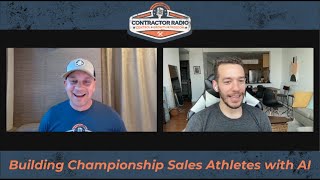
This is a Contractor Radio (YouTube) interview (Jul 6, 2022) hosted by Jim Johnson with guest Sebastian, founder/CEO of Rilla (RealVoice), a conversation-intelligence company for home improvement sales. Sebastian describes his background (DR → NYU → data science → stand-up comedy → entrepreneurship), explains how Rilla records and AI-transcribes/analyzes in-person sales conversations (handling noise, speaker diarization), and argues Rilla solves two main problems: (1) visibility gap for sales managers (the coach not being 'on the field') and (2) identifying and scaling top-performer conversational patterns (a Moneyball approach to sales). The episode also includes sponsor reads, event promotions (Top Rep Rush, Contractor Coach Pro) and CTAs to rillavoice.com.
Chapters
Foreign. Hey, everybody, it's Jim Johnson here, your host at Contractor Radio and the founder of Contractor Coach Pro. Our whole purpose with Contractor Radio is to give you the information you need when you need it, so you can get control of your business, so you can grow your business and find that personal and financial freedom you've been chasing as a contractor. And I am super pumped about our guest today. Not just because of what he does and the technology that they bring to the game, but just him as a human being. He's one of my favorite people in the industry. I enjoy every conversation I ever have with him. He brings such an energy and joy to life. I'm excited about bringing him on today. But before we do that, we better get a message from one of our amazing sponsors so that we can keep the lights on what little light we have today. Because you can notice I am not coming from my normal studio I in the RV in Wisconsin. But we got to get Contractor Radio done and we want to have a great guest today. And so we whatever production value we can get, we're going to do the best we possibly can with it and bring you value because that's what this is about. It's not about how pretty we look, it's about how informative we are. So we're going to hear a little word right now from Hell Trace and we'll get right back to it. You're not using Hell Trace. It's definitely worth the money. That money invested was one sale was already bought. We've got from deny or declined to of being back just because of Hell Trace and storm reports that they give us. Not only do I know where the storm's at, sometimes as they're happening and I can already head right there to the storm. But also after the fact, when I'm out knocking on doors, I can show homeowners the map and what kind of hail was in that area. We've seen a huge return in our investment and I have no doubt that you will too. If you're a restoration contractor and you're not using Hail Trace, what are you thinking? It is the our hail information, wind information, data information source that we trust and you should trust as well. Hop online, look up helltrace.com and get on board with them as soon as possible to get the edge on your competition. Now, today, like we talked about technology there for a reason. I put that sponsor in there because technology and my background has a lot to do with technology coming from the CRM world and what I did as director of sales at acculinx, actually creating my own piece of software before that. And when I got into this coaching business, I'm like, hey, this artificial intelligence, what is that? I don't even understand what it is. Start doing some research on it. I'm like, you know, it'd be really cool if we could apply artificial intelligence to sales. And somebody has done so.
And.
And that's my guest today, and I want to bring him on. It took him seven years beyond whenever I first started thinking about to get it out there, but thank God he did. Sebastian, welcome aboard to Contractor Radio.
How's it going, Jim? Thank you for having me.
Yeah, it is so good to have you. I cannot wait for our listeners to meet the force that is Sebastian. Like, Sebastian just is. Every time I've ever seen Sebastian, that's what he looks like right there. He's smiling every time. I can't tell if you have a good beer today.
Yeah, you can tell I'm traveling because I'm leaving a beer. You know, it's all this time spending with roofers. I gotta, like, kind of look the part now.
Oh, you gotta fit in. Yeah.
I just need my cap, my beard, and my hunting knife and that's it.
If. If I could grow one and my wife would kiss me with one, then I would grow a beer. But she's like, no, no dice. No beard. We're not doing any of that.
She's like, I basically signed up for no affection this month because it's so no affection for me this month.
So our podcast today is, like, about the power of artificial intelligence when it comes to sales. And you notice some problems out there with the way a manager gets the information that he needs and how you can make him a little bit more effective. But before we get there, tell us how you got here. Give us a little bit of background. You got a pretty good education background and a pretty interesting background. What brought you to. Hey, we're going to create this real. A voice thing.
Yeah, totally. So, yeah, just so people get an idea of what RealVoice is, it's basically the leading conversation intelligence software for the home improvement industry. In conversation intelligence, what it means is when salespeople talk to customers on the phone, on a zoom, or in the home, or in a door knock, we record their conversations with a mobile app right from their tablets or phones, and then we use AI to automatically transcribe, analyze, and give them feedback on all their sales conversations to help them improve their sales. So that's what Rila is.
And so how we got There for a second. I can tell you used it. You used your own tool because that was as perfect as it could be. You nailed it.
I'm using real all the time. Yes, yes, I do. And Rilla tells me the biggest thing that Rilla tells me is that I talk too fast and that I need to shut the hell up because I talk too much. So really is always telling me that. So I'll try to talk slower today. So, but. So how do we get here? So that's a pretty cool, pretty interesting idea. We've grown a lot in the last year. We'll get into the details in a little bit. So how do we get here? So I'm actually from the Dominican Republic. I came to college in New York in New York University. I have a degree in data science from the School of Business in New York. And I actually started. So how did you know? I'm pretty young. I graduated college in 2018. The way I found kind of my way in life and into building tech products. I actually started doing stand up comedy in college and that's what I did. Right. And to the disappointment of my parents, you know, I didn't go to class at all. I would just go do standups in these shitty bars in New York City. And that's. And that was my college experience. I just got a degree in stand up comedy. That's what I, that's what I really did, you know. And stand up is a really interesting art form because what you're doing is you're. It's the only art form you have to test with an audience with live feedback because you can't. I mean, if you're singing, you can like, you know, play in your room. And if you're writing, you can write. And if you're painting with stand up, it'd be pretty weird. If you're like, like a sociopath just talking to your mirror, you have to go to like an audience, right? And so what that does, it's. It gets you in the product building mindset. Because when you're building products, essentially what you're doing is you have an idea and it's usually in. Even if you're really smart, it's going to be in the right direction, but it's going to be wrong. Like 90% of the idea is going to be awful wrong. And what you need to do as a product builder is you need to kind of test it out a thousand times and iterate based on the feedback that you're getting from real users and launch it as fast as possible. And then from this repeated process of trial and error, that's how you build a world class product in a world class company, in my opinion. And that's what you're doing with standup. You have a joke, it's a shitty joke. It sucks. You do it in a crowd, it bombs. And then from that bomb, you learn. It's like, oh, let me try this and this and that. And then until you get to the weekend show, you tried it a hundred times and it actually works. And, and so that's what I did in college. I got hooked up with this guy from. He was a Forbes author who was writing articles about tech founders in New York. And he needed somebody to write funny articles for him to punch some up. The articles. And I was in New York, a kid. I was a sophomore in college. I needed a job for the summer and I was funny. So I went in with him and started doing, you know, interviews with these tech founders. And that's kind of how I found about technology and what they were doing seemed to me a lot like I was doing in stand up. And that's kind of how I started in tech. Right after graduating college, I started my first company. And that first company, we did really well. We took all our profits and that's, that's how we started real life. But it started in a shitty New York bar in the lower east side telling really crappy jokes. That's how it.
That explains. I didn't know the comedian thing. Sebastian, like I commented the very first time I ever saw you present. It was, it was well done. You did it in front of about, I don't know, 40 or 50 contractors at our top rep event, like showing them what Rilla does. And you had some good humor about how your mom was really disappointed in the track that you followed. And I was engaged right away, like immediately, like, hey, there's a story here. Not just, hey, look at my product. Which was, which was pretty cool. Yeah.
So that's where it comes from. That's what I. And by the way, I winged that presentation, just so you know. I like made it like 10 minutes before. I was just like, I need to make this presentation. So. Yes, stand up. That's mom. Stand up. What's worth something? So there you go.
Presentation. We'll make sure mom gets a copy of this. We'll soon.
Yeah, yeah.
So get into tech. Sounds like you did something that must have gone pretty good. Took the profits from that and said, hey, I'm not exactly jazzed about that thing anymore. And I kind of like this other idea even better. What brought you to like artificial intelligence? Analysis of conversations.
Amazing question. So I graduated New York University, 2018. I had a tech offer at a really cool tech company called Quatrex. They do surveys and they're, you know, pretty cool company in Utah. And I kind of did checked all the boxes, right. Of the immigrants, you know, to America. I went to a good college, got good grades. I got good grades despite the fact that I never went to class. So that's like, really interesting. So I, I got a really good job and. But the kind of the entrepreneur tech book had already bitten me because I like learned about all these tech founders and what they were doing. And I kind of got obsessed with that as I was obsessed with stand up. And then so I basically decided NYU gave me like a 10,000, $10,000 grant to start my first company. And I decided I was like, okay, I'm going to be an entrepreneur. And my mom was like, no, no, no, you're. That's unemployed. That's not. And then because I had like a good job, I basically said to the job offer, I can't do this. I want to go be poor for a while because, you know, whatever. So, so I started that first company. It was just like me and a couple of my college friends, we took that $10,000 grant. We made it into like six figures of revenue in like the first three months that we launched that product. It was a very basic product. It was a. If people understand Hail Trace, it's like kind of like a field sales app to, to, you know, to basically track your field salespeople on the field. We had a similar tool for field marketing. So we were kind of like a hail. It's not a hailtrist because we're not chasing storms. And it was a fields marketing management tool. And for people who don't know what field marketing is, it's kind of when you send promoters, like brand ambassadors into college campuses and they're like selling Red Bull or like giving out things. It's not sales, it's marketing. And so we had an app for. That was a very basic app. But like you said, in the back of my head, I was like, this is not the next big thing. So we were always looking for that in that first year that we were doing that company. And then we found it. And usually how we got into AI, well, I do data science. Any, any kind of amazing, revolutionary product. It's usually at the cutting edge of technology, right? Because that's. It's like, why now? It's. Well, because the technology exists now to be able to do whatever it is that you were thinking of doing. Amazon started because the Internet was a thing, right? It was not possible to do Amazon. Facebook started because the Internet was good enough. So there's Airbnb started because people have mobile phones and Uber. You know what I mean? So, like, there was like, all these enabling technologies, so we knew it was going to be somewhere at the cutting edge. But the day that the idea struck me, it was. I was talking to one of our users, a field marketing manager for one of these big companies that we had in our customer base. And it was a very simple set of questions. I asked her, it says here that you guys are talking to 100 people per event. And she said, yes. And it says here also that you guys do 50 events a week. And she said, yes. And I said, you're talking to 20,000 people per month, like field marketing. And she said, yeah, I mean, that's normal. And I was like, how many markets are there, like you in this big company that you're working with? And she said, there's about 200 markets. It's like big brand, big company. And I was like, are you talking to 4 million people every single month, like, face to face and all these interactions? And she said, well, if you put it that way, I never thought about it that way. And then in the back of my head, I'm thinking, the marketing executives at these big companies, which I know because they're spending half a billion dollars every year on surveys, social media analytics focus groups also trying to get into the minds of their consumers so that they can create better marketing, better products, better experiences, and then from all those sources of data, even social media analytics. And you guys can look this up, like you look at one of the most popular products like Bud Light or Anheuser Busch, you look at the total engagement that they have in social media, like YouTube, Facebook, Instagram, and it's like a couple hundred thousand points of engagement every single day, single month. Maybe like getting into the millions when they go viral or something like that. But on average, on average. And here's this lady telling me that, you know, these field marketing brand ambassadors, these cosh kids are reaching like that they have the single biggest source of data from their consumers is happening in these field marketing events. Four million conversations every single month. And I was like, wow, what if we could actually capture this, you know, transcribe these conversations, analyze it with natural language processing and turn them into these little Dashboards that these marketing executives are used to seeing for their surveys and their social media analytics. What if we could do that? And then I started doing the numbers and I realized it wasn't only this company. It was, you know, Red Bull and Heineken and Mollison, Nineheuser Busch and Coca Cola and Pepsi. And it wasn't only brands, it was anybody that was talking to customers face to face. We did the numbers and there's about 10 billion conversations being had between customers and salespeople or service people offline, face to face every single month. You think when you walk into the retail store, when the roofing contractor goes into the home, the solar, the telecommunication, the banking, all these tens of millions of salespeople who are having tens of billions of conversations every single month. And just to put it in contrast, there's 80 billion Google searches. So 10 billion versus 80 billion Google searches. So Google's worth $2 trillion. We were like one eighth of Google's a dot, not a bad number. So we were like, you know, so we were like, holy shit, this is a big deal. And that's. And when I saw that my purpose in being, you know, getting into tech was never to just make money. It was to build one of these generational companies, one of these really fucking big companies. And when we saw this idea, it was just like a no brainer for us. I told them my, like one of my co founders and I was like, hey man, do you want to drop this thing that we're doing and you know, go to this, you know, really hard problem of AI and just figure it out? Like we were doing good, man. We were like, could have kept growing and made a couple million and be fine. We weren't interested in that. We were like, no, no, no. Go big or go home. We're going for this. 10 billion conversations. Let's do it. Let's go.
That is that first off, amazing story. Just the, the whole thing of you got something going good. A lot of people, when they got something going good, they're not looking for the next best thing. And it's like, hey, let's just nail that and get that thing perfected. The, the way that you see things like you through those questions, you got to 10 billion conversations, like you asked a few questions, then got to 10 billion conversations just like that. Like, wow, this is big. And you understood how big that was. You know, first off, that takes a smart guy like to understand. Yeah, yeah, click to that. So kudos to you. I was sitting there seven years ago thinking about the same thing. This idea that there's so many sales conversations going on and nobody knows what's being said.
Yeah.
It's one to one. And you could say anything to that guy and that guy could respond with anything and nobody knows anything about it except for the. The final result. Yeah. From you. Or they didn't. But what led to that? Right? Like.
Yeah, yeah, yeah.
And so we have for generations been Neanderthals and really like guessing what works. We're guessing, we're putting it together. And you see from format, presentation, practice, role play, you see results improving and you keep improving them over time. And it can be successful. But I always felt it could be way more successful. But the technology wasn't there yet or I wasn't smart enough, which probably to find it.
It wasn't there. It wasn't there.
I feel better now because I searched, I searched up and down, backwards and forwards like, hey, how can we analyze these conversations to generate feedback back to the company, the manager and the salesperson to give them the highest possible feedback that would allow them to have success more often to find out what actually works. Then contractor Coach Pro got busy. Contractor radio set off on a back burner. And I'm grateful and thankful that somebody chased this because I thought it was something that's a big thing.
Yeah, I mean, we're certainly not the first people that had this idea. I know many people, some of our customers that are pretty smart guys themselves. They were like, I thought about this in 2015, we couldn't make it happen. So there was a lot of things that had to happen for this to exist. 2015, 2016 is when speech to text transcription got good enough to be able to transcribe audio well enough so that it could be used. And now 2020, we are actually at the very cutting edge of, I mean, if you think about like a home improvement sale, it's usually face to face outside. It's like really, really difficult to capture this kind of audio because you're like dealing with like noise and like multiple speakers and you have to like, you know, you're dealing with like the husband and the wife and the, you know, everybody who's talking in the thing and it's being captured by one microphone. Whereas in like a call center you're like, you have, you know, multiple people speaking on each microphone. So it's like multi channel audio when you're trying to bring speech analytics to a lot of these industries that it has not been. And like those 10 mil, those 10 billion conversations, which is Mostly offline line.
You're.
You're really at the cutting edge of, like, AI because you have to identify people by the sound of their voice. You have to, like, understand who's talking when. You have to filter out noise if there's, you know, you have to know what speech, like, when someone's speaking and when there's, like, music that has people talking in the music, and you have to know that that's music, and you need to. So it's, like, really difficult to do, but. And the technology was not there at all in 2012. It just wasn't there.
No. Like, I ran into all those hurdles. They're like, no, can't do that now. If you had it. If it was a closed system. Right. If it was a closed system, like, I'm on a phone, you're on a phone. They could. Yeah, but even that wasn't.
No, that wasn't there. Yeah, that wasn't there either. That. That was there, like, around 2016, 17, 18.
So you figured it out, right? Or at least what I would call a good enough starting point to make it a viable option. Yeah, I'm sure you're still working on things how you're still, like, I would get that at some points you're having to use some artificial intelligence or at least you're headed down this road. Because this is one of the things I was concerned about is, like, I'm talking to so and so, you know, we're out in front of the house or something like that, and the trash truck drives by. Big.
Yeah, yeah, yeah, yeah, yeah, yeah.
And it catches you in the middle of the conversation. Trash truck goes by. So that middle, you know, there's like 10 words that get missed.
Yeah, yeah, yeah.
Again, artificial intelligence based on what it picked up with.
Yeah, yeah.
Probably fill that gap of what was actually said at some point.
Yeah.
Real close to it, right?
Well, yeah, that's. That's. Yeah, you could actually do that with natural language processing and, like, try to predict what was said during that. That's kind of how a lot of chatbots work, actually. But, yeah, yeah, you could actually do that. Or you could take another approach, which is to clean up the audio and just eliminate the truck, which is another thing. And say, like, hey, this truck is trash. Throw it in the garbage. Let's focus on the people speaking, because you can actually do that, too.
That is so wild that you can do that with technology to take a sound out of a conversation because it's. It's not another channel, you know, it's like, it's all on one channel.
It's all, it's all being inputted into the same thing. But, but, but things, sounds have sound waves. They're represented graphically in a. So. So you can actually tell the way we can identify people by the sound of their voice is because you have just like your fingerprint, you have a very unique pattern of sound waves when you say things. And just like that truck has a unique pattern of sound waves. So if you can actually train AI to understand what is a truck from just looking at a. Like, imagine a graph with like a sound wave going like this. And the AI says like, this sound wave is a truck. And you ask me how it knows that? I don't know. It's like, you actually don't know. It's like deep learning. People ask, like, how does it know that? I was like, It's a black box that knows.
So this has been a cool conversation. It's been kind of wrapped around, like, how you got there, some of the technology, some of the challenges and obstacles and stuff like that. I want to. We got to get a break in here, but I want to come back and what I want to talk about is how do we actually apply it? What is the application of it that brings the value of this hard work and technology and being able to capture those conversations? What does that actually mean to us as salespeople, contractors, that type of thing? But we're gonna have to hear a word from one of our sponsors and we'll come right back.
Who doesn't love getting more referrals? GTR will make your referral game stronger than ever with our four step process. First, engage with customers through job status updates and push notifications. Then motivate your advocates to send referrals and earn rewards. Third track and manage all of your results through your company's dashboard. And finally, sit back and enjoy achieving up to 40 times ROI. GTR is the number one referral platform for contractors. So book your demo today@getthereferral.com it's awesome.
Like, we're doing technology and stuff, right? And so that was another one of our technology sponsors. Get the referral. You know, get the referral. You've seen them at our event and top route and it's so interesting to me. I mean, come on, we're roofers and siding companies and painting companies and bath companies. We're like blue collar. Like, we get dirty and stuff like that. And all this technology that's in our world and we're having to. We're having to jump this big gap from Neanderthal to technical really fast. And it's a big challenge. You see that as a challenge whenever you're talking with contractors and stuff like this is just sometimes beyond us. No, that's good. No, I don't.
I, I know because with. It's just I never, I usually don't talk about the intricacies of AI. I talk about people's problems. And, and one of our, our, one of our core values at Rilla, like is that genius is not picky. It can come from anywhere really. The reason we had the idea for real a voice is I sat down with a field marketing manager who was not very tech savvy and I was just understanding her day and her day to day and asking her questions about her problems. So when I talk to contractors, I'm just like talking to them about their problems, which they understand much better than I do. You know what I mean? So then when we sell technology and when we try to push technology out into the market, you're not really selling technology. You're selling a solution to a problem which people know their problems.
Sounds like what we do in the home.
Yeah, yeah, yeah, yeah, yeah.
We're not saying, hey, this is how you use Rilla or engage. Yeah, no, it's hey, let's solve your problem today.
You saw my presentation. I spent very little on the demo. I talked most of my presentation that it's. I'm talking about the problem.
So what problems are we solving? Right? Yeah, let's talk about application value, what problems? Maybe let's talk about the two or three problems that you saw that you also got feedback from contractors on to say, yep, that's a problem. What do we solve?
Amazing, amazing question. So the fundamental problem that we solve is a lack of visibility. We think of sales as a high functioning, world class sports team, right? Any sales team needs to be a really good, you know, highly competitive sports team. And we are sales athletes, right? And we don't play with our bodies, we play with our voices, with our conversations, with how we talk to customers and what we say. And in any sport, right, you have a coach and have players and, and in sales you also have coaches and you have players, you have the managers and you have the owners and you have the salespeople who go into the home. But what's the problem in the sports of sales? Imagine if I told you, right? And in sports, imagine if I took any one of the all time greatest teams, right? Let's take, you know, Phil Jackson and The Chicago Bulls. You have one of the top players of all time, Michael Jordan. And, and you have one of the best teams of all time and one of the best coaches of all time. Imagine if I took Phil Jackson out of the game. Phil Jackson coaches his players. He can see the results if they're winning or losing. But Phil Jackson's not in the game while the games is going on. You know, it would be impossible to build a championship team if the coach is not there understanding what the hell is going on in the field. Right? So, because then what happens is they lost a game, Chicago Bulls lose a game, Michael MJ's gonna blame, you know, Dennis Ramen, like these kids are not passing the ball, blah, blah. And then Phil's not gonna know what the hell happened. He's just gonna go from hearsay and nobody's gonna be on the same page about how we can improve and how we can iterate. There's no game tape that you can.
Go back to and what to take that even. What if he could only coach one of them at a time?
At a time. Yes, exactly.
He's over here instructing this one guy. Right?
So it doesn't matter how good the players are. I mean, you look at the last dance documentary, it took Phil Jackson like four years to just get his players, players to adopt the triangle offense as a, as a system. So it's already really hard to build championship teams in any world class sport. It's impossible if you don't have the coach on the field day in, day out, reinforcing, reinforcing, reinforcing and iterating on the playbook every single day, be with.
Every sales guy on every call. It just, it doesn't work like that.
Exactly, exactly. And that's what happens in sales. In sports it's a calamity if the coach is not on the field because they punch somebody in the face and they got booted off. In sales it's the norm that the coach is not on the field with the players. And it's not because it's not anybody's fault. It's just the fundamental nature. It's that there's one sales manager, there's five reps, 10, 20, and there's one other sales manager and there's 20 of them. And they can't be everywhere at the same time. They can't.
They're not all playing the sport in the same, building different stadiums at the same time.
So then it's impossible to do proper coaching because then that means we have to go on A ride along, right? We have to do on a ride along while you're on a ride along, spending six hours with one rep while you have nine others that are over there doing their thing. And then tomorrow you're going to go with the next guy. And if you're trying to and if you're doing ride alongs, you think about that. It's like Phil Jackson showing up once a month to coach his players, right? If. I know. Because I can tell you if you only show up to class once a month, you're not going to get.
You're.
You're. You're going to have to cram a lot to get passing grades. And I know that from experience.
So.
So what happens in sales is that the, that's the fundamental problem. The coach is not there with his players all the time. And this creates a massive, you know, visibility gap where we don't know even how to help our players because we don't even know what they're struggling with really. We're going from what they're telling us, and it's not because they're lying to us that it's like, oh, what happened in the home? Oh, the homeowner didn't want to buy. It's sometimes it's because they don't know themselves. The players are new, they're coaching. They don't even know what went wrong in the sales presence. How many times does it happen that you have hire a new rep and the rep says like, oh, my God, that meeting went great. And then, and then the deal doesn't close. You're like, what happened?
I don't know.
I did everything you taught me.
I did it perfectly.
I did everything right.
It's always, they didn't have the money. They just didn't have the money.
They don't, they don't know. They don't know what they did wrong because they don't have to coach with them, like analyzing, who does know? So what Rilla does is it solves that problem. Imagine if you could have your sales coach with your players all the time, anytime, without having to waste any of their time. Because with Rilla, your coaches, they don't have to go drive around for hours on end. They don't have to listen to the entire sales presentation two hours long. Your reps are going to record their conversations right from their phones just like this. Put the phone on the table, Put the. The tablet right there that they're presenting. It's going to record from there, and then our AI is going to be there The AI is going to be there all the time. Anytime the AI can be in multiple places at the same time, the AI is going to be listening in and knowing what's happening. And at the end of the day, the manager is just going to get a report of what was said. Precisely. Precisely. In that sales conversation. Did the rep follow my company story how I wanted them to? Did they actually do the price conditioning how I wanted them to? Did they do the preach the trial close? Did they do the close? The AI is going to tell you yes. Did they do it or not? How much time did they spend talking about pricing and building rapport with the customer? And if you actually want to go and review a conversation and be in the rep and listen to the customer, to the rep and how they're, you know, interacting, how they're dealing with objections, right? Just go, click, go to the specific point of the conversation and you can play it back without having to listen to the whole meeting. And with that, with that, you make your sales managers, you make them bionic, you make them superstar sales managers because they're actually able to be coaches, like in sports. They're actually be like on the field with your players all the time. That's the fundamental problem. That realism that is.
I mean, that's so cool, right? It's one of those things like, God, if I could just be on every sales call, we would close every sales call, right? If they could just say what I would say. And that's not what's going to happen, but what is going to happen is it's going to give you the fundamental ability to identify that they are not doing what they've been instructed to. Or even better, they've come up with something innovative or creative that's actually working, that you can incorporate.
Yeah, yeah, yeah, yeah.
Now, if I remember right, unreal. It compares what's happening out in the field with success, right?
Yeah.
These, all these guys are saying this. These two or three guys are being successful. What's the commonality between these guys over here that are being successful? Yeah, share that with everybody else, right?
That's the second problem that really solves. And I think that's the coolest thing because the first bomb that I just described is saying, hey, sales is a sports. Let's complete the sports analogy and let's put the manager on the field. That's just like, that's just like how sports have always been played. This thing that you're talking about is the most exciting thing about real where because sports is not only putting the manager on the field. Now sports have evolved in recent years, right? Everybody's seen the movie Moneyball where we are now applying data science to win sports game. Every world class team of every major sport has a team of data scientists understanding how it is that we can actually maximize our chances of winning winning games. Right? With data, right? And, and this, you know, this was the decision why they made like, you know, that's why they hired Tom Brady, a lanky white guy who doesn't run too fast. The Patriots said, oh no, this might be the best quarterback of all time. Because they were looking at different metrics at the metrics that mattered, right? The Golden State warriors, right, just won another championship. What? Who could have foretold that a modern basketball team was going to be built around a 6ft, 6ft two, you know, point guard who's a specialist in throwing three point shooting. Right? That's the data. That's a data based decision, right? Those are all database decisions because there's data scientists understanding what plays do we need to do and how do we need to strategize to maximize our chances of winning games. Rilla lets you do the exact same thing for sales. It's Moneyball for sales. And what you were describing is so. And that's the second problem that really solves. Rilla identifies how the top performers of a sales team talk specifically and what they say specifically, specifically to start recommending those conversational patterns that are winning deals to all of your sales team. Right? We think of the 8020 rule. Why is it that the top 20% of my sales reps are bringing in 80% of my revenue? If you ask them, they're going to tell you something like I'm just good, I'm just amazing, I'm just awesome, right?
I work harder.
But it's not, they don't only work harder, they also work better. Better because their conversion rates are higher. Right? So like how, how, how discouraging it is that you have to like do a hundred sales meetings to get the same amount of deals as a guy who does 10 because he has a 50% conversion rate and you have a 5% conversion rate, right? It's like so real identifies what is it that that top performer is doing from like how much does he talk versus the customer, Their talk ratio from how much dialogue do they get generate? How many questions are they asking in their discovery? Right. How much rapport and then what are they saying specifically? How much time are they spending on the trial close. Do they spend three minutes, they spend four Minutes, when do they bring it up in the conversation? Really will analyze this because it's analyzing everything. And then it'll identify what are the biggest areas of opportunity for every single one of your reps and it'll give them smart recommendations based. Based on their own conversations. Based on their own conversations. It's going to say, hey, you're talking way too much. Sebastian, shut the hell up, let the other person talk, or you're talking too fast or you're not doing this enough as you should. Because that's how the top performers are doing it. And this is not some algorithm that we're creating. All we're doing is very simply looking at how the top reps are doing it. And we're just trying to replicate that across the rest of the organizations. That's the, that's the coolest thing about real.
When we saw it, we were like, all right, how do we, how do we work together? Because we teach sales. Chuck, Toky and myself, we do this top rep event. We bring home service salespeople, from rookies to veterans together. We teach them this process. It's very easy, very stress free. No hard, close. And without Rila, we can achieve 45, 50% close ratios. But we're always pushing to make it higher than, push beyond that. And I'm like, man, this would be a great product for our teams. Like, we need the analytics. I need to be there, you know, coaching all the time if I can. But what if, what if instead of just this company having their information, that company having their information on a broad basis, we could compare thousands of refs and raise up a championship team that's like nothing ever seen in home service sales. And not giving away all of your, you know, unique thing. We don't do any of that. Right? But Chuck and I get to hear all of these things and then build content around that to help all these companies do so well. It. We're super excited. Like we. This contractor co pilot thing we already have people using has been off of the charts. We're getting these feedback now.
Like the.
The of rest results have been like nuts.
Yeah, yeah, yeah.
Why sales? Why that one? Why passionate about that particular area?
Well, if you think of any company. And so, so like as I said, the at the beginning, the idea wasn't even originally for sales. It was for marketing. Right? So why sales? Why did we go for sales? Well, you have to start in sales because sales is a lifeblood of any company in the world, right? There's, you know, 10 million salespeople in America, or 12 million, I think it is. And they're out there, you know, doing the hard work of solving problems for customers and getting customers and increasing the like. There's no business without sales. That's, that's the first thing, is it. Why sales? Because sales is one of the most important things in the world. So that's like, that's an easy market to start with, but also because there are such big gaps, especially when you go into the home improvement industry. Because, you know, we talk about, we talk about like all these new technologies that have come into, into the fold, right. You have CRM technologies that allows you to like, keep track of everything. You have, you know, marketing technologies that allow you to like, automate your referral systems. You have production technologies that allow you to manage your production. But sales coaching, sales coaching technology is really far behind. We're still literally doing the ride along and like, doing. We're still really far behind. You know what I'm saying? So the big opportunity and then, and then this, this thing that you just mentioned of, of how can we bridge the gap between like the top sales superstars in the country and, and like everybody who's like, just getting started. Right. That's the biggest, that's the biggest impact that you can make with sales. And that has to do with coaching. Right. And like this thing that you were mentioning, this is why we're really excited about this part of the. Because it makes so much sense. Because again, you guys are a sales coaching, like, you know, company. We provide a tool for sales coaches. Right. So it makes sense from the very beginning. Right.
And so, yeah, there's, there's this aspect, like, that's not where you come from. You don't, you weren't a salesman or a sales manager or any of that kind of stuff anywhere you were before. You're a data science person said, hey, there's a, there's a big group of data out there that's not being tracked right now. We could try it. It's super valuable. If I could find somebody that actually understands sales and some of that, we could really do this. Because AI is all about repetitive and seeing trends and then building off of those trends to really nail it. I mean, just nail it every single time. That's why we're excited about it. Like, okay, we can see across organizations, like, if you just did organization, the only value, the highest value you have is your best salesperson.
Yep.
And so here's one thing I know. There's always somebody better than me. Always. Yeah. I want to hear what they're doing. I want to know what they're doing. I don't want their unique or proprietary stuff. But what is it that's leading to success as part of the recipe? Right. This process they're following, that they time they're spending that. I cannot explain the amount of value that would provide to me as a home service contractor because I was one for a long time. If I could see, hey, these are the things that are working. What I do know is we're not going to get everybody. The ones that we get, those guys are going to be insane. It's going to be something where you almost have to do it to keep.
Yeah. Like, and I want to talk a little bit about that because that's, that's the thing that really excites me about the product. So again, really is basically like a way to make your sales people like Demon Championship world class sales players. Right. That's what really is supposed to do. To have a recommendation engine of giving them the most important tips, the most important feedbacks at the right times. Right. But like you just said, if you only have like five reps in your team or three, you're limited to the potential of your highest performing sales rep. What if we had an organization. Yeah, you're the right. So what if we had somebody that could have visibility across multiple organizations and the way it works with top rep, which is like really, really cool, you get recommendations not only from your own reps, but from the top performers in the country. People who are making 5 million $10 million of revenue every single year.
Hey. What? I. I gotta tell you something. I'm sorry to interrupt. That's super cool, but you were talking about it. I just talked to one of our guys. That's right, he sold. This is an insane number. He sold 1.9 million last week, seven days in seven days. When he said I closed, everybody, everybody to talk to, I closed. I want to see that happen with more and more people because I'm a big believer that the highest paid profession in the world is entrepreneur. Like that's highest paid, second highest paid salesperson. And sometimes salesperson can out earn the entrepreneur. I've learned that in my own life. And the more people that realize that if they can have a recipe to follow, it doesn't matter if you're introvert, extrovert, you know, naturally outgoing, not outgoing, hey, this is the recipe. Follow it and follow it to the T and you're going to be successful. We give opportunity, we create opportunity, we change lives, we Change families, we change generational wealth. It's like you can change an entire community, an entire country, entire world by giving people the tools they need to be successful. That's our gym. That's what we're about.
It's like to what you just said, it's like basically when you get in through this system, you're basically getting to look at the game tape of the Michael Jordans of the world of sales and you're getting to learn from them.
You know, I, I know you're on a time limit and I want to keep it. I can talk to you about this for hours. We are going to bring you back. We're gonna, we're gonna talk. I want to dig into some more areas, but I know you had a hard stop. You'd let me know about that before. How do people get a hold of you? Get a hold of Rilla. If they want to just do it for their company, they can go to Rilla voice dot com. Right.
Ritlavoice dot com. That's R I L L A voice dot com.
We'll drop that in the show notes. Everybody will see that in the show notes and everything. If they're interested in comparing their sales team to Tom Brady. Yeah, Roger, I hate that you use Tom Brady. Aaron Rodgers.
There'S another go, man.
Come on.
Like, you gotta admit.
If, if that's what you want to do and you want to create those championship teams, the best of the best, we're going to drop in our contractor co pilot program link and that just tells Rilla. Which way do we want to go with this? And, and we can help you out. You can learn more. It's super easy. The demo is really quick. It puts you on. You start getting data right away. You can start applying that data to your coaching, to your training. We believe in applying training every day, but instead of having to have guys come in and sit for an hour and go through a training thing and all that stuff, it's like, hey, this is something that's working really well. Go listen to that. Practice that, do that right. That's what Tommy's doing over here and it's working really well for him. And you can just give coaching now every day. Every day. And I've noticed, I'm. I'm observant. Like, you are the best and biggest and largest companies that have the most success. The reason they have success is two reasons. Their leadership and culture is solid and their training is off the charts. It is literally like you don't work here unless you train. We, we are going to be a professional sports every day because we're going to play the game every day.
You can't win championships without a winning system. And you can't just win with superstars. You have to win with a system.
Absolutely. Sebastian, thank you for being on today. I cannot wait to see you. August 23rd and 24th in Philadelphia. We got top rep rush and top rep rush is where we change the dialogue. You know, early on in the year we're talking about kickoff of the season. Homeowners are like wanting to do home makeovers and things, things like that. Guys are starving because they haven't sold the winter time and now they're like, hey, I gotta go make some money. But when it gets to this time of year in August, we're thinking about that final push, right? Like we're the championship team. We're good. We're on our game winning drive. And are we behind or do we have to run out the clock and beat everybody and have just outscore? They put it out at reach for everybody else. That dialogue changes not only for the homeowner because their solution now becomes more urgent, more needful. Wintertime's coming, like that type of thing. But there's also this. How do I motivate a sales team that's done so well using top rep or their tools and surpassed our goals already and we're on track? How do I keep them motivated? How do we avoid fat wallet syndrome? Or if we're behind, how do I reinvigorate everybody so that we. We do hit the goal at the end our changes and we want to. We want to teach that at the top rep brush. We know you guys are going to help us. Can't wait to see you there. And I'll be there.
Yes.
It's a fun dude. I will let you go. Thanks for being here.
Thank you.
With real voice. Awesome job, man. Appreciate it.
Thank you. Thank you. Bye. All right. Bye, guy. Bye.
So I. There was so much more I wanted to get to with Sebastian, the whole Dominican thing. I'd love to talk to him about that. Like why, why New York? Like I. Nobody should ever want to go to New York. Just kidding. Sebastian. I can see you're still here. So I got lots more questions for Sebastian. We'll bring him back. We're going to do some lives about Rila as well here in the future and how that plays in with our top rep stuff that we do because we train contractors all over the nation and how to improve their sales. Chuck toki is one of the top sales trainers in the world when it comes to in home service sales. It doesn't matter what kind of in home service you do. We, we teach that in a way that is easy to learn, highly successful right away and continuous. It doesn't just stop because you had two days and everything. But he's excited it continues on. So if you're interested, check us out topreptraining.com the program prices for that event go up every week. Like we're trying to give those early people the best possible price. And the registration closes. Okay. So it doesn't close on the 23rd or the 22nd right before the event. It closes 10 days before the event. So on August 12th there won't be a chance to get in. So get signed up by August 12th. If you are looking to raise the level of your team, give them something simple out there that you can apply to what you already do. That will increase your closing percentages beyond anything you can imagine, help you hit your goals. And if you're looking to improve your game as a contractor, you're trying to get control of your business so you can grow your business and achieve personal financial freedom. Go to contractorcoachpro.com check us out there and we will serve you and serve you well. We've helped hundreds of contractors just like you through our Boost program or or our one on one program to achieve our dreams as contractors. That's our goal. That's our purpose. To empower you to believe in yourself and that you got the right team behind you as executive coaches in all areas of your business to give you comfort, take the stress off. Let's rock and roll. Thanks for being here for Contractor Radio today. We appreciate your time. Peace out. We'll see you on our next episode. Want proof that Andersen 400 series windows.
Are the windows contractors trust the most?
Here are a few real quotes from contractors read by.










