Coaches' Roundtable - Connecting the Dots of Your Business - Part 1
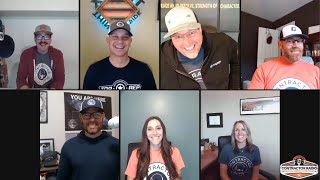
Transcript of a Contractor Radio Coaches' Roundtable (host Nathan with coaches Jim Johnson, Chuck Toki, Mike Bose, Jenny, Roz, John Townsend) discussing how different parts of a contracting business interconnect. Primary focus in this chunk: leadership as foundational—its role shaping culture, processes, accountability, hiring, and downstream outcomes (finance, sales, HR). The episode mixes practical anecdotes, coaching perspectives, and sponsor messages.
Chapters
Foreign.
Hello everybody. Welcome to Contractor Radio and this week's episode, which is a special one. We are super excited that you're joining us to get a little information. Hopefully I'll have a laugh or any kind of thing that helps you out in your business. Contractor Radio is really all about contractors. All entrepreneurs, business owners who, who want free information. I'm just kidding. But what we're going to do today is pretty cool because we've done one of only one of these before. So this is the second installment of what we have kind of taken to calling our Coaches Roundtable. So our Coaches Roundtable is where we bring in the world class amazing expert coaches over at Contractor Coach Pro. And then we usually take on a topic and to discuss and that topic is going to be kind of attacked and thought of from many different angles. From leadership component, from culture, from sales and marketing, from recruiting, hiring and onboarding, from hr, from finance. From all the different angles that tend to exist in your business. We have coaches who are experts in those angles and so bringing in their expertise as we deal with some of these issues is really, really cool. And many of you have told us you got a lot out of the last contractors or Coaches Roundtable. So if you're wondering what the last Coaches Roundtable was, it was a two parter around moving the needle as it pertains to profit. So just jump into our library of podcasts and look for Coaches Roundtable moving the needle, if you'd like to check that one out. It was really cool. So today we are going to talk a little bit about this concept of connecting the dots inside your business. There's a couple of things going on with this topic. Nothing inside of our businesses really exists inside of a vacuum. Our businesses, just like our bodies, in a lot of cases they're connected. And when things happen in one area, it affects another area. Or if you try to add or remove something or change things in different sections of your business, it's going to have an effect on something else. Positive and sometimes negative. The other thing we're going to talk a little bit about is what is going on when you're experiencing problems and struggles inside of your company. Is it always just that thing? Or could that thing potentially be a symptom of something else? So when you're experiencing a struggle of some kind, we're having problems with cash flow. Is it just because you don't have enough cash? Or is it possible that maybe somewhere upstream from that cash flow hitting your bank account, something's gumming up the works there that we need to address there, but it shows up down here. Is production getting blasted with way too much work or does it not have enough work? If you decide you really want to blow up the revenue inside your company, what other things might that blow up? So we're going to attack this topic with our full suite of awesome coaches right after we get a great word from one of our excellent and awesome sponsors.
If you're a window installer, you deserve a simple choice. Andersen 400 series windows. They're the windows contractors trust the most. Based on a 2022 survey of U.S. contractors, probably because they have fewer callbacks and extra peace of mind. And thanks to shortened lead times, they're available faster. At Contractor Radio, we believe in promoting the best like andersen 400 series windows. So request a quote today at andersenwindows.com.
Welcome back to this week's episode of Contractor Radio where we are doing a coaches roundtable. Super pumped about it. Be sure to love on our sponsors. Helps keep our lights on around here and helps to support and promote the podcast. So go check out their websites, reach out to them, find out what they do. Many of these folks are very, very well, all of the folks, if they sponsor this podcast are dedicated to the success of you, your business and your team. And so they, they have lots of cool resources and ways to help you out. All right, so we are going to bring in our coaches one at a time. Here I have founder of the feast, our fearless leader, Mr. Jim Johnson. He is obviously the founder of Contractor Coach Pro and Contractor Radio as well as a few kids and a lot of few businesses. All kinds of fun experience there. Welcome, Jim.
Good to be here, man. Let's, let's do this thing.
Next up we have Mr. Chuck Toki. Hello, sir. Chuck is. Chuck is our reigning sales champion here. He is our, he's our sales coach and trainer and implementer. Chuck's been in the industry a good long time knowing and learning about sales, about products, about human beings. Really at the end of the day, when it comes down to sales, it's about knowing people and being able to provide needs for them or provide services for them. What's up, Chuck?
Glad to be here, Nathan.
Awesome. Good to see you. Next up, oh, we have the newest member over at contractor coach pro, Mr. Mike Bose. Mike has come aboard at Contractor Coach Pro just a couple month ago. Now, I want to say just over a month. Yeah, yeah. And so many of you that are listening to this or probably get the pleasure of working with Mike at some point as he is right now kind of coach in training and learning about who we are. But that is, that is not a takeaway from the amount of experience that Mike has. He has started numerous nonprofits. He actually started a private school that's still rolling, still up and going. He also has started a few businesses. Lots of experience and success and in entrepreneurship. Thanks for joining us today, sir.
Yeah, man, I've made all kinds of mistakes doing all those ventures. I'm glad to share all of them.
Awesome. Next up, we have the lovely Jenny with her ever present smile. Those of you out there listening, you guys know Jenny. Jenny is an absolute genius when it comes to understanding your finances, when it comes to understanding your accounting, when it comes to teaching and training your people and. And when it comes to lifting your mood and your spirit. Thank you, Jenny for showing up.
I am looking forward to this. Thanks, Nathan.
Then we also have Roz, our HR champion coach. Roz has got a plethora of experience in numerous different industries and some nonprofits in working with them on their HR strategy. One of the things I find most brilliant about Roz is that she makes a thing like hr, which, which I formerly used to think was just wildly dry. She makes it wildly interesting. She has a phenomenal way of taking who you are in your company and really communicating and creating awesome relationships with your employees. Thanks for joining us today, Roz.
Thanks, Nathan. Glad to be here. Thanks for the love on the hr, kind of reshaping that for our industry and helping people embrace how much that can really change and transform your business.
If you know anything about me, you know I end up talking to HR a lot. So here we go. Last and certainly not least is our man, J.T. john Townsend. Many of you know who John is and have known John for a number of years. John is one of our head coaches here at Contractor Coach Pro and has been working very well with many of our clients as well as taking big command and ownership of our boost program at Contractor Coach Pro. And he has been killing it. And so thanks for being here. John, welcome.
Thank you, Nathan. I was it got it got lonely in the waiting room.
Everybody left me.
Yeah.
I don't choose how. How Streamyard or our service like orders people in there. I don't, I don't know how they decide that, but so welcome guys. So the first thing, the first thing that I want to talk a little bit about is interconnectivity inside of our business. Before we kind of start talking about problems and solutions to problems, I want to lay the groundwork about how things inside of your. Of your business is connected. Now, Jim's book, his first of two books, has been released. The contractor's blueprint. And. And one of the things that it starts with right out the gate is the concept of leadership. So, Jim, tell us a little bit about kind of some of that. That connectivity that leadership has inside of your business and its value and importance.
Well, first off, I got to correct you. You said the first of two books, first of two books about this subject, but I actually have 24 plans, so I'm going to be right in a little bit. It was a lot of fun doing. I didn't think I was going to do was suggested to me. I went ahead and that way and I no way could I ever write a book. But yeah, it's been pretty well received. And so one of the things that was a bit of an epiphany to us as we start coaching and doing what we do was that certain things happened in a sequence, that there was a bit of an order to the outcome for a company. And we noticed that the more successful they were, these things were lined up a little bit better. You had a great leader leading a business, would set the table for everything else that had to happen within that business to go. Well, number one, they absolutely believed in what they were after, like 100%, no doubt about it, that they could see this thing that was going to be this thing, and they were driven to achieve that thing because they felt like it was worthwhile, felt like it was worthwhile to go and do that with that as kind of the foundation of it. A great leader will then start to put in the things that he needs in his business because he is still open to learning and gaining some coaching, gaining information, whether that's from a book, from a podcast, from a radio show, a conference, getting coaches like us, whatever it is. He's looking to go beyond just being good at sales or being good at the installation side in his business. He understands that he's got to actually lead people and that that's going to set the stage for everything else that happens. Did I answer your question there? A little bit. I don't know how far you want me to get into the 12 things, but that's kind of the first thing and why it's so important.
Yeah, absolutely. Like, the leadership component is like.
You.
Can do all kinds of stuff. You could have awesome brochures, you can have cool job descriptions, you can have really sweet accounting. But at the end of the day, it's human beings at Least for now till we're taken over by the robots. You have human beings that have to do these things, right? And those human beings need direction. They need support, they need encouragement, they need training, they need. Sometimes you need a little kick in the butt, like, so leadership is like, there isn't a part, as far as I can tell, there isn't a part of your business that leadership doesn't touch.
I would agree with that. It is going to have a profound impact on the other 11 things that are going to be a part of your business that we need to learn as good business people. And really we need to get that mindset about what we do, that we're business people as owners of our entrepreneurial endeavor and not necessarily a specific thing within that business.
Oh, sorry, Jim, Go ahead, go ahead. I was just gonna ask Rosalind because I know she's dealt with the HR stuff, right? So have you seen cases where, where people have essentially developed like an awesome, they got an awesome process where they have a really great internal structure of some kind? Have you seen situations where, where they've had a really great thing or some back end stuff set up, but it failed due to just a lack of leadership?
Yeah, absolutely. Nathan, this is such a, like, it's kind of a rough analogy, but I've heard it said that the fish rots from the head down, right? And the, the reality is like, you can have the best processes and all of the right people, but if they're not being led toward those things, what happens is those things fall apart, right? So even if I have a process, if I as a leader, I'm not able to communicate why that process matters to my employees, they may not follow it. Right. If I have an amazing culture, if I as the leader, I'm not connected to that culture and I don't model that culture, my employees are going to start to shift away from that culture even, and start to maybe model themselves more after me. And so I think it becomes critical that as leaders, we not only understand that people are looking to us all the time to model that behavior, but also that we take the time to really develop and understand the language, the narrative, the things that are important for us to communicate so that we're ready, we're ready with the response, we're practiced, we're able to just speak it from a place that feels natural and intuitive versus, you know, just kind of leaving people to create their own narrative or their own expectations or their own path forward. We give them clarity and then they actually have an opportunity to Succeed at those things that we put in place and worked hard to establish.
I've seen that characteristic, we talk about empowering people to believe that. I've seen the characteristic of belief be stifling actually as a leader. I've seen people have leadership characteristics. Maybe they can manage, maybe you know, they're good with people, maybe they have a lot of traits that we would gravitate towards but that leaders self belief isn't present for whatever reason. I don't know, maybe it's some other childhood trauma or personal issues or you know, lack of experience or whatever it is. But I've seen that be stifling as a standalone hurdle for people at times. So you know, we, we can read all sorts of books and go to all sorts of seminars and learn about these, these, these skills, these leadership skills, these leadership, the art of leadership. But if we don't believe on the other side of the application that we're going to be able to achieve something, that that single thing could, could cripple someone that's at the helm.
Yeah, I wanted to just add in too. Nathan, you had mentioned about like, do you see that, you asked Roz, you know, do you see that where you have these processes and without the leadership they may not succeed. Being in the finance, so much of my stuff is extremely process driven.
Right.
It's where I my nuts and bolts. I love to get into processes and making things efficient. But I can speak from experience that I love that as a part of our blueprint. Why it starts with leadership before it gets to finance in our ideal process is because without that foundation of leadership, these awesome processes that our team gets to bring to the table don't always succeed if you don't have that foundation built out first.
Yeah.
The way that I look at this is, you know, they say that those who can't do teach or those who can't do lead. And there's so much of that where people will take people that have never done, let's just say sales, they've never done sales. So they're gonna come in, they're gonna be the sales manager. And so yes, they can serve, they can make sure that the sales team have everything that they need. The problem many times when that happens is the sales team does not see that person as somebody that can take them to the next level. They can serve that team and really help. But you know, there is that limiting belief of, you know, not only the sales team of the leader, but also the leader understanding that they can't do what the sales Salespeople. Do you have that limiting belief as Mike was saying?
Yeah, yeah, it's a good point that the belief is a both sided thing and you have to believe in yourself and in what you're doing for sure. Because that conviction is very, very important. But your people have to believe in you as well. And what's interesting is oftentimes we try to, we try to fake it till we make it seem people who do that, they're like, well, I don't really feel that confident and I don't really know if I can do this. And so I'm just gonna act like I am. And so if I act like I am and maybe you go overboard, I'm a little too verbose and I demand people's respect. And, and then, but then if I don't serve, like Chuck is saying, if I don't serve and truly help people out, then, then they're gonna lose the belief that this person really wants to lead me. They just want me here so they can achieve what they're after. And I think that can cause people to now, I mean, they may have to follow you for the moment, but if they don't want to, then eventually they're not gonna have to or want to cause they'll just be gone.
Yeah. Nathan, I think we, you know, we have such a cool opportunity at CCP to serve clients at all different stages in their business. And so it's always, I think, really neat to work with our clients that are maybe newer in their leadership that want to approach it from a spirit of humility. Because the reality is sometimes we are in roles that we've never done before and that. Right. But that doesn't mean that we aren't still the right, best person for that role. And so when we approach it with a spirit of humility and we seek help and we seek advice and then we can start to build that confidence. Some of it is like, it takes practice, right. The first time I hit a ball off a tee, I probably couldn't put it where I wanted to. But over years of practicing and reps and getting help, right. Understanding what do I need to change? Where can I get better? Asking for feedback like, hey, there are some ways that I can change and improve on in my leadership style. How can I serve you better? Those are the things that allow us to then start to develop that belief. Right? Because now we have confidence, we've taken the reps, we've gotten that practice and now we actually can lead from a place of personal security in that. Yeah. You know, I do seek out ways to be a better leader.
It just makes me think like the idea, like if you're a, if you're a leader and you have some people, your team are your customers, right? Like your team are your customers. How do you serve them the best? I've definitely seen some people and this kind of breaks my heart Sometimes they have people that are really trying to do their best and they just shred them in front of a customer or they have this whole customer first mentality. Now don't get me wrong, it's good to make sure your customers are a high, high priority. But who's responsible for taking care of those customers? It's your people. And so if you don't treat your people well, how do you think they're going to treat your customer? You know, they're constantly going to be doing a little CYA with your customers because they just feel like they're going to get pounded on if they do something wrong. And they know that at the end of the day their leader is always going to take the customer side or they're going to get blasted over something like that. Like, so I don't know, maybe we should make a shirt out of that. If your leadership, your team are your.
Equals, your customers, you got to stand in the gap.
Ah, yes. I love it.
I don't have that shirt on today.
I got the bracelet. I got my bracelet.
Just wore it yesterday.
Hey, we've been a part of some really fun conversations lately where this concept and everything that everybody has said so far has really come to life. An owner who is just an incredibly energetic, go getting owner who wants to win and is coachable. But he says that none of his messages are coming across and there's just so much miscommunication and the people that he thought were going to stick around aren't sticking around. And he admitted, he said, he said, I'm known to kill an ant with an atomic bomb. He said, if something is going wrong, that's how I attack it. He said, I leave awake.
Right.
And so to Roz's point, when it comes to repetition and feedback and accountability, that's where everything started for us. Like, hey, you know, we can't move until we're able to communicate. We're going to work on some really great things, but there has to be a connectivity and alignment with everybody involved here. And so now pretty much every single time we meet, which is weekly, he brings up situations and is now kind of kind of bragging on how well he's Done in communicating, you know, his community. So I think so much of leadership is understanding that leading. Just because you're a boss doesn't mean you're a leader. Right. Just because you're an owner doesn't mean you're a leader. Manager. Just because you're a manager doesn't mean you're a leader. Like, leadership requires certain set of habits.
Right? I always think there's some key things that as a leader, you should be listening to that you're saying yourself. Like, for example, nobody's doing what I tell them to do. Like, you hear that quite a bit. Nobody's loyal. People don't want to work. And you stay consistently throughout your organization that you feel that way about them. And, Nathan, you're really good at this. And talking about this, you got to look at the common denominator. What's the common denominator between all those things? Well, it happens to be you. And so you may be lacking in some skills to actually lead people the way they need to be led. It is a skill. It is not a talent. You're not born. God didn't touch you and go, hey, you're gonna be a leader. It's something that can be learned, and it is something that is a lifetime dedication. If you really want to be a great leader, that you don't ever stop learning. I'm far from knowing it a long way. Every day it seems like I get further away, not closer. And so I keep reading, I keep studying, I keep listening. I keep making sure that I hang around with other great leaders. Part of the reason why every one of you work here, like, you're all great leaders. You're all great people that I can learn from. And approaching it that way, with the humility that, hey, I don't have it all figured out. I'm doing the best I can. I'm continuing to learn those skills and to get better at them. But if you feel like you're saying those type of things and they seem negative about the people that are working for you or the people you're trying to get to work for you, probably the best thing to do is take a look in the mirror and say, hey, am I a person that somebody would want to follow? And really, you know, I think it comes down to a pretty simple thing, really. They want to know that somebody cares about them and they recognize them as another valuable human being. I think if they can get those two things from the people that they're that are being their leader, that they're looking up to and wanting to be like that goes a long way to turning a job into a career.
We were, Mike and I were just having this conversation with somebody yesterday about how the, the values, the disposition, the behaviors, the, the core, the core drive of the leader. Depending on the size of your business, you might be solo entrepreneur, you might have a couple people that are also leaders with you, but that overall characteristic and values and behavior are going to be the hallmark or the watershed mark of how the rest of the company goes. And so if you think about, like the, the reason why that leadership thing is so important is because if you, if you look into this idea that you really want to have a great culture, you want to have a great culture where people want to work there. They walk into your office and they're like, this place is great. Like, man, this, the office looks nice. The people are so friendly. They're saying my name to me. They ask questions that people are smiling, There's a couple dogs running around here. Whatever it is that you, that you, you guys have or that you love is going to flow from the leaders and be reinforced by the leaders. So as an example, if you really, really want to build an excellent culture, you got to be an excellent person. And then you need to have excellent people as you. I mean, so tell me a little bit about what you guys have seen as far as the character and the nature of those leaders and what it looks like to take that and then create a culture that, that permeates the rest of the business.
I'll tie to something Jim just said to answer your question about looking in the mirror. And I see this, like in life too, just in parenting and relationships, you know, if you're, if you're able to have some humility and, you know, self improve, I think that's a. People are drawn to that type of thing. Right? So for the contractors that are listening to this right now, in your own business, I mean, none of your businesses are perfect. I know that for a fact. So when you run into problems, are you first saying, why did you do that wrong? Or are you first evaluating your systems or yourself? And I found in my experience, it was best to go, okay, do we have a process for this? First of all, if we don't, that's leadership fault. That's my fault. If, if I can check that box and say we did have a leadership or a process for that, did I communicate it? And did I communicate it well? Are my expectations clear? Right. Okay. So again, I'm looking at myself. If I can check that box Now I can hold that person accountable, but it's not until I'm done evaluating myself, my own humility, my own self improvement, my own business processes before I turn to the people that are following me, hopefully and try to hold them accountable. So just again, tying that back, to answer your question and what Jim said, I mean, I think that's a characteristic. There's a great book I read years ago called the Leadership Challenge. You know, one of these 400 page books. The one thing I remember from it is that the number one characteristic that people are. Yep, that's it. The number one characteristic that people are drawn to is humility. So I think looking in the mirror, evaluating yourself, evaluating your business, and then, you know, hold yourself accountable first and then those that are following you.
These are full of Nathanisms with humility over hype now.
I'm just kidding. I think building off of that mike too, like part of what I recommend when I'm thinking about those culture messages and those core values that you're trying to ripple out, right? So you're starting with that leader and then you're taking that approach of humility. It's about that introspection and understanding who are you? What are your personal values? What is it about you that you naturally bring to a place, to a team, to an organization? Because that's your, that's your culture that you're bringing, right? So it's a little, I think we can get in this habit of like looking outside and seeing what are, what are our customers asking for, who do they want us to be, who does the competitor down the street that's rocking it out, who are they trying to be? And then we can try to model after that. But I think what, where we trip up in that is now we're so extreme, we're trying to go against something that's just not naturally who we are. Take that approach of humility and introspection, understanding ourselves, understanding what we gravitate toward, then that's when we actually have core values that are easy for us to embody because they're a part of who we already are versus trying to be somebody that we maybe just aren't.
Yeah, we've, we've, we've had that, We've had guys who, who built out a company, were trying to grow that company, got a few years down the road and we're like, I hate this place. They're the ones who built it and.
They made a ton of money. Don't get me wrong.
Yeah, they're making money and they Walk through the front door and they're like, I don't like you. I don't like you. I really don't like you. You're cool. I don't like you. You know, and, but they're the ones like that was that right? Wholesale clean house. So think about that for a second. If you've got, you've got these, these goals of profitability, you've got these goals of revenue and you've got, and then five years down the road after grinding and your company's doing pretty well and you're making pretty good money and you just want to burn the thing to, to the ground. I mean, wow. Like, so you think about that, that, that cultural component. And so this is kind of a two sided thing, right? So if you're, if you're a leader, owner, manager, think about the kind of place you want to work. What does that look like, number one? Number two, if you actually are an employee listening to this, what kind of place do you want to work? And is it, is, is, is the place you're at that place. Be careful here. Somebody's gonna be like, listen to this podcast and go, I quit. So I don't want that going on. So if you do.
I do. I like.
Well, I guess that's true, right?
Like it doesn't fit. You quit or go do something.
You're the owner. You don't want people working there that don't want to work there either.
No.
Yeah, that's a, that's such a, that's such a crazy thing. And, and the, the effect of like what, what Roslyn was talking about, that permeation of your culture will seep down to, to your vendors, to your partners, and most importantly to your customers. Customers will be like, man, you want to talk about building an amazing customer experience. People want to start with, they want to start with process, which is, don't get me wrong, not a bad place to start. But who's it, who's, who's initiating and doing that process? Those if that people, if that person, it's like, it's like whenever you like you call a company and they have that script, they're supposed to say, hello, it's a wonderful day at whatever, right? They have a process to try and create an amazing customer service. That person sounds like they're on Ambien. So that wasn't a good experience. Even though they have a process and that process might have some great stuff in it. So you go to Chick Fil A and they go, may I take your Order. It's absolutely my pleasure. They say with excitement. You know why? It's not because they were brainwashed into feeling that way. It's because they were that kind of person to begin with. And Chick Fil A found them because.
They bought into that culture that was built by a leadership group that said, this is who we are and we're not going to hire people that aren't a part of that. And so then the process lives, the.
Culture and people that were actively modeling it, leaders were actively modeling it and holding people to the expectations. Right? The processes reflect the culture, the interactions reflect the culture, the communication with employees, it's all just like you said. I love that word, permeating, Nathan. It's just ruin through it. It's interwoven in every part of who they are.
You know, I find it. One of the things that is interesting to me is this concept of accountability. And we created all these things, right? KPIs and, you know, reviews and. And it's been very cool here that we don't really have those. It's not really part of our culture. Like, we keep stats and we have. We know what our numbers are and things like that. But there's this utter faith from me with you and all of us together that we're gonna do our thing because our culture says we will. It is who we are. It's not a thing where I've got to worry about, are you spending enough time doing the thing you're doing? Are you getting enough clients? Are you coaching enough clients? Are you. None of that. So where does that come from, Ross? This like you got two sides of that coin, right? You got this whole accountability metrics and all of that good stuff. But then there's is also this kind of almost trust factor that because of how bought in we are to that culture, that people just do what it is they're supposed to do willingly because they want to.
Yeah, I think it's probably a both and. Right. I'm always a big fan of the both and because I think part of, you know, it's at the root of accountability should be clear expectations for what we have for people. Right. And so if there's clarity around, what am I supposed to be focusing on? Where is my agency? Where, like, how can I best succeed, right? Then I think people have the ability to just move forward, right? And so I think when you have a team where you've created a lot of clear communication, then people can start to take ownership. And that's really what you're talking About, Jim, is you're talking about that word ownership. And I think ownership comes from a place of knowing where your agency starts and where it stops, knowing what the goals and the vision and the mission of the culture of the organization you're a part of. If you know those things, you have more clarity on where you're marching forward to. You can come up with ideas and strategies to get there. Right. And stay within the bounds. You know, if you said, hey, we're gonna, you know, we're gonna drive this bus to Mexico, and I'm on the bus, but I'm thinking that we're going to Canada, like, we're going to have a very different experience, right? But if it's like, hey, you know, team, we're going to Mexico, let's plan some stops along the way, we can all participate in that because we know which direction we're heading, right? And so I think even before accountability, coming back to those culture messages, having a clear understanding of what's the purpose of our business, what do we exist for? And then how do I personally, in my role, what's the connected dot there of how I can impact? I think we have a beautiful, unique culture at CCP where we get very clear understanding of what is that impact that we get to have. What is our purpose of our organization. I don't think there's a person here who doesn't have clear understanding of why we're doing what we're doing. Right? And so I think that that is where ownership starts. And ownership, then that's that we see accountability come up when there's kind of a mission on ownership.
So.
Oh, go ahead, Jim.
No, no, I'm. I'm just saying. Yeah, I want to give a hallelujah. Pass a plate.
So one of the, one of the major places that I see dots, like, getting connected, like massive numbers of dots get connected inside of your business. It's like an explosion from the generation of a process, from generating a, a way of doing what you do. It's like, it's almost like, like John's got this universe behind him in his, on his, on his, in that poster. And I think about, like this, this bang from, from your processes that. That occurs once that is created and what you can now do once you've actually stepped in and done the hard work of doing that. Jim has an amazing story about creating process, and I'd be interested to get the. Get have him relay that to us a little bit. And then for the rest of us, I mean, we've got Chuck in sales, you've got John in General Business management, got Jenny in finance. And I'd love to hear you guys begin to talk about where this where these little cosmic dots from your process land and what they do to your business. And we're going to talk about that right after we grab another word from one of our sponsors. If you're a window installer, you deserve a simple choice. Andersen 400 series windows. They're the Windows Contractors Trust most based on a 2022 survey of U.S. contractors, probably because they have fewer callbacks and extra peace of mind. And thanks to shortened lead times, they're available even faster. Make your GoToWindows Anderson 400 series request a quote at andersonwindows.
Com.










