Coach's Roundtable - Profit - Part 1
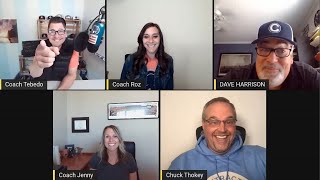
Nathan Thibodeau and Contractor Coach Pro coaches break down profit components: revenue, cost of goods sold, overhead, and the difference between markup and margin. They explain how to track marketing efficiency through cost per lead and cost per acquisition, measure closing percentage and average sale per lead, and why investing in sales training and culture beats relying on discounts to improve profitability.
Chapters
Foreign.
Hello, everybody, all the guys and girls out there, contractors of all different types. Welcome to Contractor Radio. I am coach Nathan Thibodeau and I am super excited to be talking with you today. We have a really cool topic and we're going to approach this topic from a bunch of different angles. We're talking about the concept of profit today, right? We all want it, we all need it. It's got to be there. What is it exactly? How do we define it, what affects it and how do we change or affect those things that affect it? So we're going to actually get into those things. And today's kind of a special edition. It's kind of like a coaches roundtable or coffee with the coaches this morning, as it were. I have some of my coaches from Contractor Coach Pro joining me today to talk about this topic from the different angles from which their expertise comes. Because clearly I'm not the smartest, sharpest crayon in the box. So we I'm going to need some help in deciphering this issue. All right, so we are going to jump into this concept, into this subject right after a word from our sponsors. Hi, I'm Ricky Harmon with Balance Claims. I'm here in the balance claims office to help answer one of the questions I hear all the time. Why use Balance Claims? Well, I have two of the account managers here, Travis Croft and Emily Caldwell, to answer just that.
Contractors should use us because we have experts on site that are well versed in xactimate, able to write our estimates and make sure that your claims have everything accounted for, making sure that you're paid out correctly.
Contractors should use Balance Claims because we are hassle free. You have the time to focus on the homeowners and the sales for these roofs while we focus on the insurance claims for you. That is where time is money and.
We are here to help you.
So you heard it from our ams. There are multiple reasons why you need to be working with balanced claims. If you want to reach out to us, our email is successalanced claims.com or you can reach out to me directly. Ricky Harmon, 331-736-00903. Talk to you soon. All right, thank you to all of our sponsors who support Contract Radio. They make it possible for us to try and bring as much content and value to you guys as possible. And so we thank them very much, show them some love, go to their websites, go check out their social media and, and look into what our sponsors do because more, more than likely it's something that could help you out. All right, so with that, we're going to talk profit, and I am going to be bringing in all of my coaches. Look at them. Come here we are. All right, I have coach Rosalind, who is my HR champion. Say hello, Roslyn.
Good morning.
I have coach Dave Harrison, who's one of our head coaches at Contractor Coach Pro and one of our content creators. Say what's up, Dave?
Hey, what's up, Nathan?
We also have Jenny, our finance champion. She is definitely going to be important in this conversation. Say hello, Jenny.
Hello, all.
And then, of course, we have Chuck. Chuck is our sales champion, and so going to get some information from. From the front end of profit all the way to the back end of profit. Yes, sir. So, all right, now for those of you that know me and those of you that listen to podcast, all right, I have this. This pension for trying to set definitions or at least set the boundaries for the conversation that we're going to have. And I want to make sure that we're all kind of on the same page as it pertains to the concept of profit. So I would like to start with the concept of the basics. And so, Jenny, if you wouldn't mind rolling through some of these. Some of these terms that will. That will help in our conversation today.
Absolutely. So I think you're kind of. What we're trying to do is break it down to, what are these components? How do we simplify them? And I think the sales piece that Chuck's gonna speak into is our revenue. That's the money we're taking in the door. Right. And then you have these job costs. You're paying money out to your subs, to your suppliers. You have permits, you have, you know, different direct job costs. That is what we refer to as cost of goods sold.
Those.
Those costs that are 100% associated to. And then we have the rest. What does it cost you to run your business? You have employees, you have marketing, you have office rent. There's those components that are what we all group together as. This is what it costs to run our company, whether we did 1 million or 10 million in sales.
All right, so if somebody's out there and they're hearing the concept of, like, there's some people get confused around the concept of margin and margin. Right. What are those things and what's the difference between them?
Great. So margin. When I hear the word margin, I'm referring to that remaining money you have left after you pay out all those job costs. What do you have left now that's your gross profit margin. That's your job margin. When we refer to GP percentage or that gross profit percentage, that's that money that's left over that after you do your job costs. Now you need that money to now go pay your overhead expenses. But that's what I refer to or what I think of when I think of margin. The markup comes into play. And Chuck, you can feel free to step in or any of you coaches. When I hear markup, I'm thinking of, I know my cost. What do I need to now go up and charge my clients so I leave enough for that gross profit margin at the end. Chuck, do you refer to that differently in your world, Marco?
No, it's all gross profit. We all look at it as a percentage. Do we want 35%? Do we want 60?
Do you want 75?
Depending on what trade we're working on will typically depend on that gross profit.
Right. So you mark up your costs in order to achieve a gross margin or a gross profit. Right.
The simple way to remember it is, at least works for me, is margin is gross profit divided by my cost of goods sold. And I'm sorry, gross mark up is gross profit divided by my cost of goods sold. And margin is gross profit divided by my selling price.
Excellent, Excellent. Okay, good. There'll probably be a few people. If I was listening to this, I'd probably like. Okay, I gotta rewind that real quick and make sure I write that down correctly. Right. So, all right, now calculating. And then obviously there's kind of that, that leftover component where we have the gross profit, where we took what we, what we charged our customer, subtracted out those costs of goods sold that we can apply directly to the job, and then we subtract out our company overhead, which are those fixed costs. Right. And that leaves us with the net profit. Right? Okay. The net profit, that's the one we're all after. Right?
That's.
That's the real. That's the one at the end of the day that really either keeps the lights on in the building or gives you the capital to reinvest into your company and continue to grow it. Because you can pay yourself and then your company can just be at zero at the end of the year and then you don't end up really getting anywhere. So. Okay, cool. Are there some tips and tricks for calculating profit for those that are listening to this, who might be like, okay, I get that that's pretty basic, which it is, but I just want to make sure we cover our bases Are there some tips and tricks for calculating it to get some averages or, you know, just ways to get a good understanding of what kind of margins you're running? Gross margins or net?
Yeah. Well, I have a feeling we may have different perspectives here amongst us coaches. From my perspective as finance strategist, I rely on our coding software to do that. Right. If you set up your strategy where your data entry is doing all the work for you, you rely on the reports to tell you where those margins are at.
Okay. All right. I mean, believe it or not, there are some folks out there, especially folks just kicking their business off. They're still running a lot of their accounting off of spreadsheets. I remember when we. When my dad and I first started the company and we got into QuickBooks pretty quickly, but we didn't use QuickBooks for job costing very quickly. We were running everything on spreadsheets because us knuckle draggers were just like, okay, how do I know how much to do? Right? And so we're like, well, let's just build a calculator of some kind. And so that seemed easier to us than using QuickBooks. I don't know. But we definitely use a spreadsheet for calculating job costs and things like that. And that's how we ended up figuring out, like, what to charge. Because then we get to the bottom and be like, okay, how much more than this number can the market bear and us still land jobs? Right. Because that's always a real. We'll get into that one a little bit more, too. So let's talk just a little bit about the concept of overhead. Kind of what is it? What things should be categorized as it. Because here's one thing I do know in this industry, it aren't, well, in a lot of industries. But I know that in the, like, storm restoration industry especially, the concept of what the actual overhead is is either very misunderstood or very poorly calculated. So let's talk a little bit about. Yeah, let's talk a little bit about overhead. What it is, what goes into that, Jenny?
My computer jumped off on me there.
We can see you and hear you. Okay.
Okay, so I caught the end of that, Nathan. So that's okay.
No, we're talking about overhead. Right? Like. Like the understanding of overhead. I know there's a lot of. There's a lot of talk out there about, you know, paying guys 10. 50. 50, right. As if your overhead's actually 10%, which, quick hint, guys, it is not.
Yeah. Well, let me just touch on a few of the things that I I consider overhead one of the unique things in our industry that I consider overhead is what I call an indirect cost sold and indirect cogs accounts. These are all those. If you're going to have an accountable, and I know we're talking spreadsheets versus, you know, accounting software, but really everything that goes out your door needs to be accountable to something. If it's not accountable to a job, it's accountable to an overhead account. And so what I refer to as these indirect cost of goods sold are you're oftentimes going to have charges that it's not worth your time and energy to allocate out to jobs. It's not worth your, you know, you may can't allocate it. Maybe it's a purchase of a tool that is used on all sorts of jobs or you have a charge come through that you don't know what job to book it to. It happens, it happens to the best of us. We don't want it happening a lot because there's not accountability to it. But that's an overhead. In my mind. That's money that's going out the door, that's not tied to a job. I need to monitor that. If I'm an owner, I need to monitor those funds going out the door. So that's more of that unique overhead in my mind in our industry. But I mean, what I touched on before too, you know, you have your employees, you have admin staff to production staff to maybe some sales management staff. That's in my mind, overhead expense. One of maybe the more debatable ones is really some of those sales bonuses. In my mind, commissions are attached to the job. They're 100% assigned to the job. But all your bonuses or your management over your teams, all of that in my mind is a set cost that you are setting up your shell at the beginning of the year to operate. That's an overhead expense. What else am I missing? You got interest, you got insurance, you have.
You got software, you've got gas for your vehicles, you've got car insurance, you have general liability, you've got, man, you got your utility bill, the cell phone bill, man, your, your beer budget for taking all your people out, right? Yeah. I mean, and that's probably a too heft. There's all kinds of numbers. I mean, you think about it like when you go to travel with your people, if you're taking your people to a conference and you're taking them to do some education stuff, you can't really directly apply that to a job. Right.
Yeah.
And picking up off that a little bit. Nathan, you asked what are some of the biggest mistakes people make? And it's. Well, when you're starting off, it feels like you don't have much overhead, but you have these dreams of what your company's going to look like a year from now or two years from now. So you end up building what you think is this great model at a pricing level that, hey, when you're doing it all and you're operating out of your house, it looks like you're making money. But the minute you add what real overhead is going to be, if you're going to scale your business at all, everything changes on you. So the advice is don't think of your business as a way of collecting a paycheck. Start your business thinking of it as it's going to be a business size to what dream you believe and what kind of expenses and things will you eventually have if it's scaled. Try to build your business around that.
That's really, that's really good. Right. Like thinking about. So we have a, it's interesting because we have a client we all love up in the, in the, in the cities in Minnesota, Josh Swisher, and, and having a conversation with him. He's been in business for like 10 years. Right. He's a young guy and he's got a business that's got some maturity to it. And it's interesting because when we were talking about his finances, he went back and was taking a look. He said he went all the way back and took a look at like what his records were when he was starting versus, like his overhead versus his revenue number. And he said it was a steady and almost perfect ratio over the course of the 10 years. And I thought that was interesting. Right? Now I know that's not that way for everybody, but Josh also didn't experience like spike type growth where he had to ramp up his staff real quick. His, his company has grown nice and steady over the course of 10 years, but his ratio of, of overhead to revenue has been almost exact over the course of that whole 10 years. I thought that was really interesting. Yeah. Well, cool. All right, so we kind of talked a little bit about the basics. All right. And for those of you out in, in radio land, if you have any questions about any of this stuff, obviously you can reach out to us. Okay. Because we're always ready to talk with any of you. Now we're going to get into some of the more fun stuff. Okay. So basically, here's what we're talking about, okay? We've got what we charge our customer minus the cost to produce it, okay? And then minus the cost to operate our business, okay? That equals profit, right? Now, here's the thing. Those are three categories, okay? We've got what we charge, what it costs to produce, and then. And basically the. The cost of running our business, okay? There are these three categories, but there's a lot of stuff that goes into those three categories along the journey of a customer as they work through your business, okay? And this is where we're getting into kind of the stuff I was really looking forward to having you guys on here about, because I want to talk a little bit about the concept of acquiring a customer, having that customer move through your business, and all of the things that affect those three categories as that customer moves through your business, okay? And so I want to start a little bit with the concept of marketing, okay? Now, I know that Rosalind has some expertise on marketing. I know Dave has some expertise on marketing, and I know Jenny has some expertise on budgets. Right. And how much we plan on spending on those things. So let's talk a little bit about marketing. I kind of broke. In my mind, I kind of broke it down. There's two. Two essential components to your. To marketing. One of those components is having a budget for marketing, and then one of them is creating commissions for marketing. Okay? So I want to throw that concept out there because one of those things could be considered a cost of goods sold, but one of those things could be considered an overhead. All right? So I'm gonna throw that. Throw that little stone in the water and let you guys jump on it.
I mean, when I hear that this is where there could be discussion here, but in my mind, when you go in and jump into a marketing strategy, you are. You are laying some foundation. You're laying some dollars throwing dollars out there. And you don't know the closing percentages yet. You don't know what those marketing dollars are going to produce. And so in that way, I treat those as overhead. Those are those in my mind as you're setting your marketing budget. And I love to do some of those analysis on, okay, based off of this spend, what do I need to produce to actually make money on this spending? But to allocate that out to a job, in my mind becomes a little bit more of a estimate or a guess of how you're going to produce with that spend. So that's where I make the differentiation. I'd love to, again, hear some dialogue, Dave, from your perspective. Even with how you've treated marketing.
Well, absolutely. I agree with you that it's an overhead expense. So here's where I see issues in the industry. Right? So let's say you have a company that does both roofing and windows. I'm making it up roofing and windows. Well, the rule of thumb in roofing is the marketing expense as a percentage of sales is likely to be a lot lower than if it is for windows. And so then you ask the question, why? Well, windows is why I don't have to have it. And it's a. There's fewer people in the market at any given time. And the nature of the rules of thumb and cost of goods and commitments, all of those things are very different windows. So I see the mistake of, for example, someone in both and they say, oh, my overall percentage of marketing to sales needs to be, I'm making it up 5%. And so let me give you an example of extremes from that in the industry. All right, so if you look at the overall roofing industry, this isn't a matter of right or wrong, but a rule of thumb is 2 to 3% of sales goes into marketing in roofing. Well, I also ran at one point in my career 85 locations that did Windows. And that business model ran on 10 to 13% marketing as a percentage of sales. And most window companies are at least 5 and likely headed towards that 10 range. So the key point is you have to look at the business based on what that particular business segment, what the model, your business model support.
I think one thing that comes to mind for me too is just understanding that really your marketing strategy as a whole and what kind of buckets make up that marketing strategy. So is there going to be some online marketing that we're going to do? Are we going to boost our Facebook presence? And we're relying on that. Are we utilizing Google reviews to really make our presence known? And then are we doing collateral pieces? So, like, do we have leave behinds for our clients? And so I think thinking through kind of the stages of marketing can be really beneficial when it comes to understanding how you're allocating your dollars as well, because you're going to have some of that creation process that has cost associated to it. Right. But then you're going to have, like you mentioned, some of those ongoing costs. Maybe you have your budget set for running a set number of ads per month, for example. So I think really getting clear on what your actual strategy is for marketing allows you to have a better understanding of where those dollars are being allocated in the first place. But I definitely echo, I think marketing in general, I would put it in that overhead bucket as well.
A couple of things, mistakes I see in this area. So let me go through a few of those. One, in a perfect world, you know, what media, what type of marketing you did, how effective each one was specifically. And so here's the reality on that. It's going to be a best guess. And why is it going to be a best guess? Well, a classic is people are going to call in and you're going to ask them or have someone ask them, well, where do you get our name? Well, for a lot of people, the last place they looked, the phone number. So on the Internet, they're going to say Internet. And well, when we had 85 locations, we had market research, just been behind that. And we found that, you know, 10 years ago, it used to be phone book got overrated, and today Internet gets a little overrated. But it might have actually been a sign at someone's house that actually was the one that they said, oh, I got to call those people. Right. The key point is if you try to be too absolute and perfect on that, you can make mistakes. So that's one key point. The second one especially. And again, this is an opinion, not a fact. In general, when I hear contractors, even 3 million and below, and they say, well, I talked to an ad agency and they tell me, or I talked to a newspaper, I talked to radio, I talked to television, they tell me, well, I need a portion of my marketing towards branding, just getting my name out. And I need a portion of my marketing to actually drive a decision to call me now. And having gotten hurt by a lot of those, that advice, I'm going to tell you, my advice is in general, forget branding at the stage when you're 3 million and under, ask them to call. And now.
We need revenue. We need revenue like that's going to keep our doors open. And that's a great. It's a great conversation too, because. Because we've been having this conversation a little bit back and forth about, like, what advice should contractors be listening to based on the stage that their business is at? And I know that, like, the concept of branding is a really good and powerful and needed thing right at the right stage. Because you can spend yourself into the grave trying to build brand recognition when what we need is some profit. Right?
Absolutely. And here would be an example. You know what? I'm branding lawn signs. Do them. Do them. The minute you got the paperwork signed in the House, which I know Chuck would tell you, and try to get it so it stays up at least eight weeks after you finish the job. Okay, that's good money at branding, but don't do it in your advertising. Don't do it in the money you're spending on whether it's direct mail or newspaper, Internet, whatever. Ask them to call.
Right.
You know, and I love that Dave says this because so many people think that call to actions are sleazy or whatever. It's like if you don't do a call to action, they're not going to take an action. You know, when you're like, oh, we just want to wish everybody a merry Christmas, let the 10 million guy do that. You're at 2 million and you need revenue. Stop wishing people a merry Christmas and make sure they're calling you for your Christmas special.
That's right, Exactly.
That's really good. Okay, so I have an. I have a question then, along the concept of like this cost, right? So we've heard from three folks who all are of the mind that marketing spend for lead generation is an overhead. Okay, Now I do know, and Chuck can chime in on this too, that there are some, Some guys out there who are paying per lead, right? Like they either have a canvassing team, or they might have a telemarketing team or something like that. And they are paying specifically. They. It's not just like they put a website out and then their SEO turns over a lead. They're literally paying for an appointment. Is that. I mean, you can talk a little bit to that, Chuck. And then my question, kind of following up to that is, is that a cost of goods sold or should. Can that be applied directly to a job or. Or does that something that still needs to be accounted to in. In overhead? Go ahead, Chuck.
I'll tell you, it's a little harder to say. It's, you know, you're going to direct it right to the job. Because now you're saying, okay, what lead source was this and how much did I pay for it? You want to lump it all in. And that would be in part of your cogs. But when you're looking at the. Because there's pay per lead and there's pay for performance, there's. I mean, I know I don't want to make this a marketing call, but I mean, you have to look at that. I mean, if you're going to go through Home Depot, they're going to have ask you for 15 to 25% of the job if you decide that you want to go that route. I mean, there's a ton of others that lead sources where they just want 15%, but you have to look at that. Can you pay that? It's not just, I need leads, so I'm willing to pay it. And you find out that there's nothing left in the job because you're. You're charging $300 a square.
You just dovetailed right into this other one. Yeah. That is awesome. No, yeah. Okay, cool. Like, so all in all, the consensus is just lump your marketing together as a singular cost, whether you pay per lead, whether you pay per for perfect pay per performance, or whether or not you're paying simply for lead generation that produces X amount, regardless of who of how much you spend on it. Right. Like, yeah.
And the one thing I'll just add to that, Nathan, that I think the reason I think people want to attribute it to a cost of goods sold or to a specific job is because they want to be able to see the results. They want to be able to track, engage. Like, is this actually working? And so I think that's where maybe the tension comes in. But I think if you're really doing some of that capture of your actual analytics, your results, and kind of looking at what are you getting in your taking the time to go back and see how performance is going, I think that's maybe where you can get away from this tendency of wanting to allocate it to a job. If you actually just do take the time to set up the analytics and.
Be measuring, that's a great call out. Because that is probably at the heart of why people may want to make it a cost of goods sold. They want to be able to track performance. And here's what I can tell you. For those of you out there who might be looking at this and you're real data driven, you're kind of like me, right? Like, I love seeing numbers. Numbers. At some point it does. I mean, it is. You should try as much as you possibly can. But at some point, it gets very, very sticky and difficult to really pin down where certain leads come from. So don't lose heart. Stay on top of it as much as you can, but don't, don't, don't kick yourself if somehow you just don't feel like you can get it nailed down in black and white, because sometimes it's just not possible. So a little encouragement to you guys out there.
Yeah, we should probably have a marketing call based on this. I mean, there's, there are ways to do it and you're gonna. What we used to say is that you're gonna to guess it's total guess where leads come from and you might be right 50% of the time. So we also say that there are triggers and the way that people buy or the way that people call. So they may seen us on tv, but they called us through the Internet. But the Internet, that's going to be, you know, since they went to your website, that's the one that's going to get credit. And people think that all TV doesn't work. No TV is what drove them to your website, man.
I think I see another coaches roundtable. We'll talk a little more about that. Who doesn't love getting more referrals?
GTR will make your referral game stronger.
Than ever with our four step process.
First, engage with customers through job status.
Updates and and push notifications.
Then motivate your advocates to send referrals and earn rewards. Third track and manage all of your.
Results through your company's dashboard. And finally, sit back and enjoy achieving up to 40 times ROI.
GTR is the number one referral platform for contractors.
So book your demo today@getthereferral.com let's move.
Into this different stage. I want to talk about sales. Right? So we've done our. We've been doing our whatever, right? We're doing our marketing. We've been doing door flyers, been sending out mailers and. And we've been doing YouTube and social media videos and TikTok. I don't know how you get a lead off TikTok yet, but like these kids these days, right? So sales, okay, Now I. There are a handful of different places where sales is going to specifically affect your profit margin. Remember, kind of bringing this back around, we're talking about this concept of profit margin. What creates it, what goes into those three categories, what we charge, what it costs to produce, and what it costs to run our business. Okay, So I want to jump in with this concept because we just talked about marketing and Chuck kind of dovetailed his way into this very, very well. Cost per acquisition. Let's talk a little bit. Okay, so definition of term here. Okay. Cost per acquisition is essentially how much it costs you. And you guys can correct me if I'm wrong, to close a deal. It's not how much you spend in revenue total. Okay. And it's not even how much you spend to generate a lead. It's how much does it cost you to actually get a job. Okay? So if you spent a thousand bucks and it produced 10 leads. Okay. Each of those leads is worth it cost. Each of those leads cost you 100 bucks.
Right.
But if you only close one of those leads, that lead cost you $1,000. Right. So I'm gonna throw out cost of acquisition and let you guys start kicking that one around a little.
I want to share a quick story. A lot of people, if you weren't alive, then you can relate to this story. But it's an interesting story. You were in home improvement in the late 1990s. The biggest home improvement company by far was Sears and roofing alone. They did half a billion dollars, right?
Half a billion.
Half a billion.
Huge.
Okay. And the owner actually even owned his own factory. Roofing factory. Factory. Right. Interesting. And they all of a sudden went into a financial tailspin. And the reason I know this is because GAF came within an hour of owning this company. And I was the front person going in to look, trying to figure out what the hell happened in the last year that this behemoth fell apart. It's a fascinating story. The head of sales and the head of marketing hated each other. They never talked. Right. The head of marketing's a year, year and a half before this, went on a new compensation program. And he got paid on number of leads, cost per lead, period. And so what happened? Well, they went from spending, at that time, most of the dollars on television, which was very expensive acquisition, initial acquisition, cost per lead. And he switched it almost totally over to quick coupon at that time, newspaper. Well, here's what happened. Yeah. Their cost for the initial lead went way down, and that marketing guy made a gazillion dollars. But when you built in the closing cost, it was like junk leads. So the salespeople went from being able to close at a rate of 35% on the leads they were handed, and it dropped to, like 15%. The head of marketing didn't even know it. And so the salespeople started quitting like crazy. And I only picked it up by seeing a data point I wasn't even looking for, which was the average salesperson was only in the company six months versus three years before. The average was several years. Right. The key to that story is your cost is not the cost of the lead. Your cost is the cost of the lead relative to Are those leads closing, and not all leads are valued at the same. Would that be right, Chuck?
That's absolutely right. That's absolutely right. Now, I'm going to spin this a little bit. So we look at cost per lead issued, which is the Cost per the appointment. But when we look at the sale, we look at a percentage, which is our marketing percentage. So I know that. And every number that we look at as maybe a sales manager, anybody, but say Jenny's position, because she needs dollars and cents, but in my position, I need percentages. I need to know very quickly, AM I over 15% marketing on this? That means that I really need to look at why and should I still be in this. This source. Our target is 10% and our alarm goes off at 18%. So we need to know where we are. And so when you're looking at the sales piece of it, or I'm sorry, the sale, how many of them sell that we look at the percentage. But yet when we're sitting down talking to marketing, it's all based on cpli, which is cost per lead issued. How much does the appointment cost me and why does it cost me? Why does TV cost me fifteen hundred dollars for a lead or for an appointment for tv? That's, you know, I have to figure.
Out why that is.
And do we still. Should we still go in that direction?
Yeah. And let me add one more thing to that. It changes. So, for example, back in. I mean, it doesn't seem like that long ago to me, but I'm old. Back in 2005, direct mail worked awesome. And frankly, Internet wasn't all that great. Right. Well, if you didn't pick up that, that changed, you'd still be doing direct mail and TV and radio a lot more. And the reality is that changed. And if you're not tracking that stuff, you'll miss the key.
Yeah, that's really good. And I was. And I had a few notes around this thing too. Like, if you're not aware of this cost per acquisition and value of appointment. And Chuck said this perfectly. Like, if you're not aware how much it cost you to. To get a deal, close a deal, get a project, right? Your profit could be half gone as a percentage of spend before you even. I mean, before you even like, like ink the deal. Like you're inking a deal that you're gonna lose money on. You don't even know it. Like, that's terrifying. So, like somebody right now is listening to that going, holy Moses. Like, I have sales guys in the field right now.
So.
And I had kind of like this. The thing that this also dovetails into, I think in my mind a lot is closing percentage. Right? Because if your closing percentage is low or if you're a salesperson listening to this, pay attention. Okay? If You're a salesperson who has a low closing percentage.
Okay.
It means that it actually costs the company more money to give you a lead than it does somebody else.
Yeah.
And all the coaches nodded.
Well.
And what I love, and I know we're going to dive into too, but it's the piece of how much are those jobs? You know, if we just talk number of leads and number of sales, we're missing a huge component with the size of our deal. Because if we're costing us $1,000 for that sale and you run an average two $3,000 repair jobs or small jobs, now that percentage is significantly higher, leaving nothing left of profit. When we talk that net profit. Right where I love what we're going to probably. And Chuck, I think you do it justice. Is this slugging average. Right? That what is the actual money that you as a sales rep is bringing in the door? Right. The dollar amount, not the number count. It's more value for me in the number side of things. It's that dollar amount that makes the numbers way more promising than any sort of data point of a sale.
And so you segued that perfectly because closing rate is a drill down. You know, you have your number and this is. And your number is your slugging average, which is your nsli, your net sale per lead issued. And when that number comes out and we don't just look at it as this sales rep is at this nsli, a sales rep needs to. Or not sales rep, sales manager needs to look at every source and to find out what the slugging average is for every source. My slugging average and my target for home advisor is going to be different than my canvasing. Kind of the same thing with my closing average. But what's nice with slug is I can look at efficiency and profitability in one number.
Yes.
Yeah. Let me add to that story again, a horror story. I went into one. One client was a big client, had multiple locations and the location. And the company ran pretty entrepreneurially. So at a local level, they could make decisions what they want. And it was one location. I'm noticing the profit dollars are dropping and I'm noticing the salesforce turnover increase. I'm going, what the heck just happened? So I go to visit them and the manager of that location was all excited. Dave, I got us into a new business and the closing rates, unbelievable. We're closing at 65% and making our margin. I'm going, oh, wow, that sounds fantastic. What business did you just go into? He goes, garage doors. Toss them. I Go, well, what's the average selling price of a garage door? He goes, 1500. I go, well, do the math. Can a salesperson make money on their commission rate at an average selling price of 1500? I don't care that you're closing at 65. It can never work. You gotta run the whole number.
Yeah, that's. That's totally. That's. I mean, that's putting the. Putting the cherry on the cupcake there for that concept of slugging average versus closing percentages.
And most people don't understand that a very important number is your average sale.
Very important. And Chuck, you know and I know because we both come from that sales whatever. But coming from that is a few things I've learned over life with all the sales I've done and salespeople report to me. Every time I ask a salesperson why we lost a sale, it was either you're making me price it too high or we don't have what someone else has. They have never told me, well, I didn't sell the value well enough ever. Right? So every time have that conversation, it's, can you either add something that we don't currently do, or can you lower the price? So what I did, I suggest you might do that. We can make it available to us. I created this chart. I said, okay. And I sit down with the salesperson. I say, okay, how much do you think is going to make this huge deal? And let's say the average sale price was 10,000. They're going to be. Dave, it's not a lot. If I could sell it at 9,500 versus a 10,000, come on, that's nothing. I could sell a ton more. So I pull up my chart and say, okay, let me look at the chart. If we need a 45% margin to make our business model work with overhead that we talked about and everything going on, let's see, at 5% drop in price, I need to do 13% more business to make the exact same amount of money.
Oh, man.
Percent more headaches, right? 13 more problems. 13 more people. And I'll ask them, okay, if you're doing a hundred projects today over a year, how many you think you'll get? Oh, at least 115. Well, we'd be idiots to approve that. And that's only on 5%. You got to be real careful with these numbers. And just remember, it's natural, it's not bad. A salesperson's always going to tell you, we've got a lower price and we got to add Something we don't have. And it's not bad that they're asking. You just have to be ready for, well, what effect will that really have on my business?
Nathan, Everybody that's listening to this right now needs to go back about 45 seconds, maybe even a minute and a half, and listen to this again. Right there is the word is worth the price of admission. Because most people, they think that's negotiation, and they're negotiating their company, not the job. They just don't know it.
That is so. And that is so true. Now, just so you guys know, we actually have a chart. Okay. Dave has a chart built to explain this. So if you're listening this podcast and you're like, whoa, whoa, whoa, timeout. I got to go back and listen to that again. How do I figure that out? If you're interested, let us know. You can reach out to us@contractorcoachpro.com or you can find me coachontractorcoachpro.com and we can get that chart into your hands. Don't worry about that. But let's stay on top of this issue here, okay? Because lots of people will offer a discount, a coupon or something of that nature in order to close a deal. But what Dave and Chuck are both hammering on is that if you're trying to hit your profitability numbers, you just made it harder. In other words, it would be better to not do the job and stick to your guns on your numbers than to have to do more jobs for less. Right? I want to. I want. I want to hear you guys kind of continue to chip away on this idea because so many people don't understand, me included. Years and years ago, I did not understand this. Right. Some revenue is better than zero revenue. Right? And the answer is wrong.
So I'm gonna pitch Chuck for a second on why, if I was a contractor and could afford it, I'm hiring Chuck. I'm going to share with you why. I want to take that same example. With an average price of $10,000 today, I'm going to ask you this question. Which way is easier to make more money? Trying to get, on average, 10,500, just a 5% increase versus the average in the market. Knowing how to sell, knowing how to. How to make sure you're differentiating, how you're adding value to all the services, which is easier to make more money. I found it's easier to invest in my sales force, in their training and their management, and be able to get an extra $500 without affecting close rate versus taking my price down 500 and hoping it's going to magically take care of itself. I mean, of all the coaching we do, and we do a lot of great coaching, but if you got $1 to spend the first one, no disrespect to the rest of us, including me and Jenny and Roz and whatever, spend it on making sure your sales force is selling value and differentiation. It's a lot easier to make more money.
I, I just got done with the an on site with Farha Roofing, and that was one of the questions that came up was, you know, how do we negotiate? How do we bring, you know, the price? And I says, here's the issue is that you need to understand how to close. And it's not just you have to understand how to stay at your price. So when someone says that, you know, I don't see paying what you're. You're asking, okay, no problem. So before I came out here, how much did you think this would cost? They come up with a price, maybe it's $1,000 off. I say, okay, so after I came out and I showed you this, this, this and this, depending on whatever is you selling, you, you throw some features and benefits out there that they really like. Now where are they? And let's say they're about $500 difference. And instead of shooting the deer, as we would say, you know, we say, how long would it take you to come up with the rest? And shut up. And they'll say, well, I'm sure we can come up with the other 500, you know, and instead of discounting your product or, you know, calling the manager over $500, just ask them, how much longer, how long will it take you to come up with the rest? You know, it makes it look ridiculous, but it works.
I think what both of you are really speaking into is that investment in your team and the culture that you're setting within your organization. I mean, if your employees, whether they're on your sales team or not, if they understand that what you do as a business is provide value and quality and exceptional service, they're going to be behind the price. Right? If they understand that, hey, our price is worth every penny, I mean, they're going to be able to get behind that and back it. And so sometimes it's even just a matter of building the value within your team so your team understands why you're at the price that you're at too.
For a second on that very point. Right. I personally believe culture eats strategy for lunch. It eats it for lunch. Every time I go to a client, I can tell in the first five minutes whether I'm looking at a client that's making a lot of money or not making money at all before I even look at the data. If people, like, come into work and like each other and feel like they're part of something important and valued, whatever, they always make more money. And picture, just go back to Chuck's point. Picture two salespeople. One loves coming to work every day, believes in the product, believes in the system. What's their close rate going to be versus the super stud salesperson who comes every day, thinks the owner's an idiot, thinks the foreman, doesn't know what they're doing, but they've been making a lot of money. They're closing. Guess what? It's not going to keep happening. And the rest of the team's not going to perform. Culture eats strategy for lunch. We can talk all day long about procedures and things like that, but yeah, hire Chuck Is your first dollar spent. But if you ignore culture, guess what? You're throwing away money on Chuck.
And I want to point one thing out, because there's going to be a lot of people that are going to listen to this and say, oh, my gosh, we just need to do away with all of our discounts. There is a difference between scheduled discounts, meaning, hey, call us today for 20% off, meaning, here's my price, that here's my target. I'm going to mark it up 20% versus giving your sales team too much autonomy to name their own price.
Yeah, man, that's. That's like. That's huge. Just want to make sure that I key in on that as you guys, because we're talking, remember, we're talking about affecting profit here. Okay. And what, what Dave just said. Okay, which, which. Which was said so well. But. But there's lot. So much great information kind of flowing around in here is. It is easier. It's easier and cheaper to get better and sell at a higher number than to sell at a lower number and try to find 15% more business. I'm going to say that one more time. And then if you're thinking, wait, where'd that come from? Rewind it. Okay, back to rewind. It's like the five minutes ago. It is easier and it is cheaper to get better at your craft and sell at a higher rate than to find 15% or 20%, depending on how low you think you need to take your prices. More business. That's actually more Expensive. All right. I just want to make sure that we put a real fine point on that one, because there are people out there right now. The reason why we're having this podcast, too, which I didn't really bring up, is over the last month and a half, I've had, like, three or four conversations with contractors who said their number one problem right now is profitability. And I was thinking, man, how would I approach that? And then in my thoughts, I thought, man, we just need to talk about it, right? So anyway, for those of you that are listening to this right now, especially the guys that I've talked to, I know you're out there, just pay attention to those components because you understand that concept right there, that can. That right there could change your profitability by 15% in the. To the black by understanding that concept immediately.
Just another. Maybe an analogy that may help in a lot of this. So we may. I may have confused people saying, well, when do I bring in Chuck? When do I bring in browser? When do I bring in Jenny? When do I bring in others? So here's an analogy for you. All right, let's start with the area that Jenny coaches on. It's incredibly important, but think of it like a car, all right? When you're going 10 miles per hour or 15 miles per hour, no one's on the dashboard. And the speed, you know what, if you crash, it's not going to kill you, but at 60, you better know what the heck's on that dashboard, or you could hit a bump, and the next thing you know, you're on a tree and you're dead. So the finance stuff, I'm not downplaying, it's critically important, but that dollar you start spending when you're getting up some speed. Now, how do you get that speed? Well, it's a combination between your team, the stuff that Roz coaches on in general, and the culture and the sales and strategy, your ability to differentiate and communicate that value and then deliver it effectively. And I think of it as, how do I get up to 60? And then when I'm at 60, I better have all three running real well.
Yeah, Roz, I saw you unmuted there for just a second. I don't want to miss what you had to add.
I was just thinking about. Yeah, absolutely, Dave. That there is kind of a logical sequence. And I think that's one of the things I love about our coaching process, is that with our contractor blueprint, I think think we really kind of try to follow that sequence for our coaching model. Just for that exact reason that we really understand that the foundation of your business really starts with kind of the culture, the leadership, you being able to lead your team. Well, like I said, if your team doesn't know the value, you can go out there and sell and have the best sales coaching on the planet. But if your team isn't built into the culture and understands what you're really all about and what you're pursuing, what you're putting, passionate about, your mission, your purpose, they don't have some of those elements. You know, you're just kind of all out there swimming on your own.
Right.
Versus a school of fish together. Right. Really making that progress. And so I don't know, that was just my two. My quick thought on it was, I love that. That's. That's a core principle that we coach around is the sequence.
Yeah, that's awesome. Sorry, go ahead, Jenny.
Oh, no, I was just going to add one quick comment there because I couldn't agree more. I, you know, I love what you say, David, in the sense of like, you know, sales. Sales is really the key to drive that fuel. Right. Drive that acceleration. However, what I'm finding, even with our smaller clients, what I just stand so much behind our blueprint is when we lay that simple foundation. When you're small in the finance realm. Right. Those crazy dash or, you know, a lot of the more intense trackers. I think you're spot on, Dave. You know what, they're not going to make or break your company when you're smaller. But the foundation of your finance strategy, when you lay that out at the beginning, it just sets you up to soar without a legging leg. You know, I'm huge. I think we're all huge in this industry is you need all your legs in the same spot if you're gonna soar. And so, yep, your sales may be going 100 miles an hour, but if you're so far behind on finance and production and other areas, you know, so that's where it's again, those little bits of foundation along the whole way. I just couldn't speak to that more, Roz, with how you, you know, we lay out. There's so much thought process behind our foundation.
Yeah. And again, another analogy on at least how I think of what we do as a group of coaches is in the earlier stages, we're more like a chiropractor. We're helping make sure all the parts and pieces are built together so they can scale. And then once you're really going, now our role is more Like a group medical practice. We come in where you feel a little sick here or feel a little sick there. It looks like you get a little disease here. We, we switch from chiropractor to doctor. But it's all around what stage you're at. It goes back to what Ross says earlier. You got to know what you're looking for and know where and how it's going to help. And it's stages.
Man, I really hope I don't have a little disease anywhere.
Yeah.
I do have this, I do have this need, this need for speed. Yeah.
Can I bring up a quick topic on, on profitability and that's financing.
Oh, hey, I got an idea. We've got a couple more components to this sales thing. I want to talk about financing. That's a big deal, number one. And then number two, I want to talk a little bit about pipeline management, which so many people just ignore it. It's literally a gold mine in your pocket you don't know about. Okay. And then I want to talk a little bit about your margins versus closing percentages. But I'm going to, I want to, I want to hear from our sponsors, I want to hear from our sponsors real quick before we dive into that. So you guys just got a little bit of a taste of what we're going to talk about when we come back. So right after a word from our sponsors. It's most important to have a strategic partner. And that's the way that I look at Atlas. They're my strategic partner. You start breaking it all down and you look at the product and you look at your company and what you're.
Trying to deliver to somebody.
And Atlas right now is pushing that best product by far.
We feel like it's the best product out on the market.
It's a no brainer.
When it's, when it's time to sell.
The shingle actually sells itself.
I've been incredibly impressed, actually. They have the best warranties.
They guarantee no streaking, they guarantee longer lasting seals. And whenever you're selling somebody something that.
You want them to feel comfortable, we.
Want to offer them the best product that we have available to us. I want to leave my homeowners with a long lasting roof that they're not going to be mad at me in 10 years and say why did I spend all that money on the roof?
It looks so ugly.
If you care about your homeowners, you're going to get Matlas. Atlas is a great partner for customer service. We have any issues we do have. Mike, come out immediately in Dressels. If we have any warranty claims, they back us up. And they're very supportive of what we do and how we do it.
Atlas takes care of me. They want to make sure that I'm happy with the products I'm putting on, the literature that I'm getting, the questions that I have.
We never had support from the other companies. None. I like my partnership with Atlas.
I feel like I'm not a commodity. They make me feel like your opinion matters. They kind of treat us like family.
We started with Atlas, and we.
We won't change Atlas.
Our relationship will. Will be forever.










