Consolidation, is it Right for Your Roofing Business? with Josh Sparks
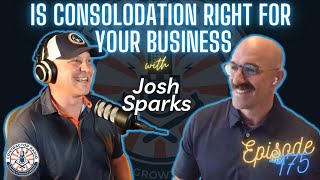
Transcript of a Contractor Radio episode (host Jim Johnson) interviewing Josh Sparks, CEO of Infinity Home Services. They discuss Sparks’s personal background and career in roofing, company growth from a local startup to a multi-hundred-million-dollar platform via private equity partnerships, the ethics and culture of consolidation in roofing, integration/operational supports offered by IHS, and personal leadership and longevity practices.
Chapters
Hey, everybody. Welcome back to Contractor Radio. I am your host, Jim Johnson, the head coach at Contractor Coach Pro, where we help contractors get control of their businesses by becoming better leaders so that they can grow their businesses and hopefully, if we do everything right, achieve some personal and financial freedom, which is why we all start our businesses in the first place. If that sounds like something that interests you and you'd like to meet with one of our coaches for free, go to our website, contractorcoachpro.com, click on the take assessment button. It'll take you about 15, 20 minutes, but we're going to learn a lot from that and we're going to be able to do an actual coaching call with you, not a sales pitch. And we're going to talk about two or three things you could do to level up your business right away. If you like coaching, great. We would love to have you as a client. But if it's not a good fit for you, at least we served you well that day and gave you the next two or three things that you need to be working on in your business to get it to grow. In today's show, I've got somebody that I got to meet a few weeks ago, really liked him, like, super smart guy. They're after something that is uber interesting to me. There's a lot of hubbub about it out there. And so everybody's hearing in our industry, especially in the roofing world, about merger and acquisitions, private equity going public, consolidation, these things that's give us a little bit of pause anytime anything changes things, you know, fear can be a part of that. But I want to talk a little bit about the reality of it today. I want to give you guys some insight in it today. I want our guest to really share with you because after talking with him for about an hour the other day, he has a great approach to this. The what they're doing I really like because it's a bunch of contractors. So. So without further ado, let's bring on our special guest today, the CEO, the guru, maybe my twin brother, if I had a mustache. Josh Sparks. What's up, brother? Good to see you.
How are we doing today, Jim?
Doing well. I'm doing well. So, CEO of Infinity Home Solutions, right?
Infinity Home Services.
Infinity Home Services. My bad. Sorry about that.
I looked by ihs. It makes it easier. Those, you know, those.
So tell us a little bit about your history, like how did you get started in this industry? And, and kind of maybe the Reader's Digest high level view of how you've gotten to where you are today.
Sure. Give you a little background on myself. I actually I grew up in Oakland, California. Kind of a tough childhood. I didn't really know my dad. My mom went to jail. Jail when I was a kid. When I was 10 years old actually I went to foster home. Lived there for a couple years. Went to 17 different schools and found myself living in a suburb of Milwaukee, Wisconsin called the West Dallas. It's a very blue collar subdivision or blue collar area outside of Milwaukee. Went to a school called Nathan hale. I've had two jobs my entire life. I've worked at McDonald's. I got that job when I was 14. I had to help pay the rent. Worked there until I was 17. And then a friend of mine offered me a job roofing. And I had no idea roofing was all about but I was making 4:15 an hour at McDonald's and I figured that this can't be the end all be haul. He offered me a job for nine bucks an hour. And I said I don't care what I have to do, I'll take the job. Because I secretly thought to myself that I might retire as a millionaire on nine bucks an hour. Of course I took the job and I found out why I was making nine bucks an hour. It's brutally hard work. You had to get up on the roof the first day. It was June. It was probably 95 degrees. It was just unbelievably painful. But I said, you know what, I'm going to keep doing this. I'm going to stick to it. Actually fell in love with it after a couple weeks. I love being outside. I love working with my hands. And so I learned everything I could about the roofing business over the course of that summer. This is back in 97. And then the very end of the summer I decided to hand out some flyers. I was an ambitious young man. One single human being found my ad compelling enough to call me. I, I sold that roof and kind of Thus began Infinity Exteriors. Went off to college for a couple months to be an engineer. Realized that engineering and myself were not a good fit. So I came back and I was kind of lost a little bit. End up joining the Marine Corps. You know, the Marine Corps really teaches honor courage, commitment of the core values or honor courage, commitment, perseverance through suffering and leadership. Decided to bring those traits back to the roofing industry and try to build life. And you know, I spent about three or four years subcontracting from a local roofing company and I didn't understand business at the time. And I didn't understand, you know, human beings as well as I do now. And I found out that I was working for just a really unscrupulous contractor. I found that out in 2005. The contractor I was working for really took advantage of an elderly lady. She was in her early 80s, husband was a marine. He had passed away. She saw my Marine corps tattoo, was telling me all the stories about her husband's service and his very decorated service in his life. It was a nine square layover, which is not good to do, a layover for those who understand roofing. And they charged her $12,000. And my labor bill was 300 bucks. I almost ripped the guy's head. I was so upset, I almost created some violence with him, but walked into his office and told him I quit, that I would never work for him again, and that my sole mission in life from that. That moment forward would be to put him and contractors like him out of business. I called my wife, told her that I quit my job. She was on maternity leave at the time, so I can't say she was happy with me, but. And I asked her how much money we had in the bank, and she said, we've got about 20 grand. And I said, do you trust me, honey? And she said, I don't think I like this line of questioning, Josh. And this is back when the yellow pages were great. And so this yellow page guy was hounding me. And we took 13,000 of that 20, put it in a full page yellow page ad, spent the other 7,000 in local marketing. And, you know, my wife was on board with that. She just asked me one question. She's like, josh, if we take our whole life savings and put it into this business, how are we going to pay our rent? And I said, I'm going to sell the job money. It's that simple. So two things happened that day, Jim. We coined our vision statement, which is to save our communities from unscrupulous contractors. And two, my wife and I decided to dedicate our lives to building a business predicated on the values of honesty, transparency, and fair price. And all customers. That experience I had and leadership I have from the Marine Corps, the money we had in the bank, we applied that to the roofing industry. And over the course of 15 years, with the help of a lot of great people, some innovative technology, we built out great branding and marketing, and most importantly, good culture, good people, we grew that local business to about 50 million in revenue. And for me, my mission is to save our communities from unscrupulous contractors. And that didn't just mean Milwaukee, that meant everywhere. And so when private equity got into our space, for me, it made the. It made sense for me to take that backing and accelerate what we had done so well in Milwaukee. And so we took some backing back in September 2021. We grew the business from about 50 million to close to 300 million now, and still growing. So we've made some great partnerships. We've greenfield a lot of new locations and we're just getting started and we're having a lot of fun.
Wow, what a story. Like Oakland, California. Like, if people don't know Oakland, California, pretty rough area. If I remember right, I've been to San Francisco and I went over to a boat trip that went out of Oakland side. So I had to drive around and go in through Oakland to get to the marina that we're going on. I was like, wow, this is a little rough area here. And so all the stuff I'd heard was actually pretty accurate.
Yeah, it was rough. And I remember When I was 7 or 8 years old, we used to take the city bus. We used to have to go to the place to get the food stamps. And these are the book of stamps. Back in the day, we had to tear a five dollar bill out of the booklet. And my mom was saying, hey, this area here is what was called the kill zone at the time, which was the highest murder per capita in the whole country. But she's like, don't worry, we live a few blocks outside of it. It's only dangerous when you get in that area. It's not dangerous I outside that. But yeah, that was, that was my childhood. But it certainly, you know, you know, nurtured me into the person I am today.
So, yeah, it's like what the American dream story, right? Like the whole like tough background, moved to Wisconsin. Like that had to be a bit of a culture shock. From California to Wisconsin. It's a little bit chillier in Wisconsin. I lived 18 years in Wisconsin. Hence the cheese head and the pack. Are you a packer fan?
Of course.
Oh, okay, good. Like, I wonder if you're a 49ers fan. I don't know if we could be friends.
I had a 49ers when I was a kid. I had an open show too. But no, I'm definitely a cheesehead.
All right, sweet, good. And so start your own business. And it's gone over several years, like from back in the 90s until 2021. You guys grew it to a 50 million. That is unbelievable. Like, what were the biggest struggles that you went through? And did you notice at certain points throughout that growth where you like hit a ceiling or a block or an obstacle, like, hey, what was that like for you?
You know, we, I would say we're pretty fortunate. You know, we built, we built our business. We started business in 2005. We had a down year in 08, but economically, you know, the Midwest has been strong for the last 15 years. I never took days off. I didn't take the winters off like a lot of roofers do. They make their money in the summer, in fall, and then they kind of, they kind of shut it down for the winter. I always focused on improving my business. I never, you know, counted my, my, my eggs right. I, or my chickens. I say before they hatched. I always thought that there was improvements that needed to be had in the business. So I focused a lot on reading and personal development and self discipline and trying to imbue that leadership on my second generation of team. And I would say that there wasn't one particular sticking points. I'm a big fan of the flywheel Jim Collins book about this big mechanical flywheel. And you just push it every day. And some days you push a little harder than others. But once you get that big flywheel move and that momentum just carries you. And so I was always looking to improve our technology. We built out a technology in house which is fantastic. It's real time KPIs and every business function. Every function unit of your business. I always focus on improving marketing and operational efficiency. So being able to, as you scale, continue to deliver that world class customer service is really hard. When it's you personally doing four or five roofs a week, it's pretty simple to call your customers every day. When you're doing 50 roofs a week, it becomes difficult.
Yeah, there's a couple things there. The time to work on the business. That's actually kind of one of the benefits of being up north is hey, you're not going to be putting a roof on in January and February in most cases. And so you get this time. And I think a lot of people just rest or take it easy or relax or whatever you call it, go on a trip to the Caribbean for a month, whatever it may be. But instead you took that time to keep improving and working on your. Did you, do you think that was an advantage over maybe some of the others out there?
100%. You know, there's a lot of, a lot of folks in this industry is this is a lifestyle business. You know, they make 2, 300,000 bucks. They'll spend the winter in Florida or doing whatever they want to do, and they'll exhaust that. That income, and then they'll have to make it again the following year. That was never my. That was never my mission, Jim. I. I didn't have any delusions of grandeur to be some multimillionaire when I was a kid. In fact, if I could assign a union job when I was 18 years old, I probably would. Probably would have done. Wasn't until I met Betty and until I started understanding the industry. And you read the horror stories. I mean, Better Business Bureau ranks roofing dead last amongst contractors for customer satisfaction because there's just so. There's so much money available in this industry. And when you put a bunch of money around, what would you call, you know, maybe somewhat unsophisticated players sometimes that like to drink and. And, you know, we'll just leave that aside.
There's all kinds of things you can say whatever you want to say on our show.
Well, I mean, you know, extra.
Right.
Yeah. You know, they. They snort away and smoke away and drink away a lot of their profits. That's, you know, that. That was. That was disappointing. You know, I remember seeing, like, I had a 1982 Chevy pickup truck that I spray painted with a Power Wagner blue, the Infiniti blue. And I see these big fancy trucks with wraps, and I'm like, man, those have to be great businesses. They just really have to be taking care of their customers better than I. Better than I can. I don't know what they're doing. I didn't know. But then you start realizing that they're not. Because you're showing up for estimates when they put a roof on last year and there's no chimney flashing on it, or there's issues that's leaking and they're not calling the customer back. And. And I started realizing that that was the case and that what we were doing was. Was unique. We were not. We were not sacrificing our customers for profit. We were doing the inverse. You know, no matter what happened with that job, if it was something that. That if the job lost money, it wouldn't matter. It's like we need to take care of the customer. We need to deliver what we promised.
Yeah, I wish everybody had that mentality. I'm actually grateful that something bad happened to you with that. With the elderly lady and that situation, because it. It gave you some drive. This. Hey, well, hold on a Second, this is just not. Not right. So it didn't sit with you morally or character wise. Now, have you always had that, like, moral fiber to you, or do you think you got that from the Marines while you were there?
Well, I think my moral scoopers have probably been the same since I was. Since I was a kid. My mom having the problems that she had, you know, being addicted to drugs didn't stop the fact that she was a great human being and she was a great person. And she, you know, imbued that character on myself and my brother and my sister. And so even though we had that tumultuous childhood, I still thought the best of humanity. I wasn't introduced into this really wicked world of profiteering and unscrupulous behavior until I got into the roofing space, believe it or not. Yeah.
Like, other businesses or industries don't operate like this. And you hit the nail on the head, it's because there's so much money in it and so few barriers of entry into allows for some unscrupulous characters to get involved. Which is a shame, because the reality is, I think it's that 80, 20 rule, 80% of contractors are pretty good, they're pretty solid, try to do the right thing, but the 20% just give everybody else such a horrible, awful name. And this perception of the consumer out there is that a roofer is somewhere between a garbage man and ditch digger, maybe a used car salesman.
Right.
And the reality is, I mean, I go to a lot of events, I get to. I'm honored to speak at a lot of different venues and events and meet a lot of contractors. Most of these guys are really trying hard to do it right. They may lack some knowledge and some business acumen, some financial acumen, things like that, but they're at least trying to do it right. And then they get themselves into a position where, because of the lack of business and financial acumen, they're running into some areas that cause them issues, and they have to make some decisions. And a lot of times they make a poor decision. They don't have the cash flow to do the work they're obtaining, and so they start making poor decisions there. They grow to a size that they're doing very well, and they start to cut corners on the customer service side of things, trying to be more and more profitable because greed gets into our world. I love the fact that your whole thing is to get the unscrupulous contractor out of this industry and that you're so driven to it. I think that's what led to you spending the time over the winter to grow your thing and, and to help and serve more people? Is that a fair assessment?
That's, I think you hit it right, right on the head, Jim. I cared about my customer. I cared about the human beings that were working for me, developing them, giving them a long term career. I had to grow the business. Growth has to be, it's, sometimes it's accidental but the best growth is intentional. Like I always had a plan, I always had a written plan of where I wanted to be out of that winter and going to the next year, three and five years down the road. And I would map that on to what I need to improve on my own and how I needed my team to improve. And we'd come together and we put, we put, we put a really strong plan together. We would take action items and then we'd actually go out and execute and that's part of it.
Where did you learn? Because that's not something natural for most people to plan and like execute a plan. And where'd you learn that aspect of being a business person? And is there anything in particular that you either read or attended or became a part of that helped you with that?
That is a wonderful and great question, Jim. And I couldn't tell you exactly when I started. I, I, I think it probably back when I probably two, maybe 2010, 2011, we were doing over just over 10 million in revenue and I feel like I stumbled to 10 million and like okay, I'm, I'm doing things kind of right but I'm not, not quite sure. And then I started reading, I think I read the Traction book, you know the EOS Traction I picked up, I started reading Jim Collins, had Patrick Lecioni. I started reading some books and from there I just started formulating a structure going forward. For me it was always about self improvement every day. So like I'm a big person on discipline. I'm up at 4:30 every morning. You know, I do my cardio, I lift weights, I study a little bit, study longevity. I'm a big fan of Peter Attia and Andrew Huberman. I do my ice bath in the morning which is absolutely terrible, but I hate it. But I, I do it anyways.
So do I, so do I got ice.
And then I'm very intentional. I read an hour a day and I put my, and I put that into practice and that's what's important. And so intentional with my own, with my own actions and then intentional with, with the people that I'm in charge of.
I don't want to gloss over that. There's, there's a lot that you're saying there that I don't want the listeners to miss. You're intentional, you're disciplined, you're growth oriented. You spend time on yourself. Like you said, you read an hour a day. I bet you less than 2% of population reads an hour a day. And then the key part was the applying it like that. There's all kinds of people that have knowledge, but they don't. There's not a lot of people that have wisdom and discernment to actually use it. So I'm a big fan. All this stuff, you're ticking them off like I don't get up at 4:30. I have 5:30. All right, so I get an hour later than you. But I do a very similar thing. I get up, I do a devotional, I study the Bible, I, I do my cold plunge, I get my exercise in. I, I actually meditate like very similar type things.
Right.
And I think a lot of that is this self work creates your outwork like this, this idea that working on ourselves improves ourselves so that we can pour out into others. Do you see it that way?
Absolutely. I feel so. I also meditate. I'm a big fan of meditation, Mark Seirelius stoic meditation, reading much of Ryan Holiday. But I feel that it's a requirement for me right now. Jim, I have a mission to save our communities from unscrupulous contractor. That includes going to every corner of the world and I won't get there and I won't be able to lead this organization. I have a lot of responsibility. I went from installing my first shingle in 97 to growing a local roofing company to now being the CEO of a very fast growing, you know, what will be a billion dollar business in short order. It's my responsibility to make sure that I'm ahead of the curve and that I'm doing everything I can from a personal development side to make sure that I'm doing, I am the best person for this role. And you can't do that by, you know, by phoning it in.
I really hate interrupting these videos, but I've got some important information for you. If you haven't tried out Atlas Shingles, you should because they put you first as a contractor. They want to give you a competitive advantage out in the field so that you can win more sales and be more profitable. Check out Atlas in your local area, find your local rep, get hooked up with them today and start Making more money tomorrow. So let's talk about that for a minute. So you get to 50 million. Were you approached by private equity? Was it something you searched it out, you started thinking about it because that's 21. This has been going on really for the last, I don't know, probably since 1819 has really, really started to pick up steam with private equity going public and those type of things. Which, which way did it go? Them going to you or you going to them?
Yeah, so I had no intention of selling my business, none whatsoever. I, I didn't want, you know, financial engineers to come in and, and be beholden to stakeholder capitalism and, and shareholders and, and profit as being the, the why. If, if you look at the Simon Sinek you ever seen a lot in if his. His talks but he's got a book called Start with why and you know, and my why is to save our communities from one script to those contractors is not to return, you know, some crazy multiple to the investors. Although if we do things right we're going to make a lot of money, no doubt about it. But. Oh, sorry, sorry, I lost my train of thought was the question.
I think those crazy multiples are actually created as a byproduct of how you approach the consumer. I think those crazy multiples happen because of what you do, not because of how you run the KPIs and the numbers and the shareholders.
You asked me did I seek out pe. Yeah, did PE come to me? So again, really no intention. I greenfielded I had opened up three locations, we were doing really well and a friend of mine, Paul Collins from Overhead Solutions is a company of Green Bay. I knew him in the industry. Really salter of the earth, great guy. Said that he was considering it, wanted to join forces. I met the small firm out of, out of Chicago called North Branch Capital. Really awesome, humble, not your typical suits, really great people. They had shown me some case studies of other really good businesses that they had grown from 20 million to 150 million in the H Vac space. And I said wow, this can really help me accelerate and see my vision through much faster than I could do it on my own. And they have expertise on the M and A function which is something that I did not have expertise in and there's no way I was gonna be able to do it on my own. And so I talked to them and I retained a very big piece of the business because for me I wasn't looking for a payday. I wasn't looking to cash out and move on I was looking for support on how I can continue my mission of saving our community as much with these contractors. So they approached me, vetted the process, I partnered with them and 60 days later we were partners and we put a five year goal together and we hit that goal in eight months. So.
Wow. And so what did they bring to the table that you didn't have already?
So I have, I had the marketing side. We hired a cfo. Really, really fantastic cfo. He was, he was the CEO of a company called Brand Safeway Scaffolding fall protection business, 6 billion dollar port co of CDNR. He did 14 buy side transactions, M and A transactions. I didn't have the M and experience, I had the operating experience. I'm a roofer. I know how to take a business from 0 to 50 million. I understand that the difficulties of companies that are going from 10 to 20 million, I know what those operational struggles are going to be. I, I know what the system struggles are going to be. So that, that's where my expertise is. My expertise is not in the M and A side. You know, an M and A is a full on separate function. It's diligence process, it's Q of E, understanding tax, it's understanding business structure, it's all the attorneys, it's purchase agreements. There's a lot going on there. What North Branch was able to do is bring me in in front of an entrepreneur and say, hey, what are your goals in life? What are you trying to accomplish? And when they said back to me, I care about my people, I care about my name and my business, I want to learn how to accelerate my business to double, triple it in size and I want the support to be able to do that. Then they became our partner and then the PE firm would handle that, basically handle the transactional part of it. But then once it's through the transaction, now they integrate with us and now we become partners. So that's kind of, that was their function.
Gotcha. So two different complete expertise. Being able to handle the actual joining through, the legal aspect, all the paperwork, the vetting, the discovery, all the stuff that goes into that, you're more on the cultural side. Was it a good fit? Number one, like do these people actually fit us? And after a similar thing and I can help them because of my experience grow that business to be whatever they need it to be. So what was the next step? Or was there one? Has it still been that the whole time or has anything else happened?
Yeah, I mean what I like to say is, you know, I Understood how to grow my business to where I had grown it to. I knew how to grow a, grow a $50 million business. And when I talk to these entrepreneurs I like to say that they're helming a ship, you know, with icebergs ahead. And it's a dim lit shift because most of these entrepreneurs who are growing their businesses are roughly at the top of their expertise. They're at the very top of where they've ever operated a business at from a leadership perspective, from a growth perspective. And so what I say is, look, I understand what it takes to build from 100 or from 10 million to 50 million. I can brighten that light for you. I know what's on the other side. I've been there multiple times, more than one business. So I know how to get there. I don't know how to grow a business to a billion dollars. But these firms do. And so what they do is they help us illuminate the path forward. They understand what a business in five years might look like. We back engineer that to where we are now. They take my expertise as a roofer and we apply that onto the financial expertise that they have and that's what allows the growth.
Gotcha. Okay.
So.
We find the right one. Right. And then we're going to start installing your systems. It sounds like. Is that the way it works or do they still operate on that? What does that look like that because it's called mergers and acquisitions. Acquisitions part of it. But merging is a whole different animal. What does that look like with you guys?
Yeah, for IHS specifically. So we built out a really cool technology. Our CRM communicates with a sales quoting tool that we have that doesn't exist on the market. It gives you you know, real, real time pricing. It's all system is completely paperless, start to finish. And so we're able to integrate and pull people into our technology. We talk the same language across 14 brands. So when I talk about what our our m core is, our marketing costs on revenue or what a production manager can, can actually produce produce and what his responsibilities are, we have that Data stretched across 14 different brands and so that our brand presidents or our brand leaders can look at high functioning businesses in, in you know, across the country and say am I performing you know up to snuff against what other good businesses can perform at. So we help. We're basically a resource center. Jim, I have a, I have a CMO who came from is a multi billion dollar business. She's incredible, incredibly strong from a marketing perspective. If A brand leader needs more leads. They tap. They tap into her. She helps them. She helps execute, you know, lead gen. She puts together lead plans. We have a chief human resources officer who in her previous role managed 4, 500 global employees. She's incredibly sharp. So when it's like the brand leader says, hey, my lead volume's high. I can see that today in my app. I need to recruit more sales staff. She helps recruit sales, sales staff. And so we are a resource center for brand leaders to take their business from where they were to where they want to be. And that's what we're doing.
Gotcha. So you got some professionals. That's the thing. There's not a lot of professionals in what we do. It's pretty difficult. You get a bookkeeper and then you maybe have a cpa. But do they even know construction or not know construction? Do you know what to look for? So you guys have a CFO that has the experience in this lead generation is an absolute nightmare for most smaller contractors out there. Who can they trust? Who can they not? Can they really deliver the number of leads that it is that they're saying they can? I get those messages. As a matter of fact, I got like five this morning. Hey, do you. Because everybody thinks I'm a roofer for some reason or another. I don't know why, but could you stand another 30 leads this month? You know, those type of ads all the time, and so they get really confused. And then the leadership side of things, I don't want to discount that. Leadership's a skill. It's something that you learn over time. There's a lot of experience that goes into it, a lot of skill that needs to be refined and mastered and enacted, especially when it comes to communication, things like that. And we start to bump up against our capacity sometimes because of the lack of skill that we have to delegate, grow and install processes, take care of our people. Is that the role you play in this is like teaching them how to become better leaders?
Absolutely. John Maxwell has got a book to 21 irrefutable laws of leadership, and his first law is the law of the lid, which is understanding when you're bumping up against your, whether it be intellectual capacity or just leadership capacity to run your business and run your team. So that is where, you know, that is where we come into play in some capacity. Right. We are bringing resources to a roofing industry that didn't happen before. I couldn't afford to pay a CMO or a chro. The caliber that we have now. At one local business. The fact now that we have revenue that's generated across the entire country, you can bring in high level talent like that. And then we have learning and development camps that we're running. And so you take, you take a strong entrepreneur who's good at managing people, good at delivering great customer service, and you layer in some professional leadership skills and resources that they can now tap into and bring to their local level. You create a monster. And Jim, so my goal and my responsibility is not to go in and hands on location, tell them what to do, how to manage their people, what to pay their people. Our goal is to provide them resources and give them a framework in which to help scale their businesses. And that's what we've been doing and we've been very successful at it.
So one of the hurdles that I've seen with a lot of this type of stuff, whether it's merger and acquisitions, private equity, trying to go public and stuff like that, is you're taking all these different companies and bringing them into the fold and they all have various cultures across the board. There may be some alignment that you know, hey, we were trying to do it right by the client or there might be some alignment like hey, let's make as much money as we possibly can, or hey, we're uber competitive. There's some alignment there and some even like process and system. Like hey, they're really focused on that. I've seen a variety of those different ones, but they don't necessarily take the culture aspect of it into enough consideration when making the decision. So for example, it all sounds great. You know, company comes in, hey, we're gonna, you know, buy your company from you pay this multiple, you get to keep shares and all the other good fun stuff that goes along with that, which I wanna talk about a little bit. But they don't ask them too much about their culture. And so human behavior the way we are, we start seeing numbers and this whole greed thing gets involved and like that kind of stuff can happen to us. Even if you're like a super faith based company, you still, you know, you, we wanna make and then you get involved and you find out it's a different thing, it's not what you thought it was. Cultures are very different. How do you guys manage that part of it?
That's a great question. I would say that this is why if you're considering selling your business, you need to ask very pointed questions. We have 14 brands. I would encourage you, if you are interested in joining ihs to talk to Every single one of our brand presidents to understand what the dynamic is before, during and after the transaction. Because it's very important we do not mislead people. We are very selective. Culture is not one thing. It is the only thing with our organization. I'm truly on a mission, Jim, to save our communities from unscrupulous contracts. I cannot do that by partnering with unscrupulous contractors. Right. Or companies that don't. That money is the primary goal of the operation. Right. Typically, the contractors that join us, the first two things they always, if I would say if they don't ask, this are typically a problem. One is what happens to my brand name and two is what happens to my people if the first thing they say is, what multiple are you going to pay me, how much am I going to make and how soon can I leave? Hey, there's PE firms that'll buy you because there's different strategies than ours, but ours is centered on saving our communities from unscrewing for this contract. And I'll tell you how we. We created a culture of one. So we have an IHS1 newsletter. We send out. I do podcast internal podcasts with all of our team. All. All of our 600 employees have access to and know. But we had the nine foundational brands that we brought to Las Vegas last year. All of us together came in for a Q4 meeting and we created our culture, our brand, Culture growth statements. We created our mission statement, which is to install peace of mind. We created our values, which is IHS integrity, hard work and service. We created them together as a group, and then we took that back to our individual locations and then we imbued and inculcated our folks with that brand because we decided that's our culture together as a group.
And that's pretty awesome.
That's really how, you know, we're different than a lot of these other folks. You know, private equity is inundated in our space and they are aggregating ebitda. This is a math function. It's like this company plus this company plus this company equals a higher number than these three individual. And therefore we're going to exit. There's going to be some winners and losers here. And a lot of those that think that way are going to be losers because they're going to realize there's no buyer on the other side. These PE firms are smarter than some of us think. They're not going to buy a loose collection of disgruntled, arguing roofing companies across the country with no clear hyper Focused strategy. It's just they're not gonna be able to exit. What we've been able to do is we grew in 12 months from 50 to 200 million. We exited to larger private equity firms and now we have a plan to grow to the next level. And it's a very hyper focused plan.
That's what I was wondering if the original firm that helped you get to beyond 50 million up to, I think you said 200 million, they exited and were now bought. How does that work? What does that look like?
Yeah, so they owned a portion of IHS and they have a fund which they're a small middle market private equity company. So their, their fund size is like 150 to 200 million, which I know seems crazy, but that's a relatively small.
Yeah, that's a pretty small one.
Yeah. And as we scaled, they, they no longer had the operational capacity, so they couldn't help us improve our business anymore. And they didn't have the capital resource to help us acquire the businesses that we need to acquire. So at that point in time, they wanted to share off a percentage or sell off a percentage of their stock to larger firms that could help us. So we have two firms now, Light Bay Capital and Freeman Spogli. They're based out of LA and New York. You know, Freeman Spogly has built. And the reason we partner with them is because of the legacy brands that they built. I mean, they, they have partnered with, you know, mattress firm, took that company public, Floor and decor, batteries, plus Popeyes Chicken, Cinnabon, Advanced Auto Parts. You're talking names, brands that have not not only stood the test of time, they're thriving today. That's who our partner is. And so our partner is not a company. It's like just buy a bunch of roofing companies, whether they're Storm commercial, I don't care if they do decks, they do interior baths. Let's just buy them, let's try to sell them off. That's not what we're building. IHS will be a brand name that will be here in a hundred years. And that's what we're building. We're building a real business predicated on real values. And it's yes, we'll make money because we're doing things right, but that's not the sole purpose.
It sounds like you, you also brought on more resources, like they have more capabilities than the small to mid market. Like you can go really big with these guys.
Yeah. And the cool thing is, so not only do we have our internal team Jim, you know my CMO, my CFO, they have operating partners. And so I have about 30 operating partners who work directly from my private equity companies who have unbelievable skill sets like my if Freeman Smogley, they have a CMO kind of partner and she was an executive at Walmart. She was one of the executives@jet.com so she is phenomenal at this type of stuff. My CMO partner at Light Bay Capital, Aaron Shockey, he's fantastic. He worked for Neiman Marcus. He was one of their top folks on the digital marketing side in Neiman Marcus. So those are, that's what the roofing company, that's what we have at IHS now. So if I have concerns, my executive chair who runs our board, his name is Steve Stagner, he was one of the foundational brands at mattress firm franchisees and then became the CEO and took that company public to now it's I think three or four billion dollars. So he is my kind of executive coach. He's coaching me to say, hey, this is how we get the business to where here's the pitfalls you might step on, let's avoid those. And here's how you get to the promised land, if you will.
That's pretty awesome. Does it make you uncomfortable like having these guys around you that know more than you do type of deal?
Not, not at all. Not, not at all. I, I, I'm a roofer, Jim. You know, I, I know how to, I know how to grow a roofing business. I know how to manage production, I know how to do sales and manage people to some perspective. I'm not so arrogant as to think that we can't put great people in a room and who've seen experience in other industries that can help navigate us to our goal. Because the end goal is to be in every state and beyond and do it the right way to be competitively priced and delivering world class customer service through better technology. That's our goal.
So you know there's a couple of companies out there that are quite large and we won't mention any names. I'm going to stay away from that. But I would classify them as unscrupulous, you know, 12, $1500 a square for 30 year arc. You probably know who I'm talking about at this point.
I do.
Is that, is that who we're after?
Those companies will need to shift their business model if we're successful, yes.
All right, I'm in full support of you, brother.
I think it's, I think it's insane. I mean you know, you have to be competitive in the world. I think if you're going to truly say you have a great culture, delivers great customer experience, unscrupulous can be thought of a couple of different ways. You know, unscrupulous could be, you know, you promise one thing on paper and you deliver something completely different. You know, you swap out products, you do something really, you know, really, really bad. But also I would say unscrupulous could be in pricing and not running a streamlined business. And, you know, if somebody goes or having to target a certain demographic in order to sell your product, having to target, you know, having to be the only person in the room because any competition will flush out your unscrupulousness. I think, I think that we're trying to bring light to that in the industry.
To me, that's super cool, that part of it. In our first conversation, I grasped that and then as I thought about afterwards, I'm like, I wonder how he feels about those guys that are not like that.
One of them just sold and one of them is going up for sale right now. And it should be interesting to see. I mean, that's not what we're here. That's how I want to hear.
No, no, no. Like you're doing your thing and just if it affects them, it affects them like, but I'm going to do my thing my way. And then I think you're doing right by the consumer, which is really cool. And it seems right by the contractor that you're looking at by Fit. Like, there's got to be the right fit. It's not going to be everybody. Which I don't think is necessarily the case for all the companies that are out there trying to do this type of thing. I think it's like, hey, which one's most profitable? Go get those guys or which one fits? Our specific like, hey, we want to grab as many of those five to ten million dollar guys and grow them really fast. I don't care about their culture or anything like that. I see a lot of that kind of stuff out there as well. I really hate interrupting these videos, but I needed to take a moment to tell you about Moment Finance. They are the technology company that makes financing simple and easy for your clients. If you're not offering financing right now, did you know that you're missing out on 20 to 30% of the sales that you can make? And then a company like Moment teaches you actually how to sell financing. Don't miss out on those opportunities to make more money doing what it is that you do by being able to close more sales. Check out Moment Finance down the link below. We'll see you later. What advice would you give to a contractor who's being approached with these type of opportunities right now?
That's a great question. I know we talked last time about, you know, does somebody buy, do they hold, do they sell? Yeah, you know, that's a, that's a personal decision. You know, a lot, a lot of these businesses have family members in them. They have longtime friends that are in the business. Depends on what you're looking for. You know, our strategy specifically would be a good fit for you if you're looking to take some chips off the table, Reduce that liability perspective, grow your people internally. Like if you have a sales manager who wants to open new locations, you have, you have internal folks that you want to continue to promote. You know, we are a great opportunity for that. You know, you mentioned to me about potentially buying companies. I would say my. Just my personal recommendation, obviously you take it for what it is. But we're business owners. We understand how to run roofing companies. We're not M and A folks. That's a completely separate piece. There's, there's. There's a diligence process. There's what the valuation would be. There's expectations of integration. There's all a whole layer of different things you have to understand and be able to. Not only understand, be able to execute on which will then probably sacrifice your. Your, your ability over here, your time resource to your own business. So I've heard some people that are like thinking about buying or like buying a few other companies and then trying to package and sell. That's probably tough. But from a sale, what about just.
Holding and growing as you are? Like there's a traditional model for that. Like, hey, we've perfected our process and our system. We've grown our leaders and we've got talent. We could go open a new location and you could even franchise. Like there's other. There's lots of other options. Why would, why would you maybe choose one of those or not choose one of those?
Yeah, it depends on the stage of your business. It depends on, you know, again, back to John Maxwell's the law, that lid. Depending on where you think you can grow that business to, you know, what liabilities you want to take off the table. Let's face it. I mean, we came off a Covid bump. Market's been really strong for the better, better part of last 15 years. This is an opportunity to, to cash some chips in partner with the good business that can help you continue to grow your location. But yeah, there's certainly, certainly something to be said about holding your business longer and, and trying to flush out the details. Hiring a coach like you, Jim, and. And you know, appreciate that plug.
I'll pay you the money later. No, just kidding.
Yeah, yeah, yeah. Growing your revenue a little bit more. And I would say that this is an interesting time insofar as multiples on roofing companies have gone skyrocketed. When some of these companies, these PE firms are now that are acquiring businesses don't do well, and they start realizing that these 2 million EBITDA businesses aren't the most sophisticated roofing companies or companies in the world, there'll be some losers, and losers scare capital. And so when there's losers, people might get afraid. And then. And then the multiples start dipping down. We're seeing that in the H Vac space right now. So, look, there's pros and cons at both. But what I would say, what I would say is this. If you are considering it, certainly talk to more than one questions. Interview their CEO, whoever's running that business. See if they can really help you grow your business. Like, hey, give me an example. I'm struggling with this on production right now. How would you help me? How are you gonna help me grow my business? Ask that question now.
That's some great advice. I was hoping that's where you would go, because while the financial side of it's important, obviously the help and support side of it, to me is the more important part. Can they actually fill the gaps that you're missing? Maybe you're really strong in marketing, but you're not so hot in production and customer service. Can they fill that gap? Maybe you're really great with your community and your involvement and your network and stuff like that, and it's really built a great company for you. But could you take that further if you actually knew how to market beyond that in a digital or traditional space? Like, I would be looking, where are my gaps first? And then whenever I'm interviewing each one, I would be going, do they fill the gap? I'm lacking, like, leadership growth. Maybe I don't have much depth on my leadership team. Can this person help me grow my leaders? I think those are. That's some amazing advice. That was really good. You brought something up that I want to talk to you about. Like I. Like I. This has all been great. I think you gave some great advice to everybody. But you brought. You talked about longevity what do you like? I think I know what you're talking about. Are we talking about like blue zone longevity and that kind of stuff? Like what are we talking about?
I'm talking about. I have, so I've got five kids. Yeah, we have four biological. My wife and I are foster parents. We adopted a. Well, we're foster parents. And Imani's 19 now. We got her when she was seven. But I have a 19 and 18, a 15. And then my wife and I had a 10 year gap and I have a four and a two year old. Well, actually just turned three and I'm 44. And so from a longevity perspective, my personal health, it's like I'm going to be in my early 60s when she's kind of coming into her life. And for me it's important that, that I'm in a healthy disposition when I'm in my early 60s. So, you know, I do intermittent fasting. So, so this is from a personal perspective, not from a business perspective. But so I do my cold plunge, my sauna, my intermittent fasting. I eat healthy. And I think that that provides clarity in mind as well. And I also do, you know, stoic meditation because I'm trying to be grounded as a human being and really the figure out what really matters in life. And yes, business is incredibly important to me and, and accomplishing our mission of saving our community. Someone screwed for this contractor is important. I also need to be grounded as a human being. And so I spend, I spend time reading and studying stoic meditation because I think that's really important and it makes you a better human. I mean, at the end of the day, we're all trying to build, we should be trying to build our eulogies, not our resumes. Because when you, when you land right when you land in the casket, nobody talks about how big your business was or what they talk about, what kind of person you were. Were you a good human? Were you good to other people? Did you give your time? Did you give not just money back? Did you give your time? Did you sacrifice your time for other people? And so I spent time thinking about that. I spent time improving myself there because it wasn't always that way. You know, in my, I had a terrible childhood and I was a, I was kind of an upset kid. When I was in my early 20s, I didn't know what I wanted. I was mad at the world. And it wasn't until I, in looking outside in. I was married, I had two kids, I had a successful business, I had a nice house I had all the things that people would say, wow, this guy's doing really well in life. But I was not happy. And it wasn't until I found stoke meditation that I started to understand who I really was and what my drivers were. So that, I think, is what keeps me going in part most days. I did my cold plunge this morning and I meditated this morning. So I feel great.
That's, that's all. Because that's a little bit of the track I've been on for, I don't know, maybe the last 10 years or so. I've really been like, okay, I want to learn more about this longevity. Some of it comes from me wanting to just be around and share my experience and hopefully have a positive impact on the others for as long as I possibly can. But it's really ramped up in my appetite for gaining the knowledge and learning more about how to live longer. Because I have a grandson now, he's two and a half. Whenever he graduates high school, I'll be in my 70s. I want to be able to throw a football with him. I want to be able to throw batting practice for him. I want to be able to spend that quality time with him that I might not otherwise if I didn't take care of myself. And so I just gotten really organic in what we eat. Like, if it, if I don't see it standing in the field out there, I'm probably not eating it. If I don't see it growing in the field over there, I want to be as close to the source as I possibly can. I don't know if you've read this book before. It's called Deep Nutrition. Have you ever read that book?
I have not, no.
Sounds like one right up your alley because you like to read. Because it's more like a college like type book than like a joyful reading type book. But there's a lot, like, I don't put vegetable oil in my body anymore because of that book. Like, it will not enter me. And so, and where a lot of that comes from is they've. They've studied these groups of people that live in blue zones where the highest average of centurions is people that live over 100 years old. And the commonalities aren't necessarily like a lot of people talk about the Okinawan diet because that's one of the blue zones. Well, that diet is kind of built for them where they live. It's generational for eons. But there's people over there in Sardinia, that's the other One, right. That's one of the other blue zones. They're eating a totally different diet, and it's not the same thing, but they're all living this long. So is it the diet? No, it's the source. Like, it's natural. It's as close to the source as it can possibly be.
A lot of studies done on this. I mean, obviously it has a lot to do with your genetics and your epigenetics, but Peter Attia wrote a book called Outlived, which is really, really good book, so I recommend that book. But total caloric intake is a huge determinant of longevity. So typically, smaller humans who eat less.
I used to be pissed that I was five' ten. I'm like, I'm cool with it. It's good. Those tall people, they ain't gonna be around.
I was a competitive powerlifter, you know, for a long time, and I walked around at 220 pounds for the better part of 15 years. And I'm starting to lose weight now. I'm like, I gotta lose a little weight. I can't keep eating so much protein.
Yeah, very. So this is pretty. Well, I'm walking down the same path, but I can remember a time in my life where I didn't care. I seriously was like, hey, I just wanna get through this. Like, whatever that is. If I die tomorrow, good. Like, I'm glad. I don't know what it was really. That shifted for me. I haven't been able to put my finger on that one thing. I just know that I need to be here longer, for as long as I possibly can to take care of this temple that was given to me. Right. I want to take care of that thing. And if I take care of that thing, and not just the nutrition and. And exercise part of it, but the knowledge and the study and the growth, mentally and in my own heart, like, what am I actually open to and being humble about all of it. Like this idea that I really don't know all that much. I'm one step from stupid. You can walk in a library at any point and realize how dumb you really are. It's just there's so much knowledge that's out there. Was there something that. That, like, flipped a trigger for? Was it the kids and, like, how young they are? What tripped your trigger on that?
That's funny. You talk about the Dunning Kruger effect. So typically, the less intelligent you are, the more certain you are of what you know, and the more intelligent you are, the. The more you realize you don't Know, so you and I both fall in that camp where I. Yeah, there's not a, there's still a lot of information that I would love to, to pursue. You know, since I was 19, you know, since I got the Marine Corps, I was always focused on fitness and then health and understanding that and the dynamics of, of what's healthy has really changed a little bit over time. And I went from, you know, being, you know, muscularly, you know, pretty strong and eating healthy and, and being fit, what I thought to be fit. Now that I'm 44, you know, that shifts a little. Right. So I've got a three year old daughter and it's okay. So I want to be, I want to be athletic. I don't want to be, I don't have all this muscle around carrying that I got to feed because you know, feeding that, my internal organs, you know, it takes, you know, puts pressure on those. So for me, probably a handful of years ago is when I started to really cognitively, you know, pay attention to total caloric intake and, and really putting more of a long term plan together. So when I'm 70, 75, hopefully 80, I'm in good shape. I could throw football just like you.
Yeah, like that. To me that's, that's pretty cool to go beyond just your children to your grandchildren like having that because. And I think the thing that really drove was the passing of my grandfather. I was very fortunate that my mom had me when I was young and I had my kids when I was young. So my kids got to know not just their grandparents, but their great grandparents. And I think there was a lot of value in seeing that depth of knowledge, experience, understanding. The thing I know about my grandfather is like, guy never made more than $24,000 a year in his life. He was the happiest human being on the planet. So serving so giving so hard. And like he's military, like there's, there's a hard part of him too. I want to be able to be like I had him until I was 42 in my life. He did physical activity things with me until I was 35. Like we go fly fishing and do stuff like that. I want to, I want to do that. Like he passed on so much to me. That's so valuable to me. I don't want to take that away from my own grandkids. Like, I just think that's super cool. I, I didn't know that about you. I didn't like that. That's one of those things. And I'm sorry Listeners, I got like a little selfish here. Like, I wanted to learn a little bit more about that. Hopefully you guys go, well, wait a minute, maybe I should think about some of that stuff too. And I think we start thinking about that when we get older. We just do.
I talk about it all the time. I think it's so important. Everybody, you know, I think probably get tired of me talking about stoic meditation and about, and about fitness. But look, I think it's important. It's really changed my life for the better. It's allowed me to be more centered as a human being. And I think it's important that look, we, we got free an entrepreneur and you're leading a business, you're leading a group of, group of people. It's stressful and it's not easy and you don't want it to, you know, dictate your life. You know, you are not one with your thoughts. Most people don't understand that. And it's, it's, you have to be able to, to make them separable and, and, and be able to pursue excellence, be able to work really, really hard, but then be able to remove yourself from that and enjoy the life that we live.
Because that's, that's, that's the fun part to me. The working hard on myself. That's the fun part. Like there's not a destination. Like I don't know where it ends. Like it ends when day I die, I guess.
Right.
Like, it's like I don't have this like plan in my head that I'm going to be this thing or whatever. And it's like every day I'm going to grow a little bit every single day, whatever that turns out to be. That's cool with me. Now this has been a great conversation. Just, just so you know, Joe, thank you for. I know you're a busy dude. So huge appreciation for taking some time out with us today, navigating some of these questions that these guys have out there. I do want to hit on one last subject. Should everybody be scared? Like this consolidation thing, should everybody. Like there's been some of that out there, this fear mongering, like, hey, you know, you know there's going to be 60 companies when it's all. I saw a post about that, like there's going to be 60 companies left when it's all said and done and you better get on track or you're going to get left behind. How do you feel about that?
I think that's well. So I got a couple of takes on I think that's probably a little bit fear mongering, right? If you look at the H Vac space right now, they've been rolling up for 10 years and I think they're like 10% consolidated, so there's still room for small businesses. I would say that institutionally and this is going to be, this is where I may say that we could drive some competitiveness. Is that because our business is focused on delivering world class customer service at competitive prices, it's going to be a little more difficult to compete against an IHS company that would be competing against the other two you talked about because their pricing is way up here and it's not, it's inconsequential. But I wouldn't have, I wouldn't make that. One of the decisions to sell. One of your decisions is though, should not be predicated on fear of somebody coming out and dominating your market. Although if you do a SWOT analysis in your local market and you say, what are our strengths? What are our weaknesses, opportunities and threats, you know, over in that threats column will probably be a business that is of scale, that has a good sales program, that is operationally very efficient, that gets a good buying power because they're buying 50, 60 million dollars a year from the distributors. That would probably be in the threat column. Not to say it's not overcomeable, but it's, but it's there. And so it's something you would think about.
Yeah, that's exactly how I would look at it. I think a SWOT exercise is a great. And I think there's also the weaknesses part of it. Like what are my gaps? Where, where are those? That would probably help you make some of those decisions. Where are strengths? Like do they create some opportunities that others may not have? Because we have these. That's an amazing exercise. You guys are listening. If you haven't ever done a SWAT exercise, you should go do one immediately. Like it's, it's something that we do here twice a year. Like, what's going on? What? Because things change so fast now, you can't do them like once every three years anymore. It's like, it's like twice a year. Hey, what's going on? What's changing out there in the world? Technology, the industry and environment, the market, like all those things have a such a big impact on your business. And we don't really realize it because we're, we're in our own little silo. Right. We got blinders on.
That's right. And so, you know, one of the Things you think about is what would scare you, what would make you lose sleep at night, what. What would the business be that would come to your market that you'd be most fearful of and build that business? I mean, that's, that's, that's the exercise that we do.
Yeah. I would ask somebody why they're scared, too, because fear to me comes from change, number one, or feeling a lack of something. You lack something. What is it that you lack? I would go get the thing that you lack. Like, if you're not good at marketing and branding, getting opportunities. Okay, well, I'm going to go get that thing. And so, yeah, what a great conver this has been. Okay, so we don't all have to, like, freak out and get scared and go sell tomorrow. That's.
There's also. But there's fomo, right, Jim? There's, you know, fear of missing out.
Yeah.
You got both say, hey, man, this. His ride is going up. I mean, I want to hop on and look for some of the brands that have partnered with us, have made excellent returns, and they tell me all the time it's the best thing they ever did. But it's important that you partner with the right person, right company. I can't.
I think you're right. And to ask yourself, what are you really after? Do you really want to be a part of this? Whatever it is, like in your case, ridding the world of unscrupulous contractors, does that really speak to you? And you want to be a part of that and it drives you because if it doesn't drive you, you're not going to be successful in it. Or if it's, are you being driven by the dollars and how much is enough? Like, you really need to ask yourself those kind. And, and are you just. Are you kind of happy where you are right now? Like, and is that okay? Like, I think everybody should ask themselves those questions because I think the world pushes on us an awful lot to follow and do things that don't align with us, maybe internally and fulfilling it.
That's very well said. Jim. Couldn't say anything.
It's just be cautious of why you're scared of something. Ask yourself why. Why am I scared of that? What's causing me to have fear? And there's also, like, you said that FOMO thing, the fear of missing out. Like, hey, did I miss something? Did that opportunity to buy Apple when they first came out just pass me by and I don't have it right?
One of the things that I love about our brands Is the camaraderie, you know, when I was. It's lonely at the top. You know, it's lonely being the top of your organization. And yeah, you've got coaches like yourself who bring a lot of value. You've got these conferences that people go to and try to. Is this marketing guy great? Is this CRM good? So that, that, that can be somewhat overwhelming. And having the camaraderie with the different brand presence that we have, the, our quarterly on sites, it's just, it's a fun group. It's a different level. It's beyond running your local location now. It's about, you know, taking on a why, a bigger why and having accesses and resources to do that. So we, we're having a lot of fun here.
So it sounds like one of those, one of those mastermind groups that you got to pay for, but you're getting paid by this one, which is pretty.
Paid by it. Yeah, it's a little bit different. And, and you're an owner of the company, so it's, it's like you still run your location. You're. You're an owner of the company, you're part of the greater good and you get to help folks. The, the cross collaboration, in the beginning, it was a little rough. You know, it's like, okay, I know how to do things over here. But as we all become friends and got to know each other when we do these quarterly on site meetings, we're all getting together. It's a, I mean, it's a great time and there's a lot of collaboration. I've got sales managers that will go from Michigan down to Indianapolis. We've got, we've got. Jason Kudo is fantastic for us. He's a phenomenal sales rep manager, I should say. He does training across the platform. So, yeah, we have a lot of cross collaboration. It's just been a, it's been fun.
It's really cool. Josh. Hey, man, thank you for being on the show today. I wish I could talk to you all day. It sounds like you're a guy I'd like to hang out with. Like, I just like to hang out and have a good time. But man, what you guys are doing, I've seen a lot of these. If there was one I would seriously investigate, it'd be this one. To be honest with you, I'm not just saying that because you're on my show or anything. That's why I have you on my show. If anybody's watched my show, I haven't had any of the others on. Because I'm like. And not a fan, but got to meet you guys. I know some of the people involved in, in your organization. I've known them for many years. They're believers. So I wanted to find out more and I appreciate you taking the time today.
I love it. Jim. Hey, more than happy to swing down and visit you at your. In your home state as well.
So, hey, here's the deal. Like in January, February, it sucks up there. So come hang out down here. We'll go fly fishing. To have a good time is kind of where I live is what they call the, the Texas vacation spot. If you live in Texas, where you come during the summertime, if you're not going to leave the country or Packer game was. Oh, now, now you got me. Okay, I'm coming. That wasn't. I didn't take much. Anytime I get a chance to go to a Packer game, I'm in, man. Thank you very much. Have a great day. I can't wait to, like, build this relationship a little further with you and get to know you a little bit better.
Same. Jay, thank you very much, man. Appreciate it.
All right, thank you.
Take care.
All right, guys, what a great show. Josh Sparks, IHS CEO, like the CEO jumped on with us today of a $300 million company. That's pretty cool. He made time for it because he actually does care. He gives a crap about what the consumer is getting from the providers that are working on their homes that he doesn't want to see people taken advantage of. And that's not just the consumer, but us as contractors. So if you, if you need to reach out to Josh, you can get ahold of me, just message me here at Contractor Radio. You can find us on Facebook or Instagram, any of those places. I'll give you my email. It's head coach, like the guy that runs the football team@contractorcoachpro.com. you can get a hold of me there. And we'll get a hold of Josh's information. We'll put that in the show notes. It's been awesome to grow some of our businesses the way we have from, you know, one to $3 million up into 15, 20, $30 million. And to see them starting to navigate this whole mergers and acquisitions and private equity and those type of things, if that's something that you're trying to do, you're trying to grow your business, you see this opportunity that's in our industry, don't do it out of fear, but do it out of genuine. I want to be a part of something special to serve others well. Get ahold of us. We help put those systems and processes in place to position you to have those choices if you want to have that choice available to you. Like I said, we'll put down in the show notes our assessment link. You can take an assessment. Takes you about 15, 20 minutes. If you're not willing to put in 15 to 20 minutes on your business, you're probably not a good fit for us anyway. We're or for this merger and acquisitions and consolidation stuff going on in our world. But if you will, we'll hop on for a free coaching call and we'll really coach you and we'll look at your assessment. We'll identify two or three things that we could probably help you with or that you could do on your own right away to level up your business. If you like coaching and want to become one of our clients, it's awesome. If not on the other hand, we've served you well and helped you grow yourself and your business. Thank you guys very much for hanging out with us on contractor radio. We'll see you on our next episode.










