Do Your Prospects Really Trust Google?
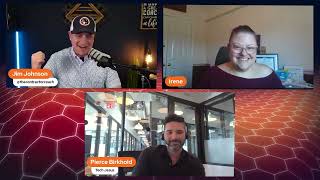
Pierce and Irene Brinker explain how Google's algorithm shift toward helpful content means contractors should stop chasing SEO and start collecting location-specific reviews and photos instead. Sites that seed 30+ reviews mapped to job addresses see roughly 40% conversion lifts. The key: deputize your field crews to capture testimonials tied to actual houses.
Questions this video answers
February 22, 2023
Pierce and Irene Brinker of Real Work Labs
The Helpful Content Update (Google), rolled out in August 2022 (speaker-stated)
Crux
About a 40% increase in website conversions for clients who had seeded ≥30 mapped Google reviews; reported range 19–50%.
Chapters
Hey, everybody, it's Jim Johnson here. And another episode of Contractor Radio where we empower contractors to succeed. We want to share information with you guys to keep you up to speed with what's going on out there in the industry, the business world, leadership world, technology world. And we're going to talk a little bit of technology and marketing world today. I've got some cool guests. I've got to meet them here over the last few days and excited to bring them on and talk to you about some changes that Google has made that affects us as home service contractors. And we want to be some of the first to get that information out to you guys so that you're prepared for it and you do a great job of continuing to generate leads. But before we do that, we got to pay the bills here. Keep the lights on. Little word from our premier sponsor and massively awesome partner, Atlas Shingles.
The Atlas Pro plus contractor program is designed to help you build your business. It gives you tools and resources, training, industry insights, bonus structures, technical knowledge, the brand power and science of 3M Scotchgard and what we think is the best product and warranty in the industry. Become part of the family that is succeeding and growing their businesses.
We went from nobody ever heard of us to the number one roofing company in our region and we've gone from.
12 roofs a year to 2035 and we did over 400 last year.
We're on track right now to do.
1000 roofs this year.
You'll begin earning Atlas bucks and rewards as you move up to even greater reward levels. Becoming Atlas Pro today.
Foreign.
If you're not an Atlas Pro, you need to be get a hold of your local rep and he will help you out in getting organized and put together for being an Atlas Pro. And if you haven't heard yet, I'm going to be doing some educational content at the Atlas booth in Dallas for the International Roofing Expo. So drop on by. I'm going to be talking about leadership, sales, motivating your team, recruiting a team. We're gonna have a lot of fun there, talking about some of the things that you guys really want to get done as contractors. Speaking of which, I think most of you would like to generate more leads, more leads through referrals, more leads through social proof. And so I've brought some experts on today. First, I'm gonna bring on the business development person who connected with me to get this all worked out. Her name is Irene. Irene. Welcome aboard to the show. Good to have you on board today.
Hi.
Thank you for Having me.
She's with Real Work Labs, and she's going to have a little bit to say today about what they do and how they do it. And really, it's not a sales pitch about Real Work Labs. It's more of a conversation to help you guys understand better what's going on with Google and why it's important to you. And we also have, I believe his name is Tech Genius or Tech Jesus. I'm sorry, I messed that up. Tech Jesus. He just walks around technology and it tends to work, which is absolutely amazing. He is the founder and CEO of Real Work Labs. Welcome aboard, Pierce.
How you doing, Jim? Thanks for having me.
I am doing quite well. And, you know, I don't usually do podcasts at the end of the week, on the end of the day at 4 o'. Clock. So first off, thanks. Like, this is a big ask. I know that everybody would rather be at happy hour than they would be hanging out on a podcast talking contracting stuff. But we got to get some content out for next week while I'm at the ira. I am so happy that you guys were able to make this happen, and good to have you on board.
Yeah, thank you.
So, first question. Real Work Labs, I hadn't really heard of before I started doing a little bit of research. And you guys, you've been around for a little while now. What was the background and then what got you into this, Pierce?
Well, so Real Work was we're only about two and a half years old on the sales floor, so you're gonna hear some background if you can catch that. Yeah, right. So, you know, basically my partner and I, we had worked together at some previous companies, the likes of Yodel, the typical Internet marketing space. And just from that background, you know, had some experience working with roofers and selling to H Vac plumbers across the board. And so, you know, during the pandemic, he and I kind of came together and thought, you know, where. Somewhere where we can fix some problems. Right. And so one thing that always stuck with me, having some background in Internet marketing, was how those shops tend to sell lawyers, they sell dentists, and then they have contractors on the side for their newer reps. And really knew that there wasn't that many specific types of tools for home services that represent them. Like, you know, you guys drive to your customers, they don't drive to you. So there were certain things that never made sense. Right. And how do you bring web 2.0? How do you build trust online, which is so crucial to home services? So that's something that we felt that we had a hypothesis on and some recent changes with Google and the Internet are absolutely going in that direction. So good to have called the shot early.
It sounds like you pulled the trigger at the right time. Well done. Timing is everything when it comes to business sometimes. So yeah, and you're right, I've noticed this too. I, whenever I first started this company 10 years ago, I was trying to figure out how to get my website up and how to marketing out there and trying to leverage some third party type stuff. And there were tools and agencies out there, but they were kind of the do it all for everybody thing and they were all very similar. If I built one for me, kind of looked like the one for the doctor or the attorney or the dentist or anybody else in my that had a business. And so there's a big difference though. You mentioned one of them, like people drive to the doctor, but as contractors we drive to their house. The other thing is like I don't like get on Google and go, hey, who's a doctor near me? I might say that. But then I don't ask who have they done work with around me so I can make sure they're actually okay. Where with contractors we like to, you know, our customers like to know who have you worked with and what are those reviews like might look at those dental reviews but their location to me doesn't really make a whole lot of difference where in contracting that social proof of your own neighborhood or your community is really big. I think that's a big part because we teach a lot of that in what we do in contracting. Have you guys found the same thing?
Yeah, I mean at the end of the day, what, what powers the actual economy behind home services that we found is word of mouth referrals. Any good contractor, they have referrals coming in, their business grows 10, 12% year over year because that network grows people talking about them, people they've done work with, maybe they've been around for a long time. But that's not the Internet, that's not how the Internet works. The Internet rewards roofers, right, that play the game the best. That has the secret sauce of like how to show up on Google or game the system. And it's not really the quality of their work. That's the signal that brings them more business on the Internet. And this is also bad for homeowners. Right. And this is actually what's led to, you know, a lot of zero click search results on Google. A lot of the kind of confluence of crises that Google's facing because it's not working for homeowners and it's not working for home service businesses either.
Yeah, the biggest thing we shoot for whenever we're coaching our contractors on marketing and stuff like that is getting those Google reviews up there. You want those up there because that's social proof. But even then, those reviews, you don't know where they came from, right? Is that their friend, is that their buddy, all the people at the office, that kind of stuff. And it can feel that way sometimes. So as a buyer, we don't necessarily trust just that. And so then you get the SEO aspect and so, hey, create content. Google goes, hey, new content, you must be active. So you're going to rank a little bit higher. And then YouTube channel. So I got that going. So you have all these different pieces that when they're all put together, work pretty well together. Do you agree with that or you disagree with that?
No, I absolutely do. So one thing about our platform that we're releasing, its next iteration is called Crux. And the reason it's called Crux, which is a constellation, is that when you look to the stars and you look at constellations, right? When it comes to horoscopes like Pisces and Virgo and all that, it's really just a bunch of little points tied together, right? And when you tie those points together, suddenly you have new meaning. And so with Crux, that's the same philosophy that we have, that a review by itself has a little bit of merit, but when the reputation of reputation is not great, it's not working out the same way it used to. There's also the work that was done, what the person had to say. What are these other things that can make me believe or not believe that what I'm looking at is real on the Internet. So when you look at things like ChatGPT, Dolly, other systems that make creating content so simple and so easily faked, what are human beings going to actually reward and react to? What kind of presence is actually going to build trust when too easily someone can go and snap their fingers and write a whole page that you know is talking about roofing, but actually is not from a roofer. So reviews are absolutely important. User generated content is what powers E commerce, which is most of the economy. The thing is when you go and look elsewhere, it's not just reviews, right? They have photos, they have user profiles, there's more proof points, right? And you don't have that in home services.
I got a lot of questions. First off, something Just became very clear to me. I did a lot of research on you guys. Like I needed to know a little bit more. I don't, I don't like having people on the show that I don't know something about. So I went to your website. When I looked at it, looked at the website and I noticed all these little dots like floating around on the, on the page. And as I move my mouse around, it would connect them like a little constellation like you said. So that makes a lot of sense with what you're doing. And it drove me nuts because I'm like, how'd they do that? I want to be able to, I want that on my website. That's super cool. So we got some good, good website going on there. I love that. Is that purposeful? Was that like, that's the intention to kind of bring that thought of this constellation coming together and that. I like the way you put it. Individually, they're each stars that have their own value, but when you bring them together, they have true meaning. And so this, this thing we got, we got somebody on the show. That's good back there. How's it going? Those of you that are listening on the podcast, you're like, what's going on? You check us out on our YouTube channel, you'll know what just happened. And that's the fun part of like doing what I do is this kind of stuff is enjoyable. And I like people to be real like that. Like, Pierce, you're sitting there at your office today, you got people walking in and out. You took some time out today to do this. This idea of bringing the different things that you do together into one place is going to bring more meaning to that person's search, is going to be something that I think where this is all headed, I think a lot of people have been very one star centric, like, I gotta get ranked on the maps or I gotta get ranked on this page or I gotta get reviews and being very like focused on that one thing where they need to be a little bit more broad based. Would you agree with that?
Yeah, absolutely. Because. And this is where the updates from Google back in August, which at the time I just assumed were in response to the TikTok effect of Google losing the number one domain in the world's TikTok. That happened. Right. And it's not just younger people, it's the idea that people trust TikTok when it comes to trying to find restaurants, trying to find content. And so Google itself has been undergoing a shift towards content and away from.
Isn't that wild though? Like, isn't that wild that they trust TikTok? Because there's all this stuff about why we shouldn't trust TikTok, right? Texas tried to shut it down. Like no TikTok in Texas. I think there was actually like some.
Legislation about that, which is interesting how that's going to end up playing out. And whether it's TikTok or something else, at the end of the day, it's not really TikTok's namesake, right? It's really just a conduit for relevant user generated content for people to see what other people have said, what they're doing. The new social systems out there, like be real, for example, UGC is what powers those ecosystems. So whether it's TikTok or something else in the future, what draws us, right, what we're all craving and looking for is something that we can trust that's real, that's organic. The problem is that when you do show up on the front page of Google, you're doing things or have had to do things in the past that remove you from being authentic. Because you're probably paying someone to talk about roofing that maybe not works for you. Or they're outsourcing it to someone in the Philippines. And because you're playing the SEO game, you have a website that shows up. But when you click on that page, who's that page for? Like most pages I go to for home services, I don't read that shit. And like, I don't know who does. And it's like, this is clearly written to trick Google's algorithm. And that's the problem, is that when you have the paradigm of what you can find and what you can trust, they're not easy to resolve. Like I can find billboards, right? Doesn't mean I trust them. And the things that I can't find, I do tend to trust. I know my neighbor has worked with a maid service, but I'm not sure who it is. And how do I find out? Do I go ask them, you know, is there a Slack channel that I'm a part of or a Facebook group? So findability and trust are almost diametrically opposed. It's very difficult to resolve that.
So yeah, it's rare to have a Facebook group like the one in my neighborhood. My neighborhood is maybe the most active Facebook group for a neighborhood ever on the planet. You'll see 500 posts a day on there. It is nuts how active it is. But that's not normal, right? It's just A really tight community that is able to ask questions of each other in this little silo. So let's get to the point, like, what did Google change? What did Google change that made Real Work labs what real Work labs is today?
Yeah, if I can share my screen and it sounds like for those listening to the podcast, I'll take your sound bit there. If you go to the YouTube channel, can see what we're talking about. So this is the most important, least talked about thing that's happened probably in the past, I don't know, decade. So we know that Google is a search engine that we go and look for things for. Right? And what Google rolled out back in August of last year is called the Helpful Content Update. And it's very, it's, it's, it's hard to overstate the gravity that this impact is going to have. What Google says on its developer blog is the Helpful Content Update is meant to tackle content that's been primarily created for ranking well in search engines rather than helping or informing people. And again, when you're reading the tea leaves of like what did Google say or the SEO person you pay for and it's their job to interpret this right, throw sticks on the ground and tell you what's happening, the ranking update is going to make sure that unoriginal, low quality content does not rank highly in search. And you have to understand that Google is saying make sure. And that may seem innocuous, like, oh, okay, they're just making sure. But like that's a commitment on their side. When you actually go a little bit deeper into their developer blog. And again, any person that you pay to run your website just interprets this as scripture and then interprets it for you so you can just go and read it yourself. But they say specifically to focus on people first content. They want your content to clearly demonstrate firsthand experience and depth of knowledge. For example, expertise that comes from having used a product or a service. Visiting a place and they specifically call out a search engine is telling you to stop creating content for search engines first. So what does that tell you? Right? What that tells you is that Google is trying to create a new kind of ecosystem. It is a search engine telling you to stop creating content for search engine because it wants you to think in terms of content that helps people. That's going to be UGC, that's going to be the TikTok effect. That's going to be Reddit. Right? These are the places where we put stock in what other real human beings have to say, not People talking about themselves and landing on essentially their advertisements, which is a website now, right. That happens to show up. So when you take these breadcrumbs for whether it's worth, you have to understand in context of TikTok and now ChatGPT with Bing, there's going to be a very seismic shift in market share. How do we search as people? Where do we find things that we trust? And the Internet of today is making another huge leap forward. So where roofers today are in Web 1.0 without making the leap into Web 2.0 at the least, this next jump, this next change in how we search is really going to leave those businesses behind.
So I would consider myself a pretty tech savvy guy. But even for me, and for the clarity of the folks hanging out listening today, what's the Difference between Web 1.0 and 2.0?
User generated content. User generated content, Yep.
So when you say user, like my mind immediately says okay, that's somebody else talking about me instead of me talking about me, or is it me talking about me and other people talking about me?
Well, and that's a good question. User generated content. And then there's brand generated content BGC and I think it kind of works in stages or depending on the firm that you're talking to that's, you know, taking a shot and investing money on solving this. At the end of the day, brand generated content is when you're talking on your website, the photos that you choose to put up, stock images, etc. Real UGC and the closest thing to it in home services is Google Reviews. Right. So our perspective and just the function of how the business develops overall, our mission is to bring true user generated content, video surveys, video testimonials, and regardless of us, don't worry about us, focus more on that roofers and home service businesses, they need to be getting feedback from customers beyond a system that is not trusted like it used to be. If Google Reviews had reviews itself, it would probably have a 3 or maybe a 2.5. It wouldn't be good. The reputation of the reputation has to be good, otherwise the pass through isn't great. So you can have lots of great Google Reviews, but if people don't trust them because it's gameable and it's written right and you can just have chat GPT write it or somebody else or pay them right buy reviews, then there's not that transitive effect of trust and you're not really benefiting as much as you think you are. We're all just used to doing it.
It's so a year ago, I never even heard of ChatGPT. And now when we say it, everybody knows what you're talking about, which is artificial intelligence for creating just about anything. It was pretty wild. Like, we were playing around with it here. Not really for our content, but more for clarity on our content, I guess is a better way to put it. Yeah, the. So let's talk use case. So normally I would go out to a homeowner or I would contact a homeowner. Hey, we did good work for you. Would you. You told me whenever we first started that if I did good work, you'd leave me a review. Would you mind leaving that review? Here's the link. Please go do so. Boom. And they put a review for me. Things are great. But if I understand what you're saying correctly, I'd like them to do a video.
Yeah, well, there's more to. Absolutely. And getting a video survey, getting a video testimonial, getting photos. Right. Of the work that's being done. At the end of the day, UGC is a big component. Hearing from other people. But our perspective is that most homeowners want to see the work being done. Like, I can. I can put some stock short of like, let's say a video testimonial if there's more context to what I'm seeing. So not just a review, but like, where did the Google review happen? So to the roofers and professionals out there, when you look at your Google reviews, if you have a hundred, two hundred, ask yourself, do you know where they came from? And if you don't know where they came from, how are your customers supposed to know? You could be talking to someone and you got a Google review down the street and you don't know. So there's some incremental steps that I think are necessary. I would recommend, first off, that if you have a reputation, what are ways that you can add context to it? We can't go back and suddenly add videos for all the jobs we've done or fix things. But how can you go to the reviews that you've got and how can you better contextualize them? Do you have some photos of the job that happened? What are some other things that a person can look at and say, wow, this differentiates the business. Not just slapping a 4.9 or your 4.8. Right. Or whatever you have on Facebook, for example, but give it some description, give it some life. Right. My opinion on that is differentiating in a given market, given the number of roofers I talk to, first and foremost is going to separate you from the pack.
So I'm a roofer. I want to put this into play. I want to like, okay, so user generated content, I get that I can do that with reviews, but I need to do it better than that today because Google's. And I'm associating it like this for me. Like I think about SEO on that side of things. And I talked about this with Irene, I believe yesterday or the day before that, you know, a lot of people do SEO like you said, which is to fake out the search engines. You know, they're putting the, the cities they work in and all the different stuff that they do. They have some pages sitting in the background back there with all the stuff that you wouldn't really normally get to, but Google would see it. You're, you're writing blogs about just useless stuff just to have something on there. And people are, you know, a lot of people are doing their SEO that way, maybe even putting a few pictures and stuff like that on their website. But the reality is if I can somebody else, so one of our partners or something like if I said, hey, from our video today I'm going to put a blog together, real work, would you mind posting that blog on your website? That's more powerful SEO, because that's another website or a brand generated content, I guess that's voting me up. They're saying, hey, they're worthy enough, that content was worthy enough, they're going to put it on their own website, not just his. And so I'm seeing it in two places now. That bumps it up the list. Is that accurate?
Yeah. So having external links like that increases the domain authority. And under the current system, as useful or useless as that may be from a user perspective, that that's part of the formula. Correct. So it's not on TikTok though. It's not like, oh, I got to go back here. And it's, it's just shareability. It's. Oh yeah, but it's, it's. Yeah, there's categorization, but it's about, it's not what systems think. What systems think don't matter. Human beings are what drive this thing. Right. And so that's where that description is correct. But does that make any sense? Do websites need to be the way they are, where we have to have those kinds of backlinking, et cetera, versus being able to have an authentic presence that people actually want to see when they're trying to find someone they trust and that's just the system trusting you when the system trusts you. And that's where all of our emphasis goes, is building trust with the system. Great, I get some degree of leads, but then it's like, well, they're all price shopping or they're not serious, right? They're just asking for a quote. Well, yeah, no shit they're asking for a quote because how are you any different? The system may trust you, but at the end of the day, what else can you do?
There's still this doubt in your mind because you, while you may have that review, that review is from somebody you don't know. You're just kind of taking their word for it. But if it was somebody in your neighborhood that was pinpointing, you're like, hey, I know that person, they live there. Or I can see it on a map. So that's real. That's more like social proof, which is a big difference.
Yes.
And so in order to make that happen, is that something where I, as the contractor, I'm out at the job site, I'm taking pictures, I maybe shoot a cool little video of. Hey, this is what we helped Mrs. Jones with. This is her problem. We solved her problem this way. This is the finished product and I kind of give like a little timeline of it and I post it on my site myself. Is that like geotagged or located to there where I actually did it, or how does that work? Where I go, that's from outside, not inside brand.
I mean, so putting a review on a map and associating it that way, you can manually do that and hard code it into your website. As far as automatically putting your Google reviews on a map for people to see is what the foundation of our company is built on. So one of the big only ones.
Who can do that, right?
Yeah.
Can we get that point across? We're the only ones that can do this.
I mean, I think it'll be a lot easier to just show the map.
Right? Like, is it. And this is, you know, a discussion about how can roofers in general, agnostic of how or who. Right. How can they be more effective? And I think that if you go the extra step of taking some of your reviews, if you can represent where you are doing work and the best way that you can with your website, working with your SEO agency, et cetera, to come up with some strategy to collect that content out in the field and really start asking yourself, according to Google's guidelines, am I being helpful to a human being? Is what I'm doing something that In a future Internet six months or a year from now, when that begins to change, am I future proofing myself? Right? Or am I catering to the legacy system, building trust with this machine that at the end of the day is kind of on its way out between antitrust suits, between ChatGPT, between TikTok and Reddit. You have to start thinking a little bit more broadly, in my opinion, that search is going to fragment a little bit more and that you want to. At the end of the day, your guiding light, your crux, which is kind of the North Star, but again, the light you want to be following is how can I be authentic? How can I show what's real? And you have all the tools and the content creators to do it. It's in your fsm. They're the people that work for you doing the installs, and it's empowering them with the tools and the mindset and maybe how you, you know, remunerate them for getting content out in the field. That's what's going to transform your business and that's what's going to carry you through whatever the next generation of the Internet is.
So let me see if I get this correctly. Old contractor way of doing things. Give me reviews. So that's one thing. Take pictures of my job sites, put them on my Google business page, maybe post them on Facebook and social. They're over here, right?
Yeah. One here, one here. Yeah.
One here, one here. And there's no connection between the two. They are. They're individually in their own little solar systems. Right. And when you connect the two and say, there's the review, there's the pictures.
From it, and this is where it happened.
And this. Yeah, and this is the location where it happened, that becomes a lot more powerful. And that's something that, while, yes, we probably could figure out how to do it manually, it's a big process and you got to be a tech genius and all the other good stuff to make it happen. Sounds to me like you guys have made that happen. Is that an accurate assessment?
Yep, 100%. Our capacity, right, as a business is the underlying belief that we think that the quality of the work that you do is the signal that should make you more successful, that the Internet should reflect society and what actually makes the most sense for homeowners. At the end of the day, we're here to make our clients successful. You guys are here to make homeowners successful, happy, etc. Do a good job, and those are the people and systems that should be rewarded. So, yes, we have a, we have our system that works in, on top of a web presence that helps, you know, carry over that gap into web 2.0 and really just empowering people to be authentic.
How far does it go and what I mean by that? So I'm a contractor and I do, I don't know, I install fences. Right. We work with all kinds of contractors and so it could be anybody, but I install fences and I got, I don't know, five sales guys. Those sales guys are out there in the field, they're taking pictures and doing their part. Our installers are taking pictures and doing their part. Homeowners leaving their review and doing their part. Does it go as deep as that was the sales guy and that was the crew on this job at this location.
Going as deep as. I'll say that. You know, again, thinking from a human perspective, here's the before and here's the after. Right. So whether it's the installer, whether it's the sales guy, most sales guys, my experience would prefer to say, here's the work I've done nearby, here's the reviews from nearby. Let me show you what I've done and what your neighbors had to say. That's what salespeople like. And can they be a part of the content generation process? Absolutely. Right. If that's the way that makes sense for that, for that business. So it's mainly about, you have to take the perspective that the work that you do, your people out in the field, picking up whatever the tool it is, the sweat, the grit, all the stuff that they're going through, that's the frayed edges and the authenticity that not only defines home services, I think connotatively what we associate like roll up your sleeves, Ford F150, like I'm a tech guy, so apologies for the rough descriptors here. Yeah. But you know, at the end of the day, it's not glamor shots, it's not studio shots. Right. You have the power to be authentic. You have the ability to make your business even more successful and go against the tide here of what's resulting in disappointing click through rates, you know, bloated nosebleed budgets. It's just in the systems you already have. It's in those photos, it's on your technician's cell phones. Right. And it's in the hands of your customers.
Yeah, if, if I was, you know, if it was me and I was a contractor still, which I'm not, but man, I wish I was with the things I know today I would really just murder it. But it would be multifaceted for me. I would be like, salesperson, tell the story. All right. Hey, I showed up at this house today. I met Mrs. So and so. She had this problem, and we were able to solve our problem with this product. Keep up with the story. We're going to show you the before and after and watch what we do with Mrs. Jones. And then the tech guy steps in and does his videos on the same exact project and that. And you can see the. The whole thing, not just part of it, because part of it is seeing the work, but part of it's also knowing the company and how can they actually solve your problem. Putting a roof on or installing a fence or any of that kind of stuff is one thing. The actual practice of the installation, but solving the problem that they have, That's a little bit more sales guy perspective than it is technician perspective. Would that be, like, the ideal situation if you could get it done? And can you guys do that?
So I guess boil the question down for me a little bit better so I can answer it.
So think about anything that you've bought for your. I assume you have a home, and you've probably had some work, done it by a contractor before, right? And you've probably got multiple estimates on it. More than likely, you didn't go with the cheapest person. You went with the person that provided the most value, that solved the problem that you had the most, if not completely. That's the story I want to see, which. The installation of the project is super cool, but I want to understand why the installation is being done the way it is, based on the problem that I had. And I don't think the technician can explain that story quite as well as that sales guy on the front end.
Oh, gotcha. Yeah, go for it.
Go ahead, Irene. Go ahead.
I'll give you a great example just to kind of play that out. So my husband and I were actually looking, you know, considering starting a remodeling project. We want to redo the kitchen. We want to move the laundry room upstairs. And like, you know, there's. Let's put it this way. In our mind, we basically created this monstrosity of a project. We went online looking for a remodeling contractor, right? And they all look the same. They all have, like, a beautiful picture on the front end. They show their jobs. They're all just, like, finished, gorgeous work. I don't know what's real. Right. And I. And I work here, by the way, you know, so I have no way to tell one from the other. However, we got really lucky it happened that my husband got an email about a nari tour of remodeled homes. And so I don't know if you're familiar with that. They do like best contractor of the year for Austin. So we went to that. The contractors were on site and, and they were so excited to share these tiny details, right? Like, oh, you know, the designer picked this tile because of, you know, look at how the gold runs through here. Oh, this is the cabinet maker that we chose. And the cabinet makers, like, wow, you know, I'm so excited to show this to you because look, we created this, we custom built this drawer so that we could not lose space around the plumbing. Everything that you get excited about is what I get excited about when trying to select a contractor. If you're a roofer on a roof and you see something that you think would be interesting for homeowners to know, that's a great opportunity to actually put that out with your knowledge. Right. Like the things that are interesting potentially to a homeowner, those are the same things that you already know. Just right now you're not sharing it with the homeowner.
Right. And I think to that point to your perspective, Jim, on the technician versus the salesperson. And I would beg that the relationship and challenge that how we see or how roofers see their installation or their sales guys, that they're going to become a bigger and bigger piece of the puzzle for creating brand voice and that the people you employ, it's not only just going to be how good they are at their job or maybe it takes that sales guy, but it's going to be that team effort and capturing those moments. Right. Because your ability in the past to game the system, it's going to be more about capturing and packaging those exciting moments that make your customers happy and being able to communicate that to your audience, whether email, Internet, etc. But rather than losing those moments to the Ethereum because it was great and maybe they remain excited and two months later they talk about you and get. And you get a referral. How can you memorialize that? How can you build a durable asset? How do you leave an impression months after you're gone? And that's what you could do with your website.
Yeah. So I have a question for you. What does it look like? Like the finished product? Like, if I was going to use it on my website, is this something I use on my website? Is it actually on Google? Like, what is the finished product? Like? I did all the stuff he said to do followed the practices, took the videos, took the pictures. What does the finished product look like? Is that something you could. Ah, he's going to pull it up on screen. But before we do that, I have to take a short break real quick because again, we got to keep the lights on around here. I'm already down to one light, so I got to try and get another light here. I've got to talk about one of our other premier sponsors, Moment Finance. Moment Finance makes finance easy because it's a fintech company, which means they took finance and combined it with technology, have made it easily accessible. Soft pulls on credit so nobody gets their credit damage and it actually pulls up what they could afford to buy instead of just what your amount is. So if there was upgrades and things like that that you want to do, makes selling so much easier. Gives variety of different options based on the buyer type that you have. If you haven't checked out Moment M O M N T, go check them out. They'll help you sell more jobs. We found that our customers that use moment sell about 20% more jobs because they have financing available. All right, so there's my little spot about Moment and anybody that is interested, they'll be in the show notes and all other good, fun stuff. So show me what it looks like, Pierce. Like I say, hey, I'm going to do this whole real work thing and I think it's awesome. And they're the only ones that can do it, it seems like to me. So what does it look.
So what you're looking at on the page here, Jim, is one of our websites that we built to help showcase this. And you know, the best thing about this is what I would call the diminishing value of reviews over time. And this is really for businesses that have 300, 400, 500 reviews. You know, what's the next thing that unlocks trust, right? That unlocks that next tier of, you know, your business reputation wise. And it's not going to be the 700th or the 800th, because for each new review you get, it's actually worth, worth less the farther you go because you already have so many already. And so one of the main things, when you do this correctly, these houses you're looking at, you can actually associate the Google review and where it came from on a map. And that's really powerful because again, when you're thinking hyperlocally, when you're thinking about when people are searching, why do we ask our neighbors, right, the neighbor referral so neighborhoods define socioeconomic status. They're our affinity groups. Okay. And when I asked my neighbor, you, we were bringing it up before when I had my electrician who installed my Tesla charger. The reason I went with the one I did, fixing the problem. Well, the problem was I want to find someone who I could trust. It's not going to rob me. That I have no idea about and that I think can do the job. And so I got a referral from one of my neighbors. Don't know my neighbor hardly at all. But you know, we live in Austin, we're in the same neighborhood. He's probably a software guy. And honestly, if there had been a review from two miles away, it could be based on value, right? Like they could be looking for the cheapest thing possible. And their problem is I need to get it done and can't afford it. So the problem kind of changes based on that socioeconomic status. So this is an interactive page and you can click on these houses and you can see the packets of information. You can see the Google review, you can see the photos and videos of the job that had taken place. And we really, as I said, it's taking pages from billion dollar websites that we already know works, right? Zillow location driven. There you go.
It reminds me of Zillow. Like I do a search on Zillow and it pops up all the houses. And whenever I either click on the picture on the left or the house on the right, if I pick up click on the picture on the left, the house on the right gets big and says, oh, that's the one you're looking at. Then I can click it again and it opens up and I get to see all the pictures and all that other good stuff, then close it up and go look at the next one on the map. Same type of idea.
That's exactly it. And so by doing it in this way, you're able to solve a lot of issues at once. Number one, you're adding context to your representation or I'm sorry, your reputation. So, you know, you have a 2D website and a 3D Internet. This is how you immerse. This is how you engage people. This is how you relate your brand to a homeowner from the work you've already done. And that's by seeding or putting your Google reviews you have or getting new ones through the system that place that on your website, on the map here so that other people could find it three, four, five months later. But at the same time, you're deputizing your staff. This future of the Internet for home services is a new relationship with your installers and sales guys, because they're now the engine, the SEO engine, getting you found on location, and they're the ones doing the damn work. So they're getting the photos and videos, right? They're getting those positive responses, they're describing the work that's happening. So you're not only able to resolve this very big issue with Google, which is that a search engine is telling you to stop making content for a search engine, to start making content for people, right? You're doing exactly that. And you're accomplishing many goals at the same time. Higher conversion rates, more calls, more reviews. Google Maps as well as SEO. And those accretive effects across the board for our customer base has been astounding. Again, Google reviews came out in 2004 and basically nothing changed since. Until now.
That's pretty cool. Now, I assume there's some data behind this. Like, hey, before it was like this, and now that you've installed this, it's like that. Is there any kind of statistics with.
That in terms of what, like conversion rates or showing up and that kind of thing?
Conversion rates is always the thing for me. Like, hey, I have more business than I had before. I got leads, they're quality and I actually sold them.
Well, yeah, and on that, on that piece, because, you know, and of course tracking the search engine results, which are fabulous, by the way. But moving that aside, there's one statistic that we've tracked over time specifically, and I would say this goes beyond using our platform, Jim, but in general, the tool in January. So our home service businesses that had this on their homepage that had seeded at least 30 Google reviews because they hadn't had a chance yet to get started using it, what they saw was about a 40% increase in the number of conversions off their website now. And it's amazing, right? And we've tracked throughout time anywhere from 19 up to 50% increase in conversion. So it's going to vary by month and industry, of course, but there's feedback that we get downstream from that phone call that's harder to measure. And again, when you establish credibility and trust with someone up front, and this changes for every industry. But for roofing, you know, they're seeking less quotes, they close faster. Right. They're more open and trusting when it comes to the extra work that needs to be done or you pointing out a problem and them not being reticent or distrusting because it starts with trust, you know, so when you have those downstream effects, the feedback that we get from our roofers and companies is that it's that locus of control that they're in control of their online presence rather than the black box of the dude somewhere I never met. But at the same time, it's having different kinds of conversations and looking at your website not as just a point for random people to find you and call you and, you know, ask for how much it costs, but really a point as your first impression to build trust. So I would encourage people to look at your website and ask what on my website is meant to build trust? What are my competitors nearby? What are they doing to try to build trust as well? And how can I differentiate? How can I start thinking in terms of the future of the Internet and go against the grain a little bit, but actually with the flow of where things are going and think at the human level. If I were a customer and I needed to spend a lot of money on a roof, what would make me make that call?
Yeah, this is. It's pretty cool. I got some good insight on it. I was looking at your. Your website and I wasn't quite connecting the dots, but today I have. It seems like something I would absolutely do. At least I get a demo on it. So what would it take to get a demo from you guys at Real Work Labs? What does somebody have to do?
Reach out to me. Reach out to me directly.
Yep, yep, exactly. So on our website, of course we have our demo form, but you can also reach out to Irene directly, who tends to loop me in on things as well as needed. But yeah, I think we can put an email out there somewhere. But isn't yours just Irene Dot? Or is it Irene?
You know what? I should have put my last name on here. I was trying to do it quickly because I was running behind schedule. Didn't realize Pierce was running behind me. But yeah, my email is irene Brinker@realwork labs.com or you can of course make it easy on yourself. If you go to the Real Work Labs website, just fill out the form and ask for a demo and put in there the that you saw this. And that way we know if you know, you saw this and you follow Jim, that that's just going to. I'll probably be the one to call you at that point.
Nobody follows Jim. They just follow the people we interview. So it's cool to do things like this because this is new. It's not something I've heard of before. I've seen the ability to drop your Houses on a map before. I've seen the ability to get reviews. That's been around since 2004. But to connect the dots between the two, here's the one. You keep using this word, Pierce. So I'm going to put you on the spot on this trust, right? Like trust is a big thing. Does the user of Real work lab, so the contractor have the ability to show some reviews and not others?
That's a super good point. So we do allow these are our customers websites. So if they want to showcase their four and five star reviews and put their best foot forwards, then they should absolutely be able to do that. So they have the ability to seed or place which Reviews they want 100%. If I recommend, and this is proven on Amazon, nothing is perfect and nothing is five stars. Do not be a five star business. If you have five stars, go give yourself a one star.
I'm trying not to. Like, seriously, I have a five star.
It's just so hard.
Yeah, we've got a five star review on Google, Facebook, anywhere else that there are reviews and I'm like, please give us a four. Just knock it down or two.
Absolutely. Because it's because authenticity. There are imperfections in authentic. Right. Handmade Italian leather bags aren't the same thing as the one that comes off a press. Right. It's the little imperfections that make things real because that's how real things are. They're not perfect. So you can, you can cater what you want on the page and in a future Internet that Real Work labs is making. Getting bad reviews is okay. And it's part of what makes things real.
And so I think the key to the bad reviews, because we have had them. I don't want to say we haven't had them, but the response to them is the key. Whenever you're able to respond, respond caringly, empathetically and with the truth. It's funny, those things tend to disappear because, you know, a sales manager gets fired from a contractor they were working with because we find out that he's actually stealing money. So he goes and put the bad review and well, we just tell the truth on that response. That thing ends up leaving. And so I think people want to see that when something goes bad, what is your response to it? And my advice to anybody that I would coach that was using Real work labs, like, dude, unlock the door, let everybody see it. Full trust. Get a one star review. How do you answer it? I think that's going to be more valuable to you than gaming the system.
Well, and as you said, because it's about trust, right? Reputation and trust. People have to trust in your reputation. So if your reputation is all perfect and nothing in the world is perfect, then guess what? They don't trust it. This is why products on Amazon that are rated five stars undersell compared to ones that are rated 4.7. Yeah. Because it's seen as real.
The first thing I would do, I would go, oh, neat website. Pretty cool. Looks like it's connected to Google reviews. There is 72 right there. Let me go check. Google 141. Wait a minute, where's all your Google reviews? That'd be the first thing I would do as the type of buyer that I am. I'd be looking at the comparison between the two. I don't know if other people are as weird as I am about things.
But you'd have to go through right now at least, and you'd have to manually count each of those in order to do that. So if someone wants to spend the time, then like they're spending a lot of time on your website, I would hope that at that point they'd call you. But you.
I would be. I'd be going, God, everything's a four or five. I don't know if I quite believe this or not. That niggling of doubt would be in my head.
Well, that's the thing. So when you have people, instead of focusing on what's the average of 500 reviews, that's a mindset that we all think about and we all have. But what's going to be more impactful? Jim, what are the three or four reviews that have come from nearby? I don't care about the other 497 that you have. What are three that happened near me? And I can tell you as a. As a salesperson and anyone listening to this podcast that's a roofer that's ever talked to someone who's trying to sell them something over the phone, you always like to ask, who do I know that's used you? That's what you're looking for. You're looking to build trust. Who do I know? Send me referrals. Well, you bring up.
You bring up a really good point. And this is something that really, since the pandemic has accelerated quite a bit, is this concept of being able to sell on the phone, not even going to the house. I mean, with Google Earth, with Eagle View that you have in the roofing industry, a lot of these industries now I can get everything I need right on a computer and not even be at your home. I think you're going to see more of that. And then if I can tie that to those reviews and the work that we've done while I'm having that presentation, I think that would be super powerful.
Yeah.
That'S the people I want to introduce you to, because I don't know if you know they exist. I don't think they know you exist. And I think you have a good relationship that would probably work quite well together for contractors that are moving more towards this tech world that we're moving into. I all honesty, I buy off of Amazon, not because it's cheaper. I don't want to go to Walmart. I really don't. It's the last place in the world I want to walk into.
I don't want. Sorry, go on.
No, I was just going to say I don't want some sales guy in my house. I really don't. I feel like they're only there because I have to have them. There's just no other way. Well, now with technology today, there are alternatives. Not everybody's going to buy that way, but I see it moving in that direction. Do you agree?
Absolutely. And the reason is because I have myself never been an outside sales rep, but as an inside sales rep over the phone, which is what I've done since 2000 and whatever. 15 or something. No, 2000 and 20. 15. 14. Whatever. The guys that used to taught me used to slam the table and talk about having to on the old days, the Rolodex and go into offices and knocking on doors and all that shit. And guess what it turned into. People like me that know how to communicate over the phone and use my voice to build trust, be honest. Right. Be authentic and utilize the tools in front of me and to think creatively on how do I make a connection and represent this product in a way that makes this person emotionally want to make that decision, to jump. So I can tell you that that transition in tech has happened and it's absolutely possible for roofing as well if you have the right collateral. Right. If you don't have that kind of collateral that you can share digitally, then it's going to become more commoditized. You know, you run the risk of sounding like every other roofer. And the guy that is in person, maybe he does close the deal because he can leverage that emotional moment, make it happen. But if you have a more compelling story and different trust and, you know, more credibility with that person through means like this, I think that that's Absolutely possible from a close rate perspective.
Yeah, I think. I think your tool closes that gap even more because I think that gap is still there. Having somebody there, I get to win the emotional part, right, that. That happens when you're in the house. But there's a lot of emotion knowing that my neighbor did it and this is what happened with them and what they said about it. Pretty cool stuff, guys. I think that's a great place to end it. Is there any final words you guys want to share with the listeners?
For the love of God, it's real work labs and not real works labs. Okay.
Real work labs. Okay. That's on me. No, you're good.
You didn't say it. It's just that, like, every other person. Well, you know, they pay with calling. Oh, is this real works labs? And, like, maybe I made a mistake naming it that, but just to make sure when people are looking us up that there's only one S. It's where I live.
Everybody calls it New Bronze fools, but there's only one S in it. It's new.
Yes.
Yeah.
There you go.
And so, yeah, realworklabs.com, right? That's right. Great name, by the way. I was surprised that was available whenever you got it.
I know, right?
I feel like you had to pay something for that. Congratulations. Really cool tool that you've built. It's Zillow for referrals.
Can look at it that way.
Yeah, that's pretty cool.
Kind of like Zillow for contractors. Like contractors, maybe.
Yeah. I'll tell you this, that what we're doing now is just the start. So one day, it'll be a different kind of Internet, a different kind of way for homeowners to look for contractors. And we very staunchly believe that an ecosystem like ours is going to empower homeowners and businesses to be more successful and reward those that help the most people and do the best work. So more to come on that.
Well, now I'm just pissed that I was under the weather and I didn't get to come in the office and see you guys. So I wish I would have. I will get there one of these days. You write down.
Yeah, you're welcome. Come up.
Well, when you come in, we'll let Pierce know to have an NDA ready for you, and he'll give you the whole vision. I mean, it's pretty spectacular. I will level with you, but everyone else, you'll have to wait and see.
Oh, I get some inside scoop that I can't talk about. Sweet.
Well, Maybe we'll let you. Maybe we'll let you talk about it when as the pieces are ready and they come out.
That'd be great. You guys are going to be at the ire. Is that correct? Did I hear that correctly?
Yeah.
Do you have a booth?
Yeah, and I'll be speaking there as well on this very subject.
Really? So you're doing one of the teaching segments in the mornings?
Yep, I am.
Yeah. I've done a few of those. Those are a lot of fun. I'll have to look it up and pop in there. Do you know what booth number you are?
I don't know what. She didn't just try to post. She's on your thing. You're fin. I actually don't know the booth name right now or the booth number. Well, we name though.
We'll look at it.
Yeah, you know the name.
Real Work Labs. We'll look up the booth number, we'll put it on the show notes because this is going to go out next week and it'll be in time for the re. We hope to see everybody there. If you're in roofing, be there. If you're a contractor thinking about being in roofing, be there. Roofing is highly profitable and to be honest with you, it ain't all that hard. So that's why there's so many people in it. Hey, guys, thanks for being here on the show. We really appreciate you and we'll have you back on as you bring out the new cool stuff.
Sounds great. Thank you, Jim.
All right, bye, guys.
Thank you so much, Jim.
All right, everybody, that was Pierce and Irene from Real work labs and realworklabs.com. go to their website, click on demo. Go get a demo of this new amazing product. Like, that's pretty cool. They've been around for a little while, so it's not like they're a new company that could fail. They've been around. So make sure to do your due diligence. See if it was. It's what works for you. Get some of that social proof out there that actually has power on your site and on getting you ranked on Google. Thanks for hanging out with us here on contractor Radio today and we will see you next week with another episode.
Be.










