From The Boardroom to Door to Door Sales
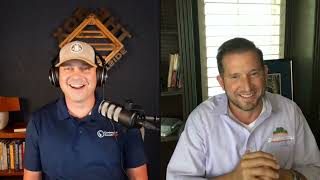
Podcast episode (Contractor Radio) in which host Jim Johnson interviews Garen Armstrong of Shamrock Roofing. Armstrong describes growing up in a family construction business (father started in 1977), later leaving and returning to help his father, narrowing services to focus on roofing and gutters, learning insurance-based sales via door-to-door work, and ultimately taking over Shamrock after his father’s illness and death (father died 2016). Armstrong recounts a severe personal health crisis beginning in 2018—acute heart failure after inhaling smoke, implantation of a HeartMate 3 LVAD (first in Kansas City), multiple surgeries and infections, and a near-transplant wait during COVID. He reports company revenue growth since 2017 with milestone figures: ~$3M (2017), then growth through $7M, $15M, $25M, $32M and projecting $38M–$40M in the latest year.
Questions this video answers
1977.
2016 (fall of 2016).
Since 2017.
Approximately $3 million in 2017.
HeartMate 3 (left ventricular assist device); described as the first one in Kansas City.
Chapters
Hey, good afternoon, everybody. It is Jim Johnson, your host here with Contractor Radio and the head coach at Contractor Coach Pro, where we help contractors get control of their business so they can grow their business and achieve that lifestyle and personal freedom and financial freedom they were chasing when they started their business. Today is going to be a show of miracles. It is something that I've wanted to have this guy on for a while, but I waited intentionally for this particular time and place to do so. We're doing our Contractor summer series. This guy is an amazing individual who runs an amazing business, and he's got unbelievable talent that steps in and fills the gaps. It is my honor to have on our show today from Shamrock Roofing, Garen Armstrong. What's going on, man? It's good to have you, Jim.
It's great to be here. It's always great to be in your presence. Really is.
Well, we'll get to the story of, like, how we met and what all went down there at some point. But just so all the listeners know who you are and a little bit of your story, like, how did you get into this home services, construction, roofing thing? And just kind of bring us up to speed with where you are today.
Sure. Garen Armstrong, Shamrock Roofing and Construction. And I got into it when my dad was started in 1977, but it was a side thing. It was his main deal. And anyway, when I worked doing that growing up, but I did not want to do that all my life. So it's hard work. And anyhow, I wanted to sit behind a desk or do finance or something like that. Long story short, I went and did that for a minute, and then it didn't work out. My dad got sick, and so I got back into the business to help him. And it's been a whole change since helping him back in the day versus what it looked like, what it looks like now in regards to the business, the size of the business, everything about the business.
So. So were you guys like, like, sell it and install it, too? Like you actually did the work?
Oh, that's all we did was the work.
Like, yeah, you're all like. You're tearing stuff off.
Yes, yes, yes.
You know, you hear this term for those kinds of companies, right? Like Chuck in the truck, Pete in a pickup, that type of thing?
Yeah.
Is that. Is that kind of how it started?
No, it was more started with my dad and his friends and uncles and, you know, and a side thing. It wasn't just roofing. It was electrical. It was, you know, framing. It was everything Plumbing, construction, everything.
And so everything from building a house to putting a roof on.
Yes, from putting a roof on. And so then, you know, it was. It wasn't. It was doing too. Doing too many things. Right. Because of all those. We basically honed them down to, you know, roofing. Before we had roofing, we were roofing deck, all, everything we need government contract work. But it. But we had to stop. Well, we have. Once we stopped the government contract work, once we stopped doing all of the other things, and once we focused on roofing and gutters, then we started growing like wildfire.
Okay, so you trimmed down all the offerings to what made you trim them down first? Like, and how'd you decide which ones?
There was too many distractions with them all, and it was too difficult to train your sales guys, your estimators, on multiple things. You chase two rabbits, both will escape. And so once we honed in on the largest ticket item, most profitable item is how we chose to answer the question. And then we was able to scale from there.
That's actually pretty smart. I think a lot of people, they find fear in that. Like, hey, there's a job I could go do if I just go take it. Right. And so you're now saying no to things that you would have done before. And this fear of being able to fill it with just a little bit of the stuff that you were doing before, how did you overcome that?
It's a real fear, and it did impact our revenue and our numbers, but. But we planned for it. I talked to it with my controller, my cfo, let them know that was the plan. And, you know, we. We just financial. Modeled it with the increase of. Of of the roofing sales, you know, and just effort. And we ended up even beating our effort with just the roofing sales because it's such a distraction when you've got so much going on. There's something about being able to have, you know, singularity of focus.
Yeah. One of the things I love about it is how you can market it. It's hard to market. We do it. All right. It's hard to market. Like, I'm a general contractor, and what does that mean? And there's variations of commercial, general contractor, home general, there's all that stuff. But if you can say, hey, I do roofing, you can be very specific in your marketing to people that actually want what it is that you do. Did you guys, like, click to that right away? Like that was part of the thought process, or did you come across that or learn that later?
I learned that later.
It does make it easier. Would you agree?
It makes things easier? Yes.
Yeah, for sure. It's one of the things. Whenever we're coaching, we look at a contractor and they're like, they do everything. Roofing, siding, gutters, windows, screens, coming ac, all of it. And we're like, okay, which ones are the most profitable? Which ones give you the most grief? Let's get rid of the ones that give you grief. Let's focus on these two or three and then market those two. Two or three specifically. And it goes pretty well normally. And you can systematize it then. You can scale it then.
Yes.
Is that is. And so is it down to just roofing now or do you do a couple of other things too? We.
We do. We'll do siding and we'll do, you know, interior. We don't advertise it. And. And it's one of those things that if there's a client, it's a big client and they want it all done to, to get all, you know, they want it all encompassing. We can do it. I'm a class A general contractor, can build bridges and skyscrapers in 48 states. So we can. But we try. We try not to.
Yeah. Okay, I got you. As you, as you transitioned from do it all with dad, and then you're transitioning now to keeping it down to two or three things that we do, really great. What were the biggest obstacles? Did you start to become the leader of the business? Was dad still the leader of business? Was there for any friction there? What happened there?
So, no, what had happened there was. He had.
We weren't. I.
He and I had left the business when I was younger and. And so I then was helping consulting for. I had a finance background and software, built a software and sold the Department of Defense. It's another story. It wasn't a home run. It was more like a single. Like, I bought and beat out a single. So it sounds cool, but it's really wasn't cool. And I was like, okay, every, you know, I'm around with a bunch of very smart, passive aggressive people all the time, you know, and technology. And I'm like, you know, I really like the construction thing, you know, construction management aspect of everything. But, you know, maybe I'll try this. But I want. I want to try something. Something different. You know, growing up in the business, I had my dad's friends that, you know, there have businesses and everyone else, so I could easily gotten a job back in construction in any other multitude of business. I answered an ad out of a Craigslist because I didn't want to do that. I wanted to learn something completely different to see what I could. You could do. Long story short, I was out an ad from a company local, said they're local and. But they're out of Texas. And that was a project manager job. And they gave me a stack of cards and they said, go knock these doors. I'm like, what in the world?
Yeah, What I get myself into?
What did I get myself into? And I'm like, okay, well, I see other people that are successful doing this, so I'm just gonna see what this is about. And I. I was really weird at first because I'm used to being in boardrooms and I'm used to being, you know, so I had to really check my ego at the door. Like, what? You know, and then it was boardroom.
To door to door. Sales guy.
Yeah. Yeah. And so.
But.
But. But then it was fun because I could just sit there and freestyle with people and talk to people and help people. So I like that aspect of it. But immediately I'm starting to analyze, you know, his business and business processes and systems. The guy I went to work for, you know, and like, oh, this is, you know, I see what's up. But what I learned from that was I learned the insurance side of things. That's what I didn't have with my dad's business. It was Chuck in a truck side hustle business. You know what I mean?
Just right.
You know, growing up and, you know, that's what you. What you learn. So as we did. So that's how. That's. That's my story of how I got into this and then continue to move forward. Then I. My dad got sick. And then I came back and helped take Shamrock. Learned what I learned in the insurance side of business with construction management. Classy. General contractor license. And then what I, you know, what my dad taught me with work ethic and everything else. Then, you know, all of those things combined. And you know what I've learned in the sale with the Department of Defense and the other deal. So there was a combination of things that I learned that was able to help me take this over after my dad passed, got cancer and passed away. That I was able to take it Shamrock and grow to this level.
So give us a little bit of growth patterns. How long have you been running Shamrock and what does that look like over time?
I've been growing it since 2017. I passed away in 2016. It took a little time. Morning. Getting everything together. In. In. In. In the.
The.
The fall of 2016 is really kind of when everything started to come together. And then 2017, so 2017, it was, you know, really 3 million, 3 mil. You know, 2018, that's when I had this. I got, you know, the infection in my heart, and I had to go get this pump. Heart pump put in, which is. We can talk. Well, that was in 2018. And. And we had 3 million after that. It was 7, 15, 25, 32, and we're hitting 30, 38, 40 this year.
Wow, that's some pretty exponential growth. And you alluded to it just for a second there. This is the part I really want to talk about because I see a lot of guys that there's nothing you in their way. It's just hard work is what's in their way. You alluded to got a heart pump put in in 2018. Is that right?
Yes, 2018, I had that.
So this is two years after your father had passed. Obviously, there's probably some concern there, right? Like now we're thinking all kinds of other things, and this business is now just starting to take off. How did you manage that?
Well, you know, back up a little bit. I had immediately I was working a hotel that burned down, and I was breathing in this char, and the char went to my. My gave me a sinus infection that went to my heart, and my heart went bad. In 45 days. In 45 days. It went so bad that I code blue. I got dizzy on the way to the hospital. And on the hospital, they code blew me. And it was immediately I was in the surgery room and they were opening me up. It was so bad. They kept me, did more tests on me, and then they was able to. They had to cut me open and put a heart pump in me, which is the heartmate threes, the first one in Kansas City. And it's just a. A flow that will. Keeps. Keeps your blood flow. So I keep my organs alive. Because my heart was so bad. I just had. I was on the list to get a transplant or live with that at that time, I had to heal enough still to be able to receive a heart transplant. And because I'm a. O positive blood, I can give to A's and I can give to Bs, but Os can only accept O's. So the list, the wait time was longer and it was during COVID And so I ended up spending, you know, three years waiting for the heart. Just. Just shy of three years. But even back that story up, while I had the HeartMate 3, you know, in. I was living on batteries. Batteries. I wear, you know, Under Armour football pants so I can tuck the batteries in my jeans, put jeans on because otherwise they want you to wear this vest and look like a goober. And I still wanted to have some swag, you know.
Yeah. Look good while we're at it. Right?
Yeah. And so I put these and they look like, you know, it was a little. Had hips, you know, but it worked. And I was able to tuck the wires in there because I had a wire hanging out of my side here. And I was able to go to work. So I was able to go to go to work with these batteries hanging out of me and this heart pump. And so I just, I showed up, I kept going. But during that time, you know, the business was just startup, you know, taking over and was going. And then I got sick and then a lot of the team, absent a leader, they leave. So they left. But the people that stepped up who are here today have really grown, grown personally grown the business, grown so much. Every person, everybody, myself included, all of us. And it's, you know, we really, through this journey had just locked arms and marched forward together. And then, you know, when I'm gone, I'm in the, in the hospital, they're able to, you know, just keep, keep things going. It's just keep it moving forward, you know, because after I had the heart pump, I was working and I was throwing some shingles and I ended up ripping the heart pump out of my, my heart. And so the blood was filling up, filled up my pleural sac that holds the lungs. It filled up. Your body holds, has seven liters of blood. It had filled up three liters, was pushing my, my lung up. So I had to go back in, have another surgery to. To sew the pump in and, and drain all the blood out of my lung and everything. And then during that surgery, saved my life again. Same surgeon then, but. But during that time it got infected and the infection is ultimately what was. Was killing me faster than the heart pump because of, you know, just the infection around the metal around heart. It was bad. So I had to, you know, have a couple surgeries in that time to have all that cleaned out. But to the point, finally I was in ICU dying in 2020, just, you know, in December of 2020. And it was just a real scary time there and, you know, not knowing whether, you know you're going to live, you're not. But it was, in retrospect, it was a great time. I learned so much from that time, reflecting in myself, in life, in my kids lives and in my family's life and everything. So it was very, you know, there's definitely the seed of equivalent benefit in going through an experience like that.
I really hate interrupting these videos, but I've got some important information for you. If you haven't tried out Atlas Shingles, you should, because they put you first as a contractor. They want to give you a competitive advantage out in the field so that you can win more sales and be more profitable. Check out Atlas in your local area, find your local rep, get hooked up with them today and start making more money tomorrow. Sam.










