Grab the Bull by the Horns with Mat Mulholland
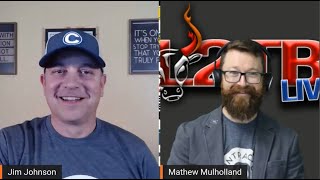
Mat Mulholland, a public insurance adjuster, explains why policyholders need PAs to push back on insurers. He calls out common insurer tactics like "we only offer direct physical loss" and "our position stands," and discusses how contractors and adjusters can work together better across different state licensing rules.
Chapters
Hey, everybody, it's Jim Johnson here, the host of Contractor Radio, and we are going to be doing our show a little bit live today. We are hoping for a special guest. I'm hoping he pops in. We're going to go ahead and get started though. Maybe there was a time zone misunderstanding or something like that. But once again, host here, Contractor Radio, this is Jim Johnson. And yeah, that always kind of throws me off when it doesn't happen, when I'm hoping it's going to happen. But we had a backup plan. I like up back plans. So we're going to talk about some fun stuff today. Oh, look at there. I. Our special guest has arrived. This. This is good. This is good. I. I don't have to go with the backup plan, although that was going to be good as well. Welcome to our show. We want to say thanks a lot to all of our sponsors out there. Those guys are what makes this show possible. We're so thankful for them. It allows us to have great guests like this. And with this guy, I'm really actually pretty excited to talk about. He's one of those guys that kind of thinks outside the box a little bit, which is the way we look at things. And he is the host of I believe it's the no Bull podcast or Listen to the Bull or something like that. He's going to tell us all about it here in just a second. I think he even has his background on, so he's going to get to it really, really quickly. Normally we go over all this stuff for about 15 minutes before the show, but hey, we're going to do it while we're here. Just so you know, I've gotten to know this guy a little bit over the last few shows and it's been really cool. I really like the way he looks at things. We seem to have a lot in alignment about making this industry a better place. So without further ado, I'm going to go ahead and bring him on. His name is Matt Mulholland. Matt, welcome to the show. Glad to have you, buddy.
Thanks for having me, Jim.
Yeah, no problem, no problem. Why don't you, you know, before we go any further, why don't you catch everybody up to speed, kind of give us a little bit of your background. I love your shirt, by the way. Shirts. Amazing. It looks like that one right there. So bring us up to speed. How'd you. How did you get to hear a little background and what are you up to?
Well, I am a public adjuster. One of the things that I like to do mostly for lately with this show that I've got, which is listen to this bull, by the way. We like to train contractors, public adjusters, give them as much free information as we possibly can to help them with their claims. There's a lot of bull that goes on in this industry and with all of the crap that is fed to contractors, public adjusters, attorneys, policyholders, it's nice to be able to cut through that, let people know what the truth is. Because most of these adjusters, they don't actually know what they're talking about. They're being fed the same crap from their higher ups. So we want to make sure that we can, we can share our knowledge as much as possible. And that's something that we like to do. I come from a contracting background. I was a roofer to start off with many years ago. Roofer, Really?
I did not know this. This is new information to me. So how long were you a roofer?
I was a roofer for four years. Right after the economy crashed in 2006, 2007. That sound about right? Something like that.
Okay.
Yeah. So I had. I could go back further than that actually to really start this story off. If you really want the full thing, you want the whole thing.
How'd you get here?
All right, so this is interesting. So I went to school for aerospace engineering. I had a Air Force scholarship, full ride. But when, I don't remember who it was, but there was. There was an administration that was taking in too many second lieutenants that year. So they were taking volunteers to get out without having to pay back for college. So I was four years into my five year engineering program and I started volunteering to get out because I couldn't get the pilot slot that I wanted. Most of that was a vision related issue, which is a shame because I was a shoe and I was really, I was ready for it. But so I took the route out and they accepted my application. To be one of those that they allowed out of the program without having to pay them back is great. And I went to look for a business to start. And I've done a lot of different things since then. I was selling Disney tickets for a while online. I might have ruined things for a lot of people out there because of that. I was selling convention tickets. When you attended a convention, you could get deeply discounted Disney tickets. So I sold those tickets by signing up for the convention and then purchasing a lot of tickets and selling them on ebay for a slight discount, more than you could get for yourself otherwise. But I got some of that difference. I was even driving into the Orlando area to do hotel deliveries for additional costs and things in order to make sure people had their tickets in time. But they didn't like me doing that because these were people that were getting these deeply discounted tickets that normally would pay full price to them. And I kind of stole those customers for them. So they. They started saying that you couldn't do this. And they started taking my customers and asking them if they were going to the convention at the gate. And I got a lot of bad feedback. But I had about 60 tickets sold the last time I did it. And I had to go down to Will Call to pick them all up. And I remember going up to this Will Call Booth, picking up 60 different tickets, and the lady says, what's your name? It's Matthew Mulholl. Oh, hang on a second. She walked over to the telephone, picked it up, looking at me all nervous, and she's like, it's Matthew Molecule. I went, oh, going down. So what I noticed, though, was that she had opened up my name. And when you do that in their system, something I figured out about a week before is once she opens up my name, she actually unlocks the ticket. So I had a colleague of mine run down to a Will Call print station, get your tickets printed out. And while it was open, while she's on the phone trying to get security or somebody out there, my other guy got all the tickets printed out at the local machine because she unlocked them for us. But that was the last time I was doing that. And they no longer sell those tickets at a deep discount. I'm very sorry, Disney goers. Very, very sorry.
You messed it up for a lot of people, but you were thinking ahead. Like, it seems like you were kind of thinking ahead on that to make sure that you at least covered the people you had. So from there to roofing, how did you get into the roof?
I had to have another business. I really enjoy being my own boss. So I got involved with a pressure washing company that were pressure washing roofs, sidewalks, driveways, all that fun stuff. We were knocking on doors, doing that. We were using this process called applesauce. There's a company called Apple Roofing in Florida that put together mixture of sodium hypochlorite, really high concentration, 12% sodium hypochlorite pool, chlorine, borax and trisodium phosphate, TSP. And you can put that on the roof, let it sit for like five minutes, and then rinse it off with a crap ton of water. If you didn't do a crap ton of water, you were killing all the plants. But that, that basically cleans it off without having to actually use pressure. So I'd say pressure washing, but it was really no pressure whatsoever. And it made the roofs look brand new again for the most part. So that's when the economy tanked, though. Nobody was buying pressure washing services from a dude knocking on their door at that point. So I went and sold cars. I'm almost there. When sold cars for Toyota, I only sold the new stuff. For some reason I had this image of a sleazy used car salesman stuck in my head and I didn't want to be that guy. And I'm a big gearhead geek, so I wanted to be able to talk about the new cool things that were coming out. So I was selling Toyotas. I ended up in the top 3% of sales for them that year. It's only half a year, but I still ended up in the top 3%. And then we had two months where there was three cars sold at the entire dealership because of the economy. So we were in Florida at the time. I was in Daytona beach and my wife was from Georgia and a lot of her friends were still up in Georgia and they said the economy was doing fine up there. At least it was better than Florida. So we decided to move. I got myself tied in with a dealership up in the Atlanta market, Marietta, if you happen to know where that is. And we went up there. I sold cars for another three months. And there's a dude walked onto the lot that had a roofing company.
That wasn't you, that was a guy like me. He's like a good sales guy. I'm gonna get that guy.
You go to car lots like that?
Yeah, oh yeah. I've done that in the past.
It was the weirdest thing because I did not attempt to sell this guy a car whatsoever. I just sat there picking his brain about what it is that he was doing the entire time. I didn't know anything about the storm restoration world, but I was open constantly looking for something. I didn't want to be a car salesman forever. I was looking for the next business and some kind of opportunity. That guy showed up, pointed out some AC units on the top of a large shopping center across the street, said, you see that salt and pepper and going on there? That's hail damage. So I put in my two week notice and went to go work for that guy. He told me he was going to train me. That didn't happen like a lot of contractors. He told me to get, get five people scheduled for the next day and he would go out there and do the appointments with me. Well, I made seven appointments for the next day and he couldn't go out there with me. So I went out there and I figured it out for myself with those seven signed up three of them. He said, alright, well I'll be out at the adjuster appointments with you. He didn't go to any of those. I won one of them. I don't remember if I won the other two, but I distinctly remember winning one of those and went from there. Then he said, oh, I'll teach you how to supplement your claims. He didn't do that either. I had to figure that out on my own. So we started supplementing things and then I got involved in a lot of the forums and websites. I was already on a roofer forum for the Applesauce. So roofing contractor talk or something like that. There's a lot of my old stuff on there still, but yeah, so I became a roofer and I was slinging shingles, selling hail and wind at the Atlanta market and I got good at dealing with the insurance companies and I got pretty active in a lot of the forums. Love the playing field became a thing at that time. I got pretty active there and learned a lot from other roofing contractors. I realized that I was somewhat exceptional in dealing with insurance adjusters. Even though I hated it, I hated it with a passion. But I figured if I hate it, other people probably did too. So I became a public adjuster and started my PA firm, walked away from the roofing contracting firm, left my partner there and been doing this ever since.
That is a pretty wild story. I laugh because I literally used to go into a car lot once a month, every month. I had a rotation of them that I would go through and I would always go and say, hey, who's your youngest hotshot sales guy? That's who. I want to sell me a car. And he'd be working for me within a couple of weeks. So yeah, that's kind of an old school technique, I guess. I actually did differently though. We trained them, we actually went out with them. We, we did a decent job there.
I'm glad to hear that.
Yeah, we worked hard on that side of it. So Matt, what we're going to do right now is I'm going to give you a question. Once you think about it, we're going to break for one of our sponsors here. We're not really Going to live. Like we're just going to take a little quick break so they have a cut spot and then we'll come back. Okay? You good? All right. And now a word from our sponsors.
Hi, I'm Ricky Harmon with Balance Claims. I'm here in the balance Claims office to help answer one of the questions I hear all the time. Why use balance Claims? Well, I have two of the account managers here, Travis Croft and Emily Caldwell, to answer just that.
Contractors should use us because we have experts on site that are well versed in xactimate, able to write our estimates and make sure that your claims have everything accounted for, making sure that your payments out correctly. Contractors should use Balance Claims because we are hassle free. You have the time to focus on the homeowners and the sales for these roofs while we focus on the insurance claims for you. That is where time is money and we are here to help you.
So you heard it from our ams. There are multiple reasons why you need to be working with balanced claims. If you want to reach out to us, our email is successalanced claims.com or you can reach out to me, me directly. Ricky Harmon at 317-360-0903. Talk to you soon.
So here's the question. The question for you is, what's your greatest achievement today? Not including getting married, kids, that kind of stuff. That's easy. We all know that's our greatest achievement or should be because our wives will kill us if it's not. So what's your greatest achievement otherwise?
All right, well, that's a good question. I've got a few things popping into my head as being a good, solid achievement. And if you're taking away the whole wife aspect, that eliminates it down. I'm down to about three big things that I feel good about. I think. I think becoming relevant in my industry has been my greatest achievement. And the way that I did that being really the key. I didn't do it by spending a lot of money. I didn't do it by being the loudest kid out there trying to scream my own praises. I did it by giving away information, by giving my secret sauce away for free. Now I think I'm good at what I do. I'm very biased, obviously, but I think my great. Yeah, I like this answer. My greatest accomplishment is becoming relevant and establishing myself in this industry by giving as much as possible.
I knew who you were before I met you. I hang out in that same forum, level the playing field and. And there's four or Five characters in there that always brought really strong game, you know, almost an overabundance of detail and information. Somebody asked a question, and you being one of those people, I noticed it was like every time he answers a question, he does it with sincerity, full information. It's not just some quick little post or comment. If you, there were some detail and you shared like documents, you shared things that you were doing. And I always had some respect for that because I think a lot of people don't. And I actually think that's the secret of kind of becoming relevant in our industry is being willing to share, you know, throw it out there. These podcasts all the time. We do training events all the time. We don't charge anything for them. And we hope that people find value. We hope we raise the bar in the industry. And I think you're trying to attempt to do the same thing. And so that's, that's pretty cool. So we're a public adjuster and now, you know, like, I don't know, like. What do you think contractors think of public adjusters?
Well, there seems to be a dichotomy there. There's definitely a group of contractors that think that public adjusters are just greedy and they're slow and they just get themselves involved in a claim because they have to every now and then, but there's just no reason for them to exist. There's definitely a group of contractors out there that don't understand the role of a public adjuster. Maybe it's because they got burned. For that group of people, I'm hoping to change their minds, but in order to do that, they have to find a decent PA to work with. Then there's a lot of contractors that believe that a public adjuster is there to help with coverage issues and policy requirements, but they only really need to get them involved once they hit a snag. There's actually less contractors out there that want to get a public adjuster involved from the beginning than there should be. And that's something that I really love to change their minds on.
So let's, let's, let's do that. Let's talk about that a little bit. Because, you know, I'm an old school contractor. I've been around this business for 23 years and 40. For most of that time, there was no need for a public adjuster. It was, hey there, you meet an adjuster. He would call it either damage or no damage. And we discuss scope, get things most of the time worked out and perform the work, make a homeowner happy, hopefully. And everything was pretty hunky dory there for quite some time. And then for whatever reason, something changed. The insurance companies weren't being as they were in the past. We'll just leave it at that. And so it made it a little bit harder, I think, on the contractors. Some laws were passed that said, hey, contractors couldn't negotiate. That word was used. And there was a lot of things you couldn't put on your websites anymore, like claims assistance or anything like that. And it just got where it was a lot more difficult. So I think a little bit of the contractor side is like, who did that? Who made it happen that way? So now this PA guy has to be in the fray. You got any insight into that?
I have not dug into this particular topic as deeply as some people think that I should have. I've had a few conversations with Mike Lindhurst about this. You know, as someone on the inside of the public adjuster world, it doesn't seem. It doesn't seem like we're actively trying to do anything against contractors, but they definitely have the perception that we are actively trying to do something against them. And I don't really think that that's the case, but I'm sure that there are some that are trying their hardest because they got burned by some contractor at some point. Here's the reality. You know, there is a judiciary responsibility that a public adjuster has with an insured. The money is coming to them. We have to act in their best interest. Can't act in our best interest. We can't act in the contractor's best interest. We have to act in the insured's best interest. Sometimes claims are better for the insured if the work isn't performed. If there's a fire that completely burns down a house, it's very easy for the contractor to get written out of the scenario because it might be better for the insured to go buy a house somewhere else than to try to rebuild. So I think that there's a lot of large loss, especially fire, like public adjusters that do a lot of fire stuff or very large claims that end up at policy limits on residential, where the contractor kind of gets written out of it and it hurts the. Hurts the contractor in some way. I think that there's been some animosity there, but I think the most of it, most of the issue has to do with the insurance carrier and their lobbying trying to make some infighting amongst us. If you think about where we hear the majority of these issues coming from it's coming from our own groups, it's coming from our own forums. It really doesn't make sense. Why would we keep saying anything about UPPA unless something new actually happened? There's no, there's no real fight between contractors and public adjusters. Not that I'm aware of. I work with contractors all the time and I'm a public adjuster. I'm the president of gapia, the Georgia association of Public Insurance Adjusters. I happen to be a member of napia. There's definitely a lot of information out there that suggests that someone like me is actively trying to hurt contractors. I don't do that. I wouldn't. I get the majority of my business from contractor referral. It would destroy my business if I were to actively try to do something against contract.
Yeah, so that, that's, that's kind of against the rules for contractors kind of team up with pas. Is that right or not?
So depending on your state. And this is all state specific stuff. You know, there, there are states where you can be a contractor and a public adjuster on the same claim.
Very aware of that. Like Illinois, Delaware. There's four. Is Georgia one of them?
Georgia and Illinois are the only ones that I'm aware of. If Delaware is one of them. I didn't know that.
There's just not a lot of claims. Nobody knows except for coaches like me that have to deal with stuff.
I'm going to have to look into Delaware and realize that. And even in Georgia, it might not be legal going forward for very long. So we'll see how things pan out here. But the laws are not that tight on anything. Even the upper regulations that do exist in most states and they have for a while, by the way, this isn't new stuff. It's just stuff that might recently start to get enforced. But for most states, the regulations exist, they're just not enforced because it's too broad. There's no real definition of negotiation. There's no definition saying when someone is representing someone else what that really means. So if a contractor is presenting damages, is that negotiating or representing an insured? If all they're doing is talking about what's on their estimate, is that negotiating or are they just presenting their own estimate? The terms aren't really clearly defined, so it causes a little bit of confusion. I think that confusion makes people a little bit more nervous. Fear comes from not knowing something about something. So if we could really define it and set hard boundaries so that a contractor and a public adjuster would know where those boundaries are I think it would make everybody feel a lot better. There'd be a lot less innocence fighting going on. I hope that we can figure that out soon.
Yeah, you know, I know there's some people that are on it, and I hope that it does get worked out, because you're right, it is a gray area. And I'm discussing scope. I'm not negotiating a number of a line item. I'm negotiating the amount of line items that should be in here because this is required for me to do the work. And we all use that type of language whenever we talk with insurance companies. But, you know, you said one of the things that you're trying to really establish is why a contractor should have a PA involved from the beginning. Justify your cause a little bit. What do you mean by that?
The whole reason I have my show and behind me, it's, I had the right arm. That was perfect. Oh, this is hard to do. There it is. No wrong way. There it goes live. For those of you listening to the podcast version of this, I just did something really weird with my hands and it took away. So we have this. Listen to this bull content that we've had for a long time, which is a video we put out, put out about one a week, sometimes two, where we describe some bull that the insurance carrier is feeding you and why it's not correct, why it doesn't actually meet the policy language or something along those lines. Some of that stuff is so obvious, it doesn't really make sense that it's even being presented to someone. And some of it is really sneaky. Most policies pay for the direct physical loss of the property, and direct physical loss is something that the carriers might say we only owe for direct physical loss. And that might be meaning that we only owe for what was physically damaged at that moment in time when the loss happened. But the reality is that direct physical loss actually includes everything that occurs as a result of that loss. Even down the road, if you're making repairs to a building and a further damage is caused that require you to make more repairs, that's still part of the direct physical loss. But the carrier might say, we only offer direct physical loss to try to get you to believe that they only owe for that small area that was actually damaged at that one time. This is an example I'm giving you because I want you to realize that there are a lot of little nuances in the way that they say things to the policyholder and to the contractor. And if you don't know really well what you're doing could lead to some issues. So if you're the kind of contractor that believes that they're really good at what they do, and I hope you are, and if you're watching or listening to this, you probably are one of those kind of contractors, otherwise you wouldn't bother. It's those kind of contractors that watch this because they're trying to better themselves. So good for you. Kudos. If you're the kind of contractor that believes that you're good, then you're probably the same kind of contractor that wants to do best by the client, by the policyholder as much as possible. Wouldn't you want to have the right expert involved at any given time for that client? Wouldn't you want them to be able to hand off all of this crap that they have to deal with because you're not a public adjuster, so you try to help the insured by providing them with documentation and get them to send this and get them that in. And I just spilled beer everywhere. Cheers.
Yeah, I didn't bring my beer. I went home.
You're killing me.
I went home to grab it and I said, I'm going to bring my beer, and I didn't. We have had beers on here before, usually with our coaches, whenever we're doing a little coach talk, back and forth. So my apologies when I'll have a beer, I promise.
That's fine. If you're the kind of contractor that wants to do right by the insured, though, you want to have the right expert involved. If you get a PA involved from the beginning, a good pa, then they're going to help the insured by not having to have them do everything. You can take control of the claim from the beginning. Now, a good public adjuster can more than compensate for their own fee, so there really shouldn't be any issue. Now, if the PA that you've gotten involved in the past let you down, took way too long, didn't provide you with information, well, shame on them. But not everybody's made the same. Not every contractor is the same.
Okay, so that's a big one. Right. The time frame, this.
Sure.
This is actually something we're doing some research on right now is how much does it cost us to have to deal with the insurance that if I was out selling retail, it'd be this. But because I'm dealing with insurance, it could be 30, 60, 90, 180, 365 days before I actually get to collect money on a project that I've sold, which isn't something that happens in retail. So what's the cost of doing business and insurance? I think if we can justify that, that might be something that might help a contractor justify his overhead that he may be charging in particular circumstances. So how long should it take?
Well, the answer to that is it depends on the claim and it depends on who the carrier is, what the fact pattern of that case is. Generally speaking, it shouldn't take a lot longer than what it would take a contractor for the same circumstances. It should take a little bit more time because you're getting somebody else involved that probably is going to do a little bit more thorough of an investigation on the claim. But it shouldn't take that much more time than it would take a contractor by themselves. Maybe an additional 30 to 60 days. Now if it's a super complex loss, then the public adjuster might take even longer just because they're going to really dig into every little nuance and every little part of that claim a little bit more than what a contractor would do. But for the most part, I don't think it would take that much longer for a good PA to establish and run a claim than what a contract would have. The problem is with communication. This is what I see. Public adjusters failing at all the time. If, if you're a public adjuster and you have a contractor that has graced you by, you know, sending claims your way, they've recommended that you get involved in their claims and they're putting all their trust in you and that's hard for a contractor to do. Being a contractor myself, when I was, I had a hard time not being in control. So the only thing that they really want from you more than anything else is communication. If you don't contact them and let them know what's going on with the claim or don't contact them and at least give them a little bit of information to let you know how much longer things are going on, you know, and the policyholder too. Don't ignore the policyholder and hope that the contractors are going to give them updates. How is the contractor giving them updates? You're not even giving them updates, but you should be in contact with the policyholder and the contractor. We like to give them access to our system. They actually have a login. They can see whatever, whatever's happening on their claims just by logging in. We give them access to everything, very transparent. So every note that we put in the system they get to see. Every email that we write to the carrier they get to see, every phone call gets recorded and they get to listen to every phone call. All of that information helps them realize that we're actually working on the claim. If you don't tell them that you're doing something on it, they're going to assume you're doing nothing. And then they're going to get really upset. And it's too easy to, to assume that the other party is doing nothing. This is a problem that business partners have all the time. If you got a business partner and you don't see them constantly working, physically see them doing it, you're always going to assume you're doing more than them automatically. Human nature.
Yeah. Had that experience before in my life. And it's common like you can't, you know, I did the whole conference thing and that was one of the big things, was that communication side of things, this connection that we have with people. We can't lose sight of that. So there's a couple things on my mind. Number one, what's, what's the. You, you said listen to the bull, right? Is that, is that how I say it?
Right? Listen to this bull.
Listen to this bull. And then you said all this crap that they say. So we're going to talk about the bull crap that we hear all the time. What was the top three bull crap, things that you hear from an insurance company that we go, we should go. No, that's not right.
Well, there's three statements that we all hear all the time. There's. We only offer direct physical loss. I think that's the biggest bull that they purport because it's just playing on people's assumptions.
And as soon as they see that, as soon as they say that contractor can't like argue that. Right? They can't. Are they able to argue that? Is that now go, oh, PA attorney, whatever. It's just out of my hands because now I'm arguing legalities.
I think that you do have to get a public adjuster or a attorney involved for that argument because you are arguing policy and case law.
Okay, so let's get to 2 and 3 and we're going to come back to that one.
The second thing that they always seem to say is our position stands. If they say our position stands, no matter what position it is that they're standing on, they're basically saying that they're not open to any more information. And if you are a contractor and let's say it's a repairability issue and you're saying it's not repairable and that insurance adjuster is saying it is Repairable. Our position stands. Who do you think has better credentials to say whether something's repairable or not? A contractor or an adjuster. You have more power there than the adjuster does. You have more power there than a public adjuster does or an attorney.
We should know what we're doing. I would think.
I would hope so.
That's, that's my argument about this whole thing is like, what is the public adjuster know about what I need to do this project? Really, the only thing it comes down to is that thing damaged or not? If it is, then this is what we need to do the work. Okay, so that's two. What's number three?
Every claim is based on its own merits. How many times have you heard that?
A billion.
A billion times. They say that for a reason. They say that to eliminate any precedent that they've set in the past for the same merits on a different claim. So if they say that to you, it gives them the out. So you can't go back and say, well, you did this on this one, this one, and this one. And now you're segregating against my clients by not doing the same thing for this client who has the same policy as all these other people do with the same claim fact. So by feeding you that crap, you're less apt to provide them with documentation from other claims where they did something differently.
We actually used to track that. To the best of my knowledge, we were the first contractor that had what we called a claim specialist. It was a person that would take the documentation from a salesperson in the field, put it all together, write the xactimate, make all the phone calls back and forth, and literally get it worked out with the insurance company. And we said, hey, since we only have two people doing this instead of 100 people doing this, how about those two people start tracking everything? And so if it was a State Farm claim or any insurance company just using them as an example, that paid a drip edge, for example, on a claim, whenever we would have another claim that they were saying, no, we don't pay for drip edge, we'd say, well, what about this one over here? And this one and this one? And so that's where that came about as like, hey, we can't have that happen anymore. So we're going to do it on its own merits. So my question to that always back to them is, so this customer that you're talking about now merits less than that customer you have. That would be an interesting conversation to have with those two customers. Now I can't say stuff like that.
Right.
But it always bothers me that that game is played in us. And that's where you guys come in. What legal standing do you have above and beyond a contractor that gives you the ability to solve those problems that a contractor can't?
A public adjuster. Again, depending on the state you're in, there are a few states that don't license public adjusters and there are a few states that do license public adjusters, but they're treated very differently. So for the vast majority of states, a public adjuster represents the insured. They're legally representing the insured on their claim, which means they basically become the insured. So a contractor can't legally represent an insured on an insurance claim. Anytime a contractor says something to the insurance carrier, the insurance carrier has the ability to completely ignore it. They don't have to respond. They have a certain amount of time to respond to an insured in many states. And if the representative of the insured says something to them or provides them with information, then in those states they have the same amount of time to respond to the public adjuster. They don't have to do that for the contract. Whether that's fair or not is not really in question. Obviously it's not fair. If you are helping the insured out, then they should be responding to you as well. And sometimes they do until they get to the point that they don't have to anymore. So then they just try to intimidate you and ask you, are you a public adjuster? Are you a public adjuster? You can't be asking that. And it's intimidation tactics.
No, I'm not. Response. No, I'm not. All right, so that's the whole, the whole thing is a bit frustrating in most cases. And here's the reason why. For large loss stuff, I actually understand it. I get it. I mean it's more complicated. There's more to it there, you know, there's, it's just a more complicated situation, especially when you're dealing with commercial, where you're dealing with some high end products and things like that in a residential version. So I do know that there are public adjusters out there that work with residential claims and they don't set a limit on it. But the vast majority don't. They say, nah, we don't do anything under like 50,000. They have some kind of arbitrary number that they just throw out. And they say, eh, that's too small, it's not worth my time for what I'm going to get paid on this. And so they say no. An attorney goes absolutely not and not even close to my fee. And so this, this homeowner is caught in the middle. It's the consumer I'm worried about. It's not the contractor. I'd love for the contractor to get the work, but this consumer that's caught in the middle of this whole dichotomy that's going on in our industry. You got any bright ideas of how we can solve some of that?
I have a few, but I'm not the first at the table with some of the ideas. Let me say this, and this might not be the most popular opinion. The idea that we're going to leave all of these people alone in a situation if UPPA ever becomes fully enforced is a temporary issue. There's not enough PAs to handle all the claims right now. That is 100% true. But that would be a short term problem. The market always shifts and always adapts to meet these needs. If that ever actually occurred, PAs would get licensed left and right. There would be a ton of new public adjusters available or some kind of technology would come out that would help things out. There are a few different companies that are trying to fill that gap right now using technology. There's the virtual Public adjuster. Have you heard of that?
I have.
Bulldog Adjusters out of Florida has something very interesting there. There are a lot of legality concerns and questions that a lot of people have on it, but they have some good attorneys involved in it. If that ends up working out and taking off, that could fit all of the needs. It's just like doing a, a virtual assist with a, with a ladder assist on the roof. You got the adjuster on the phone and the ladder assist is showing the adjuster around and giving them their opinion. The same thing is going on for them with the contractor holding up a public adjuster on the phone to the adjuster saying, here's the public adjuster on the claim. They can have that argument. So the public adjusters have to be there on site, which allows them to be at a lot more, which allows their overhead to be low enough that they could justify being involved in volume small claims. I did volume small claims for a long time. For years we were handling a ton of claims. Our biggest year, we had 3,125 claims. One year. It was insane. I don't know if I could do that again. It was way too many claims. I think I was on, I think my best day, I was on 14 roofs in one day. It Was a rough day, but I was averaging more than nine groups a day. And so that's initial inspection, the adjustments, meeting an adjuster out a second time if necessary. It became an issue. The harder things get with the carriers, the more times you have to beat on site, the less likely it is a public adjuster to get involved. My point on all this is there is a need for a public adjuster on the small claims. We all see it. Contractor doesn't have to fill that need. There can just be more PAs as a possibility. And if laws keep getting stricter the way they are, regardless of who creates them or who's pushing them, it's the situation that we're in. I think that there will be more PAs. I think that the market will shift and adapt to it. Either it's going to be through some kind of AI technology, something like the virtual assist kind of a deal with the public adjuster, something along those lines. Something will fill that gap. It's just a matter of time.
Yeah, I don't. I actually don't think it's a bad idea. I mean, it's. It's really like, hey, a guy holding a video camera run around with a video camera, letting you do your job so you don't have to be there. Like you said. Same as some of this ladder assist stuff that we see. Still doesn't excite me, to be honest with you. I wish the homeowner had the power that they should have as the owner of that contract and the risk of that. The insurance company owns the risk. The homeowner is the responsible party that should receive the benefit. And really it's between the two of them. And now we get these other three people involved, a contractor, a PA and an attorney, which makes everything get really squirrely. And, you know, I, I'm in agreement with you. I think there's going to be more. There already is. There's. Man, there's 50 times the number of PAs in the last two years than there was before that. It's amazing how many of them are popping up out there. I almost think that they're going to be more like what a roofing salesman would be than as they are roofing salesman. At some point, unless. Unless a law gets changed, unless something happens where a contractor can handle those claims that are under 50 grand and be that homeowner's representative and be part of the equation. If I think if insurance companies are smart, they would probably say, yeah, okay, 50 grand and less, we're good, like, we'll deal with you. And we'll get back to you and we'll follow through with you. But I don't, I don't know when that's going to happen. I just know that something's got to happen. Whenever you have this kind of friction in a situation, something's gonna happen. APA is doing a good job of kind of bringing that to bear. I'm a big believer in those guys. I know you are as well after our interview where you tried to catch me off guard, but I think I rolled with a bunch of Lisa, that was a lot of fun. All right, enough. Enough PA talk. Are you good with enough PA talk?
That's fine with me. I talk about this crap all the time, so.
Yeah, I know, and I do, too. And I think it's great. And I think it's important that we know. So I got a question for you. You have a beer on your show, right? All the time. Every. Every show.
Every show. Every show.
What's your favorite kind of beer?
I really like porters and stouts. I like dark beers. Unless I'm really thirsty.
You know, if I was gonna guess, that would have been my guess is that you like those darker beers. I'm kind of more of an IPA guy myself.
Are you? Yeah, I actually, I'm not a huge fan of ipa. This is an IPA that I'm drinking right now. It's not so bad. I actually like this one. Okay. Can you see it?
Yeah.
A 420 strain IPA from Sweetwater. Sweetwater is a local brewery in Georgia.
Did you say a 420 strain? Yeah, I, I, I didn't know if I caught that.
That's what I said.
Is that legal?
It doesn't have any marijuana in it, I assume. I did not read the label before drinking.
Well, we'll see how the rest of this.
If I'm drinking marijuana right now, I feel like Elon Musk suddenly. Just a weird interview.
I tend to have some weird interviews here and there. So here's the next question for you. For several years, you were, you were just kind of one of those guys that was on the forums and making comments back and forth and stuff like that. And here recently, you've been a little bit more, I would say, front facing. Would that be a good way of putting it?
Yeah.
What was this? What made you say, hey, I got to put myself out there and do this?
I mean, I was always trying to put myself out there. I gained the most of my business through my Facebook interactions. I've provided a lot of free information. Either by answering someone's questions and then talking to them outside of Facebook until it became a business relationship or not. But I really, I ended up getting enough business. I don't really need a lot more but I thought it was important to share the information. There's, there's a lot of PAs that need help. I constantly hear about public adjusters looking for someone to help mentor them. I know that there are mentor PAs out there that you can get with that'll charge you for doing things. I try to give my phone number has been available to every PA possible. I get more calls from public adjusters and from contractors these days asking me what to do in certain situations and I'm completely okay with that. I like being able to help. So there's, there's situation here where I just want to make sure that I present the information and I try to do it in a way that's somewhat entertaining. I think my videos are okay. I definitely can take something that's very, very boring. Like everything about pas is try to turn it into something a little bit entertaining. It's not, not every video is, is super exciting or super funny. But I try to do as much as I can with it. But the benefit here is if most PAs benefit and get better then some of these issues, some of those three main problems, this, the three big bull items that we keep getting from the carrier. If we keep giving them the same information back, saying you can't say this because it's full and here's why and we give them that information, then it should help the industry as a whole. Maybe public adjusters won't be as needed in the future because there's enough information provided that it's not, not necessary.
So let's say that happened. How would that make you feel?
I'd be ecstatic. That means that I've done my job. I, I think that well, I mean the industry evolves all the time. There's always a new argument coming from the carrier. Right. There's always some new crap that they're trying to feed or the policy language has changed. So I don't think we'll ever actually push ourselves out of the industry. But if we did, that means that I've been very effective at training. That would make me very, very happy. It probably means that I've done pretty well for myself to too. So I'm not too scared.
So one of my clients hopped on. He goes, this is an insurance related 420 strain G13 IPA. This aromatic super hybrid sticky IPA is first and foremost, a phenomenally delicious and drinkable beer, with the added bonus of an olfactory experience that mimics that of the legendary G13 cannabis strain. The IPA based brew has a great body, good head and nice amount of haze at a pleasurable 6.56% ABV. To work with the Maltville, the Brewers added some of their dankest hops, Columbus and Simcoe, plus two dry hop additions. So we got a little education on your beer there.
I mean, who doesn't like dank hops, right?
And thanks, Justin. We appreciate that. We. I was wondering what the deal was with dank hops. Sounds pretty amazing.
I don't know what that means, really.
I. That's. That's a term. Like, my kids, they call me a boomer, right? Like, first off, I'm not a boomer. Like, I'm younger than that. I'm a Gen Xer. And so. But anytime I do an old guy thing, they call me boomer and send me all kinds of memes and stuff about it.
So they say the same thing about me. And technically I'm a millennial, so. How about that?
Whoa. Yeah, I thought you guys were worthless. That's what everybody keeps telling me.
There are a lot of us.
My kids are millennials. And I would argue that. Yeah, it's one of those things. I think millennials get a bad rap because they're not motivated by the same thing that Gen Xers and boomers are. And they're not called boomers. Baby boomers. Be nice about it. Are motivated. We're motivated.
History. Old people have always complained about the youngest generation all the way back to recorded history. You can see that. So there.
Well, like, for example, here's a great example. I say that the millennials are going to be the ones that kind of break everything. They're going to break the mold because they're not following the same script we've always followed. Our script has always been fairly competitive. Survival, achievement, try to get ahead, that kind of thing. Been very money motivated and achievement motivated. Where these millennials, for some reason are motivated by something different. They're looking for purpose. They're looking for this ability to make change and positive change in most cases, or what they may deem as positive change, which could be argued, which I find incredibly cool. And you can see a great example. It happened last week, the whole GameStop thing, right?
Oh, yeah.
Wow. A bunch of kids just broke these hedge fund deals. That was amazing to me. I'm like, yep, there they are. Watch out. If they find something that they can get behind and have some belief in they're going to do amazing things. But that should be education to us older folks. We go, hey, they're not as pitiful as we thought they were. They just need to have something that they're passionate about. And so what can we do in our industry to give them passion? And most of them are really passionate about serving others, it seems like to me, you know, making the world a better place, we can do that in contracting or in public adjusting if we do it with the right attitude. So. So don't give up on those guys just yet, all right? I haven't given up on you, Matt. I really have. Oh, good. So I got another question for you. Is the last question. And we're running bumping into time here. And so before I ask that question, we're gonna do a little break for one of our sponsors. We'll come right back. It's most important to have a strategic partner. And that's the way that I look at Atlas.
They're my strategic partner. You start breaking it all down and you, you look at the product and you look at your company and what you're trying to deliver to somebody. And Atlas right now is pushing that best product by far.
We feel like it's the best product.
Out on the market.
It's a no brainer. When it's, when it's time to sell.
The shingle actually sells itself. I've been incredibly impressed, actually. They have the best warranties. They can guarantee no streaking. They guarantee longer lasting seals. And whenever you're selling somebody something that you want them to feel comfortable, we want to offer them the best product that we have available to us. I want to leave my homeowners with.
A long lasting roof that they're not.
Going to be mad at me in.
10 years and say, why did I.
Spend all that money on the roof?
It looks so ugly.
If you care about your homeowners, you're going to get malice. Atlas is a great new partner for, for customer service.
We have any issues we do have Mike, come out immediately and address those. If we have any warranty claims, they back us up. And they're very supportive of what we do and how we do it.
Atlas takes care of me. They want to make sure that I'm.
Happy with the products I'm putting on.
The literature that I'm getting, the questions that I have.
We never had support from the other companies. None.
I like my partnership with Atlas. I feel like I'm not a commodity. They make me feel like your opinion matters.
They kind of treat us like family. We started with Alice.










