How Marketing Has Changed and What Contractors NEED to Know!
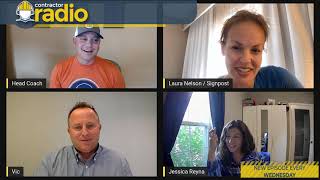
Jim Johnson hosts Laura Nelson, Jessica Raina, and Vic to break down how contractor marketing shifted to digital during the pandemic. They cover automation tools like chatbots and text updates, tracking leads through the full customer journey, and building referral systems that actually reward people who send work your way.
Chapters
Foreign.
Hey everybody, it's Jim Johnson, your host with Contractor Radio and super excited to be here with you today. We are going to be talking about marketing and whether it has changed and if it has changed, what are some of the keys that, that we need to know as contractors out there to be successful in our marketing and getting as many eyes on us as possible because that's where it all starts for us to generate revenue. Super excited to have these guests on today. We're going to do this as kind of a panel. There's, there's several. We got three of them. They're amazing. I will introduce them in a minute but before we do that we want to highlight one of those sponsors. May give it away who's going to be on but. But we want to highlight one of those sponsors and we'll be right back in just a second with how's marketing changed? Any for contractors?
Want more? 5 star reviews from your customers? At Signpost, we make it easy for your customers to give you great reviews on Google, Facebook, Yelp and more. Our software connects with industry specific solutions driving even more reviews from your customers. Drive loyalty and repeat business by sending the right messages at the right times to your prospects and customers. Message your contacts from anywhere, anytime, using text, photos and video all in one app. Check on progress with campaigns and review generation across Google, Facebook and Yelp. Visit signpost.com and get your demo today.
So if you guys haven't checked out Signpost and how they create engagement with your clients. We're going to talk a lot about engagement today in marketing, but they said a lot of really key words in there. Loyalty, engagement, messaging and interaction. All of those things are really important in our marketing today. And so we might as well bring on the superstar of all superstars when it comes to engaging our prospects, who we want to become clients. The guru of engagement. We've got Laura Nelson from Signpost. Laura, welcome aboard.
Hi. Thanks for having me, Jim.
Yeah, absolutely. You and I have been friends for a few years now. I know each other. A little tidbit about Laura is she's an artist too, and she's a very, very good one. And it has a lot probably to do with why she's in the marketing thing. Those creative types tend to do really well. I'm going to go ahead and bring in our other two guests. We have the all everything of all things marketing. And I'm talking from Google to mass media like radio and TV to social media. Like if you need to have one of those bases covered, this gal here Is like part science, part art, and kind of some kind of weird. Michelangelo, master of websites and marketing, we have Jessica Raina. Jessica from Kill youl Competition. Welcome to the show today.
Thanks for having me. Glad to be here.
It is awesome to have you. I always enjoy our conversations because you bring so much value for the listeners. So I can't wait to hear what you have to say about marketing today. And then we have our boy Vic from Get the Referral. Vic. I've gotten to know him recently and he is all about referrals and what their platform does in helping people to get more referrals. We talked a little bit about engagement and how we can make things interactive, a little bit more fun. And then we also have this problem with like tracking referrals and stuff like that. And so we want to make it a way of doing that is super simple. And there isn't anybody better at doing that than the team over at get the Referral. Welcome aboard today, Vic.
Glad to be here. Jen, thanks for the intro.
Yeah, all of you guys are absolutely awesome. I am thrilled just to kind of let all the listeners know. I know you guys a lot, due in fact to what we call the Catalyst Group. And then I know Jessica because whenever the whole pandemic thing went down last year, she reached out to me and said, hey, I know you're going to do this thing with these contractors. I'd love to help to get them through that whole pandemic thing. So a lot of very service oriented, do it right, do the right thing by the contractor people. That's why we created the Catalyst Group in the first place. And so I'm just super excited to have you guys on board today because we're here to help contractors do it right. So I got my first question is, is marketing the same today as it was even just two years ago? And Laura, I'll go with you first.
No, absolutely not. I mean, even in a normal environment, things happen so quickly in marketing things. And we're always learning and adapting as we go along. But I think that the pandemic really accelerated digital media, digital communications. I know we'll talk a lot about that today. But one thing is for certain in marketing is that no two things are gonna be the same. And timing and context is everything.
Completely agree. Vic, how about you?
Yeah, I think along the same line, it's regardless of, you know, the last year and a half has been challenging. Right. But I think the Pandemic has been like a great accelerator for our field. We definitely, I think the Concepts are the same. But I think a lot of like how we engage and communicate with people has drastically changed in the last year and a half because of the pandemic. I think it was already going down that road and I think some of it is things that we're really excited about and are, you know, are for the better. So there's definitely a lot of things that have changed in the past three years. And you know, as Laura said, you know, it's like it's that field that you have to be comfortable with things constantly changing and, you know, it's never going to stay the same.
So, yeah, I'm going to get back to you on that part that you said for the better because I want to, I want to kind of dig into that. What does that mean and who's it better for before we get there? Jessica, how about you? Do you think it's changed a lot or is it pretty much the same?
I think there's some things that have definitely changed. There's obviously been definite changes in behavior, how people consume media, what types of media, time they're spending with different types of media. But also there's things that are very consistent. And it's that people want to have a great experience, they want to be familiar with your culture and that people are taking more time to make those decisions based off of what they can learn about the culture, your complaints, your reviews, et cetera, before they make a decision.
That is also key. So let's. Those are two things that I want to really talk about. Is like this how a buyer buys today versus maybe even just two years ago. And then is it really better? Right. So Vic, you mentioned it's creating this better experience. I think a lot of contractors would argue it's not a better experience for us. We've got to learn all this new stuff. There's this signpost thing and how do I use that and there's get the referral and that's a whole nother tool. I got to figure out how to learn and implement and actually use it. It's great to get it, but actually using it is a whole different thing. Then you've got Jessica over there with all the Google Analytics and media tracking analytics and just all, all these things that we as contractors. That's who I really am. When you get down to brass tacks about things, it's mind boggling to me. There's so many things and every one that's kind of like this new way of doing business is something that causes fear in us. I Think it's like, man, I don't know enough about that thing. Can I actually do that thing? Well, and we end up, like, not doing it first. Then we might go to an event or we see some podcast and I go, man, that thing sounds good. We on a demo and that was awesome. Get me signed up. And then we just don't execute very well. Has that been your experience? Have you guys seen that type of thing? Like, is it truly better for the contractor?
Well, it depends on how they implement these programs, right? Certainly no contractor has gone into the field to become an expert marketer, right? No.
Here's what we like. We like flyers, we like direct mail, maybe a little radio and TV if we're really advanced. And maybe some door knocking, like, knock on some doors and go meet some people. Referrals, like, do you know anybody? Not really. Any kind of plan. That's us. That word of mouth type of thing. And so you're now saying, hey, there's this digital thing we all need to be aware of and be thinking about what happens if we don't. Jessica, Jessica, you're on mute. So just want to make sure you.
Sorry. There are a lot of great new tools out there and everyone, I mean, everyone can be excited. You know, you see a new truck and it's exciting. You know, you see whatever. There's something new and exciting and it's shiny. But the issue is that a lot of people don't think about is the execution side. And that's where we've seen a lot of people struggle in the past year. Not a lot of people, but you've seen it where some markets, it was extremely critical where you were available and had virtual consultations and being able to communicate that through your marketing, that you had that. And then there's other markets where they still wanted to know, you are going to come out, you're going to put someone on the roof and you're going to meet with them in person and whatever that looked like it was, making sure that what. Whatever that tool was that you had out there to collect those new leads or to communicate that information that you explain your culture and you set yourself up for success in that sense. Because you can't go back out there and just say the same thing. You know, you can't have the same offers you used to have. You can't have the same messaging because then you all look the same. So it was very critical that you set up the culture and the expectations and that your team was able to meet the expectations that around you from your customers. You know, a lot of people didn't want to do that was the feedback or pushback I saw a lot of contractors do is they didn't want to do virtual consultations. And there was great opportunities that were missed because of it, because they didn't want to do it. And in some areas, you know, especially if you're working with people that are older or at risk, they really wanted to know. And for them, it wasn't that they were trying to push you off and not pay attention to your sales process. They wanted that for their own personal comfort. And if you weren't willing to offer that and you didn't communicate that even within your marketing or once they finally came to your website or called you on the phone, you lost those opportunities.
Do you think people still want that? Do you think that people still like, hey, I would, I'd rather you not come to my house. Can we just hop online and you tell me all about this thing?
I think you'd be amazed how busy people are. And especially during a pandemic when you can't afford to miss work, that became really critical. And all of a sudden the fact that convenience was the big push for people, you know, if you could make it easier for me to do business with you, I'm a working mom or I have a fixed income, if you can send me that finance application, if you can walk with me through a virtual consultation or if you can email it to me, why not? You know, do you know, you. The biggest, most important thing of marketing, it's not about just getting a leads, it's about following it all the way through the entire process. And a lot of people forget about that. It's not just about how many times my phone ring, it's can I take that phone ring? Give them a great experience from that frontline salesperson, which is actually your customer service, to being able to provide what they need and make it as easy as possible and as attractive as possible for people to do business with you.
Laura, I saw you shaking your head a lot there. It seems like you might have a little bit of impact.
Laura and I like this.
That's, you know, that's where we're making a big investment as a company. Right. Like a lot of people know, signpost is review gen and we, that's our bread and butter. We'll still do that. But we have seen in the marketplace that this very thing, they spend a ton of money with partners like Jessica and kill your competition to generate leads. Right? And then they have no process, no tools, no technology to follow up. And that's where other softwares like signposts can really work hand in hand, is to automate messaging to text, to chat, to take that lead to the next level down the funnel and in their chances of closing. And you know that that's where a lot of contractors are falling down, right? Like getting tighter on processes. It takes people process and of course, tools to ensure that it, you know, all leads are followed up with and that it happens.
Yeah, I find myself, you know, today being more likely to interact with a chatbot, to kind of get some of that early. Like, like I'm looking for a new piece of software for us and I went on several websites and the little chat deal pops up. And normally I would call, right? I would call somebody. Back in the day, I would call somebody, get the answers I'm looking for. And then we're going to talk about my dog and their dog and gonna talk about. And I just need the information because everything's in a bit of a hurry nowadays and I need to even see if having a phone call with you is viable for either you or me. And so you can get a lot of that done with automation, you know, asking the right questions up front, like, are you interested in a roof or siding or fencing or whatever it is? And then would you like some more information on that? Would you like to see our brochure on that? Would you like to be directed to our. And these things that are repetitive, things that happen all the time that really and truthfully I don't want to talk to you about, just need to be directed to the right spot. Is that a little bit of what you guys do, Laura?
Yeah, absolutely. You can see the example on the signpost website, signposts.com but I think Jessica's point is really, you know, at the center of what we're talking about, people are busy. They don't have time to go through this like 40 minute call with, you know, three choices for an expensive project. Right?
Yeah, it's, it's a big thing. Like I need to get some of my research down. Like, are you good? Do you have good reviews? Or what's your quality? Like, what is the process look like? What kind of products do you have? All of that is pretty standard information. And I go through and I get to, okay, these two or three people are actually in line with what I'm looking for and what I need. Now I interact with you and I might be looking for more information. I might be looking for employment whatever that may be. But if we don't give some of that stuff up front, it's very unlikely for anybody to call nowadays. They're like, I didn't get the information I needed. I'm gonna go someplace else to get the information I needed to see if I should even call you in the first place.
One thing that I've seen is some of the calls, some of our clients allow us to do call recording through Google Ads. And we have definitely seen an increase for people if you cannot get them that information quickly or you can't get out to them quickly. And, you know, again, those virtual consultations are a great way to get through the process with someone. That's a way for you to retain it. The other thing using that signpost tool is you give them that great experience all the way through, because a lot of contractors will get calls. And we all know that it's going.
To take a few weeks.
You got to order the materials, you gotta get the permit. There's a whole process that goes into it. But if you can basically use things like your signpost tool and you can have someone that says, hey, your materials have been ordered. Hey, this permit was processed. It constantly keeps them where they feel like they, you know, you haven't just not talked to them in six weeks, and it's just sitting out there as, like, you know, collecting dust on someone's desk. It makes them feel like you care about their experience. They know what's happening. You're not going to get a call. Basically, you're paying to have someone click the call and say, hey, where's my roof at? What's going on with this? When is your guy going to be here? When am I going to get my estimate? Is my permit even pulled or. I haven't heard from you guys in three weeks. This other guy says he can take care of me better, and they move on. So again, it's a great way to. Again, you have to look at marketing. It's not just about the very beginning of the process, but, but following them all the way through, giving them that great experience, you know, and if you focus on that, you're going to give them that great experience. You're going to see a lot better results from the beginning all the way through the end.
So let's talk about. We created this great experience like everything was wonderful and beautiful and everything went according to plan. We were in good communication and we did all that. And now we want to maximize that opportunity as much as possible. And I'm betting that through Laura's tool. There's some ways to ask for referrals and stuff like that. But Vic, like a lot of us contractors really rely on this word of mouth thing. We hold our, you know, we hang our hat on it. Like, we're going to create this great experience for you, do great work, it's going to be super clean and we get done. And we tend to be very, like, if we ask for them, the way we ask is, do you know anybody else that might need a roof or a fence or whatever else? Right? And that's the extent of it. And most people, that breaks their brain. First off, because if you say, do you know anybody? Man, I got a big list up here. And I'm now trying to sift through that giant list of all these people. So we always coach people on asking for referrals. To ask by group, you actually take the whole Rolodex that's in their head and you start to break it into little smaller pieces they can actually think through. So, like, your first interaction is neighbors. Like, do you know any neighbors? So I can let them know that we're going to be working on your project and then call me if we're parked in the way or something. You give them a good reason to give you that referral. And then I go to friends and family, then somebody at your church and somebody. I just keep breaking them into little small groups all throughout the process to get the initial information. But here's where my problem comes. Like, I'm really good at asking for referrals. I absolutely suck at tracking them. I'm terrible. And so I get these referrals and. And I might call them that first time and I didn't get a call, I left a voicemail, whatever. And maybe I'll try even a second time of that. After that, I'm done. Like, okay, on to the next one, you know, new shiny object, right? The other part of it for me, above and beyond the tracking thing, is like, I did it. I got them and they were customer. Now I got to give somebody something. I got to go back and find who was that that gave me the referral. How do I track all that stuff? And then I gotta go, you know, buy a gift card or buy whatever it was, send a check, like, whatever it is you do for your referrals. How do you guys make that easier?
Well, you know, everybody, I think, has a level of either being comfortable or uncomfortable asking for referrals, right? So when do you do it? How do you do it? Who am I Supposed to ask for referral, right? But the bottom line is word of mouth has been around forever, since the beginning of time, right? But the way that, you know, we started talking about marketing and how that's changed, like, you know, what Laura and Jessica's companies do, they really help you to, like, drive the decision to get you through from, you know, the traditional, like, awareness, consideration, purchase. You know, now people are doing research on you. They want to find out, you know, how are your reviews? You know, do you have a good reputation? And chances are, if you're like me, I end up reading all the bad reviews, whatever reason, right? And then finally, I get to the end, which is like, okay, I'm gonna purchase, so what do I do now? So the journey's not over. That's where we come in. So then right after that is, you know, the thing called advocacy. So now you work so hard, you spent so much money, you spent so much time. You don't have to break up now, right? You can enjoy that relationship a little bit longer, right? This is just the beginning of, like, your blissful, like, relationship with your customer, right? But like you said, though, it's hard, man, because it's like, you got to go, when do I ask for a referral? How do I track it? How much should I pay them? Who did I pay? Who did I not pay? Then if you put yourself in a customer's shoes, right? You just have, like, this beautiful roof, and your neighbor comes over and they're looking at it like, you know, yeah, let me get the business card. It doesn't work, right? Or you just install some solar panels, the neighbors come over to have a drink, and you're like, wow, this is really great. You know, did you have a good experience? Yes. Let me connect you. Well, that's where we come in, right? So what we do is basically, we have our software, which at the core center of it is an app that belongs to either. Primarily, we work in the home services business, like solar roofing and many others, right? So the main thing that you do is you sign up a customer, you say, download my app. Going back to what Jessica said, the very first thing that we do, the reason why you want to download the app is instead of you calling me wondering about the status of your job, I will update you in the app. I will let you know what stage we're in, whether we're at the permit filed or permits received or, you know, beginning of stage one, all the way to the end. Then when it comes to the end, if you think you had a great experience with me. Can you please refer me? Someone? And the ultimate motivator, no matter who you are as a human being, is money. Right? I am going to pay you money, like hard earned dollars. And I can pay you right in the app and I can track it all in the app. You don't have to worry about a thing. If your neighbor was really asking you about it and you want to refer them back to me, you can do it all in the app via your contacts or you can type in their name. I will schedule an appointment. If I get the appointment, I might give you some money. Done. Or if they buy, I will give you a bigger part of the money at that point and I pay you right in the app. So what do you do? You get a push notification, say Jim just paid you $1,000. Guess what, you're gonna be happy, you're gonna be an advocate and that relationship can go on and you can get more referrals. So at the end of the, at the end of the day, what it does, it does everything that you've done with Laura and you've done with Jessica, to get that hard earned customer, you get even more from that.
If I gave somebody a thousand dollars, they gave me a lot of referrals.
This is what's crazy. During the pandemic, we saw our customers do better than ever, right? The reason being is because they needed a new way to engage. They needed a new, there was that social distancing thing. But what it also brought about, as I said, I think some things are moved to for the better is, you know, people today, they, they want to consume information faster, they're busier than ever. And if you give them a way to do that, they really, really appreciate that.
So awesome stuff. That really seems like this whole focus of this engagement thing I want to talk about how do we actually do that? Like it's a good idea. We got these tools to do it with, but how does that actually first start and really become something? But before we do that, we need to take care of business, make sure we stay in business. And we love our sponsors. I want to share a little bit from the sponsors we have on today. And so here's a little bit more about get the referral.
Who doesn't love getting more referrals? GTR will make your referral game stronger than ever with our four step process. First, engage with customers through job status updates and push ups. Then motivate your advocates to send referrals and earn rewards. Third track and manage all of your results through your company's dashboard and finally sit back and enjoy achieving up to 40 times ROI. GTR is the number one referral platform for contractors. So book your demo today@getthereferral.com.
So there we have it. Get the referral. Get you more referrals, more deals, make more money, get people tracked and rewarded the way we want to reward them all seamlessly through a little app. I actually use the app myself for my own referrals. You cannot go wrong with, at least, if nothing else, doing a demo with get the Referral. We'll add in the link and all that other good stuff on our post for this podcast. So we're talking about engagement, and that's something that I've noticed. There's a couple of things I've noticed. One is psychologically how people buy, right? Like, I don't go to Walmart anymore. First time. I never really liked Walmart in the first place, and I'm sure they're going to just hammer me on some kind of liable lawsuit or something. But the experience is not great. The aisles are crowded, there's weird people there. There's all kinds of just weirdness going on. Have you noticed there's more stuff in the store now? Like, you can't hardly get down the aisles and it just feels crap. Do any of you ever have, like, almost, God, there's too much in here. I gotta leave. Like, if you're in a Walmart, okay, Target's a little different experience. A little more open, a little more white, a little more like, you know, clean, sterile. Like, okay, that's not so much fun either. But I can hop on Amazon and I can go and look for whatever I like searching for. I don't have to walk down aisles and trying to figure out where it's at in the store. I can search for the thing, it pops right up. I can go look at all the pictures of it I want to look at. I even watch videos on a lot of it. All the reviews are right there, all the specs and dimensions. If you're buying electronics or anything, everything I need to know is right there. And I go, hey, most everybody else likes it. Looks like a good product, fair price for the money, good value purchase. And guess what? It shows up in my house in a day or two. Fantastic experience, right? Like, I like, there's a reason Jeff Bezos is the richest me on the planet. I'm a very observant person. And so when I observe that type of thing that my behavior is like, I Wonder if other people are like that. Do you guys think that's how people are wanting to buy if they just could?
You know what, I'm going to answer that first, if I can. So the fact that Amazon does it and you have such a good experience with Amazon, the answer is like overwhelmingly yes. They definitely want to buy that way. There's no doubt about it. Right. So, but again, like, if you look at like your business and like what do you have in common with Amazon? Obviously you would like to have a lot in common with them, you know, and make $175 billion yourself. Right. But there's some marketing concepts that you can, you can adapt to your business. Right. For example, like what is Amazon so good at? And I'm sure Jessica and Laura can talk a little bit more about this, but this is my previous world. Right. So you went to buy those shoes, you didn't buy them. You know, something happened. Your kids were yelling in the background or the game was on or whatever was happening, right? Then magically you go to Facebook and what stares at you right in your face, those shoes. And then you'll go to like weather.com and what's there in front of you, the shoes that you should have bought that you didn't buy, that they want you to go back and get right now. Right. And the offer just got better. Right. So you as a business owner, you could do the same thing. Like you have X amount of people that go to your website every single month. They're driving traffic to it. A lot of it don't go all the way through the decision making process. Right. But you know, do they want to engage with you? Yeah, they definitely do. You got to engage with them where they're at. Right. And where are they at today? They're on social media, you know, call retargeting. Like you retarget them until hopefully they purchase from you or get them deeper down the funnel. So everything that Amazon does, in essence are things that you can do on a much smaller scale for your business. And you can actually, it's not that hard if you have the right partner. And those are my thoughts.
Yeah, there's an interesting stat out there. Seven years ago, used to be the marketing like number was get in front of somebody five to seven times before they'll interact with you. Right. Everybody agree with that? I see heads nodding.
Yeah.
That number today is 22 to 27 times before they'll actually interact with you. Just like Vic said, you go and look at the shoes and you didn't Buy them for whatever weird reason. Well, bam, you see it again. Bam, you see it again. Bam, you see? And it's delivered differently each time. It's like, hey, here's a picture of the shoes. Hey, here's somebody in those shoes. Hey, here's a video of somebody doing exercise in those shoes. And like, you see all these different things that you aspire to and want to be. You go, I better get those shoes. It's. It's time, right? Jessica, your video just cut off. You okay? Any kind of disaster there? She, she may have some. Oh, we lost her complete. She clicked the wrong button right when I wanted to go to her expertise. Any thoughts there, Laura? On, on your end? Like.
Yeah, yeah, absolutely. So, like, obviously, you know, contractors are providing a service and product together and people aren't just going to check out with the roof from Amazon. However, you know, to Vic's point, there are aspects that contractors can certainly adopt. I think, you know, an important one too is that convenience of doing things online and not adding the friction of the phone. I'll give you an example that I experienced with another project at my house, garage door repair. You know, I looked at reviews, I assess who might be able to do the job and quickly. And the one I ended up going with, I could book online. Right. So it's a similar principle to Amazon and making it easy. But they just by having an online scheduler and taking me farther down the road of working with them, like, I was able to book it and move on with my day. And services like Amazon, Uber, Netflix, etcetera, have really changed consumer expectations. And once a contractor in an area starts to do this, you know, and consumers see it now, they demand that out of other contractors. And similarly, yes, like the retargeting and getting in front of homeowners 22 times or more these days is super important. Ad programs and technology can make this easy for your company and you don't have to be a large scale operation. Like, what's really cool about this is that, you know, it can make your reach larger. It can make your company appeal appear larger than it is.
Yeah. So like there's all of this. You say some terms there, like retargeting. I mentioned geo targeting before. There's SEO and there's chat bots. Like we're talking about all these like, things that make contractors nervous. Just think of it, I break out the sweat. Just the thing is there are resources out there like signpost, get the referral, kill your competition that can handle those things and still be less Cost give you more capacity than what it would be if you tried to do it yourself. You think about you're like hiring an expert for far less than you would if you had to put somebody in place to handle all those things for you. So customer service, person on the phone, answer the phone all the time, all day long, sending emails, sending out information, all that stuff, well, that's way less cost. By automating the majority of that, somebody like in your office building, websites and making sure SEO and SEM and all that stuff. Like I just said, two things that most people know very little about, and to leverage experts to do that. I'm not trying to pitch any of these folks. I think you should go look at all of them. I know I can trust these guys, which is why I have them on there. So give them the time of day because they will take care of you. But Jessica, how hard is it to retarget and Geo Target and do that kind of stuff? Is that something somebody can do on their own with just a little bit of education, or do they really need to dig into it?
So I have a slightly different approach to retargeting. So the reason you have to be in front of someone 22 times is you're giving them the wrong message at the wrong time in the wrong place, or they weren't your customer in the.
First place, or one of those things is wrong.
It could be just one, it could be multiple ones. So, you know, you can retarget people, but if you have to put a message in front of someone 22 times.
There'S a problem with your message.
There's a problem with either the timing within the message or there's a problem where you sound like everybody else and what you don't want to do is you don't want them because you're not selling a pair of shoes on Amazon. You're selling something that's, you know, 10, 15, 20, 25, 30. And then if you go in a commercial, you're talking about, you know, how hundred, couple, hundred thousand dollars, you know, maybe a million. And so they don't want to be stocked around the Internet, you know, and that message to that person has to be different and has to be very precise. And it's very difficult and frustrating from a consumer standpoint where everybody looks the same, all the contractors look the same. They all expect you to have great service. They all expect you to have a roof repair that doesn't leak. They all expect you. Like, there's all these things, like saying, you know, if I Go to Lexus. Can I expect great service?
Well, I don't know.
Like, you know, that's really what it sounds like when you read a lot of these ads. So if you look at all these different Google Ads then they start fighting over price. And it's been really refreshing this year. Some of the people that we worked with this year where they are willing to step out of having that same, we have great service, we're family owned, we're whatever having the same message or having no offer whatsoever or having like just really ridiculous offers to all of a sudden let me show you my culture, let me show you what this is that I have to offer. And then you have things like IP attribution where you can say okay, this ad aired in front of specifically in front of someone that is a commercial property manager with a commercial property type of service contractor ad. And then you can see after two to three times they came to your website from organic and then they filled out the these forms and then you can retarget that person who was that commercial contractor came to your website, looked specifically at commercial contracting services that you have to offer and you can retarget them again onto a tv. But again you're making sure that what type of engagement they have. Because just because they came to your website and they left doesn't mean that they were your customer. They might come to your website like, you know, I really needed something where basically I can't afford a roof. I was looking for a free service. Well, why are you spending money to track that person around the Internet? You know, track someone that went to your contact page, didn't click to call and didn't fill out a form that's the person you want to retire. So there has to be a deeper thought into that methodology. And now there's a technology too where you can target people that visited your competitor sites and left. So I'd rather do that all day long. Where there are purchase racers, three different behaviors there's in market or interested in market and purchase ready. I'd rather get that purchase ready person that's visiting my competitors that I know I can win those bids and against because I'm a better roofer than they are. Whatever you know, your opinion is maybe a better price, better value, better service, better reviews. Target that person versus the random Joe that was on your website that you have no context about.
See what I mean? Like why you need an expert just staying on top of what's going on and how it all functions, the new tools and just that all this stuff is hard to keep up with unless it's something that you're doing every day. Part of what you said there really kind of like, gathered me there for a second. When we go to purchase something, like we said, we want that to be engaging, grabbing all the information. But there's been this understanding that psychologically we used to buy, like, name brand type of things. Like, what's the name? Like, that's the brand I'm gonna buy from. And I was being very observant while I was flying yesterday, and I noticed, like, the luggage and the backpacks and all that kind of stuff that people had. And I remember, like back in the day, it was like, okay, coach purses for the women, Louis Vuitton. You had to have the specific type of backpack. Like JanSport, I think, is one of the big popular. Like, you always saw the same kind of brand stuff over here. I did not see that on my flight. I saw all these different kinds, different varieties, they different looks. And I don't think we buy like that anymore. We buy what we actually like because we've done some research on it. We found the thing that we like. It fits my personality, my culture. Which brings me back to this. The way people buy, they don't buy what you do or how you do it. They buy why you do it. Because you mentioned culture, Jessica. These contractors are now presenting their culture out there to the world. And they're saying, this is who we are. This is why we do what we do to help clients, like this client or that client, or this veteran that needed a new roof or this community service project that we're involved in, and we want to become a part of that story. Like, that simple. Like, we're looking at buying a new fence. Like this fence thing. And the fence guys are all the same. Great server, good quality, blah, blah, blah. Like, you hear that same thing over and over again. But then this guy was like, this is why we install fences, because we support. Man, I forgot the name of it. The big hospital thing, St. Luke's the kids, right? And so they do St. Luke's and that's why they do it. And they told a whole story. They had a little video about it. I'm like, dude, I get to help St. Luke's by buying from these guys. It's a few bucks more, okay? But I like them. They seem like me, right? And I think that's how people tend to buy. I think it's recently been discovered that that's how people buy. I think some of the big Boys, kind of like Apple was all about that. They didn't want people to know their computer company or any of that kind of stuff, like what they were as a computer company. How they did it was magic, I guess. I don't know. Like they didn't explain exactly, but they said why they wanted to make people's lives easier and that was what people buy. Was that part of it? Do you guys see this changing in our industry? Like, and I think I actually also think it works on the recruiting side of bringing in new talent to your team too.
Music City, we work with them and I know you guys wear them and I love them. And if you want to talk about a very culture centric company, like you cannot walk in the doors without being and completely inundated with it. And it is really cool. And they're one of the roofers that we work with where they were totally willing, where we have not run an offer on their ads. And even their display ads, it doesn't even hardly show a roof. It shows their culture. And it's like, hey, you can get a free roof estimate from us. And there's Jeff's big smiling face and Joe's and they're happy and excited and all of a sudden it's like someone's going to come to my house and they're going to be happy and excited to work with me and it's going to be a happy great experience. And that's what we show. I mean that's what they show on tv, it's what they show online. And those online ads outperform their social media ones, outperform some of their Google ones. I mean it's just showing people that perception about what they can expect, that it's not just great service, you're not just family owned and you don't look at the same text ads as everybody else that can make a difference. And the areas that we targeted for tv, for on air targeting, where they said okay, within the map, these are the areas we want to reach. And we said okay, this as the programs are doing, taking that, showing that culture. We drove their direct traffic up significantly within like the first three days and then they increased it by 40% and then we saw those conversions coming from that. And it's all about showcasing the culture we show. You know, a lot of people have like the guy and they're just on the roof or whatever, but they're showing like them happy, they're working, they're engaging, they're talking to customers. There's no one like Come on down now. It's nothing like that. It's really about, this is great. Our clients are happy to be here. They have even the guys that are on the cruise. You can see it's all part of that culture. You know, they've got on their vest, no nails left behind, just fun, happy, excited to be part of this industry. And that makes such a big difference.
100% agree. It is, it seems like the difference between the good companies and the great companies. Those ones that are really sharing their culture and who they are and why they're doing what they're doing seem to be the ones that are rising to the top when the others are sometimes struggling. So, Vic, I think you work with a lot of solar companies, am I right?
Yep.
Do you see those guys doing much of that, like embedding their culture into their marketing and their sales processes and what they do with referrals and things like that?
Like that, Yeah. I just met with a company in Vegas and I was floored. Right? They, everyone, every, like every person that is part of that company and I'm not gonna mention the name of the company, but you know, we walked away from the meeting saying the same thing that you said. You know, it's like, holy crap. Look, not only would I, you know, buy from them and have an incredible experience.
Oh, you there, Vic?
I think we're back.
Okay, there, we're back. Buy from them.
Yeah. So anyways, can you hear me?
I can hear you now you were saying.
Yeah, totally. So, yeah, yeah, the companies, you know, are leveling up. Meaning, like the companies that are improving, they're. That's part of their DNA now. Right. One is they're going to attract really good talent. Two is they're going to have an incredible customer experience. And then, you know, because they work with us, we have an unfair advantage because we work on the referral side of the business. So the best spokesperson is going to be a happy customer. And a happy customer chances could probably give you other happy customers. So if you have all that in alignment with your company, you have an incredible benefit. And the company that I was telling you about that we met with in Florida, it was a top down thing. Like we met with the CEO of the company and it was part of his culture, it was part of what he wanted to communicate with his people. And we got to meet with some other people and we're like, could this really be like, can everybody drink the Kool Aid? And they were all drinking the Kool Aid. Right. So yeah, we see that a Lot. And it's a really good trait to see.
Yeah. And I think that culture is what attracts your ideal client. Would you agree with that, Laura?
Yeah, absolutely. Because it gets conveyed, you know, not only in ads, to Jessica's point, like, the successful ones show, you know, happy people working there and happy people that homeowners will work with, but also, like, you know, that's who the homeowners write about in their reviews. Right. And the smart companies also tell this culture story on their website. It blows my mind when they don't take that real estate to talk about their team, because everyone wants to, like, read the About Us page, like, who's going to be on my property for several days for this project? That's what they're buying. Right. So I think that is super critical as well.
Yeah. I usually click on two pages on a website about us and how much. That's the shoe I'm clicking on. I usually already know the product or whatever it is. I don't really need a whole lot of that. And that's usually right on that homepage, some of that stuff. But once I get past the. Hey, the product thing. Yeah, I got that. All right, tell me a little bit about you and how much does this stuff cost? All right, I know I've kept you guys a little longer than we were planning on, so I'm going to wrap this up with a parting shot. Your parting shot today. What is one big thing that a contractor could do to increase the number of leads they get immediately? Let's start with Jessica.
Be willing to not look like everybody else and do the same exact marketing strategy as everybody else and expect that you're going to get different results when you act like everybody else.
You mean we shouldn't run ads and say, hey, we'll do a free estimate for you?
I mean, you could, but I mean, and I. Before we jump onto that, I want to give Vic one more thing on there. You know, one thing that I love about his product is that it follows them through before he asks for the referral. If you want to get more referrals, you should probably check in with your customer before you send out a mass email or a mass message or something like that and make sure they had a good experience because you might be pretty disappointed by the results or the responses you get back. So I really think that get the referral has. Is definitely. If I was going to be. If I was a contractor, that would be the methodology I would want to use.
Awesome. Vic, how about you? 1. One key thing they could do to just get more leads immediately. Oh, Vic.
If I can, can I give you two?
Yeah, give me two. Give me two. I like two.
Anyways.
Go ahead, Vic. We got.
So then, you know, there's a fear of technology. But look, you have great tools.
Great.
You hear me?
Yeah. You're breaking up a little bit. How about we go to Laura, see if you can clean up your feed just a little bit. We'll get Laura and we'll come back to you.
Yeah. So I think your question was about getting more leads. And I know everyone kind of focuses there, but really it is manage the leads you have more effectively. Like get systematized from soup to nuts so that you can maximize your opportunity on the leads you have. This is process, this is tools. This is the people that you have. And you know, to steal vix under a little bit or to, you know, to add on to that. I think that a lot of contractors under invest in getting more business out of the customers that they do have. Not just with referrals, but with campaigns that educate them, recall them, like, you know, keep them top of mind when another storm hits or when a maintenance need comes up.
That top of mind thing, like, you finish their job, you get all done, you get paid, and then you never talk to them again. And early on, getting referrals is easy because they still remember who you are, but 30 days later, like who did my roof again or who did my fence again, if you're not staying in front of them a little bit or reminding them a little bit of who you are, you could lose. That's great.
Vic, two things, two things. So number one is, if I was a contractor today, I would jump on with Laura and Jessica's company in a heartbeat. Technology's overwhelming.
We'll pay you later.
Technology is overwhelming, but you have people that you know can make it easy and provide you results and you know, they truly know what they're doing. So, like, the number one say that. The number one thing that I would say is, like, it keeps evolving. Jump in. You have great people that can be partners, like, you know, Laura and Jessica, for example.
Right.
Number two is from the referral perspective, whether you use get the referral or not ask for referrals. Right. There's a crazy stat. Only 11% of salespeople ask for referrals.
Why?
Right. Forget about anything that you know. Yeah, we make it easy, we track it all.
All that.
We'd love to have you as partners, but even if you're doing it on a spreadsheet, bump up 11% to 22%. Why not? Right? So just do it. So those are the two things that I would want to leave you with. Because the first one that I said, things are going to keep evolving. You want to stay on a cutting edge, you don't want to play catch up, and you have great partners in the space.
Yeah, that one about asking. Just. Just ask, right? Like, it's the number one reason why salespeople don't sell something if they don't ask for the sale. The number one reason they don't get referrals, they don't ask for them, and your stat is accurate. 11% of people. And all that comes down to what that tells me psychologically about the salesperson. He doesn't believe he's worth it. So if you believe you're worth it, you should ask every single client that you ever have, do you know somebody, and break them into little groups and make it easy for them. Awesome stuff, guys. I think there's gonna help a lot of people. I think, like, let's get over our fear. Let's get past that. This isn't all that crazy. The only reason you have fear is because you don't understand it. Once you gain some understanding of it, it becomes easy. We get confident with it. Find an expert that can help you. There's lots of great ones out there. Go look up Catalyst Group Co and you'll find all kinds of folks that can help you through that. And then engagement, engaging. Make it about why you do what you do, not who you are, necessarily because who you are is what everybody else says they are and be different. I wrap that up pretty good, everybody. All right, cool. Hey, thanks for being on the show today, guys. I not only value for being here, but I value all his friends. I love each one of you dearly. Thank you for being on today.
Thank you.
All right, bye, guys. All right, everybody. That was our show today. Contractor radio episode 80 something. I don't know exactly which one. We're starting to get close to that 100 now. I hope you found it entertaining. Number one, I thought. I hope you also found it educational. It helps you with your market. Kind of starting to help you wrap your head around what's going on out there. And don't be one of those people that fall behind the curve like you were with the curve when you were doing flyers and direct mail and all those things. They can still work today as long as they're approached with the right way. But digital is a thing and we need to understand it. We need to use it. We need to make sure that we are leading our teams well, running our businesses well, and the way we do that is by staying ahead of the game. So thank everybody for being here today. If you're looking for some of that marketing strategy advice, it's one of the areas that we coach with people. We help them build their whys, we help them build their story, we help them put those things together so that when you work with one of these experts, you're like, here it is, it's ready to go. And it makes that just go that much faster. You're not having to put it all together. Here at Contractor Coach Pro, we are focused on helping you get control of your business so you can grow your business and find that personal and financial freedom you've been chasing since you started your business. If you were looking to do that, go to our website and click on the assessment link and take our quick assessment. As soon as you get done, you'll get a link to our calendar. We'll do a free strategy call with you and we're there to help you that day. We're here to do a coaching call that day, give you the experience of what it's like to work with us, to see our why and why we do what we do to help you learn why you do what you do. That's going to bring your culture to bear, is going to attract the right people to you, whether they be clients or employees. We have a lot of fun doing it. We hope to do it with you. And thanks for taking a little time out of your day to hang out with us here at Contractor Radio.










