How Technology is Changing the Game for Home Services Contractors
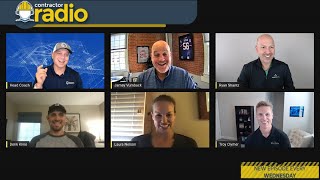
Jim Johnson talks with Laura Nelson, Jamie Bomback, Ryan Schantz, Derek Klein, and Troy Clymer about how contractors are using specialized software to streamline jobs. Mobile apps now let customers book remotely, referrals move faster, and workflows cut friction for crews and homeowners alike.
Chapters
Hey everybody, Jim Johnson here, the head coach at Contractor Coach Pro and your host for Contractor Radio where we hope to bring you the things that you need in your home services business to you strategically, tactically and informationally to improve your business so you can get control of it, grow your business and hopefully achieve that personal and financial freedom that you've been chasing. In today's episode, we're going to talk about technology. How it's changed so quickly over the last few years and where we might see it going in the future. And I'm not the guy to talk about that stuff anymore. In my history, my background, technology was a big thing. I got to work for one of the CRM's in our industry, got to bring that off the ground and bring that to the world. But I've kind of been out of that for the last eight years coaching companies. And while I keep up with technology, I use a lot of technology. I thought I'd bring some real experts in today. And so what we're going to do right after this break from one of our sponsors, we'll bring those experts down. We're going to talk about where technology is headed in our industry and what you might prepare for as a contractor.
Kill youl Competition is a distinctly different web design and marketing company. We don't treat contractors like cheap leggings with a one size fits all solution. We don't charge monthly fees for SEO or any of our incredible resources. We aren't limited by a specific media or marketing strategy. Our only bias is your success, not Facebook, Google or any other media. And we don't have to fake it with a third party dashboard or glamour analytics. Learn more Visit killyourcompetition today.
All right, we're back from our break. We want to thank our sponsors. Without film, this is not possible. We really appreciate their support of our show and as it's grown over the last year or two, it has been awesome to have them on board today. Like I said, we're going to talk about technology and I've got some technology gurus here with me. From everything from single purpose apps to big data, there's all kinds of really cool information these guys are going to talk about with us today. But I'll quit talking now. Let's bring those guys in. First we'll bring in Jamie. Jamie, welcome aboard from get the Referral Absolute Rockstar app. I love this app. I love everything you guys do. How are you doing today?
Doing great. Appreciate the time to come on in and share with you some things that are Happening here at get the Referral.
Awesome. And then one of our sponsors, not only of Contractor radio, but also our top rep that we do, which is our sales event, Ryan Schantz. Welcome to the show there, buddy. How you doing?
I'm good, man. Greetings from Canada. Good to be here.
We always love that Canadian accent. You guys are just so nice to everybody.
We'll talk hockey at the end.
All right.
Sweet. Perfect. Perfect. And then we got Mr. Big Data himself. We've got Troy Clymer in the house from Balance Claims. How you doing, Troy?
Well, gentlemen, Jim, thank you for having me. Good to see two of my all Catalyst Group folks. And I'm telling you what, at our new company, sirc, we use the heck out of get the Referral and Sumo quote and Signpost and Hail Trace that we're using all these tools and they're great. Yeah.
What a great lead in Troy, because we've got Laura from Signpost and Derek from Hail Trace joining us. Laura, engagement software for your company. Is that the best way to describe signpost? Oh, she's breaking up a little bit.
A little frozen.
She's probably on vacation. Colorado there somewhere. Laura, you got us.
Can you hear me?
We can hear you now. Oh, boy.
Yeah, I'll have to move to another room. Good to see you all and thanks for inviting me in the conversation.
And then we've got Derek, Mr. Hale himself, the storm chasing wild man. One of these days, I'm gonna get in that truck with you and we are gonna go chase some tornadoes. Thanks for joining us today, Derek.
Oh, thanks for having me on. I'm really excited. Can't wait to talk. And I can't wait to take you on a storm chase too. That's gonna be fun.
Well, it'll probably be after you come in second place to my guy Nathan and the go kart racing. We have this race coming up and I want to mention that just for a second real quick. Those of you that don't know listeners Watchers, there's an organization out there called Roofers in Recovery. And it has been awesome to watch not only our partners, but just people in the industry get behind this movement to help roofers that are struggling with abuse issues and substance abuse issues. And Derek's doing something really cool. I got an awesome Go kart race fundraiser going on. I know Paul Reed's got something going on. There's a golf deal going on. We did a barbecue pit giveaway. Like, it has been cool to just see everybody get behind that thing and really serve others I think that's. That's cool to see, and great job, Derek, on that. So we're here to talk technology today, though, right? So let's just start with a fair softball question. Just a real quick. Just less than 60 seconds. What do you think has been the biggest change for contractors using technology over the last two to three years? We'll start with Ryan.
I think the biggest change is it's just becoming a standard practice now. Everybody knows that they need to use technology, and technology, it's becoming so integrated with each other. So to Troy's point, before you can get these best practices set up across 4, 5, 6 platforms, which really lets you scale up, but it also, it's not all reliant on human capital. So there's huge opportunities on just how easy it is to start putting best practice tools together.
So adoption, it's being adopted. We start seeing it really being something that. How about you, Jamie? What are you seeing?
Yeah, I think you know what Ryan's saying. The tech stack, right? Making sure that you have different technologies because there's not one fits. All right, so you want to find the right technology that will also integrate and seamlessly be able to be utilized in a way that you're not jumping from screen to screen and product to product and such. And so being able to identify the right tech stack is so important.
Awesome. All right, so, Troy, how about you? What do you think's changed in the last couple years? Maybe three.
Usability.
Especially the last three years, the usability of technology for contractors has increased tremendously. If you just look at the technology that we have represented here on this call today, Hail, trace, get the referral, sumo quote, sign post, marketing and sales enablement technologies, all but the functionality within them has become much more rich in the usability. The ease of use is important for contractors who many times need to use technology in the field and then back at headquarters. So the interface on a mobile device as well as the interface on a desktop is important, and I've seen a dramatic increase in that across technology in our space in the last 36 months.
All right, Laura, how about you? It looks like we got a little better Internet coverage here. What do you see in the last two or three years?
I think that one of the underlying themes that ties everything together, what everyone has said so far is the, you know, consumers doing the driving. And what I mean by that is like they're using other apps in other realms like Uber, Netflix, etc. And demanding that convenience of providers like us. Right? And demanding contractors get More sophisticated and communicative.
All right. Derek, how about you?
Yeah, so, I mean, I see, like the. There's like a turnover, Right. That's happening. Right. So you have the. The older generation of roofer that's being replaced by the younger generation of roofer. And then this younger generation of roofer is learning that it's not just roofing sales. Right. Like, a lot of them came in and they know how to sell a roof and they know how to install a roof, but they're learning how to run a. And running a business now takes technology. And so I think we're kind of seeing that transition right now, especially over the last two to even five years. Really?
Yeah. It seems to me like softwares initially were built for a specific purpose, whether it was a CRM to manage your clients or some kind of marketing software that allowed you to market better to your clients, Email programs and things like that. Some proposal tools that were out there, and they were all kind of individually based. But the thing I've noticed in the last two or three years, I think one of you mentioned it, is that they're starting to integrate now. They're starting to come together and say, hey, you know, if my thing can talk to your thing, it makes both of our things a little bit better. And I would say that's the biggest thing that I've seen over the last two or three years is just this joining up of groups. Like, all of you guys work together. You're all part of the Catalyst Group. You. You guys that are listeners. If you aren't familiar with the Catalyst Group, it's a group of about 35 or so of us now trying what's the number?
And lo and behold, the founding conversation happened at Ire in 2016 or 17 at the Taco shop there across from the Mandalay Bay. So I will. We'll be missing you when you're not there next week, Jim. I know you'll have contractor Coach Pro there, but what's happened is the technology providers in the different niches, the contractors are working much more closely together now. Okay. As they're learning, like what Laura and Derek hit on what contractors want. And so there's a collaboration going on between the puzzle pieces that make up a contractor's tech stack. And these relationships between Jamie Bomback and Ryan Chance and Derek Klein and Laura Nelson and Troy Clymer and Jim Johnson and the rest of the Catalyst Group companies and our friends has really driven a lot of innovation. Right. And integration comes through that. And your integration of being able to access your technology, maybe in your CRM you can use Sumo Quote inside of Job Nimbus. Right. But then also the feature and functionality suite gets driven from that too. And so you've just seen a lot more collaboration in the last really five years, Jim, like you said. And to Derek's point, what's happening now is Gen X and Gen Y start to change out in leadership and you've got, you know, people running contracting companies that are in their late 20s, early 30s. And then you have people who are, you know, have been leading contracting companies for decades and they're maybe retiring and they're moving on. There's secession planning going on. Jimmy talked about that. You have a different adoption curve for technology where it used to. I remember when I came into this industry in 2013, it was very disparate and contractors were not making good use of systems with processes. It's totally different now.
Yeah, it's been interesting to watch because I don't know if it's necessarily driven by the ownership. I think it's being driven by who they're hiring. The ones that are coming in that they're hiring. I see a lot of head shaking there. They're expecting to use a computer, a smartphone, videos online to learn and like that's what they're used to doing and seeing. And when they come into our world, they don't see that it might not be a good fit for them. So that would be something I would consider as a home services contractors, like who am I hiring and do I have the right tools and the way that they work for what it is that I do?
Yeah, you're really going to. I mean, the folks that are coming in nowadays too, they want to see their tools. You know, the, the new employees, they're looking for the company that is tech forward and that's an advantage for a roofing or home services company to be tech forward and to have those tools in place for those younger folks that really want to use technology.
Have any of you seen a fully seamless process for the consumer yet? Where the consumer starts at point A, they're interested in all the way to point Z, they are paid in full and they get all their paperwork through integration. Have you seen any company execute that well at this point?
I think this goes back to the earlier point. Like you can see it from the consumer point of view being seamless, but behind the scenes it actually is a series of integrations across communication software, like signpost, across, you know, canvassing capabilities that Hail Trace has cross sales proposals and sumoquote when they follow up for a referral or review by get the referral. Like, you know, hopefully that all looks seamless on the front end. But we know on the technology side that it is a set of integrations and processes that make that all possible.
Yeah, and I think that's what, I think that's what drives technology. It isn't the companies, it's not the people that work for companies. It's the people that buy from those companies that drive where technology goes. And we're always looking for easier, faster, simpler, like just take the sweat off of me. I do not want to go to Walmart or Target. I just don't want to go there. I don't want to drive there. I don't want to have to. I funny thing, I was looking for what was. Oh, I was looking for a driver. I haven't bought a driver for my golf bag in 12 years, which is crazy, right? And I said, I'm go buy this. I knew which driver I wanted. I know who carried it and I needed to go physically get it. So I went to Dick's Sporting Goods. No drivers at all. Like they carry them. They didn't have any. Then they had a display that had them on the wrong deal and and then when they had them that was priced incorrectly and it was just all this stuff and you couldn't get anybody to help you. I've already done all the research. I just need to buy the stupid driver. So I left that and I went over to Golf Galaxy and the price of the driver had gone up $70 in five days. In five days time, the driver went up seven. I was like, what the hell just happened? Where my experience and some now frustration. So now I'm going back over to Dick's to try and find it again. And I ended up not getting a driver where if I would have just gone online and went to TaylorMade's store and said, hey, this is the driver I want. Send it to my house a week before I would have my driver. And I walked back to the truck after the third experience and I looked at my wife and I said, I will never ever walk into a retail store again to buy anything. I want to buy it online. Experience. It's just so much less pain even if I don't find what I'm looking for. And that I didn't waste my time driving around. I didn't go into a store and didn't get service. And I think that's what consumers are looking for. I mean, do you Guys feel similarly.
I think you nailed it there. And I think the one thing is contractors, we've let ourselves get away with not being excellent there because we've compared ourselves to the competition and we've just looked at the roofers up the road and been like, well, we're better than them, so we must be great. And yet consumers are expecting these experiences that are, you know, like you said, it's the online retail experience, it's banking experiences. I can't remember the last time I was physically in a bank. There's no need. There's no point, right? Like grocery stores. I've got three boys, seven and under. There's no way I'm going to the grocery store with three boys. Forget about it, because you can do it all online now. You just pull up, they walk it out, drop it in your vehicle and drive away. And you can create these experiences with these technologies. We've got, you know, in the room here and. And out there. And yet, you know, the future will be owned by those roofing contractors that figure out how to put them together and create that ultimate, ultimate experience. I think, for the homeowner and every other industry feels like is ahead of us right now.
But we're gonna.
We're gonna. Come on phone. I. It. We're right around the corner from contractors getting the pieces put together, and the technology is continuing to integrate. But it's. This stuff is going to change really fast in the next year or two.
So my question, and maybe Derek or Troy, this might. Laura. Well, any of you, you probably know the answer. What's the. What's the driving factor that the consumer is considering when they're thinking that way? What is it that they're. What's underlying there that's causing us to do this? Like, mine was, I wanted less pain and stress, right? I don't mean that, but anything else that you guys see.
I mean, I see one. I mean, one thing that I see, like, you know, especially, like, if you go through any sales training, right, like you want your process to give them the options that they need, but not. Not the, not the excessiveness, right, because that was part of the frustration for you was you were shopping for a driver, but you were also shopping for a place to buy the driver, and you had too many options to buy the driver, and you ended up not buying the driver at all. So I think taking your process through a way where it eliminates options, but finds solutions. And I think in the right solution, not any solution, but the correct solution. And so, and I Think that's where technology can really come into play. You know, whether it's, you know, there's a lot of contractors out of retail and storm. Right. They do both. But if the homeowner has storm damage, the right solution might be to file a claim. But if they don't, the right solution might be retail, where you would need something to finance that. So having that solution and being able to tie all that together to the process, but do the discovery that allows you to find the correct solution. I think that's what's so important. And that's where technology is taking the contractor now, to where they can quickly find those solutions that are the proper option for the customer.
So on that note, I want to take a real quick break. We got a break for one of our sponsors, but I want to hone in on that discovery aspect that Derek just brought up. I think that's one of those really driving factors. That's something that we need to consider not only as contractors, tech providers, service providers, but what that is going to play out. We'll come back with that in just one second.
Hi, I'm Ricky Harmon with Balance Claims. I'm here in the Balance Claims office to help answer one of the questions I hear all the time. Why use balance Claims? Well, I have two of the account managers here, Travis Croft and Emily Caldwell, to answer just that.
Contractors should use us because we have.
Experts on site that are well versed in xactimate, able to write our estimates.
And make sure that your claims have everything accounted for, making sure that you're paid out correctly.
Contractors should use balance Claims because we are hassle free. You have the time to focus on the homeowners and the sales for these roofs while we focus on the insurance claims for you. That is where time is money and we are here to help you.
So you heard it from our ams. There are multiple reasons why you need to be working with Balance Claims. If you want to reach out to us, our email is successalanced claims.com or you can reach out to me directly. Ricky Harmon at 317-360-0903. Talk to you soon.
Hey, welcome back everybody. That was awesome from our sponsors. Once again, it's the reason that we exist is those guys help us get things done. We're here today talking about technology and we left off with Derek and Derek, reiterate your point there with that last little piece.
Well, we were talking about being able to go through the discovery to basically create the solution that the consumer needs. And so you're eliminating options that they don't need. But you're doing that through your discovery. And that's, you know, it makes the choosing process much easier. And when things are easier, it's easier to buy.
So do you think that the consumer's doing a lot of discovery before they ever even talk to us?
I mean, I think it depends on the consumer. Right. You know, I think some of them yes, and then some of them no. You know, so, I mean, obviously, Jim, you know, with your driver story, you like to do the research, but obviously you didn't do the research on where to buy the driver, but you like to do the research and really come up with that solution. I'm the opposite. I want to sit down and I want to ask and expert questions and be able to. And be able to figure out, let them direct me to the correct solution. Right. Like, I see them, you know, as the person that knows that's why they're there. That's why I'm there asking them questions. So, you know, if I were looking to go buy a golf driver, which I know, I mean, I love to play golf, but I don't know a lot about drivers, so I would want to go to a store and ask them a lot of questions. Whereas I'm not the type of person that wants to sit down and watch videos and read white papers on which driver to go to. So I think that's probably part of your discovery, right? Is who are you setting down and talking with?
Fair. Yes. Golf is a passion for me, for sure. And the thing was that I did do the research of where to buy it. I searched which locations carry TaylorMade drivers and those locations, and I went there and they didn't have them, which is frustrating. Which I knew if I would have gotten on Amazon or went to TaylorMade site, I would have got them, which was where I really, probably my frustration was coming from. But here's the funny thing I noticed after all of that, as I'm driving to the retreat and my wife is looking at her phone, she's getting driver ads showing up on her phone. Is that creepy? Like, is that. Wow.
Yeah.
How does that play a part? Because that's artificial intelligence. That's our devices listening to us. Right. Like, that's a little bit creepy. But to be honest with you, I don't care. I'm like, dude, you just made my life easier. Now I know where to find it and I can go get it. Do you see much of that happening in roofing?
That what we're really getting on is efficiency and time. Right. When we talk about consumers and who's driving technology based decisions in a contracting business, there's two types of consumers. There's the consumer that's buying products from your company and then there's the people that work for you. They are also consumers. That's very important. And we got off of that topic. But when you look at your tech stack in your contracting business, you really need to consider both because you have consumers that work for you, your internal clients. That's everybody but you. Everybody but the senior leadership team. Okay. And your technology to serve them. They need to know how to drive the car. Okay. Play golf with that driver. I'm not a very good golfer, so I hit better without these big super high end honking drivers because I don't have control of my shop. But I'm not a bad golfer so long as I can control the club. Right. And I can play straight down the fairway and do a decent job. Right. It's the same thing. And then you have to know your markets. Right. Because consumers are much savvier. The amount of information that's bombarding the consumer these days compared to seven years ago, much different. And don't assume that that older consumers are not as informed. My parents are very informed. They're going through a process. Indiana, where Balance is headquartered, has had a bunch of hail this year. And so my folks are in the insurance process with one of our clients. And my mom is hyper informed about the process because of what I do. Even more. But because she's getting served ads, she's being targeted. Okay. And you know, Laura and Jamie could talk a little bit about that. Right. But time is of the essence. And Jim, that's where you had frustration. So you need to make sure that you're putting together a tech stack that takes the time into consideration for the people who have to use the technology with your buyers. And Jim, you just kind of hit on different buyer Personas and understanding those and how you approach them. I'll leave it open there.
It's an experience.
So, Laura, can you talk about that a little bit? Like this experience what you think the consumer wants?
Yeah, I mean, I touched on it a little earlier and I think we were all talking about this more recently. Is this idea of convenience. Right. You know, whether you are Derek, and want to sit down with the pro and get the information you need, or a discerning shopper like you, Jim, where you just want to look at a bunch of different places and get it the, you know, driver as Fast as you can.
I already knew which driver I wanted. I already knew which one I wanted. I just wanted to pick it up.
Yeah, yeah.
Research all that other, like, I was ready to go and they missed a sale on me because it wasn't easy, it wasn't convenient.
Right, right. So it wasn't convenient for you yet. You know, shoppers are now conditioned to pick up their groceries, as Ryan said, to, you know, connect easily with the pro and go deep as, as Derek said, either route, like, they're looking for an, you know, an easy way to get what they want. They want that convenience. And the reason why, you know, we have ad tracking and we have AI in our devices now is like, clearly something is working in that. There's enough people interacting with that and getting what they need and, you know, getting their conveniences met there. It is. It is creepy in some regards, especially if, like, you know, you've made your purchase or, you know, is somebody else talking about a purchase or, you know, you have already have a plan for making this purchase. But. But yeah, unfortunately that's like something that's not going to go away in the near future.
Well, I think convenience is a big one, but another one I'm going to throw in there is trust. I found it interesting before Derek said, some people talk to one, some people talk to more than one. And when I, when I was thinking about that, I'm like, well, why would they talk to more than one? It's because they haven't found somebody they can trust yet. And when you look through this, whether it's referrals, reviews, whether it's, you know, I'm, you know, hail trace, I'm showing them the report, it's establishing trust with the homeowner balance claims. I'm talking to the homeowner saying, don't worry, we're going to make sure you're covered correctly. We work with the best in the business. You know, sumo quote that presentation. Like, there's an underlying concept of everything that we're doing here with the homeowners where it comes down to trust with them and how technology can leverage that and set your business apart in a, in a massive way. But I, you know, again, their side comment that I thought was really interesting just on like, is it one per. Does it one contractor they talk to or many? It depends how quickly you can establish trust and hold it. I think that's a massive part that technology can actually help you with as well.
At the end of the day, I'll use that same analogy. This will be the fifth tailor made driver in a row that I've purchased because I trust, I trust that that club is going to do what they said it's going to do because the last four have all done it. And they've earned that trust. Not just through my own experience, but what you see them do. You know, their drivers are the number one driver on the tour. Their drivers are the number one driver being bought by consumers and they advertise that and they market that. And it's something that you almost just know now if you're a golfer, that TaylorMade's probably the one to trust. Most likely, unless you have some other weird, odd preference that can be put into our world as home service contractors, that that trust doesn't happen just because I use technology or just because I've served clients well or just because I've gotten great reviews or even just because I've gotten referrals. It's a combination of all those factors combining into one and sharing that often. Jamie, when it comes to referrals like this, the one that I really, it's been one of those ones I've been harping on a lot lately is this way of automating your referrals. And I hope to see you guys get more integrated with more of these softwares that are out there because you're in line. Like it's one of those things that I'm doing throughout the process with the homeowners. I'm earning the right to ask for referrals and I want to give them something. But there's never really been a great way to reward that client. You had to like track it in house, maybe keep it on a spreadsheet, maybe great notes on your files or whatever. But there was no real way to make it tangible and real. What have you seen as far as from contractors before using your type of software to using your software? Do they tend to get more referrals? Is it something that is giving them more business because they're using technology? What's the advantage of the technology on that side of things?
Well, I think everyone hit on simplicity, convenience and educating the consumers. If you can do that through one platform and serve that up in a trusting way through a branded application where that company now has the opportunity to own real estate on that customer's phone. Right. They have the trust and they have the relationship with that customer and now you can feed that information to them in a very, you know, non pushy way. Right. And it's very seamless and it's just simple and easy. And you can educate them through that process. And so I think that trust, knowing that the company has built out this system to communicate and engage with them really helps them realize that customer realizes, hey, this is the real deal. This is a company that understands how I want to be served and how I want to be communicated with. And when you do that, you are going to see an increase in, in sharing that information with their friends and family. So you just make it super easy for them to do that. Whether it's submitting a click, importing a contact, clicking a link, or sharing it on social media, knowing that your friends and family and social network is going to be getting that message of the relationship that you had with that company. And that helps build the trust and that helps for other people to want to work with that individual company. And being able to reward someone for that simply and easily, that's what really, you know, I always say, you know, cash is king and you know that people want to do it just because they had a good experience. But if you can put a little icing on the cake and reward them for that in a super seamless, easy way, that really helps the whole overall process move forward.
So seamless, easy, convenient. Those all seem to be words that we're using. The time is so important to people these days. You know, for me, most of the things that happen around my house where I have to have somebody come to my house, where I would really like to be involved in the conversation, I don't have time for Ryan, thanks a lot. Right. Ryan had to jump. He had a scheduling conflict. But Ryan, with sumoquote thanks a lot. Great input. So we have an air conditioner guy needs to show up at the house because we want air conditioning in our garage and some switch isn't working right. I can't be there. But he can't just tell us over the phone, he can't give us any information over the Internet or he's got to come and see what's like, I could take a picture with companycam and send him the picture and say, this is the device and what do I need to do it with? And you get that device and come out and do it and give me a quote. You don't even have to come out here and waste a bunch of time. Your time. Tell me what it's going to cost without ever coming out here. Do you think people want that? Do you think people want the sales dude at their house? And does it really make that much of a difference?
I think, I think Derek said it before, there's all types, right? But I think the direction that we're going in with technology, with Amazon, with the convenience of different applications out there, I think you're going to see more and more people, you know, want to that experience remotely or virtually. And, you know, that's where we see in our business. You know, we have companies, you know, coming to us and you know, their biggest concern is how can I, can I do this remotely or virtually? And so, you know, trying to find that solution for them. But, you know, to answer your question, I think we're going to see more and more of that. I think the trend is virtual versus in person and, you know, educating, you know, in a way that is where they want to be educated, right? Whether it's a, you know, an email, a push notification in app message, something like that, where you can actually get educated without having to actually sit and talk with somebody face to face.
So if I asked all four of you tomorrow, you need a, let's see, what would be good? You need somebody to paint your house. You need somebody to paint your house and you've got to sit down with a sales guy from three different painting companies. Does that excite you? Do you want to or do you not want to?
Me personally, I don't want to.
I'm probably the opposite. But like I said, I'm the one that wants to go in and talk.










