Is Your Sales Team Motivated?
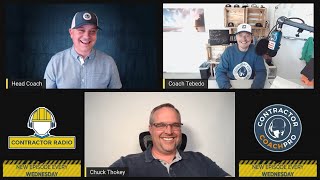
Jim Johnson talks with Nathan Thibodeau and Chuck Toki about what actually moves sales reps in contracting. Money works, but so do pins, trophies, recognition, and competition. The key is figuring out what drives each person on your team and building discipline around it.
Chapters
Hey everybody, is Jim Johnson here, your host with Contractor Radio. And our purpose with Contractor Radio is to help contractors develop strategies to implement tactics. Hopefully to be a little educational and entertaining along the way. And today I am super excited about our content because this is one of those things that's near and dear to my heart. We're going to be talking about motivating your sales team and the components of that, the drive that the person might need to have incentivizing people and how we get the most out of our sales teams. How do we help them reach their potential? And I've got two awesome guests on today that are going to help us through this conversation. But before I do that, let's get a little word from one of our sponsors as they help us continue to do Contractor radio.
Want more 5 star reviews from your customers? At Signpost, we make it easy for your customers to give you great reviews on Google, Facebook, Yelp and more. Our software connects with industry specific solutions, driving even more reviews from your customers. Drive loyalty and repeat business by sending the right messages at the right times to your prospects and customers. Message your contacts from anywhere, anytime, using text, photos and video all in one app. Check on progress with campaigns and review generation across Google, Facebook and Yelp. Visit signpost.com and get your demo today.
All right, we are back here. Thanks to our sponsors for helping us out with Contractor Radio and doing what we do and doing it well. And today we want to talk about one of the things we hear contractors struggle with quite a bit. And I hear it all the time, motivating their sales team. They don't sell like I sell. We hear a lot of those types of things when we're working with our clients and with contractors out there in the world, events that we do. And the big question is, how do I get my sales team to reach their potential? So I thought today I would bring in two of the best sales professionals I know and have them talk with us and they just happen to be our coaches. Let's bring in. Let me get my mouse over here. Let's bring in Nathan Thibodeau and the sales guru himself, Chuck Toki.
I did not know I was one of the best sales coaches you know, of. Wow, I gotta write this down.
Yeah, that's just one of those things. I gotta say that you're on the show, right? Like, no, just kidding, Nathan. It's really cool having both of these guys on. They look at it from very different perspectives. I would say that Chuck is the classic, like he, the dude knows Sales, inside and out, knows how to get sales teams doing what they need to do, sales leaders doing what they need to do. And then we got the philosophical sales leader over here who really thinks about the growth and what he can learn from doing what he does from a sales perspective. And they're both good at both of those parts. Just a little bit different viewpoints on. That's why having them both here is going to be great. And so, guys, how do I motivate my sales team?
So when you're motivating your sales team, when you're looking at motivating them, is the first question that I would, I guess I would have for you is, you know, what type of motivation, you know, what makes them motivated. But I will also tell you, the first answer I always get is money. And I'm going to tell you that money is the worst motivator. You'd be surprised just how unmotivating money really is. The other thing is, many, many companies out there, they have annual bonuses, which I feel. And somebody brought up a couple weeks ago about an article I wrote called the dumbest bonus of the annual bonus. They're not worried about it until November. Then they're wondering, am I even in standings?
So one of the things you're talking about there is incentive and understanding how incentive works. I want to get there. And part of motivation is applying the right incentive at the right time. And one of the things, you know, whenever I get asked this question, my sales team's not motivated. Why is that? I'm like, why are they doing what they do? What incentive have you given them to achieve these goals that you have in mind? Is it just sell as much as you can? Do you set some kind of barriers? Do you have any kind of expectations with them? And is it part of your culture? Like, what is the culture of your business? And so many things play into this. It's not just sales. I think a lot of people just set it off aside as sales, and my sales team doesn't sell enough. But there's a lot of things that motivate people, whether it be leadership, the type of culture that a company has, the accountability that's put in place, or expectations that somebody has, the level of training that they get. And then one of the things that I really like the most is those guys that can take motivation and amp it up a little bit. It's like turning on the volume. Like, you can turn the radio on, but you have this ability to turn that volume up, like Chuck was saying earlier. But before we Hopped on is, you know, everybody's got some level of it and can I turn it up a notch? So, Nathan, I'll ask you what motivates a sales team or how could I motivate my sales team?
Well, so I thought real quickly while you guys were both talking, I thought, well, what, what is the definition of motivation to put some context around it? So I thought, well, I'll just google this real quick. And I found this thing right here and it says, motivation is the process that initiates, guides and maintains goal oriented behaviors. Motivation is the process that initiates, guides and maintains goal oriented behaviors. It is what causes you to act. Whether it is getting a glass of water to reduce thirst or reading a book to gain knowledge. Motivation involves the biological, emotional, social and cognitive forces that activate behavior. How do you guys feel about that definition?
It makes sense when you're looking at motivation and it kind of goes along with that. To me, success or winning is your best motivator. The fact that they're winning, they want to continue winning. That's why we call it momentum. And that is to me and what I've seen inside of sales organizations, we call it the waterfall. And that's where motivation comes in. The second thing is quite simply a little bit of competition. If I want to beat this other person, you don't have to beat the top rep. It's just like when you find a bear, you don't have to be faster than the bear, you just need to be faster than the next guy. So, you know, again, they, they look at motivation of I just want to beat this guy, and then when I beat this guy, I'm going to beat this guy, you know. So that's all kind of built into motivation amongst the sales team.
Well, there's an underlying component there too, right? Because like I found honesty. Honestly, like I'm, I would consider myself a competitive person, but not really against other people. Like, for a long time I thought I was competitive, but then I would make meet other people who were like, actually they didn't care what you were playing, they wanted to beat you at. It didn't matter what it was. And I started to discover that like, I didn't really care. I didn't care if somebody beat me at checkers or if somebody was a better golfer than I was. Which was weird because I was like, okay, well does that mean I'm not competitive? What I discovered, the thing that drove me more than beating somebody else was whether or not I did better the next time than I did before. I like that so consistently. That's me personally. I know there's people out there that identify with this too. Is like, I know that if Jim and I decided to do a heads up sales competition, I feel pretty strongly Jim would probably be. Or Chuck. But both of you guys, if we just said, okay, which one of us is going to sell more of whatever this thing is, you guys would probably beat me.
It wouldn't be close. I would destroy you.
Right. Right now I wonder like, does Chuck know he would beat Jim?
Right.
For me personally, I would be like, I don't really care if one of these guys. All I care about is did I hit the thing I was after. And so my competitive nature and it plays out in negative ways too. Like if I play golf or I'm playing volleyball or. And I don't do as well as I know I could, I get frustrated, but I almost never yell at my teammates or anybody else. And I don't get pissed off when somebody out drives me or somebody beats me to block. I get pissed off that I didn't do as well as I knew I could.
That's a really good piece of insight right there. Because there are different forms of competitiveness. You know, Chuck talked about just beating that guy. Right. That next guy up where Nathan was. And it's two different kinds. And I would almost bet, I would almost bet that Chuck played a lot of team sports growing up and Nathan is more predicated towards individual sports. Would that be a fair assessment?
I wrestled.
Oh, that's right. Well, you got the team thing going on there too. You better do your part. Right, right. But very individual sport. I, on the other hand, grew up playing team sports like uber intense football, baseball, basketball, and really baseball and basketball the most. And there was always somebody trying to take your spot. And so you had the same wrestling. There's always somebody trying to take your spot. Right. He's trying to wrestle up. Whoever wins in practice gets to wrestle during the week. Right. Or at the match. And so you were competing against somebody else, am I correct?
Yeah, absolutely.
Yeah. But in golf you're not really competing against somebody else. You're competing against the course. In running, you're competing against your previous time. You're really competing against yourself most of the time. Although there is a hey, I want to win and I want to win this event type thing. Most people that are in those sports are more motivated by their own personal record achievement than they are by did we win the game? Did we win the event? Would that be fair?
I would, I would think that, that. That would be fair, but I played some team sports, and I got motivated by the success of the team. So if I wasn't the guy who hit because I played softball, I didn't. I didn't play baseball as a kid, but I played softball when I got a little bit older. And if one of my guys hit a home run, I was like, that's frigging awesome. I was never upset if I was the one who didn't. And so. But that. That component, though, is part of what drives me, because we were talking about, like, motivation, is that it took me a long time for me to dial into, like, what is it that drives me to work a little bit harder, work a little bit longer, do a little bit more. And I started to discover that, like, my own growth is what drove that more than anything else. And so if I didn't feel like I was growing, I would get bored. And then, like, competition didn't matter. None of it really mattered too much to me if I felt like I was just doing the same thing over and over again, then getting the same result. But I also know that there was that for me at times, my. If my own personal growth was based off of comparison to other people. For me personally, my personality, that's a toxic scenario for me. But as long as it's driven more by what I'm after, what I want to accomplish without me trying to keep up with the Joneses, that's a pretty healthy position for somebody who's like me.
So it's funny, like, I used to be one way and now I'm a different way. I used to be, like the uber competitive, the opposite of Nathan on my team. Right? My ultimate goal, team win.
Right.
But even kind of more ultimate than that was, did I help the team win it? Was it. Was it because of me that they won? Right? Like, did I go four for four with a couple of home runs? Okay, cool. We won because I did good, right? As I've gotten older, I've looked at it more as the team win thing. It's not so much about me. And a lot of that's just, you know, age and experience. You start to realize that winning a trophy or making the most amount of money isn't all that there is to the world. There's more to it than that. There's growth, knowledge, sharing of wisdom and experience with other people. I'm super excited because we've got this top rep event coming up, Chuck, to bring in a bunch of sales guys, and we're going to Teach them not only the format and process to achieving greatness in sales, but we're going to teach them some things regarding sales psychology, understanding human behavior, and really take people from this place of, I don't know, following a pitch, which is important, don't get me wrong. But understanding why, why they do that and the why of each one of those components and then the why they are doing it for themselves, because that's what actually will turn an average or even poor rep into a great or exceptional rep is when they understand why they're saying what they're saying and when they're saying it and why they're doing that, not only for the person across the table from them, but for themselves. And everybody thinks it's about money. Chuck, you brought this up right away. I want to hire money motivated people. And before you hopped on, I was talking with Nathan. Nathan, tell us a little bit about your experience getting interviewed and what you had said.
So excuse me. So a number of years ago, I got interviewed for a sales position at a company and they had a small sales force. It was kind of weird. Like a lot of companies, their salesforce tends to be one of the larger departments they had. This one was small. Getting onto that team was. Was not easy. And during the interview process, they asked me what motivated me. My response was, I'm actually not particularly money motivated now. I come to find out later I did end up getting the job, and I come to find out later that my boss at the time said, said to me, after you said that in the interview, I thought, we're not going to hire this guy. That that was his thought. He said, we're not, we're not gonna, we're probably not gonna hire this guy. We want somebody who's hungry and who is money motivated. And that's what's gonna cause them to make the extra calls, to stay an hour longer, to pump out a few more estimates, right. To go the further distance because they're motivated by the money component. But throughout the interview process, I had a couple conversations with different people. And what I explained to them was I can do this job and I will do it very well. But here's what I'm after. I said, I'm after learning what it's like to become a better leader, to become. To run a team, to implement vision into a business, to impact the direction that the company goes. And at the time, I was interested in what it looks like to become a C level executive at a corporation. I wanted to know what that was like. And I Wanted that experience. And so what I told them through the interview process was, look, you're going to get three years from me. Three years to learn your products, learn everything. And I am going to. I am going to kill it as a sales guy over these three years. But by the end of that three years, I am expecting an opportunity to move up and to grow into a different position and start to learn something else and do something else and expand who I am. Now, if I suck, that's on me. I don't expect anything out of you after the three years. But if at the end of the three years, I hold my end of the bargain and I don't see an opportunity to grow in advance, I'm gone. And when I had that conversation with. With my direct boss and then the boss above him, they were all on board for that. They were like, okay, we can. We'll do that. Well, that sounds good to us.
Yeah. So, Chuck, you've interviewed literally thousands of people, and so have I. And it's one of the mistakes I see by interviewers is they'll ask that question, what motivates you? And they'll always be looking for the money thing.
Right.
Especially sales. I'm money motivated. I want to go out and crush it. I want to lead the team, dominate, and be the top sales guy, all that stuff. Right. And when we don't hear that, we, like, shut off and we're already thinking about the next person we're going to interview in a lot of cases. But it sounds like whoever was interviewing Nathan was wise enough to start to tune into why did he want this job. If it wasn't money motivation, what was it? Have you ever interviewed anybody like Nathan before?
I have.
I have.
I will say it's hard to hire somebody like that because when you have an organization that is based on money motivation, and I'm not just saying that, it's just because it's sales. But most organizations, that's what they base all of their incentives on. So if you're not money motivated, they don't know what to do with you. But the offer.
That guy.
Yeah. And what these companies need to start realizing. Let me give you a quick story. I went in, I started working with Home Depot. So Home Depot flew me out to Atlanta. And I'm sitting there with all these people and they have these little pins. And I had to ask, I said, what are all these pins that are all over your little. Even when you go to corporate, they have these things, these little shop sashes. It's like Girl Scouts or something, I don't know. But they got all these little pens. I says, I gotta ask, what are these pins? Like this one here is when I did this. And these are things that I would have paid thousands of dollars for for a sales rep. And they get these 50 cent pins and they're more proud of those little 50 cent pins than if they would have gotten a bundle of cash because they would have already forgotten it.
They were like a cheap, they were achievements and they got a pin for a particular achievement.
Yeah, customer service, whatever. And it's, it's. That's what they were going for. Now I'm not saying you need to go out and get your, your sales reps a bunch of pins, but realize you that if you decide to give them money, the only thing they want next is more money. And then they want more money. It's never good enough. Yeah, there you go.
Here's the thing.
Yeah. It's funny. We were just meeting about the top rep event and we're going to have top rep pins. We have some pins planned out for that. Because people, what they're after, I don't know what happened to Coach Thibodeau's video there, but. But they're not after this money thing. They're after recognition. That's what motivates people. I really think. I think that they're more motivated by somebody saying that they have achieved something than they are by, hey, you made a bunch of money. I noticed that whenever we did contests and things like that, the contest that would hold more sway with my reps weren't the ones where we gave 500 bucks for top and 250 for second, 100 for third or anything like that. It was always the ones that was like dinner for two at this really nice restaurant, which is less than $500, but they really wanted that thing or tickets to a ball game. It was more about the reward. And what they really liked is when they got it in front of everybody else. Like when you handed out a trophy. We had, we had trophies, we had wrestling belts. We had all kinds of golden hammers. We had all kinds of different awards like that. We had a traveling award that was a bobblehead. It was the top sales bobblehead that affixed inside of your vehicle and like a little suction cup on it. And you got to ride around with that in your vehicle for the month as the top sales rep, which you think is the goofiest thing in the world. But I mean, the guy would run out of sales Meeting go stick it in his truck right away as a top rev and go, ha. I got the ball with. There you go, everybody. And so there's this, there's this approval from those that you respect and also this status from everybody that is your peer. And I think those things have as much to do with incentive and motivation as anything else. Would you guys agree with that?
I would. And I want to share something. It's funny you mentioned this. So, and I was just speaking with one of our clients about how to get, you know, put some of this stuff inside and he's like, this is genius. So at Able Roof, one of the things that we love to do and these things didn't cost us anything, but it did more than the money that we gave. But you know, if at the end of the month we looked at the guy that had the Highest ratio of 1 call close and he got a brass balls, everybody wondered who was getting the brass balls. Keychain. The other one is the guy that when the, when you first hit your first hundred thousand dollar month, you get the cat's ass award, which is a big plaque with the rear end of a cat, you know, and it was funny and everybody loved it. It was, we got it on Amazon. And then the, and I'm not going to tell you what the, the initial stand for. You can probably guess because it's part of, oh, it's a part of a movie, but it's the BMF wallet. So when you hit your million dollars, you got a BMF wallet and these guys would actually use them. It was fantastic.
Those are awesome. Those are great ideas. And I love that stuff because it plays so much into the culture, right? This is stuff that the leaders of an organization has everything to do with. What type of organization are they going to be? Right? You can have the, the really super uber competitive, lots of trophies and awards and all that stuff and be exceptionally successful. I mean it works really, really well. But then you can go and flip it all the way around the other way. Very professional, really tight, you know, dressed and that kind of things. Not a whole lot of awards and stuff like that. But it all still comes down to this recognition and this growth thing. Those people see this opportunity to grow in a business and gain some skill that they may not use wherever they are forever, but that they can go out and improve their particular situation with. I want to dig into, drive a little bit. But before I do, we need to take a break, slight break here. Pay the bills. You know how that works. Everybody likes to pay the bills. We're going to bring in a sponsor real quick. I won't take long. And we'll be right back with can drive be achieved through learning or is it innate? So we're going to come back to that.
Hi, I'm Ricky Harmon with Balance Claims. I'm here in the balance claims office to help answer one of the questions I hear all the time. Why use balance claims? Well, I have two of the account managers here, Travis Croft and Emily Caldwell, to answer just that.
Contractors should use us because we have experts on site that are well versed in xactimate, able to write our estimates and make sure that your claims have everything accounted for, making sure that you're paid out correctly.
Contractors should use balance claims because we are hassle free. You have the time to focus on the homeowners and the sales for these roofs while we focus on the insurance claims for you. That is where time is money and we are here to help you.
So you heard it from our ams. There are multiple reasons why you need to be working with balanced claims. If you want to reach out to us, our email is successalanced claims.com or you can reach out to me directly. Ricky Harmon at 317-360-0903. Talk to you soon.
And we're back. Hey everybody. We've been talking a bit about motivating and incentive and recognition, those type of things getting the most out of your team. And right now I want to kind of take it in a different direction. We're going to talk a little bit about drive, but before we get there, I want to talk about helping people achieve their potential potential. One of the things that we teach and we coach a lot is the understanding of incentive. And if you look it up in the dictionary, you can Google it if you want to. But it's pretty simple definition. It is the reason we do anything. That is the simple definition of incentive. It is the reason you do anything. You brush your teeth so your teeth don't fall out. You wipe your ear in because you don't want to smell all day. Yeah, there's. You have these incentives to do the things you need to do. And one of the biggest mistakes that I see in most contracting businesses, especially in the home services, is not understanding that incentive because you get this thing. Why isn't my sales team doing what I thought they would do, what I expected them to do? And it's a real simple answer. They don't have the incentive to do it. You think you may have given them the incentive, but for some reason is falling flat. A lot of that comes from not knowing who your sales team is, what motivates them, and why they're there doing what they're doing. I think one of the best questions you can ever ask your sales team is where do you see yourself in five years? Each person sit down with them and ask them that question. Where do you see yourself in five years? Are you the top sales rep here? Are you a manager? Did you leave here and start your own business? Did you buy a big house? Are you in real estate now? What are you after? Because if I can figure out what somebody's after, then I know how to apply incentive correctly to help them achieve their goal. And one of the things that I would do with them and Chuck and Nathan, I'd ask you about this is I would be very clear with them that in order to achieve that thing, thing, they're going to have to push themselves a little bit. And my job as the leader is to help them achieve that goal through achieving their potential. But you guys, how do you feel about that?
It makes sense. I mean, yeah, I mean, it's.
The.
When you're looking at the training, you know, it's like practice breeds confidence and confidence will bring breed competence, you know, so, you know, that's, that's where that motivation or that's where that, that drive is started, if that's what you're asking.
Yeah. So here's a good example. I don't think most of us sitting back in high school, we're like going, man, I cannot wait to go sell a bunch of roofing, siding, windows, gutters, painting and all that other good stuff. Right. So how do you go from there to actually being in this business and being motivated, incentivized and driven to do it? Well, there's something pushing all of us. Every person on this planet, I believe, has drive. It may not be drive for our particular thing, but there's something driving them. Whether it's wanting to learn how to be a computer programmer, a video game player, and they may not even know yet what that thing is driving that. I, I find that a lot. Like, what motivates you? Money is the number one answer, without a doubt, 99 of the time. I've asked this question a thousand times in events and I mean instantly, money. I'm like, why? And everything gets really quiet. They don't know why. It is like money is going to solve all the problems.
I think it has to do with connecting your. I think it has to do with Connecting your effort. So, like, when I was a kid, well, from the moment I understood what a car was, I wanted one. Just, I wanted a car, and I wanted to drive. And for whatever reason, early in my life, I connected having a car to freedom. And so what I really wanted was freedom. I wanted to go where. Well, that. And I love driving, but I wanted to go where I wanted to go when I wanted to go there. I wanted to see places where. Ride with friends. Like, there were all of these things that I connected with having a car that were my actual motivation. The car was the vehicle, right? And so I think connecting. Connecting the end goal with the activity is where I think you start to see, like, the rubber meet the road, right? Like, there's so many people like, well, I don't want to knock doors. Like, well, what if I told you that for every hundred doors you knock, you are one hour closer to hitting your. To buying your new house, right? And then all of a sudden, it's like, wait a minute. Say that again. For every hundred doors you knock, you just put yourself one hour closer to buying your next house. I don't think those ratios work out well. But making that connection to your effort, right? And then. And then when you start to see a little bit of results, it reinforces that. And then you start to get excited. Like, I've seen some of those times before where I was like. I was doing a thing. Like when I. Like, for a little while, I got really into weightlifting, and I was like, I'm just gonna. Like, because I used to run, So I was 140 pounds forever, and I was a skinny kid, and I could run forever, but, man, I was like a toothpick. And so I was like, you know what? I'm gonna try lifting and see what happens.
I.
And so I started grinding it out. I was eating, I was working out, and I was like, I don't really see any results. I'm telling you, I didn't see results for a while. And then all of a sudden, I started to notice some results. I started to gain some weight. My clothes didn't fit quite the same. And then I got even more excited, and I hit the weights even harder, right? Like. But that first initial grind, God, that. It's like, that's that barrier to entry. Because when you start seeing results, then you're like, ooh, ooh, I can. I bet I can lift a little bit heavier. I bet I can. I can eat just a little bit better. I bet I can. If I get a little bit more Sleep, I drink a little bit more water. That'll add to it even more, and then, like, those results start to come in. But, man, getting to that first one, I mean.
So I'm going to guess you didn't magically obtain a car. No, I have a feeling there was some effort to getting that first car and probably doing a bunch of stuff you didn't really want to do. But that car was what was driving you. Is that fair?
Yeah, actually, I drove the car, but, yeah.
I got you. Funny, Funny. What do we call that? What do we call. You use the word grind. Getting through it and. Not one of my favorite words, to be honest with you, because grind doesn't sound like.
Does not sound appealing. No.
And I like to make things as fun as possible. But what does that describe with that, that barrier of entry, that investment that you've got to make? What did we call that?
That's drive to me. I mean, that's. That's drive. That's. That's. That's not giving up, staying to it and realizing that, you know, I'm going to get through whatever this phase is, because I believe it's a whole nother. A whole nother component of this conversation. I believe that if I keep doing this, I'm going to get there and that and that. But you have to see it, though, and I think that's a struggle. So I was gonna ask you guys this question.
Okay.
Because you guys have definitely got a lot of experience in hiring and managing salespeople. Talk about some of the moments where you helped somebody to either make that connection.
Right.
Like. Cause I'm sure you've interviewed guys where you're like, man, this guy's talented. He's smart. He or she is. Is. They're definitely got some motivation there. Their purpose is a little bit foggy, but I might take a risk on them. Right. And. And have you guys had some of those moments where that light bulb went on and they just. Right. Do you guys have some of those stories or some of those moments? And what was it. What was it like to help them discover that or what happened after that?
You know? So I say this to every sales rep I work with. I say, there will be a day that you're gonna be driving down the road and you're gonna start laughing. You don't know why you're laughing. You've just sold a job. You probably sold three in a row, and you start laughing. I want you to understand that at that point, you get it. And we call it just getting it, you know, as long as I've been in sales, we call it just getting it. And, you know, that's when that light bulb goes off. That's when there's like, I just figured this game out because before then, it was just the basics, and they were just going through the basics. They're going through the motions. But until that moment, and it could be next month, it could be next year. Hopefully it's not that long, but sometimes it is. And I always get that phone call because I make them promise, you know, whether it's my guys or from somebody else. I said, I. The only thing that I want from you is that a promise that when you. When you have that moment, it might be midnight, you're driving home and you're laughing, you're going to remember, I need to pick up the phone, I need to call Chuck, because I got it. And that's. And to me, it's again, it goes back to winning when they win, when they sell and they're realizing, like, this isn't as hard as what I thought it would be.
It's so funny, every time Chuck and I get time to interact together, we called it the click. You'd be going along and everything would just click. It was like somebody dropped all the pieces in place and went, boom. I get it. Like, how could I have been missing this all this time, right? So, funniest story I have on that one. Nathan hired this guy, and I knew the day I hired him, I went, oh, my God, he is going to be a pain in my rear end. This dude's going to ask a billion questions. And I was dead on. I was like, every day, 100 questions. He's actually the guy I tell the story about that called me at 1:30 in the morning and was asking me how. How many rolls of. How many squares were in a roll of felt. And I didn't even answer the question. I just threw the phone up against the wall. I'd been so frustrated and answered so many questions. I know I'd answered that question like five times and. But I stuck it out and because there was. There was this reason he wanted to be good at it, and he wasn't. He was awful. It was terrible. And so there was a bit of a competitive thing in me, like, okay, this guy wants it that bad, I'll put the effort in. So I did. I did, I did, and worked and worked and worked. And two and a half years later, he made that phone call. He goes, it clicked. I get it. I'm spending Way too much time thinking about this stuff. I get it now. And it was. And it was so fun to have that phone. Phone call because you help somebody's light bulb go on, right? And years later, I still know this guy. He actually owns his own roofing company now. We actually coached him. We've had these conversations about this. And he goes, I attract people like me. And so everybody I train is like this. So just so you know, I was just one. There's many of us out there. And I want to thank you for spending that time with me, because nobody ever had before. I'm not telling everybody to go to that extreme. Right. Because that. That's a lot of pain to go through. But that want is what made me do it. He wanted it so bad. He put up with whatever I put him through, and I did. I put him through his paces really hard all the time. I think that's the thing that trips my trigger the most about a salesperson is how bad do they want it? Not the money, not the. The. The Ferraris or planes or whatever else they're gonna. Even buying a house, paying off bills, any of that other stuff that doesn't trip my trigger as much as the. It clicked. How bad do you want that? How bad do you want that piece of knowledge that you now have the competence that everything's confident because of it? That knowledge is there. You're like, oh, it's like riding a bike now. And I'm going to guess that for Chuck and Nathan, if they're anything like myself when it comes to sales, I don't even think about it anymore. It's not something. It's like riding a bicycle. I can leave sales for an extended period of time. It doesn't take me much time to knock off that rust and come back into it and do pretty well. And it's not because I mean anything great. It's because I gained a level of experience and knowledge, compiled all that stuff together to hopefully make me a master at what I do. I have a lot to improve on. I'm not perfect, right? I don't think anybody's perfect in anything they ever do. But I would put my. I would put my sales chops up against most people. Chuck and I might battle over that, but we. We've invested an inordinate amount of time, energy, money to gain this knowledge. And it's so motivating to me to share that with other people. Like, that is cool to me to see somebody's life literally change because of some information that I passed along to them. How about you, Chuck? Is that where you get the jazz from in this?
I'll tell you. And that's what makes me. When people ask, well, how.
How.
Why are you such a good sales leader? And it's because. Yes. Am I a top rep? Yes, absolutely. But what drives me is when I can take somebody that has never made more than $30,000, and they're making six figures, and they're doing it in less time than what they were making. $30,000. And when they're. When I see. Not only that, but then their livelihood changes, their family's livelihood changes. They go from work, you know, they're. They're in a small apartment they can barely afford to. Now they're on the hill, you know, in this big house, and they're like, look, I got out of the marines and never thought that this would ever be possible. That's what drives me every single day. You know, I got into. And here's another quick story about what we were just talking about. So I just. I. When I first got into American weather tax, I was told about this guy Spencer, and they went through their whole lineup, and then they get to Spencer. You know, it's like the kid at the end of the. The pine pony that nobody wants to play with, you know? And so they're talking to me about Spencer, and they say, well, Spencer's kind of our cleanup guy.
You know, he.
He'll take what everybody else does, and he'll even come in and thank us for whatever we can give him during the month. I'm like, I gotta meet this dude. And so I meet him, and he's a really likable guy. And he decided when I went ahead and I hired a bunch of people in, and he says, hey, can I take the class? I'm like, absolutely. And we got to the day where we are doing the window demo, and I Suspense. Why don't you go ahead and do your window demo? After I sat there silent, he thought he was in trouble. And I sat there and I stared at him. I Suspense. That was by far the best. I've seen thousands of window demos. That was the best window demo I have ever seen in my career. I says, I gotta ask you, why can't you sell? And he's like, well, I don't know. And he's so timid. So I went out, and I'm not a real big fan of Grant Cardone, but he has this armband that says, don't be a little. You know what? And so I went and bought him this armband. And I gave it to us as you have to flip it inside out. The only thing you have to promise me. But I want you to wear this thing, and I want you to understand that when you're in the house, you have a job to do. And so he's now competing with our top reps. He went from dead last. People don't even know why they were giving him leads to he's now competing. And the only reason, it's not because he went through my class. It was I believed in him. And I told him that there's nobody that does a better window demo than you do in itself. Gave him the motivation, gave him the drive. And, I mean, just the fact that his wife, Kate, always tells me that he's happier than he's ever been. He's actually contributing. I mean, it's amazing, though, how his life has turned around.
Wow, you really hit on something there, Chuck. That's a big motivating factor for me. I grew up in a situation where nobody believed in me, like, zero parents, grandpa, everybody. It was. It was pretty rough situation. And I had a neighbor across the street that he saw something in me. I don't know what it was, but he could tell I was. I wanted to change things. And so he asked me one day. He goes, hey, what would you like? I said, more than anything, yes. Yeah, I got a motorcycle. Because guess what? I have a motorcycle, and I would like it to be your motorcycle. If you mow my yard for the entire summer, you can have my motorcycle. I went, really? He goes, yeah. Where do I sign up? Put me on the job. And I did. I mowed his deal for the whole entire summer and got done with it. He goes, do you know why I asked you to mow my yard for the entire summer and gave you that motorcycle? So, no. He goes, because I believed that you would do it. And I went, you know, that's the first time anybody's ever said they believe me. He goes, oh, I believe a lot more than that in you. Motorcycle is just the beginning. And he proceeded to work with me for the next about four years of my life, giving me really good guidance entrepreneurially, sales wise, even marketing and business wise. There's a lot to that. I owe that guy. But all came down to that one component, that he believed in me. Much like I believe in that guy in the sweatshirt there. I believe in Nathan. Nathan, I've believed in you from the moment I met you. That you have untapped potential and you're just scratching the surface of it. It's awesome to see. I mean, that's why I do what I do, because somebody believed in me. So my takeaway from that is that's first step. Right? Like believing in the person that you're hiring. Like, don't hire somebody you don't believe in. Just because they can fog a mirror or walk through a door doesn't make them a potential salesperson. Make sure that that person is got something pushing them. But you got to figure out what that something is. Is it like Nathan and growth? Is it like Chuck and competition? Is it what. What is it that's driving them? And I think if we can figure out what that is, we can apply the right pieces of incentive to keep them motivated so that that drive actually comes out. Do you guys agree with that?
I do. And I have a kind of an analogy with drive, and it's not just because I'm in Ohio, but I equate it to a tractor pool. You know, you have these huge tractors and you get to find out how far down the track they go. And it's all about who wants it more.
Right.
And so your drive is the same way everybody has drive. It's just what level of drive do you have? What are you willing to sacrifice to do it? You know, who's better at it? Who did you go to to get better training? You know, who. Who did you get that training from? And so that's when I look at that and you look at someone as if it was a tractor pull, it's like, how far down that. That course are you willing to go to get what it is you want to get? So to me, that's what drive is. Like I said, I mean, everybody's got it. It just depends on what level. Same thing with motivation. Everybody's got it. Just at what level.
Yeah, once I find out what it is that somebody's after, whether that be six figure income, buying a house, getting a Corvette, buying a motorcycle, whatever that thing is, I always like to follow it up with, well, what would you do to get it? What are you willing to do? Because that's sacrifice, right? Like you got to sacrifice to get this thing. Just like Nathan getting his car the first time and those type of things. But it takes something to execute that sacrifice, and that's discipline. And if we don't set those early on as those expectations to achieve what it is that you're going after, then your people aren't going to be motivated because they don't know why they're chasing whatever it is they're chasing. And you haven't set the right groundwork for the discipline to do something you don't like to do, to become competent so you become confident. And once you do, motivation is a little easier, then drive's a little easier. But I think discipline to know that I'm about to go through blood and guts to get here, man, I can remember going through all the sales training I went through. David, I hated that. That was terrible. It wasn't fun at all. And I. I promise anybody that shows up at top rep, we're gonna have a good time, but you're not gonna love it. Okay? So just know like, hey, yeah, this is gonna be awesome. But it's terrible at the same time because we're going to push you, we're going to drive you, we are going to. We're going to put our money where our mouth is and say, hey, guys, when you leave here, you are going to be much improved. Your life is going to transform because of the amount of information that you have. And now you have the playbook to implement the discipline to get there. And so in order for us to have that discipline, what does that take?
First of all, it takes the sacrifice, but it also. To have. It's one thing to have discipline, but if you don't have the training to understand what to do with that discipline, that's not going to help you at all either.
Yeah, you can have all the discipline in the world and just beat your head up against the wall every single day. But if you don't get the skills and you don't get the knowledge that you need from somebody that's been there before, you're just going to be running in circles. It's whether you come to our event or go to somebody else's. Go get it from somebody that's been there. Like that is the key to all of this is. I always think it's funny, the concept of fail forward. Right. Like, feel for, you know, which. What that really means is school of hard knocks or fail a whole bunch until you figure it out. When. Good lord, I can just go learn from that guy that's already got it figured out. Practice that over and over again and that's gonna. Then I'll be okay. Yeah, the practice part sucks. I don't like doing it, but at least the guy knows what he's talking about instead of. I see so many owners. Funniest thing to me and Chuck, you tell me you. You've met with and Nathan too, my sales Guys can't sell like I sell. You ever hear that?
All day.
Well, number one, they're not the owner and they can't cut the deals that you cut. So playing that crap right, Like, I hear that all the time. Well, nobody can sell. Yeah. Nathan will never sell as much coaching as I will sell. Because, coach, guess what? I own this place. I can do whatever I want to do. Nathan's got some, like, parameters you've got to play inside of. Now we've kind of gotten to where he knows the parameters and everything's good, but. And we're also pretty strict. Like, we're strict on what our costs are. We're kind of like Apple of coaching. That's how much it costs because we feel we're worth it. But in these contracting businesses, they can't go out there and say, you know what, Ms. Jones, I love you and I really, we want your business. I'll just give you a thousand dollars off. Like, an owner can do that, right? Like, he can go do that anytime he wants to. And sure enough, he can drive up a big revenue number. But I wonder where his profitability is versus everybody else's. Do you guys run into that, like, where everybody goes? Nobody sells like ISO.
I just got a message today. Someone mentioned that guy that me and Nathan know, Jeremiah. She says, yeah, Jeremiah sent me to you, and I just needs to figure out why my team doesn't do as well as me and my husband does. And I'm like, well, they probably don't have the leeway that you and your husband have for one. But two, they probably also aren't trained.
Others.
I mean, like, there's other factors to that one, too. Like, nobody believes in your business more than you do.
Yeah, right.
Like, so when somebody is selling their company and they own it, they are also selling themselves. And nobody believes in it more than they do. And nobody benefits more from the success of that business than the owners do.
As well or the opposite.
Right? Yeah, exactly. So the owner is the one who benefits the most or has the most to lose. They also have all the leeway, okay? And on top of that, they have a built in value proposition. And that built in value proposition is, I'm the owner. You ever have a problem whatsoever, you're talking to the one person who can do anything that they want to make it right. Salespeople don't have that. They can't say that. So what?
So.
So number one, have you given them anything to believe in? Because they have nothing to believe in. They're never Going to sell that. And generally speaking, too, when it comes down to it, the owners are almost always going to sell their company better than anybody else does, period. Even against an experienced salesperson when the owner owns it. Comes down to it, the owners are almost always going to sell their company better than anybody else does, period. Even. Even against an experienced salesperson when the owner owns it. That's a tough, that's a, that's a tough competition. I mean, an interesting thing to see. Like we could find a case study of just a cold blooded killer in a company up against the owner as a, as a salesperson and see, right. But we got to give them number one. We got to arm them, right? They have to have the tools they need, which includes a value proposition that they believe in. We can give them all the cool fancy presentations and stuff that we want all day long if they don't believe in that thing. Human beings are wired to sniff that out. Like, we know, we. Like, I've had sales guys talk to me before, not like, try to sell me something and I'm like, I know this guy does not care about this thing, whatever it is that he's selling. Right. And you know what? That's fair. Okay, but do we give them something to believe in and then do we give them the tools to present that belief? And then lastly, just no one's ever going to work as hard as you quit expecting them to. It's not fair.
Yeah.
If you want to see them work as hard as you do, wait till they go open their own, Their own business.
Very good. There it is right there.
Oh, boy. That was a. That sounds like a. That sounds like a final last word right there. Man, what a great conversation today this has been. We kind of winged it, to be honest. Today we were sitting here like, hey, what do we want to talk about and want to talk about? Incentive, motivation, drive, hunger. All those things that every sales leader or owner wants out of his team. And I hope that we gave you some things. First things first, if your team isn't doing what you want them to do, the first place you should look is in the mirror. Are you a good leader Is giving them the right tools, giving them something to believe in, providing them the training that they need at a professional level, coaching that training that you've given them to ensure that they are competent and confident in it, and then understanding what it is that gets them going. Because everybody's a little bit different, it sounds like to me. Because the three of us are all driven by different things. That seems to be the real trick to me. Would you guys agree?
Yeah. Jim, I want to share a quick story with you. When I first got into sales, I had a sales manager. What he did is he looked at me, so what have you sold before? And I'm going through all this stuff all the way back to 16, because that's it. Have you never sold anything else? And I'm checking, I'm checking. I'm like, you know what? When I was like, eight. Eight years old, maybe seven or eight years old, I seen in the back of this magazine that I can order this, this. This magazine or this catalog, and I can go around the block and I can sell stuff to my neighbors. So I went ahead and I ordered this. I went around. He says, right there, that's it. That's why I'm hiring you. Right there. That's what I was looking for. I'm like, what? He says, we call it sales roots. I says, from there, I used to sell lollipops in school. You know, I would candy if I wasn't chocolate and melting in my bag. But, you know, and we were talking with Randy, Randy Brothers, how he used to sell lollipops out of his bag. And it's funny because you're. You're coming from sales, and, you know, you've been selling as long as you can imagine. And some of the best owners that I've ever met. I now ask him this question, says, did you ever sell anything before you were 16? You know, have you ever sold anything? And it always goes back to, they sold something, whether it was how much they sold more, Girl scout cookies or whatever. But they've been doing this since they were kids. It's like the best athletes started when they were three, but they call it sales roots.
So I can remember the first time selling. I know what that was. There was a contest for selling magazines, very similar. It was a fundraiser for the school. Can't remember what the fundraiser, but I had no idea, but I could win this. And I don't know if you remember these. They're gonna show how old I am. It was a black and white TV. The screen was about that big, about 4 inches by 4 inches. And the case was like this big. The TV was like. It was a big long thing with this little bitty screen on the front of it. And I wanted that thing so bad, and. And I went out and I sold. I doubled the next person closest to me just to make sure I won. I got the tv. Still have the tv. I'm gonna have to put that on there one of these days. First time I can remember selling, the first time I remember being an entrepreneur was different. I went, hmm, what can I take that doesn't cost me much and sell it for more than it cost me? Right. How many of you remember cinnamon toothpicks? I don't think I remember that. So for all the kids out there listening to contractor radio today, you get the toothpicks in the little plastic container, you fill it 3/4 of the way full of water and then a quarter of the way full with cinnamon, shake it up, let it sit for five days, and sell each one of those toothpicks for 5 cents apiece. I bought the whole box of toothpicks, like 500 for 50 cents. And I sell hundreds of toothpicks every day to the kids at school, and they're toothpicks. That was the first time I've ever been an entrepreneur.
Let's see.
Love it.
Prior to 16, I sold. I sold boy Scout popcorn. I sold Christmas wreaths. Over the season, I sold Tupperware. And I think the closest or the earliest entrepreneurial moment, and some people are probably going to hate this, but I sold feeder mice to reptile pet stores.
It was.
It was savage. It was a savage business. A few occasions I watched my product disappear down a snake.
You probably. You could have sold it to me. I had a boa when I was in high school, so that's pretty funny, guys. What a. What a great conversation today. So. So would that be something that these guys should like? Is that a question, like every single time, should we ask, have you ever sold anything before you were 16?
That would be huge. Yeah, I ask it.
That's a good question. I like that. I wonder how many people don't realize that we're always selling every moment of every day. Us three right here, We've been selling this whole entire time. Yeah, we've been selling each other on our view. And what it is that we do, we're selling the listening audience that, hey, maybe we know a little bit about what we're talking about. Hopefully we're selling you guys on the idea that this top rep event is really good. And maybe you should send your people, they might learn a thing or two. And you can find it@topreptraining.com little plug. We'll do any more selling on that. You guys go check it out. If you like, we will put the link with this podcast. I want to thank the two of you for being here today. Great, great conversation. I love the stories there at the end. Those are great. I learn more about my people every day. Boy scout popcorn and feeder mice lollipops out of their bags.
And let's. Let's throw three golden nuggets before we close this sucker out. Or do you want to. Do you. You want to get a word from our sponsors and close up with three golden nuggets?
Yeah, let's do that. Let's. Let's get a word from our sponsors and we'll give three gold nuggets. Each person gets to give one golden nugget on how to achieve sales mastery. Fair enough. All right, here we go. Word from our sponsor.
Who doesn't love getting more referrals. GTR will make your referral game stronger than ever with our four step process. First, engage with customers through job status updates and push notifications. Then motivate your advocates to send referrals and earn rewards. Third, track and manage all of your results through your company's dashboard. And finally, sit back and enjoy achieving up to 40 times ROI. GTR is the number one referral platform for contractors. So book your demo today@getthereferral.com.
Hey, everybody. Welcome back. We're gonna finish up with three golden nuggets of sales mastery. Achieving what you want to achieve in sales. And who wants to go first?
I'll go first.
All right.
I'm gonna go first. Because I think we're all gonna come up with very close to the same thing. When you're looking at sales mastery, it's all about not losing technique. Always knowing what to say. Don't. Don't ever find yourself in a position to sound like Yosemite Sam, you know, like I. Or they just run out of the house because they don't know what else to say. So never lose technique. Always know what to say next.
Is there anything there that I want to dig into that for just a second? So we don't want to break technique, but we do get questions out of the blue. Right. Is there anything that you use as, like a patented Chuck thing? Like if he's. If he's trying not to break technique, but he needs to think for a second before he answers. Is there something you do?
It's called reversing. That's a great question. Why do you ask?
It is.
That was what I was hoping.
Insurance.
Yeah.
That one thing that's always there that if they blindside you with it, it's. That one thing gives you a couple extra seconds to think about what you need to say.
That's a really great question. Why do you ask? That's good. All right, Nathan, you're up one golden nugget.
So a golden nugget for. For inspiring your salespeople become an expert at discovering who they are. If you can become an expert at discovering who your people are, then you'll know how to help them achieve their dreams. And you show me a company with rich salespeople, and I'll show you a company that does not want for cash.
Amen on that. Yeah, salespeople make money. Business usually makes money, and they don't leave. And which is nice. You lose a lot of money in just turnover, the expense of having to train a new staff, and all of that good stuff. Nathan, that was right in line with where I was headed with things. So I've got to give a different golden nugget. So in building a little bit off of what Nathan said there, paint the picture. So don't just figure out what it is. Paint that picture with your people of what that looks like. So anytime I ask people that question, hey, where do you see yourself in five years? No matter what it was, they said, I own a Ferrari. I'm a pilot. I run my own business. Whatever it was. I would literally go out and find pictures that represented those things, and I would put them in their little mailbox. I would send them to them in the mail. I would stick them to their. I'd like, write a little note. Don't forget, you want to buy that house, Boom. And stick it to their door. I kept that in front of them all the time. I reminded of them that that thing that was supposedly their why, the thing pushing them. If I didn't put it in front of them every day on a consistent basis and reminded them of it, sometimes our why tends to change or move around a little bit and we lose focus. So keep your people focused. That's my golden nugget there. Figure out what it is and focus them on that thing all the time. I love walking past people and going, hey, what do you got set aside for that Ferrari, man? You want that Ferrari? Remember, we set up the goals. We worked our way backwards, said what we got to do to get there. What do you got set aside for? I got 10. Oh, we're a little short. We're supposed to be at 12 grand right now. Right? All right. And I would go and, like, photocopy, and I don't even think they have them anymore, but they used to have thousand dollar bills. Do they still have thousand dollar bills? I don't carry one. I don't think they have one. It's 100 bills now. I would photocopy a thousand dollar bill and I would go put two of them in their in their box and say you're behind by this much. So just those little things of taking it that serious about your people, it's amazing what that does them because it's you telling them what Chuck said earlier that I think is the biggest golden nugget. Believe in them. Believe in them and. And prove it. Don't just say it. And you'll get a lot out of your sales team. All right, guys, that's our show for today. That was pretty banging show, I think. Great, great guys. Great guests. Thanks for being on and we will catch you guys on our next episode. See everybody.
See ya.
All right, guys, that was our episode for this week. We had Chuck Toki and Nathan Thibodeau, two of our coaches here from contractor coach pro. And you heard us talking about motivating our teams and what we can do. I'm going to give you some extra advice. There's go read a book called freakonomics. That book will help you with understanding, incentive and how it works in people's brains. Learn about how to have a great contest, what you need to do to incentivize the whole team, not just the top dogs all the time. There's so much you can do and learn about this profession called sales. I hope that you found this interesting. I hope that you found this as something important enough that you want to send your team to check us out@topreptraining.com come join us at the event. It's in New Braunfels, Texas. It is going to be absolutely awesome. Not only are they going to learn and become masters of this thing called sales, but they're going to get to compete against each other and somebody's going to walk away as the top rep, win a thousand bucks, get a top rep, cool jacket and the title of top rep. So send them off to us. We'll take care of them. We'll give them that training they need, that coaching they need and the flight plan for them for over the next year to grow and become a master of sales. Thanks for joining us here on contractor radio today. Hope you learned something. Hopefully you were entertained and we look forward to seeing you on our next episode.










