Live a Better Life with Keith Sconiers
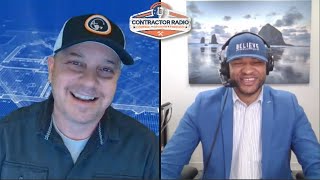
YouTube episode of Contractor Radio (host Jim Johnson) interviewing Keith Sconiers (President of PaySuite and Catalyst Training and Development). The conversation traces Keith's personal journey from a difficult childhood and collegiate athletics (played 2002–2006) through years of unstable employment ("17 jobs in 11 years") to a turning point of journaling and defining non‑negotiable values. They discuss purpose‑driven entrepreneurship, authentic selling as advocacy for business owners (PaySuite is a payments consulting service), and practical advice for aligning work with personal values. Contact links given: paysuitepay.com and keithsconyers.com.
Chapters
Foreign. Hey, everybody. Welcome back to Contractor Radio, this place where we come to talk not just about how to be a better contractor from strategy and tactics, but how to live a better life, how to get control of our business so we can grow our business and hopefully find that personal and financial freedom that we're chasing. And man, I am pretty pumped about our guest every time. I don't know if I talk about this much whenever I'm on the show, but before I hop on a podcast with somebody, we have a little breakdown, kind of let's talk about what we're going to do today. And that was one of the best ones I've ever had today with our guest to see kind of that sparkle in his eye when I started to talk about the topic and what he's going to bring to the game. And we're going to talk about this idea of purpose and how it applies and how we might get it right sometimes and then other times what we might be doing wrong with it. And he does a lot of really cool things with businesses, entrepreneurs, athletes. So I think you're going to really enjoy today's show. But before we get there, we do have to pay the bills and keep the lights on. So just a little word from our sponsor. Get the referral.
Who doesn't love getting more referrals? GTR will make your referral game stronger than ever with our four step process. First, engage with customers through job status updates and push notifications. Then motivate your advocates to send referrals and earn rewards. Third track and manage all of your results through your company's dashboard. And finally, sit back and enjoy achieving up to 40 times ROI. GTR is the number one referral platform for contractors. So book your demo today@getthereferral.com awesome.
If you guys haven't checked out, get the referral. You gotta get on it. It is the thing that is the most likely ability for us to make our next sale our next prospect. Our best prospects are those that are referrals. If we give people the right amount of incentive to give those referrals, we can actually increase our sales quite a bit. Now when it comes to our topic today, I kind of thought back and forth about it, about what this would be and I think we're going to really just talk about living a better life as an entrepreneur, a business person, maybe even you guys that are athletes out there that listen to our show that are contractors as well. I've got an amazing guest today. His name is Keith Schoniers. He is the President of Paysuite and Catalyst Training and Development. Hey, Keith. Welcome aboard to the show today. I love that hat. That's awesome.
Thank you. I really appreciate it. I saw you online somewhere with a Believe shirt on, so I said, man, I have to break out the Believe hat because this is my brother from another mother.
We'll actually talk a little bit about that today because we actually believe in this concept that if you don't absolutely believe in something, your ability to achieve that thing is compromised right from the beginning. So I can't wait to talk to you about that. But why don't you tell everybody listening today a little bit of your backstory, how you got to where you are today. I mean, come on, you're president of a big company. You run this deal for athletes with Catalyst Group. Tell us. Tell us how we got here.
Yeah. So I was born and raised in Fresno, California, by a single mom. If anyone's been through Fresno to get gas, you know what that's. You know what that's like living in Fresno, but, you know, raised by a single mom who was extremely hard working up until the point that she met my stepdad. And we live with. Lived with them until I was in the fourth grade. And then Child Protective Services stepped in and, you know, gave custody to my dad at the time, who was a contractor, entrepreneur, journeyman, carpenter. And he was battling addiction and mental health issues and incarceration all at the same time. And so I lived with him from the fifth to the eighth grade, in which I got expelled six times before I got to high school. My freshman year, I had a 1.3 GPA. And, you know, getting kicked out of school one or two times a year was the same trend that I was on until I started playing sports. And so when I started playing sports, it kind of gave me something for the first time to lose, I feel, even though I had plenty to lose before that, obviously. Um, but, you know, a coach stepped into my life and. And gave me an opportunity to play sports. And what that meant for me was, you know, an opportunity to. To kind of turn my ship around. And it changed my life. You know, he looked me in the eye and said, kid, you could be a. A Division 1 athlete. And I didn't even know what Division 1 was. I didn't know what basketball was, because my stepdad was really interested in. He was into sports, his coaching and things like that. And I wasn't interested in him, and so I wasn't interested in sports. But, you know, I took that opportunity, you know, played A few years in high school, got a scholarship to come to Portland State, played there from, you know, 02 to 06. And then I got done, you know, and is. If anyone's played sports and played at a high level, they know that when the jersey comes off, you, you know, you have a very significant challenge in front of you because you put your heart into something, and now what do you do with your life? You know, and for me, it was trying to figure out what I was going to do next and who I was and how I was going to take care of my family. And because, you know, I didn't have the stability at home growing up, I wanted to be a certain type of person that, you know, maybe my dad wasn't able to be for me. And, you know, the next 11 years, I had 17 jobs in 11 years after leaving Portland State. And. And, yeah, I mean, a lot of adversity that I had to face, a lot of, you know, soul searching, I would say. And I would say many entrepreneurs probably find themselves there where they're trying to figure out, you know, what the key is. And, you know, I feel like I tried every key and, you know, and then eventually, you know, five years ago, in March, almost five years, it'll be. It'll be five years this coming March. I, you know, I walked away from a job that I had because I felt like I had tried everything, and I still wasn't happy. I still wasn't hitting the goals that I really wanted to achieve, not only for myself, but also for my family and. But also a certain feeling that I wanted to have it work, right? And so I left that job without any money in my bank account and no business plan, really. And I don't recommend that for anybody. But, but, you know, but, but, but you reach a point, and there's these old sayings where a man's got to do what a man's got to do. And, you know, it was one of those gut checkpoints where I said, you know, I have to go figure out how to live the way that I want to live. And it doesn't mean money, but it means purpose. It means mission. It means, you know, a certain level of, you know, satisfaction. And so I left that job to find it, and I found it.
Yeah, well, man, now that I found out more about you, we even have more in common. Not the greatest home environment. You found somebody that sounds like that believed in you for the first time and gave you a bit of purpose that you pursued for quite some time until that ended. And Then when that ended and you were trying all these different things and they were not working out, how'd that make you feel? Like you said it was, what, 17 jobs in 11 years?
Yeah, yeah. 17 jobs in 11 years. And I don't know if there's one word that can encapsulate actually how I felt, but embarrassment, frustration, anger, disappointment, a variety of feelings. Because I wasn't the athlete that everyone had to run sprints for, right? Like, I went to class. I set my own classes. I did all that on my own. So I was, I was, I was pretty committed as it relates to my education in college. And so to, to get out of college and to have followed all the rules, so to speak, right? Like stay out of trouble, you know, go to class, do your homework and all of those things. And then to have to be put in this situation where, you know, I was changing jobs every six to eight months and five, six, seven years after getting done with college, I was still sleeping on the floor of a, of a furnitureless apartment and eating Mac and cheese. That wasn't even the good Kraft Mac and cheese. I'm talking about the knockoff 99 cent store Mac and cheese, you know, like.
Black and white box.
Oh, my gosh. It was incredibly frustrating, you know, and, you know, it. That's how it felt. It felt like I tried everything. Like, I'm a good person, I am diligent, I work hard. I've been to, to so many networking events. I have. I was going through my phone the other day, Jim, and I have 161 Michaels in my phone. And I know all of those people, right? Which means if you have 161 Michaels in your phone, I have 8, 9, 10,000 contacts in my phone. To be sleeping on the floor and to have put in all this work and not get the results, I was frustrated. I was. There's words I would use, but I don't recommend using those words either. But I was just upset. You know.
You get. I, I have a little bit of freedom on our project. I don't think we're. I don't think we're going to get ostracized for anything. So I, I can remember. I, you know, my, I think some of the words I would use, I was pissed off. You know, I'm trying to do everything I can. It wasn't paying off and frustrating. And I think so many of us go through that, whether they be one of our contractors, listener, somebody just happened to listen to the show today, that we end up in that Place. The word I would use for me was like, I was in some pretty heavy depression. Like, I thought I had it all figured out and found out I didn't. And then whenever I was trying everything, it just wasn't working out. And man, that really, like, it almost kept feeding off of itself and making it worse and worse. Did you feel any of that whenever you were going through all that?
Like, yeah, it did. Yeah. Because. Because I would. I would finally get up the courage to make the right decision, which felt like the right decision. And then once I made that right decision, like, for me, I left sales, right. Because one of the conversations for me was like, you know what? Everywhere you go, you end up hating it. You don't sell the way they want you to sell. You don't. You're not a closer. Which is one of the things I was told is like, hey, you're not good at sales. It's not for you. You know, and so I went and went to non profit. I was like, you're right, you know, I'm out of here, you know. And so I went to nonprofit. And, you know, I really loved it. But then I also did not love what the, what the upside looked like in terms of, you know, you get into business ownership, obviously, because you want to have a certain kind of lifestyle and do things for your family and also do things for the community that, that, you know, you might not be able to do with just, you know, a lower end income. And so I found that I was. I was like, wow, here I am again, you know, like, I've made what I felt was the right decision, but I'm still not reaching my goals, you know, and I'm still at risk of being evicted because, you know, I'm at this lower end job or not able to honor, you know, my family commitments and things like that. And so, yeah, it did feel like it was just getting worse and worse. And a lot of times I felt like, man, maybe maybe, like, maybe my life is just supposed to be like.
This, you know, so it doesn't, it doesn't sound like you ever gave up, though.
I didn't.
Yeah. Like, did you ever feel like you were going to. You ever feel like, dude, I just. This is all a bunch of gar. Because you tell me, maybe it was a little bit like myself, but you go from this regimented world that was very focused on this thing. It was pre laid out with practices and, and you got your school and all that stuff going on, and you kind of get cut out to the real World, you know, this private sector situ. I see this a lot with military folks too. Yeah, military folks come out and it's like, whoa, it's, you know, the world is your oyster now. Go for it. But, yeah, there's no road map for it. And so we're seeing a lot early on. Is that similar for you?
Yeah, absolutely. You know, I felt like I had to tone down. I had to. As an athlete, you can be as intense. You can be, like, driven. And that doesn't necessarily work in all workplaces. Right. Like, I feel like I had to. Like, I was constantly trying to figure out, like, what's the. Like, who am I supposed to be, you know, in order for me to be successful. Right. And so I was. I constantly felt like I was trying to be something that I wasn't. I think that's probably one of the biggest challenges that I had was like. Like how, like basically trying to become something else so that I could get the results. But even when I was in those roles then, because I was. Wasn't being authentic and I wasn't being me, I still wasn't happy. Right. And then my performance was. Wasn't what it needed to be.
Could you, I want to dig into that for a second. Could you explain what you thought you needed to be and what was driving that?
Yeah, well, I would say that when you go into. So like, my first job out of college was as a loan officer. And this was in 06.07. Right. So in 06 and 07, you could give somebody a mortgage even if they didn't have, you know, a driver's license. Right. They didn't have the right. And, and, and in the office that I was working in, there were people that were, you know, forging documents that ended up doing federal time. Right. And so when I say that, you know, I felt like I had to be something that I wasn't. I ended up because my goals were such. Of wanting to make six and seven figures and those types of things. You automatically seek out roles that align with that. And in those. In, typically in those environments are not necessarily people that study sociology because they wanted to be helped, because they wanted to help people. Right. You know what I mean? And so there's. There's questionable behavior and there's. There's a, there's a separation between you and the client. Often in those places where it's like, say what you need to say to get the deal done. Like, like, like say what, you know, pull out the negative motivations or fear or things like that. To try to get people to buy. Right. And because of, you know, I'll go back even into my own childhood of like seeing the drug dealer drive through the, through the neighborhood who I knew by first name because of my situation and seeing the nice cars and the nice music. Like, I didn't want to be the kind of person that would sell anything at any cost. And so I had these huge goals and I ended up in these environments where I wanted to make a lot of money, but I wasn't willing. And I didn't want to be the kind of person that would just sell anything just because I could make six or seven figures. Right. And so that's what I mean by wanting to, like having to be something that I wasn't. All the coaching, all the training, all the, that, you know, I went to, when I went to work to these places was, would rub me the wrong way. And I feel like I either had to comply with that or leave or not perform at a high enough level. And they, and they let me go.
So it sounds to me like internal character was at conflict with external input. Yeah, yeah.
Or just how I, or just how I experienced it. Right. Like how I received what they were telling me. They may have not intended it maybe, but, but how I received it filtered through my own set of values. I couldn't, like, I just couldn't be that.
Yeah, your internal instincts were probably pretty good. Some, some have a moral compass, some not so much. It all depends on what's driving you. And do you think everybody could be driven if they were to figure that little thing out? That it's more about who you are than maybe what you're chasing?
Yeah. I think that unfortunately we don't know how. We don't understand our own value. Right. So I think that we have a tendency to think that the job is the value or the business is the value. Right. Like, because maybe, maybe at a young age, like we were taught, like, oh, if you're a doctor, you're more important than this person. Or if you make seven figures, you're more, more important than the person that works at the, at the convenience store. And you're not.
Yeah, that's the, that's the. What do others think about me?
Yeah, yeah, yeah, yeah. So I think that if, if we knew how, how good we were, just how valuable we were without any of the performative things that, that we do in our day to day work, if we knew how valuable we were and we knew how valuable it was to other people, then we would, I believe that we would be more motivated because we could. Because when I meet people, the most common thing I hear, when I hear about somebody that is in transition or trying to figure out something in their business, when I say why did you start your business or what is your passion? The number one thing they say is I just want to help people. Which to me means we all come from the same place and we're wired to believe that way and want to live that way. It's just that we don't have a framework that allows us to operate within our day to day work and our day to day lives. We feel constantly separated from that. But if we figure out how to, how to value ourselves and really unpack our own true value and actually implement it and integrate it into our day to day, then maybe we don't have to change our business in another direction or we don't have to leave our business and go back to the corporate world or go back to some other job because we're actually able to finally live out what our actual purpose here on earth is. Which is this is to help people. Because it's not in, it's not in any of the curriculum I studied. No one said hey, you need to go out there and help people. It's something that we all have embedded in our DNA.
So I want, I want to talk to you about that. Like the how you came to understand that and what you did about it. Can you hang on for just a few minutes? I gotta again. We gotta, you know, there's these lights and there, there are bills. But I enjoy talking about this stuff. We're gonna hear our sponsors will be right back.
Yeah.
You're not using Hell Trace. It's definitely worth the money. That money invested was one cell was already bought. We've got from deny or declined 2x of being bought just because of Hell Trace and the storm reports that they give us. Not only do I know where the.
Storm'S at sometimes as they're happening and.
I can already head right there to the storm.
But also after the fact, when I'm.
Out knocking on doors, I can chill homeowners the map and what kind of.
Hail was in their area.
We've seen a huge return on our investment and I have no doubt that you will too. If you're a storm restoration contractor and you don't use hail. Trace, what are you thinking? Come on guys, like it is the best of the best and they do a lot more than just maps. They are people oriented company that will help you succeed in your business. Speaking of succeeding in your business, we're here with Keith Schonier from Pace Suite and Catalyst Development Training. And, dude, we're an amazing conversation. This is cool stuff because you were talking about this idea of doing what it is that we're wired to do, which is to serve others. And in talking to people, we do coaching. So we meet with these contractors all the time. We have the same question you have, like, okay, so what are the goals, what are the aspirations, what are you trying to do, and what are your dreams? And most of the time they start off with like this surface answer of like, I want to be a 50 million dollar contractor, 100 million dollar contractor, whatever that is, right? And we know better. And we're like, well, why do you want to be that? Let's unpack that a little bit. But it usually does do exactly what you're saying it comes down to. Well, I want to help other people, whether that be externally, through their customers, internally through the people that work for them. There's a variety of different ways that they want to do that. So how did you come to that conclusion? Like, hey, I'm over here doing this, but I feel like this. Did you just stop? What'd you do?
Well, I think it takes. What I did is I actually started to write it down. So, you know, I went to a conference where I, you know, I was trying to figure some things out in my life, and, you know, I didn't, at the time, I didn't even have the money. I mean, I did have. I had to have room on a credit card, though. And so I went, you know, spent my last, you know, thousand bucks to go to a conference because I. Because at the, at the, at the moment, I was like, wow, man, I've tried everything. And the person that I was talking to about the conference, he was like, yeah, man, every time I talk to you, you, you, you know, you're on this loop of, like, depression, basically, or, like, just not being a good place, like every 90 days. Like, I was like on this roller coaster. And so he was like, look, like you don't have any other option, like, you're coming to the conference. I was like, all right, cool, I'm going to the conference. I went to this conference and it was really the first time I really started to. To do a lot of writing just on, like, my personal story, like, for the past, I would say, up until that point, for the previous 10 years, I had been listening to all of the motivational, you know, talks, the, you know, the online YouTube channels where you get pumped up and fired up listening to Zig Ziglar and, you know, Tony Robbins and like, all these things. And they're fantastic. I think they're great. I think they're a great supplement, right? I think that they're great things to learn from. But at this conference, I really started to, you know, journal and really write down, like, what were the challenges that I was facing? Like, why was I actually depressed? Like, specifically, like, what was it about my story that kept coming back up and being a challenge? Like, if I was at a job that I wasn't fired up, I would write down, like, what was great about that job and then what wasn't great, right? And so I started to actually unpack my childhood. I started to unpack. Like, what did it mean that I was, you know, living with a single mom? And what did it mean that I was living with a dad who was battling addiction and battling incarceration and battling mental. Mental health issues? And during that period of time, like, what did that, what did that time mean? Like, my dad being a contractor and me being able to go to work with him for, for those three years and do roofing and do siding and do sheetrock and do foundation work and do framing and do all those things. And then what did it mean for the 17, 17 jobs in 11 years? Like, what was I actually specifically learning? I had to go back and unpack, like, what did all these things mean? And then I had to find the powerful meaning within those things. So what I learned about that period of time was that, you know, because my dad left me at home for days at a time. And when I was in the sixth and the seventh grade and I still went to class, I found a powerful meaning attached to that. So what did that actually mean about me? That I could actually withstand that? Right? I had to. I had to go through my story and find the principles that were really important to me in terms of, like, how did I actually want to live because I had been exposed to the drug dealer, right? And those experiences, what did that mean in terms of my principles? How could I take that experience and shape my own values in terms of how I want to live and how I want to work? And how can I create non negotiables so that when I go into situations, I can operate from a position of strength, knowing that every decision that I'm making is not just based on what's good for business today, but it's based on what would have been good for the eight year old. Right? That, like, the, the eight year old Keith. And. And so when I started to unpack my story and I started to clarify what were the powerful things that came out of my story and how could I adopt those into my day to day work. Then everything became powerful for me in, in the essence of like what am I actually doing at work. My work became personal. I'm doing the same work that I was doing for another company where I was depressed four or five times a year that I'm doing now. The only thing that's changed is me. Right. And it's because I actually went back and unpacked and figured out what was my purpose and what were my principles and what were the values that I wanted to live by. And I stopped violating those values to try to get money. And what I found was that I made well more than anything I ever made working for anybody else and I can't and my values are intact.
So can I ask you. Yeah. What are the non negotiables? Like I would just will not negotiate that. This is who I am.
Yeah. So when I started my company I didn't have any money in my bank account like I mentioned. And one of the things was that I wasn't going to make people sign contracts so I can get a signing bonus. And we've never done that. Right. That was one thing. It's pretty awesome. And it's really hard to do when you're sitting in front of someone and you. And you're late on your rent and you're not going to sign. Make them sign a contract. Right. Like it's, it's really hard to do. But what I found was that in doing the difficult things is where I really found. That's really where I got really excited and fired up the. The ability to actually do that became incredibly important just to be able to just to do the right thing. It feels so good to do the right thing and honor your own values. Right. And so you know, it was, it was kind of like a rite of passage for me.
Yeah. I mean if you talk to most sales guys and I sign a contract that's not part of their values at all. The fact that it's, it's your non negotiable and you're living by and it's actually paying off, man. Now is this the pay suite thing? Like that was where, where. Okay. So yeah, tell me the story. How did the whole pay suite thing because. And free those of you that don't know who better to explain it. And Keith, what does pay suite do?
Pay Suite is a payment consulting company, meaning, you know, there's lots of software companies out there, there's lots of credit card processing companies out there. And what I wanted to do when I came back to this industry after working for the nonprofit is I didn't want to go work for another credit card processor or another software company because I felt like I knew enough about the industry and I wanted to sit on the same side of the table as the business owner. Now let me back up a little bit and tell you why I wanted to do that. So when I was living with my dad from the fifth to the eighth grade, and he would take me to work with him because oftentimes I was kicked out of school. So I'd have to go to work with him. And, you know, I. I'd go to work with him. And during that period of time, the people that hired my dad happened to be entrepreneurs. Right. And so when I started to unpack my story and think about, like, like, who was I at the core and who did I care about serving? It came to be entrepreneurs because entrepreneurs in a lot of ways looked after me when I was at my most vulnerable point. So for me, PACE Suite is my way of looking after entrepreneurs in one aspect of their business where they're vulnerable. And so what PACE we does is we sit down with business owners and help them figure out, like, what do they want in terms of the payment solution and then what are all their options? Right. And then we just try to match them with the right solution so that they can get what they like, get the best technology, the best support, and the best price based on what their situation is.
Now, does that. Is that strictly credit card financing or is there traditional financing involved, or is there various options depending upon what that contractor wants?
Yeah, so the financing piece isn't necessarily our core focus. Financing is a separate piece where someone's trying to finance a roof or something like that. We can, we can help companies figure out, like, who might be the best in that space for them. But what we generally work on is more like, okay, how are you, you know, are you taking payment up front? Are you taking it in person? Do you need a device that you can take a, you know, take a credit card from somebody if after they're done paying for service, or do you want to send an invoice to them?
Online payment.
Yeah, online payment. Yeah, we help with that.
Okay, awesome.
Yeah.
And so how did this particular situation align more with your character and non negotiables? Was it because you were sitting on that side of the table as more on the entrepreneur side. Was it because you were helping entrepreneurs? Was it something else that. I'm not quite seeing that from other people in leadership there that were like, okay with those non negotiables.
Yeah. So what I found was that I was working for the. The fifth largest processor in the country. And this was. This was the job before I went to nonprofit. And I was working there. And one day at work, you know, I was sitting across the table from a restaurant owner who was speaking to me in broken language because English was their second language. And they were complaining about the company that I worked for. They were saying, why isn't your company helping me? Why are, you know. You know, and there had been some restructuring going on in the organization with some different technology that they purchased. And, you know, I. Mike, like, I was. I was sitting across the table from this business owner, and my heart was just like, I was. I was. I was upset, actually. I was upset for him. And so I went back to the. I went back to the. Back to the office and I sent some emails to the department that could fix it. And they forwarded all my emails to the perpetrator, and they didn't want to fix it. And so since they did that, I wrote my resignation letter that afternoon. And so when I went to nonprofit and I had went to that conference and I started unpacking, like, what was it about my story and all these different experiences and what were these experiences telling me? Then what I learned is that I care more about being an advocate for the business owner versus being just the salesperson to the business owner. Right? And so that's when I came up with this idea. Well, I'm going to start this consulting company and help the business owner, help the entrepreneur sit on the same side of the table as them, because that's where they really need the help. They don't. They don't need just another salesperson coming in and telling them, hey, yeah, we're the best and we can do this and we got the best fees and this and that. Like, they need somebody that can understand the industry and advocate on their behalf and help them get what they deserve and keep these companies accountable. And so that, to me, was what was most powerful, because in many times in my life, I had that advisor, or I didn't have that advisor, right? I had the advisor that showed up as a coach, right? That was like, hey, kid, here's an opportunity I had, or I didn't have it where, you know, I was, you know, maybe in Situations, you know, in fifth, sixth, seventh, eighth grade where, you know, I was exposed to things I wasn't supposed to be exposed to. So that aspect of my story shows up in my work. So that's. That's pretty much how it happened.
That's. That's pretty cool concept because, you know, a salesperson, unfortunately doesn't always have the best interest of the purchase or in mind. Right. It's like, hey, how do I make the sale today? Because that's going to put food on the table for my family and pay my rent. But you're kind of in between going, hey, let me listen to what it is that you want and what you're trying to get out of this. And then let me go. I've already done all the research. I've already done that part of it that you don't have the time to do. And based on what you've told me, this seems like the best situation for you. Now let me help you go to them and advocate for you to get what it is that you need when it comes to your credit card payment processing and whatever else it sounds like they might need to do to get payments made. Yep, that's a cool concept, man. And as I was listening to you tell a story, I was sitting there going, huh? I did a very similar thing because in the roofing world, especially in commercial, you would have sales guys come in and try to sell people on their commercial services, but they're more focused on them than necessarily the buyer. Where I could go in there and be the consultant, say, I'll help you find the right commercial contractor to get this done. So kind of a similar setup to what you have surmised. And that should really tell us something. As, as salespeople, people are not looking for somebody to sell them. They're looking for somebody to look out for them, to give them the best solution for them. To be honest, when you're not, and you'd be shocked at how much more you get back. Like, I changed to that model. I was not always that way as a sales guy. I was. I was the closer man. Like the epitome of a closer.
Yeah.
And we actually teach sales right now to home service companies in this manner that you're talking about that through that, we actually close at a higher percentage. We get a higher referral percentage because we do it more on a consulting basis where we truly listen, we truly, like, hey, let's find the best thing for you. Best payment options, best product, best alignment with us. And if it's not Aligned with us. We're not the right one for you will help you find the other ones. And just that alone gets more business from, from a referral basis. That's pretty cool. You enjoying it so far? It sounds like.
I love it. I love it. I love it because you know, for the first time I'm able to honor like who I, who I feel like I was designed to be and operate like from a true place of authenticity. And it's not just, you know, it's just, it's not just another business for me, you know, it's an opportunity for me to serve at a high level, which is what I've always wanted to do.
Well, we, we talk about it all the time. This concept of, you know, understanding what your why is. Yeah, what your why is. Then you'll have purpose and passion to chase it but. And a great book written about it. Start with why. I love Simon Snek. I think it was really good to bring that up and really make that a point of focus in our businesses because I think it truly is important. But we started to realize something that a lot of people were doing that, but they were doing it from almost a self serving side of the picture of all right, my why is now to be a hundred million dollar contractor because I want all this money in my bank. And like there was all these reasons for their why, but what we found is they're not aligned with who we are internally, character wise. And it sounds like you went through some of that. What do you think's going on there? Why is that just human nature, natural? Is it because, you know, others are telling us that's the way it's supposed to be done.
What do you think? Well, I think that, yeah, I think it is actually. I think that we, because we want results so bad and we think that the results are more important than people, then therefore we're willing to do whatever it takes in order to flog people. Right. And if that means that I have to share some vulnerable story to get you to buy in or to get you attached to me so that I can pull money out of your pocket, then that's what I'm gonna do. Like sometimes people are wired to like, okay, let me just get to the chase. Let me cut what's the fastest path to the pocketbook. And if you're telling me that I need to be, I need to communicate what my why is in order to do that, then that's what I'm going to do. I think that sometimes people have really missed the Point and missed the. The actual true benefit of operating from like, truly knowing what your why and what your principles and what your values are. Because they don't. They don't. They're not necessarily bought into that, right? They're bought into getting the resources instead of, instead of like getting what they actually need to live from an authentic place.
Why do you think that is? I mean, I have my own opinions on it, but I'd love to hear yours. Why, why do we default to that versus what we come to realize over time? Some of us that get some experience. Why do you think that happens?
Well, I think that. I think we just truly, we've been conditioned. The way that our, you know, our world is maybe set up, right, is like, it's all about. It's all about the almighty dollar, right? And it's all about what I can get. You know, we're not, we're not conditioned. We're not conditioned to think in this, like this abundant, with this abundance mindset. It's all about scarcity, right? So we're all about like, I gotta get, I gotta get, get, get, get, get, so that otherwise no one else is gonna, you know, otherwise I'm not gonna have, right? And so I think some of it's scarcity. Some of it, some of it is actually having. There's a lack of role models that are actually winning, right, that have the resources but also have value. Like, have also honored their values. And so I think for a lot of people, they just don't believe that it's possible. They don't believe it's possible to, you know, leave your job and double your income and on and without violating your values. But I think the more people that they encounter that are truly, truly operating from a place of authenticity and from a true place of actual service to other people and from a position of, like, being strong in what their values are and not. And like having non negotiables. The more they witness people that actually stand for what they stand for and do it the right way, the more people will have the courage to actually live out, you know, building their business in a way that honors their values instead of it being this superficial, why that is constructed in some marketing department at some smart Ivy League marketing professional's office, right? Because at the end of the day, people know, right, like, if your heart's not in the right place, you may fool me once, but you will not fool me twice. And if the, and if the culture and the DNA of your company is not truly about taking care of people, you may get one sale, but eventually the word's gonna get around, right, that you have bad follow through, bad agreements, bad service, and bad, you know, bad outcomes for people. And so I think the. I think the best way is to get real with yourself and really truly figure out what your why, your principles and, and who you, you know, who you want to be as a company and as an individual.
Keith, man. Yeah, your brother from another mother, man. Like, we talk about this all the time here. We. We get so focused on the outside stimulus, which is times a thousand, what our internal stimulus is, because we don't have enough time for any of that. You know, getting quiet and really speaking, sitting down, doing what you do with journaling and writing it down, or meditating or really actually taking time to just seriously think. I don't think we take enough of that time to do so. And so we're listening to what we're being told to do instead of listening internally of what we feel we should do. And I think you're right about this part too. I think we are wired internally to serve, but we're being pushed from the outside so much with the gain because of the scarcity mindset. And one thing I found is, you know, I found this abundance mindset quite a while ago, and ever since I did, I've been all about how do I serve, how do I. How do I make the person that I come in contact with better today? And it is just like, I can't avoid the opportunity that is presented to me. Like, it's just been so, so good and so blessed and so thankful for everything that's been put into my world because of it. You're right. We need more voices doing this. And I think the reason that we don't is I think those folks are pretty humble. They still have humility.
Yeah.
And so there's this. There's this friction between that humility and this putting ourselves out there. They're like, hey, we don't want the spotlight on us. We don't want this light shining on us. I know I did. Do you deal with any of that?
No, because I, you know, I feel like there's a. There's a. I feel a sense of responsibility.
Right.
Because I know that there's other people out there that are locked in, into whatever process or organization that they're locked into, even if it's one that they built right, where they actually want to care and they want to serve and they, you know, they just don't know how. Right. They don't know how to keep it all together and still be who they want to be from a true values perspective and how that shows up in their day to day work. And so, you know, when I look back and I started journaling about, like, who did I want to be a hero to? Dan Sullivan talks a lot about this. I know you, Dan, if you follow Dan Sullivan, but he talks about who do you want to be a hero to? And he. And that is in the sense of like, obviously, like, who are the people that you want to serve in terms of clients, but like, also, like, for me, when I look back on it, it's like, I want to be a hero to the average kid who's getting kicked out of school two, three, four times a year. Like I was. I want to be a hero to the entrepreneurs who, who looked after me when I was vulnerable. Right. Because they were key in helping me get to where I am today. And I want to be a hero to, to the athletes that are out there. And the only way that they find out about me is if I stand up and actually talk. And if I actually get out there and. And share and talk and recognize that, you know, like, you're gonna have, you know, unfortunately, you know, you will have to be in the spotlight a little bit, I guess. But at the end of the day, if your heart's in the right place and you've done the work of, like, of working through what your core values are, what your unique abilities are, your, you know, the relationships that you really want to serve, then, like, if it's coming from a good place, then, you know, I want you on stage, you know.
Yeah, it's a, it's been a struggle for me personally. It's not my. I'm not predicated that way. I do this contractor radio thing because I think it's valuable. I think it's helpful. I think I get to lean into that a little bit. But I'm not the type that's like out there posting every day on social media.
Yeah.
And all that stuff. And, and I got called on the carpet about it. I had a PR company come to me and go, why aren't you.
Yeah.
Don't you feel responsible to, like, if you don't, you leave a vacuum where who knows who can step in there Right. For your industry? And really took me back a little bit. And I had to reevaluate myself and think about myself a little bit and my responsibility. And so thank you for the encouragement. Jake is. You're right, it is responsibility. It's why I do this show. It's why I've made a bit of a commitment this year to put myself out there more and be more about that, because I think people need that understanding that you don't have to compromise your values to get ahead in this world just because that's what the world tells you you're supposed to do.
Yeah. Yeah, I agree.
Keith, man, great conversation today. This is awesome.
Yeah, Yeah.
I didn't know it would get all the way to here, but gave me a bit of encouragement today. I still. One of those things I'm, like, a little bit cautious on because the second you put yourself out there, you're under a microscope, right?
Yeah, sure. Yeah.
And I'm not scared of the microscope. And, you know, people like looking at and go, hey, let me try to find fault with you that that's everywhere. But it does, it does create this a bit of overwhelm, if I'm just being honest. Like, you start getting all this interaction back to you and everybody wanting some answers and wanting some pieces and. And I had to do some things on our. On our end to take care of that.
Yeah.
I can't answer all the questions.
Right, right, right.
So that's been a lot of fun to kind of put that together and talk with my team about it. How do, how do people get a hold of you if they're thinking about their, Their, their credit card processing for their customers, financial advising when it comes to their customers? How do folks get a hold of you and get some time with you?
Yeah, well, I do have a landing page which is just Keithsconyers.com people can contact me there. They can also find me on LinkedIn. They can go to PaySuite website if they're looking specifically for credit card processing, which is paysuite P A Y dot com. So they can find me there.
That's paste suite, like S U I T E. Right. Not sweet. Like it would be cool.
Yeah, that'll be cool too. I should buy that domain.
That's pretty cool. All right, so we got paysuite.com. we got keysconeyears.com. um, what do you do when somebody engages with you? Do you sit down, talk with them a little bit, find out a little bit more about them? Does it cost them anything to do that? What does that look like?
Yeah, no. So just to back up, it's paysuitepay.com so pay.
Oh, sorry.
Yep. No, that's totally okay. Yeah, so when people reach out, it's just a, you know, it's just A conversation like, I'm. I am. Here's the thing about me is, like, I am so relationship based, it drives people crazy. Right. Like, jump on the calendar. Let's get something. Let's just chat, you know, let's have a good conversation. And if there's a way that I can help, you know, I will, I'll make a recommendation. But if not, like, I am, here's the, here's the piece that I am so proud of. Like, the relationship is, is the true value. Right. It's not closing the deal, it's not being able to make money necessarily. Like, that's cool. The true gift that we have is that is being in relationship. Right. And so, like, if I can be in a relationship with somebody just to help them out, whether it's just today or a season or a lifetime, like, for me, that is, that is the highest, I would say, value that I have found in the work that I do is just being able to just have a relationship and help people wherever I can.
You know, the, the mindset I try to use with that and, and we talk about quite a bit in some of our coaching is we're believers in your network is your net worth. You've probably heard that kind of concept before.
Yep.
But your relationships are your true worth.
Yeah.
And I think that's a bit more powerful. That's cool that you do that. I hope we can keep this relationship up and I can help and serve you in any way I possibly can. Hope our audience gets a hold of you, has a discussion with you. If you can help them, great. If you can't, I think you'll send them in the right direction. And yeah, whatever we can do to help you. Like, my people will get all the websites and all that good stuff correct and get it all to you. We'll get you a little media kit and all that. You share it to your crowd. But I have enjoyed this story today as much as anyone I've ever done. So thanks for being on the show today, Keith.
Yeah, absolutely. Thank you for, for having me. I look forward to future conversations.
Yeah, I'm. I wish I had more time because there's a lot more questions. I'm a curious dude. Would you come back in the future if I invite you back?
Yeah, absolutely. Yeah.
I got some cool questions for you, but I'm bumping up against time and I know you've got a bit of a time limit today as well. Thank you. Genuinely. Just thank you for taking time out of your day. This is always a big ask from anybody, especially when they are an entrepreneur. They have their business. We're busy people. I'm grateful for it. And thanks for sharing with our audience today. I appreciate it.
Yep, you got it. Thank you, Jim. I appreciate it.
If you don't mind, hold on for me, just say I got to close the show, but I want to talk to you for just a second.
Yeah.
And we'll cut you loose.
You got it.
Hey, thanks a lot, Keith. Really appreciate it. Hey, guys. What a great show today. This. This concept of kind of chasing those things that we think the world and our outside influence is telling us we should chase and not feeling in the end like it's worth it, feeling a lack of connection to it. And this story with Keith today of going through all that 17 jobs in 11 years, that's crazy. Us as contractors, while we may not go through that many jobs in that amount of time, we do feel like the thing we're chasing sometimes isn't aligned with what we're all about. If that's something that you're dealing with, if you feel like that's a problem, hop on our website, take our contractor assessment. It's free. Free. It doesn't cost anything. As soon as you submit it, you will get a link back to get on our counter. It doesn't cost you anything. Hop on with us. Let's talk about those dreams you're after. Let's break them down, figure out what's going on and see if we can find some alignment for you. And if you like our coaching and want to be a client, great. But if you don't, we want to bring you that value that day, give you some next steps on what to do with your business. Because we are. We're here to serve, just like Keith is. And if we can do that, it fulfills us and helps us give back in a way that we feel is impactful to our industry. Thanks a lot for listening to our show today here at Contractor Radio. Go ahead and click the download button. Click the subscribe button. Rate this podcast. If you thought it was worth your time today and helped you with your life or your business, we are here for you. We're here to help you get control of your business so you can grow your business and find that personal and financial freedom that you're chasing. Check us out at contractor coach pro.com and click on the contractor assessment. We'll give you a hand. Talk to you guys later. We'll see you on our future episodes. You're under a microscope, right?
Yeah, sure. Yeah.
And I'm not scared of the microscope. And you know people.










