Massive Planning!
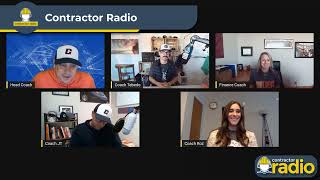
Jim Johnson and coaches Nathan Thibodeau, Jenny, Roz, and John Townsend explain why contractors skip strategic planning and what they miss. Planning sessions improve finances and hiring. The Contractor Strategy Conference caps at 30 people, registration closes Nov 12, with a $500 coupon code THANKS.
Chapters
Foreign. Hey, everybody. Welcome to Contractor Radio. Hopefully my camera will zoom in on me here in just a second. There we go. Good. Today we're going to talk about planning and why planning is so important for your business, for your life, and really for a lot of things that we do. Just in general, like if you're going to go on vacation, it's pretty rare that you just go, hey, let's take off. Everybody hop in the car and let's go. And so there's at least a little bit of planning and how important that is is going to determine the end result of that thing that you do. I got some coaching on this many, many years ago. 1992 was when this started. And over the years, I've been able to go to more and more coach planning for the future of my business. And through all that, coaching has really helped kind of predict what's going to happen. And so we want to make sure that we provide you guys with some great information today and maybe fly in the face of a lot of things that are going on out there. We want to welcome you to Contractor Radio live today. This is unusual. We usually record these in advance, but I have some very special people near and dear to my heart. They are our coaches here at Contractor Coach Pro, and we want to talk about this planning and how it can have such an impact on your business. So without further ado, I'm going to go ahead and bring on our coaches. Welcome to the the Contractor Radio Show. Nathan Thibodeau.
Good morning.
Also known as Ted Lasso. No, just kidding. It's good to have you, Nathan. We also have Ginny, our finance coach. Hey, welcome aboard. Jenny. Hello. And we have Roz. And Roz, like, a lot of people use the terms hr. Like, HR sounds boring and terrible. We're more like employee experience. Like, what does that look like? And these are all things that we have to plan for and hopefully forecast, predict what's going to happen. And last but not least, we got jt, the man with a plan, John Townsend joining us. And we're live today. Hi to Facebook Land. All right, cool. So today we want to talk about massive planning. You hear this term all the time, massive action.
Right?
Like, I take massive action. I won't mention the guy that's making that his call sign, but I think it can lead to a little bit of making some mistakes if we just jump out and start doing. The people that you see usually do the best are the people that say, all right, that's cool, I want to go take some Action. But before I do that, where am I going? So I've been working on this concept of problem solving. And I think problem solving actually starts with the end result in mind and working your way backwards. Those are problem solvers where problem creators are the people that start like right here and take massive action. And every problem that comes along is like, hey, there's a new problem, there's a new problem. They start creating problems that may be, shouldn't existing if they would have just planned a little bit. And so first off, I want to start with this and I'm going to ask Nathan, Nathan, why don't people plan?
Well, there's a lot of reasons behind that. Everybody's reasons are a little bit different. I think that oftentimes, I think the number one reason is we're not totally sure how to plan. Often we speak with a lot of contractors. And it's funny how often I speak with an entrepreneur and I ask him a question like, him or her a question like, where are you going with your business? What's going on? Like, what are you trying to do? Why did you start your business in the first place? And it's the why did you start your business? They're usually pretty good answer. Like, I worked for companies that I don't feel like did it right or I didn't want to have another boss anymore. I wanted some freedom, you know, I wanted to do it, do it my way instead of doing it somebody else's way. But then when you say, well, where are you going with this thing? What's, what's your end game? Why? What, what is the target that you're aimed at? Most entrepreneurs, I've found, don't really have one. And so I think the problem that oftentimes people have when they just sit down to trying to just decide and plan for their business is they don't have a compass to really give them an idea whether they should go left or go right. And so without having that, that compass, then all ideas are as equal as any other idea. And so whichever idea sounds and feels good at that time, that's the one we attack. And then it takes us down this path. And we don't know if that's a good path or not because we don't know if that path has taken us where we want to go because we don't know where we want to go. And so I think that a lot of the reason why people don't plan is they don't have an overarching understanding of, of, you know, where they're trying to get. And so they don't know what to plan for. You know, like, if you're going to take a vacation, should I be packing, you know, shorts and sandals and tank tops, or should I be packing hiking boots and, you know, in fleece jackets? Like, you don't know. Because if you don't know where you're going, you don't know what to prepare for.
Yeah, I ended up in Colorado and I needed warmer clothes than what I had. So lack of planning, maybe. So, yeah, I agree with you. I think a lot of times when we talk with people, they know kind of why they started it and where they're going, or at least they have a pretty good foggy notion of it. But to work it backwards, right? Like to work it backwards and say, hey, this is the step I need to take today to get to there, that gets a lot foggier, a little bit out of focus. So, John, in your experience, you've worked with a lot of clients and you've coached now for a while, what do you hear from guys like, do you think any of it has to do with just fear? Like, they don't know how to build a plan or how to structure a strategy? I do.
I think fear is a major component. Fear of a couple of things. I think when we talk about planning, that's not necessarily a sexy word. It involves work, it involves time. The folks that entrepreneurs and people in the contracting business work hard. They're very busy. And I think that when we say, okay, when we have that end goal in mind, that end vision of where I want to go, and now we reverse engineer it, sometimes it can be viewed incorrectly as a challenge, I think, to your current process, as a challenge to maybe how effective or. Or efficient your work is right now. And so I think that that could be. That can be a limiting factor, is that they view it as. And that can be some of the fear tied into it. You know, is this exposing ways where we aren't as optimal as we can be.
So.
But ultimately that it comes down to putting in time, putting in effort, and being really introspective and understanding.
You know, it's kind of like. Like, you don't.
You.
You don't want to go to the doctor because you don't want to find out what's wrong with you.
Exactly.
Yeah. So. And I'm gonna dig into that a little bit. Could it be that the leader, the main leader, feels like some of his deficiencies might be exposed as a leader and as a planner and if he just avoids doing it, then he won't look so bad in front of all his people. Do you think there's any of that?
Absolutely. There's a general. And the idea that to his or her people, that the sense that I'm doing this to you, I'm creating this process, I'm doing this planning to you rather than for you, rather than to help offload responsibility and stress and where joy may be lacking. Right. As opposed to this is I'm doing this, I'm doing this for you. And it can absolutely seem put them in a tough spot if they're not willing to take that on.
Right.
If they, if they question their leadership ability. I think, yeah, there's fears are very motivating factor.
Well, I think it leads to a lot of problems in our businesses in the areas we don't do well. I can use myself as an example. I am not a fan of finance. I think it's like watching paint dry and it's just not exciting to see Jenny there, but she's about to nail me on this. But I knew that I needed to do it. Like it wasn't a want or be nice or anything like that. I knew I needed to do it. And so things like finance and HR are not my strengths. And so that's why we brought in great coaches like Jenny and Roz. And so Jenny, Roz, asking you in your particular areas, do you think people spend enough time in planning and budgeting and finance? And then also their. They're like HR and employee experience stuff like, what do you see whenever you're out there coaching.
From the finance side? I mean, I think I come across a lot of people that want that and they have one or two things. Either don't have the experience or training to understand it so they lose value or, you know, they just, they don't. Like you said, take the time, make it a priority to say, I know where I want to be, but I don't know how to get there. And I don't, I don't take the time to take, put the work in to get there. All those same things, you know, Nathan and JT mentioned there of the fear or whatever prevents them. They want it, they see it. You know, you maybe hear about, yes, I want a budget. I want to hold my, myself and my team accountable to a budget. But they realize it takes some work, it takes some effort, and they don't always make that a priority.
Yeah. So for me it was two things. It was fear, like, okay, I don't know that stuff. And there was a, like, I didn't understand, like, financials as well as I should. Now I understand math. Great. And so there's a bit of my ego stepping in there too, going, I know we're making money. We're making great money. I don't need to spend a bunch of time over there. I need to spend time over here. And that ego came back and bit me on the rear end pretty significantly with a theft from our company that I wasn't aware of because I was just trusting somebody too much. I wasn't planning, I wasn't budgeting, I wasn't doing the things I needed to do.
And.
And it exposed a weakness that was taken advantage of. And so, Ross, from a employee experience aspect of things, how can we damage ourselves by not planning there?
Yeah, absolutely. Thank you for calling that out. Cause I think it's so critical for the employee experience, and it's often overlooked in the importance of that. Because here's the reality is, if you haven't gotten clarity on the direction that you want your organization to go and the steps that you're going to take to get there, how can your employees possibly know where they're going? That'd be like, to use your travel analogy, getting on a plane. And you don't even know where that plane is headed. Like, how many, how many people are hopping on that plane. Just saying, like, I don't know where we're going, but I hope it's somewhere good. Right? Like, so what I often see is sometimes even with the best of intentions of, okay, we're gonna, we're gonna plan this out, it's often stopped at that high level. Overall company standpoint, like, okay, even if we've done the steps and now we've planned and we actually do have a strategic plan, what are we doing that to trickle down to our employees so they understand their individual role in executing on that plan. And I think that is so important from an employee experience side, because if I can see clearly and the importance, the impact, how my actions will personally contribute to that end goal, I am so much more motivated and I can actually see tangible results as I'm going along because I know that my efforts are connected, tied back to the strengths of the organization and we're all working toward that same shared goal. So it's huge. So huge from an employee experience standpoint.
So my epiphany moment, like I said, was back in 1992. I was in health club industry at that time and I was pretty good sales guy. I was A sales manager and I ran all the five clubs that we had, but we were kind of getting stuck. We would. Every single year, we'd get together and we'd write up on. We had a big whiteboard, like a lot of people do. And this is how most of our planning sessions go. I think you take this big whiteboard and you write up all of these amazing things that you want to have happen, how you think think they're gonna happen. And it is awesome. I mean, it's literally like you're gonna dominate the world and be the greatest thing since sliced bread. And everybody walks away from there going, yes, all right, we're fired up. And a week later, those things are happening, but we're thinking about them and we're trying. And it's disconnected. It's not unified. This guy's over there doing that, and that gals over there doing this. And. And it just kind of kept me in the same place thing. And so thankfully, the leadership of that company brought in a coach and he said, okay, so this is actually how you plan now. The whiteboard was fine, but how do you take it from the whiteboard to time in there? Yeah, some good space, some good direction on what needs to get done. It's pretty step by step. Like, hey, do this, this, this, and this. We give you a whole workbook. We actually mail it to you, send it to you in advance, and it helps walk you through this. And it's actually something like, if you didn't ever want to come back, you learned something that's going to be valuable to your business forever. And like this. That was the. My takeaway from going to infusionsoft. I learned something that I didn't know before. That has been. That was in 2011. It is now 2020. That's 10 years of value that that thing brought me that has had an unbelievable effect on what I do business wise. And this is the same type of thing, but very practical, like you're gonna want. That would have been the part I would have liked. Hey, here's all the cool ideas. Now let's do it. And they didn't do that, fortunately. We had enough people that were, like, pretty intense and we did it. That's not normally the case.
I think Roz had something she wanted to add.
Yeah, go ahead, Roz.
Yeah, I was just going to mention that another really cool feature in the virtual sessions is the breakout rooms. It's really neat that we have an opportunity to allow people to kind of go and meet with their team, virtually break out, but then also still tap in a coach. Right. So they actually had the opportunity to message the moderator and like I mentioned, ask for like a specific coach in a specific area when they had questions. And because it's virtually. It's not like we had to run across the room and try to get to somebody, it was super easy to just hop into those breakout rooms and connect with them. And we also utilized our sponsors. We had amazing sponsors we will again here who were able to hop into some of those breakout rooms as well. So using our, those sponsors as partners, you know, we're very intentional about who we bring in on as sponsors because we want people who are going to really help drive the quality of our, of our workshop. Right. Of our conference, that they're actually contributing members, they're providing insight, they're providing feedback, which is a really kind of, I think, unique approach that we take in allowing them to give insight to people who, who are there from their expertise as well.
That's when I knew this was an amazing thing that we put together. Excuse my ego there, but that when I had sponsors coming up to us after going, you have no idea how much information I got from that. That applies to my business. I took tons of notes. I'm making some changes. I'm going to do my strategic plan. Like they weren't doing those things. And to have your sponsors go like that is something that we need to. Tells you that this is pretty powerful information that we share there. And to see everybody working together, super cool. We're about 53 minutes in and people I don't know. You bored with planning? I don't know. I love it because here's the thing I love about it. I love that I know when I build that plan, I'm going to achieve probably five times what I would achieve without it. That's the cool thing. Like, I know I'm going to do better. I may not hit the big number and all that other good stuff and all the big plans that I had, but I'm going to do significantly better than if I didn't have a plan. Any final comments, notes, anything any of you want to share, just raise your hand and go for it.
Well, I'll just say as like the social butterfly on the team that I'm. Well, Jenny is too, for sure that I, I hope that, that we see some people who are listening in at the event because one of the things that we do is we coach people virtually. And so it is so, so fun to be in person. And I love that we have that hybrid piece because we'll get a chance to kind of make these connections. And it's amazing how that video conference that you do ahead of time just helps you feel like you already know somebody. And so you're going to come to this conference and whether it's us coaches, you know, if it's your first time connecting with us virtually with the coaches, you're also going to see other. Other fellow industry leaders at that. Right. On these virtual calls. And so that when you come to the event, you're showing up and it's like you already have this amazing strength in your network, in your, you know, in those interactions where you get to come and just immediately have interpersonal connection with other people who are just powerhouses in this industry. So I think that's something to really look forward to.
Yeah. If you're sitting out there and you're looking around you at some of these contractors that have done some pretty awesome things, a lot of those people have been at our conference, and that's how they. They built their strategy, they built their mission, they executed. Now they got some coaching, too, but a lot of them. But some of them haven't. Some of them just go to the strategy commerce. That's all they do because it's the one thing they know that. And I almost forgot something that was super important to mention. Should you have a strategy meeting of any kind, whether it's with us or anybody else at your office, should it be in your office or should it be off site?
Here's the thing. Is anybody ever get interrupted during a meeting when they're trying to do it at their office? Yeah, all the time. Right. And so I think with something so critical like this is truly the direction of your business, what matters more to you and to your team than knowing what your plan is going to be for next year and in the coming years? Right. So if there ever was a time to cut out distractions, now is it. Right. You have to do this meeting. Like Nathan said, this is not an option. Whether you do it with us or not, this is not an option. You have to have a strategy meeting like this for your team. But doing that where there's distractions is tricky. So if you can go off site, absolutely. I would definitely recommend that. But if you are going to do it from your office, I think you really need to be intentional about setting expectations. And we say the same for anybody who's attending the conference as well. When you're doing those virtual days, you have to set expectations that this is priority this isn't distraction time. This isn't call me with, you know, what's going on with that contract time. You know, you set up your plan so that other people can handle those things, so you can truly be focused and avoid those additional distractions when you do this.
Yeah. So like I said, I went to the one at infusionsoft and they were talking with us about this and they said, hey, the prep work and stuff, all good. You can be in your office, get all that done, get it all ready to go. But when it's time for the actual putting the strategy together off site, no choice. Like, seriously, do not do it in your office because you will be as intentional as you possibly can to set everything and leave your phones outside of the office, put a big sign on your door, do all these things and stuff will still happen. And so, like, we're going to be in an Airbnb. We're going to, we're getting away from the office. We're the opposite of everybody else. We finally get to get together, which is super cool because we're all over the country, but we're still going to go off site. We're not going to come to my offices, we're going to go somewhere that's not my office to get this thing done and remove all distractions from us. Because I know if I'm in this office, people know where I am. I don't want anybody to know where I am. One of these days, I hope that we, like, go to Cancun or something to do it. So that'd be a lot of fun. But New Braunfels, cool town. Come hang out with us for two weeks, days. It's off site, no distractions. We don't allow any phones or anything like that. It's the two most important days that you'll spend on your business for 2022. How about, how about you, Jenny? Any final comments?
I think I need to echo what Ross said. Seeing people in person and getting out there and just getting that, you know, a little plug from the finance realm. When you mentioned return on investment, right. When you hear, hear you saying 10 years worth of value from that conference and the amount of coaching content, the amount of real life work that, like he said, if you don't come back, you still have that structure now ongoing. I think the return on investment is just, you know, far outweighs and a lot of other choices.
Yeah, it's, it's a big one. Like, that's the, like it. I can't think of anything that's had more of an impact on the results of my business than sitting down and focusing on my strategy for two days every single year and then another two days once a quarter to make those things happen, just to make sure we're still on track, making sure we're still focused, making sure that we haven't lost sight of things, making sure that Jim Johnson hasn't thrown some monkey wrench into the works, which he tends to do. And all of these guys hold me accountable. It's amazing. It's really cool. John, any parting shots on the importance of massive planning? Yes.
Must steal a page from Coach Thibodeau's book, but I think that the main component here is belief. I think that contractor Coach Pro. Our purpose is to empower people to believe. And we have plans and we have goals. We have goals. But do we believe in what we're setting out to achieve? Do we believe that we can do it, that we should do it, that it's the right thing to do, that we have the skills and the tools and the people to do it? This contracting strategy conference, I think is much like all of our, you know, our clients currently. This is our chance to help you build that belief system in the form of your strategy, in the form of your mission and the tools that it takes to get there. So it all comes down to the.
To the.
To your belief. How much do you and Jenny, you can rep that shirt mc wearing the believe shirt?
Yes.
It's what we believe in. And I'm excited to step in and for my first time and, and take part in and helping you guys find that belief.
Cool. All right, Nathan, how about you?
So.
If you're on the fence, just, just register and check that box. You know, you need to do it at the end of the year. Let's go. Let us help you do that. We really want to do that. And if you've attended in the past and if you weren't there last year is a different conference than you've seen if you've been to one of our past ones. It is very evolved from what it has been in past years. Look, Registration deadline is November 12th. We have limited space, so you guys have a week. Okay? A week to get this thing in there. You won't regret it. And we believe in it as much as we do everything else that we do. There's a money back guarantee on this thing. You want to. You want to show up, give it a shot. And if you just tell. You decide that this thing wasn't worth coming to or being a part of. We'll give you your money back. So just. I'm really looking forward to it. For those of you who are coming, I can't wait to see you guys. It's going to be a lot of fun. It's going to be a lot of work, but it's, It's. It's so very worth it. And I'm. I'm going to be exhausted once this thing is over.
Yeah, it does take a lot out of us. It is an intense event. You're going to get work done. You're going to walk away with, hey, this is my plan for next year. This is what I need to do in the first quarter. This is when I need to meet at the end of the first quarter. And I know the structure of what I need to do at the end of the first quarter to plan the second, the third and the fourth to achieve that overall mission. It is something that is a skill that I learned that I can't think of one more valuable other than connecting and communication. That skill from my mom was a really good skill that's really helped me quite a bit in my lifetime. We hope to help you with both. We hope that you come and join us at the Contractor Strategy Conference. I want to be really clear because Nathan left out a little tidbit. We only take 30 contractors. We're not like other conferences that say we're going to sell this many and then they sell 10 more. It is 30, because that's the only way that we can be as engaged with you as we need to be to ensure. To ensure that you get the service that you've come to expect from Contractor Coach Pro and to make sure that you walk away with what we say you're going to walk away with. A lot of people aren't really concerned about that. Once you show up, it's. What I want to know is a year from now, a year from now, what have one like. That's the cool stuff. I love those stories. Those are the things that make it fulfilling, enjoyable for all of us as coaches to hear those, as you come back to this Contractor Strategy Conference, say, hey, I'm coming. We have a client that has never worked with us in any shape, form or fashion, except at the Contractor Strategy Conference. And they come every single year. And I don't know what happened to my camera. Hey. Oh, there we go. Good. Weird. I was so excited. Made it foggy. It is amazing. And they, they love coming to that event and help them achieve some pretty amazing things with their business. We want to help you do the same thing. We want to give you a skill that you can use for. For the remainder of your business life. And we hope to see you there. I'm going to throw something out there and this is one of those things where it wasn't planned. But do for anybody that watches this or sees this or anything over the next seven days, do we have a coupon code that we could give them?
Yeah, absolutely. So if you want to use coupon code, thanks. That's T H A N K S. You can get $500 off your registration.
Whoa, 500. Okay. So thanks like. And seriously, thank you guys for hanging out with us. There's been a lot of you watching. Thank you for watching. We appreciate it. This is that month of being thankful. It's Thanksgiving. Be thankful every day for the bounty that's been given to us, this industry that we work in, the people that we work with and the people. People that we serve. And we want to thank you guys. So coupon code of thanks and we hope to see you guys at the Contractor Strategy Conference and thank all of you. Appreciate it. I know this is hard to get us all in the same place, same time, same bat channel, but really appreciate it. You're very helpful today.
Thanks, Jen.
All right, bye, guys. All right, so that was Contractor Radio for today. A little bit of an unusual episode because we were live. Our goal is to help people get control of their business so they can grow their business and find that personal and financial freedom that they expected whenever they started their business. One of the ways we do that is the Contractor Strategy Conference. Go check it out. It's on our website, contractorcoachpro.com click on Services. Click on Strategy Conference 21 and go check it out. Get registered. Use the coupon code. Thanks. And we better see you there because I want you to have the best year you've ever had in the history of your business. And we'll help you do so at the Contractor Strategy Conference.










