My Opinion on MRP's
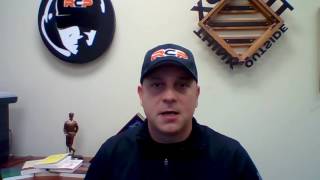
Jim Johnson from Roof Coach Pro argues that managed repair programs like First Choice and Contractor Connection harm homeowners by combining poorly trained adjusters with contractor greed. He urges contractors to stop using MRPs, keep gross profit between 30 and 50 percent, and price jobs fairly instead.
Questions this video answers
December 3, 2016
Roof Coach Pro
First Choice and Contractor Connection
Approximately 30% to 50% gross profit after overhead, materials, labor, and cost of goods sold.
Over $2,500
Chapters
Good morning, everybody. It's Jim Johnson here. And those of you who don't know me, I run a coaching company for contractors called Roof Coach Pro. Those of you that might be watching this on my feed, if you're in the storm restoration industry or homeowner that may have been affected by something like that, this is for you. The rest of you, if you want to watch it for pure entertainment or joy, go ahead. But this is directed at the industry in which I work. I work with both storm restoration companies and your traditional roofing and contracting company. So I get to see a wide variety of people been in the industry for the last 20 years or so as a salesperson, a manager, an owner. I've been on the software side of things with ACCU Links and now at Roof Coach Pro, coaching contractors on how to win in this industry. And I've been getting a lot of questions lately, and everybody's asked me kind of what my opinion is and where I stand on certain things. And one of those things is the managed repair programs. As I was putting this together and thinking about it, I thought, boy, this is going to be really long if I get into all the questions that I get asked. So I'm going to try and keep it specifically to that and where I stand on it. And the reality is I stand with the consumer, that homeowner, that person that we should care about as contractors. Why are managed repair programs even a part of what we do? It's based on one thing, and it's based on greed. It's based on the greed of insurance companies and the greed of us as contractors. So as I talk about this today, there's probably going to be a lot of you that get offended or disagree with me. That's okay. That's no problem at all. As a matter of fact, I'd love to see it in the comments below what your opinions are and see if this is something that maybe we can bring these two parties together instead of burning down the whole industry because of some crazy things that are going on out there. Now, as a homeowner, they're sitting there and their whole goal is just get my property back to what it was before. Help me get this done, help me get it done as easily as possible. I don't need the pain. And then as an insurance company, their goal is they're a business, their goal is to make money. And so they're doing everything they can to save as much money as possible. And so they find every way possible to do so. They use adjusters that They've given templates to that usually aren't well trained contractors. And they go out and write an estimate for a homeowner in hopes that that homeowner can find somebody to do the work for that amount that's been supplied. So the homeowner runs out there and gets a bunch of estimates and they bump into a contracting company that knows the storm restoration industry. And so that contracting company tells a homer, hey, I can help you with your claim. I can go back to your insurance company, make sure you get covered for everything. Then we can get the work done. Once we've got everything approved, so that contractor writes up an estimate, sends it off to the insurance company and if done correctly and includes reasonable items, most of the time that gets approved and we can go do the work and get it done. Where it's come apart on us is the insurance company not sending well trained people out there. But us as contractors getting greedy about what we feel like we are entitled to. We've gotten into some things that we shouldn't be into. Reading policy and trying to take advantage of every policy. We're like little attorneys and that gets us in trouble. So then we have to go get public adjusters who then exacerbate the problem even more because they cost something or raise the price of the claim even more. And then if that doesn't work out, we get attorneys and that really gets ugly. And so us as contractors are as much of a part of this problem as the insurance companies. So how do the insurance companies respond to that? Like, hey, these contractors are trying to take advantage and they're using our own words against us in the policy. Why can't they just write up an estimate that says what they can do it for? And, and we can come to an agreement on that. And we sit there going, well, we can try to do that, but you won't pay us what we would normally charge. We go back and forth. And so the insurance company's answer has become some of this managed repair program and there's some very common ones out there. First Choice, Contractor Connection and some of the others that are available that aren't horrible, but they've started the problem. And I was involved in it from the very beginning with triage and that became First Choice. And those programs have continued to grow into money making machines. And greed gets involved again where instead of a small percentage to facilitate it, it has become a much larger percentage to facilitate it, which left an opportunity for another type of managed repair program to come into play. And I'm Going to try and stay away from names as much as possible. I don't think there's a whole lot of you that are really paying attention to this, that don't realize who we're talking about and those type of programs. But any program that becomes a buying group, in other words, they bring a bunch of contractors together in an effort to be a buying group and get the price of materials down to go and do the work, is literally doing some price fixing on getting work done. Insurance companies look at that. It's just dollars and cents to them. If we can do that, it'll be less for us to pay out as a claim. And so they're doing what a business should do, which is try to save money. The only problem is it's at the expense of their policyholder and the homeowner. These contractors that work in these managed repair programs, specifically the last one that I mentioned, are normally not your most reput contractor. Think to yourself, why do they have to be in a program like that? Are they not able to go out and obtain work on their own? Are they not able to go out and meet with a homeowner and obtain that work for a fair price? And why in the world would any supplier or manufacturer get into bed with a managed repair program like that? All you're doing is cutting the throats of all the guys who have been your loyal contractors over all of these years and creating an unfair balance in the competition that's out there. And so things that I've noticed when stuff like this happens is it gets ugly. There's people calling other people bad names and yelling at each other and saying something's wrong or something's right and everybody's throwing opinions out there. I'm doing that right now, throwing my opinion out there. And the reality is this. If we don't like that and we don't think that's good for our industry, I am one of those people that do not believe that it is good for our industry. We as a group have to get together and solve the problem. If there is a supplier out there that is tied into this managed repair program, you have to stop buying from them. And I mean stop. And it's going to be hard. You've got rebates that are involved. But if you truly care about the industry and you see this problem coming and it's growing and it's getting worse and worse, I'm hearing more and more about it every day. You got to put your foot down as a unit and as a group of contractors. But that's up to you. You also have to realize you've got to keep your greed in check. There's a certain amount of profit that's a fair amount of profit, and that ranges for different people. But usually somewhere between 30 and as much as 50 is kind of acceptable out there as a percentage of profit or gross profit after overhead, material, labor, cost of goods sold. And so that gross profit amount, set a number. When you get to that number, call it good. Every time that you hold an insurance company over the barrel or push something. Just because that particular item has been loopholed and I can get it doesn't mean that you're doing a good thing for the industry. It means that you're having to put somebody into a defensive position. Like the insurance companies. Now they're on the defensive and they're going to do everything they can. And guess what? They got way more money than we do and they're going to fight. They're not going to just give in and say, hey, Merry Christmas, here's everything you ever want on a client. So here's my solution. My solution is quit using their tool, go out, meet with your customer, be a contractor, actually measure it, actually price it, actually take your own photos and documentation and be a contractor. Sell your upgrades. There's no such thing as a salesperson if in a storm restoration world unless one of two things is happening. One is that person has a large deductible, and I mean over $2,500, that the salesperson has to convince the homeowner to pay. And they do pay. The only other circumstance where I've seen a salesperson in the storm restoration industry is if he gets upgrades consistently at a profit for the company that he works for and sells a system that this customer finds his value and chooses to purchase it. Otherwise, if you're just going out there and you're writing up contingency agreements or handshakes on paper and meeting with an adjuster and leaving it up to the adjuster to do all the work. That's what a lot of us do. We're like, hey, yeah, you've got a claim. We'll get the adjuster out here and we'll let him write it all up. And whatever he comes up with, we'll go with and do the work and then we supplement them on the backside. That's not being a contractor, that's being a marketing company that facilitates repairs. You are in no way a contractor and shouldn't call yourself one. If you go out and you measure it. You pick out materials with a customer, you have a great job plan, you're able to estimate it correctly, knowing profit margins and things like that, then you're actually a contractor in most cases, as long as you install with quality. And so that problem has come from both sides and the basis of that problem is greed. So if we can all get together and decide that greed isn't the most important thing and that the consumer, that homeowner or property owner, is the most important thing and we're here to love, serve and care for them, we're going to find out that things will go well for all parties involved. So you asked me what my opinion was. That's my opinion on the managed repair program. Can't wait to see the comments and we'll come to you again. We got a couple of other things that we want to talk about in the future as far as public adjusters, attorneys involved in our industry and my opinion on those and where those should probably lie. So that's it for this week. We will see you in the future. Feel free. Get a hold of me headcoach at roofcoachpro. Com and if you've got questions about any of this, I'd love to answer them or I'll answer them in the comments below. Have a great weekend and we will see you down the road.










