Production Strategy: “Where Contractors Lose the Most Money (Hint: It’s Not Sales)”
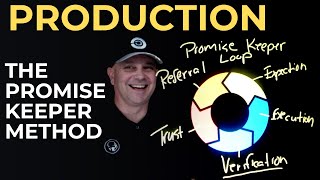
Jim Johnson (Contractor Training Room) presents a practical production strategy for contractors, arguing that most losses come from poor production rather than sales. He frames production as a bridge between sales promises and customer trust and gives a three-part operational model—Preparation, Execution, Validation—plus stage-specific actions (startup through expansion) and concrete checklists (handoff, material accuracy, safety, documentation, final inspection, reviews/referrals).
Chapters
Hey there. Welcome back to the contractor training room show where we go live and we talk about various aspects of our contracting businesses. And today we're going to be talking about production. And production is where promises. Either become or regret. I want to underline that for you. Reality or regret. When we're fulfilling on a project for a homeowner, we're either going to deliver on the promises our salespeople made or we're going to regret the job that we did. And the whole thing today is we're going to talk about what production needs to look like and what you need to do in each stage of your business. So let's talk a little bit more about how we need to perceive production. And this is my goal today, is to share with you guys brought out here. Right? We'll share with you guys. Think of this as like two cliffs, right? And over here on the left hand side we have our sales promises. And over here on the right hand side we have customer think so, yeah, customer trust. And what production is, Is a bridge between those two things. Production is your delivery mechanism, your fulfillment on the promises that your sales team makes. So production is the bridge that brings the two together. Sales guy's out there saying his thing, customers over here believing this thing is going to happen. And we have to bridge that gap. And so we stand inside of this gap in production between the customer and the salesperson. We don't ever want to throw a customer under the bus, and we never want to throw our sales team under the bus. We want to defend both sides. We want to be there to stand inside of that gap for them. And so I'm going to walk through today exactly what that looks like, how we need to perceive it in our heads so that we understand the best way possible to deliver on the promises of our sales team so our customers trust us. So I want to give you a little bit of an image here. We'll make this a little smaller so I can get to where I want to be. And there's really three major components of this that we want to talk about. The first one is preparation. We want to prep well and I'm going to walk right through exactly what we need to do in prepping for a job. Because if you don't do that well, you're going to have some issues with your overall production. Now the next piece that we've got to be very aware of our execution. So this is your fulfillment, this is what the customer is going to see out there in the real world. So that's first we have to prep well, then we need to execute well. And then finally, most importantly, we have to validate or validation. So we're going to earn something. We need to validate, earning that, and then we're going to get something from it. And so this is overall how you need to be looking at production at a very high level. How do we prep, how do we execute, and how do we validate that? We executed exactly the way that we said we were going to. So that's going to bring us to an image that I think is going to make this really clear for you on the preparation side of things, because we're going to start right there. I want you to think of preparation as the engine of your production vehicle. And so what we're talking about there is you're the first cylinder preparation is. And it's the first cylinder of production. That's the very first one that's going to fire. And if you want to check me out if that's the first one that fires not, go ahead. I had to look it up to make sure I got all you motorheads taken care of. That cylinder number one is where everything starts. And if we misfire here, everything's going to go poorly the rest of the way. But if we can fire well there, we're going to have at least a great start to what we're going to produce for our clients. And so what are the things that are involved in preparation? Well, very first thing that we have to have is a great handoff. And that handoff is from sales to production. We're going to hand it off really well. So we have to make sure that what's getting delivered from our sales team is exactly what we need to produce this job. Well, whether you're doing roofing, siding, gutters, windows, whatever it may be, you need a package, whether that comes through a CRM, a hard file, however you're doing it, that allows you to bridge the gap to customer trust. If you don't have a great handoff, you're already shot in the foot. That's the very first thing that you have to get figured out is how to hand off from sales to production. Now, I want you to remember we're talking about the contractor's blueprint, this pillar that's called production inside of that blueprint, and that there's a matrix over the top of that blueprint that says we have certain things we need to do at certain times based on the stage of our business. And so the stage, if you were small, like a startup, or solopreneur, there is no handoff from sales to production because you're both. And so we don't have to worry about that as much. But we need to make sure that we can deliver on that and be prepared for that as we move forward. We also need accurate material order. So if we're going to be handing this off from sales to production, we need to make the sure that whether we're getting the order from sales or we're creating the order in production, that they are highly accurate. Any leakage here where you're over ordering materials, even under ordering materials, if you're not accurate, it's going to cause a problem. One will be somebody has to run materials back after a project is done or get credits for them. And a lot of times you guys don't. Or if you under order, you're running somebody back and forth that's losing time. So the more accurate our material orders are, the more likely we are to be not only efficient, but very effective. The other thing that we have to do in preparation is profit analysis. So if I have a gray handoff and I have an accurate material order, I can determine the profit on this job because I know what my labor is going to cost. I like to run a profit analysis prior to ever doing the work. I want to make sure that this thing's going to be profitable because nobody should be wasting their time if it's not. If we're not creating profit on each job that we're doing, we're why are we doing this in the first place? I tend to have a barrier for profit that hey, we want it to be at least here if we're going to go and produce this job. The other thing on profit analysis, and this depends on who's responsible because of the stage of your business, if early stage. So thinking startup or solopreneur, you're the owner, you're the production manager, you're everything. You're the one that has to analyze whether the job is profitable. But as you grow a little bit more, it, it might be a production manager that's in place to analyze whether the job is profitable or not. But you as the owner might still be in charge of negotiating out pricing with your crews and with your suppliers. So we have to get that front end part done as well to make sure our profit analysis is as profitable as possible. And then as we grow a little bit further into our getting serious and expansion stages, now we have a production manager doing those negotiations and owning that aspect of our production department. So we're going to talk about that a little bit later as I break it down stage by stage at the very end to give you a very clear picture of what you need to be doing. The other things that we need to do is we need to schedule, we need to get permits, we have to handle logistics. So all of those things need to be done very, very well prior to us doing the job. So we got to put them on the schedule, we got to get the permit for the job. We've got to make sure that everybody knows where they're going, what's being delivered, what's not being delivered, when it's being delivered, how it's being delivered. So all of the logistics needs to be handled. And there also has to be some crew alignment. So that's your work order. You have a work order that you're going to be giving to a crew. That crew needs to be very clear on what this whole entire job is going to entail. It's not just a material list of things you're supposed to do. It includes things like special instructions, where to set up, how to park their vehicle, all of the information that's necessary so that we're aligned to deliver on this promise a salesperson made to earn the trust of the customer. Because if we earn the trust, we're going to get something very special at the end of the entire project. And then finally, we're going to have a customer call. We're going to call that customer and let them know everything's about to begin. So this is your prep stuff. These are the things that you need to be handling on the prep side of production. Going to have a great sales handoff to production. I'm going to have an accurate material order. I'm going to analyze whether it's profitable or not. If it is, I'm then going to schedule it, get the permits, handle logistics. Then I'm going to make sure that the crew is aligned through a very clear work order that explains everything that the customer expects and what we promised. And then I'm going to call that customer and let them know exactly when we're going to start the job. I'm going to probably send them a how to prepare for a construction job handout so that they are prepared. I want to communicate with them very, very well so that their expectations are delivered upon whenever we get out there. So this is part one preparation. So I want to do a little housekeeping right here. You guys that are watching this and listening to this presentation on production, I want you to Take notes. If you're going to learn anything, it's awesome to hear, you know, great insight and wisdom and stuff like that. But when you see something that's a golden nugget or important for you, and sometimes even if it isn't just for reinforcement, it helps to write it down. So take some notes as you go along through this. Also, write down any questions that you may have. At the end of this, I'm going to close out the actual presentation part. I'm going to open it up for any questions and answers, any feedback, any struggles that you might be having in your production department. I'm going to be there to answer those questions for you. So as you go today, take notes on your phone, on an iPad, maybe your computer, or even handwriting back old school again. So just a little bit of housekeeping before we move on to execution. So let's go ahead and move to that piece of the puzzle. Execution. I want you to think of execution like a camera, okay? And so let me grab a pin here, get the right color up there. We're going to be talking about. Execution. Is the second phase of what we do in production. And when we execute, I want you to imagine a camera in your head, because that's the lens that your homeowner is looking through. I'm going to share a quick story with you about this specific thing. The very first job I ever sold as a roofing job, the customer was awesome. Guy really enjoyed my time with him. Got a signed contract, got all the colors figured out, created a great work order and the whole bit. Called him and let him know I did all the prep stuff and my production department did all the prep stuff that we were supposed to do. We thought, and I'm on my way on a Monday morning because that's when we were going to start his job. And I'm headed to the sales meeting. I communicated to him like, hey, I got to go to this sales meeting first. I'll be out right afterwards, and the guys will be there about 7:30, so everything should be good. And I mean, at 7:30 on the nose, he calls me, your crew's not here. I'm like, okay, I'm sure they're close by. Let me call the production department, see what's happening. By the time I called, the production department, got back to him, he said, oh, yeah, they pulled up shortly after I called you. I went, great, good. Everything's awesome. Continued on my way, I got another call. He's like, hey, they're putting all their tools and everything in My yard. I go, yeah, they're staging everything so that they can get it up to the roof and take care of things. He calmed down, and this happened like four or five times. And so I said, hey, Tom, because I'll never forget his name. His name was Tom Wicks. I said, hey, Tom, here's what I'm gonna do. I'm gonna call my office. I'm gonna tell him I'm not gonna be a salesman. I'm headed your way. Make sure you have a couple of lawn chairs ready. He's like, what? I said, just make sure you have a couple lawn chairs ready. Okay. So I deviate from my path, go to his house, and I pull around the corner, and he's out in his front yard, and he has a 35 millimeter camera with one of those telescopic. Telescopic lenses on it, and he's taking pictures. And I'll tell you how old this was. This is back in the day when you didn't have these digital cameras that we have today. I had film in them for you young people. That was a piece of stuff that picture showed up on, and we could produce it later. So he's taking pictures, and I watched him take the canister out of the camera, and he puts another one in real quick and starts snapping pictures. Before I could get parked, he had already taken all those pictures, and he was on to the next roll of film. So he's taking pictures of everything, and he. I jump out of the truck and I go, hey, Tom, how's it going, man? He goes, man, they're tearing off all the shingles. I go, yeah, exactly. That's what they're supposed to. You can't put them over the top of them. And he has the. But they're not pulling the nails out. They're banging. I'm like, yeah, that's exactly what they're supposed to. I had to, like, step through. Through stuff every single part of the way. I said, hey, Tom, let's grab those lawn chairs. We grabbed the lawn chairs, we sat them in the front yard, and we both watched this project together. I went up on the roof and checked. Sure all the decking was good, that everything was removed. There was no nails that were bent over standing up or anything like that. I did my job to make sure that we did a great job. But I had to walk him through literally every step of the way because that's how he was looking at. It's his most valuable asset. He was super proud of his house. So he's Looking at it through this lens, it's like a camera. It's the thing they're going to remember the most. It's going to be the thing that locks in their head, is your execution. So whenever you execute, you got to kind of look at this like you're dealing with a lens. I'll pull that lens out here, we'll make that a little bit bigger so we can talk about what's going on inside of that lens and what you have to deliver. And that's going to be very OCD for me. So we'll get rid of that. And what are these pieces of this lens that people are looking at? And so I want to make sure I stay on track here. And the first thing that we've got to make sure we understand is the start. So this is a starting protocol. This is a protocol that you have that when the crew shows up, this is exactly what they do. And that could be handled by you just being on site if you're a smaller contractor, or it could be an SOP as you become a larger contractor. But you have this starting protocol that you follow. Exactly where people park, how they park the trailer, whether you put plywood underneath a vehicle, all these things that are really important to the setup aspect of things. And then we have the next piece, and that one's home protection. So how are we going to protect this person's home, their most valuable asset? What is that going to look like? Are we going to throw a few tarps down and hope nothing gets damaged? Or are we going to do something that protects the home? You have tools out there, like the catch all and stuff like that. We. You can build out structures over the top of air condition. There's all kinds of things. But you have to protect this home like it's your own. Exactly the way you would want somebody to treat your house. And so that's the other thing that they're looking for inside of your executions. How do you protect their home? And then the next piece that we need to be aware of is safety. How are we keeping everything safe? What does that look like for the homeowner? Not only for them, but the neighborhood itself and for your crew. So is your crew harnessed off? Are they tying off their ladders? Are they wearing the proper safety equipment to do the work? Have we left a space open that a homeowner can get in and out of their house without being hindered? Are we making sure we're not dropping things over the top of a doorway or anything like that? So we Want to make sure that those two things are handled. Maybe we even put up, like, caution tape or something like that across the front of the property so kids aren't running into the yard. If it's a really busy neighborhood, we want to make sure that we set this up with maybe lights on our vehicles. If we're parked in the street, cones around. Safety is super important. You can follow all the OSHA guidelines. There's a reason OSHA exists. Number one reason. I don't want anybody to die or get hurt. Seriously been at this long enough. I've seen those stories and heard those stories over and over again. Where roofer falls through a roof, roofer falls off of a roof. A truck goes through a house, shingles go through a skylight. There's been all kinds of things and stories about the safety aspect of things out there, and your customer is expecting it. You've probably set it up as part of what your sales team promises it. We're going to be very safe. But if you don't show that out in the real world, you're going to have a real problem with delivering on the expectations that you set for your homeowner. Now, the fun part for me, at least, installation. So we had our starting protocol. We got the home protected. We set up all of our safety stuff to make sure we're safe. Now we're going to install everything. And this installation method needs to be proprietary, unique to you. How do you make it different than everybody else's? And so we want to make sure we're proprietary if we can get there. So there's all kinds of things that you can do. You can look at a roof and say, hey, building to manufacturing specs is enough. And that's what most contractors do. Or could you do something that would be a little bit more than manufacturer specs? Could you run a bead of adhesive all the way around, around the perimeter of the roof? Could you run a bead of adhesive before you drop a pipe jack or a vent on a roof? Could you use a different type of nail? Could you use a different way of installing valleys? Could you use a different product that's better? There's all these things that we can do in installation that would make it unique to us. And we want to make sure that if we do anything unique and different from the way manufacturing specs and building codes say to do it. Because, yeah, think about that and just think about that for a second. Manufacturer specs and building codes is the minimum requirement. In other words, you are making A C in class, you're just passing, you're just getting by. But our goal is to make an A plus. And so how do we deliver on that A plus system that our salesperson sold to make sure that our crews and our team and our project managers and quality control and everything else are delivering on that in our installation? So those are the first four components. Let's come back over here and we'll go to the next component, which is documentation. This is one where a lot of people fall down on, but we want to document as we go exactly what's happening. So we want to take some pictures when we tear it off, take pictures of the decking and make sure it's a great deck. And if it's not, we have the validation for why a piece of decking needed to be replaced. Take pictures of the property before you even start, and then during the process, take pictures of the progress of the roof and share those off or siding or deck or whatever it is that you do and share those off to your homeowner. You can send them text messages with the pictures. You can use tools like company cam to get those pictures to them. They have a link for it. But we want to document the entire process because for two reasons. One is to inform the homeowner and create a great experience. Two is to protect ourselves. That something out there that was the way it was before we touched that house didn't become our problem just because we touched the house. Damaged gutters, that a tree limb hit it six years ago now became our problem because they haven't looked at it, they didn't notice it, but now they notice it because they're looking at the house once you get done. Now, the last piece of this and that piece that I want you to really pay attention to as you go through this good QC during. So you heard me tell my story earlier. And we as salespeople were responsible for that because we were the size of company that that's who needed to do it at the time. And so we were trained on quality control. What it looked like to fully tear off a deck, how to look for good decking versus rotted decking, nail patterns. We were taught everything about how that roof was supposed to be installed so that we could ensure the quality that we promised the homeowner as a salesperson was actually what was being delivered. And so these are the six major things that you need to accomplish during the execution. And have grid starting protocol protect the home very well. Put in your safety measures. Install it uniquely in proprietary to your company. Document it as you go to create a great customer experience and protect yourself and then quality control throughout the entire process. So that's execution. I want to talk about the third piece of this, which is verification. And we'll get over to that real quick. And we're going to talk about this thing. Called the promise keeper loop. Okay, Keeper. So your promise keeper loop starts with expectation. Okay, so let's just give us this little piece right here as expectation. This is what your customer is thinking is going to happen. And what we're doing here, this is the third pillar of our production. We did preparation, we did execution. Now we're doing validation. And so we have to understand the ex expectations in order to deliver on that. That validation. So what were the expectations? And then we have our execution. Okay, that's part of this as well. And we'll just use the same color. Execution, verification, trust. And ultimately the big thing that we want, which is a referral. So this is what this promise keeper loop looks like. Hey, we understand expectations. We executed on them. We verified that that happened. We earned a trust, which gets us a referral. And so what does this look like when it comes to the verification side of a job, which is this piece right here. How do we deliver on this promise keeper loop? And so I'm going to come down here and just move it over here. Well, let's come down here. Right. A little bit. What are the components of verification? We have cleanup. We have to have a great cleanup. So you think about it. We did the whole entire job. We installed it. We did all of that good stuff, which was the execution side. On the validation side, Sales guy promised we were going to clean up great. What does your cleanup look like? Is it doing the best you can, or is it making it spotless? Is it like a white glove, like you were never there before? Like it was better than it was before you left? We actually like raked yards and stuff like that. It would look better than it was before we started. And so cleanup is that first step along the way. Then you have a final inspection. And this serves two purposes. One is to make sure that you delivered on the expectation. So this would be a quality control thing that at the end, I did quality control throughout. Now I want to do quality control at the end to make sure that we delivered on our promises, that we installed it exactly the way that we said we were going to. So I'm going to walk through a checklist to make sure that we did that exactly, exactly the way we're supposed to the other purpose it serves is to make sure that you get paid. Because if you go through a good final inspection, you go over it with your homeowner and say, hey, everything looks good to you? Yep, everything looks good to me. Great. Can you sign right here on the final inspection? And what that does is it tells them that I've agreed that you did exactly what you said you were going to do. And you don't get in this hassle later on, hey, I'm not going to pay you, because homeowners will try to do that to you. If you don't have a great final inspection, if there is something that goes on, on your final inspection that you need to attend to, that's called a punch list that needs to be created and executed and communicated quickly. So punch list created, communicated to production, get the crew back out there, or get a specialist on your team that comes out and completes the punch list so that you can get paid on the job. You also have to. If you're in insurance restoration, one of those things that you have to consider is supplements. So if you're in the insurance restoration side of the world, you may have supplemented earlier to get on the same page with the insurance company, but as you did the work, something came up. You might have had space decking, so you got to meet code. Uh, you could have had a second layer that wasn't accounted for. There's a few different things. And that would be like a post supplement is what we tend to call them around here. But if that needs to be done to ensure the homeowner gets paid for it, so you can get paid for it. That would be one of the things that you would do in verification. You would also invoice. Because the only way you can invoice is if they signed off on it, they said you did it right. But you can also give a certificate of completion. And so we're doing a process of validating that. The promise was made, we delivered it. Here you go. This is the validation of that delivery. We also request a review. You guys all know how important those are. The more reviews you are, the higher you rank out there. We want to get a review each and every time. Make that as easy as possible. Don't just ask the homer. Will you do a review for me? Say, hey, before I got started with all this, you said if we did a great job, you'd give me a review. Do you mind if we do that right now? Let me grab your phone. I'll look up our company for you. Oh, there it is. I'll click on review. Can you just write a quick summary of what it was like to work with us and hit that enter button? Boom. Done. Assume that they will do it. The more of those that you do, the higher the company will rank on Google and the more leads that you'll get. So we want to make sure that we get reviews and referrals. The best way to do this is when you were selling back here and creating all those promises. You asked that homeowner. I just did the example for a review, but I would say to them, hey, if we do a great job, you're going to give me a great review, right? Yes. Oh, any referrals as well too, right? Yes. Okay, great. So now it's time to ask for those referrals. Who else do you know? Now, be very clear about asking for referrals. Kind of COVID this a little bit in our sales stuff, but you don't want to just say, who do you know that needs a roof? Because you just opened up this giant Rolodex in their head of everybody they know and they can't parse anybody out along the pathway of the sales process and through the production process and your entire time involved with them. You should be asking for referrals by grouping so your neighbors early on, people you work with, people at church, any associations you're a member of, groups that they might be a part of. You've talked to them this entire time. Maybe they have a kid on a baseball team. Hey, any of the parents on the baseball team need somebody to come take a look at their project, whatever it may be, deck, fence, roof, whatever it might be. And then finally, this lifetime value, if you do this right, that's what you're creating. You're creating a lifetime value. Not just a one off, I did your project, see you later thing. But for those of you that do multiple trades, you do one of them very well. You're more likely to get the next one whenever they have a need. Also, those of you that do storm work, you do a great job of your preparation, execution and validation in production. The second the storm hits the next time, it's not a situation of, hey, let us come out and take a look at your roof. It's more, hey, your roof is under warranty. We're going to come look at it. And so we go out and look at it and obtain that job again because we did a great job and we're not ashamed to show up. The big part of this for me, and especially as the Owner of a company or a salesperson directly to a customer is I lived in their community. I didn't want to walk into a grocery store and have to avoid them. I didn't want to put my head down if I saw them. I wanted to walk up to and say, hey, I remember you. It was awesome doing your work with you. Hope you enjoyed it. Yeah, it was a great experience. Remember, if you need anybody, needs somebody like me, think of me first. Here's a few of my cards. That's what this leads to whenever you do production. Well, so now what I want to do is I want to go through and remind everybody exactly what this is all related to here. And remember what we're talking about. Okay? We're talking about this contractor's blueprint. There's 12 pillars of our business and I'm talking about one of them today here in production, how we produce. This is the 10th pillar of our business. We have been going through this as a series and we did sales last week, we did marketing the week before and on all the way back to leadership. We did an introduction to this contractor's blueprint that explains the concept. But the idea is that There are these 12 pillars in our business that we have to be very aware of and that we have to do certain things in as our company grows. And so we have these stages. I'll just. These are your stages over here. And our stages are a startup. And as a startup, I'm not really too worried about the 12 pillars. I'm just getting started in my business. I'm probably doing less than 500 or maybe even $250,000 a year annually. And I've got to do the million dollar must. I've got to create opportunities, I've got to sell those opportunities. I've got to produce this thing we're talking about today, those opportunities. I've got to collect on those opportunities and ultimately I have to be profitable. So five things I've got to be really focused on is here in the million dollar musk. And that's why we see so much of people bumping up against ceilings, is because we're focused here on these five things and we continue to focus on them without building out the infrastructure around. Now when I move into more of the solopreneur stage where I'm starting to break a million dollars in my company, I probably have some part time help helping me out, maybe leading a crew, maybe somebody doing some paperwork for me. There are certain things that I have to do in each one of those Pillars, just like I did in production today. Hey, I can't do everything I just explained in production, but what should I be doing at this particular stage? I'm going to walk through those here in just one second. So this is what we've been talking about, these stages that our business goes through, how we get blocked by them and what's happening and why we're getting blocked by them, and that they happen in a sequence. These. These pillars all happen in a sequence. This last one I'm going to be doing right before the new year on the 30th, we're going to talk about recruiting, hiring, and onboarding. I can't do that very well if I can't train people well, if I can't produce my jobs well, can't sell them well. So they're all in sequence, but they're also related to each other. If I don't get everything done in sequence here, it makes it really hard to break through the ceiling to get to the next level of friends and family. Same thing for friends and family. I got to do all these things in these pillars and then I got to break through. And that's what we do. We help contractors break through those ceilings, install those pieces that they're missing to ensure that they're able to progress along in their business. So let's talk about what we need to focus on and the thing we need to take action on whenever it comes to production. So once again, I want to talk about our stages. That's what we're talking about here in this pillar is our stages. I'll bring that down a little bit so everybody can see it. There we go. All right, so what do we do when and where? Okay, so what should I be focused on if I'm in one of these stages? Now? Understanding our stages, startup is that, hey, we're just getting started. You may not have broken 200 to 250 to $500,000. This operator or solo preneur, they're probably at about a million or so. And they're starting to have to bring people into the equation. And the people they bring into the equation are usually friends and family. So they start to move to this more entrepreneurial stage of their business. And then their business becomes an actual business. They start to get serious. They start breaking three, four or five million dollars. We've got to get really organized, really communicate well, because we're bringing in strangers to our business that need to understand the systems and processes that we follow, which when we get organized there we're able to grow and become a true owner. We're able to grow and scale our business and become a true owner where we're owning the business and leaders are leading because we've started to build those leaders back here. This is usually companies that are getting into the 7, 8, 9, maybe 10 million, moving all the way up to about 25 million, 30 million somewhere in there, and then ultimately expansion once we get to there. We kind of dominated our market in this particular trade. How do we want to expand? Do we want to expand in market in a trade that's very similar, that we could just apply our processes and systems to and own that one as well, or do we want to take this mechanism machine that we built and go open a new location? So those are some of the decisions that we help people with along the way. But I'm going to be talking about the production stages today and what do I need to focus on and then what actions should I be taking? So down here in startup, I want to just focus number one on just understanding. The flow. All right. I need to understand how this flows through my production situation. What does that look like for me and my business? And I'm probably going to take action and create a checklist that'll just keep us on track. Nothing huge or hard to do. Pretty simple thing to do. Hey, here's the flow. Let me create a checklist for that and let me just make sure I check that off each and every time. Because it's you. You're the, you're the one person running this whole entire operation in a lot of cases. So you just need a simple checklist to follow to make sure that everything's going well. Now when it comes to being a solopreneur, you're going to actually install the three P's that we just went over. You're going to install that. Hey, this is how we're going to do things. And we're going to prepare well, we're going to make sure that we execute well and we're going to make sure that we validate well. So proper preparation prevents poor performance is what we want to make sure that we're taking care of. So those three PowerPoints of production. And so how do we do that? What do we need to do? And so you're going to create a system, simple system for preparation, execution, validation, and just follow that. You don't have to create a whole bunch of extra stuff, anything like that. It's just a simple system. Okay. Think of it as a task list. Okay. Not all the everything else but just a task list. Here's the task list of what needs to be done. Now, whenever you get into the entrepreneur and friends and family, your focus when it's SOPs is documentation or the process itself. And so what does that mean? Whenever we say process, that means sops. That's what we've got to create. We got to create some SOPs for doing the work that we do out there in production. So I've got an SOP for preparation, I've got an SOP for execution, I got an SOP for validation. We want to make sure that we have those SOPs documented. We may not have even installed them yet, but we're going through that work right now in this stage of our business to get those things in place. Now when we get into getting serious, we're going to start to build out our proprietary aspect of things. So your focus is on how to be unique or proprietary. And this is the mistake so many people make. So many people try to create all of this proprietary stuff and, and, and it's a whole bunch of work. It is some effort to do it way back here when they don't really need it yet. You remember back in here you're working off of referrals, word of mouth, knowledge of who your business is. But now you're starting to scale and starting to build out lead generation and those opportunities, especially through a digital aspect. And so this proprietary thing gives you an advantage whenever you're out there marketing. And so what are you focused on? You're focused on that home protection. And so we're going to call this the system for home protection. Safety, installation, cleanup, those things. What does that system look like that you're going to deliver to your customer? Went in to get into growth and scaling. And this has been pretty standard, this process. If you've watched these, you've started to see like, hey, this is sounding familiar. I've got some checklists to do and then I've got a, a system, a slight system to follow. Then I got to build the process and SOPs for them. Then I'm going to make it unique and different and systematic for my company. Then when, what are we going to do with that system? Our focus is to measure whenever we get to growth and being a true owner. So you started to put leaders in place. You want to put some measurements on production. What are those measurements going to be? It could be amount of time it takes to do a job. It could be velocity from start to finish of a job. It could be Quality of a job. There's these KPIs that we want to measure. And so the action would be to install those KPIs and hold people accountable to them. If we're not hitting these standards that we've been able to set back here for our business, then we have the wrong people in place. It tells us exactly who the right person is and who the wrong person is. Now, finally, when we get into expansion, this is where we start to everything that we created back here, and we start to take that thing out and we're going to build some playbooks. Think of these as the manual. Okay? This is the entire manual for everything in production that's ever needed that. I could just simply go over to another location and install that. And it works perfectly because we have built all of this underneath. So this is what it should look like as you grow your business, the things that you're focused on, where we usually work with people and get a hold of people in the ones that they're having the biggest difficulty breaking through is usually right in here. When they're starting to hit into friends and family, they're starting to hit that 2, $3 million, and they're starting to bring more people into the equation. There's more communication that has to happen. More of the hard work has to happen. Systems, processes, documentation. All those things we don't want to do because we want to focus on the fun stuff. We want to focus on, hey, how do we get more leads and how do we make more sales and how do we make more money? That's really where most of us focus our time. But to build a business that goes beyond that, you're going to have to get serious about the systems and processes which we have. And we just help every customer customize it to them. So that is our presentation for today on production, the stages of production, and then the three major aspects, preparation, execution, and validation that you've got to make sure that you're tight on, because if you're not, you won't be able to break through that next level in your business. So couple things, pull this up real quick, have a couple of different options for you. Think if I'm in a smaller stage and I'm trying to get the information I need to move my business forward, you might choose the do it yourself route. And that's our AI tool. That is literally my brain. And everything that we've ever coached, Nathan's brain, all of our brains kind of compiled up and saying, hey, you have some questions that need to be answered. This is usually best for startups, solopreneurs and friends and family. You're a little bit smaller and you're trying to fill in some of the gaps, but as you start to get bigger, you may choose to get some one on one help. This is where we work with contractors directly. It's been our bread and butter for 13 years. We've built some of the best contractors in the nation. Several contractors in that 30, 40, 50, even over $100 million in revenue. Because we followed that blueprint, we applied the matrix, we coached them accordingly, we filled in the gaps and they were actually able to break through those barriers into the next stage. So you can take your phone out and QR code either one of those if you like. You also get some information about this afterwards. Go take our contractor assessment. This assessment, which is what this QR code will do for you, is going to be a significant thing. You're going to take about 20 minutes to take that assessment. When that assessment's done, we get a copy of it back. You get a chance to set up a time for a coaching call. It's free, it doesn't cost you anything. And we're not there to sell you, we're there to coach you. Because that assessment is going to tell us where the gaps are in the stages and in the foundational pillars of your business to coach you on the next thing. And we're going to do that. If you like coaching, you think, hey, that's wonderful and you'd like to engage with us, we'd love to help you along the way. But if that's not the right time or the right fit for you, at this point, at least we've given you the next step or two to continue to grow your business. So that concludes contractor training room for today. Thank you for being here. We're out of here. Have a great day. It's been contractor training room live.










