Quit Getting Screwed with Karalynn Cromeens
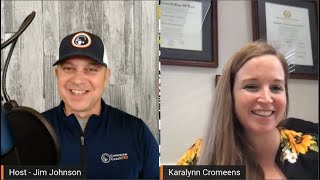
Transcript of a Contractor Radio podcast episode (host Jim Johnson) interviewing attorney and author Karalynn Cromeens about subcontractor protections. They discuss common subcontract pitfalls (bid vs. scope discrepancies, "pay-when-paid" clauses, bonds, non-competes), strategies to negotiate/mitigate risk, and Cromeens' book Quit Getting Screwed and Subcontractor Institute resources. Episode includes sponsor messages and contact info for Cromeens' firm.
Questions this video answers
On Amazon (search 'Quit Getting Screwed' or the author's name 'Karalynn Cromeens').
thecromeanslawfirm.com
713-715-7334
The Subcontractor Institute (website with classes, forms, and resources).
Chapters
Contractor Radio has been brought to you today by Contractor Coach Pro. If you're tired of all the chaos and you feel like you don't have a plan and you're not setting yourself apart from your competition, contact us at Contractor Coach Pro by taking a free assessment that you'll find on our website@contractorcoachpro.com once you take that free assessment, we'll set up a time for a free strategy call to give you some advice and guidance on how to grow and scale your business immediately. We look forward to hearing from you@contractorcoachpro.com the Atlas Pro Plus Contractor Program is designed to help you build your business. It gives you tools and resources, training, industry insights, bonus structures, technical knowledge, the brand power and science of 3M Scotchgard and what we think is the best product and warranty in the industry. Become part of the family that is succeeding and growing their businesses. We went from nobody ever heard of us to the number one roofing company in our region.
And we've gone from 12 roofs a year to 2035, and we did over 400 last year.
We're on track right now to do a thousand roofs this year. You'll begin earning Atlas bucks and rewards as you move up to even greater reward levels. Become an Atlas Pro today. Hey, everybody, it's Jim Johnson here, your host with Contractor Radio, and we have quite the show for you today. Whenever I got introduced to, you know, we get lots of requests to be on podcast. It just happens we get them all the time and most of them I dismiss. But when I saw this topic and I saw the title of the book called Quit Getting Screwed, I'm like, all right, this is interesting. Let me see who this person is. And it's something that's really close to me because I've actually had the problem that she's going to discuss with us today a couple of different times. And so it's this idea of dealing with contractor or subcontractor agreements whenever you're working on projects or maybe even in the employ of somebody from a subcontractor status. And so one of the little tips is, and you know, we usually start off with a tip. I'm just going to get you a real simple one. Before you get in trouble, get an attorney, Go get an attorney to look at your agreements, go through your agreements, make sure that you're getting your rear end end covered because our special guest today is going to help us out with that. But before we we get there, I want to talk about our sponsors. We've Gotten a lot of sponsors here for our show this year with Atlas and Signpost and Balance claims, Roof, Scope or Scope Technologies. Hail Trace, kill your competition. Beacon, get the referral. All of these guys have really made this show possible this year, allowed us to kind of step up our game a little bit. And we're super excited to have them. They've all been vetted, they're all very trusted. They all follow through and do what they say they're going to do. And I just want to let you guys know that if you're looking for somebody, those folks can help you out in your contracting business to get a little bit better at what you do and serve you as a third party vendor to help you get things done in your business, getting you more capacity. Our show is always about entertainment, education, some strategy and tactics. And today we're going to talk a little bit of strategy and we're probably going to talk a little tactics. And I have a feeling there might be a little bit of entertainment in there and education as well. Just from the title of our book, we have an attorney on the show today. Her name is Carolyn Cromings. I hope I pronounced that correctly. I hope I'm close. And she wrote a book and the name of that book is, is. Let me just make sure I don't get it wrong. Quit getting screwed. And that's the whole thing. I don't want to see contractors getting screwed. Carolyn, welcome to our show today. Glad to have you on board. Are you going to keep us all from getting screwed?
That's my job. That's what I want to try to do. Thank you so much for having me and helping me spread this word that you can work in construction and not get screwed.
That's a big claim right there.
There is a way you can.
Yeah. And it's, it's common. This is something that happens all the time. You know, my own experiences from as a sales rep type of perspective, as a subcontractor sales rep to a general contractor. Not really much of an agreement, if anything. The first one I didn't have any agreement. The second one, it was kind of one I wrote myself. And both of those allowed me to not receive the benefit that I should have as a salesperson. And so we'll probably talk about that a little bit today.
But.
But before we get there, can you tell us a little bit about how you got to where you are and what's going on in your world and why you are so passionate about writing this book?
Sure. Well, I'm from The Midwest. I'm from Illinois and I grew up in a family of subcontractors from irrigation subcontractors. My grandfather built golf courses with excavation company and actually his company went out of business cause he signed a wrong contract. And so just growing up and then working in those companies when I was a teenager and seeing the struggles that subcontractors have, whether signing a contract or getting payment, just seeing that. And then I went to law school and I learned the law. And then while I was in law school, my husband and I started a material supply business. And so I had to kind of learn the laws as it relates to liens and collections and all of that. But that experience also gave me what it's like to start your business from the ground up. How many hours it takes, how much frustration and just all out effort to build something. And that's where most of these subcontractors come from, is that they're so good at what they do, they want to go out and do the best that they can. They don't realize that there's all these other things like subcontracts and collections. And that's what I'm trying to help put the whole thing together. And actually this book I wrote because I represented several subcontracts, subcontractors after they had gotten sued and no matter what I did, I couldn't. They did the work right. But the subcontract they had signed so one sided, there was no way they could win. And so after trying to fight it in the courtroom battle, I decided that education on the front end was is, is a better way to go and let people know that there are no set of rules, you know, protecting subcontractors and subcontracts. You sign something one sided, it will be used against you. And so I want to start the, you know, the conversation about let's have a subcontract or a general contract that we can all understand and we know it's in it, we know it's required, it'd be, you know, it'd be less legal disputes. You know, things will get done clearer and faster and better. And so that's really what the book is about, is to, you know, educate people on the things that could really hurt you if you don't take care of in a subcontract.
Wow. Passionate. That's what I would describe that reply as. So you were just. Would this be a fair statement where you're just tired of losing? Like I'm so tired of losing. It's pissing Me off. I gotta go get these guys educated. So when I do go to court, I want to win. Is that really?
Exactly. And you know, it's not even tired of losing for me, but losing for my clients and unwrongfully and not rightfully so. Right. There's some situations where you did wrong and you have to make it. But when you've done everything you were supposed to do right, but you forgot your daily reports or you have no proof that you send in your daily reports, how is that, how is that fair that you win for something like that? I just, it just. And there was nothing I could do. The judges will always hold a contract against you because you're a grown up, you're a big person, you can negotiate what they say. And although I know it's not, it's not that way, but if we would all start to say something, we can make a difference.
Have you ever had a judge say you should have got an attorney before you got here then after being here indirectly.
Right. Yes. You know, because there's all these subcontracts have a line that say you read and you understand everything in here. And so what are you going to say with, yeah, I know I didn't understand, but it says that you did. So there's no, there's no argument. So we're trying to fix it on the front end.
So before we dig into this whole topic, I ask some questions throughout there a little bit more about you, hopefully when we kind of like to get to know the people that we're talking to. To this point in your life, what's your greatest achievement?
Being a good wife, a good mother. And I have three daughters from 17 to my youngest is 10. And watching them grow up and be adults besides my family, this book is my next biggest accomplishment. And I really hope that it'll start the conversation. You know, I write like I speak. It's very direct. I'll get to the point. I'm not full of fluff. And so I'm hoping that it'll strike a chord.
I noticed that immediately. And you saved me because I usually say, don't tell us about family. What's the great. We know that's the greatest achievement, but so great job, good save there. So what are some of the most common mistakes that you see in these agreements where, you know, if, even if they don't have an attorney, they should kind of keep an eye out for these maybe two or three things that are really big.
The main thing that right off the bat is subcontractors think they're hired to do their bid, and that's not the case. They bid the job, and then they get the subcontract. And attached to the subcontract is the scope. That is what they're hired to do. And things have usually changed a lot, if not a little bit, if not a lot by the time you bid it to the time the scope is issued. So my first thing is, once you get a subcontract back, review the scope as if it were a new bid to make sure that your price is the same, that you've included everything. Because what normally happens is they'll just sign it and then they'll realize, oh, down the line, you know, I didn't realize that this is in my scope. I just had one recently that was a door contractor who installed glass doors. He never did the electrical components, but it turned out in this one, in the scope he had agreed to. And so he had to pay the extra three or four thousand dollars to have that done because he didn't bid it and he didn't realize it was in his scope. But the consequences of not following the scope that you agreed to are way greater than the three or four thousand dollars he would that cost him to. To do the electrical components on the door.
Okay. Anything else? So that's kind of the bid versus scope.
Like, make sure that's a big one. And then the other one that I see that people need to try to negotiate is the pay when paid clause. This is a huge thing. And anybody who's ever not gotten paid on time knows how detrimental it can be. What the pay when paid clause has done is really taken. Who finances the construction project and flipped it on its head because the owner gets bank funds to pay for the construction, which they are holding onto. The subcontractor puts out labor and material and then waits to get paid. Right. So they have already spent the money to pay their guys, you know, paid their material suppliers, and now they have to sit here and wait, wait till they get paid. Well, what the pay when paid clause does is now makes their payment. Now the general contractor has got to pay. Now the owner has got to pay the general contractor before the general contractor is required to pay the sub. And that is something that the sub has absolutely no control over. So you do your work, you do it right, and then you submit your pay app. And now you have to wait for some situation to happen that you have no control over. So the book has some great ideas in there how to negotiate those terms.
I was Just about to ask that, like, how would I. So these two examples, bid versus scope. So I go out and, you know, they give me blueprints, plan, whatever, you know what, whatever I'm supposed to bid off of. And I go out and I bid it appropriately, I get it. And they say, yes, you have the job. Here's the scope and subcontractor agreement. And obviously I want to read through that and make sure that it matches what I bid. But if I get to the point where, hey, wait a minute, this is what I bid and this is what I have, and this is what you have as a scope and you got this electrical stuff that I never bid, you never said to bid or anything like that. We need to renegotiate the bid. Is that usually what happens? Or are people scared of like losing the job? Is that a pot?
I mean, they are. And I have a letter and basically the best thing you can do. I don't think it's done on purpose. Sometimes, yes, but most times it's not done on purpose. And so if you just send a letter saying, hey, you know, when I bid this, this wasn't part of what I was supposed to bid. Now it's here, but if you want me to do this, we're going to have to add on X funds. But the main thing is, once you make that request, wait for the contract to be reissued in that new amount before you sign. Don't ever just say, oh, yeah, sign it, we'll get to it later. Because whatever you sign will be held against you. And the fact that he said something won't overdo the contract.
Yeah, I wouldn't say that you're in a bad position there because first off, they've settled on somebody, they've gotten it all written up, they know what their numbers are, all that good stuff for them to go back and try and find another contractor at that. So you have a little leverage just on that one. I think on the other one, you're a little bit of a catch there. Like if they have that pay when paid clause in there, how would I negotiate? Like, that would be a tough one for me to negotiate. I wouldn't know how to do it. Any pointers on that?
Yeah, in the book, I have some ideas. And the main thing is you just gotta be real about it. Unless you can afford to front the full contract, your full contract amount. Because even if you're not getting paid, you still have to keep working. Just say, hey, guys, I couldn't handle this if I had to front this Whole thing. Let's come up with something in the middle. And so, like, some of the ideas I have in there is, okay, I submitted my pay app. It's been 30 days. I haven't gotten paid. The owner hasn't paid the general, but it's not my fault. So pay me 50% of the payout so at least I can pay my expenses and keep going. Or you can pay me, reimburse me to file a lien so I can get my payment directly from the owner. Or, you know, that if you don't get paid from the owner and it's not my fault, I have the right to stop working. And so you can tell the owner, hey, I got to pay these guys or this job is not going to keep going, because I can't make them work if they're not getting paid. So there are things to split the risk. You know, I'm not saying the GC should have to take all the risk, but the sub shouldn't have to take all the risk either. So let's negotiate something in the middle.
Yeah. I'm sitting there going, okay, if I was going to be a sub to a general, I would probably have set pretty good expectations in the first place. This is how I did. This is what happens whenever I get the scope and the subcontractor agreement. And this is what happens if I see the paid when pay calls. I like, if I see that, no, I get paid when I get done. That's when I get paid. Or 30 days or whatever type of timeframe I would want to put on that. I could see a little bit of a lag, but, I mean, I've been in big general contractor jobs before where it might be a year, a year and a half before somebody gets paid. And then I'm having a whole. It's really fracturing my business. And I. And I performed. I did my work. Maybe the general contractor didn't perform somewhere else, and that's why he's not getting paid. Not my fault. I did my. It'd be like me going to work for a week and not getting a paycheck because my boss didn't want to pay me.
No other industry is there something like that, that where you. Your performance, you're, you know, being reimbursed for the work that you did is conditioned upon something completely out of your control, which it's just not reasonable. There's got to be some middle ground.
I would agree with you on that. So in our. In our world and a lot of the contractors that we Work with. They have these sales guys, sales guys that are some kind. We've been talking a lot about. The guys actually perform the work and do the install and those type of things of whatever trade is being performed. But we have these sales guys that operate as 1099 and I would say they loosely follow the rules. It could be gray here and there, there's. There's a lot of verbiage and a lot of, you know, I know it's black and white. If I look at the rules, the rules are black and white. You can't do this, you can do that. But if you were to say hey, something like, like I really want people to attend a sales meeting. I can't make them. Right. I can't say you have to be a sales meeting to work with us. But I could say hey, we do bonuses based on attendance of the. And I'm good, right?
Yeah.
Okay.
And the main thing that those type of agreements have that are rarely enforceable is the non competes. They're normally not written correctly. So that because first off enforcing a non compete against the individual is very hard to do. Judges don't like to enforce it unless you know it's a non competes against companies. Yes. But non competing against individual salesman are very rarely enforced and they're probably not. Usually there has to be what's called independent consideration for that type of thing. So they got to pay you something extra and above for that to be enforceable against you later on. And it's usually got to be very small, like only in Harris county for six months after you leave. Most of the ones I've seen have like two years, the whole state of Texas, something like that would never be enforced. But it's scary enough to think that it would be that, you know, people leave it in there and it's not. That's the big thing I see there. But whatever you put in the contract, it will be, the agreement will be what's. What's used. You know, except for the.
Yeah. So that non compete clause, that's always one that's a little bit of a, I don't know, a kicker. Because all these contractors like, and I'm kind of on their side, they're sharing some proprietary information on how they do what they do. These guys come into work, they, they go wow, that was really good. Why am I selling all this stuff, making this guy a bunch of money. I'm gonna do this on my own. Little do they realize how much of that backend stuff you gotta do. And they go out there and start selling in the market with the proprietary tools of the other guy. So I can see how I wanna protect it. But I also know it's not really enforceable unless it's really hammered out tight by an attorney. Is that a fair assessment?
Correct. And I think it's fair that way too. Right. It's small enough that where if something goes south between them really they could still live, they could still survive and start a job somewhere else. The ones that are really enforceable, you know, the ones that are overly broad, won't be enforced. But at the same time you're protecting the proprietary information, their documents. You know, if somebody's going to go out, they need to start with and get their whole new set of things and go get their whole new set of clients. And you know, I think that, I think they definitely have a place. But if they, you know, written as small type where the person wouldn't like starve if they had to. If something went wrong and you fired them or they were terminated and they could, they could pick up and start somewhere else that's not in your jurisdiction.
Yeah. You know, I've seen some agreements written that were the standard practices of contracting. We're not worried about this proprietary stuff. The way we do things is protected. It is IP electrical property and I have seen those pursued in one by contractors. It's just making sure it's written right and having a good attorney do that on the reverse side of that, you know, salesperson wanting to protect themselves. You mentioned it. It's a lot harder to have a non compete hold up against an individual than a company. And our coaching advice is usually to set up some type of entity, whether it's an llc, an S corp, something like that, to protect something more than a sole proprietorship. And that way if there was a non compete in there would be against your company. And I go start a new company right. If I really had to, to do what I'm doing. I also worry about the subcontractors that are sales guys getting paid. And I also worry about the contractor overpaying for what a person has done. And so normally what happens and I'm gonna ask your advice here, like I'm gonna talk from the contractor perspective mostly most of the time there's not even an agreement. And if there is an agreement, it's something somebody wrote up office and said hey, here's our agreement, right. And so, so there's nothing. And so when it comes time for the breakup to inevitably happen, the salesman leaves and the contractor says I'M not paying it. Like, it just completely drops off, which I think is unfair. The guy has performed some work, maybe not all of what he was required to do, but he has performed some work on the sales guy side of it. He goes, screw you, I'm going to go get an attorney and I'm going to sue you. And almost every time they win. So there you go. Subcontractors that are sales guys, if you go and sue them over the money, you're gonna win because you had an agreement to sell the job. I think the contractor needs to be more specific about what the responsibilities are of the salesperson. Like, if it's more than sales, like if they have to sell it, they have to create an order, they have to watch a job, they have to collect it. Like that kind of stuff. They can delineate out saying, a third, a third, a third for these duties that you perform. And then when somebody leaves, you can pay them a third of the project, two thirds of the project, or the whole project, depending on how far they have gotten with that particular project. Do you see something like that holding up in court?
No. Most definitely. And that's the thing, is that something is better than nothing. Even if it's a handwritten note that says, here's kind of what our agreements are. I'm going to pay you third here, pay you third here, and pay you third here. Yes, that would definitely. Because that's the agreement between. If everybody signs off on it, you know, and that's how we were acting, then, yes, you could still do it without the agreement, but it's going to be a way bigger battle because if you have no agreement, all as he said, the agreement was one thing. The other side said, the agreement is one thing, and somewhere in the middle is the truth. But to get to that truth is awful, expensive and takes a lot of time, which, unless you're talking about a substantial sum, is normally not worth it just because of the legal battle to get there.
Yeah, you know, usually these guys are. Commissions can be anywhere from a couple thousand dollars up into 40, $50,000. But even then, getting an attorney involved, I spend almost all of it. Right. So might as well just pay the guy, just go away, because I'm going to end up probably paying him in the long run anyway. So the point of that was like, hey, you know, general contractor, protect yourself and pay him for what he did. And sales guy out there, make sure that you have an agreement in place that you will get paid for the work that you performed. What's the worst situation you've ever seen of somebody not having a good agreement in place. And the ramifications of that.
Well, actually, the worst one that I've dealt with was one that actually had an agreement, but it was. They had a scope that they didn't agree. There was $100,000 more than what they had agreed to. And so they. And they knew it was a problem. They tried to talk to the gc and the GC said, no, you got to finish it. But on this particular job, they had a bond. And so what? They had to provide a bond to the gc. And so what ended up happening? They finished as much as they could. They couldn't finish the whole thing. Of course, what they thought was 100,000 ends up costing the GC $250,000 to finish their scope. And then the GC files on their bond, and they don't respond. And I don't know, there's this misconception out there that a bond is insurance. A bond is not insurance. If someone files on your bond and you don't respond, the bond company will pay out and then come after you, and mostly individually and your company to satisfy the amount paid out. So that's what happened is that they didn't, you know, respond to the bond, and the bond company paid out the $250,000 to the General contractor, and then the bond company came after my client individually and, you know, forced them into bankruptcy and everything was gone. So, you know, that's twofold. That's make sure your scope, you know what it is, and then also subcontractor bond, realizing that it's not insurance, and when you get one, make sure that you put protections in place. And I talk about this in the book, in the subcontract, or in your agreement with the bond company that they won't just pay out when they get a claim letter and you have some control over when they will actually pay out. I don't, you know, that was, you know, a huge mistake. And, you know, there were some thoughts on my client that the general contractor knew when they sent them the subcontract and asked them if we had a bond, that this was going to be an issue and then ended up making money off of it because their bond just paid them out. So, you know, that's a whole plethora of, you know, the scope being what you agreed to, making sure when you get a subcontractor bond, you know, what it's involved and that it's not insurance and just being an understanding you know, having these documents be something clear that everybody can understand.
Yeah. Bond is really more like having a guaranteed loan on lack of performance. If I don't perform, whoever needs to get paid is going to get paid. And I think most people make that mistake. They think, oh, well, if I screw up, that somebody's covering it right now. You're gonna pay it. It's like any other loan that you might default on.
Exactly.
All right, so we have contractors that are. Is this. The two main things that they're missing is the bid versus the scope thing, getting them caught, and then the pay when paid thing.
There is 20 chapters in there which I recommend you read them all because you're in the subcontractor Institute. Actually, I teach them. But there's another one that is the way currently most subcontracts are written is that if you don't catch the mistakes of the sub before you, that then becomes your responsibility. And so. And then when you see these lawsuits where they have all of these subs brought in, that's how they do it. Right? You didn't. You didn't catch and point out and like, okay, you know, I have some suggestions in the book about how, yes, I'll have a duty and I'll report it, but if I don't, if I miss it, I'm not responsible for that work. I mean, that's just. I mean, who would do that? I mean, how can I be responsible for somebody, work that's either already covered up and hidden or, you know, just. It just, you know.
Yeah. So this happens, like, with homeowners, too. You know, you're working on somebody's house, and it could be years. Like, somebody did something a long time ago. You come in, you do your work, and you're like, hey, hold on a second. This thing is going on. The homeowner goes, not my problem. You said you're going to do the work for this amount and get it done. I'm like, but there's an air conditioning line underneath the decking. And we poked a hole through it. I didn't do that. You know, how am I supposed to know? Right? So those agreements, also quite important.
I agree.
The second question, on the personal side of things, what's the most valuable piece of advice you've ever gotten from a mentor?
Valuable piece of advice? Never give up.
You know, starting a company, right? You don't just automatically go, hey, I'm an attorney. And all of a sudden you're doing attorney stuff. You got all kinds. You're in business too you're setting up a business. You have the finances of business. You have marketing stick. I get a customer listen to a whole story about a guy getting his, his license and being attorney, setting up his office and nobody being there. He finally has his first customer walk through the door. So he picks up the phone and he's, he's acting like he's talking on the phone. He says, no, my fee is 50 grand. That's my fee. And that's, I'm not coming off of it. And. Well, I understand. No, I still know I can't be 45, it can't be 49.99. It's $50,000. That's my fee. That's what it's going to take for me to get you out of this. Great. Come down to my office, get the paperwork signed, the whole bit. And he hangs up the phone and he's like, so how can I help you? And the guy goes, well, I'm here to hook up your phone.
That's a good one. And just like a subcontractor. It took me a while to learn how to run a business. You know, they don't teach you in law school how to run a business. And it's. But knowing having started in the construction side and having, knowing the heart that it takes to do that, you know, 60 hour weeks, you know, time away from everyone. This is, this is your life, this is your focus. I mean, these people are, you know, starting their own thing and usually they don't have the financial backing. They gotta, they gotta make it to survive.
Yeah, most of these companies are bootstrapped. Like, hey, I'm starting with what I got. I got a couple thousand bucks and hope and a prayer.
Right, Exactly. And then so I'm trying to help them protect that because if not, you got these companies that have been around for generations going out of business because of a bad subcontract. And it doesn't have to be that way. I don't, you know, I don't think it's done intentionally, but the way it's, the way they're written, the way it's set up gives that power that if something goes sideways, you're done. And it just doesn't have to be that way.
No, it doesn't. And that's why I wanted to have you on today. Like I thought it was important to have you on. I think this is something that's good for, you know, the guys performing the work, the guys selling. All of that is important for us to understand that there's foundational stuff behind the operational stuff. That's usually where most people focus. Operational marketing, sales, you know, production, training, that kind of stuff. But they don't focus on process systems, you know, organization, HR type stuff, which is legal would be. And it's just we get frustrated because we deal with the same thing. And our coaching is they're good at this stuff and they go sell a whole bunch of stuff and then it's a big nightmare for them. And they're like wondering why it's a nightmare. It's because there's no processes or systems. And I have a homeowner that's really upset. Well, was it in your agreement? No. Well, guess what, you own it now.
Yeah, exactly.
And those are hard conversations to have. I wish more people would put, you know, the horse in front of the cart instead of the cart in front of the horse like they tend to. But it's pretty tough to catch all the time. So you have this book. You also have a website. What was the name of the website?
The Subcontractor Institute. And so what it's going to be right now, it's got all the classes on the chapters in the book and forms and free forms and basically to teach you what to look out for and other things. And so eventually there will be one for collections for Texas subcontractors. I'm actually working, finishing the edits on that book right now. And then there'll be an employment one. So basically it'll be a place that you could go to get all of basically your legal guidelines that you need. And don't be wrong, you might still occasionally need an attorney to help you, but you'll have the tools to know what to look for on the front end, you know what I'm saying? Instead of, you know, I got sued in federal court by an employee seeking overtime. I now know if I have this employee manual and if they're classified this way, then they have to, you know, they're not. They're not, you know, independent contractors. They're actually employees. So it's going to be the whole package. I said the first thing I started was the subcontract because I think it's so important for everybody to realize that there's no set of laws out there protecting you. You got to protect yourself. And if you would just take and deal with a few things that are in there like the pay when paid clause, the bid in, the scope and some other really good down to earth information that's in there, you'll be so much better Protected on the back end. And we can kind of, if people will start doing this, we can kind of level the playing field where they'll quit trying to put stuff like this in a subcontract or any contract for that matter.
Yeah, we work on that concept quite a bit. Leveling the playing field ours is sometimes between insurance companies and contractors and homeowners. Like, we get into that a lot, but.
But that's kind of a tough spot to be because the insurance company has no direct obligation to pay you directly.
No, they don't. And our coaching is like, we'll quit working with them. Let's just charge the homeowner what our fair number is and let them deal with it. But there's more to it than that, and we've done plenty of shows on that side of things. So we have a subcontractor institute. We have Quit Getting Screwed, which is the book and sounds like a book that if you're a subcontractor or even a contractor for. For that matter. Like, if you're a quality contractor, you want to protect your subcontractors, too. You don't want to, you know, you don't want to take it. You don't want to screw them, I guess is the best way to put it. And so maybe both sides really need to read this book and get the right information. So they have a great agreement, and so they have a long stand. It's hard to find a good subcontractor. I. I can't imagine intentionally screwing one that performed good. Like, I'd just pay him anyway, even if he didn't turn in his time sheets or whatever. What? I want you to keep working for me. Because they're so hard to find these days. Less and less labor is available.
No, I agree. And there's just so much that can be gained by having a clear agreement, because I don't think they intentionally spiral out of control. But you have an issue, give it to your attorney, and then they just use everything that they can that's in the contract, which is, you know, not usually a good way to do business.
No, not normally. All right, so last personal question. We all only have so much time on this planet, right? We got 75, 85 years, whatever it is. How do you want to be remembered? Like that day is going to come for all of us when that day comes. How do you want to be remembered.
For someone that tried to help, that tried to change, that tried to enrich people's lives? Because I really. That's what I want to do at the end of the day is that I. These people want desperately to be successful at business. They want to feed their families, they want to grow their business off of. Off of the things that they can do. And I want to help them do the best way that they can. And knowing what I have, I can add to what they have. And so I want to be known for helping because that's what I want to bring.
There needs to be more people like you, Carolyn. Like, seriously. I think most people are more focused on themselves. My wife calls them givers and takers, and she says they're really easy to identify. And it's. She says there's a lot less givers than there are takers out there. So she's always a little bit leery of people and she's just going to kind of get that feel for them pretty quick before she goes too much further.
All right, so on that topic real quick is that attorneys, I've always been known to be takers, and I'm trying to flip that switch. At least in my industry. Like, you have guaranteed callbacks. I'm here, like, I know what it you need to know today, whether or not you can sign that release so you can get that check so you can make payroll. I know what that pressure feels like. And so that's what I offer. You're going to call me about it. You'll have an answer today. I'll let you know what you're supposed to do. So I'm sorry, I just wanted to.
Throw that in there. Oh, that's great. Like an attorney that actually calls you back right away.
Yeah, exactly. And that's what I'm trying to say. Not all attorneys suck, so they can't.
My daughter's one, she's.
Exactly. So you know what I'm saying? There's good ones and there's bad ones.
It's funny, I think there's usually when it comes to this type of thing, because I deal with a lot of what I call blue collar contractors. Right. Roofers, ciders, fencing, and the homeowner's perception of those folks, probably pretty low expectations. Right. And that's not really the fault of 80% of the contractors are usually pretty good and try to do a good job. It's that 20% that kind of screws it up for everybody else. And I would bet it's the same thing in the attorney world.
I agree.
All right, awesome. Thank. Great questions, great answers, amazing content. How does somebody get a hold of you if they want to talk to you more Maybe get your services, get the book. The book's on Amazon, right?
Yeah, the book's on Amazon. Just type in my name or quit getting screwed. They can reach me at the firm website, which is thecromeanslawfirm.com My email's on there. You can email directly or call me. The office number 713-715-7334. I also have the Subcontractor Institute, which has a bunch of free resources and some paid classes. So, you know, and there's a link to my email on there if you have any other questions or just in general, if you want to have a, you know, quick question about something, I'll be glad to help you out.
Awesome. So Chromane's law firm, look it up. Give her an email. Is C R O M E E N S. For those of you listening on the podcast, as you on video, you see the name here. And Carolyn, it's been great.
Thank you for having me. I really appreciate it and I, you know, we hope to do it again sometime.
Yeah, I actually, I have a few customers I might direct your way there in Houston. Work outside of Houston or.
Yeah, I have offices in Austin and San Antonio as well. So basically we're in the whole state. And, you know, Zoom has made that really easy now. All the court hearings and everything are now, you know, I don't have to leave my desk. So that's really, you know, been kind of beneficial in that way.
Yeah, my daughter moved to Colorado because of it, and she. So. And we've always done it that way. We have contractors all over the nation and actually in other parts of the world, even. So it's been a lot of fun. Those ones in Australia aren't a lot.
Of fun because it's like two.
But, yeah, it's. This technology stuff has really radically changed, I think our work lives maybe for the better in some cases. So it's great to have you on. Thank you for joining us on Contractor Radio today and we wish you all the best. And like I said, I'm going to send a few people your way.
Perfect. I appreciate it. Thank you so much.
No problem. Thanks, Carolyn.
Bye.
All right, everybody, that was a Contractor Radio for this week. We're going to hold on for just a second here for a word from our sponsors. Hi, I'm Ricky Harmon with Balance Claims. I'm here in the Balance Claims office to help answer one of the questions I hear all the time. Why use Balance Claims? Well, I have two of the account managers here, Travis Croft and Emily Caldwell, to answer just that Contractors should use us because we have experts on site that are well versed an xactimate able to write our estimates and make sure that your claims have everything accounted for, making sure that you're paid out correctly.
Contractors should use balance claims because we are hassle free. You have the time to focus on the homeowners and the sales for these roofs while we focus on the insurance claims for you. That is where time is money and we are here to help you.
So you heard it from our ams. There are multiple reasons why you need to be working with balanced claims. If you if you want to reach out to us, our email is successalancedclaims.com or you can reach out to me directly. Ricky Harmon at 317-360-0903 talk to you soon. Want more 5 star reviews from your customers? At Signpost we make it easy for your customers to give you great reviews on Google, Facebook, Yelp and more. Our software connects with industry specific solutions driving even more reviews from your customers. Drive loyalty and repeat business by sending the right messages at the right times to your prospects and customers. Message your contacts from anywhere, anytime, using text, photos and video all in one app. Check on progress with campaigns and review generation across Google, Facebook and Yelp. Visit signpost.com and get your demo today. But I do want to thank those sponsors. I mentioned them earlier today and they have had such an impact on our lives, the industry as a whole and on the customers that they serve. Whether it's shingles you need with Atlas Roofing products, it's building materials you need with Beacon Building Products building supply, you need help with your claims processing. Balance claims can help you there. You need help with communicating and engaging your customers and getting more reviews. Signpost is amazing. They do an awesome job of doing that. Get the referral you want to get more referrals. You get on with getthereferral.com and they will set you up where you can get your referrals digitally. And in times like these it's very difficult to get referrals in some cases because we don't have as much one to one contact as we did before and they make it easy and simple and it's super cool what they do. You can also get measurements of all kinds of things. You can get measurements of roofs and siding, windows, fences, yards, the whole bit from Scope Technologies. Those folks do an amazing job. If you're in the insurance restoration world and you need hail mapping or weather mapping services, Hail Trace is the end all and be all. I wouldn't even go anywhere else at this point. They have set the gold standard on what is real when it comes to damage on homes. We have so many other sponsors. We appreciate all of them for helping us out with our show, helping make sure that we provide a quality product to you guys. I failed to mention kill your competition Marketing Rockstar, strategically, somebody that you can talk to to help you get your marketing down, get more leads coming into your business, which is what we need to start the whole thing in the first place. So make sure that you reach out to our sponsors. They're great. They do a great job with our clients and I'm sure they'll do a great job with you. Thank you for joining us on Contractor Radio today. We'll see you next week.










