Recruiting Sales Reps with Fire with Matt Snow
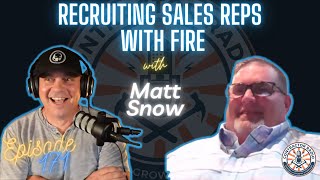
Matt Snow, who spent 13 years in roofing sales before founding a recruiting firm, walks through how to hire sales reps for contractors. Post jobs on Indeed with multiple titles like "entry level" and "paid training," lead ads with a hook and benefits before requirements, be upfront about pay and physical demands like roof climbing, and let culture do the filtering.
Chapters
Foreign.
Hey everybody, it is the head coach at Contractor Coach Pro and your host here on Contractor Radio, Jim Johnson. And I'm super excited for today's guest. It's going to be a lot of fun. We're going to talk something that I think is one of the most passionate things that contractors have facing them that becomes an obstacle or a challenge. We're going to talk some recruiting and how to get more guys, better, talented guys and gals working for our businesses and creating something that is a very attractive opportunity at your business. And we're gonna bring in the pro. Like I've been following this guy for quite a long time. Anytime I hear like recruiting, this is one of those guys, bam, bam, bam. This guy, this guy. So we'll introduce him here in a second. But I don't want you to forget we do have a couple of things coming up here that we do at Contractor Coach Pro. One of those things is top rep. It is our high performance sales training. If you have not checked. I'll go to topreptraining. Com. You want to have a team full of professional top end salespeople, get them to top rep here in New Braunfels, Texas, right between Austin and San Antonio on August 21st and 22nd. Show up a day early, maybe you can go tubing with us down the river.
We're going to.
We hope to see you there. That is topreptraining.com we also have a new program coming out for contractors that are smaller. Just getting started. You're under, under a million dollars, probably more like 500,000, 250,000. We've got contractor launch coming out and I'll tell you more moving forward into the future. But this is going to be some group coaching focused on five pillars, business acumen, just all the stuff you need to know for business. Your financial acumen, your marketing and lead generation on a budget, how to close deals and sell deals at high profit and then finally how to optimize your networking and referrals so that you can grow your business into that seven figure business that you need and you know you can do and then take it beyond that. So without further ado, thanks for hanging out with us there for that first few seconds and selfless, shameful promos there. I am pumped. I've been wanting to get this guy on for a long time and I want to introduce to you the president, owner, founder of Pivotal Recruiting Solutions, the recruiting guru, the master of magnetic, bringing people to an opportunity. We got our man here, Matt Snow. Matt, welcome aboard Man.
Hey, how are you?
I'm doing awesome. I have people call me all the time to be on the show, Right. And the number one and two people that call me are marketing companies one and CRM companies is number two. And like, I get tired of, like, doing that, to be honest with you. And I'm always looking for somebody that is in this recruiting thing, especially niche, like in our industry. I've had a couple on in the past, but you're the, you're the. The king of the. The king of the hill. It's good to have you on, man.
Thank you, thank you. I'm definitely honored to be here.
Yeah. So why don't you, like, for those of us in the audience, first question is, do you only recruit for roofing companies or do you recruit for other contractors as well?
90% of what we do is in the roofing industry, just because that's where I came from and that's what we knew coming in.
Okay.
But after a couple years, people hearing about us and how effective we were at bringing in some of the hardest recruits, door knockers, they asked us, hey, can you try this? Can you try this? And for me, any recruiting in any industry is pretty much the same. Be transparent, you know, show your compensation, have some good company culture, and the process is. Is the same. So we started taking on CDL drivers, specialty woodworkers. I've done mobile phlebotomist, which is somebody that sets up. Sets up a tent and they take lab stuff from you for. I believe it's my direct labs. So I've. I've definitely recruited some unicorns for sure.
That's pretty cool. That's. I didn't know that. So this is going to be for all of you that are listening in here, you want to learn some things about recruiting. So, Matt, tell us a little bit of the history, how long you've been in this industry, and then kind of what got you into the recruiting thing and where are you at today?
I've got in about 13 years ago with Peter Pesci from American Restoration Group. Shout out to my buddy Pete. I saw an ad said you can make over $100,000 a year selling roofs. And like most people that are not aware of the financial incentives in the industry, I just like, yes, it's got to be bull. This is not real. But I'm one of those guys that needs to touch fire to know that it's hot. So I went in for the interview and just started asking questions, you know, what's the metrics in this industry, how are you guys making so much? And once he explained to me, you know, this, this was insurance approved construction, I started to connect the dots and became more and more interested in the opportunity. And you know, near the end of the interview he asked me, he's like, well, how much do you know about roofs? And I told him, well, I know they go on top of your house. So I came, I came into the, into the industry literally at ground zero. I'm not even sure I knew what a soffit was at that point, but I had great training, great mentorship and I'm the type of guy I don't really need to be pushed to do sales. I like talking to people, I like getting out there. As long as I've got a great product and something I believe in, for me it's something I enjoy. So I did my first year I knocked out 80,000 and take home. And from then it was just no looking back. I kept going up each year, four or five years later they asked me to become a recruiter and ask if I could bring some people in and train them on, know my processes in the field. And it was pretty lucrative. So I said, yeah, I'll give it, I'll give it a shot. It turns out I was great at it, connected with people because my story was transparent, it was honest, it was real life. You know, here's a middle aged guy going into an industry with zero knowledge of the industry and succeeding just merely because I was a sponge. I wanted to learn. I was humble, you know, I was hungry and it worked. So it started kind of lighting a fire in me. I became passionate. I'm like, I'm pretty good at this recruiting thing. So I continued to sell roofs and recruit and I sold a roof across the street from a national general contractor after the store. And I'm sure they were kind of peeved, but it wasn't my fault. I didn't read the storm report, I knocked the door, I got the contract. So that kind of started up a conversation with us and eventually they cornered me up to their office in Rockford and I had an interview there and they hired me on to be their national recruiter. So whenever they would storm in Nebraska, Colorado, wherever the storms would be, I would fly in, write the ads, meet with the people, do the interviews, turn them over to be trained and then fly back home. And after about a year of that, at the end of my contract, I decided that I wanted to spend more family time, you know, more time at least near my family than I was there, the money was great, but I mean, family is extremely important to me. So I made the decision not to renew my contract and asked my wife one night while she was making dinner, after a glass of wine or so, if she'd like to leave her cushy corporate job and start a recruiting company for the roofing industry. Which even when I say it out loud to this day sounds just crazy. It's like, what? I got a 401k, dude, you know, I got PTO. I'm not leaving nothing. Luckily, she thought about it for probably 30 seconds and she looked at me like I was crazy. I couldn't imagine what was going through her mind. And she said, yeah, let's do it. So we did it. She ended up quitting her job and we formed this company. I think the first year about 150,000, just me and her. Next year hired some recruiters, 300,000, next year 600,000. So we've continued to almost double each year.
That's pretty awesome, man.
It's been, it's been a, it's definitely been a blessing. And I was, I wasn't a seasoned businessman by any means when I started this, but I've been around business and business my whole life. Read Entrepreneur, Fast Company, Forbes magazine. I've always wanted to have the kind of money where I could supply everything I want for everybody in my family with no worries. And I decided this was, this was going to be my time because I had figured out that the majority of people that I was working for were not as smart as I was. So I said, well, why do I keep working for people that are dumber than me? Like, I can do this too. And once the initial jump was there, it's, it's been non stop. But my motivation and our motto for running the business, because there's so many ways and, and points to run a business on. You know, you're going to be ethical if you're just bottom line centered. You're only worried about profit, company culture, things like that. And we decided on a quote from Warren Buffett. Just delight the customers and you'll never have to worry about money. So that's what we did. We provided results, we worked hard and the people talked about it. And to this day, I mean, it's probably an anomaly for business. I've never made one single phone call to sell my service to anybody. Everything has come through referrals, people like Chuck Toki and you and other guys that recognize how much we care about what we do and that we're actually knowledgeable about what we're doing. It's been a great blessing, for sure.
Yeah. That's first off. A lot of that story sounds similar. Like you can tell I got hired before you. And they were less transparent. It was $75,000 to be a home inspector. That was the ad I answered. And so I was like, oh, home inspector, that sounds pretty cool. And now we're selling roofing. But like you, I put the dots together, sold pretty good. Got. Hey, do you want to teach other people do this? So as we have a lot in common on that. So you've been doing the recruiting thing for the last seven years.
Yes.
Is it different today than it was seven years ago? Just with all the things that have gone on technology Covid that all the reasons has it changed a whole lot? AI and all the other things that are out there?
Yeah, it's. It's changing constantly, I would say. You know, when I knew I was coming on the podcast, I didn't want to just, you know, just come on and talk a little bit and display my knowledge. I want to bring some actual fire to the listeners to help them save thousands of dollars on recruiting. Thousands, literally.
I like the sound of that.
So the. The very first thing you want to do in recruiting to decide where you're going to post whether it's applicant tracking systems, job boards, indeed, ZipRecruiter, Jorah, Bamboo, HR, whatever you're going to pick, I pick indeed. I spend a quarter million dollars or more on job boards each year. I've done several searches on similar web basically, which is a website that will Compare anything. Ford vs Chevy, Traeger vs Rec Tech, ZipRecruiter vs Indeed. And also put my own money in it.
I want to know what they said about Traeger vs. Rec Tech all day.
I gotta be. I got a BFG on my Porsche. 30. 30 chickens at once. That's great.
Wow, that's intense. So I'm sorry to distract you there. We were talking smoking before and we mean barbecue before we hopped on. So I had to.
My customers ask me, you know, what all do you do? I said, well, I'd only do three things. I barbecue, recruit, and I harass my children. That's it.
That sounds about right.
I'm very serious about all three of those things.
All right, so I messed you up there. So you were going to bring some fire.
Yes. The very first thing you want to do is decide where you want to put your money at. You know, to advertise. Hands down, anybody ask me. Indeed. ZipRecruiter. You'll find that you'll get a lot of candidates that have just hit a push notification. It's very push notification centered. So anytime your resume says sales and somebody's job posting says sales, it'll get sent to them. They'll be kicking it with their buddies or doing what they do. See, oh, there's a new job. So and so's got a. They'll push a button. Bam. They won't read the door knock and they won't read the climbing on the roof. They won't. So basically you're paying your recruiters and wasting your clients money on talking to people that really haven't even read your job posting. So it's, it's good for the databases. About the only thing that I found fruitful as a recruiter, it's not for the kind of recruiting that we do. Indeed. You've got an average of. The Average person spends nine minutes on Indeed. When they go on there, they spend three minutes on ZipRecruiter. And I'm all using ZipRecruiter not to pick on them, but just that's the most comparable thing in recruiting right now. Right Price wise, you know, But I would choose Indeed. So after choosing whatever you're gonna post on, the next important thing is the job title that you're using. Because you need to understand that Indeed works off an algorithm and is very similar to Google search. So. So just because you think Restoration consultant is a sexier title than outside Sales rep for a roofing sales rep. We.
Don'T know what that is.
Does not necessarily mean that anyone in their right mind is going to sit down and type in the job Restoration Consultant. So you can have the best possible ad. If you don't have the right title, your funnel will not allow people to see it based on what you've worn. So we use words like paid training. That's one funnel. Entry level. That's another one. Sales. That's another one. So now I've established three funnels for one ad. And the ads that I run have a constant stream of candidates. They don't trickle in, they're constant. So this is after seven years of learning this and having account managers and hollering at people and spending money. This is the, this is, these are the next steps. Indeed. Good job title the ad. The ad is super important. Traditionally, to sum it up without boring everybody to death, you take a regular ad like anybody would have now and flip it upside down. That's how an ad should be Written, you don't open with 4, 5, 6, 7, 8 sentences about the company because you're going to lose the reader at that point. They're what's called a scanner, so they're looking for something. So you open with one or two small sentences. Contractor Coach Pro is hiring now due to explosive growth. Boom. Cut it off. Now it's bullet points. We offer work, life, Balance, upward mobility, PTO 401k, whatever you may offer. There's a whole list right on the edge of everything that you offer. You're like, man, look at all the stuff these guys got.
So everything about all the stuff they want.
Exactly. That's the hook. Once the hook's in there, that's when you bring the other stuff. There's responsibilities, requirements and rewards. And all those things need to be transparent in the ad, not commensurate with experience. And based on all that, you know what that means to a candidate? It means you're going to try to lowball me. Yeah, nobody's stupid. Nobody's stupid. Well, you. Well, we'll just see. I've got a meme that says, well, what's the job pace? Well, it starts at 40, but it goes up to 80. And the guy's like, yeah, call me when it hits 80. Nice.
That's great. I really hate interrupting, but I've got some important information for you. If you haven't tried out Atlas Shingles, you should, because they put you first as a contractor. They want to give you a competitive advantage out in the field so that you can win more sales and be more profitable. Check out Atlas in your local area, find your local rep, get hooked up with them today and start making more money tomorrow.
So the key fire is to have the ad written to where all the offering stuff is on top, nice and neat and bullet points. So now the reader is engaged. After that, what you'll be doing, meeting with homeowners, helping them through the insurance process, keeping it stress free. And then your requirements, whether it may be college educated, bilingual, ability to climb on roofs, and it's a perfect ad at that point. And I guarantee you if you switch your ad around to that format today, within three days you'll probably have 40% more candidates because I did the same thing.
That is some fire you're bringing today because we see that a lot in our coaching. Like we're working with people and we're working on their hiring strategy. Like that's what we do. We help them develop a strategy and then we send them to guys like you and say, this guy can find people to fit this strategy and, and their job postings always are like that. And mine are very much like, hey, this is all the cool stuff that you're going to want first. I think that's super important. I also want to get a little bit of my culture. Do you find any of that, like including some of the company culture in there?
Yeah, every. Every single company that we deal with, we don't have a blanket one on one ad. I mean, I've got a format for a sales manager or for an office manager or for, for whoever that we're recruiting, a basic format of duties. But we try to really represent the company culture of the company because I found that that's what attracts the right candidate. If the ad is talking about culture, whether it be highly competitive or family type, focused integrity, you know, core value type things, those are the people that it draws. And I find also that it also repels people that are really not into that kind of thing.
I don't want people to skip over that. Like that was a huge point by including the culture. And you actually did a good job of the, hey, is it super competitive or family? Well, one guy might like the family thing and go, hey, I want to be in that. And the competitive stuff sounds terrible to him. And then the other way around, the competitive guy goes, that family stuff sounds terrible. I'm going to be on top of that.
Exactly 100.
It draws a certain type of person. So you start to eliminate and pre qualify people if you include your culture. Is that what you're saying?
It's a way of automating the process without automating the process. Right. I'm recruiting and I tell everybody, be as honest and transparent as you want. Don't recruit somebody and try to turn them into something else. Well, I'm going to recruit an office manager, but I also want them to help out in the office when they're not doing office stuff. What? Yeah, it's office manager. An office manager manages an office. That's what they do. Let the people, Let the people do what they're good at. Yeah, you want a good attitude, you know, hey, I'll help out if needed or something like that. But when you start trying to hybrid positions, you end up very frustrated and the hire never lasts long. So I'm a big fan of transparency through the entire process because sure, I'm not the only one that's gotten a job and had a list of duties that all of a sudden increased exponentially by my third month there. Like, hey, we got this other project we're doing, and I'm like, well, which one of these other projects do you want me to put on the back burner so I can do this new one that you got?
Well, what's the pay for that one? Yeah, well, that's a different job. What's the pay for that?
This was not included. So I'm just. I'm just really a fan of being open and honest and expressing your apprehensions, whether you're the interviewer, the interviewee, you know, hey, I feel like maybe you might not be so good at this part or, you know, whatever, and express that in the interview. Because a lot of people call me with, hey, man, what do I say in the interview? What questions do I ask? What's trending? This and that? And I think that the interview needs to be somewhat structured as far as the initial part. What time do they show up? What was their body language? You know, were they playing on their phone? Did they have robotic answers already set up in their head? Which is going to be impossible for me because I really shoot from the hip. So if you think you're ready, you're probably not going to be ready at all.
Now, do you guys do that part of it too? Like the initial interview qualifying? Yeah, we do.
Yeah, we do the initial screening interview as far as being physically capable to climb and inspect a roof. Comfortability with knocking doors for a living. So when they go in to meet with an owner, there's not going to be a shock, like, oh, I got to knock doors. I'm not into this. So it's a major time saver for the contractor because it's one of the most difficult questions to overcome. And if you just call someone like, hey, are you interested in this job, knocking doors? You're gonna get nine out of ten no's.
I always. I always like this one. Whenever I was explaining that to somebody, I said, hey, if I told you there was 10 doors right there, like, they were right in front of us, and you knocked every one of them, and two of them each gave you $1,000, how many of those doors would.
You knock all day? Right. Yeah.
And it's just a mentality thing. And then also the, like, if I don't knock that door, who do I leave them to?
Right.
Like the wolves out there. It could be a bunch of nefarious people. I don't want to do that to my community. There's a lot of different ways to get your mindset right about it, because while a lot of people I Think look at door knocking with their. Like, they look down on it like it's something bad or like you're less than or whatever. There's this weird, like, perception of what a door knocker is. I think that we actually provide a service that's. That's important. And I'm trying to keep them away from the ones that are not doing it the right way, that are there just for the money or there to pull the wool over your eyes or even worse, steal money from you. There's all kinds of things that go on out there, right? Get out there and inform the homer, educate the homeowner and do things right. We're actually, like, doing the wrong thing. It seems bad to me, like, like, hey, why would I not go knock the door 100?
I mean, there's. There definitely is that connotation with it. And we. We're doing what we can to try and reverse that, you know, and just bring some nobility back to it. I mean, when it's all said and done. I walked into an industry that had. Knew nothing about, made 80 grand in a year. There had to been something good there. And I had a good company that used great products, great craftsmanship. The builds went down on time to make sure that I got referrals.
I mean, it was a great job earlier too. That was a little bit shocking to me because I don't know if I've ever heard this. They provided good training and they were good people. I had never heard that before.
That's. That's what makes my job. That's what makes my job easy. Because we align ourselves with people that have that kind of training. People that use Chuck, people that use you.
Right.
People that are trying to level their business up and do things, you know, at the top of the heap. You know, it makes it easier for me to recruit.
I have a question about that. Do you interview the contractors that come to you to learn more about their culture? So the person that you're talking to out there, you can go, hey, good fit, right?
Absolutely.
Because this is one of the things, and I don't mention names or anything, but this something I've noticed about recruiters in this industry. They can recruit people. It's not hard. You and I talked about this before the show. Recruiting is simply marketing and sales. I run the ads that get a response. I get the response. My job is to sell them on the idea of coming in and hiring. So that's the sale. That's the closest. The problem with most recruiters that I see is that they don't care about the culture. It's like, do you want the job? Can't.










