Relationships Define Every Part of Your Business
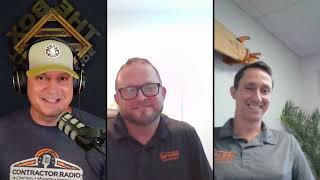
Jim Johnson talks with Brian Farr and Brian Walton about why relationships matter most in business. They cover acting like you own your role, building systems so you can delegate, and hiring to ease pressure as you grow. One founder doubled sales while learning to let go of tasks.
Chapters
That's been a theme with the, like, you guys are the seventh contractor that I've interviewed for this contractor summer series thing, and to a contractor, it has been about relationships. So the folks that are listening to this series and keeping up with it, like, hone in on that. It is so important. I could. I could not agree with it more. By the way, when you need something.
You can ask for, you don't ask for it every time. You know, you give in a little bit, too. You don't. You don't kick and scream when something happens. You look for a solution. You never yell at them.
It's.
You know, it's why we all have jobs. There's problems to fix, and you just want to make sure that you partner with the right people.
Awesome job, guys. So, Mr. Walton, what would one piece of good advice, like, somebody's out there, they're working for a company. What's the difference that they could make that might put them in a position that you've been fortunate enough to get into?
You mean, as far as Brian Farr seeing the value in me and bringing me on as part of the business? I think it was, you know, I hear it all the time where it's like, you know, if you're a general manager, you do the job as general manager, and you're like, okay, good. I was. In my eyes, Far. We haven't really talked about. I was doing the position of a business partner as a title of general manager in my eyes. And so I've always kind of lived my life that way, or see, that value is to act as if you're already in that position, and you may never get the recognition, you may never get the title, but I think it's a great way. It's how I've always lived my life, and I'm not going to do it because, hey, I don't get paid to do that, or I'm not being paid to do that, or that's not my job title. Just who I've always been as a person. That would be my one thing.
That's a huge piece of, um. It's. It's how I've actually approached my world. Like, wherever I've been, I've always treated it like I owned it. Like, hey, that I. I know it's not my money, but I want to act like it's my money so that I. I steward it. Well, whether it's building a better process, doing a better job, working extra hours when they're needed, stepping in where nobody's wanting to step in. All those little things add up really quickly and you're going to get recognized if you're. If you're treating it that way. And if you don't, you're in the wrong place. It's just that simple. Guys, it's been great. This has been a really good. I want to talk to you for, like, another hour or so. I think there's a lot more that we could probably dig into, but I want to. I want to be cognizant of your time as well. Would you guys be okay with coming back for one in the future?
Absolutely.
Okay, cool. Like, what's the goal this year? Is there some kind of big thing you're after this year? I get it financially, hey, we're going to grow and double and all that good stuff.
I have goals as the integrator. One of my goals, and actually we're starting to see the rubber hit the road just the last couple of weeks. One of my goals is to have systems, like real systematic processes in place and onboard trainings and not just like, hey, make sure you get everything ready for the new hire. What 12 things do they need? What area do they go? I want to be able to. Where one of our people from accounting can train a new sales rep because it's so laid out and systemized that way. That's one of the things I'm really working because we've grown so much and it's, you know, and we have a. You know, it was just Brian Farr and I, and we had, you know, then we hire a production guy. Now we have a production manager and a sales manager and a director of roofing operations. And we have all these people in place, but still, you know, it's really tough. So right now I have somebody in my office, and her name's Jessica, and she's incredible. She's basically offloading everything on my mind into digital format. All day she's scribing for me, basically, like, how would you do this? And as I'm telling her, she's writing it down or typing it in. And it's been going on for a couple months now, or a month and a half, excuse me, six weeks. And it's incredible to see. And that's one of my goals, is to make this just 100% repeatable. Very, very simply.
That's one of the big things we harp on here at our coaching, is making it repeatable. Like, how do we make this thing repeatable? We help you guys design out these processes and stuff like that. And then we hope that from what you learn, you take and do what it is that you say you're doing, because we continue to grow. Right. And which puts in more processes, more people that need to be able to do what they need to do. And I'm a big believer in making it so clear. I could literally bring a seventh grader in and set them behind a desk and they do it.
That's a better example. Jim, thanks for. Yeah, like a seventh grader. And have them. And so. And actually we went through your consulting, the CCP consulting, and we had a lot of information and I dabbled in it a little bit. And I dabbled in a little bit until we hired somebody to help implement those things and to really connect all the dots and put those into play. You know, we had implemented a portion of them, but our goal is, honestly, it's nothing to do with you being here, but our goal is to implement every single thing that CCP gave us during our time with you does.
That would be awesome.
And that's really what we're about, is like, there's this. There's this part of it gaining a bunch of knowledge, right? Like, hey, there's all this advice. And we've seen a lot of different things by working with all the contractors we have and the years of experience behind all of it. So that's kind of the knowledge, like transfer, which is a big part. Then there's like the tool transfer, like, here's all the different tools and stuff like that. But then there's this next piece, which is implementation, like getting the things in place. And that's where we find a lot of value in what we do as coaches, is we help them build these missions and then walk through those missions with them to actually execute and implement and put in the right procedures and policies and processes and people to make those things actually happen. So it's awesome to see you guys doing that. I'm excited to see what the results are going to be at the end of the year. I'm going to check in. I'm going to be like, hey, let's get these guys on a year from now. And how did that go, getting all those. All those things in place? Having an integrator helps. How. How's. I'm gonna. I'm asking Brian Walton, how's Brian Farr doing with letting go a little bit?
He's doing well. He's, you know, the more people. It's tough, and I even have a problem with it. You know, I'm a super delegator Sometimes, but I even have a problem. But, but he's doing really well at it. And I think that, you know, some of the people we have on the team now, it's just even little stuff like, like, you know, like for instance, we have an account with our phone company and we hire a new sales rep and it's like, hey br, can you call the Verizon guy and make sure we get a new phone and everything. Just even passing those little things off has been. But it's been fantastic. I mean, again, we have all those positions now with sales manager, director of roofing operations. We just hired somebody for multifamily. But the crazy thing about VFAR is with us doubling our sales every year, everything's brand new. So every week, every month is brand. We've never had this many employees, we've never done this amount of business, we've never done this many routes for a week. We've never had a multifamily division, you know, all of these things. So we're constantly evolving and Brian Farr is doing a really good job at learning all of those items that need to be done and then getting to a breaking point where the tension's really tight on the balloon, let's call it. And then we hire somebody on and then it settles down and then Brian Farr is onto his next thing. And I'm looking to see, you know, to make sure that we can, that we can implement it into the company and it'll be smooth and.
What a great analogy.
That's a great analogy.
Yeah, that's a great. You gotta let the pressure off a little bit, right?
Happens in the departments. It happens in the, in the company. It does. It fills up and then we release it and then it fills up again.
That's super cool. Mr. Far, are you, are you getting to enjoy anything at this point? Are you getting some time?
Well, it kind of goes back after I lost my daughter. I went about a year and a half straight. I worked 15 hour days. I didn't take days off. It was my coping mechanism. And I don't want to say I fully coped, but I've accepted. And now I'm enjoying a lot of other things in life outside of the office. So the office and our staff is a family outside of each other's own families at home to where sometimes they come to work to get away from the family at home. We got a good group, so we do a lot of things together. But yes, I'm finally, you know, until the next thing comes on and we can hit that balloon blows up. And then once we bring somebody on, I can relax a little bit until kind of something grows. But, yeah, I'm enjoying. I'm enjoying every minute of it. I'm enjoying every minute of the growth. I'm enjoying every minute of work. I'm enjoying every minute of time away. But it's, you know, you can't. I know the idea is to build a business and let it run itself. That's what everybody is, you know, imagines. I. I don't see that. You know, I don't see me ever being a part of that. I. I want to. I want to be involved. I want to know what's going on. I want to make sure we're doing the right thing by others and kind of living by the golden rule. And. And you said you step too far away and things veer off course, and it's just not what it was. You know, it's not what it was meant to be. So you make sure you got the right people. And Walton was definitely the best grab I've ever had on taking. Taking what I had envisioned and running with things and being able to trust others to do it when you're not there. I couldn't do that when there's three people or four people because there's too much on my shoulders. And now that there's 30 plus people, I'm able to get away for a couple days. They don't miss me so much. In fact, they're probably happy I'm gone sometimes. But you have to be able to get to that, because I just hate, you know, I overdo things, so I don't feel. And when you're so deeply involved and ingrained in everything, it's hard to get away. And now I think I'm finally able to.
That's pretty awesome. Hey, Mr. Walton, I muted your mic by accident, so if you want to unmute.
I heard some feedback, and I wasn't sure if that was me.
Oh, yeah. Okay, cool. So, guys, I know I was trying to cut it off earlier, but there was more I wanted to talk to you about. Thank you for hanging out for a little bit. Go spend some time with your families or go work, whichever one you're going to do. I hope you spend a little time with your family this evening. Thanks for being on the show. Thanks for being a client. We love helping you. If you need anything from us, let us know, and I'll see you a year from now, I think. I think that's something I want to make it make happen.
Thank you, Jim. It was a pleasure for you selecting us to be on this podcast.
Honored. Honored to have you. Glad you made time and keep kicking butt, guys.
Thank you very much.
All right, so. Wow. What a podcast. Running into the Fire. That's what we're gonna go with on the name of that one for sure. This so much like the thing that really impacted me of that was how many times something bad happened and got turned around into something amazing and great, not just for them individually, but for the community and everybody around them. We can all learn from that. We can learn from this approach of doing it right, building relationships and then giving back and being generous. It's amazing what comes back to you when you do want to thank everybody for listening. Joe, thanks for hanging out with us. If you're a contractor that's trying to get a little more control of your business so you can grow that business and find that personal and financial freedom that you were chasing whenever you started your business, check us out@contractorcoachpro.com you can go to our website. Scroll down the page a little bit. There's a take assessment button. Click that button, take that assessment. It's gonna take you 15 or 20 minutes. It's a real assessment, gives us some insight into who you are so that whenever we spend time with you, which is the goal is to take an hour and actually do a coaching call with you. Not a sales pitch, but. But a coaching call based on your assessment, we'll help you take two or three steps forward in your business. If you like coaching and want to work with us, great. If not, that's okay, too. At least we helped you a little bit that day and provided you some value and hopefully made your life a little better and our industry a little bit better because it's something that we're passionate about doing. Thanks for hanging out with us here on Contractor Radio and we'll see you on our next episode. Sa.










