Roofers in Recovery Live!
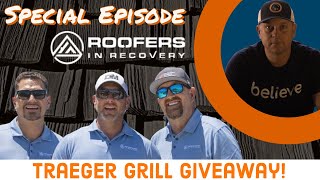
Jim Johnson talks with Paul Reed and Eric Oberant about Roofers in Recovery, a nonprofit helping roofers struggling with substance and alcohol abuse. They share personal recovery stories, explain how the group connects people to treatment, and announce a Traeger grill raffle to raise funds.
Chapters
Hey, everybody, it's Jim Johnson here, head coach at Contractor Coach Pro and your host with contractor Radio. And we have a special broadcast today. Normally, we record these and put them out there on YouTube and Facebook and our podcast channels and that kind of stuff. But today we're gonna go live because we've got some of the most impactful leaders in our industry that are doing something that they're amazingly passionate about. And we've been watching what they're doing, and we wanted to help out. And for those of you that don't know, they run this roofers and recovery thing, helping folks in the roofing industry that have substance and alcohol abuse issues. And I thought it was something that was something that people wouldn't normally do, like setting up this thing to help others and really not receiving any kind of financial benefit doesn't really go well with us as contractors. And what we do, we want to make a bunch of money and do all that kind of stuff. But they have some really strong reasons and some really strong passion behind this, and I thought it was worth doing some things to help them out. And so we're doing this event called top rep sales training. And we thought, hey, if we're going to do this event, why don't we help roofers in recovery and we'll do a little giveaway. And what we're doing is we're giving away a Traeger Grill, a raffle. That raffle is $20 to buy a ticket and get six tickets for 100 bucks. And we're gonna put all the names into one of those spinny things, and we're draw one out, and somebody's gonna win a Traeger pro series. Of course it's a pro series. We're a contractor coach pro and wi fi and all that other good stuff. Grill. And we're gonna raise a bunch of money for roofers and recovery because we believe strongly in their mission and what they're doing. So we want to talk to them today. They called us and said, hey, let's meet. And we met, like, how can we help out? And I thought one of the best ways that we could help out with this was to bring them on and talk about what reefers and recovery is doing and the mission they're on and how people could get involved. So without further ado, let's go ahead and bring on our amazing guest today. We've got with us Paul Reed and Eric Oberint. Did I say it right, Eric? Did I get it? I don't think anybody pronounces that name. How do you say it?
Oberant.
Oberant. Got it that time.
Yep.
I thought just the cough you did was how you pronounce it.
That is exactly how most people do it. They go, Eric. And then that's just kind of.
And Paul, welcome to the show. Appreciate you guys being here. We were trying to get Jonathan Sherwood on. He is also one of the three key players in what's going on at Roofers in Recovery. Unfortunately, he was having some Internet technical difficulty because he's Jonathan Sherwood. He's always in his truck. He's always doing something, helping out other roofers. And so he was unable to join us, but we'll see him again in the future. So, Paul, was this your idea, this whole Roofers and recovery thing? Like, tell me how it all came about.
Yeah, absolutely. Thanks, Jim. First off, thank you for getting us on here today. Really appreciate this and the support. You guys at Roofing Contractor Pro have really been with us. Listen, we started that. So it's, you know, no secret that I've been over, you know, going on 14 years and Eric is, I think, leaving, coming up on 13 and Jonathan's got some time as well. And it was really kind of a vision I really had for five, six years of how can I get back to the industry. Because, you know, I'm really looking at, like I'm a blessed man that I got a second chance, really, by God, to allow me to get sober and get successes and things I've had in my life. And there's part of in the big book that we have that talks about you can't keep what you have unless you're willing for you to get back. And so that's kind of a motto that we try to live on. And so one of my ideas, you know, years ago is maybe I could open some sober living houses and, you know, and eventually kind of got the point of like, maybe I could do a scholarship. And then really, then meeting with Eric one day, we kind of started talking about, you know, maybe we could do a foundation and start a 501 and start this Rupert Recovery. So really kind of started from there of us just really knowing that in order for us to kind of keep what we have, we got to be able to willing to give it back.
So, yeah, that's kind of a big thing with AA is, you know, kind of go through the program. And a lot of those folks, the way they give back is to be sponsors, right? They sponsor guys that are coming into the program, support them, and you're like, I can't just do that. I gotta, like, help a bunch of people. So this is pretty cool what you guys are doing. And who are you with, Paul? Like, just let everybody know the company you're with and the role you play in that company.
So one of the owners at Northwest Roofing here in Denver, obviously, and we also do a store into the new era. But it's interesting, you know, Eric and I were talking a few months ago that we almost introduced ourselves more with the roofers and recovery than we even do with our own companies anymore. So it's became a huge passion for us to do. And, you know, I think one other thing I want to add of why we really wanted to get that out, there was. There is kind of a stigma, you know, from someone that's recovering from alcohol or addiction of drugs that like, oh, my gosh, you know, look at that person. That's awful person. We wanted to just kind of stand up and, you know, with our platforms and we've been around for a long time, we want to stand up and say, hey, there's a way to recover and there's a way to have success, you know, even though these things have happened in your life. So that's really another reason I wanted to bring that up while we're doing this, is to stand up and say, hey, you might have be down right now or in the paths, but there's another path. And you know, look at what stuff we're doing and let's go.
Yeah, it's a. It's one of those things, like, I think we all have something like this. Right. There's something that's in our past we hope, or maybe even we're dealing with today that we don't broadcast. Right. There's a stigma that goes along with it, and alcohol and drugs has that associated with it. Like, if we've had those problems, we almost like, don't want to tell anybody. We try to keep that in the closet back there. It's a skeleton. We don't want anybody to know about it. Then whenever it comes out later, because invariably it's going to come out, people are like, well, can I believe everything else the guy says?
Right.
And there's also the stigma that anybody that's had that kind of an issue is a bad person. Right. And that's not. That's not necessarily the case. Right. Eric, tell us a little bit about your involvement. Why are you involved, who you're with? Let everybody know who you are.
Yeah. Thank you, Jim. Again, thank you for Having us, this is obviously a big deal and super important to us. I own DNM Roofing here in Omaha. Own this for a long time, and been in the business for a while. A while back, you know, Paul talked about it, and so, not to tell the same story, but we. We met and kind of became friends a few years ago and found out that we had a lot in common, you know, just in history and roofing and. And. And other items. Right. And so we kind of. We kind of started connecting on that and. And wanted to figure out a way to, like I say, to give back, and couldn't really figure it out right away. And then I remember we had just a bunch of quick phone calls and being like, well, could we do this? Could we do that? Could we, you know, whatever it is. And then one day he called and said, hey, let's. Let's do a foundation. Let's. Let's figure out how to send people to treatment. Because what we realized was, for us, and this isn't everybody, but for us, our lives were saved. My life was saved because I got the opportunity to go to a treatment center, and I got to live in that bubble for, you know, 30 days, whatever it is, where I was just submersed into recovery, Recovery, recovery. And I didn't have a bunch of outside influences that I was having to deal with, so I wasn't having to deal with work issues or family issues or whatever. Like, we all saw that running in our head.
But.
But I didn't. I was. I was there to focus on the one thing. And the one thing was. Was recovery. And we realized that not a lot of people get the opportunity to do that because it's expensive and there's, you know, not everybody has insurance that covers it. And also, to Paul's point, people don't want to talk about it. And so when we got the opportunity to. To come up with this foundation, we wanted kind of the mission of it was to be able to send people to treatment, to get that help and then be able to, you know, come home and have the support from other people in the group, in the industry. And. And then kind of to your point earlier, you know, what it's really morphed into is that we've got this really neat community of people that have gotten to know each other. And. And there's one thing that we all talk about in. With alcoholism or drug abuse or whatever is that people that are in that world and have lived that world, we're the only ones that really get it. So we can sit here and have this conversation and you can ask questions and you want to have knowledge and, you know, try to understand where we were, where we came from, how we got there and how we got where we are now. And. But only another alcoholic or another drug addict really gets what we've been through. And it's hard to explain it to a normal person, right? It's really hard to explain that. And so I think that the people out there that were maybe scared to talk about it before, they let their guard down a little bit when they see me, Paul and John and some of the other guys out there talking about it, and they know that we get them and that we understand what they're going through more so than somebody that hasn't been through that before. And I think that maybe gives them the courage, because it takes a lot of courage to make that phone call, and it gives them the courage to call one of us and ask for help. Because asking for help for guys in this industry that's an alpha oriented, you know, industry of a bunch of men, you know, generally speaking, like, we've got women in roofers in recovery as well, but, you know, the numbers are the numbers and it's just an alpha oriented male industry. Nobody wants to ask for help. And that's why we're here, is so that we can answer the phone when somebody calls and asks for help.
So that's. That's interesting because it was one of the questions I had for you. You know, like, you call me a normal person. I don't know if that applies necessarily, but I haven't had these issues, so I can't understand. I haven't walked in your shoes before. And I have a big appreciation for being able to have a conversation with people that have walked in your shoes before. And so I see the value in that. One of the questions I had, because as you look at this industry, and if you, if you're any on Facebook or social media, all that stuff, you see it all the time, the talking about drugs, the hey, let's go have a beer. You know, the man, I'm hungover today, especially in like the really rough Rufus groups. And I wonder if those aren't really like cries for help in part. And secondly, do people really want the help? It's just the alpha part keeping them from doing it. Do you think that most of them want help?
Who knows, right? You know, like, not everybody needs recovery, right? And we don't. We don't sit here and preach and, and say that we think that Everybody should stop drinking or that, you know, even somebody that's, you know, like, you know, but like, people that are out there having a good time. If you're having a good time and it's not affecting your life and your family and your, you know, everything that's close to you, then it doesn't apply. Right. But we're. We're there. We're there to support the people that realize that there's something wrong, they want to get better. Does that, I mean, does that make sense? I mean, Paul, kick in.
I think it's the sense of being mindful, right? Like, being mindful of what it's doing to your life. Like, I can go have a couple of beers with my buddies and then not have a beer for three weeks.
But understanding the grips of addiction, it's pretty hard to be mindful.
Yeah. Yeah, completely.
A lot of people don't understand. They don't understand what's really happening. I know I lived for a long time for many years until it got, you know, completely awful and, you know, mental hospitals and things like that. But for many years where I just thought that was normal, where, like, that was just my life and the people around me, that was just why. And that's just what happened. And so I didn't personally know that there was another way to live. I thought it was normal to, you know, go do a roof and get a check for a couple thousand dollars and go half of it on coke, you know, like, that's what you did. And so I think part of our mission is to get that message out there, you know, for some of those people, because that's great that you could drink, like, that's fine, that you could drink and smoke some weed on the weekend, we lost our privilege to do that because it got bad for us. But our mission is to get the word out there that, hey, if you choose, you may think that you have a problem, there is a solution, and we're here with it. Whenever you're ready. You know, we're not trying to shove it down anybody's throat and, you know, we hang out with a lot drink, and that's fine.
So I have a question. Are there. Are there any signs that might be warning signs that you could share with the people watching day that maybe it's a problem?
Absolutely. So to me, if you own a roofing company, right, or you're a top salesman or just a regular salvant, I think that anytime that you miss work because you're too hungover or you're drunk.










