Safety for Business Growth with Gavin Coyle
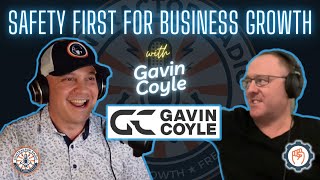
YouTube interview (Contractor Radio) between host Jim Johnson and guest Gavin Coyle (CEO/founder of the Coil Group) about safety in contracting. Gavin shares formative personal experiences (family/fatality and a colleague's death) that motivated his focus on health & safety. Main themes: safety as empathy and competency, safety as a competitive/business advantage ("business of safety"), affordable training and resources for smaller contractors (gavincoyle.com, book Workplace Safety on a Budget, low-cost courses), practical tools and checklists (SafetyCulture/iAuditor, CompanyCam), and the need to document processes and demonstrate reasonable precautions to insurers/legal teams. Advice targets residential and commercial contractors: track safety metrics, use checklists/photo documentation, value experienced tradespeople, and make safety part of brand/reputation.
Questions this video answers
April 27, 2023
Gavin Coyle — CEO and founder of the Coil Group
Workplace Safety on a Budget
gavincoyle.com
SafetyCulture (formerly iAuditor)
Chapters
Hey, everybody, it is your host here, Jim Johnson with Contractor Radio. Welcome back. Welcome to the show. I am excited. I was kind of a bit cautious about the interview today because I was worried that this might be one of those things that guys go, I'm not going to really pay attention to that. But after talking with our guest, this is something that we're going to want to really pay attention to. I think he's going to grab your attention right away. But before we do that, I to want, I want to leave a little room for one of our sponsors here. They are the ones that make sure the lights stay on. And if you are not familiar with Atlas products, you need to be as soon as possible.
The Atlas Pro plus Contractor program is designed to help you build your business. It gives you tools and resources, training, industry insights, bonus structures, technical knowledge, the brand power and science of 3M Scotchgard and what we think is the best product and warranty in the industry. Become part of the family that is succeeding and growing their businesses.
We went from nobody ever heard of us. To the number one roofing company in our region. And we've gone from 12 roofs a.
Year to 2035 and we did over 400 last year.
We're on track right now to do a thousand roofs this year.
You'll begin earning Atlas bucks and rewards as you move up to even greater reward levels. Become an Atlas Pro today.
If you're a roofing contractor, you want to separate yourself from the competition. Go and check out Atlas Shingles. They have some amazing new innovation got to go on their stadium tour here this past week and we'll be on that throughout the summer. And we look forward to seeing you guys out there. On today's show, I have an amazing guest. This guy is going to be talking about something that we tend to shy away from. A lot of you out there do some pretty dangerous work. Whether you're using pneumatic nailers, power tools, working at heights, there's a variety of different things that we kind of tend to be complacent about and we want to put safety first out there. So I want to welcome our guest in today. His name is Gavin Coyle. He is the CEO and founder of the Coil Group and he's got an amazing website that's going to help you guys out quite a bit. Gavin, welcome to the show. And Contractor Radio man, thanks.
Jim, how are you? Thanks for having me. Looking forward to it, pal.
I am doing fantastic. I enjoyed our conversation before we got started. And so to bring the audience up to speed, can you kind of give us a little bit of background and what's brought you into this world of safety? Maybe what you do a little bit and why you're so passionate about it? Yeah.
So I left school early and decided to go into the big bad world of contracting. And after a while, my brother was actually finishing school. So I said I was getting some pressure to go back and finish school. So he took my job and I went back to school and failed. And he went and took the job and became a refrigeration engineer. And when I came out, I basically started working on building sites. And at the time in Ireland, where I'm based, a lot of American companies were coming into Ireland to build pharmaceutical plants like Glass of Smithline, Beecham. And then the likes of intel and Hewlett Packard started coming in in a big way. So major construction projects were being built and I was at the very front end of that. But what they also brought with them was a requirement for health and safety, which was not a requirement as in an individual looking after health and safety on projects in Ireland at the time. So it was kind of an American influence through these projects that there would be one health and safety person for every contractor on the project. And I happened to be fingered out as the young guy that's just come out of school and he'll do type of arrangements. But I enjoyed it from day one. I had a good rapport with all the guys because I understood the complexities of the trades that they wear. So at the time we were doing clean room fit outs and interior fit outs. So just carpenters and mainly carpenters, to be honest with you. But yeah, so got stuck in and then I suppose my whole life turned upside down. In the case in the space of about 24 months, my brother died of a drowning tragedy along with two other guys. They were just throwing a football teacher in the water and it was in the Atlantic. Wave came over them and took them out to sea. And luckily enough they found them two days later. But obviously nice to get the body, but it wasn't a good experience. But within the same time frame, a young guy that I knew that was working for us on a project, a hotel project, Four Seasons Project, in. In Dublin, Ireland, he went into an area looking for some lights on the building site and tripped and fell into a hole head first. So I was on the project that day. Got a bang on the door in the cabin. Get down to site, Gavin. Man down. And when I went down, it was just carnage, to be honest with you. So Ended up in the ambulance and a lot of screaming, a lot of roar, and a lot of holding on for dear life. And I suppose 24 hours later, we got the news that the young guy had passed away from his injuries. So I suppose it shaped my. It shaped me up in terms of, you know, personally having the tragedy with brother and then knowing the individual, that young guy that died, and then having to watch him, you know, suffer for his life. Basically, it shapes my mentality in terms of how big safety is, and that shouldn't be taken lightly. And I'm not one of these guys that, you know, you know, playing the. The hard stick with health and safety. I'm far from that. It's about empathy. It's about people. It's about working with people. It's about collaboration and communication, and it's about competency. And I'm a big advocate for health and safety. And I'm sure your listeners will understand that by the end of the podcast.
Yeah, I can remember, you know, younger. Right. Getting into the trades. I actually worked as a carpenter for a little while for a home builder, then got into this roofing industry. And you're kind of 10ft tall and bulletproof. Right. Like, you just think nothing's going to happen. I had my own close calls a couple of times. Literally, like, I'm on one side of a home, and it's one story, and it's got two stories part in between, and then another one story on the other end. And I needed to see both sides. And instead of going down my ladder. Resetting my ladder.
Yeah.
I decided to walk across this little eyebrow that was a 10:12 pitch by holding on to the windows as I went across, and my fingers popped off the window, and I'm now leaning backwards and going, all right, better go with it.
Wow.
And I jumped down. It was one story, so it wasn't, you know, this huge fall. And I landed on my feet, compressed, came back up, and I was shocked that I wasn't dramatically hurt. Like, blown knee, blown ankle.
Yeah.
Everything worked out okay other than a little bit of a calf strain. I went, wow. All right. I'm never doing that again. That was very lucky that that happened. Right.
But your sense of awareness saved you, probably the fact that you were able to sense how far that ground is away from you. And I'm not trying to sort of. Here's the playbook for how to fall.
Yeah. I actually, you know, part of it. I think I'm pretty thankful I was an athlete at one time.
Okay.
Prior to that I played lots of sports, coached lots of sports around it all. Mc pretty aware of your body, how to tuck and roll, how to protect yourself, you know, those type of things. So that. That advantage, probably.
Yeah.
But there was also this, like, heightened awareness, like, that could have gone so much worse.
Yeah.
Married. I've got two little kids.
Yeah.
And all that stuff kind of flashes in front of you. I'm like, I am never gonna allow anything like that to happen.
Yeah. I think, I think. I think it's important that you mentioned the word marriage as well, because, you know, I think even from. From a male perspective, once we marry, we have all of a sudden have this extra responsibility and extra heightened awareness of being the protector. And, you know, I remember I couldn't fly for a while after getting married and having kids, because I just got this. And I used to fly everywhere. And I just, for some reason started feeling, what if this happens and what if that happens?
And.
Whereas before, when you're younger, you're just free. You were a free spirit and, you know, you're taking on the worlds, you know.
Yeah. I. It is an odd thing. And I've been married twice. First time around, to be honest, I probably wasn't as aware of that as I should have been and responsible enough. And so you guys think about getting married young. I'm a little. Be patient a little bit. Second time around with, like, a whole different perspective on things.
Yeah.
Because you've got the. You got these little lives that you could turn completely upside down and literally.
Yeah.
The bat of an eye.
Yeah.
Where you just. You get overconfident, you get complacent and just not paying attention. I have a story about that before we get done, too. I have a recent experience with that. So what do you see are the biggest issues that you come across with contractors as their. Because they want to do their job. Right. They just want to get to work and do their job. And now you're like, hey, we got the safety training. Like, what are the. Some of the hurdles that you see to doing what you do?
Look, you know, at the end of the day, we're all doing it for money. Yeah. We want to go home safe, and we all want to, you know, do the right job, and we all want to leave a great job behind us. But there's a money element to everything. And when there's money linked, you know, somebody at the top is getting a good wed of the money, and then it's about, how much can I save for myself and not have to give to Everybody else. And then all of a sudden we have all our, all of our great contractors who should be on the project, not on the project because they're being beaten down a price and somebody's come into town and sort of, you know, undercut everybody else and found incompetent or poor, skilled, poorly skilled people to fulfill a requirement to get a job done. And then by the time everybody realizes, oh my God, we've got a bad crew of people, okay, let's load a couple of safety guys in to sort of, you know, manage these people and coach them and sort of bring them up to speeds. And then, you know, the safety officers are, safety professionals, are kind of on the back foot and they're trying to do the best. And so there's a morale, total, you know, down the toilet morale feeling on the whole project and everybody's fighting with each other and there's money issues and blah, blah. So at some level there's that, that, that goes on and we, we understand that and that's the nature of life and you're not going to get away from that. But you know, if people are listening to the podcast, like I would encourage people to stick to your values, stick to your strengths, stick to your competency, stick to your core success, stick to your name and your brand and your, and who you are and your identity and be, have safety as part of that so that, you know, you can be known in the industry that, you know, they don't not only deliver a great job, but their safety record is impeccable. And yeah, it might mean losing some projects and it might mean a bit of tightening of the purse strings for a while, but over time, and we've seen it happening, the bigger guys will come back to the guys that are smartest, you know, but unfortunately there's major people that are getting into the position of hand and projects who go for the dumbest and you know, well, they're.
Trying, you're trying to save a penny to make a profit and then they end up coming back around full circle and probably, you guys probably aren't cheap would be my guess. No money they would have spent on the quality crews with the safety and stuff like that. Yeah, now, anyway, yeah, so, so like.
We'Ll talk about it later on. But like our core business as a coil group is to provide high quality, premium health and safety professionals in the wind energy power generation utilities business. And that's very premium work. But it's very challenging and it's very hazardous, but it's also very rewarding. And, you know, we charge a good rate and we give our guys as best a rate in the market as anybody else to make sure we hold on to them and that we show them that we value them, but also because our customers value us, because they know we could deliver. But that took a long time to actually turn around. That's that model to sort of prove to people that, look, you know, there is good people out there if you're willing to put the money on the table and everybody, you know, comes to the table for the right reason and there isn't that, you know, section of a project where everybody's kind of creaming the cream and there's nothing left for people to, you know, value being in part of a project. You know, there's nothing as bad as being in a project. And I've seen contractors crying like they're not making money. They're just, you know, they haven't paid themselves for so long or whatever else. And, you know, they don't really. They're stuck in this job. They have to finish it out whether they like it or not, because, you know, they can't go back. It's. They're in the middle of it. And there's. I, I feel so, so strongly for those guys. I feel so bad for them that they put themselves in that situation. They didn't. They're doing it for the right reasons. But, you know, sometimes you can be drawn into the whole shining lights but, oh, it' project. This is a major project. It's going to put me on the map. But you need to do your risk management, not only from a safety perspective, but from a business perspective. And that's, I suppose, where my concentration is on these days is the business of safety and how safety can make you money. If you can prove that you have the highest quality of standard of safety, you've got the right people that are adhered to safety, and you got a name and a brand safety value within your business.
So let's talk about that. Like, for me, that's pretty enter. I got all kinds of questions now all of a sudden, but the business of safety. You put that that way. Very specifically, that. And you included your brand, your reputation. You also included your. You don't set your values aside. I've heard that a couple of different times. Yeah, it's this idea of charging what you're worth. Right. Well, a little bit more. What you mean by that.
Yeah. So I think people need to demonstrate and a lot of people don't track or measure their performance in Terms of health and safety, they're just good at what they do and they just, they know that they can be relied on as a, as a contractor. Bush, you know, I think people need to sort of actually promote the fact that they're not only a really good, competent contractor, but they're a very safe contractor. And I don't think people do enough to promote themselves in that regard. And if they did, I could tell you that there's plenty of major projects and major companies that actually want to associate only with not just great, competent contractors, but actually with safe contractors. And that's what I talk about. The business of safety is, you know, promote yourself as a safe company. How many hours did you do last year as a team, you know, and how many incidents did you have and how many accidents did you have? How many, how many good catches? How many proactive measures? How many hours of training did you provide your staff? How many supervisors do you have? How many, you know, two box talks or, you know, meeting safety meetings have you chaired? How many groups have you joined in terms of health and safety? How many awards have you won? There's loads of different indicators. You don't have to spend a fortune on health and safety in order to promote yourself as a safety company. Hence the book that we wrote, Workplace Safety on a Budget. Loads of tips and techniques about how you can just completely blast out your marketing as a safe company and get some value back in because, you know, it is a competitive market out there. So why not use safety as a competitive advantage to win in more work?
I could not agree more. So a couple of different things on that. I've had my own experiences, two in particular that really stick out to me. One, when I was pretty brand new to the roofing thing, I was working for somebody else. And I can remember driving up to this project on a three story home in downtown Minneapolis. And as I'm driving up, I'm looking at the roof where my crew is up there working. And I watch a guy slip. I watch him fall. I watch him slide down the slope, grabbing and clawing or everything he's worth to stop. And off the side of the roof he goes, oh my God.
Yeah.
And thank God, because I could not see what was on the other side. Like, I could only see from this angle and I saw him go down. And then I pulled into the driveway, he had landed in the dumpster and there was material in there, so there was a bit of cushion. Now when I say a bit of cushion, this guy bounced back up, which I was Absolutely shocked about. He had shingles stuck to his back because the nails were still in the shingles. He rips them off, jumps out of the dumpster, goes back to the ladder and goes right back up on the roof.
No way.
Because he was scared. He was scared. You know, your adrenaline takes over. There's all kinds of reasons for it. I'm like, dude, get down here. Let's go to the hospital. We're going to go and go get you taken care of. Unfortunately, really nothing more than a bunch of scratches and stuff like that. And got very, very lucky. And that was the day I said, okay, no crew of mine will ever be on a roof again without harnesses. Yeah, we tied off. They will have harnesses on.
Yeah.
And so that was one. And at that same company, I left. We won't talk about why I left, but I left to go start my own. And one of the guys I had hired, about three months after I left, I found out I had died. He was on a ladder up against the roof line. Eve edge. And he needed to see something over there a little bit further than he could extend. So he lost contact with two points. His hand reaching this way, leg out that way, right. Bam. Over he went onto his. I got the call right away. Went to the hospital right away. And.
Was he working for you, Jim?
He was not, thank God. Because. Because that was the. For, like. That's so terrible to think about. Right. Like, you should think about the human being first. But you. You. This thought, well, what if he was working for me?
Yeah.
What would they have done to my business? My insurance? Would I even have insurance? Would I go out of business? Would I get sued? There's all of this stuff that goes into it.
Civil liability and criminal liability, everything.
Yeah, it has been absolutely awful. And it was. It ended up being awful for that company.
Yeah.
Those things right there said, hey, I got to make safety important. But along the lines of, it was something that we started including in our processes and what we did and we didn't do nearly enough. I'll admit that. But we did do things that were different than other contractors by having harnesses, putting up safety tape, doing barriers around our projects, just anything we could do to say, hey, Mrs. Jones, we're the safest company out there doing what we do. And we actually incorporated into our presentation. We talked about it before we did the work. Like this is making it part of the business that you do. And now here as a coach, doing coaching. I'm not a certified safety instructor, but I also know a Lot of guys aren't willing to spend the money to go and do that type of thing, which, this is great. I think what you're doing is amazing. And I think they should all go to your stuff like you're certified. I did create a piece of training content I started off with. I'm not a certified trainer. You should go get one.
Yeah.
Just to make sure you're safe. Here's some of the tools you can get. Here's some of the proper ways to tie yourself off. This is you should never be on a roof without some kind of restraint or harness. And I walk through some pretty, what I would call basic training stuff, hoping that it saves one person from hitting the concrete on their head. Those were important to me because it was beyond the business, it was beyond everything else. It's another human being's life, another human being's family. It's their kids. And you can completely change the trajectory of an entire family downline by just one misstep. What do you provide out there for contractors to, hey, let's stay safe.
So I set up a gavin kyle.com about a year, two years ago. And it really was for that purpose because we were getting inundated with a lot of inquiries for our services. But our services were too premium. So, you know, our business model just didn't suit the tier 2, tier 3 contractors and, and, and the rest, if you like. So it's kind of like, how can you do something, you know, that's going to solve the issue for these people? And so we set up the website. The website then provides free webinars, free information. People can contact us with inquiries. We respond to the queries without any bias or without any judgment or without any cost or fees. Which is like, you know, if someone has a question put in, put it to the website and we'll answer it as best we can and then start providing online training content. It's not like a fancy e learning platform or anything like that, but it's a, you know, budget courses at a price that, you know, business owners will look at it and go, you know what, it's only 29. It'll, it's perfect for what I want. I just want one hour of information. I want instant hit information on health and safety that allows my supervisors or team or crew to understand the complexity of this particular aspect of safety. People send us in inquiries and say, look, it would be great if you've done a course on safety of roofs, for example. Yeah, no problem. We'll put together the content free of charge. We'll knock it up and throw it on the website and you can go and just download the course and you get a certificate of achievement to say you've attended the course. All for the purpose of. Listen, take down the barriers. You don't need to break the bank in order to be safe.
It's gonna be expensive.
I mean, it can be.
Yeah, yeah. You have safety inspectors. You have certified safety coordinator on, like, that stuff can get really expensive.
Well, in. In the book. And I keep another plug. Thanks very much for Jim for that in the book. It's on Amazon.com you know, we use freelancing websites, so, you know, you can go to upwork.com I'm sure you're familiar with Upwork or Fiverr, these type of platforms, and you can find really top health and safety professionals who could have 30 years experience. And you say, look, write me a program for how to be safe on a roof. And, you know, you can put that out as a tender on these freelancer websites and these health and safety guys will. Will bid for that work. We've been using it for 20 years.
That particular, you know, 3, 400, probably. It's not anything outrageous.
Look, look, you don't go down the India route and I'm not being, I'm not being, you know, you see $2 and you go, oh, yeah, it's $2. Kind of struggling with, with that particular language that you sent me back, that document. And, you know, yeah, it's $2. It's not going to work for you. And, you know, if you, you can talk to these guys online, you can talk to them on Skype and you can get a sense of like, you know, and look for somebody that has a core expertise in your sector or industry. Don't go and just pick somebody random that has, yeah. A broad knowledge of health and safety. Somebody that actually has contracting experience in your world. They're there, they're 100 there.
I need them to do one. On chainsaw safety. I nicked myself Hamill a month and a half ago, cleaning up after a project, after a ice storm at our house and just, you know, being complacent. Been running chainsaw since I was 12 years old. And no big deal. No day different than any other day. And kickback caught me in the thumb and killed my golf game for a couple of months. Like, if you look back, a few podcasts, and I never mentioned it, but if you look back a few podcast.
Episodes, you'll see there's a bandage, big.
Blue bandage, wondering what that was.
So actually an interesting one for your listeners as well. Like there's a case study done on, you know, the skill of mastering your trade if you like, or your, your job, if you like. And they reckons that it takes 10, 10, 000 hours, a minimum of 10, 000 hours in order to master your trade or to have some level of competency to say that you're a master within your trade. So think about the guys that you have working for you and think about the 10,000 rule. Let's call it a rule, let's put it in as a rule. Even. Even though it's not. Let everybody say, right, as far as I'm concerned, unless you've done 10, 10,000 hours, don't tell me you can do the job better than me, you know, so it'll put things into context in terms of risk management and managing your, your project, your next project, the 10,000 or okay, how many guys have I got on this job and how Many has got 10,000 hours of experience in doing this job and then put in a sort of a, your health and safety risk management into that and say, okay, I'm a little bit short here, I need to put a bit more experience in here or I need to back off and bring in somebody else that can help us support this particular project and stuff like that. So I just want people to think like that rather than, we want the job. Guys turn up at 9 o' clock on Monday morning or 6 o', clock, one of our, we're going to go first and we're going to knock this out in two weeks. Like, you know, that's just a recipe for disaster. And if you're living in that world, I can tell you now, from a health and safety perspective, you're heading down a very, very bad road. Yeah.
It's not if it's going to happen, it's when. Yeah, every day is a gamble. Um, and I've been a Coach now for 10 years for contractors and we've had to navigate several of those issues. Okay, thank goodness. It's one of the very first things I talk about.
Well done.
How are you covered under your insurance and what are your safety protocols? Because that's, that's the biggest thing that can take your business down in a heartbeat. Like, one of my guy drove a vehicle into a house and actually like hit the person in the house.
Wow.
And just thought it was in reverse and it was in, I've hit the gas pedal, wasn't licensed, shouldn't have been driving A vehicle was just gonna move it and now there's all kinds of chaos. Fortunately, we had all the right things in place.
Wow.
But, you know, it can happen in the blink of an eye and it's gonna happen to everybody.
Look, with the best one in the world, you know, we've, we could, you can put everything in place and still something can happen. But you have. If there's one thing you take from this podcast is how can you demonstrate that you've done what is reasonable and what any reasonable employer would do to try and prevent an accident in your workplace? I've employed good people. I've given them great supervision, I've given them great tools, I've allowed them to have training, I've given them resources in order to do the training. You know, all of those stuff are really great indicators to prove to an insurance company or a legal team or whatever else to say, look, this guy is not reckless. It's just this happened and it was human error or was, you know, complex matter where there was outside influence, whatever it is. But the fundamentals should be, should be there for you as a business and you should have them stacked up for every project and it shouldn't be, you know, for the premium projects, the ones that you're trying to show off to. It should be right across the board and it should be what they call a culture within your business.
So you said something early on the podcast. You were in Ireland. All these new projects start popping up. For whatever reason, America decided that's where we're going to put the pharmaceutical companies.
Yeah, tax, tax. Hello.
I figure there's some kind of incentive. But up until that point, Ireland didn't really have any kind of measures around this type of thing like we have here with osha.
Yeah, we had a framework. Yeah, there was a legal framework in place, but it was kind of, it was well outdated and it was a more like a factories act back in, you know, it hadn't been updated, renewed or whatever else, but there wasn't a requirement to have a full time health and safety person. And this is where, you know, these large scale and I mean, you know, you go to Arizona for example, and you see the size of Intel's campuses, like they don't get built overnight. So they were the same sort of size and stature in Ireland that was being built. So in fairness, they influenced the culture of health and safety. These, these giants that came in and said, look, if we're going to spend this type of money in your country, we want you guys to have full Time, health and safety professionals and we want, you know, no accidents on the job. Now, yes, there was, but it wasn't, there was no fatalities on any of the projects that I worked on. Where there was any of these American projects, was it?
You probably know better than I do, but I think it was Lee Iacocca that said, hey, this is what we're going to build our business around the safest place ever to build a vehicle. And it completely changed the trajectory of General Motors because they were dying and going out of business and they got into this whole safety thing. Yeah, their talent rose, they did made better vehicles. Like. Yeah, I think I'm remembering that story correctly.
Yeah, I don't quote me on this and I could be, I could, I could be off guard on this, but I think there might have been a petrol tank issue with a, with a car. And I'm not saying it was that particular manufacturer. It could have been a different manufacturer, but it, it didn't, it didn't go well and I know who that was. Yeah, let's not go there for, for liability. But yeah, so like, in fairness, you know, fast forward to today. Electric cars, Elon Musk and you know, Tesla have their issues with safety and in terms of, like, they're at the forefront of safety and, you know, they're trying to do the right thing. But everybody has challenges with safety. There's no one that doesn't have a challenge with safety. It doesn't matter whether you're Tesla or whether you're just starting off building cars and you've never built cars before. The challenges. What I'm trying to demonstrate is whether it's a large scale project or whether it's a small roofing project or a domestic project, doesn't matter. The, the scale is bigger, but the challenges are the same and people need to understand that. So, like, you know, just because it's a domestic small project, it's only domestic small projects.
I think, I think you have more likelihood of risk there than you do on those bigger commercial projects because, yeah, big it is. The more eyes you have on it. Right, yes. Draw attention for. You're going to draw Osher's attention, you're going to draw the attention competitors that are going to tell on you. There's a lot of that kind of stuff that happens where when you're dealing in the residential and, and you're on the same site the whole time, like you're on the site that's been prepared for it, you've got your barriers up, you've Got your safety systems in place?
Yeah.
Because they're a long term project, but when you're going from house to house to house to house, it's this new setup every time, a new tear down each time I think that actually present more likelihood for risk. Would that be a fair.
Yeah. So, so, so let's have that discussion. So how, how do you, how do you eliminate that risk out of that possibility? You have a process. And whether, you know, it's. Don't. Nobody can come to me and argue the, the fact that you can't get access to some simple software that has a sort of an iPad function where you just open up the iPad and you go, okay, 154 Dawson Street, New York. Okay, it's a roof. Okay. And you go through questions within the, within the iPad to go, is the roof safe? Is there a barrier in place? Have you got harnesses? Have we got what's the weather like today? And so on and so forth. And you go down, tick, tick, tick, okay. And then you're doing your, you're doing a sort of a process checklist that you know, that you can bring forward to the next project and so on and so forth. And if people come back to you with feedback and say, hey, the iPad is not up to speed because, you know there's certain questions that are not relevant anymore or that need to be added, well then fine, now your process becomes improved and now you're building your processes around your own business. So there's no excuse to have, oh, it's a small job. We don't need to have as much protocol for safety on this project. That's not an argument.
Yeah, I agree with you. And there's tools out there like company cam. It's a great tool that allows you to take photo documentation or anything. So that would be like, let's take pictures of what. That's. The least you should probably do is like take pictures like the ladders tied off and the roof is a safe structure that we've got our harnesses on. Cover your butt. So if something does happen. Yeah, you did what was fair and reasonable to cover yourself. And it doesn't take but seconds to do.
There was a company in Australia, Jim, that set up a software system like that and it really was for contractors really when it set up first and they done a change on a weekend of the software system. And on the Monday they got a phone call from an airline, a very big airline to say that their, their airline had grounded because the guys couldn't complete a checklist. Because they've done this, you know, update over the weekend.
I wonder if that's what happened. Southwest Airlines going through that as we speak.
Yeah, but it doesn't. It goes to show you, though, like, the guy had no easy. Oh, my God. I didn't realize we had aviation companies using their software system. That was just. It just ballooned. This business just took off.
Do you know the name of that company, by. By chance?
Safety Culture started off as I auditor, I, as in just the letter I and then auditor. So if you put in I auditor, you'll still get their new rebranded Safety Culture. And it's a form builder, basically, and it's just a plug and play, and you pay a monthly subscription and you just, you can upload all your templates onto that system while your risk assessments or you can use their templates and. Sounds like I'm doing a plug for them and I am not getting paid by them.
No, that's okay. I'm at the company. I don't get paid by them either.
So maybe after this we will.
Well, hey, when it's a good tool, we think contractors should use them. Them especially things that mitigate risk. It's just a big thing to do. Gavin, this has been awesome. Like, I think. I think from these stories that you and I both. I mean, your brother a laborer on a site where you were the, Were you one of the new safety coordinators for that? Is that. Is that. Yeah, man. How. Gosh, that had to be so pivotal. And is that why you've decided to do the, like this free access to information, some really cheap courses, like those two things were the things that changed it for you?
Not necessarily, no. I think as I got more mature and as I got more successful in our main business, I could see the, the, you know, the distance between the premium tier one system and then the, the. The. The contractors in tier 3 or tier 4 that are down, that are struggling, that are trying to make ends meet and, you know, getting bruised and battered every day on a job and just getting no support. And it's just like, you know, we were getting a lot of inquiries. It's like, you know, how do you reach out to these people without. Because I can't take people off the jobs or the projects that we have because. Because nobody's going to pay the same rate for these at that level. So how do you actually give. How do you put that information into these people's hands and give them something tangible that they can actually make their people safe? Because as you just alluded to. There should be no secret with safety. It should be just open book and we should all learn and we should all grow together.
You would think, right? Let's keep people safe. I got one more question.
Yeah.
Is there any safety protocol that seems just ridiculous and like, I don't know why that is? 1. Is there anything like that that you deal with?
That's not a really a good question to ask the safety person.
No, they're all important.
I could think of one or two where it's, you know, I don't want.
To get you in trouble, you know.
No, no, I could take one or two. But like, this is what really bugs me is that, you know, safety gets a bad rap sometimes because just some dumbass people get involved with health and safety that have no motivation or no passion for what they, what they're doing. And they end up talking about things that they don't know anything, not much about. And they then try to promote this perception that they know what they're talking about when they don't. And next thing you know, they're. What they say becomes the rule. And then all of a sudden, you know, there's just carnage everywhere. And then people go, well, the health and safety guy is. Just doesn't know what he's talking about. And then people just lose respect for safety. You know.
Disclaimer on there. I'm not your health and safety guy.
Yeah, well, there's good, there's good eggs and bad eggs in every industry. So let's just put our hands up and say, you know, you know, everybody knows somebody that's coming from, from the heart, from, from the right place. And if you go with your gut and there's good people out there in health and safety, a lot of good people, in fact, for anybody that's listening, there is a complete lack of health and safety people in the global industry. There's a massive shortage of health and safety people. If anyone's interested in changing or they've had some issues within their trade or whatever else, they need to start thinking about a new career. Health and safety is a must have across the globe. And a lot of industries are crying out for health and safety people. And the rates and the salaries are, are through the roof. Absolutely. Like through the roof.
Did not realize that was a thing. I wish I'd have known that before my kids went to college. No, they're doing pretty good. Gavin, you are one of those people. You're one of those people that like, just gut. You go, that's a good guy. That's a guy that's trying to do things right, do right by others. I really appreciate you being on the show today.
Yeah, it was fun.
Yeah. I think this should probably hit home with a lot of folks out there. And I'm just going to talk directly to all of you contractors for just a second. If you can't go to bed at night going, I've done everything I can to keep my guys safe, it's time to start. Because like I said earlier, it's not if, it's when. And it will happen to you. And not only will it be bad for that person, but it'll be bad for everybody that works for you and everybody you're responsible for, including your own family. So get on it, do something about it. Today, Gavin has a great website where it's going to be in the show notes. It'll be on the YouTube notes as well. It'll be everywhere. Easily accessible, is highly affordable. His book, Workplace Safety on a Budget. I would go buy that immediately. That'll also be in the show notes. Gavin, thanks a lot for being on our show today, man. I appreciate it.
Yeah, stay safe, everybody, and take care. And it's great to great to be on your show, Jim. You're doing a great job for contractors. Well done.
Hey, thanks. I appreciate that. I need an attaboy every once in a while, too. So you did awesome, too. If you could hold on for just a second, I want to talk to you about something real quick. I don't know what your time is, but I'm going to go ahead and let everybody else out of here and we'll see, I think, again in the future. All right, everybody. That was Gavin Coyle from the Coil Group. You want to go to Gavin? Tons of webinars. I went there earlier today. I was like, wow, all this stuff is free. Like, I can see a bunch of stuff. And there are some courses very affordable, like 29 to 99 bucks. Nothing outrageous that could get some education for your people. So get out there and go get your people safe and know that you're doing the right thing by others. If you are a contractor looking to be a professional contractor, want to get control of your business by leading it better so it can grow and give you that personal and financial freedom that you've been chasing. Check us out here at Contractor Coach Pro. Go to our website, click on Take Assessment. Get a little free assessment of your business. It'll take you about 15, 20 minutes. It's no joke. It's one of those things that we want to actually help you with it. If you take it, you're going to get a calendar link back to you and we'll do a free coaching call with you. Not a sales pitch coaching call to help you get to the next steps in your business. If you like coaching, great. We'd love to work with you. If not, at least we've served you well. Thank you for hanging out with us here today on this episode of Contractor Radio. And we will catch you on the next one.










