Sales Mindset #4 - We Talkin' About Practice?!
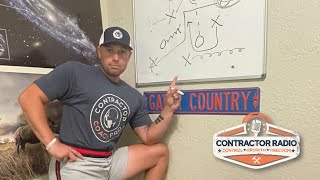
John Townsend argues sales leaders need to protect weekly practice time with a repeatable process. He recommends three rhythms: post-call debrief, pre-call strategy, and drills. Practice must be safe and improvement-focused, not punitive.
Chapters
Foreign. Hey everybody. Welcome to the Contractor Radio Podcast. I am your host today, John Townsend. Before we get cracking into a a an exciting topic, one that really one that really gets me going, that I'm passionate about and I've seen both sides of it when it's, when it's handled really well, when it hasn't been handled really well. As it and as it fits into our sales mindset series that we've been running. Before we get going on that, I want to hear a word from the folks that are making this podcast happen. Andersen Windows Want proof that Anderson 400 series windows are the windows contractors trust the most? Here are a few real quotes from contractors read by yours. Truth Eugene from Boston says 400 series are actually in all of my specifications. I've used them for many years. We've never had an issue, We've never had a callback. The window installers can't rave enough about how easy they are to install and backed by Anderson's warranty I feel as though that they are unbeatable. And Tom from St. Paul, Minnesota says the 400 series makes my job easy. Because of the window and durability, there is no question that it is a simpler, easier window to install. The real contractors like you have made Anderson 400 series their go to solution for window installation for good reason and shortened lead times mean the Andersen 400 series windows are available faster. Request a quote@andersenwindows.com today. Yes, big thank you to Andersen Windows. If you're a windows installer, especially right now in this crazy environment. I mean it's really a no brainer and we're just so thankful to have them as a continuing sponsor of the Contractor Radio Podcast. Also want to tell you if you have not already, please go ahead and follow us on Follow Contractor Radio. Subscribe to Contractor Radio but also follow the other folks who are making this possible. Contractor Coach Pro Follow us on social media, Facebook, LinkedIn, Instagram and furthermore the Contractor Community page. This is just the sole purpose of Contractor Coach Pro and the Contractor Community page is to serve you, to love, serve and care for you, the contractor and to bring you quality information, things that are going to challenge you, questions and then just resources that you can leverage to take control of your business, grow it at the pace that you want and achieve freedom. So if you have not done so already like us Follow us all the things on the Socials subscribe to our YouTube channel. Listen to all of our podcasts. Trust me, there are some golden stuff in our podcast in the Contractor Radio Podcast that you have likely skimmed over and haven't listened to. So I invite you, if you have not done so already, to please do that. Okay, so let's get moving. So today's. If you clicked on. You saw the picture describing today's video, you can. You. You. You've already learned today that we are talking about practice. We're talking about practice. I love that line. I was actually, I watched the Sports center the first. Not the actual. The. The press conference, but the Sports center the following day when Alan Iverson said that we talk. We're not talking about game, we're talking about practice. So that's what we're talking about today is practice. And again, the purpose of this sales mindset series, and this is, you know, shoot. This number four in the series, is to identify is to help bridge that gap between an owner and a salesperson. Like, there is. The understanding is, first of all, first off, recognizing the gap, recognizing the delta that exists up here and here. And if you. If you don't have video capability, I'm pointing to my head and pointing to my heart, all right? That there is a deficit between a difference between the mindset and the supportive belief systems of an owner and that of any salesperson, regardless of their skill or talent. There are just things that separate our ability to sell from as an owner from our ability to sell as a salesperson. We will never have the belief structure. We'll never have the lack of a need for approval, the ability to qualify, the ability to speak with such authority as we would if we were an owner. Right? So it's. It's asinine for us to expect that level of belief from a salesperson. Any salesperson that we bring on, even a sales leader that we bring on, like, they are not us, right? It's not their company. So we have to be careful. We have to understand that first off, but then find ways to support it. Like, okay, I see it, I get it. I identify it. Now, how do I overcome it? How do I help them overcome it? I got to accept it first, but then how do I help them overcome it? All right? And so we've gone through a couple. Couple cool scenarios. We talked about the need for approval. We talked about controlling emotions. We've talked about how you buy. How I typically buy something is how I allow somebody else to buy from me, and how that is different between an owner. Owners think of money differently than most of us. You just think about. Business owners think about. They see money in a different light than most of us. But today Regardless, we're talking about practice. And I think that this is one of the most overlooked. Oh, man, I almost. I botched this. Guys and gals. The most recent, most recent sales mindset program we did was calling the play. And I think that that might be the mo. The trickiest thing to do to get to. It's like the easiest thing to skip is calling a play, setting the expectations for what's about to happen. All throughout the sales process. Step number one, first call comes in. I set the expectations for what's about to happen. I call it. I kind of re everything back to sports. So I call it. Somebody's got a quarterback, this situation, and so I refer to it as calling the play. All right, so somebody's got a call to play. Well, today we're talking about practice. Let me tell you. Practice is something that I just think is. I just think is approached incorrectly a lot of times. Here's what we do know. We know that the best teams we know the biggest and the most profitable. Profitable and the best teams, they practice and they practice more than everybody and they practice better than everybody. I played pro baseball. I practiced. Oh, man, I practiced really hard. But I know this. I know the guys, but I never made it to the big leagues. And I know the guys that made it to the big leagues practice way harder than me. As hard as I practice, they're always outworking me. Okay. But they view practice differently from a different mindset. I think that when it comes to sales and when it comes to practice, we think of practice as a gotcha moment. We think of practice as discipline, like a disciplinary action. Like, you are not as good at this thing as you should be. And we're going to call you out in front of everybody or we're going to role play. And I'm just going to dissect every single thing that you do wrong and make you feel like an idiot. That's not what practice is about. So we got to find a way to get that to clear the air. Like, practice is never a gotcha moment. It can never be a gotcha moment. We are here for one reason and one reason only to get better at sales so that we can feel good and enjoy what we're doing. I tell you what. So I come from baseball, come from sports, pro sports. I've seen a lot of different sports, a lot of different pro sports athletes and seen them practice and train. And the second that practice becomes about something else other than practice, that's when we know we got a problem. Like, ok, in Sports. If you've ever had conditioning, conditioning is used as discipline. Like if you did something wrong, you'd go after you have to go run. But if practice ever became about, like avoiding conditioning, doing things right so that I don't have to get in trouble. Or building up self discipline, as if. I mean, listen. Building up self discipline, staying out of trouble. These are all good things. But here's the deal. I'm here to get repetitions to practice for one reason and one reason only. To get better at what it is I'm supposed to be doing. Like, there's a lot of time. There's a lot of time for disciplinary action. There's a lot of time for having tough conversations. There's a lot of time. But these precious hours that we have for practice. We cannot make practice about anything other than what it is about. It is about improving our skills. Getting better at what we are supposed to be professionals at. And that is that. And usually it is not until you get into a really professional environment where you actually see that. You see how precious practice time is. We have all the time in the world to have conversations about other things other than getting better at what we're supposed to be doing. All the time in the world. If you're a window installer, you deserve a simple choice. Andersen 400 series windows. They're the Windows contractors trust most. Based on a 2022 survey of U.S. contractors. Probably because they have fewer callbacks and extra peace of mind. And thanks to shortened lead times, they're available even faster. Make your go to Windows. Andersen 400 series. Request a quote@andersenwindows.com I need to breathe. I need a breather after that one. Sorry. I get passionate because I've seen that so many times. I'm just, you know, you see it all. You see it all the time. And you have to. So we have to objectively ask ourselves if we are this. That's a very, very big if. Like, if we are currently practicing, have we made practice about practice? Or has it become about something different? Does everybody at the pract feel connected and supported? Or is somebody there? Do they feel awkward? Do they feel like they're about to get caught? Like they're a fraud? Like they're about. They're about to be. It's about to show up that they're just not as good as everybody else? That's a crappy feeling. Let me tell you another thing about practice. We got to have something to practice on, right? So before you. Before you call practice, before you work on drills or whatever it is, and we'll talk a little bit about, you know, what are the different methods of how to practice if you don't currently practice, I'll give you some good ideas of how to start, where to start, where are some good places to start, some proven tools. But first off, you got to have something to practice. So you got to have a. You have to have something that you believe in, a process that you believe in, milestones in your. In your sales process that you believe in, or certain skills that you believe in, or questions or, you know, there's got to be a direction. There's got to be. There has to be things that we can point out and say, okay, we're working on this. If somebody on your team is sitting around questioning whether or not they're good enough, it means that they haven't practiced enough, and whose fault is that? It's a question that should be answered now. Fair enough. Again, you know, sorry to revert back to baseball, but I played, you know, I practiced a whole lot outside of when practice was going on. So there's that component. Like, I have to own that as athlete, as sales athlete, as sports athlete, I have to own the fact that I got to practice. I got to practice outside. But I've also, you know what? I got to make sure that I'm practicing the right things, and that's what it comes down to. So if I'm not out there, if I don't have the ability to practice the right things, whose responsibility is that to make sure that I am practicing the right things, That I have a system and I have a process that I believe in. I understand how to do it right. I understand the definition of winning. I am connected and I'm supported to a team. Who's responsible for that? It's the boss. It's the boss. Whoever's in charge of that, man, you are the one. You are the one responsible. If I don't know enough about our process, if I don't know what to practice, and as a result, now there comes a time when, you know, the onus is on me. When I've got to do, I got to put in the repetition, and that happens outside of scheduled practice. Got it? I got it. Trust me, I'll do it. As long as I know. As long as I know what I should be practicing, I'll practice whatever I got to do. It feels good, by the way. It feels good to practice. What you got. What you know you're supposed to be practicing when you know you're Practicing the right way, you're training the right way and you're doing it outside of practice. And you're sitting there thinking, I'm getting better than everybody else because they're not practicing like me. That just feels good. But the problem is that most people don't know what they're supposed to be practicing. That stinks. So you, first off, have to, before you begin practice, you have to have a process that you believe in. Do you have a. Do you have a sales process? Do you have a coaching process? Do you have milestones? Do you have a system that you believe gets the results that you are looking for? And that is repeatable and it is coachable. If you don't find one, there's a lot out there I recommend. Top rep. Hey, top rep rush coming up very soon. Don't want to put a time stamp on this, on this podcast, but top rep rush coming up in Philadelphia, August 23rd and 24th in Phil in Philadelphia, 2022. It's going to be sweet. Speaking of, I mean, what a. What a better place to help you find freedom in what you do than in Philadelphia. So top rep rush can be, I mean, a repeatable, scalable, proven sales system that you can believe in and you can coach to. So you get. So that is the first step. Find a process that you believe in that you can coach to. Because now, because now it is on me. It is like now my job is simply to communicate healthily what I believe in and what is going to get the results. And we practice and now we know what to practice, what to practice, what to practice. And now my folks know what they should be practicing outside of practice time. Yes. Talking about practice, not talking about game. So funny. So let's talk about a couple other things. You know, a couple of things that I need for a good practice. It needs to be scheduled. There needs to be a clear agenda. Like, I've got this system. So I have a system that I believe in things that I believe are going to get going to get the expected results as long as we train and practice and build up our skills the right way. That's why we're here and we've dedicated precious practice time to it. I've got to have a clear agenda. I got to have a clear start. I got to have a clear stop. If anybody else that's involved is responsible for bringing something to the meeting, they need to know that way ahead of time. This is who. Look, practice time is precious when I have got my coaches, I have got my teammates, and I have got the time and the equipment all available. It is precious. This is how I make my money. This is how I get better. It's how I feel good. Feel good about what I'm doing. You shouldn't walk away from practice feeling like crap. Walk away from practice feeling like you just got better. So clear agenda, including the start and the stop. Who else is responsible for anything? And then the anticipated drills, the anticipated topics. We're going to discuss the anticipated. I mean, yeah, what's going to happen here? What's going to happen? What can you expect as being a part of this? Everybody comes prepared. Everybody comes prepared. And now. So that's. So you've got. So let's just walk through this real quick. So you've got us. You've got a process. You got a system that you believe in. You have practice scheduled regularly. I recommend weekly minimum. And that practice that you schedule is very clear. It's very, very open. I mean, everybody sees it coming a mile away. It's very special time. We treat it as such. It has a perfect. We started, we start on time and we end on time every time we. Everybody knows who's responsible for showing up with what we have anticipated drills and topics that we're going to discuss. And so what are those. What are the things that we can discuss? What are the usual ways to have a really productive practice? I'll give you a couple. And I think this is universal. I mean, it's not like I'm some magician and I came up with the best way to practice. No, this is kind of just how we practice doing anything. You've seen it in sports. If you ever played sports, you show up for practice. This is usually the rhythm of that practice. Okay, so number one is what happened? What happened in a recent game or a recent sales conversation. I've heard this called the post call debrief. Like, I had a conversation. I had a sales appointment and this is what happened, whether it was good or whether it was bad. All right, so what happened? What happened in the game before? Where did we succeed? Where did we struggle? Right? And usually you take a look at and just in kind of a pro tip here. If you're a sales leader and you want to know how to practice that post call debrief. This is a really great way to start again. I'm assuming that you have a sales system and a process like top rep that you. The flight plan. Right. That you believe in and that you can coach to. I'm assuming that you already have that in place. So when we go with, okay, number the suggestion, number one, what happened? Kind of a post call debrief. We look at what a previous game film we take. We start at the end, we say, okay, how did that call end? How did that appointment end? And then you work your way backwards. You work your way backwards because usually right, right about there you run into an objection or a stall and a put off. And that's a great place to step in and start coaching. And you work your way all the way back until you feel like you've, you've done enough coaching or it's time to move on to the next person. Does that make sense? So what happened? What was looking at game film, what happened in our previous game, whether it went well or whether it went poorly, how did the call end? How did that appointment end? What happened, what was said? What did you say when they said this? Okay, well you're probably, it won't take you very long before you run into a really good coaching segment. Okay. In accordance with our process, we know that we find that our clients get the best results when anybody who cares about this is available. Right. Because inevitably they're going to have the, they're going to have questions and they're going to care about certain things. And I just want to make sure I do this the right way the first time. Does that make sense? Like what did they say when you said that? Oh, I didn't say that. Yeah. Okay. I didn't think so. Okay, so, so let's practice that. Let's role play that. Right. This is that safe place. You start at the end and go back to beginning. So that's one way what, what happened. Number two is what's going to happen. So talk about the previous games that we had and why we struggled. We're going to work on that. We're going to. Right. And now let's talk about the scouting report. What's going to happen? What do we see coming up? All right, you know, tomorrow we're playing Alabama and they got the all world quarterback. So we feel like we have a scouting report based on what we know about the. An upcoming event, an upcoming appointment. So in sales we're talking about what's going to happen. This is a pre call, pre call strategy. Let's formulate a strategy as we head into a call. Yes. Tomorrow I'm meeting with this. Maybe it's a commercial event. Maybe. So tomorrow I'm meeting with this property, property manager or I'm meeting with this building owner. I got him set up. We got 30 minutes of time. I called, right. I got 30 minutes of his time. I'm bringing him coffee and meeting him there at 8:30 in the morning. He's going to take time with me in his office. Great, great job. And now let's coach through what we, what we want to get out of that conversation. We don't have a crystal ball. Things happen. I don't know, maybe something, maybe the guy gets sick that day. We don't have a crystal ball. We can't predict exactly what's going to happen, but we can chase after a desired outcome. Make sense. So what happened? Looking at previous game film and what's going to happen, Our scouting report for the future game. For the game that's coming up. And then lastly, play and make believe. Make believe. What if? Okay, so this means just run a drill. We're just running a drill. When this happens. It's likely going to happen because it happened. We picked this drill on purpose because it's likely going to happen. It happens a lot. Let's just run through a drill. Let's run through a drill. Maybe it's, maybe it's handling a certain objection, you know, I need to talk to my brother. Or maybe it's maybe the people that you want to be there, you know, you're handling that very first phone call or you're calling to confirm the appointment and the decision makers aren't there. Right. Whatever it is. Or maybe you want to really challenge yourself and get. Challenge your qualifying skills. I love the. I used to call this drill the fire drill. And that literally meant that everything short of my house being on fire, I need somebody to come. I need somebody to come out here and take care of this right now. I'll pay, whatever. Like pretend that they are telling you they are trying as hard as they possibly can to get you out to their place, wherever it is. A homeowner, you know, or a property owner, they're trying as hard as they can to get you out to their place and you've still got to stay in the pocket and you got to ask them the good qualifying questions. You can't get, can't get happy years and get too emotional and fall for the tricks. The homeowner's tricks, doggone it. Anyway, that's a drill. That's a make believe drill that I like to, that I like to try out every once in a while. But there's all kinds of things you can come up with. The cool part is you guys can come up with this yourselves like you've Seen all the horror stories. You've seen what you typically run into, that's. That's unique to your team, your offering your value and your market. So you all can come up with the best practice scenarios. I can come in and give you a ton of them, but you will come up with the best practice scenarios because they are very applicable. You just have to. But I hope more than anything today you just realize that our practice time, we have to schedule it. We have to have something that we believe in that we can practice. And then we have got to protect it. And while we are there, it has got to be about nothing else. No other reason than just focus. I don't care if you are better at this than I am, and I don't care if I am better at this than you, this particular thing, than you are. Our job is to get better. Better. That's it. After practice, we can talk about what else, whatever else we want to. But while we're here, there's no discipline. This is getting better. There's. There. No idea is a bad idea. Say stuff and act stupid and sound stupid. Like, flex your muscles, get better, try stuff and don't. You can fall and not fail. Go for the extra base. That's what we used to do in baseball. You hit a single, go for second base, get thrown out. See what you're capable of doing. Because if you see what you're capable of doing, you're also going to see what you're not capable of doing and vice versa. See what you're not capable of doing. You'll see what you are capable of doing. You have to push the boundaries. You've got to create that safe place to make it happen. It starts with a process that you believe in. Starts with the process that you believe in. Starts with protecting that time with a clear agenda. All right? Clear clarity about what to expect and then having a plan for it. Having a plan like, okay, what happened? What? Number one, what happened? Number two, what's going to happen? Hey, let's talk about previous appointments. Number two, what's going to happen? Let's talk about appointments coming up. And then number three, hey, let's make believe a scenario. Let's play make believe. Let's have some fun. Well, look, I hope this helps. It's been a little bit talking about practice. Probably hear how passionate I am about it because I just know how valuable and I know how fun it is. I know that. I know what it feels like to look forward to practice, to look forward to role plays. And it's a great spot to be in. It's a great place to be in. So I'm going to challenge you all. Owners, sales leaders, you got to get, you aren't scared of practice because it just doesn't seem awkward to you. But we're talking about the deficits between your, your mindset and those of your salespeople. Got to get them there. You got to get them there And I hope that this information and this podcast helps give you some clarity around that. So big, big thanks again to our sponsor today, Anderson Windows. And if you have not already joined us or followed us on social media, Facebook, Instagram, YouTube, LinkedIn, listen, the contractor community page, there's a whole lot of stuff coming down the pipe that you're going to love and the sole purpose of it is to just love serving care for you. The contractor. Thank you. This is John Townsend, Contractor Radio Podcast. See you next time.










