Sales Strategy: “How to Win Jobs Without Dropping Your Price”
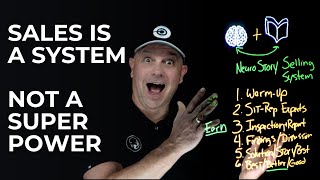
Jim Johnson’s YouTube training (Contractor Training Room) presents a sales framework for contractors arguing that sales is a system, not a superpower. He gives industry benchmarks (average close rates ~25–27%; better firms ~35%; retail ~50–63%; insurance restoration ~85%) and outlines how businesses should develop sales capability through stages (process → talk tracks → scripts → tools → metrics → leaders) matched to company growth stages. The core method is “NeuroStory selling,” a six-phase approach (warm up; sit-rep & expectations; inspection; findings/discussion; solution/story; transformational experience with best→better→good) that uses psychology and full-story presentations to increase premium sales and reduce cancellations. The video also points to training resources (Contractor Training Room platform, ContractorsAge AI, coaching).
Questions this video answers
About 25–27%.
Around 35%.
Insurance restoration: ~85%. Retail: ~50–53% (he also cited clients up to 63%).
Chapters
Hey there, heroes. Welcome to the contractor training room show where we teach how to grow and scale one of your businesses out there in the contracting world for free. That's just what we do. We want to help you really understand these pillars of your business and then the stages that your business go through, because it creates a matrix of what you should do and when you should do it. And today we're going to be talking about the sales pillar. And so my question to you is, is sales a superpower or a system? And I'm here to probably break a few myths today about that. And so it is not a superpower. It is a system. And this system, the idea behind it is that if you create a process that can be followed, you can train people to it and anybody can learn the skill to do it. As a matter of fact, some of the best salespeople I've ever had would probably define themselves as introverts. I've also had good extroverts. So that doesn't. That isn't the thing that defines who a good sales rep is. What defines who a good sales rep is, is somebody that has the desire, drive and will to get out there and go after it. They're hungry, but they have a process that allows them to be successful. After doing tons of studies on contractors across the nation, the average close rate is about 25 to 27%. And then the better companies tend to be in this 35% arena. During my time as a contractor, whenever we did insurance restoration type work, we were at 85%. And when we were in retail work, we were closing at about 53%. We've had clients that are closing as high as 63%. And that's because they develop a process and a system that can be trained and taught so that they can have success. So what do we want to get out of today? What. What am I going to deliver to you guys today so that you understand the value that's going to be part of our conversation today? And so I just want to give you a little list here. I think that'll be helpful. And so, number one, I want to make sure that you understand that sales systems evolve over time. In other words, they don't start out as being some amazing process and system and proprietary solution. When we're smaller in our businesses, we need to do certain things and then they evolve over time and everybody tries to do everything at once, which is why they don't do anything at all. Because it's complicated, it's hard. It's concepts that they may not know or understand. So we have to learn some of these things over time. The second thing that I'm going to deliver today is what is called neurostory selling and this idea of understanding psychology and storytelling to provide solutions that are stress free and get customers to buy from you at higher rates. So we're not in a pricing war with everybody else out there. We're going to talk about this neurostory system, we're going to talk about the six phases of that system. So it goes through six phases that have proven over and over and over again to be highly successful at closing deals. We're also going to talk about how to sell premium solutions. So few of us sell premium solutions. We tend to go out there with, and it's been taught for years and years the idea of good, better, best and stuff like that. We tend to say, hey, this is good and work our way up. We're going to talk about how to do that and do it the right way. And then finally we're going to talk about the shift that if you just made that shift here quickly in your business, you would be able to charge more for the things that you do and radically increase your close rates. So before I go any further, I just want to do a little reminder here of what it is that we're doing. Okay, so everybody's on the same page. For the last several weeks I've been doing a series on this thing called the Contractor's Blueprint. As a matter of fact, I wrote a whole book on it because it was something that was an epiphany that became clear to me as I started coaching. I thought I knew everything I needed to know, but I started to see holes and gaps and I started to realize that certain things had to happen at certain times. So there's these 12 pillars that are really important to our business. And we as contractors tend to focus on the last six that we call the operational pillars. That would be technology, marketing, sales, production, not so much on training and then finally recruiting, hiring and onboarding. But we don't focus as much time as we should on the foundational thing, business and leadership, finance, and knowing your numbers, your process and system, your HR and, and team performance and then your accountability. How do you hold people accountable? And so those things are all super important to our foundational side of our business. If we don't build that right and in sequence, we're going to have some troubles in our business. Why? You see people getting stuck in, growing and scaling their business the other Side of this thing that we're teaching is the contractor scaling matrix and that is these stages, okay? So these would be the stages that our businesses go through. We start out as a startup and we got to start with some basics. We call those the million dollar must. We have to create opportunities, sell those opportunities, produce and build them, collect them, and make sure that we make a profit on them. So we need to know some basics, but we need to do everything and every pillar. We just need to get those down and generate enough revenue that we can invest further in our business and start to grow it. And then what happens is we grow into these solopreneurs, these people that probably have some part time help, maybe a bookkeeper, maybe an office admin, maybe a production type person, but they're not full time. So you end up wearing all the hats. You're in charge of sales, you're in charge of admin, you're in charge of all of it. And it starts to be too much if you're creating any kind of volume. And so you decide, hey, I'm going to hire some people. Those first people that we hire are friends and family. That tends to be the case. We've been coaching for 13 years and we've seen this repetition over and over and over again. Brothers, sisters, aunts, uncles, best friends, things like that. We bring them into our organization. Most of us make a really serious mistake right there in bringing them on as partners. You really need to consider whether you're going to bring on a partner or not. Because it's like getting married. And just speaking from experience, whenever one of those goes bad, it's worse than getting a divorce. So you need to know that you're creating a lifetime relationship with somebody, or at least until you sell that business. And we go through that stage of our business and then we get serious, we start doing some things that are really important, processes and systems and things like that to grow and scale our business. Which allows us to hit this growth and scale where we start making everything repeatable, measurable, we're measuring metrics, we're refining and fine tuning, which allows us to then expand our business either within our market and other trades that are similar or outside of our market with new locations and all of those things. If you think about these pillars, there's a matrix that goes along with it and there's certain things that I need to do in each one of these stages until I get done and then I can start right back over again. Get everything done in these stages, but in order moving this way each time. Because if I try to recruit, hire an onboard before I build out all the other things that I need, my team that comes in is operating at a deficit. So this is the concept. If you want to watch the entire thing about that. It was the first video in our series. I invite you to go back, watch this entire series. And we have gone through already the first seven, make sure I'm right, eight phases of the, of the system all the way through to sales, which is where we are today. So I want to make sure that I stay on track here. I do use a little tool over here to allow me to stay on track with you guys. So first things first, let's talk about what needs to be done and when in our business. Okay. Here kind of prepared a little bit in advance. All right. So we can think of this as like stair steps in our business along those stages of our business. And so let's talk about the first step. And this is one of those myths that I think people really mess up whenever they're early in their business as a startup or solopreneur. They're just out doing the best they can. They are selling off of either some knowledge that they have of the trade that they do or their own personality, things like that, Relational sales, I see a lot of that. And then when they start to finally decide, hey, I'm going to do something about this, they start building out scripts and things like that. If they're going to hire anybody to bring somebody on, most of the time they're verbally teaching people or doing what's called ride along training. That's one of the biggest stumbling blocks for companies to scale and grow is if I have to do ride along training and train a guy that's right beside me, watching what I do every day, it takes a long time to bring that guy up to speed. So I want to kind of defeat that myth of what the first thing is that we have to do. And that first thing that we have to do is our process. What process does somebody go through from our first interaction until we're done with them and they're closed as one of our clients? We have to decide what that process is, the milestones in that process. Because if we don't know what the process is, how do we build a script for that? How do we describe that to somebody, how we do, how do we inform somebody, coach somebody, teach somebody, train somebody on the scripts if they don't understand the entire process? So process first. This is where we're probably starting to Develop this in those early stages. But as a startup, I'm trying to identify my sales process. As a solopreneur, I'm identifying my sales process, but I'm also starting to build the next thing that I need, which is my talk tracks. So talk tracks are different from scripts. Now, I going to guess that most of us as business owners don't have a whole lot of professional sales training, certification and coaching competency out there where we're a business person. We've sold things before, but we don't know how to teach it necessarily. And we have never developed and learned the psychology behind a sale. We haven't learned about building scripts and how they work. And so we just start to write out kind of what it is we say. And because it works for us, it's going to work for everybody else. Reality of it is it doesn't. It normally fits your personality, not necessarily the personality of the people that you're going to hire. So you want to think about talk tracks. So I built this process and in that process there's a talk track for each one of those things. Think of it as like an outline. I want to make sure I talk about this, this, this and this. In this order. This, this. At least they know what they're supposed to talk about as you start to bring people on board. Now we're going to graduate and get a little bit more refined because we've been doing some things on our side that I'm going to talk about in training to start building our own. Excuse me, our own skill sets. A little water. Our own skill sets. And so now we've learned, while we were developing all this back here, we've also learned how to build scripts. And so we start to script out the entire system. Exactly what we're doing along the way in the process, it's just so that when we're hiring friends and family bringing them on, they're actually helping us build this out as well. Because multiple brains are better than one. We start to develop these scripts. I highly suggest learning about script building, the psychology behind it and what you're doing with it. And if you are one of those people say, well, scripts suck and I hate those, so does everybody. But the reality is it sets a great foundation for your sales team that they can then, because they understand what it is they're supposed to be saying, how to say it and why they're saying it, they can start to make it their own over time. But we're constantly going to be measuring something. I'll talk about that in just a minute to ensure that they stay on track. So scripts are highly important to get people off the ground really quickly. So after scripts, we're going to start to focus on tools. So you don't need a whole bunch of tools back here. I mean, just, hey, seriously, I know I teach you this thing. This is our process. Here's our talk tracks, here's our scripts. And we can, we can do a fine job out there with a contract and a few pictures and some stuff like that. But now as we start to really get serious about our business, we're going to build out some tools, a presentation, a inspection report, all these cool things that allow our sales team to get an advantage over everybody else. And as you're growing and scaling and trying to grab more market share, you've got to get better than everybody else. So tools would be what you're working on whenever you get serious and, and getting more systematic about what you do. There's some rhythms in there too, but there's some rhythms to this as well that you need to be aware of. So next up on our list is metrics. KPIs key performance indicators. We've built this process. We got some talk tracks, scripts, and we got some tools and stuff in place. Now when we start going into the growth and scale side of our business and really getting after it, we need to measure everything, success rates and stuff like that, because this process is constantly evolving. You will never build a perfect process. You might build an idea when it works, ideally, but it can always improve. And those metrics are going to be what points out the things and areas in which we need to improve our sales process. Now, finally, the last thing that we've got to do is we have to develop leaders so that we can expand our business even further. We have to teach others. And you probably had some people back here as a sales manager and stuff like that. You, as you start to get into family and friends and, and you're getting serious stages, you might have put somebody in the lead of sales, but do they truly lead it or do you lead it and direct it? Truly leading it means they own it. You can literally say, go take care of this and get this done. Wipe your hands, check in on them once a week, and that's it. They're not coming to you for answers. They're solving problems on their own. They're coaching and training and teaching. And so we've got to get to that stage before we can actually expand because we won't have the time to Expand if we're over here working heavily on our sales process within our company. So that's what your growth looks like and the thing that you should be doing in each one of those. All right, so I want to make sure that we understand a little bit of what all this means right here. Okay. I talked a little bit about it. And so. And we're working on the basics here in process, but we're also working on the basics. With us, we're having to learn some things like how do I build a talk track, what does that look like, and what's the important components of it? I'm reading a lot. I'm watching youtubes and videos like the one you're watching today. And you're getting the basics down of not only how to build a process, but the next thing above it. Like, how do I build a great talk track so I can hand it to somebody and them do it well? And so we want to really get those basics down of sales. And so what are some of the basics of sales? There's a warmup, right? There's discovery, there is inspection solution selling. There's all these things that are the basics of what I have to do, and I got to get a good foundation for those things. So we're trying to keep it simple, though. So we want to make sure that each one of those things, we're learning the basics and it not some kind of advanced thing that is hard to do or that I'm not prepared to learn yet. If we don't build off a great foundation, we kind of struggle now in the next thing. We're starting to do milestones, right. So we start to put some milestones in place. Sorry about that. So we put some milestones in place. These milestones are the things, the steps that your sales process go through. We're going to talk about that today in the neuro story selling system and what that looks like and what you might learn from that today. And you want to be consistent with it. And then in this one, you're documenting, you're starting to write everything down. You're starting to put all of these things that you've created some frameworks for, and you're starting to document out exactly what we're going to be doing in each one so that we can communicate well not only to the people that we're hiring, but to our clients that we are trying to get to be our customers. And then here we're going to do what we call proprietary. We may start working on it back here, but when we start moving into growth and scale, we have got to gain an advantage in our market. And the way we do that is by creating a proprietary, proprietary system. It's unique to us. Nobody else sells what we do. And so if you think that you have a proprietary system because you sell a certain product or a certain manufacturer or brand, you're not because somebody else in your market can sell that same thing too. How do you become truly unique? We're going to talk about that in the phases of the neurostory selling system as well. And then you're going to, and you're probably thinking good, better, best. Right here we're going to talk about a little bit different approach to it than that. And here we're analyzing, analyzing the metrics to make adjustments and pull the right lever, make moves and refine and make things better. And then ultimately we're here to replicate how do I do this over and over again and make it a machine. So that's kind of what it looks like to move up the stages in sales and what it would look like if I was a business owner, how I would build out mine. And it's going to determine how fast I'm bringing people on, how fast I need to build this. If you're trying to go from 1 million to 10 million next year, you got a lot of work to do to build out all the way up into here into proprietary. So that gives you a little bit of idea there on how it looks over time. So let's talk about this, this neuro story selling system and how it applies to this right here, you're probably really starting to develop it back in here and then you're analyzing and replicating it. Get to where I want to. There we go. So if you think about the word neuro has to do with psychology, your brain, those type of things. Okay. And so we have to understand human behavior, psychology, body language, things like that. And if we understand those things and we, we have not just knowledge but deep understanding, we have some wisdom behind it that allows us to use that knowledge and wisdom throughout our sales process. And then we also have the idea of we'll do the best I can at drawing a book here, selling a story, when you put those two things together. And this story needs to be something. This is one of the biggest mistakes I see contractors make. They don't tell the whole story. They tell enough story to get something signed or some kind of commitment or something like that. And then everything goes haywire on lots of cancellations. People don't follow through, they say, I'm getting more estimates. There's a million different things that happen. And we end up losing all these things that we put hard work into getting this person into our ecosystem. And it's because they had confusion. I can tell you this right now. If you are getting the objection I need to think about it. It's because you're not telling the story, the full story. You're telling part of the story. You're telling the part of the story to where you're at today, not what it's going to look like through the entire experience. And so they can't clearly see what's happening from start to finish. They're only seeing to where you are today. And we have to understand the psychology behind that, which is why this is called neuro story selling. We, we connect these two things, the psychology and the storytelling to create a neuro story that has proven highly successful at increasing closing rates to consistently be in this 50% closing rate in retail. And if you do insurance work, 85% closing rate. If you inspect a home, you should close that person 50% of the time if you are in retail and 85% of the time if you're in. If you're doing insurance restoration work, which can give you a very high overall closing percentage, which optimizes and maximizes all those leads that you worked on in our last session. You created a bunch of opportunities with marking. And if you don't have a great system to do it with, you are not optimizing all of those leads. And you're saying we have bad leads. They're not quality leads. They're all these other things. When the reality is you haven't built a system that actually closes people. You're just winging it. You're shooting from the hip. So what does a neuro story system look like? What are the stages that it goes through? Just kind of move this up right here and we'll kind of talk about it and we'll do number one here. Number one. There we go is warm up. Now. This is nothing new, right? This is nothing that you didn't know before you hopped on today. But the reality is, it is the thing that we have to do before people want to hear your story. They want to tell you their story. That's how relationships are built. That's what warmups and building rapport is for, is to create a bond between you and the other person that is relational and that they actually go, hey, I kind of like this person. So that's the first step in a Nero story. You'll see all kinds of advice out there on that. But the reality is, as I'm walking up to a home, I'm looking for something else to talk about. Whenever I go up to that home, I'm looking for things about their family, their occupation. Recreation, motivation. It's an acronym that's been used for years called form. It's used in a lot of different selling systems. And I can remember the acronym as I walk up to the home and I go, do I see kids toys? Do I see a batting cage? Do I see an immaculate yard? Do I see fishing boats and stuff like that? I want to talk about that stuff first because that's what friends talk about. They don't talk about your roof or your siding or your fencing or whatever else it is that you're selling. They're wanting to talk about the thing that they're most proud of too. So you got to identify that. If their yard's immaculate and mowed and strips and all that other good stuff, man, talk about that yard, that guy is proud of it. If their landscaping is incredible, talk about that. If he's got a cool fishing boat or an atv, talk about that. Don't talk about something you're not knowledgeable about. If you're going to have input about it. If you're interested and want to learn about it, awesome. But then shut up and let them tell you everything there is to know about it. In other words, don't talk about baseball if you're not a baseball fan. It's that type of idea. You want to talk about the things where you have some similarities on, because now we can start to create that bond. And so our warmup is going to be in that aspect of things and shouldn't take very long once you get really practiced at it. So once you go through the warmup, the next thing you're going to do is what we call a sit rep and expectations. Okay? And so we need to understand the situation the other party's in and then set proper expectations for what we're going to do. And in order to understand that situation, we have to be a little bit of best description I can use for this as a detective, but a natural detective, one that's conversational. Not surveying. All right. Is another big mistake. I see out of a lot of companies, they're like this 20 question survey that they go through with homeowners and the homeowner, I'm being sold by a salesperson. Instead of knowing those 20 questions and interspersing them throughout our sales process at the right time, in the right place for their gravity. Because questions have gravity. There's soft questions that I can ask up front. Like Mr. Jones, have you had anybody look at your roof yet? That's a soft question. Yeah, I have had a couple of how to go for you And I can make it very conversational. Well, they did this, this and this. Did, did they check on this and this? Like I can start to say, hey, were they looking at these things as well? And start to separate myself from other folks and so I can ask a question on a question on a question. One of my favorite questions to ask is, Mr. Jones, when you're looking for a contractor, if you could wave a magic wand, how would the experience go for you? And they would tell me exactly everything I need to know to focus on in my presentation. They're telling me they're hot buttons. One of my other favorite questions is have, have you ever worked with a contractor before? Before? Most people have and they say yes and then we go, how was the experience? And most people's is not great because most contractors don't do what they need to do to create a world class experience. And so they're going to point out to you all the things that didn't go so great. And there you go again, hot buttons that you can focus on in your presentation. So that's something that I'm doing throughout this entire process. I'm adding gravity to the questions and getting a little bit deeper because I'm building the relationship with them throughout the process. So situation I need to understand the situation they're in. Is this a hail claim? Is it retail? Are you selling your house? There's all kinds of questions that you can ask. We actually have a whole download for these of the questions that you can ask. We call them objection defeating questions because what they do is they set you up for what they were going to object about to actually solve the problem before they can ever object. And then the next thing I'm going to do is I'm going to set expectations, the expectations of what I'm going to be doing there that day, this inspection. I'm going to give what they're going to get. After the inspection, we're going to have a conversation. I'm going to show them what their options are, that type of thing. I want to set those expectations up front because they clearly then understand what's going to happen and they will be willing to participate. They'll also tell you if they can't and if they can't, you have to make a decision. At that point, do you proceed or do you come back at a better time? Do you get the information that you need and then come back in a different time time? So those vary depending upon the situation. So the third thing that we're going to do, and this is the one where I think people kind of struggle sometimes, is the inspection. But you haven't talked much about this other than the expectations of what the inspection is going to be, what you're looking for, what, how you'll be taking pictures, things like that. You've set those expectations. But whenever you go and do it, what do you actually do? Is there an order and a process to it? Do you do the same thing every single time so it's repeatable? And then when you get done, do you have something to provide to them that's valuable? Because if you don't have anything valuable, why do I want you to inspect my room just to tell me it's damaged like everybody else does, to tell me there's a problem with it? You need to validate that to me, you need to prove it to me, and you need to do it professionally and separate yourself from everybody else. Now, I might not have a report early on as a startup and a solo, those type of things, but it's the things I'm working on as I start to build out my entire sales process. But I do need to perform a professional inspection. I probably have a checklist that I'm going to go through at least that, to make sure that I cover everything that I'm supposed to cover. Because this piece right here, this is where you earn the right to sell them whatever it is that you're selling them. If you don't do this well, you don't earn the right. And so one of the helpful things that you can do in this inspection to actually earn some of that authority and the right is, is to do a quick walk around with that homeowner to point out things that you see and have them point out things that they see that gets them involved in the process. It's very engaging. More time to create more relationship up here, ask more questions, and then show your expert abilities of naming off the different things and the things that they might be concerned about, using terminology that they might not be used to, and then explaining what that terminology is. And they start to go, wait a minute, I thought this guy was a sales guy. He's an actual contractor. He knows what he's talking about. And this is where I start to earn the right to their business because they don't want a salesperson doing their project. They want a contractor doing their project. So the next step after inspection is what we call findings or discussion. And so this is where you create the need for what it is that they need to have done. Okay, you are going to go over your findings, you're going to go over all the pictures and all the documentation, the measurements, your report, everything like that, and go over it in detail. The reason you do that is because it creates confusion and complication. It goes. There's a lot of stuff here and I don't want to do that. And it looks like this guy knows what he's doing. I need to hire him. And so that's why you want to go through it in detail. And not to create fear, but to create clarity. That's what we're looking for. We're trying to create clarity that, hey, that guy knows what he's doing and I need him. I don't just want him, I need him. And that's what happens in this findings and discussion aspect of things. Which brings us to the next thing. And this is where we're concentrating on our solution. And really the story, the story of what this experience is going to be like. You're going to be going through, hey, it looks like we have a problem here. Here's the options on what we need to do, here's the products. We go through and demo some amazing products. Products. And then now that we have some products figured out, let's talk about what this is going to look like when we do the work, how we're going to order materials and notify you, give you a handout, how we're going to protect your home whenever it's workday, how we're going to set up for things, how we're going to stay safe, how we're going to install it perfectly according to our amazing system, how we're going to clean up afterwards with a white glove type treatment, how we're going to do a final inspection to ensure that everything was installed not just to manufacturer specs and building codes, but to our heist standards, because that's what you expect as a homeowner. And then when we get all done with that, we're going to provide you with an invoice. We're going to get all your final paperwork to you whenever that invoice is paid. So at this point, I've told the whole story, like from beginning to end, exactly what's going to happen even after I leave here today. So they get really clear. We're talking about how the roof gets put together, components. We're using what makes our system unique and different, what makes me and my company unique and different. And so we're going to tell this story in detail and yes. Does it take a little more time? It does, but I would rather talk to five people and close three of them than you talk to 10 people and close two of them. That's the thing that's important to me is to make every experience a quality experience. Because the person I'm most likely to be able to close is the one sitting right in front of me. I already have a relationship with them. I'm not worried about the next person. I'll worry about them when this one is done. So solution and story and then the next thing that we're going to do. And one thing I want to point out in this solution story, at the entire time you're selling the best, you're not selling contractor grade or standard or basic or a 30 year shingle. If you're in roofing or the basic stuff, you're selling the best thing. And you set that up as like, hey, Mr. Jones, if money wasn't an object of all these things that I've just showed you, which one would be the best one for you? That one right there. I really like that. Okay, great. And we got a product figure out. Now here's our amazing system and all the cool stuff about it. Which version of our system do you like better? This one or this one? That's a better and a best. I think I will that one because you had all the cool stuff in it. The better one doesn't I? You know, money's not an object. I want that one. And that's how we all buy. That's the psychology of it. I mean, it's super simple. Just think about yourself going and buying just about anything. I always use the car thing, but TVs and computers, whatever. When you walk into that store or that car lot, you don't go to the cheapest, crappiest vehicle in the parking lot. You go to the one sitting on the stand or up underneath the COVID that's all cool and awesome looking. And you go up and you look at it like, man, this thing's amazing. It's wonderful. It's awesome because it's the best one they got. And they put it there for a reason, so you'll notice it. And then you go over and you look at the sticker price and you get, have a heart attack, fall over on the ground, they pick you back up and they're like, hey, looks like we're reaching a little out of our budget but we got this. You'd have to give up a few things but man, it's still great. And so I'm working down instead of up. I'm working from the best thing and then I'm giving up things to get to something that's in between, that fits the value and budget I'm willing to spend. So that's how this solution story works. And this is the best. And so what I just described is number six there and I'll move it up a little bit so everybody can see it. Number six is this transformational experience, this thing that we're going to have. Not a good, better, best, best, better, good options. So we've been talking about the best the entire time. So I'm going to show them here. You, this is what all you chose. These are all things. I didn't do it. You did it. You chose all these things. Here they are. They're going to have a heart attack. And I want to say, okay, let's what are we willing to give up and get them more into the thing that they're probably going to want the most anyway, which is this better system than what they were planning on spending but much better than anybody else that's out there. And they can't compare apples to apples. Ours is unique and different and when we get to this position in our company we can start to dominate our market. So this is what the neuro story selling system looks like. A warm up, sit rep and expectations inspection, adding in a report, findings and discussion, solutions story where we're talking about everything that's going to happen after today and then our best, better, good approach. And most of my companies, they here, here's the thing you picked. Oh, what do you want to take off? You want to take that? Off that, off that. Okay, so that leaves us with this. This is the one you want? Yes. Would you like to pay a check or would you prefer to finance it? And we want to give options like that. What, what are we creating that makes us different than everybody else? And so what you're creating for this homeowner is a world class experience. But it's not just them. And I want to make sure that you understand that this world class experience that you have sold out there in the field has a promise to it. You're making a promise that this is what they can expect from you. They've signed and said they're going to spend a lot of money with you. And it creates a promise that you have to keep. And in order for you to keep it well, you have to communicate as a sales team to production exactly what's expected. That would include not only just the project itself and the details on all that project, but the special instructions, where to put materials, any kind of special circumstances that this homeowner may have. Do they have pets? Is there a school bus that has to get to the, to the house? What are, what's going on with that place? This is why you ask all those questions and you do a great job of it. If you create this world class experience in the sales process, you have to deliver on it. And so next week I'm going to be talking about what that looks like. That handoff from sales to production and creating and fulfilling and keeping the promise on that world class experience. We call it the promise keeper production system. And exactly what we need to do. So if you're looking to build any of this stuff, you need some help with any of it, we got a couple of different options and I want to make sure that those are available to you. We'll just bring it all up right here. There we go. I think that's on the screen. There we go. And my OCD forces me to erase anything right there. And so what are my options? I have the do it yourself model where you can chat with me virtually through our AI platform called contractorsage AI. You can just go put that in to the web if you want to and find it. And it's anything and everything that we've ever coached on, taught everything about this blueprint, my books in it, the scaling matrix is in it, everything, every tool, everything that we've ever done, every coaching call that we've ever done. And if you give it the right context when you come in, I'm a salesperson and these are my goals and this is what I'm trying to do. This is how long I've been doing it. This is what I already know. These are the things I'd like to learn. Then it's going to prompt you accordingly to build on those skills and get really great at becoming a professional salesperson. Because in our industry it's required, it's required to be a professional salesperson with technology, the tools and everything that's out there these days. It has changed the game for us as salespeople and we don't have technology, a high performing, top level skilled game. We're going to get beat. So that's kind of do it yourself model. Now, you're one of those companies that said in the friends and family or the getting serious stage is usually where we tend to work with you guys a lot because there's a lot of nuance and belief and your special circumstance. You need something custom. You need to guide somebody to help you through it, handhold you. Building all the tools and everything with templates and stuff that makes it fast. This is where you might want to consider R1 on one coaching option and the best way to determine if that's the right fit for you. Click that QR code right there or go to our website and click on assessments. Either one of those two things works and take the contractor assessment. It's pretty long. It's going to take you 20 minutes. But what it does, it takes out all the questions we'd have to ask you on a coaching call to help you, and it gets them answered, tells us what stage you're in, what you've got done, what you haven't gotten done, so that we can actually coach you on the next two or three things that you need to do in your business. In other words, it's not a sales pitch. You're going to have. You're going to have a real coaching call. If you like coaching and you think, hey, this is great and I really need somebody to walk me through this, hold my hand, help me build all the tools and all that other good stuff, great, we'd love to work with you. If it wasn't the right fit for you, that's fine, too. At least we helped you that day because that has to do with all of our core values. We're here to love, serve and care for an industry that's been really good to us and we want to give back. And if we care enough to willingly serve you guys, you'll know that we love you. Whether that's as a client or somebody just getting some help and being able to move forward with their business. So that's Contractor Training Room. That's our show for today. We're going to open it up for some questions right now because I have a feeling with the economy, the market and things are way they're going right now, some of us might be struggling out there in sales. That's what I keep hearing. And so let's talk about some of those questions. Brayden, we got people online that, hey, feel free. Oh, okay. That's a great question. The question is, what podcast or book? As far as podcasts go, We've got one that's called Contractor Radio. You can go and listen that. We talk sales in there quite a bit. There's a lot of conversation about that. Adam Binsman also has a really good podcast out there if you follow him. He actually worked here for about nine months, so he learned a lot of what we do and he's out there sharing it as a sales coach. So those would be a couple of really good ones from a sales perspective. That's in our industry, outside of our industry. Anything that you can find from guys like Zig Ziglar, that's old school. That goes way back in the day. That's where I started out. Learning those foundational principles are incredible. Andrew Carnegie is also really good. Those are two great, like early on, foundational, like there's nothing new there. That like that's how you build foundation. As far as things more recent, there's a guy out there, his name is Jeffrey Gittamer. He is really strong. You can follow Chuck Toki. Chuck Toki was sales coach here for a couple of years. We actually helped him build Top Rep. You'll see the Top Rep philosophy in this Nero Story selling system. He's a fantastic follower and he puts out lots of content all the time. And if you haven't been to Top Rep, you should go. Top Rep is where we put you on the hot seat. We teach it to you and and then you actually are going to role play it with others from other companies, all in this chase to win the title belt. It's really cool system and because you're under that kind of pressure, you learn it and retain it longer. So books, how to Win Friends and Influence People. Probably one of the best books I've ever read in my life. Jeffrey Gittamer's Little Red Book of Sales is solid. There's a book out there, 101 Objections is a really great one. The what is the. What's the one? It's by Og Mandino, the world's greatest salesperson. It's a great book. It's more of a storytelling situation, but if you really look at what's happening in there, it talks exactly about what's happening in that process. So those would be some of the ones that I would suggest right off the bat. Obviously anything by Zig Ziglar. Brian Tracy is also really good. Tom Hopkins, those are all people that come to mind for me. Any other questions? That is a great question. Oh, one more Sandler sales system. Go learn that one too. And go learn them all. Don't just get on one and go, that guy's God's gift to the deal. Go. Learn them all you can. And you can find a lot of that information for free. If you're looking to get a little bit more in depth, you can actually go to our platform. It's called Contractor Training Room, where we have hundreds of hours on marketing and sales built for sales reps, how to create your own opportunities and self generate opportunities and then how to close them. We actually have this whole framework inside of there and the talk tracks, the scripts, everything you need. So that might be an option for you as well is the Contractor Training Room, and it's on the school platform. And we'll send that out with the follow up on the replay on this.










