Standards & Accountability Strategy: “Getting Your Team to Perform Without Micromanaging”
Jim Johnson walks through a three-step system for getting team performance: define standards so expectations are measurable, coach to them with regular check-ins, and enforce them calmly and consistently. He shows how this changes depending on whether you're in startup or expansion mode.
Chapters
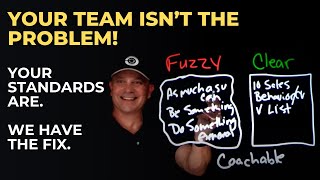
Hey, everybody. Welcome to the contractor training room show. My name is Jim Josin, and we are going to talk standards with accountability today. This is the, literally the superpower for a leader. And we're going to talk about three things that you must do to pull this off in a way where your best performers want to be a part of it and your poor performers want to get out of it and make it easy for you and make it one of those things that just naturally happens mechanically. It's one of the biggest things that we struggle with as contractors. So to give you a little bit of an idea of what we're going to do and what we're going to go over today, let's just kind of give a bit of a diagram for you. I want you to think of your standards as something along these lines right here. Right here. And those would be assumed standards. So us as leaders, we tend to assume that people know what they're supposed to do. We've talked about it before. Hey, you should sell this much. And all the things that we do, like, hey, just get the bookkeeping done. These assume standards that we expect things to. That we expect that people just know, like, hey, you should be doing these things. And then we have. On the other side of things, we have this here. And those would actually be your clear standards. Those are like, everybody knows they're very specific. There is no question about it. They're clear. And the thing that lives in between these two is where most of us as contractors live, this place called the chaos zone. A lot of us as leaders, thinking everybody knows what they're supposed to do, hoping that it's clear with them and realizing that it's not, because everything's very chaotic. And so what I'm going to do today with you guys is I'm going to give you three steps, three very clear steps. It looks something like this. Think of this as stepping stones. You have these steps that we've got to take. And those steps are we have to define, we have to coach, and we have to enforce. And in today's talk and show, we're going to go through each one of those, and then what it brings you at the end, this thing that you're all searching for as leaders and owners and wanting people to do what you need them to do. We're going to bring that in at the end and get it really clear about how you're going to get the performance that you want. So let's talk a little bit about what it looks like to do this. But before I do. I gotta bring a bit of refresher to what's happening right here. For those of you that haven't seen any of the other shows and don't really know what's going on, you get, hey, we're talking about standards and accountability and that they're important. But where does this all come from? Where does it fall into all the things that we need to do as a contractor? So let's bring this up right over here. And this is what we've been working on for the last several weeks in this series. It's called the Contractor's Blueprint. And this blueprint has 12 pillars. And those 12 pillars are built on a slab, and that slab is built on solid rock. Your guiding principles, these are your personal guiding principles that everything else is built off of. If they're compromised, everything's compromised. If they're ethical, moral and awesome, you can have a long standing, great, amazing business. And then when we're a startup, we just got some simple things we got to do. We gotta learn how to create opportunities, sell them, build them, collect them, make sure that we're profitable. That's really about what we have to do to generate enough revenue to start moving into the next stages of our business, which is where this scaling matrix that we call the contractor scaling matrix or growth matrix comes into play. There's five different stages that we go through after startup. We're solo, where we're wearing all the hats, we are an entrepreneur, we got friends and family. We start to become a real business where we become serious about what we're doing. We've always been a business, but we're actually getting serious now, turning into an actual business. And then we have growth. This is where we start to scale and grow our businesses and we start to build leaders and we become owners, true owners. We've done an owner this whole time. True owners have leaders that lead for them and then expansion. This business that now we have done it so well, we can repeat it and go do it in a new location or do it in another niche in our market. So that's the levels or stages that we go through as a contractor. But these 12 things over here, they're very important that we do them in sequence and in the right order. And so what I mean by that is, as you're looking at this scaling matrix, there's certain things that have to be done well. I need to go through them in sequence. I need to start here and go there. And once I get all this done, then I can move up and go from here to here and here to there. And so each one of those pillars are leadership, culture, process, team performance, or what you might call hr. We don't think people are disposable, so we want them to perform. Then we have finance and numbers, which we did last Tuesday. And then today we have accountability. That's the foundational backbone of your business. Those six pillars, you have an operational backbone we're going to start talking about in the next part of our series where we start talking about technology, marketing, sales, production, getting things built, training, and then recruiting, hiring, hiring and onboarding, which is all the candy stuff you guys want to talk about and do all the time. But if you don't put these in first in sequence, you're exploding your business. So this is the concept that we're talking about. If you want to go back to our very first episode in this series, you can get the full concept and exactly how it all works. But today we are talking about one specific one of these pillars and what you might need to do based on your stage next in that pillar. And this particular pillar is accountability, which means that I've gotten everything else in my foundational backbone solid. I've learned the skills to lead well at this stage. I've built a culture that's right for this stage. I have installed processes that are the right amount of processes at this stage. I've put in the KPI and what I'm looking for out of people so started to set some performance standards. Okay, so. And we're going to talk about how to align those, how these line up, because we have culture and then we have this team performance thing, and then we have accountability. They all are very similar, but they're actually aligned with each other. We'll bring it all together today, and then our finance, and then now let's go ahead and hold people accountable. So all this stuff that we did, how do we do that? So that's where we're at. My promise to you is that we're going to go ahead and get this defined coaching force in place. At the end of it, you're going to learn something about how to get people to do what you want them to do and willingly. And if they can't, they'll exit on their own. We don't have to get into this uncomfortable place of firing people because reality is most of you, you're big teddy bears, you would rather not. You want to be kind and nice and they're going to make it and they got a chance. And all this other stuff. And if you don't set standards, they're going to be around forever. And that's not you doing the right thing by them. It's actually you holding them back from their true calling. What it is they could actually be good at, you're holding them back by allowing them to do something they're poor at. So you either got to put them in a different seat on the bus for you, or you got to ask them to get off the bus. Or if you do it really well and you put in the right accountability measures, they'll raise their hand and say, hey, can I get off the bus, please? Sure. That'll be great. Find somebody else that wants to ride this track with us. That's our. That's our talk today. That's what we're going to get. Go over. And so we actually have three steps to this. I keep my notes over here on the side so I can stay on track. And so let's go ahead and get started with those steps that we need to do. Grab that. And so step one is we got to define things. So we talked about that. Right over here, we got to define some things. You'll notice those are a little different. Right. And when we're in the early stages of growth of our businesses, those startups, solos, the friends and family. When we're asking about standards, we're kind of fuzzy. We're assuming that they're going to do what it is that we need them to do because we were willing to do it. Why wouldn't they be willing to do it? And so think of that as your fuzzy. These are fuzzy. And then over here we have our clear. So I got fuzzy and clear. If you're colorblind out there, we just learned this today. If you're colorblind out there, they look the same. That one's red, this one's green. So just so you know, fuzzy is red, clear is green. Now, what does a fuzzy standard look like? And I'll share a story with you guys, because when I was putting this together, it kind of reminded me of the fuzzy standard. I went to work in this industry and I went through training and the whole bit, I was at the end of the training and went, hey, I got a question for you. How much are we supposed to sell? Now you guys are listening in out there. You probably have a response to that. I'd love to hear it at the end. And I want to set a little bit of a tone for you right now as I'm getting into this. Make sure that you write down two or three questions. Okay, Write down two or three questions that may be really important to you to get answered at the end of this, because I'm going to hang out for a few minutes and answer some questions about setting standards and holding people accountable and how they align to your culture. And really, I'll go as deep as you want to get deep with it. So a couple of questions. The only thing is, I want you to write two or three takeaways as you go through this. The Golden Nugget. You learned the thing that was important, challenging thing, whatever it may be. I want you to get those written down so that we can share those at the end and help everybody get better. All right? So I want you to just kind of think for a second what some fuzzy standards are, But I'm going to give you some of the ones that I've been given as fuzzy standards. Here's the first fuzzy standard. How much am I supposed to sell? As much as you can. That's a fuzzy standard. As much as you can. How many hours am I supposed to work? As much as possible. Another fuzzy standard. How profitable do I need to make the job? As profitable as possible. That's another fuzzy standard. How am I supposed to deliver in production? Like, what's the experience supposed to look like to a homeowner? It's gotta be professional. It's gotta be an awesome client experience. Those are fuzzy standards. So this be something or do something general. Just a general thing. Do great. That's a fuzzy standard. Hey, come be great. Come be great with us. Those are fuzzy standards. So let's talk about some clear standards. Before I add on to anything here. Once you kind of think in your head, just what's a really clear standard? Something that's like, absolutely clear to somebody. So I will give you an example. Sales guys, it's easy. Like, you need to make 10 sales every month. That's a clear standard. There's no if, ands or buts about it. That's the standard. Got to hit it. If you don't, can't be a part of this team. We have high performers. We have A plus players, and this is our standard. Funny thing about it, when you share standards and what they are to somebody coming to work for you, especially if they haven't been in our industry before, you go, okay. They have no preconceived notion. They have no idea. It's like, okay, that must be what we can do. So I actually go and do it. So it's shocking. I've had two different situations with this where I had one company that could not believe that anybody could sell more than one job a week. Just absolutely couldn't believe it. I convince them, I'd show them. I'd be like, hey, man, that is not very high standard. I just don't think anybody can do more than that. And I haven't seen it, and I haven't been able to do it. And like all this, like visas and excuses. So that was his standard. One a week for a month. At least he had a standard. Right. So it's better than no standard. But it held him back. I have another company, their standard. You guys will love this. Five a week, every week. I've had other companies. There are 10 appointments every week. 10 appointments every week. 5 sales every week. That's 20 sales a month. 20 times 20,000 is $400,000 in sales. Do some math on that of what that looks like. So those are very clear standards, behavior. And this is according to your very clear and documented and shared. Made visible and talked about often core values. So this would be your core values. And they're clear. They're written down and documented. What are some other clear standards that might be really important to you? How about a check list? Every time you do an inspection, I need you to do these things as a standard. The. The fuzzy standard. Every time you do an inspection, I want you to take a bunch of pictures. That's a fuzzy standard. I want you to take a lot of pictures. That's a fuzzy standard. I want you to take 10 pictures of every slope of a roof. I want you to take 10 pictures of every elevation of a job. I want you to take them in this way. I want you to take the elevation. I want you to take a picture of the thing that might be damaged or deficient. And then I want you to take a picture of the actual deficiency. Exactly like that. Every single time. That's a standard, and it's a really clear one. So we've got to get clear about those things. Hopefully everybody's tracking with me on the difference. So that's. This is the define part of things. The other thing you have to be really aware of whenever it comes to setting these standards, if they're not clear, they're not coachable. So can I coach somebody to sell 10 sales? Yes. Can I coach somebody how to behave according to our core values? Yeah. Hey, that didn't seem real honest, man. Like, it seems like that was a little out of line for us. Let's talk about what we can do to improve on that and how that might improve not only your character, but be in a better alignment with what we're trying to accomplish with our clients. Hey, that checklist, you did it pretty well, but you missed this and this. Let's. Let's work. How can we make that better? What can we do to make that so that each one of those is coachable? This as much as you can. Hey, man, you're not selling all that much. That's okay. Because it was as much as you can. That's not coachable. So, you know, you don't have a clear standard if it's not all right. We don't want vagueness that creates fuzziness. And that's why you wonder why people don't do what they need to do. Because if you create clarity, like, this is my standard and they're falling short, they're going to come to you. They're going, hey, whoa, I'm not hitting it like, I'm falling behind. Can I get some help maybe? And you can actually promote out to them. Hey, are we on track? How are you going to achieve your standard this week and have some communication on? This is why it's the superpower. This is why. This is the absolute superpower of a leader. Getting expectations done and actually starting to make it predictable. So let's talk about step two. How do we. How do we, like, coach this standard? Okay, we'll just keep working our way down here. So there's a bridge, right? There's a bridge between a couple of different things. And so this bridge, what it connects is Move it over just a little bit. Yeah, right here. Let's get some color to it, though. It connects your understanding and their understanding. That's on this side of the bridge. We're over here living in that side. It's going to connect that to execution. There we go. So it's connecting. This bridge connects these two things. Understand what the standard is, and we actually have to have it happen. It needs to be executed. There's a thing that lives in between, and that thing that lives in between is coaching. And we've used this word a ton as we've gone through this. Thankfully, now I know how to spell the word because I've used it so much. But coaching rhythm and this idea of running a business, we talk about sequences doing things in the right order. We talk about stages and growing through them. Those are rhythms that we need to follow and be aware of. When we have a coaching rhythm that, hey, we've got understanding over here. And we need execution over there. And in between is where I live as a leader with my coaching rhythm. There are certain things that we need to do at various stages. Coaching at a solo level is not even necessary. You got a couple of people, it's like minimal, if anything, it's like when you need it, right? That's the rhythm. But as you move into friends and family, that's got to be more consistent. And so we're going to start doing things maybe once a week or once every couple of weeks, or maybe even as little as once a month. But there's a rhythm to it. And it's not just because we have to. It's because we know that we need to. We want to try to avoid that. Oh, there's a big mess up. Let's start coaching. We want to coach and prevent the big mess up, right? So if you can't some hold somebody accountable to something they've never been equipped for, how do you expect them to actually even execute it? You say, hey, I want you to achieve 10 sales a month. If you haven't coached them to achieve 10 sales a month, how can you possibly expect it? How can that actually happen? And if you go all the way back to our leadership, when we talked about the super skill, okay, this is a superpower, we talked about the super skill for leaders was connection. And you had to engage people in a vision. You had to educate them. This is the educator, this is the coaching. This is where coaching comes in. So all these things tie together. They are harmonious between each other. That creates an amazing business. So we're going to connect understanding through coaching, rhythm to execution. This is where 90% of all the conflict that you have in your business goes away. It will end if you do this well. So let's move forward one more time in our steps. So we've defined, this is what the standards are. We've made sure they understand them. Now we've set up a plan for a rhythm to coach them on it. Now we have to enforce it. And so there are. When we don't get something done that we're supposed to do, what is, what do we call that? What happens? Does anybody just not care? Well, if you don't have standards, you don't care. Let's apathetic, okay? He didn't sell as many as I'd like him to, but he sold as much as he could, so we're good. That's a fuzzy standard. And there was no coaching involved and there was no expectations set for him. And these Are what it is. Set the standard. Here's the expectation. We expect you to do it. Here's the coaching you're going to get. If we do that really, really well, we start to enforce this thing. Because if we don't enforce it, then they're not believable. We just said a bunch of words that mean nothing. Okay, we set a bunch of standards and expectations. We want you to do this, but we don't hold people accountable and enforce it. They're meaningless. Why would you even set them in the first place? It's the hardest thing for us to do is to say what they are. Provide the coaching, enforce it. And people fall short and go, hey, this doesn't seem like this is a good fit for you. We have another option over here. Maybe, or maybe this just isn't your calling. It's time to find another spot. But if we put those things in right, we put them in well, like, hey, I'm not making 10 sales a week. And I know that's the expectation after being here for 45 days. And I need to go talk and get some help. I need to go get. And I'm still not hitting it. Hey, man, I know this is the standard everybody else is hitting. I see it happening around me. I just for whatever reason don't seem cut out for it. Here's my stuff, here's my iPad, here's my shirt, here's all my things. I got to go find a different thing to do. And so they self regulate out of your situation. But how do you get that done? Well, with your enforcement, Because I see one kind of enforcement most of the time and then I see the really good enforcement rarely. So let's talk about what really good enforcement and step three of this really looks like. And so here on one side we have red color. Here we have what you call punitive. And then here on this other side we have professional. I'm just going to write pro for now. This is the two different types of enforcement. I can have punitive enforcement and I can have professional enjoyment enforcement. Which type of enforcement do you do? I'm going to just let that sit for a second. But you really kind of like think about that for a second. Do I even know what the word punitive means? Think about punishment. Okay. Or professional. And so punitive, what you're relying on there and what's happening in a punitive form. If you are emotional when something happens. Hey, man, Jesus, I told you like we gotta get 10 inspections every week. Are you kidding me? How can you not possibly get 10 inspections every single week. That's emotional. Hey, I just had this homework call in and you didn't follow up with them. Damn it, you're fired. That's emotional. We've got to be emotionally intelligent in what we do. And then we have to actually ask ourselves if that homeowner called in with that problem, was it actually me that caused the problem because I didn't coach the guy well. So emotional and then unpredictable. These are punitive. One week it's okay, then next week it's not. In other words, hey, last week I said to do this, this week I say to do that when they got to be consistent. Unpredictability is a lack of consistency. And when people aren't in a consistent situation that they know this is what they need to do. And you are unpredictable because you say, hey, we need two sales a week. And then next week you say, man, I need you to do three this week. That's unpredictable. I'll give you another unpredictable and we'll do this one on. On behavior. A job comes through. You happen to be an insurance restoration contractor. And it is a fatty is like they put everything in it and our profit is outrageous. And the reason it's outrageous is because they had a miscalculation that more squares in there than what it's going to take to do the job. And you go, man, awesome, Great job. Let's go do it. And you do it. Okay. And then the next week, one of your guys says, hey, this homeowner, I know we only charge this much for a solar fan, but they were willing to pay this much for a solar fan, so I charged it to them. What are you doing, man? Don't you know our core values? Our core values are to be honest. Let me walk you over the sign. This is integrity. This is who we are. This is what we're about. Oh, wait a minute. Like just last week this out and they don't say it to you, but you're unpredictable, you're irrational. So that's what these two are right here. And then the last one is fear based. Fear based enforcement. Oh, my God. We're gonna run up is. Let's go. We gotta get to work. That's when we start like jumping on people because, my God, my cash flow is hurting and we're not getting enough. So. Or this idea that I want more out of somebody than when I told them. And we were off base because it was fuzzy. Everything's fear based and that's punitive. Nobody wants to work in those type of situations. And I guarantee you, if you're dealing with turnover, it's very likely that you're a punitive enforcement leader. So what does it look like to be a pro enforcement leader? How do we enforce like a pro? Well, number one, we are calm. Hey, man. Just had a homeowner call in about this situation. They had asked you to call them back at this day, and this time, can you help me understand why that call wouldn't be made? Yeah. My wife called me. My son was sick. She couldn't do it because she's at home with the baby. I needed to go pick him up from the nurse's office, and I got hung up longer, and it distracted me. I messed up. I'll call him right now. Awesome. That's because you handled it calmly instead of the emotional guy. That dude's not even telling you what happened. He's just angry with you right now because you didn't even ask or care enough to understand. So that's how a pro would handle the situation. He would be calm. He would be consistent. He's not unpredictable. He's consistent. If there's one thing I want to know from my leader, that is that he's consistent. That, hey, you say this is what I need to do, I go do it. We're. We're good. And if I go do it really well and you tell me I need to do more, I'm going to have a problem with you. You said this is what you want. I did it, and I did a little more all on my own. And now you want even more from me to me. That's inconsistent. You say you want this, but you're actually trying to get me to do that. It's inconsistency, and then finally predictable. I know without a shadow of a doubt what that guy wants out of me, and I know exactly what's going to happen when I do it or I don't do it. If I do it, he's going to high five me, swap me on the button, tell me I'm amazing. If I don't do it, he's going to sit down with me. We're going to figure out a performance improvement plan, and if I can't get through that, he's going to let me go. He's going to cut me from the team because I've seen him do it to others. Both of those things. So that's the pro. So if you can do these three things really, really well. Define. I want to define what my standards are. Those can be KPIs, those can be client experiences. Those can like everything should be at some point as you get to the really higher stages in your business, all defined early on. It's usually about sales numbers, a client experience. Keep it to those two early on. If you can be really good about that with defining them, coaching them and then actually enforcing them, you're going to find a lot of success with your business. It's actually going to create a bit of a flywheel for you. So we can talk about that just a second too. Let's get here here. What does this look like? Right, so this is where we find cultural connection because that's what we're looking. We're looking to connect our accountability, right? We got this. This is our standards and then we're going to enforce. That's what accountability is. I'm going to hold people responsible to what it was we set in our team performance that's aligned with our culture. And so it looks a little bit something like this. We have define, we've talked about today and then we have our coaching, then we have our enforcement which creates performance. If we enforce and we hold hold the line on what we've defined and we've coached to it so that they can achieve the expectations and we enforce it and somebody has seen that we enforce it to our behaviors, our numbers, our standards, our KPIs. What's going to happen is you're going to have people start to do things and hey, we've defined it, we've coached it, we've enforced it. Some of us are going to perform and get after it. Some of us are going to self regulate and get out of it. They're going to exit out of our flywheel and the high performers are going to stay because we're enforcing what it is now. We're building the A team that a player team. We allow for so many C and D and E and F players on our team that the A players don't want to stay. A players want to be around A players. They don't want to play on a team that's weak. So you have to build this system in that I've defined it, I've coached it, I've expected it and enforce it. And you're not getting it. Get out or go, hey, let's go after it. Let's get more. Which then brings us all right back to the really cool part. Those performers are going to help define even further because they're going to start to become leaders. They're going to Start to help you take it further in your growth. What this has become is your standards to culture. Standards to culture Flywheel and boy, I'd be writing some questions down about right now. How does that, how does that happen? What does that look like? How do, how do we have those conversations one on ones in a lot of cases? So let's actually talk about that. Let's talk a little bit about what that might look like as well. And we're getting close to the close on this. Remember, right here are the stages of our business. There's that startup down there at the bottom. We're just getting started, kind of figuring things out. Need to get those base layers in or guiding principles and those million dollar must get opportunities, sell them, build them, collect them and do it profitably. Now as I move into this operator solo world, things are going to change a little bit. So let's talk about what these. Make sure I got the right one. Yeah. So this is our stages. I've really enjoyed sharing this part because there's a focus for each stage wherever we are. Okay. We're like, I know who I am in this. I, I'm, I'm the solo guy, I'm wearing all the hats and I got a couple of people that are part time helping me, but that's about it. I'm, I'm kind of handling all this on my own. Or maybe you've got some friends and family that are helping you out and kind of bumping into, I don't know, a million, maybe two, like trying to get to three and stuff. And like, hey, I gotta hire people outside of my organization. They're strangers. I gotta communicate to them. Oh, I gotta get serious. I got document systems gotta build like, okay, that's, that's getting serious. I'm starting to get strangers that I gotta communicate well with and start to set real processes, standards and stuff like that. And then growth. Hey, I start to actually be an owner. I've created leaders and built leaders and they're running my business for me through me. I still hold them accountable and I trust but verify. I'm the owner, pay them well to do their job well. And now that they have you have opportunity, you can expand. Those are your stages. But what should I focus on when it comes to this idea of setting standards and holding people accountable to them whenever we're at these various stages. So whenever I am at the startup phase here, we're going to go with, over here. My focus is guiding principle, what are they and defining them. Okay, I got to Define my guiding principles. So I have said, hey, this is my guiding principles and the action I need to take on those guiding principles. This is what they are going to write them down. Gotta define them and know that they're non negotiable. It's not a guiding principle if you break it. Okay, if you say you're a man of your word and you break your word all the time, guess what? It's not a guiding principle for you. That is simply a principle. A guiding principle means that it is non negotiable. Let's get that written up here. None negotiable. There's your, there's your rock. Okay, I've got my rock in place. Everything else is going to come from that. So what, what happens when we get to operator and solo? Well, we've got to translate this, these things that we're starting to define, we got to translate them through documentation for others. I'm over here defining a, wrote down a piece of paper, I stuck it on a wall somewhere. I've got to actually translate that to what that means to other people, not to me anymore. How does it, what does that mean? I have to, I have to fully make it clear for those guys because I know a lot about what's happening in this definition because it's in my head. But now I'm gonna have people outside of my head. I gotta start translating it because it's not just for here, it's where I'm headed next. Moving up to friends and family. So I need to start documenting when I'm in this stage so I can move to that stage. So when I move into the entrepreneurial stage, this is where we start to incorporate that coach rhythm. So I put some coach rhythm to it, right? And so I, I, what that is, my focus is to get coaching rhythm. So I have to have a rhythm. It's got to be consistent. So it's going to look like this, it's going to look like this kind of training. This often these one on ones like this is my rhythm, how I'm going to help people get to where they need to be. And it can start simply with what we call a 1, 3, 1 check in. Usually at that friends and family stage. It's a simple thing. A 1, 3, 1 check in once a week. Okay. And so what does that 1, 3, 1 mean? What's, what was your one win for the week? Hey, let's just share that with each other. What was your one win? What was your takeaway? What'd you learn from this? Week. That's going to help you in every other week. Let's check your three KPIs. Here's your three KPIs that determine whether you're doing your job well or not well. I'll give you a sales example. Inspections, contracts, jobs ready for build. It could be inspections, contingencies and approvals for you insurance world guys. But I'm going to have three KPIs, the high, the most key KPIs, to determine whether somebody's doing well for me or not. That doesn't mean there's not other KPIs, like knock doors or make phone calls or whatever it is. It just means that those are the three most important that are going to determine the success of your person or not. And then one, what we call a PI. Okay? And that PI stands for personal improvement. What can we do for a personal or performance improvement? Because as you grow and move further along, you'll start to have performance improvement plans. Like, you'll start to build those for you guys. But what, what can they do to improve and perform at a higher level? So that's a simple one to start getting into your rhythm once we, hey, let's do that. And the second you do, you'll see incremental increases in everybody's performance. So when we get into the next phase, this is where we get into accountability, accountability systems. So we have reports that report on what's happening with the team so that we have a system for tracking that. We have leaders that are empowered to track their particular department. And we've set what those standards are as a leadership team and set them as an expectation. We have quarterly meetings to make sure we're on track for what we've set annually to do. We communicate that to everybody. We have these accountability systems in place. And because we need to focus on those, what ends up happening is we start to score and measure on a cadence. There's a cadence to it. It's consistently done at a specific time. So we're going to score and measure this accountability system on a cadence. I'm going to check it this often. Some things I'm going to check daily. Some things I'm going to check weekly, some things I'm going to check monthly. But I have an accountability system for all aspects of my business. Not just sales, but production, finance, marketing, all of it. Because I'm getting serious here of actually becoming a business. And this spot right here where we're talking about right here, this is where we get people at Contractor Coach Pro, this is where they're moving from operator to entrepreneur, entrepreneur to getting serious and then moving into those owner things. And really those two right there in the middle, that is you guys are the target, right? You're the ones that you're moving through these really difficult stages that if you stay in them too long, the cash flow is going to kill you. We got to move through them quickly, quickly. So getting the tools, the templates, the experience and everything that I need to move through those paramount and you're actually at a place where you can afford to get it done, maybe not so much down below. So this is where people usually come to us to get all of these stage things done at the right place in the right time. So next up, as we move even higher into the system, this is where we have what we call the cascade. In other words, no longer am I the one driving everything. I've built leaders that are now driving everything. The leadership responsibility falls to them to set standards, hold standards, achieve standards and keep people accountable. There's this cascading effect. I'm no longer in charge of it and they are. And so what do we have to do? We have to teach leaders to lead. That's the action we're doing. As the owner, I'm doing this right now to achieve that focus right there so that we can move to expansion. And so when we move into expansion, what's happening is we have a self correcting culture and our leaders have done it so well. The people that are involved in it know whether it's working for them or not working for them, they're self correcting out of the system. And because that happens, I can now implement a low, perform out a low performance get out system. But they do it on their own. You'll know that you have this right if they're doing it on their own. So that is our training for today. We've walked through the three key things that you got to do. Define, coach and enforce. And then what you need to be doing. Here's my focus, the thing I'm focused on and what I should be doing action wise in each one of the stages of your business. Because we want you to do the right thing at the right time. Now if all of this seems like a lot and you need some help with it, we can help with that. A couple of QR codes here. One is, hey, I'm one of those smaller guys. I don't have the resources to get a whole bunch of coaching and stuff, but I do want to want to improve my game. Come Chat with me, my own private large language model. You can ask anything, any question and as long as you, when you come in you say who I am. I'm at this stage in my business, one of those stages that we shared and this is what's happening in my business. This is who I am in my business. You're the owner, a salesperson, a sales manager, a leader. Who are you? Give the tool the context of where you are and what it's going to do is it's going to work sequentially what needs to be done and stage right time, right place. So super helpful. But it doesn't know you like we know you whenever we're one on one coaching. So that's your other option. You have this contractor assessment over here. You can kind of think of these things like this. Okay, this over here is D I y' all do as much of that as I possibly can but I don't want to go it alone and be school of hard knocks and beat my head up against the wall. Like they have a resource where I got a coach in my pocket 24, 7, 365 days a year. But now I'm moving into those other phases. There's nuance to my business that's specific to me, my beliefs and where I'm headed and I'm not getting the answers I'm looking for any more from this. I need some help. And this is where you get a guide. One on one. The way to start with that is go take one of our assessments. This assessment is going to go through. It's going to take you 20 minutes. So it's an investment on your end to take this assessment but if you do, it answers all the questions we need to have answered so that we when we hop on a call because we're going to do a free coaching call with you, we're going to actually do some coaching. We're not going to ask a bunch of questions. We know the answers to those and because we know the answers to those, we know the next two or three things you probably need to do in your business. We'll coach you on those. If you like coaching, great. We'd love to have you as a client. There's not going to be any hard sales pitch or anything like that. You're either going to see the value or not. They'll cut that out later. But if you don't need it, that's not a good fit. Well, at least we served you well that day. So thanks for hanging out at the contractor training room. I Hope you guys wrote down some questions. I hope you had some takeaways. I hope you need some clarity because right now we're going to get into the Q and A and take care of some of those. So that's our show for today. Hang out, ask some questions. Here's your shot. Braden, you want to open it up for everybody? All right, guys, sounds like we have a Riverside issue with a link. You might be watching it somewhere else. Maybe you're on Riverside and you just can't communicate. Maybe you're on Facebook and your comments aren't coming into us. YouTube. And we'll see those later. LinkedIn, we'll see those. Put your questions down there. Okay. Right down below where you're watching, there's a comment box right there. Put those questions in there. I will come in and I'll personally answer each and every one of them for you. And I'd love your feedback, too. What you thought about, hey, not only like what I taught about, but like how I taught it. Did you like the models, the visuals and those type of things? And even more than that, I need accountability. What can I do better? What could I do better to raise my standard to provide for you guys even a better product? Thanks a lot for being here on the show. We'll get the technical issues squared away for our next one, which will be next Tuesday, where we're going to be talking about marketing, what we have to do in marketing from a stage perspective and sequential perspective as we work through this contractor's blueprint. The reason I'm doing all these is out of, in case you're wondering, is I'm trying to set a base layer. This base layer that I can always direct you guys back to as I start to dig into the very specific things later on, like, for example, after the first year, I'm going to talk about technology and AI and how it's impact and all that other good stuff. I'm going to talk about PE companies and how it all relates back to this all relates to back to. You want to get bought by pe man, you better nail this. You better be awesome at this. You want to avoid being bought by pe. You also better be great at this. So those types of things are really important for us to have this base layer so I can get into the things that I really enjoy talking about, which can move the needle forward in your business. But without this understanding, nothing happens in those others. That's it. We're out. Peace out. Go be good humans and we'll see you on the next contractor training.










