The Big Squeeze - The Invisible System
Jim Johnson explains how roofing contractors escape price wars by selling value instead of shingles. He outlines a tiered product system and an "invisible system" of service steps that differentiate contractors, then teaches how to delay price talk until after customers experience the full value proposition.
Chapters
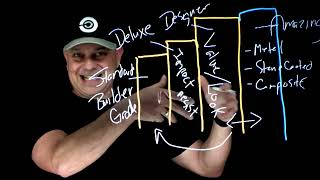
Hey, everybody. Welcome back to our series called the Big Squeeze, where we're concerned about you guys as contractors because the top line revenues for your business have started to take a nosedive. The average price per job has started to stagnate, and our costs are still rising for overhead, materials, cost of goods. So everything that's going on with our jobs, which ultimately the thing that it's doing is squeezing our profits. And here in this series, we're going to be having seven episodes. We've done the first two where we told you what this was all about. The second one, which was the core four of the Nero story selling system, which was authority, communication, logic, and emotion. Those four core components of a great sales presentation and a great experience for your client. And today, we actually want to talk about what that looks like in the real world. How you take those core four and turn that into a presentation that solves problems, give solutions, and guides a customer to choose the right thing for them. And there's something that I don't want you to forget. There's something that's really important about this, and I want to, like, just write it on the screen here so we don't forget it. And we have to stop thinking about selling the shingle. We get that so much, and we get promoted to it by our manufacturers. And nothing against them, but we get caught in this thing we call the shingle. Trap. And so many of us are caught in that, and especially insurance restoration contractors, that's what this series is designed for, is to help those insurance restoration contractors take the beauty that is insurance restoration and convert it to the retail type of setup. This creates faster cash flow, which helps us with that big squeeze that we've been talking about. But we get caught in this trap of saying, hey, here's a shingle board. Pick the ones that you want. Or getting caught in this idea that we think we know what the customer wants. And here's the big secret that nobody tells you, or at least you don't really click to, and that is, hey, if you sell a shingle, guess what? That guy down the road can sell the exact same shingle. And you start to become Chuck in the truck. You have this shingle here that you think is uniquely yours, And everybody else can sell the same one. And what we end up getting into is a price war. If we all have the same shingle and we all put the shingle on the exact same way, we are a commodity. We are a price mechanism. It's who does it for the cheapest. It's the same shingle and the same way to put it on who's the cheapest one for me. And, and that's the mindset and the perception that your clients and your prospects have about you. What I want to do today is to lay out a phased system that creates an experience. And the main part of that experience that I do not want you to miss is this concept of selling the best and then negotiating the rest. You want to get into this process of always selling the best. And so whenever we talk about our shingles, there are multiple shingles that we can sell. We can sell a 30 year architectural, we could even sell a 30 year or 25 year three tab. Those are still available out there. But most of us have gone to a 30 year low end builder grade standard architectural type shingle. And we don't ever talk about any of the others because we think they can't afford it or we make some assumptions they don't want it. And people will surprise you. One of the people that would surprise the heck out of you would be two of the people that stick out the most. My grandfather never had a job that made more than $24,000 in a year, but he replaced his roof with a metal roof. My father in law, same exact thing, never made a really high wage but were great savers. And so they were able to save their money and invest where they thought it was wise to. So we don't want to assume that people aren't going to make those wise decisions. So what you've done up to this point that we talked about previously is you've created some rapport, you've created credibility, authority and trust. And you've started to communicate a little bit with your prospect in the fact that putting yourself in their shoes, listening intently, asking great questions and, and you've done an inspection that is world class. You've set yourself apart. We talked about selling the inspection in our last episode and how important it is to do that first before we actually get to selling product and selling system. And so today that's what we're going to talk about. We're going to talk about selling product and we're going to talk about selling system. So let's talk about product first. So I'm going to draw a little picture here. I hope that helps us. And make sure we got the right size here. I think we do. Let's go ahead and make this a little bigger. There we go. And let's think of our shingles as pillars. Okay, so here's our first pillar here's our second pillar, and here's our third pillar. And some of you might even have a fourth pillar, but that fourth pillar might be a whole different color. And so think of these as your options that you have available to your client. And these options vary based on the materials that you have out there, whatever manufacturer you have, but you tend to have a standard one. Okay, so this is the standard, And that's your what gets put on a house. That's the one that when a builder builds it, it's the builder. Grade. And so if you really think about that, that's the minimum that somebody really needs to put on a house to get it sold. It is a product that keeps the house dry, but there's nothing really all that special about it. But then we have our next one. And think of this, and we'll. You can use different terms for this. All of you might have different ones. I like to use the term deluxe, so it's a little better. And I want to tell the homeowner all about that. And I want to use that storytelling about why a customer might choose this one versus that one. Somebody here is really worried about just affordability and budget, trying to keep everything down as much as possible. They're not worried about curb appeal, resale value, the way it makes them feel whenever they drive up to it, and the way it protects their home. They're just worried about those things. And I would tell that story, but when I get into the deluxe, that might be something more like an impact. Resistant. Shingle, something with some SBs in it, lasts a little bit longer, it's more durable in a hailstorm, can handle hail up to 2 inches, 2 and a half inches. Anything bigger than that, still going to get damaged. Might even have a little bit better of a profile and coloring to it. But this is more about protecting my home from mother nature. And then you have your next level that most people are aware of, and this is your designer. And so we talk about our designer. And I will spend a little time here, a little more time there, and a little bit more and maybe a lot more here on the designer. And I'm going to tell even more stories about, about why a customer might pick the designer shingle. They're trying to add value to their home, and they're trying to add look to their home. So things like curb appeal are real important. The way they feel when they drive up telling a story about another client that chose that because it added value, it increased the curb appeal, it made them feel good every day when they Showed up, they enjoyed having parties because people always talked about it and you were playing to people's drivers and think of the drivers as what it is that they want. I want something that's affordable. I want something that keeps things protected. I want things that make me feel good and make my house look good and add value. And so different people buy for different reasons. But if we understand human behavior, which we do when we teach this neuro story selling system, we know that the majority of buyers that exist out there want to get the best. That's why things are positioned the way they are. When you go on the car lot, they've got the nicest car in the place, inside the building or up on a pedestal, the thing that they want to draw your attention to. If you go into a store and you're looking at the wine that's available the most, expenses on top, we're always looking at the top. And then we work our way down. And so if there's not price involved and think about that, no price involved, what does human behavior tell us? It tells us that we're going to pick the best. So finally we have this last one over here. And this one is what I call amazing. This is the amazing shingle or roof covering. And this could be anything like metal, stone coated steel, any of those type of products, composite. So I want to show them all and what I know that whenever I show them all and I build the value in each one, I share the story of why people get them. I place them in the story of somebody else so they can see themselves in that story. Their natural human behavior is going to come out and I get done with showing my products and I say, hey Mr. Jones or Mrs. Jones or both of you, based on your needs, what you would like for your home, the way you would want to feel. Which one of these would be the one that would be best for your home if price was not a part of the consideration? And they're almost always going to pick one of these two. Almost always. The ones that don't are telling you where they fall. Usually if they don't pick one of those two, probably going to be over here. Now what we're going to do is we're going to work this to say, hey, this is just you picking right now. Think about the buying experience where you're just looking at what you want and going, hey, I like that one the best. It doesn't necessarily mean we're always going to buy it. Think of yourself going on a car lot. You go to that fancy car, and you see the sticker price going, wow, I'm going to take the next step down. That's what we're working off of, is human behavior. So this is the delivery of the product. We want to talk about warranties and durability and thickness and weight, wind ratings, all those good things, and really talk about what is involved with each one of those. And then just simply ask the question, Mr. Jones, for your particular circumstance at home and the way you want to feel about your home, which one of these is the best one for you? If money wasn't a part of the consideration? And they're almost always going to pick those two. So that's the first piece. Now, remember where we are. We've done our credibility and trust, building authority, setting expectations. We've done an amazing inspection. We really sold that inspection. We have a problem. Something needs to be done with it. And so now we're helping them figure out what the solution is going to be. And we want to let them. Them guide or feel in control of the conversation. So we're giving them the information unbiased and saying, hey, this is what's available, and they're picking the one they want the most. So they're in charge, they're in control. We're allowing them to find their solution. So that's the first part that we got to pick a product. Now the second part, and I want you to think about what we're doing here and what this next thing is going to be is this is really what I like to call an invisible system. It does not feel like a sales system to the buyer or the experience that they're having, but it is a system that we follow, and it's specific in its order. And so the very first thing that we've got to do is figure out the material. This is what we're going to cover the roof with. We. That's the important part. But you want to think of it as two separate things. We've got a shingle over here that has all of these things. I want to pick that. But then we also have a system that's uniquely ours and separates us from everybody else. And it has some major components that we have to get across. So now that we have the shingle picked, Mr. And Mrs. Jones, the next step that we would do and think of this as like a flow chart is this is logistics. So what we do once we have a material picked out is we put together an order for both the supplier and the crew. We get those ordered. We are in communication with you, we provide you with how to prepare for a roofing job. All of these things that we do logistically we've got to explain so that we don't miss a piece in their logical order of thought and process, because we are doing things in a logical order. All of our credibility, setting expectations, inspection. We picked a product. Now how does it look whenever we actually install the product? What are the next steps? And so from logistics, we're going to actually show up at the home and we have our next step here, which is how we perform home care. And you think about it, your competition out there likely probably uses some tarps, may put down a piece of plywood, tries to protect landscaping and stuff like that, so you can't lean into that, or you're just like everybody else. How do you protect their home differently? What is it that makes you unique and different from everybody else? And think about that in each one of these steps, because that's the invisible part of the system is we're changing their mindset and shifting it to not a price mechanism, but a value mechanism and client experience mechanism that will likely allow them to spend a little bit more with you to get a better customer experience. So what are the things that are involved in customer experience and what's the logical order for it? So the first thing we're going to do when we get there, Mr. Jones, is we're going to get set up, we're going to get our tools out and we're going to protect your house. We're going to protect your house like this, this, this, and this. And we're going to talk about some of those suggestions in our intensive. But I want to just lay out the system for you right now. And so the next thing that I have to do, we'll get our next box over here, is I have to talk about how we're going to keep everything safe. And so our safety system or our safety protocol, and we can have all kinds of different names for these things that start to create some value in them. But how do we keep things safe for not only them, but. But their neighbors and our crews as well. And so all kinds of different things that you can do. You can put caution tape across the front of the property to keep neighbors from coming over and borrowing that, that, that sugar that day, or having kids running into the yard. You can guarantee safe entry and exit. There's all kinds of things you can do. Osha, what rules you follow there, harnessing your guys, how you take everybody into consideration to keep the Job site safe. So I'm logically walking order, hey, we're going to get everything ordered and delivered, inventory, make sure everything's there so we're not running back and forth. Then we're going to protect your house, then we're going to set up our safety protocols, and then the next thing that we're going to do is we're going to install. And this is a unique installation. In other words, it's unlike anybody else's. And this is the key ingredient. You have to determine how you can separate yourself from everybody else. Because if you hit just manufacturer specs and building codes, guess what, you're a commodity just like everybody else, and you did the bare minimum of what was required. So it's not an experience, it's simply just like everybody else. So what can you do uniquely? Can you use a different type of nail? Can you seal things differently? Can you use a different product that performs better? Can you use different accessories, paint things differently, do your value, like, think about everything that you could possibly do in your install and can it be unique and different? We actually help people build these types of systems all the time to separate themselves from their competition. Just this one component right here takes clients that are 25, 30% close rates all the way up into the 40s, 45 and even, plus that if they do it well and combine it with everything else. So this unique install is super important. It starts to create a bit of a story and a vision in their head of what this whole thing is going to look like. And we want to tell those stories about why other clients chose it and what happened after a storm after we installed it this way and how ours held up when everybody else has failed. Those types of stories are going to really drive home the point and allow that client to see themselves in the future not having to deal with a problem when everybody else had to deal with a problem. Then the next piece of this that's really important is how we clean up. And you think about it, I'm solving all the customers problems that they're worried about that I've probably already ascertained from my question asking about, hey, have you ever worked with a contractor before? How'd it go? It was terrible. Tell me about it. Well, they, they marked up my house, they damaged items, they didn't tell me when things were going to happen. The dude fell and hurt himself on my property, they didn't clean it up. That like all that stuff they're telling you. And I'm able to hone in on those and how we ensure that those things are a little bit different for us than everybody else, and so how our cleanup is different. So if you're a roofer and you roll magnetic yards, you use equipped, you use shoots, whatever it is that you do to get this place spic and span whenever you get finished, like white glove treatment, that's going to alleviate some fears and stress. And it makes logical sense that after logistics, after home care, after setting up safety, we install it, then we clean up. And so after we clean up, what's the next thing that we do? And so you think of this as, like, phases, and we're walking them in order down it. And the next thing I'm going to do is I am going to ensure that we do a final inspection. And it's proprietary, it's unique. It's not just a form that we fill out. It's something that we've developed to ensure that we've installed our project on your most valuable asset in a way that surpasses manufacturer specs and building codes. To install that, to ensure that our unique system was installed exactly the way it was, we're going to have pictures and documentation and make sure that everything passes. You're going to have your eyes on it. And when we're all done with that inspection, we're going to have you sign off as a homeowner that's had another great experience with us. So that's final inspection. Now, after final inspection, there's one other thing that I might want to talk about, because what I've done here is explained exactly how this goes. And in that final inspection I talk about afterwards, there would be an invoice, because we're complete and everybody's happy once they sign off. That's the point, is to get them to sign off so that they pay us. But there's something else that we need to do to maybe establish things that are going to create this feeling of, hey, I'm making a great decision, because, remember, everything has to be logical. And the logic is that the conclusion is, you are the right one. So all of this is logically following an order. And the last thing that I need to give them, and this is what we call a bonus, right? Don't have to do this, but, boy, it sure does solve a lot of problems. We want to give them a price guarantee. Now, remember, as we walk through this whole entire thing, we're asking them, is there anything here in home care you don't want us to do? You want us to do the way we do? Tarps, the catch, all the things that we do? Yeah, I want all that. All right. How about our safety? Is there anything on there you don't want? No, I want all that. How about our unique install and the way we do things and the different types of nails and products and things that we do? Is there anything on there you don't want? No, I want all that. And so they're literally telling you the things they want. They're in control still, just like they were with the shingle. They're telling you now that I want these things. You want our cleanup to go the way it's supposed to go? Yes, I do. Now, Mr. Jones, where there's one last final piece of this that's really, really important, this is where we guarantee you that you'll never find anybody that does a roof and an experience like we do for the same price. As a matter of fact, after you decide to choose us today, if you find anybody before we install the roof that can do the exact same roof that we do for less price, not only will we match their price, we're going to give you $100 for your time and effort, or $200 or whatever number you want to say, because nobody is ever going to be able to do this, but it sets their mind at ease. Hey, if I make this decision and I choose these guys, I'm going to get the best possible roof. So this is a price assurance guarantee. And so these are the seven things that you need to get through before you show price. So many of us show price right there. We're showing dollars, and we shouldn't be showing dollars right there. Before they understand the experience and uniqueness and the difference that we make versus everybody else. You go out, take a bunch of measurements, do your inspection, create an estimate, say, hey, here's your estimate. There's no validation of why your estimate is worth anything. So you're just like everybody else. And so if you're like everybody else, who's the cheapest? But if I'm unlike everybody else and I don't show price right there, and I talk about how everything is different with us and the experience they're going to have and they choose everything along the way, that shingle or roofing product and all the things in my system, I can now share price with them, and I can alleviate their fear that whatever my price is going to be the best price for the roof that I'm going to do, because nobody else can match it. So you actually have a transition statement here that needs to be made every single time. You need to be really clear about it. And that transition statement is, other than price and affordability, is there any reason, Mr. Jones, why we couldn't move forward today? And what you're doing is you're eliminating all other objections and getting it down to just price. Now think about this. Whenever you have shown them price, they've told you what they want. And in our next episode, we're going to talk about that and exactly how to deliver exactly what it is they chose and how to show them how to get the best possible value for their money. So this is today. This is something that we're going to be doing in a virtual workshop where we sit down with you guys salespeople for three hours. We're going to go through every step of this, the talk, tracks, the scripts, the building of this type of a presentation, exactly how to do it, what to say, when to say it, why you're saying it the way that you're saying it, along with 150 page field guide so you can take it out in the field with you and use it as well as some flashcards. These flashcards are going to really help you with any of the objections because you have to think there's a bunch of flashcards out there for retail sales. And I don't know if there's any out there for insurance, but there's not really anything for this hybrid thing of going from insurance to retail. And so we want to move that ball forward. We're going to give you all of the objections that you might get in this unique experience of converting insurance to retail. So this is what we're going to be doing in our virtual workshop. We're going to do it in great detail. We're going to walk through it step by step by step. And we're going to have one more episode on the sales part of this where we're driving revenues higher and we're driving closing rates higher. And then our next two episodes are going to be about the business itself. What do I do for the business itself? Now, if you're interested and attending that virtual workshop, there's a QR code right there that you can just snap on the screen right here, get registered, get more information about. It's going to be three hours. I believe we're doing it. March 5th is the date that we have set aside. It'll be in the morning so you can get out in the field in the afternoon. But you're going to have some firepower to increase those closing percentages, tell stories that shape the presentation and. And give solutions that put the homeowner in control, knowing that human behavior says they're going to take the best and then we're going to negotiate the rest. So get registered, get signed up, get more information right there with that QR code, and we'll see you on our next episode where we dig into how we deliver price and what that might look like to negotiate the rest. So see you on our next episode.










