The Costly Chaos of ‘Winging It’—and How to Fix It
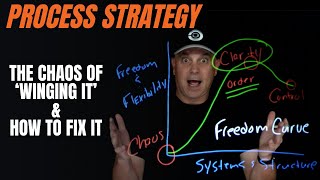
A Contractor Coach Pro training (YouTube) by Jim Johnson explaining why business processes create freedom for contractors and how to build them over time. Covers the contractor’s blueprint/scaling matrix, a ‘freedom curve’ that contrasts chaos → clarity → over-control, a four-step process flywheel (Document → Delegate → Diagnose → Develop), and stage-specific actions from startup to replication. Ends with calls-to-action (AI tools, contractor assessment, one-to-one coaching).
Questions this video answers
Document → Delegate → Diagnose/Analyze → Develop/Improve.
About 30 minutes.
About 20 minutes.
A $10,000 job taking 100 days equals $100/day; taking 50 days equals $200/day.
Foundational: Leadership; Culture; Process; Team performance / HR; Finance & numbers; Accountability & standards. Operational: Technology; Marketing; Sales; Production; Training; Recruiting / Hiring / Onboarding.
Chapters
Hey, everybody. Welcome back to the contractor Training room. My name is Jim Johnson, the head coach here at Contractor Coach Pro. And we've been talking about this concept of the contractor's blueprint scaling matrix and the various frameworks inside of the blueprint and then how you do what you need to do at the right time. And today we're going to talk about process. And process is one of those things where I think people think it's restrictive and takes away freedom. But I'm here to convince you today that what it does is actually creates freedom. Lack of processes is the reason that you don't have the freedom that you're looking for. This idea that we're just busy all the time and that means that we're doing something. The reality is that by not having processes and clarity of what needs to be done, it's holding you back from achieving the things you want to achieve. So my promise to you today is we're going to walk through exactly how to build those processes, what they look like at the various stages of your business. But before I get there, let's talk about just a little bit of the ground rules. Now we did a big training on the whole concept the contractor's blueprint. I invite you to go back and look at our content and check that I was a few weeks ago. But there's this idea that there are 12 pillars of your business that are constitute the four framework of your business. 12 things are divided into two groups of six things. One is foundational, one is operational. Most contractors focus on the operational side of their business, business, which is what gets them busy. They focus on technology, marketing, sales, production, training, recruiting, hiring and onboarding those areas. And not as much on training as they probably should or it would also alleviate some of the busy work that you feel all the time. But in the foundational side of things, there are leadership, culture, process, which we're going to talk about today, team performance or hr, which we're going to talk about on Thursday, so don't miss that class. And then also your finance and numbers as well as accountability and standards. And so those are the 12 pillars. And there's certain things you have to do at certain times in each one of them and those are relating to the stage in which your business is in. So you want to think about your business going through these various stages. Somebody that's in startup, this idea of their, a single person just starting a business, there's some simple things they have to do, they don't have to do everything that's in the framework, they got to learn how to create opportunities, sell them, fulfill them and collect them. It's pretty simple. And hopefully how to be a little bit profitable as well. So some basics that they need to understand, they start to lay a foundation for everything else that all these pillars would be set on. And so when we move into a solopreneur one man show, maybe you've got a little help here and there, you're wearing all the hats and you're doing minimal things in each one of those pieces of the framework. Then we kind of move into this entrepreneurial kind of phase where we start to bring in our friends and family, people we're closest to. And so that means we're going to do a little bit more and we're going to continue to grow in each one of those pillars until we move into these other stages of our business where we deal with most people. Just to kind of give you an idea of what happens whenever we do coaching is most of you come to us right here. You have got friends and family that have come to work for you and you're wanting to go beyond that, you're wanting to scale. You've run out of those folks and you're going to start moving into what we call the getting serious stage, where you actually have a real business. You've had a business this whole time, but it starts to actually become a business. It's where things need to be documented, systems need to be created, presentations and tools and training. All the things that need to happen to take your business from this friends and family type vibe to the getting serious stage. And then once we get to there, then we can move into the growth and scaling aspect of things and then ultimately expansion. So today, like I said, we're going to talk process. And the big thing I want to talk about process is I'm going to cover three things. I'm going to talk about what process looks like over time to most companies. I'm going to talk about the process, flywheel, what we need to do on a consistent basis. And then we're going to talk about what to do, what to actually focus on, and the actions to take in each stage of your business. It's going to take us about 30 minutes. And I'm going to ask you, when we do this, whether you're watching live or you're watching on a recorded video, want to challenge you to, to really learn something when you're here today. This is one of those housekeeping things that I think is a valuable thing. I try to put in each one of my videos. As you listen today, I want you to write down the golden nuggets or the takeaways. Write those down, maybe two or three of them. As we go through this. Something that clicks, maybe a light bulb goes off, maybe some understanding that you got. Then I also want you to write down any questions that you may have, those of you that are watching it live. I'm going to hang out for a little while. When we get done, I'll answer any of those questions. And if you're watching it on recorded, you can put those questions in and we'll see them and get them answered for you. So let's go ahead and get started. All right, so I'm going to do a little X and Y axis here and on this one down here, this is your systems and structure. Okay. And over here is that thing we're all looking for, freedom and flexibility. So everybody wants that, right? Everybody wants freedom and flexibility, and nobody wants systems and processes. One of the things I think that really holds us back from developing systems and processes is the overwhelming thought of what that task is going to take to get done. But I'm going to show you today how you can start to take steps towards it and ultimately end up with what it is that you're looking for as you grow through those stages of your business. Let's, let's real quick just get us a curve going here. Think of this as your curve into freedom. Then there's this little dip here. That dip is pretty important. And so what's happening, this is, this is what people are dealing with a lot of the time whenever we start to build this type of stuff out. So there's three main points that we want to draw attention to and what they mean to you in your world. If you don't have systems and structure and you don't have freedom and flexibility, and you're running around in this just busy all the time field. What that's called is chaos. I don't know about you guys, but sometimes the world can feel very chaotic, especially in our businesses. And so if we feel like we're constantly busy, we're working from sunup to sundown, we. We never get quite everything done. Everybody's kind of going on their own paths and things like that. Everybody does it different ways to ultimately get to where we need to be. You've created this idea of chaos. And what we want to try and do is as we build our systems and processes, we want to get to this all important thing called clarity. Clarity is the difference between you achieving freedom and flexibility or you experiencing chaos, you end up getting the important thing, order. We want some order. When we have order in things and people know what they need to do and when they need to do it. And it's all clear, you're no longer the Google of all things contracting here. You have no systems and processes. So you are the system and process. You're the one that everybody comes to to say, what do I do next? How do I do this, how do I do that? And because of the lack of systems and process, you're overwhelmed by all of the influx of those questions. But when we get it all clear, we get all documented, written down, what needs to happen, when it needs to happen. That clarity stops all the questions and gives us back about 80% of our time. I'm going to share a little story with you I'll never forget as long as I live. I was lying in bed 1:30 in the morning and my phone went off. I answered it, it was one of my sales reps. I'm like, hey, emergency going on, house burning down, something wrong with family. What's going on, man? I'm worried about you. He's like, no, no. I'm working on an order and I'm trying to figure out how many squares does a roll of 15 pound felt cover. And I'm like, you gotta be kidding me. You called me at 1:30 in the morning to figure that out? I know, I've trained on it quite a few. I've told everybody multiple times, training over and over and over again. And I didn't even answer. I was like, flabbergast. I couldn't say anything. I literally took my phone and I threw it across the room. Thank God we had a log house. It hit the logs, shattered into pieces. And my wife woke up, she's like, what's going on? I'm like, I can't believe this. I was so mad and so angry and so mad at him. But what tends to happen when I get mad about things? I tend to reflect just pretty quickly afterwards. You know, I might be mad for a minute or two, then I go, you know, why did that happen? I think we should ask ourselves, why is this thing that I don't like happening to me? And what I realized is I had let him down because I didn't give him the resources. He didn't have a process to go through, he didn't have a training manual to follow. And so there's training processes, there's job processes, there's supplementing Processes. If you do insurance work, there's accounting process, there's all kinds of processes that we need to do in our work. That's the thing, it makes it overwhelming. You don't want to sit down and do it, but if you would just sit down and start to do it and build over time, you're going to get this thing called clarity. Now there's a problem with all of this as well. And that problem is that we may end up going a little too far with what we're doing and we end up getting this control feel. And that's where we start to lose our freedom and flexibility. We're starting to get controlled by our systems and processes. So there's this place in there where you have to really have some structure, but too much makes it a big burden and nobody wants to do it anymore. I got another little story about that. Whenever I was the director of sales at acculinx, there was another software that came out at the same time. I won't say who they are, but their whole idea was that every step of the way, all the way through, somebody would have to go through and check a box, put in a number, do a thing. Well, 90% of the time you were saying, no, like, no, I don't need that. No, I don't need that. Yes, that one I need. And it got to be a burden and nobody wanted to do it. And this is this concept of going too far with your systems and processes. We want to have a view of what those things look like, some detail about them, but we don't want to control the whole entire aspect of it because it will lock us down over time. So just real clear for you, the sweet spot, the thing that we're shooting for in all of this is to get this clarity thing so we can achieve some order. And this whole entire thing is called the freedom. Now, little caution here. Those of you that are the type of person that's, you know, you're just the, the, I call you superstars, man. It's like, hey, man, everything's exciting, everything's wonderful, everything's great. You tend to not do enough in the systems and process side of things. And then then there's the other ones of you, those, those general manager types that are way engineered like they're way over too detailed and all this stuff. And it becomes this thing where you lock people up and create bottlenecks in your process because you're trying to control something that's a micro problem when the macro solution needs to be solved. And so I want to really encourage you to think about your business on a macro level. I'll give you an example of where this control thing got out of hand. We had a system and a process for what we needed to do to do agreements. When we have these agreements that we did, and they worked really, really well, we signed lots and lots of people, and we had a customer that we did a great job for. They were. They were denied by their insurance company because we did insurance work. We went and helped them with their insurance company and got them $65,000 for roof and windows and all kinds of fun stuff on their home. And they came back to us and said, hey, we're going to get some estimates on this. We know some other people and we've heard some other things. And we ended up like, we have a contract, like, we're going to do this, and we got it done, and now you're supposed to go with us. So I went to court and battled them, and I lost because my contract wasn't good enough. I said, at that point in time, I'm going to. I'm going to create this system that nobody can get out of ever. And so we created that, went to attorney, had them write it all up, everything that we need to do, wrote the process down, exactly how to do it, trained on it, everything, taught everybody what to do, and they went out to do it. And our sales got cut in half because that control over that created a dynamic that the agreement was no longer something anybody wanted to sign. So that's where we can get overboard. Those are some examples and stories along the way of what this might look like for you as you challenge yourself to get clarity in your systems and processes. So that's the freedom curve. That's kind of step one here. Let's come down here to step two, and we're going to talk about what we call the process flywheel. And I want you to think of this as a little bit more like a maybe. I really like the term flywheel. Like flywheel is it generates traction and torque. And so we've got this circle here. Think of this like face of a clock, maybe. And we've got some things that we have to do in our process. And so the first thing we have to do, we'll use a different color so it sticks out a little bit more, is we have to document. So that means we got to write some things down. Hey, this is the task. This is what we do. So the task, maybe how to do it, the role that performs it, the tool you use. And you don't have to go all the way out to there. Simply just start with the task, get the task in order, and then the next thing that you're going to do is you're going to delegate. So you create these tasks and you start to delegate them to other folks in the business. Because now you started to hire people, you started to grow a little bit, add some people into the equation. And so after you delegate the tasks to people and have them do it, you're then going to diagnose, or sometimes you'll hear the term analyze, how that's working. So I've documented things now, so this is the way we're going to do it. I delegate it to people to do it. They did it, and I'm going to go and diagnose or analyze how well it's working. Okay. Are the things being followed in order? Are handoffs happening when they need to? Is it happening as fast as it needs to? All of those things are super important to how we're going to approach getting this done. And then finally, you're going to develop or maybe think of that as growing. Okay? So we're going to document them, we're going to delegate them out, we're going to do them, we're going to diagnose how they went. And then from that, we're going to start to develop and improve what it is that we do. So you might use the word improve there. And so what this does is it creates a bit of a flywheel. So we document things, we delegate them, which allows us to diagnose or analyze them, which then allows us to develop them or improve them, and then ultimately document them again and improve and improve and improve over time. And this is going to determine your system. So this flywheel is going to be the thing that is constantly evolving, okay? It doesn't ever stop doing what it's supposed to do, which is to grow and improve if we get complacent and leave it as it is. So this is the process, flywheel. Our teams will start to break down over time. Our systems will break down over time. We will start to be passed by everybody else out there. I know that my sales process over a 27 year of being in the industry has constantly been improving and getting better and being refined because we document it, we get it out there into the world, and people use it. Then we diagnose what's working and test things and analyze things to make sure that they're working at the finish fullest they can be. And we look at what people are doing out there in the real world on their own that are maybe some additions that we could put. And so we start to develop a new piece of that process, document it and just keep doing that, and our system gets healthier and healthier, healthier. Continuing to grow. There is no such thing as a perfect process. Don't ever think that you've got it figured out. As you grow through, you're going to continue and add to what it is that you're doing in your process. So let's talk a little bit about the scaling matrix and how that applies to everything that I just shared with you here. So we're going to go ahead and move this out of the way. We're going to come back over here about right there. Okay, perfect. So the whole point of this whole entire thing that we're doing is to help everybody understand why, what to do and when to do it. And so you think of these as the stages of your business. And those stages, hey, I'm a startup. I just started the thing, I'm just now figuring it out and I'm doing kind of school, hard knocks experience. Those type of things are happening. You've gotten your business paperwork in place and you're learning how to get some opportunities, close those opportunities, build them, collect them, and hopefully do it profitably. And that's what we're doing in that area. So your focus in that area when it comes to process, we'll get to. You're trying to prove the things that you've identified as repeatable. So when you're in this startup phase, what can I repeat? Okay, I can. I think I can repeat this thing. Yep, yep. I certainly can repeat that thing. But it's still just you, right? And you know it. It's in your head. You don't need to necessarily write a whole bunch of things down. Although it's not a terrible idea to start writing down at least a little bit. Okay. I know I have to go from lead to prospect and from prospect to approve and like that type of thing. Just really a simple flowchart so that you could then whenever you start to, hey, I want to start hiring some people, you can at least walk them through some flow. Maybe not necessarily every task and everything that they have to do, do. Now when we move into the operator or solopreneur, you can think of it kind of that way. This person is looking at doing something different. They start to look at simplifying. Okay, they're going to simplify things because they need to survive. You're getting busy, you're getting more work than you can handle. So you're now I got to get some systematic approaches to what I'm doing. So I need to do things at a certain time and you do them with certain people and those people need to know what they need to do. And these people usually when you're at this stage in your business are like sub crews, maybe a part time person doing some paperwork or bookkeeping for you, that type of thing. And so what we're trying to do here, I'll make this just a hair bigger so it works out good, is we're documenting. And what you're documenting are the tasks for the job to go. Ideally you want to. If you were going to say this is the way it went and it goes, well, there's no hiccups in there, what does that look like? So I take a lead in and I do this and then in a prospect phase, I do this. And so one of the things that we teach people is to start to build out the milestones that your business goes through. So think about you, each of the milestones that your job is going to go through and then what has to happen in each one. And all you have to do is get the task written down. That's really what you're working on. Right here is the tasks and these are the actions that you're taking. Okay. And this is what you're focused on in that stage. So in the startup stage, I'm focused on proving now focus on the simplifying it. In the operator and solo stage, the actions I'm taking is identifying, hey, what's repeatable? And then I'm documenting those things that are repeatable. So this is how we start to build those processes out over time. Instead of trying to build the process for an expansion company all the way back here, you're not going to need all of those things. So let's talk about the next one because this is where we really start to interact with you guys. When we do our one on one coaching, you're starting to get beyond you. You remember you're this operator, solopreneur person, you got all the hats on, you're kind of doing everything and now you've decided to scale up just a little bit and grow and you've moved into this entrepreneurial stage is what we call it, where you're looking at friends and family. Friends and family are who's going to come and help us. And so that friends and family, what we're doing There is. We are building out some. We're building the repeatability. That's what we're doing. We're building the repeat repeatability. So what it is, the actions that we have to take are what are the how tos and tools. So if you think about this, if you were looking at it like by milestone, let's just take the lead milestone as an example. Here I went, hey, what can I repeat with leads over and over again? Okay, now that I've learned I can repeat that thing, let me document it. Do I how I know I can put a lead into my Excel spreadsheet or into a CRM. I know that I can assign that lead. I know, like these tasks now, how do I actually do that? So you got to give a description of the how to. This makes it clear for a person that's not you of how to do the thing that you're. The task is interlead. The how to is type it here, here, here, and here. And then what tool? So CRM and the name of that CRM. So you're building out this process over time through each one of your stages. So what comes next? Let's get into your next stage. Your next stage is your business. You're becoming a real business. You've always been a business, but you're a real one. You're getting serious about what it is that you're going to do. And you're now reaching outside of the friends and family people, those people that are close to you, you know, husbands, wives, kids, best friends and buddies, that kind of stuff, to strangers. We're going to bring some strangers into our equation, and so we have to even communicate better on our processes. So what we're doing here is enforcing our process and we get a little bit more detail. Enforcing means we add some accountability into the equation. And so we start to assign out roles and time. So think of it as who and how long. Okay, this was how and what. This is who and how long. Okay, now we start to enforce our process and refine our process a little bit more because we're looking towards how quickly can we move through the process and so pay special attention. It's like, I don't need to be doing this down here. That's the whole key to all this. This is how we scale. Everybody tries to do these other things way up here and it becomes overwhelming. They don't ever create a process because it's too much. So we're going to now move from business and getting serious. And I, I want to really Draw attention to a couple of things here. I. I'll come back to that in just one second. Let's go ahead and do the growth side of things. And this is where we start to lead. We're leading through systems. Okay? We're now teaching other people how to build those systems and enforce those systems and simplify those systems, because those systems are proven. And so the actions that you're focused on there, just to make sure that we stay on track with our focus and actions, is training and training resources. So if you think about this process that you're building, you start out with task and then how to do it, and then the tools that you're using to do it with, who does it, how long it takes. Now let's get the training so somebody has some reference material and some resources to go to on how to do that thing and do it well each and every time. Ideally, what you're trying to get to here is that you could take a seventh grader, bring them in, and they could watch the videos and do the instructional part of it and actually do the task that you could bring somebody in that just doesn't know anything about anything, and they could do it. But so many people want to build that way back here, and that's why they don't do it. That's why it doesn't get done. That's why it holds them back, and it's why they live in that chaos forever and ever. Our job is to help you get out of that chaos. So let's talk about the last one. And this is where we get to replicate. So we're going to expand, and there's two different ways to expand. I can expand inside of my market. I do a trade like, say, roofing. And now I want to do fencing. Well, I can go take all of the processes and everything I've built and just repeat them and go, okay, now we do fencing. Now, if you did a car wash, you couldn't repeat those things. So you want to be somewhat aligned with the niche that you have, or you're going to open a whole new location. You're just going to take all these systems and processes you have and go put it in that new location. Think about how easy it is to expand your operation whenever you have everything already done. And so the actions that you're focused on right there is what are called playbooks. So I've built out these playbooks that I could hand to somebody that says, this is how you do your job. It's not training on the whole Thing, it's how you do your specific one. And it also is everything else that we do. It has all of the processes in it, so playbooks for everything. So that is so repeatable. It's like making a McDonald's hamburger every single time. I just drop it in. And so many people, so many people want to do this way back here. I'm going to open some new locations and I'm going to make some more money, and I'm going to, like, that's how I'm going to make. And you don't have any of this other stuff in place, and you just created a whole new business that you're starting from scratch instead of starting from finished product. And that's why whenever I see people expand out, that's when they start to fall down. That's when the chaos happens. That's when they're overwhelmed. There's so much work and. And they don't have that freedom that they were looking for whenever they started a business in the first place. That's the whole point, is to get you some freedom. And all you did was build a cage. You locked yourself inside of it. Now, the point I was going to come talk about and come back to is where we really see our hard work pay off as coaches, where we really help people grow their business. They are in these areas right here. And usually they come to us in this entrepreneur, friends and family phase. Sometimes, you know, a little under a million, but at least a million. In most cases up to about 3 million. It's kind of what we can do with our buddies and our family. But we know we got to step out, and we stepped out and it didn't go well. So now you're like, hey, maybe I could go get some help. Because you're. You're wanting to make a business, you're getting serious. You're actually treating this like, hey, I'm going to build something that is repeatable, scalable, and can grow. So this is where we spend most of our time with people, is helping them get from that 1 to 3 million, moving into the fives and tens and fifteens as they move up the stages of the scaling matrix. So I do want to talk about one more thing. I'm going to take a little bit more time here, um, because there's. There's one other thing about process that's really important. You've heard me mention time quite a bit, and I'm going to talk about this one in finance as well. But just real briefly, I want you to understand time is important. And so from the time I start with somebody to the time I end with somebody. Timeline, right? And I got this lead over here. I got a timeline like so to close over here, okay? And the amount of time between those two things determines a lot of factors for you. One of those factors is cash flow. So from the time that you built it till you collect it, how long is that taking? If you don't know that answer, you are likely in a situation where you've become the bank. In other words, you're financing projects because they're taking too long to collect, and it's killing your cash flow and putting you in a situation where you're going to have a problem. But through all of this, you have those milestones that your processes have been built around. How much time does it take to go through each one? This is why we include it in our process. Because if it took me 100 days to do to do a $10,000 job, I'm making a hundred dollars a day, right? Took a hundred days to go from start to finish to do a $10,000 job. But if I could cut that down to 50 days to do that same $10,000 job, that would be $200 a day. Which one is more profitable and which one generates more cash flow? We'll come back to this in finance and numbers, but I think it's important to understand what process to. We're going to be doing finance and numbers, I think, next week. And so keep this concept in mind, as those of you that have attended this and are continuing to attend this, I think you're going to find this really valuable, that the reason we put time into our process is because we're so concerned about this thing right here that we call velocity. Okay. And then this one right here that we call gap awareness. We'll come back to that in our next one or in our finance numbers, two from now. So that takes care of the things we need to do in process, so what to focus on in the actions. It took care of our process flywheel, how we build our processes and what we do with it and how we turn it into a flywheel, and then a little bit of what that looks like over time and why you're doing it now. Maybe you're one of those people that you're trying to figure out, hey, how do I go about doing this? That seems like a whole lot. Well, we have a couple of different things that can help you out. So number one, you. You're a do it yourselfer. Okay. You're you're one of those people and and you're probably smaller as far as those stages go, you're probably startup. Maybe that's a solopreneur where you're wearing all the hats and you don't have a lot in your budget to get things done. Well, over here you might want to consider the di of choices to go out and use our AI tool. That'll help answer a lot of those questions that you might have in those stages of your business. Now maybe you're at one of those stages where we tend to work with people a lot and you want to investigate what that looks like. You have another option over here and that's our one to one coaching. And the way that starts is we do something for free for you. We want you to see what it looks like to be coached. In order to do that effectively, we want you to take a contractor assessment. You can literally shoot the QR code there right on the screen and go take this assessment. It's going to take you a good 20 minutes, but it's going to save us an hour of asking questions. We're going to understand your business in detail and with the understanding of your business, we're going to then be able to hop on that call and start to point out the next two or three things because we're going to understand your stage, where you're at, what you might be doing out of order and what you might not have done yet that needs to be done to get you in order. If you like that coaching, great. We'd love to work with you as a client, but if it's not a good fit, for whatever reason, no problem. At least we served you well that day. This is what we try to do with our clients and this is how we help people. That framework, we're holistic, we deal with all 12 of those and we walk through each one of those stages whether you want to do it hand in hand with a guide, somebody there right beside you with your own personal context, relationship and everything else, nuance to your business or hey, I just need to get some of the basics down over here with our AI tool. Either one will work great for you. Thank you for being here today on the contractors training room. I invite you to take one of these two paths, get those processes built. It's one of the most challenging things and we start with templates and tools that make it faster and speed you to where you need to be because we've done it so many times. Thanks for being here. We'll see you on our next show. This Thursday at 11 o'. Clock. Contractor training room.










