The Dreaming Room with Michael Gerber
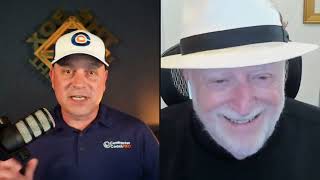
This is a transcript of a YouTube interview between Jim Johnson and Michael Gerber about Gerber's Eightfold path for growing small businesses and his "Dreaming Room" program. Gerber defines an 8-step progression (dream → vision → purpose → mission → client fulfillment system → practice/franchise prototype → turnkey business → enterprise) and emphasizes systems, replication, and an impersonal "dream" for customers. He also describes the Dreaming Room offering (cohorts of 22, $5,000 per part, six-week online modules with weekly 90-minute sessions) and uses case examples (Infusionsoft, McDonald's, Apple) to illustrate replication and franchise thinking.
Questions this video answers
77% (cited to the Small Business Administration in the interview).
Over 35 books; over 8 million copies sold (as stated in the interview).
About $150 million a year (speaker correction from $150,000).
Cohorts of 22 participants, two parts (Dreaming Room one and two), $5,000 investment per part, six weeks online per part with one 90-minute session per week.
1) Dream; 2) Vision; 3) Purpose; 4) Mission; 5) Client (job) / client-fulfillment system; 6) Practice (lead generation, conversion, client fulfillment) / franchise prototype; 7) Turnkey business prototype (up to seven turnkey practices plus management); 8) Turnkey enterprise prototype (up to seven turnkey businesses plus leadership system).
Chapters
The next step is, and last step of the Eightfold path is the enterprise. And what's the enterprise? It's up to seven turnkey businesses, plus the turnkey leadership system. Step one, I have a dream. Step two, I have a vision. Step three, I have a purpose. Step four, I have a mission. Step five, I have a high performance system. Step six, I have a franchise prototype. Step seven, I have a turnkey business prototype. Step eight, I have a turnkey enterprise prototype. And until I have all of that stunning achievement. Operating. Operating. Operating. I don't create my great growing enterprise, my great growing enterprises. Go on what I've just described to you. And that's the reason nobody succeeds at doing what Ray Cross did. Because nobody does what I call the Eightfold path. Religiously, affirmatively, expertly, every single time. Follow me. Follow me. Follow me, Follow me. No, not like that. Like this. No, not like that. Like this. Exactly like this. Not sort of like this.
There are. There's this old saying that you didn't do anything on your own, that you're standing on the shoulder of giants you may have seen. And I have some of those giants in my life. I just got to meet this guy, like in a face to Face conversation for the first time on Friday. But I've been following him for years and years. This is a show you're going to want to listen to. It is going to be some new content from one of the masters in our industry and in our world from the small business perspective. He's written more books about it than anybody out there. They are the highest rated books. He sold more of them than anybody else. When it comes to small business, he is the master of E Myth. You may have heard of that before, but if that's all you know about him, you are missing something completely important to your life and the life of your small business. He's written over 35 books. He sold over 8 million copies. He is a man that needs no introduction, but I feel like he needs to tell us a little bit more about who he is, just in case some of you have been living under a rock out there and don't know who Michael Gerber is. Mr. Gerber, could you share with us a little bit about who Michael Gerber is?
Thank you, Jim. Well, I am Michael Gerber. I'm the creator of the E. Myth, the author of the E. Myth books. And if you don't know what the E. Myth is, it's the entrepreneurial myth and it is the substance and essence of why most small businesses don't work. And in fact, according to the small business administration, 77% of all new companies fail in their very first year. Think about that. If you've survived more than your first year, you're miraculous. But please don't love yourself to pieces because of that. Because very few of the remaining actually survived the first eight years of their business. So it's an extraordinarily tragic story. I've been immersed in that tragic story for years. Post a half a century designing, building, launching and growing great, growing company. And it's that work that we want to share with you under the title, which is the title of a new book I'm working on right now called Every Business a Startup. Let me say that again. Every Business a startup. Yes, yours. No matter how long you've been in business, no matter what you think you know about your business, no matter what you've learned about your business, I'm essentially saying to you that you're probably doing it all wrong. Please, Jim, I don't want to say that in front of you because you've been coaching, coaching, coaching, coaching clients for many years. But I'm suggesting to every single person within the era of what we're saying here that every small business is doing it wrong. Now, with the tens of thousands of companies we have worked with, I've discovered that to be a truism. They're all doing it wrong. They're just all starting it wrong. So that's what I'd like to discuss with you today.
Yeah, like I said, I had the opportunity to hang out with you on Friday. We had a long conversation. It wasn't just like a five minute interview type thing to say, hey, let's do a podcast. It was like, hey, let's get to know each other a little bit. And I'm going to let everybody kind of know that you've been a big influence on me from the perspective of this dream, vision, purpose and mission. That was something that really resonated with me. We teach some of that concept to our clients as we work with them because I believe in it so much. I believe that starting right is super important. And I think so many people get caught in a trap is what ends up happening. They tend to be good at something, whatever it is they're good at, you know, installing a roof or they're good at doing their law practice, or they're good at being a chiropractor or physical therapist or whatever it is that they're good at. And they start a business. They think because they're Good at the thing. And I think you call that a technician, but they don't really understand how to start a business. And I think you believe a lot of that's because they didn't start it right? Is that correct?
Absolutely. They didn't start it right, and they didn't do what was necessary to do. Each essential step of the way in our lexicon, I call it the Eightfold path. And the Eightfold path is the crucial process for going beyond the emit to what I call the evolution of an enterprise from a company of one to a company of 1,000. And there is an absolutely dynamic process that every company must go through, yet must go through in order to succeed at that and to go beyond the ordinary. And it's beyond the ordinary that I've been focused upon all these years. Like Steve Jobs, like Ray Kroc, like Mother Teresa. Beyond the ordinary is what is truly extraordinary.
Yeah, that term for me is the exceptional. Right. The people that stick out for some reason or another. And I'd like to think of myself as a student of those people. You're one of those people. In my world, you are exceptional. You have. You have to be an observant person to realize that somebody has walked the path before and that they've achieved something that you want to achieve and that they have some recipe for getting there and that you need to learn the recipe. But even if you learn the recipe, you got to do it several times before you actually get good at cooking it.
Go ahead in that regard. And to our audience, when you talk about the recipe and you have to do that recipe, it's absolutely not enough to read the book. I have a co author, Ken Goodrich, who happens to be a contractor, the E Myth, HB BAC contractor and Klon has created this stunning company. And he said, michael, it wouldn't be the stunning company it is if it weren't for the EMIs revisited. But hear me, I read the E Myth Revisited when I was about to go out of business. My dad passed away. I worked with my dad from the age of 10, 10 years old, as I handed him his tools, as I handed him his stuff, as he did the work he did to do the work he did as an HPHC contractor. And he said, and I thought after I graduated out of college that I knew what I needed to know about that business. Then my dad passed, my mom passed the business over to me, and I simply started working in the business. And suddenly I learned something about it that I'd never been told about my dad, there's an organization called the irs, and I never heard about this organization called the IRS until they came to my door and asked for a bundle of money that I owed them. And I didn't know that I owed them that bundle of money. And I begged and I bargained, and I did, and I did what I had to do. I talked them out of shutting me down and asked them for some time, so they gave me some time. Now, the extraordinary thing, these things happen to us. They happen to you, Jim. They happen to me. They happen to everybody who's listening to us today. A good friend of my dad's gave me a book right then. The E. Myth Revisited. Now, you got to understand, Ken told me I don't read business books, but I was so dead and so terrified that I figured I had to read it because it came from a guy that I trusted, who my dad trusted. And so I picked it up and I read it, and then I said to myself, oh, my God. So doubts what a business is. And Goodrich said to himself, so that's what a business is, so that's what I've got to do. And he said, michael, hear this. I read the e. Myth Revisited 37 times. As I practiced it. Practiced it, Practiced it. Practice and abide it. Fight it. Applied it, Applied it like a religion. And that's how my company became the company it is today at about today, Jim. About 150,000 a year.
50 million. Right.
I'm sorry, 150 million a year. Yes.
Yeah.
150 million a year. Think about that. From nothing to more than something. He read the book 37 times. And I'm not saying you need to read the book 37 times. I'm simply saying it's more than just reading a book.
Yeah, it's. It's truly understanding a book. I believe there's a recipe to that part, too. Like, knowledge is one thing. You hear it all the time. Knowledge is power. Right? I hear that all the time. I think that's a bunch of horse crap, to be honest with you. Understanding is power. That's where the power comes from. Knowledge is just facts. Being able to understand what those facts mean and being able to be discerning with those facts so that you can use wisdom in your decisions is where true power comes from. So E. Myth is. Is wonderful and great, but you've been working on a project, it seems to me, for about the last seven years or so I started. I did some research all over the weekend and stuff. And this concept of the dreaming Room. And I think it's based off of the dream, vision, purpose, mission, and really the dream aspect of things and getting the right start on stuff. But it seems like you've been at it a while. Am I correct in that?
Oh, right. And you've got to understand that the dreaming room is simply the first four steps. The dreaming room is the first four steps of what I call the Eightfold path.
Right.
The Eightfold path is the business development process that I've created since emit. Redesign. The way a company goes from a company of one to a company of 1000. What I call beyond the EMIT, the evolution of an enterprise from a company of one to a company of 1,000. Step one, step two, step three, step four, step five, step six, step seven, step eight, step one is the dream. I have a dream. I'm saying without a dream, none of the rest matters because without a dream. And we'll discuss what a dream is, because most people misinterpret what a dream is. Dream is not a personal dream, Jim. It's an impersonal dream. It's not what I want for myself. It's what I'm determined to create for the other. The other is the person who comes to me. The other is the person who comes to me and says, help. The other is a person who comes to me and says, I don't know how. The other is a person that comes to me and says, I'm struggling, Struggling. What do I do? What do I do? What do I do? Nothing seems to be working. The other is that other who's in need of something they don't understand. That's been the basis of my work for a half a century. That's the basis of my EMIT work. That's the basis of the work of what we call Michael E. Gerber companies, what I call the new EMIT. The evolution of an enterprise from a company of one to a company of 1,000. So the dream is critical as the foundational premise upon which everything a small business owner is bound to do creates the great result they're there to produce.
So if there's one thing I've learned about this dream aspect of things, people struggle with developing and getting clarity on what that dream is. Is that a true statement?
Absolutely. But you understand the reason. The reason they struggle with it because they're unaccustomed to understanding it the way I describe it. So the way we describe a dream is different than the way anybody else does. And so we'll describe that momentarily. But understand a dream Is a very specific thing. It has a shape, a form, a concept. It is what I refer to as the great result. You're there to produce. You're there to produce in the company you're there to create. But without knowing what the great result is, you're there to produce for the company you're about to create. How can you create the company that's going to produce it? You couldn't.
It's where I started with this. Is it okay to share my dream with you?
Of course.
To make the knowledge necessary to create a business that gives you freedom available 24 7, 365 to any contractor that wants it.
Work on that. But we'll not work on that here.
Okay, that's fair. Like, I probably need some specifics. Like the 33 million contractors out there that need it. Yeah, but that's. That's where it all started for me was this idea of making the knowledge that because we're not doing anything new, this isn't new, the knowledge. People have done this before. They have created great contracting business. I did one myself. This is not new information, but it's just not available in a. In a way that people can dissect it and. And use it wisely to create their own.
Let me say to you, it is new.
Okay, what's new?
It is new. So my dream in 1977 when I created my first company, which was called the Michael Thomas Corporation, Tom and I created the Michael Thomas corporation. It was the very first hear this business development firm on the planet. Wow. The very first business development firm on the planet. I had a dream. Tom and I talked through this, talk through this, talk through this, talk through this for literally week upon week upon week until we finally came to agreement about it. Our dream was simply this. To transform the state of small business worldwide. That was our dream. That's my dream today. It hasn't changed one iota to transform the state of small business worldwide.
So did you. Did you nail it the first time and just knew what it was or did it evolve?
Took us weeks, but we finally got it. But we finally got it because we knew what we're setting out to do. The second step in the Eightfold path is the vision. So I have a dream to transform the state of small business worldwide. But I had a vision. And our vision back then in 1977 at the Michael Thomas Corporation was to invent the McDonald's of small business development services. How do I realize my dream to invent the McDonald's of small business development services now why McDonald's? McDonald's was and is the most successful small business in the world. How did Ray Kroc do that? How Ray Kroc did that is how you need to do what you do, what every small business owner needs to do, what they presume to do. So when I say the McDonald's, I'm not talking about hamburgers and french fries and milkshakes. I'm talking about the business model. Go invent the McDonald's of small business development services worldwide. Get it visually, emotionally, functionally and financially. That was the second step, the third step was my purpose. And my purpose was to create the story upon which all of this depends. Get that? To create the story upon which all of this depends. And the fourth step was my mission. My mission was to lead every small business owner to do what we've successfully done with a dream, a vision, a purpose and a mission. Well, that's incredible.
Yeah, that, the fact that you, the fact that it has sustained for that long is the incredible part. To me, from 1977 till to now, it hasn't changed. There hasn't been any evolvement or. Have you ever seen companies that do evolve over time? Their dream is this, and they actually do some good things get really great and they're like, wow, I can do more. And their dream now evolves.
Everybody does, everybody does, everybody does. And then, and then, and then, and then technology changes, leadership, this new book came out, that new book came out, etc. That everybody is following the next thing, the next thing, the next thing. We haven't, and we haven't. Not because we're not evolving, we haven't because nothing's changed.
So, so how do you, how does that happen? I just be transparent. Like, how does that, how do you like nail that, that? Well.
I was 41 when I started my first company. Better understand, I wasn't a kid.
Yeah.
I wasn't a guy who sold this and that and this and that. And I was always going to be an entrepreneur. I wasn't interested, understand? I didn't become what I became until something miraculous happened to me. And that, something miraculous that happened to me blew my mind. And it blew my mind because I'd never done it before. My brother in law, his name is still Ace Remus, had a small advertising agency in Silicon Valley. And Ace came to me one day and he said, Michael, I got a problem. One of my clients calling Bob is having an impossible time converting the leads we create for him into sales. When you come and meet Bob and talk to him, and figure out what his problem is. And I said, hey, I don't know anything about business. Even worse, I don't know anything about technology.
Can I ask you a question before you finish the story? And of course, what made him think you were the right person to talk to him?
Well, ace and I had had a relationship for years, okay? And ace would come to me and we'd talk about this and about that. Ace thought I was the greatest thinker in the world. Ace just thought I was a genius. Now, you got to understand, in one respect, I can understand why ace thought that. But in another respect, there was absolutely no reason on the planet for ace that thinks that. But ace is a rather brilliant guy, and ace thought I was. And he didn't have an answer to the problem. So that's why.
Okay, Gotcha.
Now, ace also knew that I sold encyclopedias in my early life. Ace didn't know anybody who sold encyclopedias, Whether in their early life or in their late life. He couldn't even imagine going down the street, knocking on doors and selling encyclopedias. How the hell did you do that? I said, well, it was really very, very simple. He said, no, it wasn't very, very simple. Can you explain it to me? And I said, sure. I'll be glad to explain it to him. So I explained to him why it was very, very simple and why it was so good at it. And so that must have led ace to think, well, then Michael knows how to sell stuff.
Gotcha.
Therefore, Michael would probably know how to see what Bob's not doing that he needs to do in order to sell stuff. You got it?
Yeah, now I got it.
Okay. Got it. So in any case, long and the short of it is, I had a dream, a vision, a purpose, and our mission was very, very simple. To lead small business owners to succeed at what we learn how to do with their dream, their vision, their purpose, and their mission. Therein resides the first four steps and the first four steps of the Eightfold path, Meaning they're the foundation for what comes next.
So do we get to talk about what comes next?
Of course.
All right, so I. I've got my dream that I'm going to do this big, huge thing, and it's going to be about them, not me.
Right.
It's impersonal. I have a vision.
Give you an example.
Sure.
Of your dream.
Okay.
How I would frame transformed the state of contracting companies worldwide. Therein resides the most profound dream you could possibly possess.
Because it's the biggest possible thing. The only way it gets bigger is if there was something else in the universe out there, of course.
But you're into transformation of end to change. You're not about change. You're about transformation. Transformation goes far beyond change. It's completely anew on your relationship with contractors. You're going to see them, feed them, inspire them with a method, a process through which transformation is going to occur in their companies, in their lives.
I, I can see that.
That is more. That is more transformed the state of contractors worldwide. Got it.
I got it. I'm. I'm, I'm gonna, I'm gonna chew on that for a little bit because I'm.
Like, okay, now think of a contractor. And you're turning around to say to the contractor, contractor a need a dream. You need to set out in Michael's Eightfold path. You need a dream, you need a vision. You need a purpose. You need a mission. And I'll get on to the next four steps. Your dream is to transform the state of roofing contrasting worldwide. Your dream is to transform the state of framing worldwide. Your dream is transform the state of plumbing worldwide. Now you say, but, Michael, I'm going to be working with every plumber that'll come to me. And if you say their dream is to transform the state of plumbing worldwide. And every one of my plumbers is saying the same thing, what I'm saying to you is, yes, but only one of them is going to do it. But every single one of them are going to pursue it.
And they're. They're going to get somewhere along the way. They're not going to go out of business.
That's never going to go out of business. Yeah, our clients don't go out of business.
Well, there's so much fear in our, our industry right now.
Hear me, Hear me. But, Jim, there's fear in every industry here, in every profession. It's not just in contracting. It's everywhere.
Yeah, I'm trying to be the guy that's. That's like, hey, quit operating out of fear. This is ridiculous. Like, yeah, so big deal. There's venture capital coming in and like, yeah, that road's been done before. And it didn't put the good ones out of business. The ones that knew what they were doing and what they wanted to achieve. And so quit worrying about that. All right, so we've got the first four, but this is an eight green.
Vision, purpose and mission. So now the next. That's the foundation, right? That's the, that's the foundation upon which you're going to now design, build, Lawrence. And grow your company. The first step in designing your company is what I call the job. And your job is your client fulfillment system. Hear me, you're going to go to work on your job to design, build, launch and grow your client. Client fulfillment system. That's the product. Every company is there to sell, every plumber, every. It matters not. There needs to be a client fulfillment system for that company to do what it does to differentiate itself successfully from everybody else in that industry.
You hit the nail on the head right there. We actually like, we have a similar concept we call the ideal process. And inside of that ideal process it must be proprietary and unique. It must separate you and differentiate you to get you out of the contractor crowd.
Right? That's the fine fulfillment system. Right. Okay. The next step, this is step number six is called the practice. And the practice is what I call the three legged tools. Lead generation, lead conversion, client fulfillment. We're taking the client fulfillment system now and putting it into the practice. And now we're creating the client acquisition system. Lead generation, lead conversion. First I generate a prospect, then I convert that prospect into a customer. And in client fulfillment I convert that customer into a client. You got to do more than buy once, twice, three times. They got to stay with me for a lifetime.
So what happens when you sell something that you only sell maybe one or two times to somebody in a lifetime?
Then you're not really thinking very well.
Well, for example, a roof. Right? You put a roof on somebody's house.
Yeah. But you're not selling a roof, just a roof. You're now going back and re roofing the roof. You're now going back and fixing the gutter. You're not going back. And so it's a system. You're selling, you're managing, you're monitoring, you're managing, etcetera and so forth. So you're in continuous relationship with your client because so is their roof.
That's good. I like that.
Of course you'd like that because you appreciate that.
Oh, I can see the value in it. Number one, I can appreciate that it keeps me in front of that client who is now a client and hopefully a relationship at this point. And while it may not be as big of a project as that first initial reroof. Yeah. Maybe 15, 20 years or maybe even shorter time frame because something happens, I do another roof. But there's all the other stuff. Maintenance program, there's the roof cleaning, there's.
There'S related to what happens on top.
Yeah, exactly.
What happens on top always affects what Happens on bottom.
That's good.
The languaging of all that is critical. But that is where lead generation, lead conversion, and client fulfillment come in. But even more important to understand is your practice is your franchise prototype. So understand that every.
So is this, is this number seven?
No, no, no.
Okay.
We're on the practice.
Okay.
The practice is number six.
Right.
Every small business is not only a startup, every small business, it's a franchise. Because the business film and the business format franchise is the most successful business development system ever invented.
Oh, you told me I could challenge you. This is actually came up to me. This is something I've been thinking about. This is weird that you even brought this up. Name one. Other than a restaurant that's a franchise that's been successful for more than 20 years.
Oh, my God. I don't ask people right now for names. The other day I was thinking I could send you a list.
Okay.
I would love to see dozens and dozens and dozens and dozens. But you've got to understand that very few companies achieve the meteoric success of McDonald's. And that's because they didn't approach their development in the same way that Ray Kroc did. Have they done that? I could even give you more examples because I'm in the business of creating examples. Because what we're here and talking about is the exempt law or inventing the McDonald's of small business development services, of inventing the roofing, et cetera, et cetera, et cetera, et cetera, that will live a lifetime. We're here to create that bin.
Yeah, I believe it's possible. I believe that. I know there are examples. I just couldn't think of one.
We'll help you to think of them.
Yeah. Okay.
I'll give you multiple examples.
Sorry to get you off track there, but thinking of getting me off track.
You're right on track.
Okay.
So you're asking the right questions. You're expressing the same doubt. You got to understand, everybody I see speak to says yes, but anybody.
My, my observations of franchises outside of the restaurant world has been poor. They exist.
Well, of course, but it should be because franchises are poor. Because the vast majority of franchises in the planet are not business format franchises. They're brand name franchises and they're stupid.
Oh, I agree with you on that. The business format's the key. The, the everything behind it, not the front. There's a lot of good.
And that's the practice. Yeah, there's a lot of good prototype.
There's a lot of good ideas out there. That. That run off and, like, catch on fire. I'll give you a good example. Like Anytime Fitness. That's one that's like, okay, that popped up out of nowhere. They put franchises all over the place. Now I can't find one. And so Anytime Fitness, they exist. They're still out there, but they're not what they were. Right.
It's like, not what they were because they're not capable of replicating themselves successfully. Right.
And there's several in our industry. I won't name names because that would be not nice of me, but wouldn't be nice. Yeah, they start with one big one and they go, hey, I'm going to go do another one and sell this franchise to somebody. And they sell a franchise to somebody and it poops. It's nothing like they have, you know, 17 locations. They do $21 million. That's $1.25 million a piece. That's nothing, considering that the one's doing six or seven.
But let me tell you why.
That's what I would love to know.
I think they didn't do what Ray Kroc did.
They didn't create the processes, the training and the format that was repeatable so that others could do it without create.
The religion at the heart of it. McDonald's is. McDonald's is. McDonald's IS. McDonald's is the golden arches. This is what we do. This is how we do it. This is how it works. This is what it tastes like. This is how we hand it to you. This is the paper it's wrapped in every single time.
You know why they don't do it, right?
Do I know why? Who doesn't do it?
Why, like you said, that thing exists. Anybody could go read the book about Ray Kroc, McDonald's story, the whole bit.
And we.
And we can see it. We know what it takes. But the effort. The effort.
We don't have the will. We don't have the will.
Yes.
We don't have the will. He did. You got to understand, he was 52 freaking years old when he started McDonald's.
Gives me hope.
Step number six is the practice.
Right.
Step number seven is the business. What's business? A business is nothing other than up to seven turnkey practices. Practice number one, practice number two, practice number three, number four, number five, number six, number seven. That's the business franchise prototype.
So in the contracting world, seven locations that are performing well.
No, not performing well. Performing outlandishly well.
Okay, fair enough.
Performing religiously well.
Ooh, I like that. Okay.
And Understand, the business is plus attorney management system. So this is what the practice does. Lead generation, lead conversion, client fulfillment. And this is what the management system does. Overseeing lead generation, lead conversion, client fulfillment. On top, on bottom, together. That needs to be perfected exponentially. Exactly. And replicated successfully. Exactly. Seven times. Why seven? Because eight is too much.
Okay. How did you come to that?
Don't even ask. It's the magic. It's the magic. You can call it 7, 11. It's the magic. 7 is a magic number.
It truly is in my world.
So seven is a magic number. How did you come up with the seven steps? Seven is the magical number. Seven bears out and throughout the religion of my company. And the religion of my company isn't something you change every month, change every year. You understand? You don't keep on changing it because you don't change God, you don't change Jesus, you don't change benefits.
Well, you and I have a lot in common, Mr. Gerber. There's seven runs throughout my business pretty heavily.
Call me Michael.
Okay, Michael. And the number 12. The number 12 is really important too.
Let's get beyond the business. The next step is. And last step of the Eightfold path is the enterprise. And what's the enterprise? It's up to seven turnkey businesses, plus the turnkey leadership system. Step one, I have a dream. Step two, I have a vision. Step three, I have a purpose. Step four, I have a mission. Step five, I have a client fulfillment system. Step six, I have a franchise prototype. Step seven, I have a turnkey business prototype. Step eight, I have a turnkey enterprise prototype. And until I have all of that stunning achievement. Operating. Operating. Operating. I don't create my great growing enterprise. My great growing enterprise is built on what I've just described to you. And that's the reason nobody succeeds at doing what Ray Kroc did. Because nobody does what I call the Eightfold path. Religiously, affirmatively, expertly, every single time. Follow me. Follow me. Follow me. Follow me. No, not like that. Like this. No, not like that. Like this. Exactly like this. Not sort of like this.
Yeah, I couldn't agree with you more. It is this way and no other way. Although the opportunity to innovate together is available. But it is this way until we prove it otherwise.
Yep. And we're not here to prove it otherwise. We're here to prove it. Right?
Yeah. Okay, so I get all that. And it makes a lot of sense. As a matter of fact, it's in a lot of alignment with what we do here. How do you explain the Apples of the world, the big corporations? They're not franchises or any of that kind of stuff. Say that again.
They are franchises.
Is that Apple?
Apple Store? Apple has never become the multi trillion dollar enterprise it's come had it not been able to replicate successfully the turnkey systems that live at the heart of it. McDonald's is a profoundly successful turnkey methodology. Got your phone?
Is the phone. Is. Is my phone the franchise?
Of course it is.
Ah, okay, that makes sense.
Residing behind the development of this phone is your franchise prototype.
That makes sense. I was. I was wondering if you got a hold of me. You're the one behind the Apple Stores or not, but.
Well, the Apple Stores, you understand, are good to a point, but they need to be better.
I would agree.
And they could be extraordinarily better because Apple had not followed through with the retail reality of the store in the way that they followed through in the technology development of their enterprise. Had they? And they could still, had they followed McDonald's, the religion of McDonald's. What happens in an Apple Store would be stunning beyond belief.
And I think a lot of those Apple people think it is, but I'm not an Apple person, so.
Well, that's because they haven't really bought the dream yet, the vision yet, the purpose yet, the mission yet. Steve Jobs was one of the first who said, you've got to have the passion, you've got to love what you're there to do.
They're just not the same without him. And so is that a big part in this too? Like who that leader is? Does that play a big role?
Well, it is until it isn't. But you got to understand, Apple did the majority of its growth after Steve Jobs. Not Wallace, Steve Jobs. Steve Jobs. The stamp of that Job's passion at the heart of it. And had he not done that, it wouldn't be here.
Yeah.
In fact, Apple was on his way out.
Yeah, he was fired and rehired, I think three different times because he was kind of a jackass. But they couldn't survive without him. It was one of those things. But when you're that. That is something that. With passion, when you're really passionate about something, you're going to rub people the wrong way.
That don't fit, of course, and that's fine.
So. So to summarize a bit of this, these are the steps that all businesses must take, every single one of them. And there is no exclusion to these rules.
No exclusion.
So when somebody gets started with you, what does that look like? Where does it all start?
Starts with the dreaming room.
And so obviously I set that up purposely. Right, all you listeners, I did that purposely. What does it look like in this dreaming room? That sounds so. Especially to a contractor. That sounds so foofy. I had dreaming room.
Right, yeah, that's why, that's why most contractors fail.
Okay, fair enough. I agree with you on that.
Yeah, but what is it? It's silly stuff.
Yeah, it's too touchy feely for me.
Right, Yeah, I know. I give you a perfect example. The management and founders of infusionsoft. Are you familiar with infusionsoft?
Yes, as a matter of fact, I got to go and spend some time with them while I was at Accu Links, which is another software where we were learning from them how they had grown their thing. And that was where I was reconfirmed and indoctrinated into the dream, vision, purpose, mission thing. And I went like, that's where they got it from. They've become keep now. So they must have been following their dream and vision.
Yes. So they, I was working with them. They had bought the EMIs. They loved the EMIs because it's systems centric and they're a systems centric company. They really understood the point of it. And so they brought me out to speak at several of their meetings and I did. And their question was, so where are we going now? Like that.
Yeah, because. Because the timing is important because I did that with them probably 13 years ago. And this dreaming room thing is like seven years ago. So something happened like they had known of you and had worked with you and read your stuff.
That was the email in the beginning.
In the beginning. And now seven at the. Seven years ago, they heard about the.
Dreaming room because I did my first dreaming room and 2009.
Okay, got it. Okay.
Yeah. And they heard about. What's this dreaming room? Steph Gerber. I said, well, you. I can't explain it to you, you got to be there. And so what do you mean, join me in a dreaming room? And in that time, it was three days, two and a half days actually. And I let it. And they said, well, what is it? And I said, look, I'll describe it to you, but you're still not going to get it until you do it, so why don't you guys come? So I think was four of their top management, two founders and two managers came to that dreaming room. And before we started, one of the founders came up to me, said, gerber, look, I hate to say this, but this dreaming stuff really Sounds wheezy, squeezy. It doesn't sound like the systems guy we know you to be.
Sounds like some hippie came up with it.
Yeah, right, right. I said, no, I got that, but shut up. Join me inside and we'll get through it. And at the end of the two and a half days, tell me if you feel the same way. The end of those two and a half days, they came to me and they were in shock. I mean literally in profound shock. It was like this. Holy shit, Gerber. We, they, us, had never thought like that before. You brought everything back to us in a way we'd never imagined possible before. It's more than the system. It's the dream, the vision. It's the purpose. It's the mission. Wow. And they went back to Arizona where they, their headquarters are and told the CEO, the founder, you got to get out there with Michael. You got to do this. We're not going to tell you about it. You got to do it. And he did. Clayton Clay.
Yeah, I know. Clay, yeah.
Came out, he did it. And it blew his ever loving world. What is it about?
What is it about?
The blows are mine, hear me. If you suddenly saw light and you'd been living in the dark, would it blow your mind?
Yeah.
Endgame you'd never seen before. And you saw the way reach it. Would you blow your mind if you were struggling? Doing it, doing it, doing it, doing it.
The way to reach it is the key. Because I think some people tend to be dreamers and they dream. Like I got big dreams.
I'm one of those guys daydreaming. Yeah, that's not what I'm talking about.
But I'm. I'm usually able to take that dream and put the pieces together to actually make that thing real. I. That's like one of my gifts that God gave me is I can make a thing a thing. Like that's my job.
But hear me and it's really, really important. Jim, you're still talking about a personal dream. I'm not. The difference between a personal dream and an impersonal dream is meteoric.
I would, I would challenge that just a little bit.
Well, that's fine. You challenge it and you can challenge it. But what I'm saying is the degree you engage in it, something's going to happen in your company. You're not ready for that.
That I believe. But I wouldn't say that my dream is personal. Like I want to get to this. No, my dream, my dream is all about everybody else. Like I Whatever happens to me, happens to me. That's cool. I don't even really think about that kind of stuff. But in our coaching, I know in our coaching, we tended to bring it personal. Like, we do do that, I will admit. But in my own world, I'm like, how can I help more people in less time?
Yeah, but, but, but Jim, here, this. Please. Now, I know we're speaking with an audience.
Yeah.
But here we'll get about the audience for a moment. If in their world it's personal, it's because in your world it is, too. Okay, you don't think it is, but I can guarantee you it is. Their world, it's personal. In your world it is, too, because if it weren't in your world, you'd be bringing something different to them.
That's fair.
Of course it's fair. Why would I say if it weren't fair?
Well, hey, I'm the first person to say I don't know everything. I'm not the best at everything. I'm working towards it to be as good as I can possibly be.
Get this really, really well, and I'm putting my hands like that and like in a circle. What I've just designed, built, launched, and grown for you is the business format franchise for designing, building, launching, growing. Any company, every company on the planet. And I don't care what changes between now and a thousand years from now, it will always be the same.
That's a. That's something to be really proud of that you. That you got that kind of clarity on something.
Oh, here. Here it is, too. And I'm not arguing with you for the sake of arguing with you. I don't. It's not proud pride. It's. I feel gifted.
That's. That's a better way to say it. Yeah, for sure.
I've been given something that has happened over 50 years. Is that something? I. I got 50 years of working on it. On it, on it, on it, on it, on it. Not in it, in it, in it, in it, in it. Practicing what I'm describing to you with thousands upon thousands upon thousands of broken small businesses with people who had no imagination, no ability to even think what I'm describing to you as possible. And providing them with a path.
Well, if I was.
That they could take step one and step two like that. But no, Jim, you don't go to step two until you finish step one. You don't get to do that when you see everybody else as you can.
That. That's a. That's a true state I, I, we are very much about, well, now we're going to finish this thing before we take the next step, like just how it works. I, I'm, first off, I'm a coach, so if I'm not coachable, I'm not a very good coach. I would love to learn more about this dreaming room and these eight steps and what that looks like not only to my own business, but to help and serve my clients. Well, what does that look like?
Very, very simple. We enroll you in the dream group, but not just you. You bring 22 people who are following you, who have heard what I've just shared with you here and say want to do it. They make an investment of $5,000 and a commitment of spending six weeks with us. And that's the new dreaming room. Six weeks with us online, one 90 minute session per week to discover their dream, their vision, their purpose and their mission. I walk you through it, I walk them through it. And intermediately between those weekly sessions, could they have questions and everybody does. I respond to those questions. The questions say yes, but what about? Yes, but what about? Yes, but what about? And everybody says that and everybody feels that, and everybody does that. And of course we respond to every single one of them who do that say that my objective would be to enroll every single startup on the planet in the new Dreaming room. And I call that Dreaming Room one and Dreaming Room two. Part one and part two. Part one is my dream, my vision, my purpose, and my amazing Part two is my job, my practice, my business, my enterprise. They complete part one, they have their dream, their vision, their purpose and their mission. And they Enroll in part two and they make an investment in part two of $5,000. $5,000 in the first, $5,000 in the second, 22 people in the first, 22 people in the second. And that's how it works. Because I chose that number.
Okay, fair enough. Just wonder if there was some kind of magic.
And since I'm going on 88 in June this year, I'll be 88. Since I'm going on 88, I figured I deserve the right to choose that. So that's why it goes 22.
So, so this is what I'll say about that. I want to do it. All of you listeners that are listening to this show, it's first come, first serve, first. 22 of you that say, hey, I want to, I want to do, I don't know, is it 21 or 22? Am I one of the 22? Okay, so the first 22, I want.
To do it with you.
Okay, first 22 that say hey, I want to do this because I see the value in it. I see that I need the clarity. And, and the big thing is the way to do it. I think that's the big piece. Like all good. Get my dream, get my vision. All as the way to do it is the important part. That's where I see the value for the, for the cost. It's nothing like five grand or whatever that seems.
Now let me say something to you Jim, and to them as well. After they graduate from dreaming room one and dreaming room two, they're going to need assistance to go through the process of their dream, their vision, their purpose, their mission, their job, their practice, their business, their enterprise. And I am going to license individuals to facilitate that process, your franchises. And therein resides the opportunity. Now there's another thing that I want to share with you here and that is, I'm sure you've seen it, which are my vertical emit market book like the E myth attorney, the emis HPHC contractor, et cetera, et cetera, et cetera. There's an opportunity for you to become one of those co authors. That sounds fantastic and there's an investment and. But of course there always is. But that means you will partner with me in producing that contractors book and we'll discuss that off.
Yeah, fair enough. Yeah, yeah. So. So there we have it, right? Like this is.
Well, there we have it so far. We'll probably do another one of these and then another one of these. But I want to say to everybody who listened to us here, you got to understand when I say profound, I mean bigger than big, bigger than anything you've ever imagined before. You have to have the legs, the heart, the soul and the spirit for it. You've got to absolutely waste to transform the state of the people you reach out to. You've got to really want to. Because if you don't really want to, don't waste my time, don't waste Jim's time, but more importantly, don't waste your time because you're never going to get there. But if you got the spirit, you understand it, got the spirit. And if you got the will, we like to say if you've got the will, we've got the way. The way and the will. The way and the will. If you've got the will, we've got the way. I want to share that with you the way so that you can practice your will to produce the stunning thing we know you can produce. It's going to blow your mind. It's just going to blow your effort loving mind as it's going to do for Jim when he joins us in that first streaming room.
I'm excited. Like, I want to see my mind blown. Usually when my mind gets blown, amazing things come out of it. And you're right about this. If you don't feel like you have something inside of you that needs to get out, don't do this. You're just wasting time, wasting money, wasting everybody's energy. But if you got something inside of you that needs to get out, this is probably the right place to start. No, it's not probably. It is the right place to start.
It is the right place to start. Jim, I want to thank you.
Yeah.
Thank you very much for holding in there. Thank you very much for believing and thank you very much for stepping into it with the excitement and enthusiasm and passion that you've actually delivered to it. I really appreciate it. Well, everybody else, a pleasure meeting you. See you soon in your very first streaming room. Bye. Bye.
Michael is an honor to have you on. Thank you for being on Contractor radio. Thank you all for listening and being a part of our show, supporting us over all these years. We're here to help and serve you. Feel free to reach out to me directly if you want to. You know how to get a hold of me, comment or hit me up@head coachtractorcoachpro.com and we'll get you whatever help you need. Thank you very much.










