Think Like a Painter with Nick Slavik of Nick Slavik Painting and Restoration
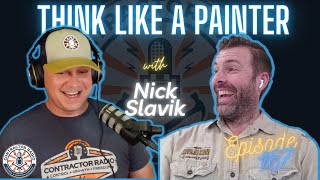
A Contractor Radio interview (Contractor Summer series) where host Jim Johnson talks with painter and restoration specialist Nick Slavik about his career, social-media presence (Ask A Painter Live), business evolution, and leadership challenges. They discuss finding passion, servant leadership, employee motivation, empathy versus accountability, and early uses of AI for practical business tasks.
Chapters
Hey, everybody, it is Jim Johnson here, your host on Contractor Radio and the head coach at Contractor Coach Pro, where we help contractors get control of their business so they can grow their business and hopefully find that personal and financial freedom they were searching for when they started their business. It's been awesome. We've been doing this for the last 10 years, and the stories that we are able to have now after 10 years of coaching has been pretty awesome. This podcast that I'm doing today is part of our Contractor Summer series, and I've got a pretty awesome guest today. I've been following this guy for quite a while, kind of stalking him. He didn't even know really, but I noticed he had a huge presence on social media. That's where I saw him first. And not only was his social media like, everywhere, but it was really good. He comes from the painting world. His name is Nick Slavic and he is with Nick Slavic Painting and Restoration. He is the founder, CEO and all things management, leadership, and everything else with his company. Nick, welcome to the show.
Thanks, man. Thanks for the opportunity.
Hey, man, it's an honor. It really is. You are like, in that painting world, you kind of guy. I see you more than I see anybody else out there. Maybe there's somebody I've missed, but you've been uber consistent. You actually have this thing called Ask a Painter Live. You've been doing that for, you said seven years. That's pretty consistent. And so I'm going to ask you about some of that here in just a minute. You also recently were voted in, I believe, as the chairman of the board for PCA Painters Contractors Association. That's. That's kind of a big deal, you guys. That's no joke. You guys have been around a long time. Excuse me. So for our audience, those guys listening and watching on YouTube, can you kind of give us a little bit of the background? Like, how did you get started in this? Were you always a painter? And how did you turn it into this, like, everybody knows, Nick Slavic thing?
Yeah, well, it does pay to be a loudmouth, a consistent loudmouth on the Internet. Right. So I got forced into this trade when I was 10 years old by my dad. My dad was a house painter and he got the whole family involved, mom, brother, me and everything. So from 10 to 18, kind of indentured servitude with the family business. 18 to 22, as you do. 18 to 22. I escaped and went to the army. Active duty service for a few years. Came out, used my GI Bill to get a college education. Got a bachelor's degree in business with a double minor and two forms of accounting, went to reform and rejoined the family business. And there was no place for me there. Father just didn't, didn't have a place for me. So I started my own business. And this is now the 15th anniversary of the Nick Slavic Painting and Restoration Company. And like you said, I've been, I've been a loudmouth on the Internet for a lot of years. I've been posting pretty consistently for over a decade. And I've been the host and creator of the Ask A Painter live show which is going on weekly now for seven years.
Wow, that's. That's pretty impressive. There weren't a lot of people posting and doing that kind of stuff 10 years ago that is still kind of brand new. What was the impetus behind that? Like, how did you know that was going to be a thing? Or did you?
Oh yeah, well, you're assuming I had this great foresight and stuff. And just like anything else, you know, it's like, hey, I'm going to start a painting business because I will be on the forefront of that and the trades are the wild west and I'll be there at the now. I just, I was always going to be a painter. I'm a servant leader. I like to share, I like to collaborate with other people. So social media was just an outlet for a introverted, passive aggressive guy from Minnesota to share all these wonderful things I see on job sites. You know, I would share all these little bits of houses that nobody else really sees or takes for granted but are very important to me. Fine craftsmanship, something unique. And it just spoke to a bunch of other weirdos like me out there who are kind of share the same values. So yeah, it's been, there's no foresight into anything. I just do that stuff. And it turned out to be a good strategy.
Yeah, it's worked out quite well for you. I first noticed you, you were painting, I think it was like this three story house and it had all kinds of intricate work on it and stuff like that. It was a long time ago. I don't even know if you remember, but you were, you were so into the details. And I went, does anybody watch that? Like, is that was that interesting to them? And then I kind of thought about my own world, you know, roofing and doing that stuff and like, who's going to pay attention to that? But we all kind of have our voice, right? And voice attracts a certain group of people. Have you found that to be true? With what you do. Like, did you have people start reaching out to you?
It does, yeah. So I. I have been called a lighthouse. I've been called a dog whistle to a certain very, very niche part of sort of like the populace of the United States of it. It's like you said, it's not just painters and roofers and other things. Like, I literally will go down a rabbit hole watching the best carpenters in the United States flash a rough opening in preparation for a window. Because there is an art. And watching any human do anything good, especially when it involves architecture, is so deeply satisfying to me. It's just. And I understand now why some people watch some of my videos.
Yeah. The ones that get me are the woodworking ones, the guys that do the woodworking. I mean, I can get lost in that all day long. And I don't even do that stuff myself. I just have an appreciation for mastery, I think, is really what it comes down to.
That's the best way to put it. Appreciation for mastery. I appreciate people who are really freaking good at what they do, and that is. Yeah, that's humbling.
So there's. There's a painting aspect to what you do, but there's also this restoration side. Do you get a lot of those special kind of projects to. To work on?
Yes. So when I, you know, I left my own family business. So in a town of 7,000 people, there were two Slavic painting companies in town. So my way of differentiating was not only service, but on the outset, putting the word restoration in my name. Because for anybody who loves historic homes, restoration is. It is a dog whistle word. It signifies something deep and meaningful to people who understand that that's deep and meaningful. So it does bring out. When I formed my company, I created my logo using fonts from the local newspaper from the 1800s. So I did some research into that. I found things I liked. I saw how the ads were made, the fonts were used and the colors and things like that. And then that's what I formed the company on. So if you're not into old houses, you think, oh, that's kind of a nice logo. If you're into old houses, you're like, that is my dude right there. He knows something. He knows something that I know, and there's not many of us that know that now.
Now, was that just, like, it made sense to you, or was it something that you had learned? Like, hey, to attract the type of client I need to go this route? Was that. How did that work out?
Yeah, great. It's so flattering that you think there's any foresight into this. It was just. This is what I love. And I think part of the reason that my social media does connect with people and stuff is that literally my logo, my company, my social media, my company is just a reflection of me and what I like. It is not one of those things, like, listen, my passion is fly fishing, but I'm going to get into a chimney building because it's lucrative and that it's like, you can only do what I do in certain ways. When you love it this much, it gives you that drive to be consistent and do it. Nobody's broadcasted live for seven years weekly without missing a week. If you don't love it, that is the chore of all chores. If you do not like this.
So why do you love it so much?
Yeah, good question. I think so. It's a deep thought I have, or what I consider a deep thought, which is my father was a house painter and I magically turned out to be a house painter. So what I don't think think is that I surveyed every profession out there. I did everything and magically, by kismet. My father was a house painter and I was a house painter. Like, wow, what are the chances of that? I just got in. I understand that people can have lots of passions. Finding your passion and exploiting it and staying with it for a very long time makes you an outlier. I was very lucky that I probably could have had a deep passion for 1500 things. Turns out that I was introduced to one at age 10 that scratched all the itches and I loved it. And that was it. It's like, you know, I'm. I always tell myself, don't, don't do the grass is always greener. What if I could have been a wildlife biologist? What if I could have been that woodworker? It's like, no, I. I truly get up every day with a passion for this. I love it. I'm not taking that for granted. And I will be interested in other things, but I'm not changing what I do. I love this.
That is awesome. See why I wanted to interview, like, this is why we do what we do. And I'm sitting here going, gosh, man, maybe I should quit and go get after fly fishing because I'm pretty. I just. Well, it's funny because I. I think that's first off a little lucky, right? Like, that just happened to be the thing, right? And it really did scratch all those itches because some of us out there we don't, we don't have that. I got really lucky myself 10 years ago in an unfortunate situation. My grandfather, well, it was, you know, the end of time and I got to spend the last three months with him and he felt it was important for him to impart to me who I really was. And he threw quite a few questions. What I came to realize is the thing I'm passionate about is actually coaching.
Yeah.
It's not roofing and it's not painting, it's not being a contractor, it's not any of those things. It's coaching other people to install fundamentals, build on those skills, master them, apply a strategy and win. Like that's I do. And I would do it for nothing and I would do it for pay. I've coached everything from little bitty kids to college age and sports, leadership, sales, like all kinds of things. And it took somebody like helping me to understand really who I was. And this is the longest I've ever done anything.
Wow.
So many of us, I think, travel through life looking for that thing, that passion thing. Any suggestions on how people might be able to find that?
Yes. So I famously do not read many business books, right. It's like I pick a book and I read it multiple times and I actually do stuff from it. So really I take about a two or three year arc on every book I read. Grit was the last book I read by Angela Duckworth and her whole treatise. And she's a social scientist. So this isn't a woo woo book. This is like Science and Data, which I'm a big fan of. And basically her thesis was you need to expose yourself rapidly to as many passions as you can. The second you find something that you like, you exploit it. And then you do intentional practice, which is you do it over and over and over again with feedback and you intentionally give yourself reach goals. And then when you find something you like and you can improve on and that increases your passion, then you stick with it a long time and that's how you come up with an outlier. So my strategy for my kids is to expose them to as many passions as possible because I don't know, it might be painting, but it might be guitar. So we're also doing that. So rapid cycling through passions. And the second that you like something, you have to do the intentional practice part. If you just. I think her thesis was too that what I took away was if you wait around for lightning to strike you with your passion, you're doing it wrong. You need to get out there Every day and just go wild and try stuff.
That explains a lot about me. Like everything I've ever done. I'm uber passionate about it. My wife will actually comment on it. There's either all or nothing for me.
Oh, yeah? Yep.
Once I decide I'm going to do something, I'm all in. My problem has been that while it was a passion at that point, once I kind of mastered it and had proven whatever I needed to prove in it, I lost interest. It was like, like for, for example, with sales for me, I was still improving on that thing and getting, you know, little bits here. But at a point in my life, for 15 of my years, it was like 100% all I did, 100% focus. I mean, time I wake up, till I go to bed, studying, reading, practicing and perfecting and mastering to be the best at what. At what. And that then translated into the next thing, like teaching people how to sell and then translated into the next thing, which offered me some leadership opportunity, which I got really passionate about and dug into that for many years and started teaching people about that. That seems to be my pattern. Like, I try to go gain these passions and these skills and then try to help impart them to others in a way they can do it faster. And so that's the whole coaching thing. Right. So I just took too long. Maybe that was the thing. I took too long.
I hear you.
It's like a four or five year cycle. And then I'd be like, okay, I'm bored with this. We accomplished everything we said we were going to do. All right, what's the next thing? And so you've never gone through anything like that. You've always been passionate about this thing.
Well, so as you talk about that, I sort of think about, I got a second wind in this industry. So this is my 30th year of doing this. And by this time you either become a super outlier or you become jaded or you leave or something else. But about seven or eight years ago, I decided to get super intentional about the business side because I realized the business that surrounded my beautiful craft was imparting stress that I never had with just the craft. And it was because I was just an unprofessional business owner. Like, I didn't really know what I was doing. I was just doing stuff and doing more stuff. More people, more vans, more everything else. And I soon realized that as thoughtful as I was with the craft and the science of coatings, I needed to do that with people and with my business too. So I got this crazy second wind that I'm still riding up the transition curve as I learned to be a manager and a leader. And it's like, I don't want to say reinvigorated, because I never want to give people the inkling that I lost interest in this. My passion was always high. If I could just paint the rest of my life, I would be perfectly happy. Until I found out about leadership, management, and entrepreneurship. And now it's like, now I want to do both. And it's giving me this whole other set of challenges where with painting, it is solvable. Right. There is just an end to the questions. You can be curious about new stuff, but the questions just stop everyone. You know, there's not any. Any big lanes, unexplored areas. But with leadership and management and the inspiration of others, I don't feel that ever gets solved. I feel you constantly keep moving through that. That excites me.
Yeah, same for me. So seven years ago, things changed where you went, okay, I've kind of perfected the painting part. Like, I got that down pretty well. Now I want to perfect the business part. And it seems like leadership was the area that you went. That's where I'm going to dive in. Or was it all aspects of the business?
Yeah. So again, with no intention and hopeful optimism, I grew a business. And to a dum dum, growing a business is get some more brushes, get some more people, get some more vans, and let's rock and roll. Right? And then that soup that you make, the gathering and the conglomeration of all those parts creates things for you to deal with as a manager and a leader. The interpersonal relationships, the interplay between them and your clients and things like that. So then it kind of forced me to be like, oh, I guess maybe being a business owner isn't just having a bunch of vans and people. Maybe there's a whole bunch of stuff that is like the connective tissue between that all and I was forced to reckon with all the major hurdles and heroes, journeys that business owners go through with that as they just came up in real time. In my business, if you.
If you had a chance to go back and do it all over again, would you do anything different?
100%. Yeah. So I didn't have job costing, a standard operating procedure, a job budget, anything. For the first one to three years of really aggressively growing the business, it was just cowboy style. Right. It was just grab a bunch of stuff, do a bunch of stuff. I'm sure this will all work out. Just great, right? And so now, I mean, it gives me shivers to think back before there was a job budget and job costing, but now I would go back and from day one I would build all that first and then hire my first employee. But that, I mean, hindsight's always 20 20, right?
It's what we're trying to get across to people. We gotta get that foundation down first so that we can then operate. Well, that's pretty cool that you followed that path like you and actually had the realization of it. Like, man, if I could go back and do that over again, I'd do these things first. So what are we passionate about today? What's the big thing that you're working on today?
Yeah, the biggest thing that I feel has unexplored areas and lanes and dark spots is that situational leadership, inspiration, motivators, things like that. And whereas, you know, I have a 22 step standard operating procedure that has been proven over 30 years to paint the walls in a bedroom and there is nothing quicker, there's nothing better. Highest value for the client, repeatable, scalable, trainable. That's not the same with leadership and management and accountability. Every single. All my humans are bedrooms that we've never encountered before and we have to create a new sop. And I'm working through that now to try to figure out, like, I know that people need to be led differently, but how can you apply a standard operating procedure to the different types of people and the different motivators so that I can be more streamlined. So it's not basically every human is a snowflake, that maybe there's 15 kinds and now we can apply to that. So that's the deep exploration and the thing that excites me now, which is I want to be a better, better leader for them. I owe that to them. And I am breaking myself right now to make sure that I just check all those boxes for them.
Are you finding any uniformities?
Yeah, it's interesting. You start, you start finding through lines because I travel the country and I talk to other contractors. Right. So you can imagine I was just in Boston. A group of third generation Irish house painters from Boston are way different than a bunch of upper Midwest, passive aggressive, introverted, quiet sort of people like that. So it's funny that there's, there's numerable different types of people and motivators, but we attract pretty similar people from a pretty homogenous area in the upper Midwest. So as far as I can tell, there are the thing that I'm slowly Coalescing around now is there seems to be a through line through people that are motivated by the approval of others. Sometimes they're within the company, sometimes they're without. And there's some people who are motivated by an internal other, like who are accountable to themselves and they, and they would feel really bad if they let themselves down. And then the wrinkle on top of that is maybe some people have a proportion of both. And what, what, what lever, what, which motivational lever do you then pull to make sure that they are the most happy and you get the best performance out of them? So that's like, that's the machinations now.
That first off, that's real, that's an accurate assessment. There's far less of group B than there is group A. I think most human beings are looking for recognition, acceptance, community, that type of thing. And that's their motivating driving force. I literally just got off of a coaching call that a salesperson knew what they were supposed to do and if they were on their own just out there doing their thing, it was doing their thing. But the second you incorporated another person across the street working down the street doing what they do, the motivation changed. There was this, this thing to shoot for. And so I think it's actually pretty insightful of you to kind of figure out that there's this internal like self driven type of person and then there's the person that gets it from more recognition and acceptance and those type of things. Has that been your experience? There's far less of one than the other.
Yes. It's really interesting that my people are breaking down into teams like that, even by job position, which is really interesting to see. And then like you just mentioned, the next layer of that is, you know, in the, in the human soup that we're creating in this business, all the parts are delicious on their own. And when you, when you put some of them together, they don't go, they're not bad, but they're different. And then you're like, oh, that's interesting. Didn't see that coming. And like you said, things change. The squishy, soft, irrational parts of us, the motivators, the happiness, the things like that change based on the combination of humans you put together, which is, and some of that combination makes it, it's like a one plus one equals three, you know, which is cool too. But it's just so interesting. I was not prepared for this in college. Right. Like this would have been a helpful course and it was non existent.
Yeah, I think the Only thing that comes close to it is probably psychology a little bit. But I heard you with the two minors in accounting and that kind of stuff, so probably not. Not on the track you run.
The opposite of psy.
Yeah, exactly. Oh, here I am interrupting you again. But this is an important message you do not want to miss because it's about AI AI and sales. Could you imagine having every sales call recorded, analyzed, tell you what's winning, share it with everybody else so they can start winning. Everybody's closing percentages go through the roof. If you haven't heard of Rilla voice, you need to go check out Rilla today in the comments below. So what are you finding to be the main motivators? Yeah, because that's a challenge, right? It's a challenge for everybody. It is figuring out what motivates this person that works for them, because most time, they're liars. I'll tell you one thing, that is what's motivating them. And I think those motivations might change over time. I think when we're younger, motivation might be just financial security, like, I gotta make some money. Right. But as we get older and we've made a little money, our motivators change. And then as we get more experience, would they even change some more? Are you seeing any of that?
Yeah. So I think a great example is what I also remind myself all the time is that that is all not static. Right. Everybody is one deeply meaningful conversation with a loved one, a grandfather, at a very pivotal inflection point in their life away from completely rejiggering all that too. So it's like it's a. It's a. It's a. It's a weird thing. The. As far as I can tell right now, I'm going down the decision tree because it. It's approval, and then sometimes it's internal and external. And when it's external, is it somebody else within the company? Is it somebody else there? Can you even figure that out? And so now I'm trying. Once we get down to about the fourth level of that decision tree, to me, that becomes a super squishy process where I almost want to say, okay, we need to go back up and simplify and just address this from, is it the approval of me, the owner of the company, or is it the approval internally? And then we start dealing with that and then trying to assign a situational leadership style to that. Step two for me, number one, I am on a mission to find motivators for my people. And honestly, I've only Really got intentional with maybe a third of them. And even then I'm kind of only 5050 on my assessment because I'm not an expert. Right.
So I know you said you don't read a lot of books. I'm scared to give you one. Have you ever read the book Freakonomics?
So listen to the podcast and I've listened to portions of the books. Never listen to the full book.
So that book is all about incentive, what motivates us. And we don't do anything. There is nothing that we do that doesn't have an incentive associated with it. And you can break it down real simply like just brushing your teeth. Right? Like we brush our teeth so we hope they don't fall out at some point. So why do we do the things we do? And is funny how often we apply the wrong incentive, thinking we're going to get this result from it. But the human being on the other side isn't necessarily motivated by the incentive you think they're going to be motivated by. That's what that book is all about. I think you'd love it because you're on this path right now. And that book was a game changer for me 20 years ago about understanding motivation, incentive and that kind of stuff for. For my people. Because you're right, it is vastly different. And they're not looking normally for anything that benefits your business unless it's a byproduct of what they gain. And so they're looking for external benefit, whether that be financial growth, knowledge gain, whatever it may be. Maybe there's a fulfillment aspect by giving back and there's all kinds of different folks out there. But tapping in and figuring out what that is, that's a challenge by a long ways. And then to try to apply it broad base across a business, are you finding that to be challenging?
Yeah, it is the most challenging. And it's the thing where it's hard and not many people do it right. Judging by, you know, the average sizes of business in the U.S. where, you know, when you look at the stats, you know, 4 to 8% of businesses employ more than 10 people of all businesses in the United States, some crazy stat like that. So that tells you intrinsically how hard this is. Now the thing that I love thinking about, that I know that it's a lifetime's worth of work, but then I also have to do pattern detection and say what kind of head trash and stuff do I bring to this for my upbringing? Because I'm not this objective arbiter of these things. I'm not coming here like a blank slate and taking everything perfectly for facts and that. I'm coming here with 30 years of being in a very regressive trades based business and things like that when standards are all over the place. So now there's another sort of like asterisk on the end of that, which is now how much of this is my feelings that are coloring this stuff too. And that is, that's where I really start getting lost in the weeds of like nothing's sticking out to me. I'm going to stay with it, I'm going to keep thinking about it. But boy, this is. You get into the number of variables on that and that's complicated.
Well, if you ever figure it out, I can't wait to read the book. Like, because it is it. When we deal with humans, like you said, they're not necessarily snowflakes, but they are individuals and everything's different. They all have their own baggage. They bring with them things they bring with them from their childhood. And, and, and like you said, even for yourself, you bring stuff from your childhood and from your upbringing and your preconceived notions to the table. And to mesh those two together is just challenging. What are you finding that's working?
Yeah. So happiness and empathy and circle of trust up front and honest. It was not the way I was raised in the trades and it took me a lot of years to get over it. That you know what, it's not fair. I was screamed at for a lot of years, do it better, do it faster. And even when I did do it better and faster, there was no attaboy. I mean, it took my own father 11 years to tell me, good job. And even that it was kind of a surprise, like, oh, good job. One of those things.
So you noticed it?
Yeah. And it was like, oh, that was weird. Did we just have a moment together? This is one of those things. So and so it was actually really hard for me. Again, this is the head trash that I bring into it, which is, that's not fair. These young people should suffer too. Just like I suffered. You're like, is that the company you want to build? It's like, but again it's, you're, you're laden with that, which is this. I have this internal scale of justice where it's like, hey, if it worked for me, that's fine, but this is my passion, so I'm going to stick through it whether people are screaming at me or not. So empathy and happiness. I had a very important person to Me in the company, my production manager, Holly, pulled me aside years ago and say, hey, you know what? When you show up and you're happy on these job sites, production goes up. You should try more of that. And I was like, all right, let's try that. And it does work. It doesn't feel fair all the time, especially when you're addressing basic kind of accountability stuff. But it's what managers and leaders do. And I just kind of had to come to terms with, like, I don't. I shouldn't say that. I shouldn't say I don't trust it. I do trust the process. It's hard to trust the process. It doesn't always feel fair. It feels like you should just come out and say, stop doing that. You know better. But you have to go through this empathetic, happy way of doing it. And honestly, it feels better when I'm done and it's better for my people. So it is a thing I have to force myself to do, to be intentional, just like exercise. But when I'm done, I always feel better.
What does empathy mean to you?
I think trying to see it from their point of view, which is some things are so obvious to me that you would wake up extra early, break yourself to the point of exhaustion, and constantly be thinking about the next day, the next week, the next month, the future, your future, the company's future. And nobody else is going to do that. And it doesn't even mean they're bad people. It just means that this isn't their passion, doesn't mean they're bad people. This isn't their life's work, doesn't mean they're bad people. They're never going to think about it as much as you. And to hold them to your standard is actually very unempathetic. Like I. Back to psychology. One of the things that I readily use in my company is Maslow's hierarchy of needs, which is, hey, listen, why aren't you interested in the coding signs of a cross linker and a new 2K poly from Renner and the amazing KMCA standards it can help reach with the, you know, the coffee and the burnish test and this and that. And they're like, dude, I might not make my mortgage payment three months from now, you know, and it's like, oh, you need to. If they don't have the base of that pyramid covered, they're not going to start thinking about self actualization, the future, or anything farther than what's in front of them. So you have to meet them where they are and just say, if the most important thing for you is a stable relationship, a stable job, constant progress, and maybe you want to not hate it during the day, I can provide that. Now my hopes is that I can inspire you to love this as much as me. I want that for people. But it would be very unempathetic to have your love of this craft as the standard, I think.
Yeah, that's kind of a, I don't know, a truism of being an entrepreneur. Nobody's going to love it the way you do. Nobody's going to feel the responsibility that you do. If I can get 80%, I'm pretty happy because they don't get the benefit you do. There's, there's an imbalance there and we got, we got to kind of understand that.
So, yeah, and I think that. Sorry, sorry, but that is, that has literally been the hardest thing for me as a leader to come to terms with, which is just making peace with that and loving the people around me. Even if they don't like, even if they don't have this deep seated passion or they think about other things during the day. Loving, caring, empathy is still like, yeah, it's a hard fought lesson for me as a leader.
Well, you mentioned it earlier, this concept of servant leader. What does that mean to you?
Yeah, I was only introduced to this a couple years ago actually through the pca, the Painting Contractors association, the nonprofit that I'm the board chair of. We started trying to figure out, me and another contractor. We actually put the organization through traction and professionalized it the best we could with the help of a mountain of other people too. But when we started going through the core values and who we should be recruiting for board members, we're trying to oversimplify and try to just say, here's what we're looking for. And we wrote down all the best traits of the best members and board members and they were all leaders and they all just served. And they all, they didn't come to the PCA and say, if you give me a free booth at the trade show, I'll gladly give my time to this thing. No, they all showed up and they said, I want to help. This is meaningful. There's not even really an immediate benefit to me, but this is what I do and I'm here to serve. And so we coined, we didn't coin the term internally, we recognized the term servant leadership. And now it's like, oh yeah, it makes complete sense. Ask a painter live my 7 year social media show. I Have this biological urge to share stuff with other people. And it makes me super happy when other people interact with me about it because that's what I want from other people. And this whole organization is full of servant leadership and it gives me a ton of energy.
That's super cool. I think more of that is needed in our world. The best example that walked our planet 2,000 years ago, right? And it's what we preach. We preach this idea of caring enough to willingly serve you. And willingly being the key word, like willingly serve your people. They'll know that you won't. But that empathy thing, we sometimes take that too far. There's a big difference between empathy and sympathy. Like, yes, I put myself in shoes. I see what you're dealing with. I understand what you're dealing with. I have some experience with what you're dealing with. But we're not going to allow that to be an excuse. So here's our action plan. I won't let you fall down on those excuses. I won't let you play victim because I believe you're a victor. And we tend to not have that ability to press that extra button there. Have you had any experience with that? Like maybe being too kind?
Listen, man, you. It's like you are partially in my head right now. So I have. I got this poor high school intern, man. My beloved high school that I graduated from is down the road. And I got involved with their business program and stuff. And they sent me this intern and he's going to college in North Dakota here in a month or two. But they kind of gave him to me and said, do what you want with them. And today, this morning, we worked on. His previous project was doing a bunch of automation with artificial intelligence for goal setting and review meetings where we track data and compile it. And that's all the fun, like, you know, crispy stuff that we do with the young fun people. But we completed that project and now I'm talking about recruiting, retention and inspiration. And this morning we had to deliver a stain sample to a client. And we got in my car and I said, we're having a mobile meeting today. And all we talked about was my arc of over sympathetic versus over harsh with all my people. And I wanted feedback from an 18 year old. I said, here's examples of all these conversations I've had. Give me feedback of whether they were too empathetic, too harsh and things like that. And literally, that's all we talked about this morning, of that. And then how people reacted to it. And the outcome and slowly realizing that, you know, when you get an 18 year old's perspective about that, it's like they do not enjoy the over empathetic either. That doesn't get best performance out of people. But they also don't like the old grumpy guy screaming at you. So it's always that interplay of. It's kind of like a no duh sort of thing. But it's great to hear it from somebody from the generation underneath you about that. So yeah, you're in my head, man. That's all, that's all we talk about. And this poor high school intern standing there.
Like an 18 year old kid was open for that conversation.
Dude, yes. And so I got a gem. I got an absolute gem. So on the outset you'd be like, oh my God, this kid probably fell asleep into his face down in his cereal. He could not be more into this. Like he is, he is a high performer just like me and my leadership team. And he brought examples of exact. I would bring an employee example. He would bring an example from Boy Scouts or from a sports association in school. And we, our examples mirrored each other to a T. Exactly. So it's really fun to impart that later on in life stuff. It's also fun to get that experience from him, which is again, we all think we're snowflakes. Magically. People in the Boy Scouts experiences, people in painting businesses, roofing businesses. It's universal and it's amazing we don't actually get more intentional about it and think about it more.
Two of my favorite words, intentional and thinking. Well, you're part of the problem. You're out there, all this social media stuff and it's distracting to me. It gets my attention and we all fall into the trap. I mean there's very few people in the world out there that don't go, hey, there's Nick. Let me watch that reel that he's got going. That was pretty interesting, pretty humorous, pretty funny, all that good stuff. And then the next one, the next one and an hour later, I've wasted an hour of my life that I could have actually been thinking and being intentional about what I do. Do you do anything to like keep that out of your world?
Dude, listen, all right, we. You like me. I'm known for ASCII Painter live off the cuff. There is no prep that goes into my show and that's an open secret. Like people know that they. When I fired up, we go, you mentioned the same thing, which is, you know me. You did a minimal amount of research and we have an organic conversation. This is all I do now. I intentionally. So I'm. I'm a utilitarian. I cannot just do one thing at a time, right? Most business owners are like that. Like I know I have to do fitness to keep myself of a certain physical shape so that I can do this for a very long time. I also cannot just exercise and not do something else while I exercise. So I found a form of exercise where I used to do stuff like weightlifting and running where it was too strenuous to have successively deep ideations. My brain would get distracted by the physical pain in my body. So I go for hour and 15 minute walks now every morning on a country road by myself and my dog and I force myself. Usually I put one song on repeat so it distract my brain long enough. And then I tell myself, here's the one thing I want to ideate on this morning and it's going to trail, but I'm going to go this. And if you give yourself even eight minutes of no distractions, you start having these successive thoughts that you never would have had built upon one another if you were staring at Instagram or you were in a boardroom or in an office. And it is the, it is something I look forward to every morning now, which is that successive thoughts. And so, and it's all, it's all personal stuff, right? It's all, well, not personal but like personnel stuff. It's all, it all deals with the people, right? And thinking about the different variables and parts of that soup and going through thought experiments with that and just trying to like first principle reasoning it and say, well, if I had to start over, what would I do? Or you know, things like that where you try to get rid of all your sort of dispositions about it. So yeah, long winded way of saying.
Yes, well, it's, it's another one of those truisms slow down to go fast. We tend to think how we got to get to the next thing, get to the next thing, get to the next thing and constantly moving forward, like how do I grow the business, scale it and do more work and get more leads and make more sales? We're always like that mode. Has there been anything on your walks this hour and 15 minute walk that you had a breakthrough on that you applied to what you do and it moved things ahead much faster than if you would have just kept bowling through?
I think, I think there's going to be an unsatisfying answer, but I take ultimate ownership of everything. I still I tell myself that this is all my fault. If something happens and I truly believe it is, I believe that we can affect it. So most of the breakthroughs I have are confirmation of the things that I may not be good at or may not want to do, but you have to do if you're a leader. And it's that the biggest breakthroughs I've had are not moonshots. They're more of like, literally, I'll be on a walk and be like, does that. It's one of those things that's like, oh, dumb, dumb. You know what it is? You just refuse to do it. It has everything to do with micro accountability, which is somebody in our position. You know, I think about technician versus manager versus leader. And technician does the work, manager manages technicians who do the work. And then leaders inspire the managers who manage the people who do the work. In my like, oversimplification and for me, that micro see something, say something every single day for the rest of your life and you're never going to solve it is the thing. Never letting accountability go any longer than it has to. Saying it now, holding people to it, that is the way to success. And that's through the few business books I've ever read, you will find a version of that listed as the main arbiter of success in any business.
You know, that was really good. Wow. That was like, I like mic drop, let's go. I was pretty sure.
Yeah. So unsat. I wish I would say, oh my God. I had this idea for an app and it completely revolutionized my business. It's secret, nobody knows about it. I'm making four times the profit as everybody else. But we know business success is not that Apple, they grind. They grind. Apple just started. Apple's a bank. They launched a sort of like deposit thing where you can save money and they like, weirdly enough, they didn't come up with the next new iPhone. They came up with the most stupid, boring thing on the planet. A bank. And honestly, I think they are by market cap, the largest bank in the world. Now that is the mundane, unsexy, boring thing that they did that makes them world class. They didn't completely change the iPhone.
Again, there's not much more you can do to. It doesn't seem like unless they just embed one in your head or something.
Hence you get into banking.
So you, you mentioned something that's a topic. I've been looking for somebody that might know something about this AI automation stuff. Is that something you see valuable for your business?
Yeah, right. Now it's a novelty. Painters. Painters love to make poems about painting on it. That seems to be a very popular thing right now. But that is not the highest realization of A.I. honestly, for me.
Hold on a second.
I know, I know. Hold on.
This is what we're doing. We're making poems on AI you gotta send me one of those.
Listen, listen, hold onto your shorts. House painters are not at the leading edge of technology in artificial intelligence. I'm just gonna. Let's open and honest. I know. Clutch your pearls. It's a crazy realization, but no. So what happens is people use it for all the novelty stuff, but I schedule time each week to mess around with it. And the two things that I'm working on now are some very utilitarian things which are just Excel formulas, right? Like it's. Like it's beautiful. Now that you can say I have 10 spreadsheets and randomly throughout, I need to find a certain number, give me a formula that links all these spreadsheets. But then I also want to conditionally format if it's above this number, green, below this number, red. And I want it to appear in these two things. But when it's on this sheet, I want it to be orange and yellow. And it'll spit out the longest sort of like formula you've ever done. 90% good. But that I never would even been possible. It's not like with enough YouTube videos I could have done that. It gets me 90% of the way there. And then I troubleshoot. So there's the utilitarian part, but there's also the part where I like big macro visionary things. So I'm intentionally using it to try to derive market data from our industry, which is you just. I love that. Think of it as like one of my morning ideation walks, but with AI as my walking partner. And I basically say, how many house painters in the US and then you start looking at the numbers. How many painting businesses in the U.S. what is the largest painting business in the U.S. if you have 20 employees, what segment of the industry are you? What does the average house painter take home? What is the average. What is the lifespan of the average painting business? And you keep having these successive things. And listen, 40% of it is not accurate, right? We just know that. But through a series of logic, you can start discerning what is true. And there's certain things you run across so much that you're like, okay, that is a thing. Now I could do census reporting myself and find out if it's actually true. But Outside of that, we actually have really good stuff. And then you start drilling down into your own market. How many house painters in Minnesota, what is the market cap? How many gallons of paint are sold in the U.S. what about Minnesota? So for me, that's like, I like the stuff that I can use now, but especially for visionaries of these companies to connect what I do in the cosmos of what's going on around me really gives me my place and lets me understand how unimportant or important it is, what I'm doing as well.
Well, I think what you're doing is pretty important. You are one of those guys from the book outlier. You're constantly pushing the envelope. You're constantly thinking. You're constantly like, hey, is there a better way, a new way? Is there something that's in this pattern of all these pieces flowing around out there? Is there a pattern to it? Is there an order to it? I think you and I are a lot more alike than I ever thought, because that's my world. Like, that's where I live. I see puzzle pieces and then I start seeing connection, Then it starts to make a pattern. And it's just kind of how I'm wired and who I've been my entire life. And that's really how I've kind of been using AI Is to take and put those puzzle pieces together. I didn't know you could make poems. Like, I haven't even thought about using it for this.
I thought everybody did that at first, because the first time I heard about AI I mean, all it was was write me a poem about the painting industry and the voice of a pirate from the 1400s. And everybody's like, oh, look at this A.I. this is wonderful. And it's just like, okay, I get it. Like, that's really cool. But, like.
You'Re going to mess me up really bad because it's going to be like the reels on social media now. I'm going to just go put silly stuff in there and spend the time, all day doing that. No, I only got so much time on this planet, so I'm trying to make good use of it if I can.
Likewise.
What are. You know, I'm a guy. I'm painting houses. And it's. It's me and maybe a buddy, small business. But I, you know, I make enough. But I'm thinking about growing my business. What are. What are some of the first steps that they should take or any other contractor?
Yeah, number one, know thyself. Right. Which is. I know examples in this industry of people who have 20 million dollar painting businesses with office staffs of 75, multiple locations up and down the eastern seaboard. And I also know somebody who works for three weeks, takes a week off, does adventures with their wife, they manage their own portfolio of real estate. They work alone. They only do one type of painting job. It's a complete lifestyle business. Both people are equally happy. So, number one, just because Mr. 20 Million does what he does, doesn't mean you should be doing that and anywhere in between. So, number one, you got to figure out where you are. Number two, I actually, as a servant leader, I documented my entire path to professionalization over the course of Ask a Painter. And I condensed it down into a one page document with like six or seven steps, and it's all just.










