Triple Bottom Line with Jonathan Orpin
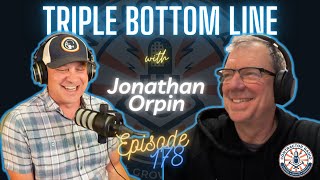
Jonathan Orpin, founder of New Energy Works and Pioneer Millworks, talks about building his companies around a triple bottom line: people, planet, profit. He moved from solar and insulation into timber framing and reclaimed millwork, sources FSC-certified timber, and converted to an ESOP to give ownership to his 160 employees across two coasts.
Chapters
Hey, everybody, it is your host here with Contractor Radio, Jim Johnson, the head coach at Contractor Coach Pro, where we help contractors get control of their business by being better leaders. We help them grow their business and scale it to a place where they need it to achieve their dreams. And hopefully if we do all that, we position you in a place to work on your business instead of in it. Today I have an awesome guest. I cannot wait to talk to him. And there was one thing that really stuck out to me that you're not going to want to miss as we get to that thing, because it really spoke to me because I believe in a lot of what this guy's about. His name is Jonathan Orpen. He is the owner and founder of New Energy Works and Pioneer Millworks. He sold his company to his employees. I'm interested to find out what that looked like and how that went because I think that's something that as us as entrepreneurs start to consider after being entrepreneurs is a little while is like, how do we get out of this thing? And to do it in a way that works for everyone, everybody. So I'm excited to talk to him. Jonathan Orban, welcome to Contractor Radio. Good to have you on board, my man.
Thanks, Jim. Glad to be here.
Yeah, I got introduced to you by one of these podcast folks and most of those people I go, eh, don't think so. I like, they send people that just, I don't think fit the show real well. But you have been in the contracting world. Timber Framers Guild. Right. And president of that. You've been around it for a long time. And the sustainable building thing was really interesting to me because this planet's important to me. And so could you just give us a little like, brief history of what kind of brought you here to being on podcasts and talking about sustainability and exit plans and things like that.
Wow, sure. Let me give you that quick executive summary because I've been around a long time and so started in the early 80s, new energy works as a solar company and an insulation company. And quickly realized I wasn't much of a sales guy. So I had to figure out something that people would come to me for and discovered timber framing, which is it's just a really great way to build for two big reasons. One is it's gorgeous and so it attracts really good co workers because they want to do gorgeous work. But also it's a great way to insulate a house because you kind of like insulate the outside of it. Throw a blanket over a piece of furniture. I always say so it met a lot of my goals, which is to have a nice place to work, a niche and a. And frankly a really good insulated house. If people came to me and said, oh, I want, you know, one of your beautiful houses, I said, well, that's great. I know you came to me for the beautiful house, but you get the best insulated shell you can, whether you want it or not. And they would laugh and I would laugh and then we would give them the best insulated shell we could. So that's how it started. Then a little while after that, we got involved in Pioneer Millworks because I was looking for a stable, a more stable wood, a wood with a story to tell. So reclaimed wood kind of caught my eye back then in the early 90s. And so since then we've just grown ourselves. We're 160 people, places on two coasts. And yeah, that kind of brings us right up to now, you know, and the rest of it is most of you and your listeners know is just hard work and years at it. So that's what we are. We're hard work and years at it. What we're known for right now is having sold the company. We've become ESOP employee Stock Ownership plan, which I can talk about if you want. And we're also a triple bottom line company, which is means that we are as interested in the people and the planet as we are in the profit. We are interested in profit, but we think business is best expressed when all three work together like three legs of a milking stool, you know, or something like that. You really want all three equal lengths, equal legs of the stool. So we're really into that. And because I'm not a professional here, I can tell you that I have to plug in my computer real quick. So I'm just going to lean over real quick. Jim, give me one second.
It's all good, all good. No worries. You won't be the first person I've ever interviewed that had to plug in their computer. So we're in good shape. Before we get to those other two things, I get it. The timber framing thing. I actually built a log house. Oh boy. Back in 2000 or so. My best friend actually built it for me. It was really important for me that the product that I got was sustainable, dry aged, came from Canada. And I was between timber framing and doing a log house. And I really had some decisions there, which route to go. And I really kind of came down more for the look than anything else. Just where I was in Wisconsin. But the Insulating factor was a big factor for me because we did use full log, the whole bit. So just kind of a little side note there. I don't know if everybody out there knows what timber framing. I think they know what a log house is. But how is it different from, how's timber framing different from like.
Well, in some ways think of a barn where you've got posts and beams and traditionally we join with wood to wood joinery and mortise and tenons, you know, male and female joints on the, on the ends of the timbers. It's more of a framework than it is a lot. Logs are piece on piece where you're you know, building up the whole wall at the same time. This is really a framework of heavy timbers. And while I use the word, and while I use the word barn, if you ever look at some of the timber framing that's going on in the world, it's often very contemporary looking, very clean looking. Although you know, good old fashioned barn racing can still be fun.
Yeah. So because they are cool. Like I, I've seen some amazing timber framed homes, buildings, offices. What's, what's your favorite one? What's the best one you ever did?
There's no chance I am going to.
Come on man.
But I will tell you we did amazing one recently out in the Alvord desert area of southeastern Oregon. 150 miles from the nearest grocery store. We're there for two weeks, I can tell you. We loaded up the trucks with all the food we could get and barbecued every night and, and that is. It was a horse barn or as I like to say, kind of a horse cathedral. Really big stuff, gorgeous soaring arches and again you can probably find that on our website. I reckon so we never can fit everything we do in there but again because we're, you know a lot of people on both coasts are doing a lot of work but you know that was amazing. We also right now, next weekend we're featured at the Northeast Eco Builders Guild Grand Slam as an event up in Seattle. We'll be presenting a 1600 square foot house I did for a lovely couple, Eric and Barry who all they wanted was sweet, gorgeous and unbelievably ecologically sound. You know, no petroleum products, super well insulated carbon sequestration the whole route. And you know that's just as favorite a project on this.
How are you insulating something without petroleum products to.
We use either cellulose insulation or wood fiber insulation. Those two are the big things. Wood fiber insulation is a whole podcast on its own. It's coming strong to to America right now. Our first ever wood insul wood insulation, wood fiber insulation plant just opened up in Maine called Timber hp and it's. What it takes is it's instead of pulp trees, instead of trees going to a pulp mill which has now been decimated by the digital market and the rest of it, these pulp trees can go to a plant that turns it into insulation, either loose fill bats or rigid. It's an amazing process. We've been importing a similar process product from, from Europe for last half dozen years, container after container because we just believe in it so much. The use of wood fiber is an amazing, you know, the conditions of that it's used for is just, it works better, it works great, it breathes, it's got good acoustics, it's got good fire rating, you know, with less borates in there as the f fire retardant and it's just killer. So that's one of my favorites.
I could do a whole podcast on that. Like that's, that's.
You bet you can. Just get me, just get me started. Jim?
Yeah. I was wondering if you were maybe going to go into straw bales and stuff. Like I had a buddy at one point in my life that was building.
You know, straw bales are cool. It's really hard to scale that. It's just not accepted in the the world. And you know, it has its issues too. So I know a lot about straw bale and it's just not a direction we've chosen to go. And really, nobody does.
Enough of my silly curiosity, all right?
I don't know if you'll. You're a curious guy. I don't think you'll ever have enough of your.
I dig building. I just do. I think especially when you get to build like cool stuff, sometimes we get a little caught up with like a lot of the guys I work with are roofing contractors and you know, putting a roof on is putting a roof on. There's not a lot of pizzazz and excitement there. But when you get into the specialty products, I mean, it can be pretty, pretty darn interesting. So tell me a little bit about why and how you navigated this process of going from founder and entrepreneur owning these two businesses to deciding that, hey, I want to exit, but I'm not going to go sell it to somebody out there. I'm going to sell it to my people. Got a phone call.
Yeah. Excuse me. So, such a powerful question. You know, I, I like to say there's three ways A guy who is aging out, which I will be doing at some point, can leave. He can leave in a box, leaving a mess behind him. He can sell it to a third party and, and hope that that will work out for everyone or in this case sell it to or otherwise bring your co workers, what I call co workers, other people call employees, into the process and into an ownership position. You can do that in a variety of ways if you're large enough a company, an ESOP employee stock ownership plan, which is a bipartisan supported, believe it or not, yes, bipartisan supported. Part of the government back in the late 70s as part of the ERISA laws, which allows a owner like myself to sell it to the employees through this ESOP program. And it's a tax protected entity. So the tax savings are what allows the employees to buy out the ownership, whatever the ownership is. And that way I know that the legacy that I, that I've helped create, been part of creating, but that I've shared with my coworkers, some of which have been with me 28 and 30 years. We I know that they're going to be properly rewarded because now they become owners and all of that hard work comes home to roost. So it's in its simplest form it's an additional retirement project, but in its bigger form it's an emotional step into being to getting the reward that you, I think, deserve. In some ways, I tell my co workers in, when we talk about this in groups, I say this is not ownership or management, you know, method of getting you to work harder because now you're an owner, it's really giving you what you deserve. And in fact though ideally, you know, we'll be more profitable because people maybe are just a little bit more caring or maybe just a little bit putting up with less garbage from some new guy who's not carrying their load or whatever it is. You can fill in the blanks there, but ownership is powerful and now we are all owners. You introduced me at the beginning as the owner and I wanted to say, wait, wait, wait. I'm no longer the owner. I am one of 160 owners. And it's just so, it just gives me the woo, woo. Stu, what can I tell you that's good about it?
That's super cool. I've never navigated that part of it. I'm in the process of navigating some of that right now with a couple of my co workers that have been here for quite some time and earned it, I mean, worked really hard to start moving into that position. But it's not everybody.
So ESAP only works if you're relatively large. Right. You know, because it's very expensive and it's highly regulated and the maintenance costs are high. But there are other ways to do it that you're discovering now. What way are you looking at? Just give, you know, sharing some of the ownership percentage or.
Yeah, that's exactly what I'm going to do. A majority of it is going to go to these two folks. I'm going to stay involved. I'm not ever going to retire. I love what I do. I, I feel like if you retire, you're kind of selfish.
You look like you're 30. You've got a long way to even talk about it. Forget it.
Actually, I've already retired twice, so neither time did I stay that way. But I'm older than you think, probably I'm 53. So you start thinking about those types of things. Not because I necessarily want to go off into the. And go fish and golf all day long, but it's more because they deserve it. They've worked really hard for it. We've created something that's pretty special here. I have other things that I want to do in my life as I continue on in my, my work process. And so that's. It's important to me. I've helped others in my business build a business within the business and then sell that to them or hand it off to them in some cases, which has been super enjoyable. I just seeing, I love seeing people succeed. I just do. It's. It's cool to see that happen on a large scale like yours or a small scale like mine. It has been, It's. I mean, it's part of what we do. We coach contractors, so we help them build and succeed out there too. So it's just kind of how I'm wired. I really hate interrupting these videos, but I've got some important information for you. If you haven't tried out Atlas shingles, you should, because they put you first as a contractor. They want to give you a competitive advantage out in the field and so that you can win more sales and be more profitable. Check out Atlas in your local area, find your local rep, get hooked up with them today and start making more money tomorrow. What have been the hurdles to the like? Because here's my first, like, instinct on hearing this. I go, well, it went from one guy getting all the profits to now 160 people. Does everybody, like, get the same kind of benefit? Not the same kind of benefit, but how's that different?
Well, I mean, clearly as at one time the sole proprietor, you know, the buyout, I was a beneficiary of the buyout. I'm pretty convinced if I'd gone to the third party route, the arm's length sale and walk away from it, probably could have financially made out better. But you know, honestly, I was compensated just fine because the way the ESOP rules work is that the selling price has to be determined by a third party licensed valuation company. So, you know, there was just, it wasn't, wasn't any behind the scenes stuff. It's, as I say, highly regulated or go to jail. Dude, if you don't follow the rules.
You don't want that?
No, I don't want that. So, you know, in that example, that's the way that was decided and I did fine. Now the profits go into the esop, which is valued every year by a third party licensed valuation company, which determines the cost of the shares, the value of the shares. So when somebody retires, if they've accumulated, you know, a thousand shares and they're worth 100 bucks apiece, you know, that's a hundred thousand dollars, you know, that they gotcha. Not have. So, so basically you're accumulating shares as you go on in, in work and there's a pretty complicated bunch of formulas that go along with that. But. So that's it in the ESAP method. I think a lot of your listeners probably aren't necessarily large enough to go the ESAP rule, but if you are, you oughta. That's my comment.
Is there, is there like a cutoff point where you go, yeah, business, so I can do it or 50 million or 30 or is it more number of employees?
I'd say 20 million dollar business with.
Oh, you got a bunch of, you got a bunch more. Surprised?
Yeah, yeah. No, I don't, I have no idea. I'm sorry. As you know, talk to contractors and most of the contractors I know, you know, are friends of mine who have, you know, three to 10 people businesses. And so. But yeah, you know, if, if it's time to age out and you're a contractor with a reasonably profitable, big enough company, I, I think you, I think it'd be a big mistake.
So you've tied this into the sustainability thing that you're so wired for. Right.
Adamant about. Yeah.
And, and so there's this, this part of you handing the business off that said this makes this business sustainable beyond me. Right. Is there, is there some legacy thing there or is it like you didn't want a third party to buy it and turn it into another name or change the culture or do any of that kind of stuff.
Yeah. You're kind of asking, is there ego involved here? You know, not really.
Because I am like you. I'm glad that was your instinct. Right. Because I'm like, there is no legacy about me. Like, it's not my legacy. I'm not doing anything that isn't already. Probably somebody else out there that can do it. But did you want to see it because of you want to see your business continue on past you or did you see it from. I want to see these people benefit from my business or a little bit of both?
Oh, yeah. It would probably be the balance of the two. You know, that's a really interesting question. I, I would say that there is legacy. There is a certain amount of. The last thing I would want is in three years meet somebody up at the, at the cash register at the local grocery store and hear what you made out. But I'm out of business now because, you know, those people came in, didn't know what they were doing, or those people came in and raped the cash register or whatever it is. Plus, we tend to be relatively quirky little company and it would be hard for somebody to come in and really understand all that was going on. But we have all those people in place now. I mean, my second gen leadership is powerful enough to tell me off in a hurry and that's important.
We don't do it your way anymore.
That was so last year, dude. You know, so is that weird? Well, that's a whole different podcast in transitioning leadership now. God, you're a coach. You know as well as I that it can be very strange to no longer be the sheriff in town. Now I work at the pleasure of the board. You know, I'm the CEO. I went from sheriff to CEO working at the pleasure of the board. It's very interesting and not always comfortable.
Honestly, you better hit those performance standards. They might have to replace you.
I offered twice.
That's really good.
Yeah, yeah, it's crazy. So you mentioned sustainability. Are we going to get into this triple bottom line thing? Because that's what I thought you were going.
I am headed there. But before we get there, I think people need to understand what the green industry is. I think there's a lot of misconceptions about that. Is that something that you could briefly like, go, hey, this is the definition of that?
No. Okay.
That's kind of what I was expecting. Because it's so many, I mean, yeah, like, like people who go, wind power is sustainability green and that kind of stuff. But then I have my questions like, well, those things cost a million dollars and they got maintenance. I like, is it really, like I always have it and same thing for electric cars, like, oh, you know, we have to generate that electricity somehow.
Right.
So there's all that kind of. So where do you kind of draw the line?
Might be over my pay scale. And I mean that quite sincerely. As an example, I have three electric cars. I believe in them, but I'm, I'm terrified to know more about where the lithium came from in the batteries. You know, I'm terrified to know that, you know, by the time they're, they're no longer usable batteries that we don't have an infrastructure that can reclaim the various elements. My son says it's not green, you know, and he's smarter than I am. But you know, electric cars aren't green. I think they probably are green. But we really have to just keep pushing on two major issues, you know, reclaiming, recycling the lithium, finding more sustainable sources of lithium, which there are out there other than the easy third world countries that are being, you know, ravaged for the sake of it. And the other one is making a green grid, you know, continuing like I live in Oregon where we have a very green grid here. It's like third greenest in, the third most sustainable in the country. Lots of wind power, a lot of water power, a certain amount of solar, not as much. And so I'm happy to have a electric car. If I lived in West Virginia, I wouldn't drive an electric car.
That makes sense. That actually makes a lot of sense.
So you just got to go at it piece by piece and just do the best you can. And every time you spend a dollar, you got to make sure you're spending it in a way that you can believe it.
So let's talk about this triple bottom line thing. It's people, planet and profit. Can you explain a little more about what that means as they come together?
Sure. So to me, business would be too self serving if it's just about profit only. And I think the idea of capitalism, and believe me, I'm a capitalist, but capitalism run rampant means just, you know, the next quarter's profits and the stock price or you're going to lose your bonus or you know, the ever increasing wealth gap that we're seeing right now that you know, we could talk about for too long and point to the problems that it creates. Not for the 0.1%, but for the bottom 50%. And it gets tough. So for me, business is perhaps the most powerful opportunity for change there is change, whether it's stopping the climate crisis that we're in or creating better programs for people to succeed and live a fuller life or whatever it is you want to say. So business is this powerful entity that is not being used that way, but the triple bottom line businesses that use the triple bottom line as their filter where all three are equal. The decisions we make have to do with right for the planet, right for the people. And who are the people, the people who work here, our clients, our community, our global, you know, the people we're sharing this earth with. And then profit. Profit is critical because without profit you can't be a good planetary steward, you can't serve your people well. So they're all three just as important. Like, like, you know, milk a cow with a two, two legged or one legged stool. It's not, I would think that it's got issues. I don't milk cows. So maybe I'm out of my area though.
Can you, can you give me an example of some of the decisions that you may have made along the way with that lens that you're looking through? Because I can see how I could get a little dicey every once in a while. Like man, there's this project we could do. Oh, highly profitable, be great for my people, maybe not so hot for the planet. Have you had any of those experiences?
Only every day. Every day we have to. It's hard. And so right now, for instance, we've made the decision on the, on our west coast team that all of our timber that goes through our program is going to be Forest Stewardship Council certified. And it's one of the few internationally recognized third party people who decide whether the wood is sustainably harvested as an example. And yet that adds money to the cost of our products. And we don't take a profit, we don't take a margin on that particular part, but it still adds money. And so for, in that example, we're going to lose it. I'm looking at a job right now that we're going to lose because it added, it was a big job and it added another $35,000 to the cost. And you know, that $35,000 is just one more straw in the camel's back that we might lose that job over. But you know, so that's one. And then one of my co workers says, well there is that $35 that we could Take away. And we're like, you know what? I think we'll just leave it there. And, you know, we're blessed with enough work that if we lose this one, you know, so that's an example right there. Another one is right now we're working with healthcare for our, for our client.
Right. Like, it has a lot to do with who your client is, you know, it doesn't actually.
I'm a little surprised about that. So I was telling you that we do a lot of wood fiber insulation, right? So on the outside of stud walls, your contractors, this is, this is the language we speak. The outside of stud walls, there's a thermal break often used. You know, in this case, oftentimes it's like polyesocyanurator high Archie thing to break the thermal bridge happening, you know, for heat or cold to travel through the wall more easily. And we, for years and years we use poly isocyanura. In an effort about six years ago to get away from petroleum products, we don't do a great job of it, but, you know, we were working towards getting away from it. And we're not purists, but this was an effort we were going to take. We decided we would switch from polyesocyanurate to the wood fiber rigid board insulation on the outside. And, and the first client we presented this to happened to be an oil man from Texas, right. And he was living up here and he had moved up here and his whole family was oil and his legacy was oil. His last name was the name of an oil company. I'm just named right here. But, but, but I said to him, I said, oh, you know, by the way, our wall system uses wood fiber insulation. We're getting away from polyester sanurate. It's just a goal of ours and that's what we do. Pause. Didn't say thing. I'm waiting for the hammer to come down on my head. You know, he looked at it, he looked, looked at me, thought about it. For me, says, sounds like a great idea. And on we went. I figured at that point, wow, if I can sell it to this guy, gives out to anybody. You know, people want to do the right thing. All everybody wants to do. Most people want to do the right.
That gives me hope. That gives me some hope.
Yeah. We never looked back. That's what we use on the exterior of our wall system is this wood fiber instead of petroleum based polyester.
I really hate interrupting these videos, but I needed to take a moment to tell you about Moment Finance. They are the Technology company that makes financing simple and easy for your clients. If you're not offering financing right now, did you know that you're missing out on 20 to 30% of the sales that you can make? And then a company like Moment teaches you actually how to sell financing. Don't miss out on those opportunities to make more money doing what it is that you do by being able to close more sales. Check out Moment Finance down the link below. We'll see you later. So one more question for you, if that's okay. You got time?
Yes, I do. Thanks.
Okay, so why is taking a sustainable approach to business management a good strategy?
So that's a powerful question. And the answer is even more powerful because it brings you good people. Everybody will tell you that the money you pay them is certainly important up to a point. And, you know, people got to eat and they got to raise their kids. But every survey says people want to work at a place that they believe in doing something that they believe in. Job satisfaction goes up when they can share a vision that makes them feel right. So business like this, you know, my co workers are all mostly better than me in all sorts of ways. And it's because we have a shared vision. And it's a vision that they can appreciate. And when they look at their kids, they can say, doing what I can, man.
So which is more important to you, sustainability or capitalism?
Geez. I find capitalism to be a powerful motivator and a good economic organizer. Not the corporate capitalism, all the corporate capitalism that we see, but the small business capitalism. You know, I care about my people, but I care about my people as a capitalist. As a capitalist, I know that I can be more. I can compete and I can get stuff and I can motivate. So capitalism's a pretty important motivator. Sustainability is a reason to be sort of like, do you like. Which do you like better, pork chops or ice cream? I like them both, man.
Okay. It's fair because I sit there and I have the same battle, and I. I have these kind of deep conversations with people. I'm really good friends with one of the guys at Tesla, and he wants the world to get more focused on sustainability than capitalism. And I'm like, man, you're fighting an uphill battle, I think, especially in organizations that big, right? And the more tool they are. Huh? I'm sorry.
It's just a tool. It's just a tool. You know, capitalism is a tool, and it's a pretty powerful one. And if we use a tool poorly, then we're going to get hurt or we're going to hurt somebody. But if we use a tool, well, we're going to do a better job. So for me, capitalism is a tool to be used.
Well, that's been one of those topics for me lately, like AI. You hear a lot about that. Right. So AI is also a tool. It is neutral. It is what we ethically and morally do with it that matters. And. And then that tool will have a byproduct. So whatever morals and ethics you apply to that tool, the byproduct will either be good or bad, sometimes strong or weak, like those type of things. We have these really crazy deep conversations about that stuff because it is something that bothers me. I'm worried about our planet. And I wouldn't say, like, you get this word tree hugger, right? Well, yeah, I kind of like trees. They're pretty good. They create oxygen, do all kinds of good stuff for us, deforest the planet. It's not going to be a good thing.
They sequester carbon.
Yeah. It's kind of important to everything else we do. Even if climate change isn't a thing, which I believe it is, but even if it isn't, I believe we still have a responsibility as human beings walking the planet to take care of this amazing thing that was created for us. I just don't see how people can be against that.
It's very clear in the Bible that you're supposed to do that. And so, and it's very clear in logic that you're supposed to do that. And it's very clear in all sorts of walks of life. So why wouldn't we.
But so many sacrifice it for the bottom line and for the board and for the shareholders. I don't have an answer for it unless all of us just tell them it's good business.
Yeah, the answer is it's good business. Clients really want to work for somebody that they believe in. And people want to work at a company that they believe in. Just say it's business.
That's a good. That was such a good answer. I think we need to end right there. Sustainability is good business. That's just a powerful pop right at the end. John, that was solid. Are you mentoring or helping people out there at this point in your life, in your career?
Yeah, probably not as well, not as much as I should. I'm a doer. I'm not much of a. But we are starting a triple bottom line networking group in the Pacific Northwest, you know, to help people who are interested in that and there's one in the Northeast that is run by the Northeast Sustainable Energy Association. Triple Bottom line.
I think it's fun. You go northwest, northeast. You didn't say anything. I don't know if we got one of those.
Come on, dude, you should start it.
Hey, I agree with it. I think those three things can live side by side. We certainly try to be that way here in what we do. It's not all about how much money can I make. It's about what kind of lifestyle do you want to live? How do you want to impact others? That thing is really important. So maybe I'll sidebar with you and see what that looks like. To start something like that down here. I might get three people, but at least three people would start. It's a good start.
Don't you live near Austin?
I do.
There you go.
I knew you were gonna go there.
Lots of people in Austin want to be that way.
Austin's like this little spot in the center of Texas isn't like the rest of Texas. And in all honesty, I think some of it can go a little too far where it just drives people the other direction of going. Well, I just don't like that either. There's so much of that polarization in the world today. You're either all the way over here or all the way over there. And I think, really and truthfully, 80% of us are kind of somewhere in the middle. Like, hey, yeah, I do believe that sustainability is good, but I also like to make a lot of money. That's okay.
Triple, Triple Bottom line. All three legs are important.
I think I'm going to change the name of what I put this podcast as to Triple Bottom Line, because I think it's something that people need to know. Where did that come from again, by the way? I never asked them.
So there's a. Yeah. So there's a fella in the 90s, an economist, who's trying to, you know, re bracket what business could be or what he's seeing out there in business. I don't remember his name, but I'm sure if you Googled it and Google origin of the name Triple Bottom Line, his name comes up. Robert something, I think. But, yeah, it came out in the mid-90s, and some of us have been doing it for a decade or two before that, like myself, but. But it's a powerful. I think it's a really good phrase. Good title.
It's good stuff. Jonathan, thank you so much for being on the show today. It's been a very interesting conversation. And when I say that I'm not downplaying, I'm like, it truly was interesting. And funny enough, sometimes we don't get to have those. So it's been a very, very big pleasure of mine. Thank you for satiating my curiosity a little bit today. Good stuff. Really appreciate you.
Yeah, my pleasure, Jim, you're doing great work. Thanks so much for doing that.
Hey, thanks, Jonathan. Appreciate you very much.
Yep.
Bye.
Bye.
All right, guys, that was Jonathan Orpen. Man, that was really good. I didn't know him before. I'm glad I do now. I hope we stay in contact. I want to find out more about this triple bottom line. I think you should probably spend some time looking into that a little bit because if you think about it, this people planet and profit. He's right. You're going to get good people. People that care about the planet usually tend to be pretty solid moral and ethical people. If we make a profit, we get to pay them. So it all works in, like, this cycle. That's super cool. I like the way you thought about that. I think, I hope that you took something away on the ESOP idea. Whether you do that or not has a little bit to do with the size of your company.
But.
But how can you pass this thing along to those who've invested so much in you? I think that's something to think about. If any of you are out there looking at moving on to your next thing, I hope you enjoyed today's show. Thank you for being here. As always. We love you guys. If you need help in building your business in a way that's moral and ethical and you want to grow it in a way that you can be proud of, leave something for others, impact others. Well, check us out here@contractorcoachpro.com you can go on our website. Click the button that says take assessment. We'll do an assessment of your business and then we'll do a free coaching call with you. It won't cost you anything. We'll talk about the two or three things where we see you could move the needle the fastest and have the most impact for your business. If you like coaching and you want to coach with us, that's wonderful. If not, we hope we served you well that day and gave you a couple of things to help you move your business and your life forward. Thanks for being here at Contractor Radio and we'll see you on the next episode.










