Welcome to our live show!
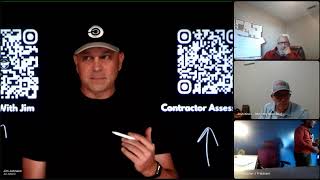
Jim Johnson walks through the Contractor's Blueprint framework for early-stage leaders, including a 12-pillar model and a leadership wheel built on seven connection skills: engage, educate, set example, activity, empathy, discipline, and encouragement. The session ends with Q&A and contractor assessments.
Chapters
Pillars of the Contractor's Blueprint. If you'd like to find out more about the contractor's blueprint and the scaling matrix which we've talked about in our past videos, please go check those out either on our YouTube channel or in school. But today we're going to be talking about leadership one more time. I talked about it last week. We talked about the five levels of leadership and this week we're going to talk about the skills we actually have to learn and in each one of those levels to really grow our business. So hang on, enjoy yourself today. I'm Jim Johnson, the head coach here at Contractor Coach Pro. And today's show I'm proud to announce is actually sponsored. We're sponsored by Hybe AI, the AI agent that'll take care of your business for you, give you the insights that you need, processes your payment for all your commissions and crews, also does all your material invoice verification as well as giving you the insights from an AI large language model of your own business. So go check it out, Hybe AI and we'll take care of your business in an agentic way to grow and scale your business, which is what we talk about here in the contractor training room. So just a little refresher. The Contractor's blueprint is a framework of 12 things that we have to do well in our business. And those 12 things are broken into six components. Each one is foundational backbone. That would be leadership, culture, process, hr, finance and accountability. And then the other is your operational backbone. And so that's technology, marketing, sales, production, training and then recruiting, hiring and onboarding. And we're walking our way through these various pillars and we're talking about what we need to know and when we need to know it. And in other words, helping you try to do the right thing at the right time in your business. And today we're going to again talk about leadership and leadership for these stages of leadership, solo and tech and the million dollar must, these things that we have to do that are part of these 12 pillars of your business. But they're not. I have to do all 12 of them. There's some simple things that we've got to do to get to that million dollars. But once we get to operator, we got to start thinking of our business in these pillars then entrepreneur, business owner and ultimately expansion. Like I said, if you want to go and learn more about that, we've talked about that in the past. So what I'm going to do right now is I'm going to the Wrong way. Let me bring it that way. There we go. We're going to talk about this one right here, which is. Your leadership pillar. And if you remember, down here at the very bottom, we have our tech or solo leader. This leader is not really a leader yet. There's somebody that is on their own doing their thing. They might be doing side jobs, maybe they just started, but they don't really have anybody else involved. So they're just leading one person themselves. We're going to talk about some of what you might have to do to just lead yourself today. But then you have your operator. And then your entrepreneur, Your business leader, Your owner, and then expansion. And each one of these have to learn certain skills to up level in their business. And so this tech solo person has to learn a couple of simple things. One of those things is how to optimize their time so they're doing the right thing at the right time and doing them together. In other words, not randomly running appointments all throughout the day, but setting, set aside, setting aside time to run those appointments at specific times so that they control their calendar instead of somebody else. And then other times for paperwork, other times for actually getting work done, getting this thing scheduled out so that they're doing the right thing at the right time. Now the other thing that they have to do, if they decide, which is the thing we talked about a little bit last week, was that they want to be a leader. Well, they have to start to develop a bit of a vision. And this vision of what this company is going to be, and that varies for everybody. Some people are immediately, I want to build $100 million business with all kinds of people and trucks and locations and all that stuff. That's where they want to go. But others are like, hey, I just want to build a business that takes care of me and mine. And what does that look like and what has to be left over over this many years to get there? They start to create this vision. But the vision imparts more than just what you want. It has to actually impact the other people that come to work for you. It has to be a benefit to them. So we have to start thinking about that vision. We'll talk a little bit more about that this morning. But then next up you have your operator and they're into optimization, optimizing their time, optimizing their processes a little bit, optimizing how work gets done, optimizing the team that they have, that's a smaller team that they got to get the most out of each and every person and Then our entrepreneur is focused on systems. So I'm going to kind of go along with this a little bit. This guy right here is vision, all right. And this guy right here is optimization. And you think about this is a skill that we've got to learn. We got to learn how to develop a vision and put that together. We got to learn how to optimize not only our time, but other people's time. We also have to learn how to develop systems. And these are all skills that great leaders have figured out how to move their way along to do those things. But I don't have to create a whole lot of systems down here at the tech and solo. I don't have to create a whole lot of systems that operator. But boy, boy, once I start adding other people and bringing new people into the equation, I really need to start adding some systems. And then whenever we grow into a business, that leader starts to learn how to some analysis of their systems so they can build off of the skill of optimization so they can optimize their systems even more to achieve the vision that they set. And then we have growth. And this is not just simply you growing as a leader, which it does involve that that means adding some skills to you, but this is where you start to grow other leaders. If you go back and look at our five levels of leadership, you'll see that that is in alignment with what we're supposed to be doing with growing people at that level of leadership. And then finally you get to the good one, the fun one. And this is where we learn the skills of empowerment, how we start to empower those leaders to really grow within our business so that they are ultimately leading the main day to day functions. So we as the highest leader on the board, the visionary, we're working on expansion and adding that to the equation. So that gives you a little idea further on the concept of this leadership pillar. Once again, as you're watching this, I'm going to give you some advice. I forgot to do this at the housekeeping when we started. But if you have questions about any of this, write those questions down. You should probably have two or three questions after taking the time to listen to anybody talk. And then also write down a couple of takeaways, whether they were a golden nugget, maybe some feedback for me, I'm all about that. Or. Or just something that you discovered as I was walking through this that turned a light bulb on for you. So that's the leadership pillar. We're going to step away from this for right now. Because that gives you kind of the concept. We're going to go over here and we're going to start to talk about some of those early on skills and how important they are. Make sure I get the whole thing where we can see it. And this is the one that made the biggest change in my life. It radically changed the way I looked at the value of time. And it's the concept called. We'll get that ready to go. Here, get my pen. It's called time. Blocking. Lots of different names for it out there, but it's the idea of getting certain things done at certain times. We as human beings and our, in our nature, we get distracted super easily. As a matter of fact, right before I started, I took my, my watch off that buzzes. I set that off to the side. I took my phone out of my pocket and put it over there to get it away. Because I don't want to be distracted while I'm talking to you guys. I don't want an email to pop up, a text message, any of those things. And we tend to really, from a psychological aspect and really wanting a thing called a dopamine hit, whenever we get a notification, we just go take care of it. We go take care of it. And if we're in the middle of something and we get one of those and we go take care of it, we get distracted from the thing we were originally doing. We have to go back and do that. And you also have this concept called flow. When I'm in something, when I'm really working on it, I'm in the flow. Like I'm nailing, I'm getting it done. Boom, distraction hits me. I go away and go do the whatever was distracting me and come back and I'm out of the flow and I gotta find it again. And it takes time to do that. We're wasting seconds and minutes and sometimes hours in that effort. So the concept of time blocking, the idea is to do what needs to be done altogether. If you've ever read the book the Four Hour Workweek by Tim Ferriss, that's a good book about that type of concept. But this was actually taught to me by a coach and that I have times that I need to account for. And so just real quick here, let's kind of lay this out a little bit that I have, you know, early morning and then I have morning. Now I probably have some lunch in there somewhere. Midday, okay. And then I have afternoon, evening, and then wind down. And so during those times I've got to be doing Something, all right. I can't just be Willy Nilly and I have to think about what do I do well at what time of the day. So for me, as an example, and this isn't everybody, but for me, early in the mornings is my thinking time and my exercise time. I found that whenever I have some time to think and I can get some exercising done, the rest of my day tends to go quite a bit better. I also do some maintenance and recovery stuff for my body. I do some meditation, I do all kinds of things. For me to get started in the morning, I might take on a few deep thinking type exercises to get some work done. But not work like day to day work, like big picture of where I want to go. So I really look at this early morning time kind of this idea that these are all about me. Okay? Now the rest of the morning comes along and that's when everybody starts waking up and getting about their business. And that starts to affect you. And you have to be very aware, like what do I do well in the morning? So you might do things like planning well in the morning, going and meeting a homeowner at 8 o', clock, 9 o' clock in the morning is a possibility, but is it as often as possible and am I in the right frame of mind and I'm in the best place to actually do that? You might. This is where you have to think about you and how you work. I do want to take a bit of a break for lunch. We need that midday break to kind of get back to who we are. But then in the afternoon I'm going to be doing some other things. Now I'm going to erase that because none of that would I do on a Sunday. For me, Sunday is the day. That's God's day in my world. I'm gonna take it easy. There's God, football and me on Sunday and my family. So that's, that's Sundays for me. But when it comes to that Monday, I'm really thinking about what am I going to do during the week for me first, okay. And that's kind of my whole Monday through actually probably Saturday. I tend to do that on Saturdays as well. But then in the morning I tend to do more businessy type things. But they're not necessarily interacting with clients. They are generalized concepts that need to get done during that time. So I'm going to give you an idea of what that might look like. One of the things that I find that gives me an ability to do what we do and you would find the same thing in your own business is you got to market, right? You think about the pillars of what you've got to do. And one of those things, we got to create opportunities. That doesn't mean I'm going to go out and knock doors early in the morning, but it does mean I'm going to work on marketing campaigns, digital assets and stuff like that. So I might set some time aside in this block for marketing and I might do that a couple of times throughout the week. And during that time I am totally. Yes, It's. Sorry about that. How about now? All right, sorry everybody. Some technical issues. I have to be aware that my screen time's out over here. So hopefully that hasn't been the case before. So hopefully we'll get this work. We're again using some new technology, so bear with us a little bit on that, that we get this right. Okay, so just to. Just to like reset. Okay. I know we had a bit of a technical snafu there. I want to reset back to this time blocking concept that early in the mornings, in the middle of the week, I'm going to be focused on me. That's the time when it's best for me as an individual to do that. You might be sometime in the evening, you might be a night owl. That might be the time where you do your thinking and your work on you aspect of things. It might be when you work out or you might work out during lunchtime, wherever that is. You want to make sure that you allot time towards that because if you don't give yourself time, you're never going to give other people time at a very high level. Now there's also the work side of things that we have to do and I mentioned marketing. So I want to do some marketing stuff in the mornings because that's when my brain is really thinking. But I'm not out knocking doors and stuff like that. I'm working on marketing campaigns. Those could be digital, they could be, they could be letters, they could be any of a number of things. I just noticed that my, my feed. I'm sorry about this technological stuff, but my feed is not showing me again. Is that correct? Okay, good deal. Sorry guys. So once again, I'm trying to find the times during my day where I do the right thing at the right time because it's the most optimized time for me to do that. So marketing and creating campaigns and stuff like that, putting letters together to homeowners, putting out flyers, things like that would be great. And going and meeting collaborators like an insurance agent, if you're in the insurance world of contracting or you're networking at a bni, something like that. Those are all marketing. I lump all that together. But I know during that time I need to be doing that because if I don't do that it's going to compromise my pipeline. And to be honest with you, I don't want to knock doors all the time. I actually like to have people call me every once in a while and if I put my effort in right there, I won't have to go out and knock as many doors or do a lot of face to face outreach. It'll be incoming to me. We also have this thing called lunch right here. And so this is a bit of what I call a break. Let me get this right here. And this is a break. And that break can look a lot of different ways. That could be you're working out and eating. I want to make sure that I do get something in my body. It could be just a checkout for him, a few minutes. It could be, hey, I'm going to eat and I'm going to take some time. Now as you look at this, remember I'm just showing you early morning, lunch, afternoon, evening, break these down by 30 minute to 1 hour segments and allow time for things. So for example, one of the things that I might allow some time for, and I'm going to put this in red I hope, is that I'm going to handle some emails. And calls right there. Right after I get my morning stuff done, then I'm going to handle my emails and my calls. I'm not looking at my emails all day long. There is no way it would be all I do. But I set a time aside. Usually about 11:30 in the morning and also a little bit later in the afternoon, like 4 o' clock to go check my emails, make sure that I have them taken care of and then I go about my business. Now as I've grown and moved up in my leadership levels, I'm more into the operator and expansion level at this point. I now have somebody that does that for me. Those are the skills that we learn growing those people. But early on I've got to make time for all of the things that we do. So I want to be really clear with you that think about the things that you do in segments. I do emails and I do phone calls. Okay, I'm going to do those when I'm going to do those all week long at this time and maybe somewhere down here at this time, I'M gonna do those emails and calls now. In my afternoon, I might do. And I'm gonna grab another color here. I hope I might do some practice. If you're a salesperson, somebody like that, or you're a leader. Practice is important in what we do. So I might take some time for some practice. There may be a place in there for paperwork. If you listen, all of these are very general things that I do. It says paperwork. Okay, go get any kind of paperwork I've got that needs to get done, done practice, whatever I need to practice that would move the needle the most. I want to go practice that. That could include simply reading. I want to go read for 30 minutes. Because this early time in the afternoon, right after lunch, put probably not best time necessarily to be interacting with other people because they're busy getting back to their day too. And then in the evenings, I'll grab another color over here. We'll see if we can find a good one. The way I set up my schedule as a salesperson is that these were appointments and I only ran appointments on Tuesdays and Thursdays and then on Saturdays to about lunchtime, maybe a little after. And I've moved everybody that called me into those places so that I said, hey, this is what I mean. I have an opening on Tuesday evening or afternoon, late afternoon. I got one at 4:30. I got another one at 6:15. Which one works best for you? And they would put those. And they would go on those appointments with me at those times so I could focus on all the other things that I needed to do during the more common workday and the time when I would do them best. Now, if you're a leader and you're a sales leader, you might be going on appointments with sales reps, you might be practicing and leading a practice with sales reps, you might be doing that in the morning, you might be running reports at a certain time. So you want to think of these things in segments. What is the general thing that needs to be done at the best possible time of the day? And then go time, block out that time. And when it's time to do that, no distractions, put the phones away, put the emails away, put all the stuff that distracts you. I used to even put a sign on my door, hard at work. Don't bother me right now unless the place is burning down around me. And there was times where you just needed to do that. Now, early on, as a early stage leader, you have time to be able to do this. You have time to be able to put some of these things in place. But as things grow and you have more people involved, you start to get those people hitting you, which is where you'll have to up level. And skill is where you're going to have to learn how to build systems and processes is where you're going to have to learn how to document those things or have somebody document them for you. Because as those people grow, they have more questions and they start to inundate you and take over your schedule from you. So this is time blocking in a general sense. You can go and look up time blocking on YouTube and find a million different YouTubes about it. We actually have some content on our own platform about this in more detail with some downloads and stuff like that. But that's the concept of time blocking. So if you have any questions or feedback on that, I would love to hear that at the end. I'm going to take some questions and answer those at the end. So let's make that a little smaller. Let's talk about the big one. This is where we start to up level as leaders and what we call this now get this written on there. So everybody sees it. We call this the leadership. Wheel. And us as leaders, we want nothing more than traction with our team. And I believe that there's a super skill that we have available to us that if we learn it, we'll well enough we can do some pretty amazing things. And that super skill is the skill of connection. I want to connect with my people, I want to connect with everybody that I come in contact with. We'll just move that down a hair more so everybody can see the word I wrote up there. Sorry about that. There we go. Good. All right, so what we want to talk about here is you. You are the leader. That's why you're watching this or you're aspiring to be a leader. And you are the hub of that wheel. You are the drivetrain, the engine, the axle. And you can think about torque if you're familiar, if you're a motorhead at all, you'll know what I'm talking about. You'll think about torque coming to that hub that then drives the wheel, which ultimately spins the tire and allows us to get some traction. And so early on, with you as a leader, I want to make it as simple as possible on the skills that you need to learn. I've read every book there is possible out there about leadership, pretty much. And, and at last count, there's like 37 skills now, like a million of them. You're like, hey man, how do I do all of this? 21 irrefutable laws of power. You're just really confused. I want to keep this simple for early. Later you can build upon this. But these are the foundational skills that we need to know. And the first one that we need to have is we need to be able to engage. And it all starts there. We need to be able to engage whoever we're interacting with as somebody that we're leading in our vision. And so we think about this vision that we need to share, we need to be clear about it, needs to be consistent over and over and over again. So you can think of this as almost whenever you're doing some hiring. Whenever I do some hiring, it's one of the first things I want to do. I want to engage them and where we're headed as a company and the opportunity and benefit that gives to them, that drives what they're going to be doing with us. And hopefully they start to look at this thing as something more than a job. But actually there's opportunity here. This could be a career. This could be a place that I could be a part of forever. So I have to engage people. The second thing I have to do is I have to educate. I have to educate people. And so if I engage them and they are, they're bought in, they're like, okay, I'm good to go. Like, this sounds like a great thing to do. And I don't keep my word and say and do what it was I said I was going to do, I lose them. Because up here, just grab one more color here, have a little fun today. What I'm trying to get is I'm trying to get buy in. So if I have an awesome enough vision that creates enough opportunity and then I actually educate them and give them the tools and the assets to be successful. And I'm also doing the same. They see that in me. I start to get this buy in and so the tire starts to turn a little bit. Okay, now that's not nearly enough. It's a good start. But the next thing I have to do is I have to set the example. I've got to set the example. If I'm asking other people to work hard to make this vision become true, I'm putting my time and effort into educating them and they're educating themselves. I have to then set the example. If I walk out the door and go, hey, have fun, we'll see you later, I'm going to go off on my boat or go on Vacation or whatever. I'm not setting that great example, especially early on, and then teaching others how to set the example as I grow as a leader. So they need to see me working. If I say, hey, we're going to work from 8 to 7 at night, man, maybe I should be working from 8 to 7 at night. That doesn't mean I have to be doing what they're doing. What it does mean, though, is I need to be doing something to propel the business forward, and they need to be able to see that in me. So I have to set this example. With that example, I start to. Sorry, guys, I'm gonna work on a setting here real quick because this is just annoying the snot out of me on my display, and I don't know why it's doing that. All right, so we'll see if we can make that work. But again, just coming back, we have to engage people first with a vision. We have to educate them, and we have to give them the example. They have to see in us that we're willing to do the work too, especially at a little bit of a higher level, a little bit harder, a little bit more effort than what they may have been willing to give prior to coming to work for you. And what that does is it starts to get this thing that we call. Color right here. Activity. See if I can write sideways here. So they start to do something right? They start to be active, and that wheel just turns a little bit more. We got a little bit of activity going on. So up next, I'm. I'm engaging, I'm educating, I'm setting an example. They see me working, they're starting to gain some activity, and then the next thing I have to have is a little bit of empathy. You guys are like, what? Empathy? Yeah, you got to care a little bit, and you got to show that you care. So many of us bring people on and onboard them, and we do a pretty good job up front, but then we can almost leave them on an island. We don't check in with them. We don't see how they're doing. We don't get feedback from them, and we don't realize that actually something's going wrong, whether in what it is that they're doing for work or in their own personal lives that's affecting their work. Then all of a sudden, activity starts to dwindle a little bit. You see them not engaging near as much, and they're just starting to ghost and vanish. And all of a sudden, they might just disappear or they might Walk in the office and quit. Or they might call you and text you that they're quitting because that's because we didn't show any empathy. Now, empathy is very different from sympathy. Sympathy, on the one hand is feeling sorry for somebody. I feel sorry for you. And you know, you got a problem in your life. We understand. Take a couple of days off. We'll see you when we see you. We hope everything turns out. That's sympathy. Right. You might even send a card or you and flowers or whatever. Empathy, on the other hand, is putting yourself in their shoes and going, okay, I was in those shoes once, or I know somebody that was in shoes like those once. And this is what they did to overcome it. And so, yeah, I get it, man, things are tough. Life is hard at home. You've got all these things going on in your world that are holding you back, but we can't let those get in our way. Let's make an action plan. Let's do something to move you forward. And when we do that, we get this next thing. And this is going to make it really tough on me to write this upside down. We're going to try. Boy, that's going to be the. There we go. Discipline. We get a little bit of discipline in what it is that we're doing. In other words, we don't let barriers or obstacles or challenges stand in our way. We see the issue, we address it, we stay engaged with them, and we help them through whatever those struggles are and learning what it is that we do or that they have at home. And you are going to run against this quite often throughout the history of somebody working for you where you have to be empathetic, which means you understand, but you care enough to pull them through it. All right, so that's the next one for you is empathy. The next one that we have to learn is encouragement. So we got to learn how to encourage people. And that isn't just because they sold a job or did the thing that they were supposed to do, the complete thing, whatever the finished product was. You go, oh, great job. That's natural for us to do that. What we want to see is progress. There was something they did that made progress in what they were doing. They moved forward, they had more activity. They knocked a few more doors, they made a few more calls. They tried something new. They're taking and making effort. We see that effort and we want to recognize it. We want to recognize it quickly. We want to recognize it right away, and we want to recognize it in front of front of everybody. When we do that, that discipline just, like, builds up even more, and that wheel really starts to move. At that point, we really start to get going. And what that gives us. We're going to try and write this again sideways, Is results. We start to get some results. We start to see sales coming in. We start to see production orders getting executed. We start to see happy customers. We start to see all these things because we engaged them in a vision, we educated them well. We set the example, and they saw what work looked like. We were empathetic when they hit bumps in the road, and we got them through it. We noticed them getting through it and really starting to be active and started encouraging them, which now allows us to do. The one that I enjoy most of all, for me personally, is to empower. I get to empower people. I get to empower them to take on a little bit of responsibility. When we see somebody getting results and the results are improving and there's progress, the incremental progress, and we start to realize that one of those things they do really, really well. Why don't we give them just a little bit of empowerment and allow them to show off what it is that they know? So one of the best examples I can use for this is as a sales leader, I'm the leader, and I see Billy over there, and he's doing a really good job of getting inspections. He's really good at that. Like, he knocks the door, talks to him, and boom, he gets an inspection. Boom. He just keeps getting inspections. He might even still be weak on the presentation, the closing, and stuff like that. But, man, he can get inspections like nobody. Hey, Bill, you want to teach everybody else a little bit about what it is that you're doing? I would love to see you start to do that, because I've seen something in Billy that he's bought in. He's working hard, he's trying. He wants this opportunity. And so I say, hey, what do you think? He says, yes. I go, great. What I want you to do is put together a plan. What you think we should practice. Get that to me. I'll coach you through it. We'll get it finalized, and then you're going to deliver it to everybody. And so first off, Billy goes, wow, Jim noticed me. That's cool. I like that. And then the other thing he is is, like, he's challenged a little bit to get outside of his own bottle. We're helping him reach his potential, and so we start to empower him. And what happens next is we really get results. Because now he's showing others how to get what it is that he's doing, and he's helping them get better. And the more that we empower people with those little tasks and build them up over time, the more likely it is that Billy becomes a team leader, maybe even a sales leader. Because I'm not looking to be sales leader forever. I'm looking to be general manager. I'm looking to be next level up, vice president of sales, whatever it may be, as this company grows. And so some really cool things start to happen right there. And we get that wheel just moving forward and a little faster. And then there's the last and final skill that you have to know early on in your business, and you're going to carry these throughout. This super skill of connection with your people is the most important skill that I've ever learned about what I do. And I hope that you guys take it to heart with you today. Take a screenshot. We'll send you this if you want. I have an actual whole thing on this you just put into the comments down there. Hey, I want the leadership wheel and the explanation. We'll get it off to you. But the next thing I have to do is I have to expect. In other words, I got to hold people accountable after expect from people. Let me write that correctly there. I'll get rid of those. There we go. I have to expect that the standards that I set are being met, that there's these certain levels of activities, certain amounts of work, this incremental growth. All of those things are things that I set as expectations and standards. I have to expect that they're met. And when they're not met, I have to accept blame at the beginning. Hey, must have been my fault. Maybe I didn't give you everything you need to be successful. So let's take this next month. I'm going to devote myself to you, and we're going to get you back on track. We're going to get you back where you need to be. But I'm only going to do that one time. After that, I expect, because I put this effort into you that you now know and you'll get it done. And what that delivers to you is the thing that I believe all owners leaders are after, and that is belief. Belief in you. Belief in what you're about, Belief in the vision and belief that you hold value to the people who work for you and that you're connected to them and working towards ultimately them reaching their highest level of potential. And outside of that Being an impact in their lives, it takes them further than they ever thought they could believe. And that's when you get the real fire. That's when that thing starts to spin. So you, you make this decision, hey, I'm going to lead people well. I'm going to learn these skills inside and out, and I'm going to start doing them consistently. And that torque that you put on this tire causes people to buy in, causes them to get active, causes them to be disciplined, which ends up getting results and ultimately leads to belief in you as the right person to lead them and the right person for them to work for. Because you provide opportunity to them. You give them something of value that they haven't gotten anywhere else before. So that's the leadership wheel. And if you do it right, you are going to start to really peel out here and you're really going to start to propel that business forward. All right, so that's two of the major skill things that I wanted to teach to you guys today. One is time blocking. Get your time. Time is the most valuable asset that you have. Make sure that you have done something to get your time blocking squared away and then also adding in how do I connect with my team and getting consistent with these seven skills that allow your team to get some traction and move your business and propel it forward faster. So that is a bit of a discussion on the things that we have to do to up level from solo to operator to entrepreneur to business to owner to expansion. And you're going to add skills each level of the way along in leadership. I apologize, number one, for the technical issues that we had as we ran through this. That was a little frustrating for me and I'm sure it was frustrating for you guys. But if you did find what we found, what we shared with you valuable today, hang out for a minute. I'll answer some questions and, and listen to some feedback and hear some takeaways. But if you've got to go and you're interested in like, hey, how can these guys maybe help me? See here, we got a couple of different ways we can do that. If I can. There we go. Boom, boom. Found it. Make it a little bit bigger. There we go. So you have your contractor assessment. Here, grab my pen. Again, this is for those of you that really want to grow your business. You need somebody to walk side by side with you. We do a contractor assessment where we can assess your business and learn more about it. And then we'll hop on a free coaching call with you. There's no obligation to it in any way. We genuinely want to follow our core values, which are to love serving care, especially for this industry. And so if you hop on that call with us, we're going to give you the two or three things you should likely need to do next in your business to start to move up that scaling matrix. If you like the coaching and you want to work with us on a one on one basis where we're literally hand in hand with you building everything you need and what you need to put in place, the contractor assessment is a great place to start and we would love to have you as a client. If it isn't a good fit for you, well, at least we hope we gave you some value that day and that you can continue to grow your business. Now. The other option you have is, hey, I just got some questions. I need to get some questions answered real quickly. We created this thing called Chat with Jim or Contractor Sage. You can go to Contractorsage AI or Jim Johnson Chat, either one of those, or you can click that QR code right there and actually get signed up and start answering your questions right away. It's compiled over 20 million words of all the stuff and things that I've learned over the last 30 years in leading businesses and selling and running and all the other stuff that goes along with the business. So whichever one fits you, you might do both. You might go, hey, I want to do that contractor assessment. Go see if that coaching thing is right for me. If it's not, for whatever reason, hey, a Chat with Jim thing might be. So that is our presentation today. Once again, we were sponsored by Hive AI, the operations AI for your business. And I thank you very much for being here today at Contractor Training Room. I'm going to open it up for questions right now and we'll get that taken care of. So, Noah Braden, you want to allow people to participate and talk? I'll put it over here where I can actually hopefully see some things. There we go. Do we have any questions? There's a chat area there. You can unmute yourself and just ask them. And I'm here. That's what I'm here for. Let's see if I can find the chat over here. There's a chat. All right, so I got a lot of. You were frozen on the, on the broadcast. Sorry about that. That's a little snafu on my end. I'll get that fixed for next week. But seriously, you got, you got your shot here. You got, hey, I got some questions about this leadership thing or Anything else? Like, hey, you got a question? Question about your business, about what you're doing as a leader. You got some feedback on this? What do you got? Feel free to unmute yourself. And. So Kairos Construction USA joined in a portrait orient. Okay, so you. Somebody's on their phone. If you flip your phone sideways, it'll probably look better for you. Anybody else have any questions or anything like that? Sydney, just unmute yourself. It looks like you got a question.
Not really, just a comment. Does drinking out of the fire hose ever get any easier?
You know, to be honest with you, I felt that way much in my life. I, I actually understand what it is that you're sharing with me because I'm in this position of drinking out of the fire hose right now. The fire hose I'm drinking out of is where's technology moving and how is that affecting us as an industry and those type of things. And I've been drinking out of that fire hose for at least a year and a half, if not two years, because I could kind of see this thing coming down the road. And so what I've, what I've decided to do is go, what do I need to know to move to the next stage? Because I'm here, I'm at this beginner stage. I didn't know anything about anything, especially when it came to AI. What do I need to know first? What's the ground rules? So I figured out what those were and I've kind of gotten those down now. Now I'm starting to up level stage by stage where I'm to the point now where I might even write some code, which is something I swore I would never do. Like that's not me. I do have a software background from a visionary side and a design side, but from writing code, that's just not me. And so in your business you got to kind of think about it the same way Sydney is, like, what's the thing I need to know right now? Like, that was all cool, but based on the size of my company and the stage where I'm at, I gotta focus right there. Focus on that leadership wheel or I gotta focus on the time blocking thing. Not both at the same time usually. Usually one or the other. And get that down and get it a part of my thing. And here's the thing about time blocking. This is the beautiful part about it. In my time blocking, I set aside time to put that learning stuff in there. There's a place usually 15 to 30 minutes a day where I'm like, hey, learn the new thing totally focused for 15 to 30 minutes. And I learned that new thing, I implement it and I've been trying to learn some new tools that are out there with one called make.com and another one called ClickUp. And I, I'm at that point where I'm like, man, I thought I was software savvy and I'm, I'm, I'm struggling with it. So what are the basics? Let me go watch some videos. Let me go. Okay, got that. Now move up. So that would be my suggestion on that, Sydney, is. And I'll ask you, I'm going to ask you right back. What do you think is the, the, the thing that's standing in the way? You, I think you actually did a contractor assessment with us, so there's probably a couple of things. We went, hey, right there might be the place to focus. What did you learn from that?
Well, that is the difficulty is understanding what you need to focus on. And yeah, I keep reiterating how old I am and how long I've been at this, but you constantly need a reminder not to get in a rut, so to speak. And when you're wearing a bunch of hats, it's really hard to stop and try to learn to do something differently or new. I mean, just, just the time we spend with you each week is quite a commitment.
Yeah. You know, this is 30 minutes to an hour depending on how long you hang out. You watch the thing for 30 minutes, maybe you hang out for another 30, asking questions, getting some feedback. But like I said, the important thing about it is as I go through that, I write down my questions and I put my takeaways. The takeaways for me are usually focused on what I think I might have to do next. And then I go, okay, of that, what can I do next? What's the next thing I can do with this piece of information that I learned and I hope what people are learning from this is that, hey, I need to up level my skills somewhere. If I so think about it this way, am I having a hard time getting people to stick with me? Are they, are they like, I'm able to find them and bring them in the door, but they don't stick. Stick. Well, that's one thing about leadership. The other thing could be I'm having a hard time even getting people to come to work for me. I can't even get them to like come into my world. Well, that's a different skill of leadership because we have this one skill where we've got to Share our vision and really compel people with that vision with charisma and excitement, because it's going to be awesome for them and for you. That's one thing. But then if I'm losing them, that's that example and education side of things. Am I doing that well? So that should, like, maybe help clarify some of that. Like, hey, what's actually happening in my business? What's the result? I'm getting. I'm getting this result. Okay, I need to go do that part of this leadership. That help at all?
It does. So, you know, one of the questions you have to ask yourself is, would.
You work for you? Oh, that's one of my favorite questions. I used to put that in my presentations.
If you wouldn't work for you, then why would anybody else? So if you're having trouble keeping people, you better fix that before you spend time and energy trying to get more people.
So every once in a while, I run into a coaching client where it's a leadership problem. Number one reason that businesses go out of business is leadership. Number two is finance. Those two things is what puts us out of business. And every once in a while, running into somebody that has a difficult time on the leadership side of things. If I hear this, I have a hard time getting people to come to work for me. People aren't loyal anymore. People aren't willing to work anymore. If I hear those type of things, I'm like, are you sure about that? Because I know this company over there has got 170 salespeople working for them. So somebody must want to work. That's time to maybe look in the mirror a little bit and ask a little bit about ourselves, like, would I work for me? And then the challenge that I give to those leaders that I have that conversation with is write down every reason that somebody would work for you. Those are your strengths. Write down every reason somebody wouldn't work for you. Those things right there is where I want to focus my skill, skill sets on. Because if I'm not doing those well, I'm not ever going to be able to move forward. And I have one of two options. I either need to learn them or I need to hire somebody that has them. It's one of those two things you might be held back from. The second one, if you don't have the finances or revenue or can convince the person to come to work for you. Does that make sense? Yep. I always felt like, you know, having the. The base that I had as a salesperson allowed me the ability to sell the People that came into my ecosystem, the idea of coming to work for me, that I had a system and a plan to what it was that was going to happen, and I was excited about it. And your excitement travels to other people. Your energy that you transfer travel to other people. If you're not excited about your business, why would anybody else be? And then that would be. Why would anybody come to work for you? But if you're excited about it and you know, hey, we're going to do something special here, and I want you to be a part of that. And if you are, this is what that does for you. And you focus there not on what the business is going to grow to be, but they're going to become a better leader. They're going to be more skilled. They're going to learn skills they never had before. They're going to be able to change the trajectory of their life because of the financial benefit and the personal benefit they would get by coming to work for you. Man, sign me up. I'm ready. There also has to be a little bit of a challenge, too. And we're elite. That's the way I always look at things. Hey, I would love to hire you. We're elite. And I mean elite. We expect hard work, effort all the time. This is not. We're not here to play patty cake. We're here to win. That was me. That doesn't mean that's how you have to do it. I'm just saying that you've got to do something that that person is compelled to get a benefit working for you. All right, Any other feedback or question. I got?
I got a question.
Sure.
Josh, this is, like, off of what you just talked about, like, I can see myself struggling with.
With.
With looking at my inner self and seeing why people might want to work.
For me or why.
Why they may not want to work for me. Because it's that honesty part. Like, how do I, you know, how do I break that part of that barrier? It was like, why would people want.
To work for me?
Like, I don't. I don't know. I could be, you know, overconfident and think I have all these things that I don't have.
And.
Or I could be, you know.
Maybe.
I don't see those things. And so how do I figure that out?
I'm gonna get. That's a great. That good insight, Josh. That's really good. I kind of struggled with that, too, because there's a bit of this idea of you almost don't want to be egotistical. Right? Like, I'm not that guy. Right. The best way to find out why somebody would work for you is ask the people you know. Your friends, your family, and even people that work for you currently. Why do you work for me? Like, explain to me what it was about me that you said, hey, I want to work for this guy. That'll start to point out some of your strengths. And if you really want to challenge yourself, ask people why they wouldn't work for you. Why wouldn't you work for me? What is it that's missing that I could improve that would cause you to work for me even more? That's one of those challenges we do all the time with our clients is we will actually ask their people, like, hey, what do you like about working here? I like this, this. And what do you not like about working here? That, that and that. And no leader or owner ever wants to ask those questions. Here's the funny thing about it. You already know the answers. That's why you don't want to ask the questions. I realized that I got some really good coaching early on in my career about doing reviews with everybody that worked for me. And one of the things I had to do in those reviews was tell them, no holds barred, you're not going to hurt my feelings. Tell me everything that I could do better to serve you better. And a man, I didn't want to do it. I was like, I don't want to do that. That sounds like you're going to put me to work. I don't. I don't want to. Like, that was the thing, or I might have to learn something new that I don't want to learn. So that's the challenge of it. But you gotta ask yourself, do you really want to lead? If you really want to lead, you'll put yourself under that fire and find out where you might be missing it. I know one of the things I was missing it on was finishing something. Like, I had people tell me, like, man, we have all these great ideas and all these cool things. I still struggle with that today. But because of that, I work harder to get things finished, to be like, hey, we're going to do this thing, get it done. And even if that thing fails and doesn't work out well, I learned something through that experience. And usually I can add to it and just finally get it to where it needs to be. But what is it about you and your thing? What is that thing about you that you go, hmm, man, if I could just do that a little better, I Think people would come to work for me, whatever that is, I almost guarantee you it's a skill involved there that's learnable by anybody, even if you're not naturally predicated toward it. I'll give you one this is one about me. I'm not naturally the rah rah, cheerleader type guy, the charismatic type of deal. I tend to be a little bit more reserved, strategic, deep thinking, that kind of thing. But I had to go and learn how to speak with tone and how to draw people in, how to pause when things were important that were being said, how to add a little bit of volume when it was something really important to hear. Those were all skills that you could learn. It's not just God touched. Jim Johnson said, hey, that guy talks great. And I had to really, man, you couldn't get me in front of a class to talk to people at all in high school. There's no way. But I went and learned those skills. So my challenge to you is, hey, what is it? That if I could do that just a little bit better, I could get people in the door. Now that I got that happening, how do I keep them in the door? Well, I got to educate them, and I got to set the example. Am I doing that well? Be honest with yourself. Okay, great. Now, I did the educating. I set the example. They all see me working hard. Do I care? Do I care enough to check in with them? Do I care enough to work with them when they need to work? Do I care enough to understand and drag them through the mud? Whether I used to tell every person that came to work for me, my job is twofold. One is to help you reach your fullest potential, and the other is to drag you kicking and screaming every single Friday to cash checks. That's my job. And you're gonna do it whether you like it or not or don't work here. We're elite, don't forget. And, man, when I would see that movement. Oh, encouraging high fives, man, way to go. Killing it. I had to learn how to do that. That's not natural for me. I had to learn how to look for recognizing that was actually the weaker part for me is seeing it. I didn't see it all the time. Now it's like, hey, wow, good job. Wow, good job. I'm looking for a good job all the time. When I see that good job, I go to the person on my team, I say, hey, doing that great. Want to help out, Want to do something, And I empower them. And when I empower them. I expect that not only do they do that well, but they hit the standards and everything that we've set for the company. So really think about that wheel man. It is life changing for you, connecting with people. And if you can connect with people, they'll follow you. That simple. Any other feedback or questions? All right. Sounds like we got her done for today. Sydney, thanks for taking the time, man. That says a lot about you. Because it. Time is valuable. It's the most important asset that we've got. Doing my homework. Hey, there you go. Finally. High fives. Boom. Way to go. See, we're not gonna just hit you right now, but that's the best I can do.
You all have a good day. Good. God bless.
Yeah, we'll talk to you later. Guys, get out here and go to work and bring some people in and lead them. Well, See you, Christopher.










