Welcome to our live show!
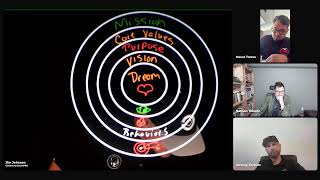
Jim Johnson walks through five cultural drivers for contracting businesses: Dream, Vision, Purpose, Core Values, and Mission. He maps these to six business stages and offers a three-part test for culture strength based on Belief, Behavior, and Belonging.
Chapters
A contractor coach, bro. And we're going to talk about culture, that silent thing that lives underneath our business that allows us to build a business that we're super proud of. One of the things that we see is that sometimes we don't design a culture and we end up with a business where we're having a hard time hiring people. And then also when we do get them, hired, them staying. So we're going to talk about that today. Before I do, I want to just give a little bit of a shout out. We have found a sponsor and it's Hive Ops. If you are looking to automate your commissions, your material invoicing, get a little bit of AI insight into your business with some intelligence about your business, like a private, large language model of your business, check out Hive AI, get a demo and go see if it'll help you out in your business. It'll shock yet. So last week we talked about the leadership side of things. As a matter of fact, for the last two weeks, we've been talking about this leadership pillar right here on the contractor's blueprint. So I just want to do a little bit of refresher, but my promise to you is that by the time we get done today, you're going to see exactly how to build a culture that's magnetic. They'll draw people to you, and then by living it, keep them within your business because you're in alignment. We're going to walk through exactly how to do that. But I need to give you a little bit of background. We've been doing this for a few weeks now to understand this entire thing that runs our business. And we have these 12 pillars of our business, and six of them are foundational pillars, and six of them are operational pillars. And we talked about leadership a couple of times. The very first one, we talked about the entire blueprint, gave you the whole concept. But there's also a matrix. You can see that matrix is orange laid over the blueprint. That allows us to do the right thing at the right time based on where we're at as far as a stage with our business. Are we the solo tech, doing probably less than 500,000, maybe even 250,000? And it's just us. Are we the operator, starting to budge up into the 750, maybe a million dollars? And. And it's us and a couple of people. Are we the entrepreneur? And we started to hire people outside of our circle and we're starting to hit 1 to 3 million somewhere in there now that we've got a Few people. We've started to build a business. So we've become a bit of a leadership group that has a business. We've put systems and stuff like that in place. And then we have owner, where we've grown some leaders. And those leaders are now leading our business while we're staying and holding them accountable. And that's usually at business, you're going from that 3 million to maybe 7 to 10. Owner, you're going from that 7 to 10 to 12 to 15, maybe as much as 20 or 25. And then an expansion, you're going beyond that. You're starting to repeat what it is that you've done. And you're expanding either in other trades that are very similar to yours or by location, you're doing other locations. But I'm going to talk to you today about culture. I think it's the killer. I think it's the one that makes the biggest difference. We say it all the time around here. That culture eats strategy for lunch every single day. And we have a choice with our culture. So I'm going to go ahead and get started here and show you what I'm talking about. So first things first, we have up here get another color real quick. We have a choice on what our culture is going to look like. We can either design it or it can be designed for us. And what that creates is chaos. And this is how you'll know. Did that backwards. Oh, boy, I can't write like that. That fixed chaos. And how you'll know that if you have a culture like that is you're going to find people talking behind other people's backs. There'll be drama. There'll be people putting themselves on a pedestal because they think they're better than everybody else. You're going to have people coming in and not staying very long. They're washing out really quickly. They're not on the same page with you. So it creates this chaotic type thing that's going on where everybody's going in different directions and they're all over the place. They're over here, not a very good person, but they're yelling at everybody else. There's frustration and stuff like that. And so we've got this chaotic thing. A lot of times we're wearing all the hats and we're trying to run a business that's very chaotic because there is no alignment with our culture. We've just hired anybody and everybody that could come to work for us. So we want to make sure that we avoid this type of thing and what happens. And where this comes from is allowing everybody else to design our culture for us. So, on the other hand, get us a good color here we have design, so we have this ability to design our culture. And that design culture that we have hopefully leads to something that we love. And there's order and there's alignment. When we get everybody aligned, all going after the same thing, behaving the same way, all seeing that, hey, we're here to help you have a shocking difference in what your company can achieve and do. And so you can think about everybody on the team at this point, all going in the same direction, trying to get everybody where they need to be. And so you've got these people that are on your team. And they're in lockstep hand in hand. Over here. You've got these people, they're frustrated, they don't fit. There's no alignment, and they're leaving. They're trying to find a place where they do fit, where they do belong, where there is order, where there is alignment, where there is growth. And what you end up finding is they cross that wall right there, and these are the other companies that are attracting them. And so you've got a decision to make. You've got this decision of, hey, am I going to let everybody else determine what my culture is, or am I going to get intentional about this and design my culture? And so, just coming back to here for just a second, we talked early on about this solo tech and how important it was to understand your guiding principles. That's really where it all starts. And so we're going to go through a little bit on establishing some guiding principles and what you might do as a solo tech. And then we'll move through each one of them and help you out figuring what you might need to do in your particular business and identifying where you are in the stages so that you can do what's necessary to then build that culture even further and better than where you've already done. So let's come over here. We're gonna skip that one. We're gonna come back to this pillar. We've been using this pillar for an explanation. We're gonna come back to that towards the end so that you can see exactly which thing you gotta do in what area of that stages of the scaling matrix. We're gonna start here first. I want you to think of that column that I just showed you. Like there's a center of it, and you're gonna add layers onto that column. So it's a really strong column. And the very first thing. Make this a little bigger so I can write in there. Very first thing. That first component of our culture is based on you and those guiding principles. So we'll grab this color right here. I like that color. And that is your dream. Now, this is usually personal to the owner. That person is the one that's doing it. And it's really the emotional reason why you're doing all this. You've decided that you're going to build something. You've decided that, hey, I'm not going to be a solo tech person anymore. I'm going to move in to the next stages of becoming an actual business and all of those other things. So I've got this dream. And you're probably thinking about it right now. If you fit that solo tech or even the operator area, you probably have something in your mind of like, what I want this thing to look like in the end. And I want you to think about it that way. This isn't in a year or two years or three years. It's in the end, ultimately, what is this thing going to become? What do I want it to be? And you're going to hear different things. You're going to see lots of promotional stuff out there. Scale your business to 100 million and all that stuff. Hey, no, it's your dream. It's not somebody else's dream. That's one of the nice things about us, is we are a holistic coach. We coach across all 12 of those pillars in the contractor's blueprint, and then each of the stages that you need to go through as a contractor to grow your business. When we first talk with anybody, this is the first thing we do every single time. What's the dream? What are we trying to get to? Because if we can figure out what that is, we can start to build it backwards and add layers on top of it. That strengthens that culture and becomes something that you don't just have signs on a wall, but it's something that everybody's living every single day. So the very first component of your culture is the dream. It's really kind of about you. It might even be. Sometimes we don't even share it with the rest of the team because it's really where we're wanting to go with our business. And who knows, people want to sell their business. People want to hand it down to their kids. There's all kinds of different reasons why you're building this thing. Some are, like, trying to build a leadership organization. Some are trying to impact the world. In a positive way. There's all kinds of different dreams and we want to help you achieve those dreams, but you have to establish that first. Now the difference between a dream and reality is the fact of whether you write it down or not. I think most of you have it in your head and it's this picture and it's constantly out of focus and changes on a daily basis. Need to take the time to sit down and go, hey, this is what I really want to do. Where I want to see this business go, where I ultimately want to end up. So that's, that's the dream, that's core, the center. So let's talk about the next one. And that is we're going to make this a little bigger as well. Let's do that first so I can write a little better. Oh, we're good. And that is your vision. Now if you were on last week's episode of the Contractors Blueprint and what we're doing here, you'll know that we talked about vision. We'll talk about how that's a skill that leaders develop. And so, but once we've developed it, then we have to engage people with it. We talked about that super skill of connection that leaders have to have. And the very first thing they have to do is engage people with a vision. And this vision, what it does for us is it gives us sight. We know exactly, that's a terrible eye, but we know exactly what it looks like. Usually lay it out about three years. Now this is, I'm talking about owners most of the time. But if you are a sales leader or you're a production leader, you need to think about this thing. In your pillar of the business. You're going to have a dream for what your, your sales team is going to become. You're going to have a vision specifically of what you're going to achieve over a three year time span. Targets, sales, all kinds of stuff, people that you bring in, the training that you do. You want to have a really clear vision so you can share that all the time. So if you're an owner, that's one vision. If you're a sales leader or production leader, you've got a different vision, but you are in line overall with the company vision. So this vision is something that, to give you a little bit of a breakdown on how it works is first thing you have to consider is what's possible, what all is possible. Everything. I'd write them all down, every single one of them. Everything that you think is possible. Hey, we could be A commercial company doing $100 million. We could work with insurance agents. We could create a retail program. We could all these different things, write them all down and then look at them and say, which one moves us closer to where we want to be in three years? I want to be here in three years. Which one of these things, if I did them right away and did them right now, would move us closer? And then what would I do in year two and year three? Once you have that, you then would say, hey, how exactly am I going to do it? So you're writing out how you're going to get to this thing that you're. You're going to be achieving. Then you want the result. So you're going to have this result that happens. And the result is usually numbers. It's how many salespeople, trucks, offices, sales percentages, KPIs, all this. Exactly how you're going to do it. And then ultimately, the benefit to everybody. What's the benefit? Do they grow? Do they change? Do they stop the. This idea of breaking the chain. Generational curses like, what are you doing? Like, what's the benefit to everybody? I know money is part of it, but what else? What else can actually change for somebody by coming to work for you? Once you have all that kind of worked out, then take one piece of paper and write your vision. Be very clear and concise about it. Don't fluff it up. And that way you have something that you can talk about all the time. Think of it as your sales pitch. It's your sales pitch to everybody, and you're constantly giving it all the time. This is my sales pitch. This is where we're going. That way, if it's in alignment with somebody else, they'll join you. If it's not in alignment with them, they won't. And we don't want them. We only want people that are aligned with us, that want to achieve the same things and get the same results and get the same benefit from being with us, because then they're aligned in the ultimate vision and ultimately everything else that we're going to do. So the next thing that we have to consider and get my color here is our purpose, and we'll leave it because I think this one's that important. And think of your purpose as why you're doing what you're doing. It's ultimately the reason. I'll give you a good example. The reason that we do what we do, our purpose is to help people achieve their goals without sacrificing the things that matter most, the relationships, their health, and all the other things that some of us tend to sacrifice to build this amazing business. You don't have to do that. We can actually get there faster and not kill ourselves doing it because we actually have a guide in a roadmap. So that's our purpose. What's your purpose? Is your purpose to do something different in the industry, to help people? Is it to impact the community by giving back? Or what is the reason that you're doing what you're doing? I can remember back whenever I owned my own contracting business, our purpose was to make it easy. That was our purpose. It was up on a wall, but we talked about it all the time, and I instigated it. Hey, Ann, how do we make your job easier? Hey, Kelly, how do we make your job easier? Hey, Dan, how do we make your job easier? How do we make the job easier for the insurance adjusters if you do restoration work? How do you make the job easier for your crew as they're installing? How do you make everything easier? Made things simple, which allowed us to really grow and scale our business. That was our purpose. And we looked at it all the time, every day, all day long. It was a whole goal. And because of that was our why we were able to grow and scale our business really quickly and onboard people really quickly. So your purpose is your why. Why are you doing what you're doing? Everybody buys your why. They don't buy your widget. So you want to make sure that you have a really good purpose because you're going to share that whenever you're sharing your vision. And we do this because of this. If people are aligned with it, they're going to hop on board. If they're not, they won't. And we don't want those people that aren't in line with why we're doing what we're doing. So I think I got the right color now. What's up next? So we got dream. Hey. Got that in my mind. I'm going to get that down on paper vision. Okay? Three years, we're going to hit this and do this exactly. That way I can engage people with it and share it with it and show them the opportunity that's with us. This is why we do it and why it's so important. That's the thing that gets you out of bed every day, by the way. I get out of bed not to coach contractors or sell another contractor or anything like that. I don't care about any of that. I only care about helping Somebody achieve their goals without sacrificing the things that matter most. That gives me fire, and I want to kind of throw that in here real quick. I noticed earlier I was terrible at drawing fire, but there's our fire right there. And that gives us the fire to go and go every day. The will, the energy. Let's go do something that has an impact. So our next thing that we have to consider is our core values. And you can think of your core values as your behaviors. This is the way everybody acts. And they act based on you, based on what you've designed. Your guiding principles have so much to do this. Do you want your team to be competitive, aggressive, forward thinking, innovative. You hear all the time, integrity and honesty. They're neat to get them and get them figured out and go put them on a wall. But if you don't live them, they're not truly who you are. You don't actually believe in them. I always share the story when it comes to core values. We had a core value called honesty, which was aligned with. It meant that we had integrity in all things that we do. And I had a little sign on the wall. It looked really cool. And I can remember one day a young lady came into my office, said, hey, we got a great deal. It's coming in on one of our jobs. We've got two jobs next door to each other. The houses look exactly the same. The adjuster used the measurements for one house for the other house, but he doesn't realize is the bigger house is the one he used. The smaller house that didn't have the addition on the back isn't. We got an extra 14 squares. We'll make a lot of money on this deal. That's awesome. Come with me. We got up, we walked out, we went out into what we called the war room. That sign was on the wall. I walked her and we got about 15ft away, and she's like. I'm like, yeah, like, that thing's. That thing's serious. We're not kidding about that. It's real. I don't care. If we're gonna make a whole bunch of money on that, we gotta be honest. That's integrity, and I'd love to show you how. So at that point, I walked into the office with her. We made a phone call to the adjuster. We informed him of what was happening and told him that he was paying too much on that job. He was silent on the other end of the line, like, are you still there? He goes, yeah, I've just never had anybody call me, tell me that it pay too much. What's the name of your company? Somebody else needs some help. I'd like to send them to you. So I gave him the name of the company. How to get ahold of us. The guy sent 81 jobs to us that year from his insurance company. That's the value of showing and living and being your core values. She talked about that all the time. She shared it with others. And that's actually living it. Okay. It's neat to have it on the wall, but you've got to live it. We'll talk a little bit about the action that allows that here in just a minute. So let's go for the last one here. And I'm going to try and put that in a different color as well, because I think it's so important. And this is your mission, and I want you to think of your mission as the target. This is what we're after. We'll even get fancy here. I think a little white circle in the middle because that's the target. And we'll draw some arrows going into that target. This is what you need to accomplish in the next year. It's not a mission statement. While mission statements are valuable, I think they get captured by the purpose just fine. This is an actual, like, military mission. We actually name it Operation Beachfront, Operation Takeover, Opera, whatever you want to call it. And then we define that mission. What does it mean to actually achieve that mission? This gives us target to shoot for. It gives us something to talk about all the time. It gives us something to measure on whether we're on pace or not on pace. And it gives us something to rally around. We're able to rally around this operational mission that we're on to get everybody on board and align that. That's all where we're going. It's clear. Whenever we don't give them any direction, it's not clear. And we leave direction up to them. And their direction is like, how much money can I make? Or can I just make enough money to meet my needs? But whenever we all get on board for like, hey, we're going to go get this thing, and there's something of value at the end. Whenever you achieve that thing, you'd be shocked at how much more a team produces and they actually achieve their potential. And so these are the components of creating a culture. We've got to talk a little bit about living a culture. And what does that look like whenever we live a culture? So I want to just stay on track. Here we've got five drivers of culture. I shared them with you. The dream, the vision, the purpose, the core values, and the mission. But we're going to come over here and we're going to talk a little bit about what that looks like in your pillar. Like, how do I do what needs to be done at the right time to effectively live the culture? So first off, let me just real quickly get our colors accurate here. And I'm going to go through and I'm going to go solo tech. That's down there at the bottom. Then we have our operator, then we have our entrepreneur, we have our business, we have our owner, and we have expansion. Those are the stages that our companies go through. Really small down here, working our way up to really big up there. But you have some things that have to be done along the way to get there. And so what I want to call out is the focus. So what you need to focus on when it comes to culture and the action, what goes with those? And think of these as your stages. So the first focus, the thing that we've got to make sure that we get done down here for the solo tech is that you have to be the model. You literally, this is your focus, are the culture. That's the only person there. You are it. And so you have to model that culture. You have to be consistent, and you have to care. This is based on your guiding principles. Now you've decided to do something more, and so you move into an operator. And as an operator, you want clarity. This is where you've created your dream and your vision, and you can be clear about it with everybody as they're coming into your organization, even if they're friends and family. You want to be clear about that clarity. You want that to be the focus of what you're doing in your culture, because what that does is it defines that dream of vision. And I want to communicate. That daily. I want to make sure that I get in this habit of communicating dream and vision daily. I might have even started to work on purpose a little bit with the team. I want to engage them and bring them into helping build the culture. And so we are like, hey, what words define us? And pick out all those words, and then we go, hey, let's put them together, figure out which one works, which one's the. Aha. Oh, man, that's us right there. Great. There's our purpose. So we might start building towards some of that. Then as the entrepreneur, we get alignment. That's where we really drive home the that purpose. Our core values and ultimately our mission. So you're in these stages right here. You're bringing in there to get values in place so you can hire towards them. Me and my writing too fast so you can hire towards them and you want people to feel like they belong. It's the number one reason why people quit a job. I'll give you a couple stats. First stat is 90% of people that come to work for you quit on day one. They don't tell you yet, but they've already decided it's a job, it's not a career. I'm still looking for my next best opportunity and I'm going to keep looking. But if we make that first day something special, that they actually see something different about you, that there is something more to this and there's a purpose and there's some core values and there's this mission. There's these things that we're doing together as a team. People want to belong on teams that they're in alignment with. So we want to get alignment there at our entrepreneur stage, here at the business stage. We want to codify, in other words, get it documented. And we want to reinforce, So we want to reinforce it. So that's our focus as we're growing into a business. We're getting everything documented. We're and we're reinforcing it. We're talking about it all the time, we're doing it throughout all the things that we do. We're recognizing people for adhering to the core values. We're recognizing people for helping achieve the mission. We're, we're doing this constantly which is that encouragement side of things from that super skill of leadership. And we're making sure that people know this is who we are. What this does and what our actions are is we need to train to it, we need to measure it. And ultimately we need to celebrate it. So those are our actions. That's how you start to get into that business side of things. Start moving your company into that eight figure realm as a business is codifying. Reinforcing is the focus of what I need to do in my culture. And then I'm going to train, measure and celebrate when people are achieving it. Now as an owner, this is where we get to have some real fun, get to start to delegate it. If we've done all of this right, right here, if you remember, we started to empower people as one of the skills of that super skill of connection and we started to build some leaders and that allows us to start to delegate some of the culture out there, which what we want to do, our actions is to find. And I'm going to use a different color for this just because I think this is so important. We want to find. We want to find champions. These are the people that champion our culture. We want them to be the ones that are leading our culture. Now. We don't ever walk away from it. We trust but verify. We want to make sure that what we're installing they're doing and that they're living to it. So that's what we're doing as an owner now, as an expansion business up here. We're going to export that culture to any other division or trade that we're doing or any other location that we're doing. And so what we're doing there is we are a different color for that one, I hope. Let's see screen here. We're scaling it. We're scaling that culture outside of its current silo into other silos that are in alignment with the overall organization. So that's what it looks like as you grow through each one of these stages of your business being here. Hey, man, I am the culture and I just got to model it for right now. Then I want to get it clear and communicate. Then I want to get it alignment with values and belonging. Then I want to codify and reinforce it. Training and measuring and celebrating to it, ultimately delegating it, getting champions of it and then exporting it to everything else. And trust but verify. Don't walk away and just hope everybody does it. You want to trust but verify. And actually, if you're the owner or you're the leader of a group, you want to go in and high five people, you want to swat them on the butt, you want to take them aside if they need to be taken aside to say, hey, we need to correct, we need to do a little self correction here. Those things are still important for you no matter where you are, as a stage of your business. So let's talk about this in kind of a practical sense. I want to give you guys a bit of a test that you can give to yourself and to your organization that allows you to kind of figure out real quick, let's undo that real quick and we'll come down here and we're going to talk about the strength test for your business and draw your attention to the fact that I'm using a triangle. The reason I'm using a triangle is it's the strongest of all shapes. Great pyramids are a great example of like, why, why A pyramid works. And so what we're working on here is the fact of getting alignment. That's what we want in our business. We want alignment. And so there are three factors to this that are going to generate alignment. The first factor is belief. The second factor is behavior. And the third factor is belonging. Now, if we can put all of these together, we build a healthy culture. That healthy culture is going to foster the growth of your business. It'll scale like crazy because you have a healthy culture. And so how do I test behavior, belonging, and belief? Do your people believe what you believe? That's the first question you need to ask yourself. That's something you should probably write down. If you haven't written down anything else right now, this is the thing you should probably write down. Do your people believe in what you believe in? Because if they don't and they believe in something else, your culture is at risk. So that's belief. Do people behave the way you behave when nobody's watching? And this is one of those ones where I'm going to poke you a little bit as a leader. If you're acting out of character, of behavior that you expect, guess what? Everybody else is too. The second you let something slide, you've developed some core values, and this is who we are. And honesty is one of them. And you are dishonest. It tells everybody else, that didn't mean anything. I can go be dishonest, too. Or if you're curious and innovative and you're not doing any curiosity or innovation, that just means get a word on the wall. It doesn't really. It's not really a thing. So I don't have to do that either. So that's the big question there. Do people behave the way you behave when nobody's watching? That's the key. Ask yourself that question. Write that one down. This is your strength test for your culture. Then ultimately, do they belong or are they just collecting a check? Are they just doing what's necessary? Are they just doing as little as they can, or are they pushing for reaching their potential and trying to grow that they belong in the team? They want to be with the team. I'll tell you how you know if belonging is working. Your team wants to be at the office and in community with everybody else. When they're outside of work, they're hanging out with each other. They want to be with you. That camaraderie is what you're looking for. And that's one of those words I don't think we see as much of anymore. I Think it's one of those things that people are starving for. They're in these little silos right now of their own little worlds and technology, and they're missing something in life. And it's this idea of belonging to something that's on their own, they could never achieve together. It's called collaboration to achieve greatness and impact. And if you belong to something like that, you don't ever want to leave. So this is your culture health test or strength test. Are you strong in your culture? If you're not, you're running a risk whether your company is going to achieve that ultimate dream that you were after. Because I don't care how much strategy you have. If the culture is not in alignment, all headed together, all willing to crawl through glass for each other to achieve the goals, to achieve the mission, you're running a risk of either having a business that you hate or not having a business. You got to ask yourself really fast, like, this is one of those things. Am I having a hard time even hiring people? Well, that's probably because they don't have belief that it's a place for them to behave in a way that's in alignment with them so that they can belong. And then if you are hiring people and they're leaving, they're not staying very long. They're washing out. It's the same problem. They. They got your vision. That was great. That sounds great. They didn't believe in the vision because you didn't follow through. You didn't educate them, you didn't set the example. You didn't show those behaviors and core values. And it was a place they didn't belong, and they know it. And I got to go find a place that I do belong. So I hope that hits home. Whether you're an owner, a sales leader, production leader, administrative leader, this is for all of you. This is everybody. A company has its culture, and each one of those pillars has a culture that needs to be in alignment with it. So defining the company's culture first is important. And then the culture of each one of the individual pillars of the business itself is paramount that it's aligned with it. So that's our training for today. And you got a bit of a choice. You got a choice right now of what you want to do, and we can actually help you. If you're interested in getting some help, we'll pull this together and bring her down here. Like, so. Maybe you need some help. You're on a path, and you're trying to figure out your path. Right now and you've got a couple of choices. You, you can either go and do the DIY and try out our contractor sage. It is a AI intelligence aspect. It's last 27 years of running this business. One of the things that we did that I'm really proud of is we documented everything, recorded almost everything and we have created a large language model just for contractors. And here's the brilliance of it. This is what makes it different than any other tool that you might use. We put the blueprint and the scaling matrix as the underlying filter for everything. So if you come into it and you ask the questions or, sorry, you give context of who you are. I'm a sales leader, I'm a salesperson, I'm a production leader, I'm a administrative leader, I'm the owner. This is the size of my organization, the company, the revenue we've done. These are my goals. These are the problems that we're having and having an issue with. When it gives you answers back on the questions you ask, it's going to be looking at the stage of the where you're at and giving you the right answer at the right time. Now maybe do it yourself is not your bag of tricks. And this is where I think most people should go, especially if you're in that 1 to 3 million or a really hungry company trying to scale your business and you might be a little bit bigger than 3 million, hitting some ceilings. Go take our contractor assessment. It's going to assess your business across all 12 pillars and those stages of your business. It's going to take you about 20 minutes to do it. But if we can get those answers, we don't have to spend that time on a call to get the answers. We can actually coach you, we can actually spend some time with you and give you some coaching on the next two or three things that you should probably be doing in your business. If you like coaching, you think, hey, this is a good fit for us and you want a guide to walk hand in hand with you all the way to helping you achieve the goals that you want to achieve. We're really good at it. We've been doing it for 13 years. We have some of the best companies in the country out there doing what it is that we coach. We'd love for you to get a little bit of one on one help because then there's nuance, then there's understanding, there's relationship between us and, and you if you're a little smaller, maybe contractor Sage, if you're a little Bigger, you're looking to scale, you're hungry to grow, you're willing to do the work. We can certainly help you there. If that call is something that goes, hey, that's great, I'd love to coach. Awesome. We'd love to have you. If nothing else, it's going to be uber valuable for you for the next two or three steps because all we want to do is serve you. We want to help you achieve your goals without sacrificing the things that matter most. That's our training for today. Thank you for attending Contractor Training Room. We're going to continue to do these blueprint things. Here's something I would actually like from you guys. Put some feedback in the comments and stuff like that. When I roll into the first year, I want to coach on some things like, do you guys want us to coach on some of the technology stuff that's happening? Do you want to coach on economically, what's happening? Do you want to coach on some of the things that are changing in sales? What is the thing that you really want to see? Let us know and I'll make sure that I build some content around that. We want to help you guys do very well, but I'm going to be doing this for the rest of the quarter till January 1st. Want to go through this blueprint because it's going to establish the foundation for everything else that we do. Thanks again for being a Contractor Train room. You can QR code either one of these or go to contractorcoachpro.com, click the assessment button or jimjohnson. Chat and chat with Contractor Sage. Thanks a lot for being here and we'll see you on the next episode of Contractor Train Room. By the way, if you have any questions, I'm going to hang out for a few minutes. You can ask any question that you want. We're going to end the actual training part now. You guys are. Hey, you name it, ask the questions you got me for about, I don't know, 10 minutes or so is what I've got extra. So let's get some of those questions answered and unmute everybody or unmute yourself out there and we'll see if we can get those questions, comments, feedback, anything like Golden Nugget that you learned today. Love any of that. Feel free to unmute Braden. If you've got to give them the right to unmute, please do so. Anybody got any questions, some feedback, anything? I'm going to try and go over to comments in the chat. Jim. We can't see the entire screen. Some of the words you write are not visible. Oh, okay. I'll keep that in mind. At what point? Where do we miss it? We'll. We'll check that out on the replay and make sure. Oh, okay. Talk about it. Oh, they can see here. I'll make sure we get it. Here we go. Let's pull it. Oh, undo that. Grab that. And everybody wants to see my pretty picture of a target. There we go. We all. There we go. How's that? Everybody see it now? I'll make sure everybody's got that dream. Vision, purpose, core values, and mission. Your heart. It's the emotional thing that you're chasing. Your vision, the fire that keeps you moving, the behaviors you need to adhere to and live to, Then ultimately the target. Any questions? Sydney says thanks, Jim. No problem, Sydney. Appreciate it. I'm over here trying to touch screen my computer, livestream chat. That's just us. All right, everybody. Good. I'll move this down, put over here and try to be in the middle of something. There we go. All right. Go for it. You can unmute and ask any question. You get a shot at asking me anything you want to ask. Doesn't have to even be about this. All right, we're going to end the show then. Don't have any questions or feed. This is the first time, like, this is a cool thing, like you can q A. It's kind of my fault because I told you. I didn't tell you guys to write questions down and get right key points down. I'll remember that for the next show and we'll see next Thursday. I'm going to get into process. Oh, it's so exciting. It's so important. All right, I'm going to go ahead and stop the live. See you guys. Have fun. Go be good humans.










