What is Mental Performance?
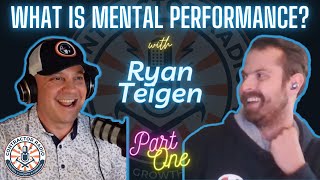
A Contractor Radio interview where host Jim Johnson speaks with Ryan Tigan, a mental performance coach (owner of Perseverance Performance) with a master's in sport and exercise psychology. They discuss applying sports psychology and mental performance techniques—confidence building, imagery/visualization, journaling, and mindset recovery after setbacks (like injury/iron deficiency)—to entrepreneurship and contracting work.
Chapters
It is Jim Johnson, the head coach at Contractor Coach Pro and your host here on Contractor Radio. And I got a really cool guest today. This is exciting for me because this is one of those sideline passions that I have. It's one of those things that as I've grown more and more as an entrepreneur, leader, coach, it's an area where I really focus a lot in my own life. And this is this mental side of what we do, really this mental performance aspect of what we do. And Ryan reached out to me a couple weeks ago and said, hey, I do this mental performance coaching. And it was super exciting. I'm like, man, I would love to talk to a mental performance coach. And so we're going to be talking to a guy that we're going to take a little bit of the sports psychology world, and we're going to apply it to the sport of entrepreneurialism, this sport of running a business, this competition that we're all in, and how to get our head right about all of it. He's got a master's in sport and exercise psychology, and he owns Perseverance Performance. Welcome to the show. Ryan Tigan. Good to have you on board, ma'. Am.
Thanks for having me, Jim. I really appreciate it.
Now, now, Ryan, you're up in Wisconsin, right?
Yes. Yep.
Is it a little chilly?
Yeah, you know, the weather's been very up and down. It was 80 degrees here a couple of weeks ago, but it's been sitting probably in the 40s for a while. So pretty typical Wisconsin weather at this point. But it's getting better from here.
Yeah. I lived in Wisconsin for 18 years, and this was the time where it was the Most, like, when May 1st hits and it's still cold, I'm. I'm. I'm out. I don't want to do that anymore. So I moved back to Texas. It's always awesome to interview somebody from Wisconsin because the people of Wisconsin are my favorite people I've ever run into. They're very genuine. They're very authentic. They're very family oriented. They're very town oriented. Do you see that as Wisconsinite?
Oh, yeah. I mean, I've lived here for about seven years now, and, you know, I've kind of dug into the community aspect for sure. I mean, all my friends, they have their own stereotypes and they have their own, you know, kind of mini culture, just depending on where they're from, whether it's Sheboygan or Milwaukee or Kenosha. You know, there's something about it. And they just have their own atmosphere and it's very interesting just to note the differences. Just.
Yeah, if you feel the need that you got to go to a dive bar, just go to Wisconsin. You'll find them everywhere. They're all over the place. It can be a fairly good time on a Sunday for a Packers game. But without going too much into Wisconsin. Let's talk about you a little bit today. Ryan. You're a mental performance coach. Why that, like why did you pick that? What's the background? Give us the history a little bit and why you're doing what you're doing today.
Yeah, so I think my journey has been one of the self exploration and what I really mean by that, it's not the destination itself and it's not necessarily the journey that you go on, but it's who you become along the way. So when I say that, you know, I first went into college, my undergrad years, thinking I was going to become a physical therapist and just be a college athlete on the side with tracking cross country. And the reality was was that was so much harder of a goal than I had necessarily, that I didn't necessarily think about, you know, going in as, you know, an 18 year old kid driving midway across the country to go to school for something that I was not really sure that I wanted to join. And trying to be a college athlete on top of that was, you know, you're juggling a lot of hats there. You're juggling a lot, whether it's practice schedules, competition, just getting homework done and getting studying for exams. All of that was, you know, two part time jobs on top of each other. Even two full time jobs, if you really think about it. And my first year I really struggled with just some physiological stuff that was going on. I had an iron deficiency for quite a while and just general burnout that was associated with it. And I was sidelined from running for probably about four months where I couldn't run at all. Everyone just turned into me being really sick and just being really sick and, you know, not being able to make it past like a mile without just being fully out of breath, you know. And three months before I was doing 8 to 10 miles, you know, waking up and just going do that before breakfast, which was probably.
Most people are not up for about 8 to 10 miles before breakfast. Sounds like the military.
No, it almost was at some points. But when I was sidelined, it really got me thinking about what my future career, just in terms of an athlete and just in terms of my career trajectory, what that was going to look like. So as I was doing that, I really started to dig into sports psychology and I read a couple of books, one of them by Jim Afimroe, the Athlete's Mind or the Champions Mind, How Great Athletes Think and Thrive. That was probably the one that had the most influence on me. And from there I really started to dig into my own psychology, psychology as, you know, both an athlete as a person, you know, what was it that I really needed to work on and when I took a good look in the mirror of what I wanted to work on was necessarily my confidence and just learning how to stay present when things are going rough during, you know, a cross country race or during a 5k or 10k on the track, because that's a grind. And the more that I learned what that grind felt like and how to kind of dig into that dark space, I think that changed the trajectory of my career as an athlete quite a bit. And I love that. I love the, you know, just learning how to dig into my own psychology and the mental training aspect and just learning how to be a better athlete, but also just being a better person and just, you know, taking those life skills that I learned and essentially putting them into my own spikes and, you know, my uniform. And that's really what I do now. You know, I, I kind of changed my undergrad from pre physical therapy more into the, the psychology space where I was doing exercise science on top of psychology. And then from there I wanted to keep going and that really started me on this journey of sports psychology. So I recently just graduated back in September after finishing up my internship hours and really just digging into performance psychology and exercise psychology in general.
That's a pretty awesome story. I have a question. So iron deficiency making you feel bad? I know when you're low iron, you're like low energy and all that other good stuff that goes along with that. Why digging into the mental and psychological aspect of it and not the nutrition or did you?
I did, I did. And I had a, um, you know, I was seeing an oncologist at the time and she was fantastic and I, you know, I had full faith in her. But I think at the time I was looking towards the end of the cycle, right. I was looking at what it was going to look like when I came back from essentially an injury. Right. My body wasn't working the same way that I was supposed to. And I think that's what really started to push me in that trajectory in the sense of, am I going to be able to get back to the same level of training that I was at without having this happen again. And obviously with the physiology and just the medical side of things, things are being taken care of. But it was more of kind of a mental gut check of do I have what it takes to keep being an athlete mentally as well as physically, you know, without having a, necessarily a doctor holding my hand every day while I'm out there on the field or out on the track or things like that?
Yeah, I love that term gut check. And I think it applies whether you're an athlete or you're an entrepreneur. Like you're constantly having these. Do I have what it takes to actually turn this thing into a business and then a growing business and then this thing that's vehicle that helps me achieve some freedom. There's constant gut checks throughout all that time, especially when you have setbacks. And that's what it sounds like you went through, you had the setback with the iron deficiency and then you're going to come back from it and you're going, will my body stand up to it? Do I really want to do all this hard work? Is the effort worth it? So you start studying the mind aspect of it. What did you learn about that? And then did it have an effect? Like, did you come back, did you work harder? Did you do better? What happened?
Yeah, so if you look behind me, there's this shit picture that I have in my background, right? And there's a quote that I heard from Grace Mary Hopper. She was a big part of the Navy back in the 1940s. She's one of the mothers of computer science. Fantastic person. But she's quoted and saying a ship in the harbor is safe, but that's not where a ship belongs. I think that really embellishes a lot of what I do as a meta performance coach and what I've learned over the last few years of how to help athletes. Because we can do a one on one session and idealize everything that's going to go right, everything that is going to be perfect? You know, I, I did it on my own in terms of like, you know, I'm going to come back, I'm going to have this great pr, I'm going to have these great track sessions. You know, all these great workouts are going to make me run three minutes faster. Cool. What is that work in between going to look like and what I was kind of going through my own work, you know, I really started to dig into the confidence and what that confidence string really looked like. And for me it was Just learning how to journal, just journaling the process, right. What are some things that I did well during the week? What are things that I didn't do well? What are things I need to work on? Setting goals are going to help me push towards those long term goals that I had for myself as an athlete. And from there, you know, if I didn't have the ability like running, if I didn't have the ability to run, you know, I was trying to do more imagery training than anything of just trying to put myself out there, you know, on a cross country course, on the track, and just trying to really embellish and get the most realistic image that I could in my head of what it actually felt like running. Because the research shows that when we visualize, when we're practicing imagery training, it's absolutely better than nothing, right? So if you're like today, if it's, you know, 35 degrees and raining, and that's not your work environment, that's not where you want to get out there to contract or go for a run, but you want to make sure that you're building your confidence or just sustaining your motivation, Just taking a few minutes to practice that, really just digging in and just making this realistic picture in your head, just practicing what it feels like to be back out there, you know, even in sports or just with your contract work that you're doing.
We actually do this in, in our sales training. We talk about this, you know, as we approach a home, you, you have kind of two parts. You have the initial introduction, then you do some type of inspection, then you do a presentation. And so after the inspection, we coach our, our sales athletes is what we call them that when they're in the vehicle, the last thing they do before they go in the house, and I got this coaching a long time ago, is to visualize the process exactly how it goes and visualize the success at the end. And what that leads to is giving you confidence like you've run through it once. Anytime we've run through something once already, the second time is easier, third time is even easier, fourth time is even easier. And it just starts to build this confidence because now we're competent. Is that something that you've seen throughout this?
Yeah, absolutely. It sustains your motivation, right? If, if you feel like you need that to keep going, right? Because we can set goals, we can set some of the biggest goals of our entire life, but if you don't have the motivation or the drive to keep those goals sustaining, you're not going to achieve them. Right? And if you don't know what you're doing, you're not going to be able to achieve those goals, too. So even just practicing building that competency is huge for your motivation, and learning how to do it on your own is just going to push it even further.










