What's Your Contribution with Jonathan Ruzicka
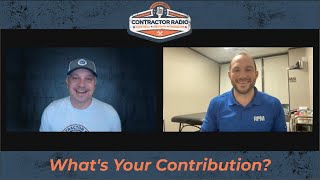
Jonathan Ruzicka, a physical therapist, runs a cash-based clinic focused on quality over scale. He uses education, hands-on therapy, and simple habits to restore mobility, and is building online programs for low-back pain with neck, shoulder, and knee courses planned.
Questions this video answers
January 19, 2022.
January 11 (date mentioned by hosts).
January 21 to April 5 (75 days, Jonathan's birthday on April 5).
4,700 square feet.
Four trainers, two physical therapists, and two office staff.
Chapters
Foreign. Hey everybody, welcome back to Contractor Radio. Thanks for taking time out of your day to put your thinking hat on a little bit. Our whole goal here is to help contractors become better leaders by getting control of their business so they can grow their business and find that personal and financial freedom they were chasing when they started their business. Today we are going to talk about your contribution, how you contribute back to others around you and when we were kind of thinking about these things and what we're going to do. I had somebody on my podcast list that I've wanted to bring in for a long time, but he's a busy dude and it's not always easy to get him on. But he had such an impact on my life and his contribution to it, I thought it would be a perfect place for him to come into our podcast today. So hang on for just a minute. We're going to hear a word from one of our sponsors that keep the lights on for us and we'll be right back. Want more 5 star reviews from your.
Customers At Signpost, we make it easy for your customers to give you great.
Reviews on Google, Facebook, Yelp and more. Our software connects with industry specific solutions.
Driving even more reviews from your customers. Drive loyalty and repeat business by sending the right messages at the right times.
To your prospects and customers. Message your contacts from anywhere, anytime using text, photos and video all in one app.
Check on progress with campaigns and review.
Generation across Google, Facebook and Yelp.
Visit signpost.com and get your demo today.
So if you haven't checked out signposts, make sure you get a hold of them if you want to engage with your customers. Get better reviews, close more deals. Signpost is your answer. So for today's episode I got to give a bit of a backstory. So our guest is going to have to hold on for just a second, but I'm going to lead up to why he's our guest today. There's a little thing that a lot of people don't know about me personally, but eight years ago I got really sick and ended up getting a virus that settled into my body and caused a condition called reactive arthritis. So I have this arthritis condition that I dealt with and still deal with today that really kind of put me out of commission. I couldn't do anything without a bunch of drugs in me that more than just walk and even then like somebody shake my hand. It was uber painful but I was able to block most of it out, not give any indication of what was going on and most people didn't know what was going on, except for those really, really close to me. And that went on for some time, a couple of years. And I made a decision that I wasn't going to be on Humira or Imbro or any of those drugs anymore because they weren't so great for my body. And I went through and I learned that. And I had known for a long time, because I come from the health club world, that your body's the temple. It's the thing that we got to take care of. We only get one of them. And so I made some decisions to change my diet that helped out an awful lot with the inflammation, enough that I could actually start to move a little bit again. But when I started to try to move again, everything didn't work right. My shoulder was still hurting, knee problems. I couldn't be bend over and do the things that I couldn't work out. And every time I did work out, it hurt because everything was just locked up so tight. I couldn't do much. So I started doing some research and trying to find the right person to help me out. And I found that right person in Jonathan Razika. I tried a lot of other things, chiropractors and other physical therapists and. And this guy was just different. He put his clients first. He explained things very well. He could tell, he was very knowledgeable about what he was talking about. And he radically changed my life just completely, especially, you know, in the job I have now and what I do, I end up sitting at this desk a lot. And when you do that, your body doesn't always do what it needs to do anymore from a lack of mobility. So I needed that mobility back and I went out and I found a guy that has probably had much more of an impact on me than he might imagine. And his contribution to me has been selfless the entire time. And so I want to welcome in the guru of mobility, the master of health and fitness and wellness, Jonathan Ruzika. Jonathan, thanks, man, for joining us today.
Hey, I appreciate it. I will say that I was getting paid during the time period that you were coming in, so it wasn't completely selfless.
One thing about Jonathan is he's a great business person. He's also a very good salesperson. He understands the dynamic that goes on between two human beings and how to fill and serve the other person by serving somebody. There's this principle of reciprocity or law of reciprocity that you feel like you kind of owe something back, and that's how a lot of people become customers. Is I can remember I went in and I had a. I think it was a very low cost or free, like, assessment thing. Like, let's see where you're at. Yeah, Discovery deal. And I came in and you did more than I expected. You showed me what was going on. You actually gave me a couple exercises. I think you knew at the time those exercises were going to help me, and I was going to go, hey, that was great. I want more. And I ended up becoming a client and uber grateful that I did. But. But do you have more to you than just being a great physical therapist? You're a good business person. You're a sponge for information. I know as I laid on that table and you put me through immense amounts of pain to get to where I could move again. You were always inquisitive, you were very curious, which is always a sign of a good business person. They're very curious. And so I really enjoy those times. I thought it would be valuable to our community right now because I want to talk today a bit about the health and fitness part of things and mobility and where we have problems and what we might be able to do about those. But I also want to talk about how we contribute back in the world. And so that's kind of the format that I want to run at today. So I thought beginning of the year, good time to do it, because everybody set New Year's resolutions out there, and most of the time those are about probably diet, health and fitness, you know, spending more time with the family. All of these things that people set New Year's resolutions about. And it is January 11th, right? January 11th. Any idea, like, how many people actually keep those? And like, what do you see? What do you hear from people whenever they come in and talk to you?
Statistically, I know it's less than 90%, lasts more than two weeks.
Yeah, it's crazy, isn't it?
Yeah. So. So I don't like to think about things as a New Year's resolution, but I also don't like to think about things in a ridiculous way of pushing my own discipline, which doesn't exist, as well as what. What most of my clients think that, you know, when we go through the holidays, we work with people long term way more than what we work with people long, short term. So more than 50% of our clients stay with us long term. And some of that is that we're realistic about what happens during the holidays. We spend time with family, so we run into some hiccups on that road because ultimately, as we age Our body start regressing in a way that we really don't want it to, but we've got to do something about it. So we start looking at retirement and the things that we're doing as we get older. And it's like, I don't want to spend as much time on my body. I want to go. I want to enjoy myself. But really, that's the time when we really need to start focusing more on our body. I would love, you know, in the 30s to start doing it, but really focusing on our body more as we get older, we have to do more and more to maintain the same amount of mobility because our joint capsules start to get tight and leathery, and that. That changes a lot of the dynamics of the way that we move, and we have bad movement patterns over time. So. But just. Just specifically on New Year's resolutions, I do them. Absolutely. I will. Sometimes they aren't on the 1st, but I'll do the New Year's resolution. So this year. Excuse me, this year I have a. I will not be drinking until my birthday on April 5, except I have a concert that I'm going to on the 20th. And I've. I've given myself a reprieve when I go there because I want to have a good time, but it's. I'm doing that 75 hard. One of the guys that I follow is. Has touted it, and it's a 75 days, no drinking, no breaking your diet, two workouts a day, 10 pages of a nonfiction book, then a gallon of water. And that's. And they want to take. You take progress pics every day. That one, that's part of one that is not that important to me. What's important to me is that I show that. I show myself that I have that discipline to be able to do the other things until I can get to my birthday, because it just makes me a whole lot more productive. And so that's the direction that I'm moving in. And most of our clients, we're on the same page because ultimately, when we work with a client here, I'm not fixing anything for you. I'm a guide that'll take you on the road. So I'm going to teach you everything that I know. Nothing is off limits in a conversation with me, but I am a guide, and I'm your partner on this journey, and I want to make sure that we're successful, because ultimately, I'm competitive and I want to win. And winning to me is that you get the results that you're looking for and the results you're looking for the majority of the time is to be able to do the things that you want to do on a daily basis and enjoy them without having the pain that comes with it. For a lot of people.
Well, one of the things I realized, being a more experienced human being in age is what I would call it, was that I wasn't what I was when I was in my 20s and 30s. You know, I could, at the drop of a hat, say, okay, I'm going to start working out again and go in the gym, you know, push ups and pull ups, you know, hit the, hit the dumbbells, bench press and all that other good stuff. And what I found is I started getting into this repetitive cycle where I would go in and it would hurt so bad, it was so painful that I would quit, for lack of a better term. And once I met you, you kind of clued me into this thing that it was because I didn't have the mobility. I got to get the mobility first before I can go and do those things that I thought I was still able to do. And you freed up a lot of parts of my body. My shoulder was my biggest issue, and then also my hips were big issue, like to golf. And I was like, dude, I cannot turn like I used to turn. I couldn't do those things. And so you. The cool thing about working with you was you educated me. You educated me not just on, hey, this is where your problem is, and I'm going to work on this to solve your problem. This is why it's your problem. You're sitting in a chair. You're doing this thing with typing all day long. And a lot of that made it very clear for me about why I need to get up every once in a while. I constantly feel myself doing what you instructed me on, which is getting my shoulders back because we tend to roll them forward. And so I. I roll them back. You taught me this thing called the Texas towel roll, and I'd never heard of that before. I was like, what? Kind of. Yeah, and you did. You made it up. But it's. It's literally taking a hand towel, rolling it up into a. A little roll about that big and putting it between my shoulder blades and being able to work out those knots and the lack of mobility that I had, that's just one of, you know, dozens of different extras. I. I did my Superman stretch. I. I've gotten in a habit of doing it down the hallway whenever I go to the bathroom.
Hold on, pause that right there. Tell me what, what is the Superman stretch? Are you talking about the world's greatest stretch?
World's greatest. Sorry, world's greatest.
I just want to make sure that people aren't thinking you' because that is absolutely not in our repertoire whatsoever. That's back east.
That's my fault. I always feel like a Superman because I'm like down on the ground, I'm like, look like I'm about to take off. But yeah, it's those little things that you taught me were things that gave me a better quality of life. And I think some of us out there as listeners, we go to try and work out and it just doesn't work out. And what we don't realize is because we don't move the way we used to move and especially in the construction trades. I mean, we're swinging hammers, we're carrying heavy loads, we're climbing ladders, we're on roofs, we're painting over our head and we end up with back problems, shoulder problems, hip problems, feet problems. All these problems that we end up having and we just dismiss them almost as a fact of life. It's just what we're going to deal with and don't really realize that there are. Would you call yourself a functionality therapist? That's what you're doing is trying to get our function back. How do you, how would you describe yourself?
I don't even know. That's a good question. I mean, I don't even know what our, our, my profession is like nauseating to me. They're the lack of care that people have, the lack of tenacity that they have with clients that they're not in it with them. You know, when you go into an insurance based clinic, you are there with anywhere from two to five people at the same time. So if you go to a personal trainer, you' one on one with a guy that's typically less qualified. They might be a great person. It always depends on the person that you work with. But then you go into a physical therapy clinic and now you got three or four other people there at the same time. You got a physical therapist who's telling you what to do. He's just kind of directing traffic and it is a absolute mess to me. And I don't understand why, why it's that system. So we've flipped the system within the clinic where we're one on one with our, with our cl. Right now we're one on one on training. But I'd like to lean into A small group style training because it would return much more revenue for the clinic. It would get us, allow us to pay our, our trainers more money, which I absolutely value because I want to keep really good trainers. I want to keep them long term. But that's the breakdown that needs to happen. Because when you're not in pain, a small group style, I'm not talking 20 people at once, right? I'm talking like four people cabinet at four. You can talk, you can hand that amount of people when you get into bad movement patterns. But yeah, I would, I would say I'm a manual therapist, but then we're a movement specialist. Like, so we look really hard at movement patterns. Because what you touched on earlier was what, what, what causes chronic injuries. We know that, that the first thing is an accident. The second thing is repeated movement, and the third is a prolonged position. So repeated movements and prolonged positions are what we can control. I cannot control what happened in an accident that you happened 10 years ago, but also can't allow you to leave that as a crutch and say that that's the problem and that, that, you know, I had this accident or this football injury and now I'm just screwed. Right. That's just a weak mentality. And it is not if you're, if we came in, in that whole discovery visit, that discovery visits for you, but it's also for me to make sure that you're a good fit for us. That, that we need to make sure that we, we're going to link up together and that we're going to be successful in the end. And, and we got to talk about that, that, like, how do you feel about that in the past? Like, and what is your, what is your viewpoint on the future? Because if you have zero hope, I can't create hope for you. But if you have a little bit of hope, then I can open it up. I can open your eyes to what can be accomplished.
Yeah, I can remember my goal, My goal was I wanted to be able to throw a baseball again. I wanted to be able to swing a golf club again. Like you asked me day one, what are you trying to get out of this? I said, I'm gonna have a grandkid one of these days, and I want to be able to throw a baseball with him. I want to be able to, you know, run alongside him. I want to be able to do those things and I want to be able to swing a golf club. And they're like, okay, we can do that. We'll get there, set up a Plan for it and made it happen. I like your idea of a small group because what that does, it creates not only accountability because I'm paying you and I got a trainer, but it's got accountability with those three or four other people that are going to be there as well. Like, the second you don't show up, you're like, hey, where you at, buddy? Which is what you're doing with this 75 hard thing. There's an accountability aspect to it because.
Yeah, if I can find somebody that wants to do it with me, everybody, when I get it to them, they're like, that sounds too hard. And I'm like, and every time that happens, it becomes another little. It's like rat poison. Like, that sounds too hard. It's like, okay, great, because I'm gonna end up doing it. Like, more motivation to show you that it can be done.
It is something I have put off and I have heavily considered doing the gallon of water a day thing is my biggest issue. Like, that seems like the hard one.
If that's the hardest part, that one's the easiest for me. I drink a gallon of water already a day. But let's go ahead and since we're on the podcast, let's go ahead and get. There's no edits here. Let's go ahead and get a buy in from Jim Johnson on that. He's gonna do 75 hard with me on January 21st till April 5th.
January 21st to April 5th. Oh, boy.
Don't even think about it.
Like, no, let's do it. Let's just do it.
We can go at it. Let's. Let's attack it with a purpose. And then if you, if you fall off the wagon or something, we'll talk about it. Right? And. And we're there. No judgment.
Well, I haven't done it because I know when I do do it, I will do it. Okay.
What the hell are you waiting for? Because you're an old fart already.
Hey, man, now take it easy there. Yeah, I mean, let's do it. January 21st to April 5th. Is that.
Yeah. January 21st. April 5th. And I knew you'd eat it. I knew you'd take it. Yeah, I love a challenge. And I'm right here with you. I'm. I'm. And I will be absolutely honest with you if I break or do something, because ultimately what the challenge is, is if you break, you have to start over another 75 days. But this is the best window of the year to do it, because we don't have the holidays and all this other stuff going on. This is a great window of the year. So we're actually.
Thank God we live in Texas, because one of those workouts has to be outside. Right. And so.
It is. It is. I might struggle with that. And I'll be honest about it. I might struggle with that. I did get.
Hey, if I'm in your end.
Hold on a second.
If I'm in your end. All right.
Workouts you're doing. Because. Yeah, if we're. Yeah, I'll do it. All right, I'm in. All right, good. Now you. Now you're pushing me. But that's what. Absolutely. That camaraderie and that joint discipline goes so far in. In being able to find that in somebody, and you got to look for it to find it. That's what like. Like we. You looked for me to find me, and then we built a relationship based off of our common interest and how much we care about people and helping other people, and that's why we remain friends over this time period. And you've moved away and we still talk. We don't talk as nearly as much as we used to, but. But that. That's. It is that. It's. I got this from Les Brown years ago. It's OQP only quality people. And. And that's something that I've been living by for the last five years of my life. I don't care if your family, like, if you are not adding value. If you're. If you're. You don't have to add value. I'll still be a part of your life. But if you're bringing me down, I don't have. I have two kids and I have a wife, and I have a whole business to run. And if you're bringing me down, I'm not wasting that energy on you. Yeah.
Because it is. We only have so much energy every day, and I constantly harp on this thing. Every decision we make has an roi. So my decision to engage with somebody that isn't a quality person is a suck on my energy and my contribution back to the world. I'm not going to do it. I'm just not going to. I want to come back in just a second, talk with you about that a little bit. We've kind of talked the health and fitness stuff. I want to talk about this idea of what's your contribution, and I want to talk a little bit about how I feel that, like, that went with you, and then maybe some of your beliefs about that. You good with that?
Absolutely. All right, hold on. Are you going to ask a specific question?
Yeah, I got a couple specific questions.
All right, I'll get you.
All right, here we go. A little word from one of our sponsors.
Who doesn't love getting more referrals. GTR will make your referral game stronger than ever with our four step process. First, engage with customers through job status updates and push notifications. Then motivate your advocates to send referrals and earn rewards. Third, track and manage all of your results through your company's dashboard. And finally, sit back and enjoy achieving up to 40 times ROI. GTR is the number one referral platform for contractors. So book your demo today@getthereferral.com you want more referrals?
Get the referral is the answer for your business. It allows you to track them better than you ever could any other way. It also allows you to reward those people to give you referrals, give them proper incentive at the right time to get the most referrals from each one of your people. And I would imagine that Jonathan works off of referrals a little bit too. Is that correct?
Yeah, referral from my people.
Yeah. Like I think.
Yeah, it will be always in a. I, I feel like this. Take it with a grain of salt. I'm not an expert by any means, but word of mouth will be your number one referral source.
You.
We have to, I, I feel like we have to spend money on marketing to create those relationships. But as soon as, when you create those relationships, I can't name how many families that we've worked with that we get everybody because of the job that we do and the communication that we have and how much we care about clients. So word of mouth is absolutely. It's not scalable though, right?
Yeah, it's not. And so that's why we continue to market and do those things. Now. It will broadcast further, but it's not something that you can lay all the eggs in one basket on. As a matter of fact, anybody I know that's in Houston, whenever I hear anything wrong with their body or they're not able to, I'm like, go talk to John. He's your man. That's the guy. And you have a bit of a different approach to your business than what most other physical therapists seem to follow, which they usually get aligned with some type of hospital or insurance company, that type of thing, other doctors. And so whatever physical therapy they need is paid for by an insurance company. But that's not your model. What made you choose that?
There's no there you couldn't, I don't know. Well, you could pay me but, but, but they don't pay me. So the issue is that they don't allow me to make the decisions that I want to, that I need to make for my clients for their best interest. And so that's where, where I don't want to staff somebody that's talking to insurance companies all the time because they're either not going to be somebody that I want to be around or they're not going to be somebody that does a really good job because somebody that enjoys talking to insurance companies all day doesn't really fit. But what I, I mean I, I, I had heard that people were doing it and of course when some, if I've heard that somebody else can do it, then I believe that I can do it as well. And what I did was invest in my skills. And so I mean I can remember when I did a fellowship in manual therapy, I put my, my little, my little name in the chat on there credentials behind it. It's like I just spent you know, five years just dedicating my life to learning as much as I possibly could. I over, I would spend money on my own accord to broaden what I needed to do based off of the clients that I was working with and who I wasn't able to fix. Like fix as well as I wanted to. Like hey, I get their SI joint in the proper position but it won't stay. What do I need to learn to get it to stay better? And then, and so then I'll invest 3, $4,000 to figure out how to get it to stay better. And so that, I think that that thought process allows me the opportunity to open a clinic that is cash based. It's so.
Where'D you get the help from? Like you said, hey, I, I knew other people were doing it.
So, so I have a, so, so I, I was listening to a podcast years ago with Jared Carter. He was the first one that was, that was doing that cash based podcast. And then Paul Goff is my business coach. He's out of the uk. He has four clinics that are cash based in the UK they have socialized medicine and so people pay cash to go see their clinic. And so and I just keyed in on that and it took me probably just personally and I've talked to him about this, that there was a lot of things that I did in the first six months at opening my clinic that I would have changed if I could. I would have started with him sooner because. And this is. Jim's not paying me to say this. This is. Paul did a. Has done a great job of getting me into the mindset of how, how I have to be to, to sell and to do all these things and to create a business. And now it's even progressed along. I mean over the last four years it's, it's way different training and coaching than what it was four years ago. Like now we're on a, on a plane where we're talking about our staffing issues and how we're addressing those things and, and I mean it's a lot of it. Staffing issues. Let's be real. It's a lot of. It's your pyramid. Like what's your, what's your. I don't remember the name for it but your, your breakdown of how all the work. Yeah. Org chart.
Yeah.
So org chart was like the first thing that, that we went through when we went into, when I went into a small group and one on one type of situation. The or so dang important. And so, so, so I, I got on board with him. It was a big pill to swallow at the time, like the amount of cost. But if I look back on it like there is no way we'd be the size that we are now if I hadn't got his help. And my wife was totally against me when I did it. She was like, you don't need his help, you can do it yourself. And I just told her, I go, I can be successful in two years with him or I can be successful in five years by myself. And I just feel like those three, that extra three years is going to be really painful. I'd prefer to hit that successful in two years now. But my ideas of success have changed significantly over that time period. It's been five years now. We've been open and, and we, I mean we're, we're just running on a clip. We just opened our, our own facility. It's 4,700 square foot. We have a full gym. I have four trainers, I have two PTs and two office staff. And one of the biggest things that he got me to, to get on the bandwagon was to hire office staff to manage the business and work with those office staff because they're so integral. We have our revenue generating section of the, of the business. We have two of them but then we have to have a office staff. We have to have an administrative portion of the business that is on point and making sure they're, they're keeping Us in line on the revenue generating side because that's what covers their salary. Salary. And I'm open with everybody about that stuff. So that's, that's kind of how I wouldn't go into an insurance based system because insurance reimbursement's going down and then, and then our premiums are going up and we've found. I got told that there's no way that it can be done. And you know, even with clients who are coming in, like there's just not enough people can afford to come in. We have, we have waitresses, we have like we are the handyman at the, that helped us with our lockers here as a client. Now guy that's only the floor metal lady at the airport. Like it's like, it's just all these contractors.
You got all these contractors that are doing these, you know, repetitive movements that really suck, that if they don't do something about it, they're going to be in a world of hurt.
Yeah. And we set ourselves apart. If you set yourself apart and say like give a higher level of service. Which ultimately I feel like in Yalls World because now I do know a little bit about Yalls World from the consumer side. I went through eight contractors when I was, when I was doing my build out, my commercial build out through eight of them was the eighth guy that I, that I chose and I trusted him. I damn glad that I did it too. I mean he is, he, me and him will be friends forever. There is not. He just, he's just a solid guy always. I'm not an ass and I'm not somebody who it needs to be like walk through and talk to about things. But there was a lot of stuff that I needed somebody to like kind of look at, look at my lease and, and what our, what our architectural plans are and him just working through that with me was so beneficial and, and I, he told me that I was his best client too. I mean, what's going on? But he like he came to our grand opening and donated like three different things to our grand opening and, and There were over 100 people there and that was an opportunity for him. Like he told me that if, if he didn't think that there was a, a good, like that, that I was a good opportunity for him to get referrals, then he probably would have dropped. But he liked me too. Right. But he probably would have dropped. I mean but, but he'll get referrals from me forever. And I'll always work with the, the people who are really serious about life. And so. And that's what we want to work with. Regardless of what industry you're in, you want to work with people who are really serious about life and getting ahead.
So let's. Let's talk about that, because I noticed something as you were going through, the guy that helped the lockers guy to the floor, the guy that did this work. Like, everybody you come in contact with, you're talking about that because it's. It's your passion. It's a thing that it fulfills you. Like seeing people get back. Like, you know, you and I talked afterwards after I went through a lot of work with you, and I was able to go golf again, and I was able to do some of those things again. And I could see just as much joy in your face over it as there was in me. Like, that was wild. It was something I noticed about you. And I always noticed this other thing about you that if I texted you or called you, you made time. You know, I moved. I now live in New Braunfels. I was an idiot and went and played basketball and did so in a way that I wasn't quite ready for it yet. And I tore my Achilles. And that was right before COVID So Covid hits. Can't go into physical therapy, can't go into all these other things, and couldn't get through everything. I reached out to you and said, hey, I'm struggling with this, I'm struggling with that. I know what to do here, but I don't know what to do about this whole ankle thing. And where I'm at. You were just Johnny on the spot, do this, do this, do that. And all of it was so helpful. Without any ask for reward. There was no, like, hey, you need to send me some money because I gave you those exercises. It was, hey, you're one of my clients. You're hurting. I'll help you. And I felt like that was a strong contribution from you. And what that's done is like, how can I get back to you? How can. How can I contribute to your life and make it a little bit better? Whether that's from a business aspect and you got questions there. You want me to come and be a part of some event, whatever it is, man, you ask, I'm probably going to be there as long as I'm not, you know, otherwise occupied. How do you look at your contribution to the world? What does that look like for you?
You know what? This is an interesting question. We talked about it a little bit beforehand, but since I Didn't know this is where it was going to go. So my son asked me. We got these hats over the break. So we all got Covid and like right before we were supposed to go on a ski trip and we all got Covid or so at Christmas Day we came in contact with my sister. She tested positive the next day. And on Monday we were supposed to be leaving to Taos. And so me and my wife had to go through that decision making process of like, hey, what are we going to do? You know, like on. It's because it's like what. It just depends on where you're at on the spectrum with this whole Covid thing. And it's like, well, I'll be a little bit irresponsible of us when I know that we came in contact with them, but I don't know if we're gonna have symptoms or anything. But we ended up, we, we ended up canceling the whole trip, got our full refund, which was great. And then, and then we spent the week. We ended up getting sick and like, and at the tail end of that once we, me and the boys were fine, and then I got a three year old and a five year old and we're fine, but my wife's still sick and I'm like, hey, I'm gonna let you sleep. And so I go to the mall. We go to the mall and there's these, there's these hats on sale and they have motivational quotes on them, right? And one day, one of them's. All day, every day, one of them's unfinished business and the other one is, is legends never Die. And so I don't feel comfortable wearing legends never die or unfinished business, but all day, every day I can do that one, like easily. So we end up getting these hats. But my five year old shows Legends never die ended up in a conversation about like that he didn't want to die and that's why he got the hat. It's like, that's not what that means.
It worked out pretty good though.
But he asked me, this is yesterday morning. He asked me, daddy, are you, are you going to be a legend? That's, that's a big question from a five year old. And damn near brought tears to my eyes to, to have him ask me that. And it's like, well, hell yeah, I am. Like, there's not, there is no like on contributions. Like, oh, I want, I don't, I don't know what that looks like right now. And do I need to create a plan around It. Absolutely. But my whole mission right now is to the clients that trust us, that come to us. I want to help them to a degree that nobody's ever helped them before, and I want to be accessible to them. There are clients. There are problem clients. There are clients. I will never give my cell phone out to certain clients. But. But the people that work with me and trust me, it means a lot to me. And I've been in their shoes before, so. And there's. There's a lot. Like, we're going to end up with a ton of injuries over time. And my obsession is to figure out how to fix the majority of them. Like. Like, I'd love to fix all of them, but it's not. So I'd be trying to be realistic with myself. And if I can figure out what's going on. And then we have a video system to, to give them things to do, and then they follow it and it gets better. Then we have a notch on our belt. Right. And then. And we can check that off. Like, this is a good system for this person and this demographic. This is so. And we categorize those things as. As new PTs come in, we're training them like, this is what works with this. This person. Typically with the body, 80% is the same. 20 is slightly different. Right? It's always 80, 20 rule. And that 20 is specific to that person. But that 80%, they have a human body. And that human body needs to work with these certain mechanics. Right. We need 10 degrees of dorsiflexion. We need zero degrees of hip extension. I can get nerdy about this, but.
Let'S not get nerdy.
Yeah. Those things. Like, we know that the body needs those things within that 20% specific to them. But again, I don't even know if I'm answering the question. Ultimately, it came down with, like, contribution. Like my. I think that was, how do you.
Want to contribute to the world to make it a better place?
I mean. And I don't. I, I. Ultimately, what I want to do is, is my goal right now is to have three clinics I want to do. I'm. The next one will be. One of my friends is franchising out a sports performance clinic. We already took on some of his tech equipment.
Brothel. New brothels. That's where we're going to put it.
Not even close. Not even close enough for me to manage it. Because I'm a control freak. It's. I'm a control freak on quality. I'm an absolute control freak on quality. That is it like, I'm like, how we get there is not what bothers me. What bothers me is that I'm in a. I'm in even like just any setting that I'm in. Let me say that when you allow the quality to go down because the revenue is okay, it's not okay with me. It's never going to be okay with me. The quality has to be there at all times, every time. And that's what. So I. So my vision right now is three clinics because I worry that the quality goes down when I go higher than that. So. But my contribution is to the people that trust us and come see us. And everybody can't come in and see us like they can. They just have to make the investment and see that it's worth it and they'll make the investment. We have people that don't make good money at all, but they make the investment because they know it's important to them. But those people that come see us, I can't treat everybody and I can't make you care about your body, right? That's the biggest issue. Because I'm the guide. I'm not going to do it for you.
So that's step one. Step one is, do you give a crap about this one body that you get given because you ain't getting a new one? Do you care enough about it to invest in it? And if you do, how are you going to do it? Are you going to go out and do a 75 hard thing, invest that way? Or maybe that doesn't work for you and you got some problems in a shoulder, a knee. You mentioned that you have like videos and things like that. Is that like, let's say I live in Alaska. Could I learn anything from RPM from Alaska or do I need to, like, I got to get into your building.
So we have YouTube videos. We have YouTube videos. We have our Facebook platform. They're not as robust as I'd like to. We have a low back program. That's the only thing we have done right now. We'll have a. Well, by the end of this year, we'll have low back, we'll have neck and shoulder, and then we'll have a knee program. Those are the three that we need to finish. Right when 2020 happened, we shifted our focus and said like, we had a. We had a bunch of trainers that didn't have any. Anything to do. So rather than firing them or furloughing them, we found another resource, another outlet, like, okay, well, let's start creating something that will pay back over time. Right. So. And that's the business side of it. But yeah, so we have an online program. It's specifically back pain, sciatica, everything related to that. And it goes super in depth. The videos are so much better than what we have on YouTube. They're edited better, but they're longer as well. Like we go through specifically why you should be doing these things and how to do it. And it's exactly what we do in the clinic. But we're teaching. The reason why they're longer is because we're teaching you how to do it to yourself. And that is much harder when you're not sitting in front of me and I can put my finger on this and say, no, I want it right here. Right. So that, that's where. So the videos are much more detailed, scaled.
Right.
But yeah, so we have that online program for the low back. But otherwise, otherwise, like just in, in general, it's like, I, I mean, I'm a big proponent of finding somebody that's solid as well near you. Like, even like, like getting our online program. Online program will be the number one program that you can get. There's not because the quality comes behind it. There's. Then this is with my business coach and I hope he never listens to this, but he's like minimal viable product. What you need to just go mvp and then, and then what you really need to focus on is your marketing system because you don't have a marketing system set behind it. So you could have a dog program and then put a great marketing system behind it and you're going to great return great revenues. And I totally agree with him. He's absolutely right that the marketing program is not like robust whatsoever. We have not had the time to do that because our program, we've only been able to finish one right now. And that's. And I can stand behind that and have pride that I know that somebody's going to, if they follow this, they're going to get better.
So that, that's what it is about you. That I believe is what makes you such an amazing contributor. You don't half ass anything in every conversation. It's intentional, it's purposeful in anything that you do. You're trying to do it to the best of your ability. Your investment in your time and energy into learning what you know and continuing to do. So it's palpable. Like you, you can feel it. And I, I remember talking to you after our first little discovery thing. There I went, you're the first guy I've talked to that actually cared. I don't know if you froze up. Are you still there?
Yeah, I'm there.
Okay. You kind of froze up on screen. So we'll. Ah, there you're back. It was palpable that you actually gave a crap. And that went a long ways with me. And I think that goes a long ways with whatever business you're at. The person on the other side of the table, that person that's giving you a quote, like they actually genuinely care that you have their best interest at heart, goes a long way. And it went so far as to. I had one appointment left with you. I will never forget this. I. One appointment left with you called, you said, hey, man, we could I fit that in. I'm coming to Houston. You said, yeah. And I got to Houston. I called you like, dude, I got covet. I'm like, well, how you feeling? I feel like crap. I said, what do you need? He gave me a list of things, and I went, I got your back. Give me an address and they'll be there. And he said.
He said, drop them off. That. Yeah, I know. My wife gave me a hard time. Why are you asking Jim for that? You can ask. Go. Jim's like family. So you. You earned that.
Yeah, that's the thing. You earned that because of your contribution. You. You went above and beyond the call of duty. And I think you do it not just with me, but with everybody. And you earned. Was literally zero thought in my mind. I went, hey, he's sick. Can't get out. What can I go do? Could I bring him a sandwich? Can I bring him some medication? Can I bring. What do you need? Give me a list.
I got a lot of vitamin C in that. I still have that vitamin C.
But I. I think that's how. I think that's how relationships are really built. We truly invest in the other person. And this. This just natural, authentic reciprocity comes into play. And you always have that with me unless you screw me, but I don't foresee that ever happening. But you'll always have that with me, and hopefully likewise. I think you may have noticed that about me. Every time you'd have me on the table, it was like constant grilling me with questions. It was so great and just feedback and talking about business. It was awesome.
It was all for you because you just like talking about business, so.
Oh, yeah, There was nothing about you trying to figure out anything.
What the hell am I doing? Tell me what I'm doing. Because I need help.
So, last question. You've been very good with your time here, and I don't want to keep you too long. Your son asked you a question. He said, hey, are you going to be a legend? And you said, yes, I am. Hell, yes, I am. What are you going to do to be a legend?
Well, it's a good question, because I ultimately, like. Like, it depends on how you define legend. Right. Do I feel like right now that there would be a. A large number of people at my. At my funeral if I passed away today? Will there be a large. Hell, yes, there's gonna be a. There's There. When. At the grand. At our grand opening. My wife. Her biggest thing. When it. When we left and we were running through it, like, her biggest thing was like, dude, you have so many people that care about you. And. And. And she was saying that, you know, she was just very proud and happy for me, and. And it just goes both ways.
It's just.
I just care about all the people that we work with. We have really strong relationships. Relationships with them. So it just. It just depends on how we define legend. I want what. What I want. I mean, I don't. I don't care about the world knowing about me or being famous or anything, but in this area in the. In the Woodlands, and I'd like to expand it beyond Houston, and then if it becomes the entire state, then great.
But.
Excuse me. I try not to get.










