Why Profitable Contractors Still Go Broke and How to Avoid It!
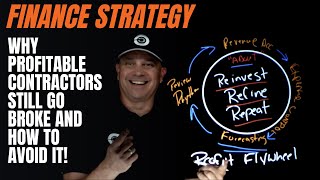
Jim Johnson explains why contractors with strong profits still run out of cash. He teaches the Profit Flywheel (tracking revenue, expenses, and forecasting), the Four Levers of Profit (price, cost, volume, velocity), and how to split revenue: roughly 50% to job costs, 25-30% overhead, 10% net profit, 5-10% taxes. The key is measuring how long money sits between starting a job and collecting payment.
Chapters
Hey, everybody. Welcome to the contractors training room. And today we're going to talk about the number one reason contractors go out of business, not knowing your finance and numbers. And we're going to talk about the three ways of how to avoid this every single time. So hang out as we get started here in the contractors training room. My name is Jim Johnson. I'm the head coach here at Contractor Coach Pro and I've been coaching contractors for the last 13, almost 14 years now. I did so as well five years before as the Director of Sales for Acculinx, bringing on new clients. And before that I was a contractor for over a dozen years, generating 25, 30, $40 million in annual revenues. And I made lots of mistakes on the way. I'm here to help you avoid those mistakes and talk about this thing we call the contractor's blueprint and the contractor's scaling matrix. So let's bring that over and talk about that a little bit on our Smart live board here. And this is what we've been talking about over the last few weeks. This idea that we have these 12 pillars of our business that include leadership, culture, process, HR or team performance like we talked about last week, finance and numbers like we're going to talk about this week, accountability and standards. And those are all foundational. Think of those are the things you guys don't work on very often. Where the reality is the things that you do work on often are operational. That's where you get excited about technology, marketing, creating opportunities, sales, sales process and presentations, your production, how you build something, the one you avoid over here, training and then recruiting, hiring and onboarding. Because I want to scale my business and make it as big as possible. Which is one of the reasons why people, a lot of, a lot of people come to us is recruiting people and building out those sales systems and sale processes because we're really good at it. But you have to think about these things in sequence. Like, I need to do this thing before that thing and I also have to know about them by stage. So we have these stages that we go through, from startup to solo, to friends and family, getting serious growth, expansion. We also kind of think of those as like, hey, I'm a tech or salesperson that's starting up a business. These are the things I need to know. They're the million dollar must. They're the basics, how to create an opportunity, sell it, build it, collect it, and understand my numbers at least. Basically, then we have our solo. That's the person that wears all the hats, might have a Little bit of help, but that's part time in most cases. Then they start hiring their friends and family, starting to become a real entrepreneur and then that goes really good and they start to hire outside of their friends and family and get into people that are strangers. So they have to get really serious. They have to get systems and org charts and communication and processes. All this stuff that needs to happen so that they can then move to the next stage, which is growth, which is the ability to repeat what it is that they do and do it through leaders instead of through an owner and ultimately expansion, taking all that and creating new opportunities by location or within your market and other trades and opportunities. So that's the general idea. If you want to see more about that, go back to the very first one. We talk about this in entire concept and how important it is and that the number one thing that's really most important is your guiding principles. Underneath everything else, this is the bedrock that everything else will be built on. If they are compromised, everything else will be compromised. If they're of high value, high morals, high character, you'll be surprised at what kind of a business you can build. We're going to be talking about this one right here, which is finance and really finance and numbers. So before I get into a whole lot of conversation, when it comes to finance that side of things, think bookkeeper, CPA, QuickBooks, that kind of stuff that's really finance and understanding profit and loss, your balance sheets, cash flow. We're going to talk about that a little bit today. But I also want to talk just as much about numbers, understanding margin, understanding volume, understanding cost, understanding these things that are really important that determine whether you're going to be in business next month or not. So let's get the first thing out of the way right away and we're going to do this thing called the financial awareness curve. Because I think a lot of us aren't really aware of what it is that we need to know in order to move through these stages of our business. So let's give a little bit of a model here so we can understand what it is that we're trying to trying to accomplish. Think of this as my awareness of things financially have to improve exponentially over time. And they get steeper and steeper as we move into those larger growth stages and expansion stages where things are moving at a much faster rate. And there's more of it than I can process and compile down here in startup. Hey, I know every job that's going on. I know who, how Much it's going to cost me who's going to do it. And so it's pretty easy to navigate and then what I'm going to make on it, so I can make decisions with that. But it gets more and more and more complicated each step along the way. So this is the first step, your startup step. And this is where you need to know a few things. And I do have notes over here on the side so I can stay on track with you guys. This is a big concept we're going to talk about today. It's probably the most important one of all the ones I've done, except for maybe leadership, one of those two. It's between this one and leadership. So startup I gotta know what to charge. Like that's number one, this difference between my business and personal expenses. That's all. So finance difference between a business and personal expense. And then numbers. What do I charge, how do I charge the right amount for what it is that I need to do? And so I'm going to challenge you with this concept of profit first. We're going to come back that to that a little bit more. But how much profit do I want to make on each job? And then work it backwards from there, not the other way around of here's all my costs and this, all that stuff, this is what I'd like to make because it never works out that way. We always have to think profit first. And we'll come back to that in more detail. So what do you need to understand at the startup phase? Well, you need to understand the basics of cost of goods sold. You need to understand gross profit and true gross profit. And most people don't understand gross profit for what it is. Think of gross profit being everything that's left over from the revenue after all the cost of goods sold. So I have material, I have labor, I have commission, I have permits, I have everything that's directly related to a job that I could specifically say, hey, it applies to that one job that's a cost of goods sold. That's that thing. And I need to subtract that, including commissions from the top line revenue to give me gross profit. And that gross profit number as many times. And almost every contractor I ever talked to tries to do it before the commissions when they really shouldn't. That's not how accounting works. It's not how your CPA is going to look at it. It's not how anybody that is a bookkeeper is going to look at it. So we got to understand some of those basics. We Understand overhead. Like how much does it cost to run my business? How much if I'm renting a space, if I own a space, if I have vehicles, office equipment, insurance, all that other stuff, that's all overhead. And that tends to start to set a fixed cost for the what it is that we've got to do to break even and get above that number. Especially when we're at startup and solo, there's not a whole lot of people to pay for. So I can keep my overhead really lean. And that's something to really remember. I don't care how big you get, get that overhead lean. We're talking about this today, and it's really timely. Hasn't been as awesome this year as it has been in years past for contractors. Ever since, kind of like Covid, everybody has started building like crazy and everything is like, boy, a boon. There were storms everywhere. People were doing a lot of work. Like it was just crazy. All of a sudden this year, things have changed. What changed? Well, did we build it all out? Is the economy sketchy? Is things gotten too much? There's all kinds of factors that play into it. And are you built to withstand it or did you over leverage yourself in overhead and it's too much and now you can't withstand it? I've had too many of these calls lately. One of the stories here from this last couple of weeks is $650 million company. It's reported at 450, but it's actually a $650 million company. Went out of business overnight pretty much because they were leveraged incorrectly financially. They didn't understand their numbers well enough. And because they didn't understand their numbers, they got out over their skis. They had to close the doors, like literally overnight. Hey, 7:30 in the morning, board says, hey, we're not open anymore. 8:30, everything's closed. Get off the jobs, get out of the offices, everything. So it can happen to a big company, it can happen to a little company. So we have to know our numbers very, very well. And finally, the other thing we need to know or understand is our net profit. Now what do you need to do here at this startup phase? Oh, I got to track expenses and I got to track job costs separately. So here's all my expenses, here's my job costs. Those have to be tracked separately. Learn how to do that. You can do just that at the startup phase. You're going to be in great shape. For now, as a solo, you know, hey, I've got maybe a couple of part time People or a bookkeeper over here, maybe a crew with a foreman that does some of my work over here, that type of thing. I've got to know a little bit more. And so what do I need to know? I need to know how to use accounting software at least basically. If I don't, I got to keep everything in a spreadsheet. But you got to keep some kind of record. So you got to get educated on QuickBooks. There's lots of great resources for learning how to use QuickBooks. Basic setup, make sure that you focus on contractor set up. Though we are different than the rest of the world. We have this thing called work in progress that's very important to your cash flow. So that's the next one that's solo right here. And I have to know a little bit about my software because I don't necessarily have somebody else doing it. I might hire somebody part time to do it. But I still need to know how to look at it, understand it and go through it. I also need to understand job based budgets and goal setting. So I want to start setting some goals for my business. So those kind of numbers and what I want to do for the year, quarterly, monthly, weekly, daily. So think of those type of things as numbers. But I also have to think finance. So job based budgets, how much am I going to have into this job so that there's something left over after I sell it to somebody? I don't want to sell anything at low margins and because I have to sell a whole bunch of them and I'm not going to be desperate to just get a job because that person won't pay anymore. They're going to pay what I'm worth. And the fact that you're in this smaller stage out here, you can run really lean. You can actually win some of the price battle situation with some of these bigger guys because they have more overhead. So that's some of the pros and cons, that's the things you have to think about. And so the other thing you have to do here from a, from a finance standpoint is reconcile your books monthly. So you gotta, hey, once a month, just reconcile your books, go through it, sit down with a bookkeeper, sit down with your buddy that knows finance, whoever it is, and just get them accurate every single month. You have no clue how many different contractors we've coached. And we get a view into. It's like, oh my goodness, it's an absolute wreck. And it takes us months like to get it all cleaned up, figured out and everything like that if you're looking for help in that side of things, there's a great resource. It's called Refinery. Our coaches, Jenny and Roz created a finance and hr, a coaching business that we helped them promote and like made a thing. Don't be scared to go and use those guys. When it gets into the technical details, especially from a QuickBooks usage setup, we're going to talk strategy how to approach it, but they're going to talk practical. Like this is how you do it specifically in the the tool. But we want to set you up to win. Now the next one is your entrepreneur or friends and family. This one right here. And we're still learning a little bit more. It's not crazy. I got to understand. What I need to know is I need to know profit, loss, balance sheet, cash flow. Those are three basic things in my software that I've got to know. I got to know profit, loss, what that means, I've got to know a balance sheet, what that means and I really got to understand cash flow. Because all that cash in your bank isn't yours. It is not yours. As a matter of fact, most of it is somebody else's. Your suppliers, your crews, your county and state for taxes and permits and all the other stuff, you gotta think about those things. You cannot let it get out of control on you. So every single job we got our job based budgets and I understand those profit loss, balance sheets and cash flow. Now I also need to understand some things that start to give me an advantage because I'm starting to gain a little bit of buying power. Now. How do I get some discounts? How do I go back to my supplier and my supplier rep and say, hey, look, I'm buying a little bit more than the normal average Joe out there. What, what percent can I get off? What kind of pay earlier discounts can I get? What kind of rebates can I get if I buy a certain amount for the year and they'll just settle, say, is that all? Is that it? That's not what I've heard from negotiate that thing. All right. Used to we give guys tools how to negotiate that thing in our coaching and it works fantastic. Shoot. It pretty much pays for our coaching just all by itself. But the idea being that hey, I need to understand my buying power, I get some discounts. I also need to understand commissions because now I've hired a few people, I got a few salespeople working for me. I understand, need to understand how much of the overall pie can I pay out in commissions? We're going to talk about that in a little bit. And then we start to move into this idea of what you need to do. So this is what you need to do. If you're at this stage in your business, the friends and family, you need to review all your reports monthly, if not weekly. I want to start looking at these reports that are my profit loss, my balance sheet, my cash flow. I want to look at my sales numbers, I want to look at those and I want to look at my profitability through that profit and loss and go, hey, are we a healthy business? So that's the part that you need to do. Moving into our, hey, let's get serious. This is where we're all, this whole time we've had a business. Now we're actually really becoming one. We're becoming a serious business. And if we're going to become a serious business, we've got to up level our financial awareness. I want to write that up here so everybody knows what we're talking about. This is your financial awareness. See if we can get it to fit on their curve. There we go. Financial awareness curve. And so what we're doing here is I'm, I'm getting smarter and smarter and smarter. I'm not trying to learn all this stuff about tax shelters and all that for up here, that expansion, companies and growth. I got to get these down first. So now I'm getting serious and we're going to stop here. You get the idea that each level we've got to move up and if, if we, if we're getting into these areas and this is really the areas where we tend to work with people, they're starting to, you know, break a million dollars, moving into three and trying to get to five to 10 and that kind of stuff. This is where these two stages usually fall with this type of vibe to it. Friends and family or we got serious, we started to hire people outside bumping up against those ceilings. And one of those ceilings is very much likely to due to your financial knowledge and financial acumen. So what do we got to do when we're getting serious? Well, first thing that I need to know is departmental budgets. I need to know what's my budget for marketing, what's my budget for sales, what's my budget for production, what's my budget for administration? I got to understand that, hey, I got to set the right amount of money aside for each one of those. I got to understand that marketing is a portion of my revenue. But if I get out over my skis because I'VE set my revenue goal at this number of, I don't know, 20 million and, or 10 million because we're in this stage right here. And I say, hey, I'm going to use 10% of my goal of my revenue to pay for marketing because that's what will get us to the 10 million. It doesn't work. You're out of business. Don't plan like that. You've really got to have a much better strategy to offset and live. Lean on that marketing side of things, when or no marketing. And absolutely know it inside now backwards and forwards. And you know you're going to win with it because you've tested it, you're not just shooting from the hip. So those are like how we look at our finance now. What do you need to understand here at the business stage this getting serious? We need to understand this thing called the profit. We're going to talk about that in a little bit and there's really two sides of the profit pod. But I'm going to talk about it from basic perspective and then we're going to talk about how it actually generates budgets and stuff like that for you. Taxes. Gotta understand that. Guess what? Taxes are important and you probably need to understand a little bit of that back here and hopefully you've gotten some help to do that. But boy, right here you better understand that. You better understand insurance cost and who's covered and who's not. Whenever it comes to the work on a project and how you buy your insurance and who you buy it from. You can actually save quite a bit of money by actually getting the right policy for what it is that we do. And instead of just a policy from your insurance dude down the street that says, yeah, this will cover you because he's going to write it for as much premium as he possibly can. There's specialists in our industry that can save you money in that arena and then also payroll strategies. How can I strategize? Through incentivizing people that allows us to pay based on performance, that because we do more, we can pay more, but if we don't do more, we don't have to. So these types of things is what we want to start thinking about as we move into this getting serious stage. Understanding incentive, how to apply it and how to set standards. We're going to talk about that in our next video on accountability and standards and how they apply to those. And then finally, what do you need to do when you get into the serious phase? Like I need to do this and I need to do it consistently. It's a rhythm to it. I need to build a forecasting rhythm. I need to have a rhythm that once a year, I sit down and I forecast what we're going to do. Once a quarter, we sit down and we review that, make sure that we're on track. Once a month, we reconcile everything, make sure we're on track. Once a week, we're getting a quick view of it to go. Notice any trends, catch any issues. Those are the things that have to start happening here because they kind of go underneath the surface at this point. You're not in it every day, but you need to be on top of it every day. You need to have your leadership team getting educated on it as well, because as you move into this growth phase, they're going to have to start to own some of that aspect of the business. So there's your financial awareness curve. Hopefully you understand that. Now, I'm going to take a little bit of a pause here. Those of you that are watching live and hanging out with us, I want you to do a couple of things. I forgot to say this in the beginning, but I just went through the first thing. If there were questions, I want you to write those down. I want you like, hey, I need to write those questions down because I want to ask them at the end. You're going to get some time with me for Q and A. But I also want you to write down takeaways and golden nuggets. The thing you're going to apply the thing that's important. The next thing you need to do. I'd like you to share those with me at the end. Like, hey, this was my takeaway because I'm at this stage, and this is the thing I'm not doing, or I need to understand or I need to focus on. So a little bit of a challenge there, and we'll get right back to the show. All right, so now we're going to talk about our profit flywheel. Okay. I'm gonna make this a size where it hopefully stays on everybody's screen. It looks like I'm on everybody's screen, which is kind of nice. Yep. And we're gonna get our notes up, up here, make sure that we nail this thing. So we have really kind of four parts of this. I want you to think of this as revenue accuracy. So that's kind of the top piece of this. This is expense writing upside down here. Control. Boy, that's not bad. I'm sure it could be better, but that's. That's the next one that we have there. And we have forecasting. And I'm going to write this right side up. And we also have rhythm. And think of this as, like, review rhythm. We're not going to try and write that upside down. All right? Rhythm, always hard word for me to spell. Don't know why, but I want you to think of this as, like, this flywheel, okay? And I need to understand that profitability is a rhythm. It's not a result. I need to understand my revenue accuracy. One of the most frustrating things that I deal with or any of our coaches deal with here is when we start to ask you questions about your finances, and you throw in this word that's an instant indicator that you do not know your numbers. You say it's about. About is a dangerous word. This is what I call a red letter word. You say that you don't know your numbers. We did about this much. This is about how much we sold. This is about our cost. This is about our. This. This is about our. That you don't know. When you don't know, you hold. You open the door for a huge financial mistake. I know because I made one. Hey, one of the questions I got asked was, hey, are you reviewing your books once a month? No. I have an amazing cpa. She does it all, and she's a rock star. And then she stole $585,000 from our business. I need to know my business. I need to know my revenue accuracy. I need to know my expenses. I need to know my forecasting. I need to know my rhythm. When you build this flywheel, profit becomes predictable. Predictable. It allows me to start doing a thing which most of us aren't really thinking about, but I make sure that my revenue is accurate. Let's get right color up here, and we'll get a different one. So we stick out. I want a different one. There we go. So my. My revenue is accurate. What that means is not only is my revenue on my profit and loss accurate, right. But my revenue per job is accurate according to the amount of profit I want to make. So I know, hey, I want to make 15%. I'm setting my revenue up to achieve that every single time. Not to miss it, but I'm looking at it more on a macro level than a micro level. Are we achieving that number? If we are, we're doing great. If we're not achieving that number, we need to systemically solve a problem. But if I do that really well, then I need to have expense control. This idea that we just Start throwing a bunch of people and money at stuff to solve all of our problems is insanity. It's the number one reason I see you guys go down. You build up for what you believe you're going to do, scaling wise, whether that's because there's opportunity or just because you think you are. And with no historical reason to say you are and no study to determine whether you can or if it's capable in your market. And you just decide, hey, we're going to go for 5 to 10 million. And you go based on that. I'm going to hire these people. I'm going to spend this much in marketing. And guess what? You don't make the 10 million and you're out of business. You cannot run a business that way. And so you have to have expense control. You need to be on top of it all the time. You need to have this reconciliation thing once. It's one of the things we do here still to this day in this business. It's applicable to every business. Hey, what do we have in expenses that we could cut? We're looking at that all the time. Do we have some subscriptions that we don't use anymore? Are we buying something that we don't use anymore? What, what are all the expenses that we can cut? We don't wait till the end of the year to go, oh man, we just, we spent a lot of money. So expense control. And I'm looking at expense control in an overhead fashion, but also a job costing fashion. There's only two different ways to increase the margin on your, on your work, raise your prices, or reduce your costs. This right here, expense control is reducing your costs in all aspects of running your business. They'll think both overhead and per job, which then allows me to do something pretty special. And I get to start doing some forecasting because I understand that my revenue is accurate and my expenses are accurate. I can then start to forecast that because of these two things, this thing is going to happen. It's going to happen. I don't have to worry anymore about is it going to be an about. I actually have predictable numbers that I can measure that tells me based on what it is that we sell, knowing we are going to sell that amount and our expenses are controlled to achieve it. I can forecast this is where we're going to be and be pretty darn accurate. Now, the way to stick to that though is we have to have a review rhythm. And so the smaller you are, that review is less often, maybe once a month or once a quarter. Even especially if you're like startup and the solopreneur at least once a month, I feel a lot better about that for you. But as you grow, you start to move into weekly, you start to move into higher level financial planning, you start to move into tax strategies and things like that. And you need to have a review mechanism in place to handle that. And they vary by company, they vary by stage. We help people build these all the time. But if I am able to do that, then I can actually predict my revenue again. And it starts to build this flywheel that allows me to do something pretty awesome, which is to reinvest, refine and repeat. And this is how you move up the stages. Because I can reinvest my profits, I can refine my expenses and what I charge, and then I can repeat that again and repeat that again, getting better and better and better and better about it all the time. This is something that we need to get great at as leaders and as owners of our businesses. But each one of you in your different pillars of the business, if you're a marketing leader, you're a sales leader, you're a production leader, you are a administrative leader, there is cost to run your pillar. You need to understand this about your pillar as well to help the company be overall profitable. Because guess what, they're not. They're out of business. You don't have a place to work anymore. That's actually your responsibility as a member of the team that performs at a high level to achieve their goals and aspirations, is to help the company do the same thing. You need to be aligned in this thing. It's not all about you. It's not all about the company. It's about us, community with each other, helping everybody accomplish something amazing. So that is what we would like to call our profit flywheel. That's our profit flywheel. So we got to know this as a financial leader of our business. And whoever we hire, like, as you start to grow and you're looking for bookkeepers, you're looking for cpa. But asking like, hey, how should we approach our finances? If it doesn't sound something like this or knowledgeable like this, from a strategy aspect of things, they might not be the right person. One other piece of advice, if they haven't worked with contractors before, don't hire them. Seriously work with somebody that has experience in our world. It's very unique and different. I think that'll be the last time I say that today. So let's move on to the next piece here. So I want you to think about this. And this is what we call the four levers of profit. Okay? The idea behind this is, like I said earlier, there's only two ways to increase profitability on a job, okay? That's charge more, pay less. So think of those two things, and that's. That's your first two levers, okay? And so I'm going to draw these little lines like this. And this one over here is price. Price, what I charge. And this one is cost, how much it cost me to do the thing. So I want to make sure that there's enough margin between those two things to allow me to run my business, to help me achieve the goals that I want to achieve in my business, allow me to reinvest in my business so I can apply that flywheel to what it is that we do so that we can grow and scale to the size of business that I've always dreamed of and want to be. It doesn't have to be $100 million business. Could be a $5 million business. But I have to understand this basic concept. Now, where do you need to be smaller? You are higher percentage of margin. I see as much as 3,025, 20 on the low side in those early stages. Okay. And then as you move up, it starts to go down a little bit. 17 and 15, man. When you're at expansion, you're hitting 10%. You're absolutely killing because you're doing 60 million, 80 million, $100 million. So thinking about it that way is, as you move up, you, the owner, have to be willing to give away a little more to get a little more, but you have to start to do a couple of other things. And the other thing that you have to do to start achieving that is volume. I was just talking to one of my contractors the other day. I said, hey, you know, how's. How's the expenses going? Great. Okay? Like, are you getting pushback from anybody on what you're charging? It's getting to the limits there, but we're still selling, no problem. I went, okay, so tell me something. Why is there financial hurt? Why is there pain? And then they're like, well, I don't know. Like, every job that we sell, like, I look at it, is super pro. Like, wow, that's crazy. Like, really good. We run really lean. We have great systems and processes. Everything is awesome. Our costs are way down. We can charge a lot, man. This huge margin, it's awesome. That's awesome. How many jobs you selling? 1 a week. What's your overhead? Not Even, Breaking even. So volume is a big factor. And I want you to think of these as, like, these levers, like an equalizer of your business. All right, well, we'll make them pretty. Let's make them pretty. There we go. So I got these equalizers. One of these days, I'm going to get really good at this, and I'm actually going to use the right tool. And I. And then the last one that we have is velocity. Okay? And so what's different about these things? Price is what we charge. And what will the market bear? Okay. For the value they perceive from me, if they don't perceive enough value for me, guess what? I'm in a battle for a low price leader. I got to go out there and just battle on price. But if I can add some value, I can charge a little more because I start to differentiate myself from everybody else, then I have to look at cost. Have I even negotiated anything with any of my suppliers, tried to get things down? Have I negotiated anything with any of my crews because I'm keeping them busy all the time? Have I been able to reduce my insurance? Where can I reduce costs? Can I start to automate things so I don't have to hire as many people? Especially as I start to scale my business, I don't want to hire any more people. I want to multiply and amplify the people that work for me so I can keep my cost down and do a lot more, which is volume. That allows me to do volume because I'm now ready with my systems. I'm scaled. I understand my margins. Okay, let's go add to it. Because we're able to. Because our velocity allows us to. So velocity is the one where this thing happens that I'm going to try to draw a little picture of if I can here, and we'll come down here. And I want you to think of it like this. You have a pretty important timeline to consider here. Let's grab the right pen. There we go. So this is the beginning. This is timeline. And this is. You got it built so you can invoice it. And this is collected. So let's call this invoiced. That's collected. And this is lead. Now, in between these, there are definitely other milestones that everything needs to go through and be measured by. I think I talked about this a little bit last week that, hey, we've got to understand this because this is ultimately time moving from here to there. And how long does it take to get from here to there? Because there's going to be a couple of things that really hurt you. If it takes too long here, which is everything, before I get it built and I can invoice it. I have lag, I have pinch points, I have choke points. I have all these things that are slowing everything down. So the time to money, especially for my salespeople, is too long and they quit. It's taken too long to get this thing done. So I'm out of here. A lot of things that will hold this up is if you're doing really big projects and you have multiple phases to go through, if you're doing insurance work and you got a lot of negotiations to do, all these things are little milestones that happen along the way that somehow or another I need to either account for getting somebody paid along the way, which is going to also hurt my cash flow, or I need to shorten this time up, okay? And call this the gap right there. And that is the sales process gap. And this is the. This is your cash flow gap. Okay? Now, sales process gap ends up causing me to lose people. This one right here, cash flow gap. That one causes me to lose my business. The longer that amount of time is from the invoice to you collect, it is the longer that you just became a bank, that somebody else has your money for the expenses and everything that you've already paid. And you're having to float all of those, hopefully with the profits you made on everything else. But that doesn't allow you to invest, it doesn't allow you to reinvest, it doesn't allow you to do the profit flywheel. So you start to run into this situation where I'm not selling enough and collecting enough to pay for my. And you're actually profitable. You're earning great margins. Your volume is good. The problem is it's taken so long to go from invoice to collected, you can't float it, and you go out of business. And everybody's like, what the heck? How did that guy go out of business? They were doing $20 million a year, 450 million or 650 million. But that time became too long. And so you have a little bit of a calculation here is how long does it take you to go through this process? And so I got asked this question, and then we're. We're going to talk about this from what it really is, and that is velocity. Probably the most important factor that you need to know as you move into those friends and family and growth getting serious stages. But I have some things that I Have to be very aware of in this. And we'll grab a color here to hopefully bring this home. How many days? Start to finish, Start to finish. We gotta measure that. That's this one right here. And let's say that's 60 days. A 60 days. Some dude's waiting to try and get paid on what it is he's doing, and he may not even get paid. Then he might have to wait till it gets all the way through. And then over here on this back side, we've got 30 to 60 days as well. And this is a lot of what we're seeing in the cash flow gap. And that's days of start to finish. So you could be anywhere from 90 to 120 days from start to finish that you're becoming the bank for all these projects that you're doing. And if you don't get that money collect on the back end, you were dead. Your job is to reduce this as much as possible. And I'll give you that equation right here. So how long from start to finish? Calculate those days, and let's say it's a hundred. Okay, now you have a hundred days. And you want to say, hey, how? And you want to divide that by the total revenue of the jobs. Your average job, which equals $100 per day in cash flow. That's money coming through the office per day. If I stack up a whole bunch of jobs on each other, that number goes up. But now I'm also floating all of those jobs. And so how healthy is your business if you're only making $100 a day on each one of the jobs that you do? So your goal, your number one goal, is to reduce those amount of days as much as you possibly can. Because if you could just reduce it to 50 by that same 10,000, nothing changes there. Now I'm cash flowing 200 a day. Which businesses do you think are healthier and more profitable? Which business do you think is actually going to collect their money? Which business isn't falling behind and becoming the bank? So you need to understand this profit gap and this time gap or velocity gap that's going to put you in a pinch point if you're not aware of it. As you move into friends and family and into those growth phases. This is where we help a lot of contractors actually understand this. Build budgets around it, put the right people in the right place at the right time. And that's the whole point of the scaling matrix, is to do the right thing at the right time. All right? So that takes care of our or profit levers. I want you to think about them just real quick as I can move them, I can move these things a little bit. Let me kind of give you a little demonstration of what I'm talking about. So I can move them up or down, right? Whichever way I want to. And I could move a couple of them maybe. But here's one thing you never want to do. Move them all at one time, going up or down. That'll blow up your business in a heartbeat. So you're evaluating everything and say, hey, you know, my market seems like we're winning all the time. Like, our closing rates are really high compared to everybody else. Maybe I could raise my price and maybe I could reduce my cost. You could do both of those things at the same time. I could be working on raising my price and reducing my cost. But if I'm doing that and I go out there and say, hey, let's raise the volume at the same time, you are not going to be able to handle it. You got to get this steady first. You got to get harmony in this. Because if you move that up and you move this down now, you add a bunch of volume to it, you don't make more money. You were trying to figure out where all of this went. You added volume to a system that your velocity might be pushing you down and costing you even more money in the long run, even more cash flow, and really compromising your business faster. So don't ever move all of them at the same time. Analyze which one will benefit you the most. Do that one first, then the next one, then the next one, then the next one. So that's how we pull the levers in our business financially to make big moves and grow our business. All right, so let's talk about the profit pie. This is our last one. This is a big concept today, so. And this is our profit pie. We'll get good color up there for. Oh, wrong one. That one. There we go. Profit buyer. Yep. And this is the basic one. We actually have one that we go through. It's a chart and helps all of our customers out dramatically. Our other head coach, Nathan thibodeau, the creator of that. What an awesome job. It's such a great tool to help people, But I want you to understand the basics of it. This is all you have. It's a hundred percent. This is the whole pie, and most of it looks kind of like this. Okay, actually, I'm gonna redo that a little bit. There we go. And 50% of your piece of pie I'll put it in red. Is C O G, S. $10,000, $5,000 out, cost of goods sold, boom, gone. So that's 50%. That's pretty standard. And sometimes even as much as 55 to 60. I see out of companies, if it's getting into those numbers, we need to push our price up to get that back down to 50. Okay. Everybody's like, well, I just got to cut my cost. I got to buy better from. No, raise your price. That's telling you to raise your price because you're getting up above 50%. So next up, we have another big portion of what we do, and I want to make sure I get the right amount here. Yep, we'll go. So. And this is the other really fun one. And I'm going to put in red overhead. And that one tends to be 25 to 30% pretty consistently. So then we have two other things that are really important. They're about equal. One's a little more than the other. And kind of draw it like that. And these are going to be our net profit, which we try to tell people at least 10 striving for 20. Okay. That's kind of where we want to be in our businesses. At least 10 striving for 20. I'm going to, like, highlight that really quick because I just think it's that important. Net profit is at least 10 striving for 20. We're healthy in overhead or cost of goods. If we're at 50%, we're in a decent range if we're between 25 and 30. But I'm trying to keep that closer to 25, because that's how I can move that net profit. But there's this one other thing, and all of you forget about it until it's too late. So I'm going to tell you right now, and I'm going to warn you right now, it'll be one of the things that can reach up and bite you and take you down. You need to be very aware of it, and that is the almighty taxes. All right? And that's usually 5 to 10%. If you're really profitable, hey, pay a little more if you're not. And you don't have great tax strategy. I'm sorry, if you have great tax strategy, you'll pay less, which is one of those things you're going to learn as you move up in your business. But somewhere between five and if it's beyond that, you got something wrong, and you need to get somebody to assess it for you. So this Is where things go over here. Just to be really clear about what's in there, we'll grab this thing, move it over a little bit. Okay. Keep it where we can all read it. I think that'll work. We have cost of goods. This would be materials. I want to do that different. This would be material labor. Commissions and permits and such. Anything directly. Eagle view, if you're taking measurements, anything like that, that's all your cost of goods sold. It's directly related to that job. And it's usually. We want to keep that around 50%. These are the best practices. If we're close to there, that's great. But you want to make sure the smaller you are, the bigger that net profit should be. If you're not hitting 20 doing some somewhere between million and 3 million, you need to reevaluate what you're doing. Cause you're not gonna have enough to reinvest to actually grow your business. So this is the profit. What that should have done is give you this view of how do I navigate along those stages, knowing what I need to know to grow my business. Somehow or another, I lost part of my words there. If this is stuff that's challenging for you, like it was for me, it was absolutely the most challenging part of running my business. I really had to learn this, learn the hard way by having a bookkeeper steal $250,000. Well, maybe you need some help. If you have. If you need some help, hey, we'd love to help out. We can do that a couple of different ways. One is what we call the grab my pin here. Let's go there. This is diy and this is guided. So you can hop on my AI tool asking all kinds of questions. Probably help you a lot, especially in those earlier stages like startup and solo and maybe even moving into friends and family. But if you're moving beyond that, you probably need to start getting into guided. Because there's nuance and uniqueness to your business, and you need relationship with somebody you can trust to help you grow through that. We've helped thousands of contractors grow through this over the last 13 years. We want to help you do the same. We want to prove it to you by doing something for you free. First, if you'll take this contractor assessment, it's going to take you 20 minutes. It's going to give us all the insight we need into your business, which is then going to allow us to do a free coaching call. Won't cost you a dime. We're not there to sell you anything. We're simply there to provide value to you, to serve you well. We're going to talk about the two or three things that could move the needle for your business right away. If you did them, you will likely find a lot of value from the experience and years of doing this with myself and Nathan that you could just move forward and take your next steps with your business. But if you like this coaching thing and you want to speed up the progress or the process and get some guided help with your business to go, hey, I want to go from here to there as quickly as possible. Give me all the tools, the templates, hold me accountable, let me put everything in place. If that's what you're looking for, we can certainly help you with that. Either way, we're here to help you and serve you. If after that call, you go, hey, this coaching thing is great. I'd love to work with you guys. We were super excited about it. But if it's not and it's not the right timing or you didn't see a good fit, hey, at least we served you well that day. That's our whole job. That's why we do these things for free. This doesn't cost anything. I'm not charging anything for it, but I hope that you learned something from it. That's our contractor training room session for today.










