20 minutes a day of writing your book can make you an authority
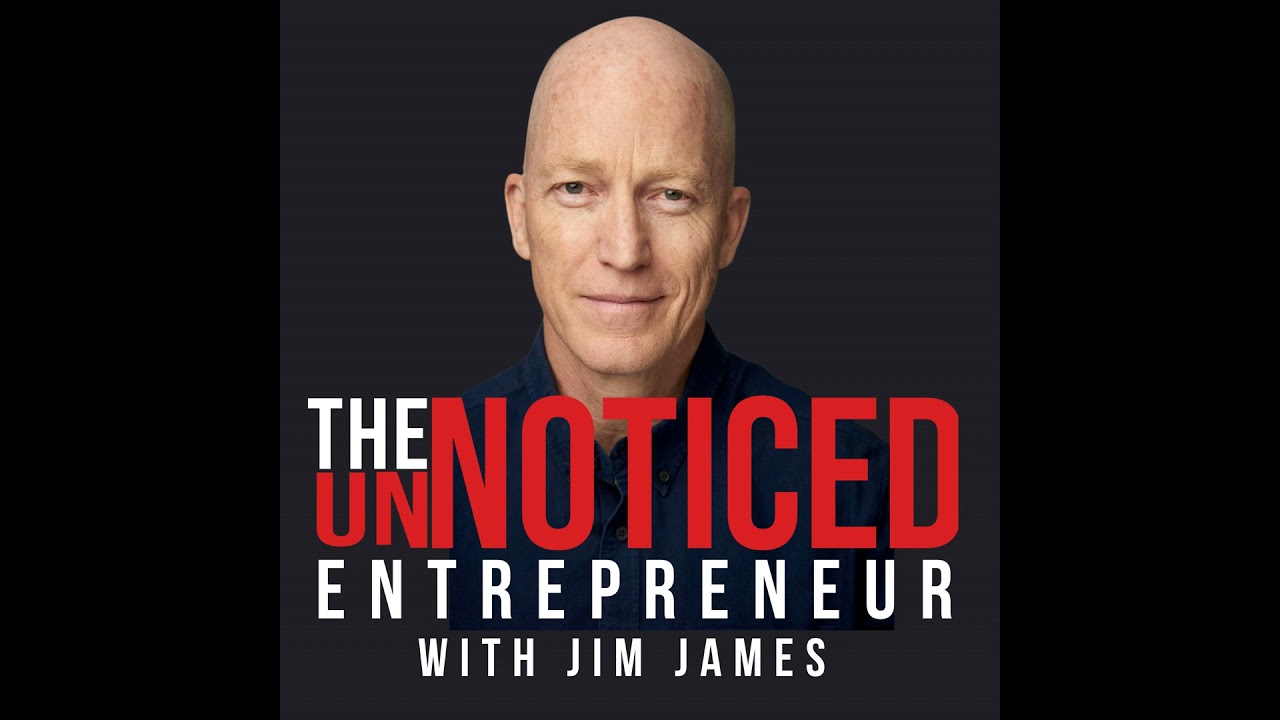
In this solo podcast episode, Jim James explains how entrepreneurs can gain authority and visibility by writing (or speaking) a book. He describes his own experience creating The Unnoticed Entrepreneur, a 345‑page, 80,000‑word book compiled from 50 podcast interviews. The core workflow is simple: record 20 minutes of spoken content each day, which yields roughly 1,000 words; after about 80 days the material is enough for a full book. He outlines the technology stack (mobile voice recorder, dictation shortcuts, Descript, Rev, Otter.ai) for capturing and transcribing audio, and how he uses virtual assistants in the Philippines to edit transcripts, turn them into articles, and manage the manuscript in Dabblewriter. Jim introduces his SPEAK PR framework (Storify, Personalize, Engage, Amplify, Know) and shows how interviewing experts provides both content and credibility. He details the low‑cost self‑publishing pipeline: indexing software, Ukrainian layout designers, IngramSpark and Amazon distribution, resulting in modest royalties and a finalist spot in the UK Business Book Awards. He also mentions a second volume, an upcoming Indian edition, and encourages listeners that any length of book—30,000 words, 200 blank pages, or a concise guide—can serve as a powerful business card. The episode ends with a call to action to connect via his website and LinkedIn, and a brief tribute to Ukraine.
Chapters
If you want to know how to get noticed, this show is for you. I have interviews, tools, tips, everything that an entrepreneur could need in order to help their organization get noticed for free. Thank you for joining me, Jim James, on The Unnoticed Show. Hello and welcome to this episode of The Unnoticed Entrepreneur. Let me just start by saying, first of all, If you've never thought about writing a book, it may be time to start thinking about doing that. Now, I want to share today some kind of exciting news about my book about the unnoticed entrepreneur, not just because it's about something that I'm excited about, but because I think book publishing and self-publishing is proving to be a really good way for entrepreneurs to get noticed. And I'm gonna say writing a book in the loosest possible sense of the word. Now, what I've done is to publish a book entitled The Unnoticed Entrepreneur, and it's a collection of 50 articles that have come as a result of this podcast. I have interviewed half a dozen publishers now, people that are book coaches, for example, of entrepreneurs, business people, and so on. So I've interviewed companies that are large and I've interviewed book writing coaches. There are some recurring themes that I wanted to share with you. One of the themes that has come back time and time again is that a book does give you authority. Obviously, the word author and authority, they go together. And everybody that I've interviewed has really demonstrated to me that creating a collection of your thoughts and putting them down in more than 20 to 30 pages gives a sense that actually you are intellectually able to master a concept and to share that. In my book, what I have is 345 pages, some 80,000+ words, and I'm going to share with you how I've created those over a period of 3 months. But in your daily life, it's actually very possible to create enough content that over a period of 3 months could be a book. So let's just go through that because people say, oh, I couldn't possibly write a book. Well, actually, the answer is you don't have to. You could talk a book. You could speak a book. What is very possible is that if you just record 20 minutes a day, that will create about 1,000 words. Now, if you do the maths, you've got in my book 80,000 words. And so actually all I really need is 80 days in which I speak. So if I record 20 minutes a day for 3 months, then actually I've got a book. Now, what you could do, of course, is you could do an hour a day. But what I found is just by doing 20-minute shows, The article that comes out is long enough to be a piece for LinkedIn and for Medium and for my newsletter, and it's long enough to be a long-form piece of content, but it's short enough to be easy to edit. I've spoken to a number of people who are writing books, and one of the challenges I think is that they're saying that they've got such a lot of content to edit, and it becomes very, very hard then to know how to structure it and how to make it all flow. In the same way that if you were to do exercise or if you were to make a meal, if you were to start off by trying to cook a banquet, for example, you would start first of all by learning how to cook each dish. And probably by first of all learning how to boil an egg. My approach to writing a book has been to learn how to boil an egg first. And once I've boiled quite a few eggs, then I've got some options. I've been making, if you like, hard, hard-boiled eggs, poached eggs, soft-boiled eggs. Now I can make egg mayonnaise sandwich and I can make egg mayonnaise in profiteroles, whatever I like. The point is that we get a skill. In my experience, we get a skill by repetition. And for me, the discipline of creating the podcast of 20 minutes has meant that I then have the content for 1,000 words a day. So I suggest as one way to approach book writing is to think about book speaking in first. What you can do is you can use the technology to help you. So one is, for example, just to speak directly into your mobile phone that has a voice recorder. Another way is to press the button on your keyboard, especially on a Mac, for example, Ctrl+D, depending on your shortcuts, will actually take dictation for you. And it's the same also on your iPhone and your iPad. You can actually talk to the machine and it will dictate and, and do transcription for you there and then. I'm using a tool called Descript where I'm currently speaking to the microphone and the software is transcribing this automatically as I speak. It's quite a miracle really. As I speak, it's recording the audio and showing me my words. I'm already making an article just by speaking. If you want to go down the path of recording and not seeing the transcription, you could use one of the many transcription services like Rev, rev.com, or another one is Otter, .ai, which is also very good. The one I like is Otter personally, and I find the, the price and the service really good because also you can link that to other platforms like your Zoom meetings. What you can do is you can record your audio on your phone either into the, into the voice memo that you have or onto the Otter app, and it will then transcribe for you in real time. Now, what I would suggest is that you don't read it in real time because the transcription isn't perfect. It's not as good as writing, but it's close enough to give you all the notes that you need for polishing and editing later. One of my, if you like, cheats, if I can call it that, is that I have then worked on creating the book by asking other people for their ideas around a central theme that I want to curate. So the central theme that I want to create is this of what I call SPEAK PR: Storify, Personalize, Engage, Amplify, and To Know, which is an overarching concept for entrepreneurs to understand so that they can do their own public relations. The value I add is forming the structure. The value that I add is finding people that can talk about specific aspects of the Speak PR, if you like, dimensions that all can form a much deeper reservoir of knowledge than maybe I would bring up on my own. But also, as a result of doing the interviews, I've learned and moved my own theories on at the same time. One of the challenges I think that people have when they think about writing a book, and I know I did, is what would I say that covers 350 pages? And most of us look at a book and say, I could never fill one. Actually, you don't have to. There are lots of people out there who've got lots of great ideas who would love to tell you about them. What I did was I interviewed them on the podcast and I limited them to 20 minutes. If you think about how much content you want, you could, for example, have them speak to you for 5 minutes. You could have them speak to you for an hour. It really doesn't matter. If you assume, or if you know that people speak at about 100 to 150 words per minute, then you can just do the maths on how many words you need in order to make your book. So all I did was just the maths. If I want 20 minutes, I'm gonna get about 1,200 words, and then I can edit that back down to get 1,000 words. And then I just need 80 of those and I've got a book. Now, I interviewed 50 people because I wanted to create this structure where I have approximately 10 people per section to give it some balance. Again, this is how I can add value as the author and as the curator of the idea so that the reader has an experience that is easy to follow. Has a lot of great content. And in the case of The Unnoticed Entrepreneur, I've interviewed 50 very smart entrepreneurs and technologists from around the world and created a masterclass in a book. I have 50 people that the reader can listen to, in effect, for 20 minutes All within the pages of one book. It's an extremely economical way for people to get access to these 50 experts. If they were to listen to my shows, they'd have 12, 13, 14 hours worth of listening, but they can get through the book maybe in 6 or 7 hours. And of course they can reference back and forwards. And in the book, what I did to make it a reference book was I included the details of all the people that I had interviewed, LinkedIn websites, emails, because I wanted to make this a functional book for people and I wanted to make it a book that was valuable for those people that came on my podcast. So when you think about the book that you want to write, if you think about the role it's gonna play in your overall strategy, then you can start to build in some of these dimensions. I know some people are writing a fiction. That's great. What role does that play? How does that narrative that you're writing fit into what you want to do with the book? If you're writing a fiction book about a location, maybe it's because you work in travel, for example. For me, I wanted to position myself as someone that understands public relations, but also someone that is connected, someone that can actually access other experts, because as we know, we can't know the answer to everything. But if we know somebody who does, then we can provide value to the client. I've used the book as a way to learn a great deal about everything from listening to AI for content creation to amplification for measurement and for sentiment analysis, for example. So in the writing of the book and the interviews, I've had an amazing education all about the 5 elements of my public relations theme. So as I wrote the book through interviewing experts, my own theory became stronger and stronger. It's in a way quite a and efficient and possibly a little bit of a cheat. But if you look at your book and think of it as part of a way to overcome some of the weaknesses that you feel that you have, not just about marketing, but maybe in your professional skill set, you can use a book to overcome that. What I've also learned by creating this book is that there are lots of people out there creating books. And it is possible to self-publish books. And there is a whole industry set up to help people like me to publish books and you to publish your own book without a lot of cost. To give you an idea, my book has cost about £2,500, and that's because I did hire somebody for about £800 to be a consultant on the first launch, but I wouldn't need that person again. How did I do it so inexpensively? What I did was I did the 20-minute podcast and I was disciplined about that. And then I have a VA in the Philippines and I had the VA in the Philippines edit the transcript that came in this case from Descript and make those into the articles that I needed then for my LinkedIn and my Medium and my newsletter and for everywhere else that I'm sharing it in my blog and so on. So the VA is costing about $20 to $25 per article. May sound like kind of a lot, but you can hire a VA in the Philippines for less. But this is writing we're talking about. This isn't just a commodity item. I need them to add some value and frankly also I'd like to pay them properly. They deserve to make a good income and then they will treat my project seriously. Otherwise they'll just job hop. So you have then these articles and I have another VA in the Philippines and she loaded these articles into a platform called Dabblewriter, which for $10 a month is an online platform where you can host your articles. And you can edit. And by sharing my account with her, she and I can both edit concurrently the articles. You can actually pay for an upgrade for, you know, multiple editors on the same platform if you want to. But because it's just her and I, we are just gonna log in with the same account. There's nothing sensitive or strategic in there to worry about. So we use Dabble Writer, and then once we've finished, we have to download that to make the index, and we found some software for $80 to create an index because Dabblewriter doesn't do that. And then we found some people in the Ukraine, and let's hope they're all okay, to do the layout. And that cost me some $200 as well to do that. And then we went on to IngramSpark and onto Amazon, and you can upload your own PDF version of the book and you sign up and you can do the pricing and you connect that to your bank account. And I have been getting royalties for my book from all over the world when it's been sold slowly but surely. I don't think it's ever going to be a bestseller, but what has happened is that I've then entered it for an award. And the Business Book Awards in the UK just announced their finalists in the business category. And The Unnoticed Entrepreneur, woo-hoo, is a finalist. I have to say, I entered it, I sent my 4 copies, I paid my £75. I didn't expect to be a finalist, but it is. And I'm super, super excited. There's a big event happening in May that I shall attend. And there are books in the awards by lots of people like you and me. There are 6 Steps to Success as Your Own Boss, writes Rob Kerr, for example. There's Unprepared to Entrepreneur by Sonia Barlow. There's Asking for Trouble by John Cohen. There's Build Your Sales Tribe by Steve Schreier. There's Grow Your People, Grow Your Sales by Lay Ashton. All of these people, including me, are regular entrepreneurs who, and writers who are using book publishing as a way to get their brand and their views into the marketplace. And as people say, it's probably one of the thickest business cards that you can ever have. So my book, The Unnoticed Entrepreneur, is in there as well. And so I'm really excited about that. But having shown you and shared with you the process on how to create a book, I just want to let you know that this is accessible. You know, it took me overall about 6 months. I now have the second book, the second version, or rather the second volume of The Unnoticed Entrepreneur ready. It's in Dabble Writer. We're just working on the second cover and We now have a publisher in India for the book, and we'll release that at a lower cost in same, same language, but with a lower cost print quality to make it affordable for people in India. And this is something that you can do. There are coaches out there, there are courses that you can pay for on platforms like Udemy. There are a number of coaches that I've interviewed that you can look through My higher— my archive to find. But writing a book doesn't have to be 80,000 words. It can be 30,000. There's a guy called Shad Samov who wrote a book and it said on the front cover, this is all the things that men think about when they're not thinking about sex. And it was 200 blank pages. It got him noticed. Everybody has got a story to tell. What's yours? Think about putting it between the pages longer than, longer than an email, more content than an Instagram post. You can do this if I can do this. And who knows what's gonna happen with the award, but my reward is that it's out there and I'm learning and I'm loving the confidence and the experience and the opportunity that it's given me to learn more. So I just wanna share this good news with you, but also to say that if I can do it, so can you. Thank you so much for listening to this episode of The Unnoticed Entrepreneur. And it doesn't go without saying, of course, that all of our thoughts are with those people in Ukraine. And I have been playing the Ukraine anthem, and I will do that again at the end of this show. So until the war is done, God bless and stay safe. Thank you for listening to this episode of The Unnoticed Show. I hope that you've enjoyed it, and if you have, please do rate it on any of the players. If you'd like more information, go over to eastwestpr.com and subscribe to our weekly newsletter, or connect with me on LinkedIn. That's just Jim James, East West Public Relations. I'd be delighted to connect with you and let me know how I can help you to get noticed.
More from Jim











2 people, infinite agents, 1 billion dollar idea #AIAgents #Startup #Productivity