280 podcasts later, I've learnt some lessons on how to make a podcast as a key part the marketing...
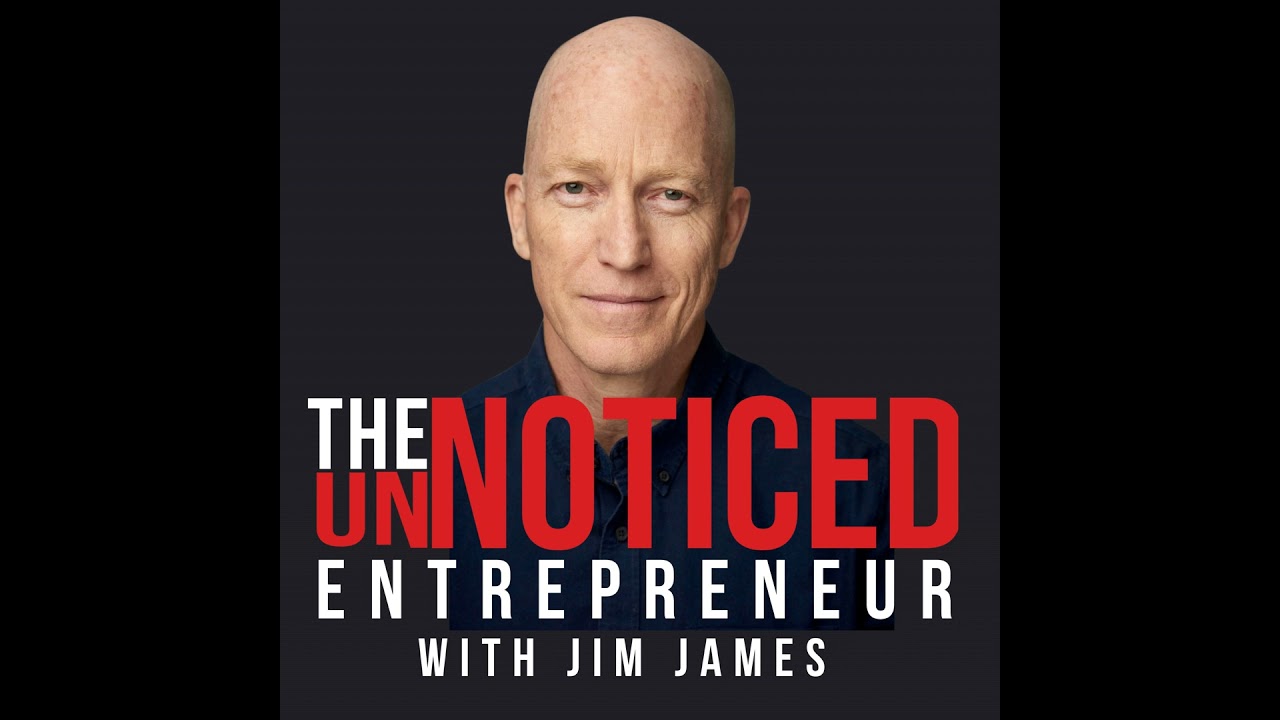
Jim James made 280 episodes of his Speak PR podcast for under $300 a year, hitting 10,000 downloads. He switched to 20-minute episodes on Buzzsprout and built a repurposing pipeline: audiograms, YouTube videos, articles on Medium and LinkedIn. The 5W1H interview structure and consistency matter more than fancy gear.
Chapters
Hi, my name is Jim James, and if you've been thinking about producing a podcast, then today's episode of the Speak Beyond podcast is for you because this is my 280th podcast and I've been producing this show from my studio, aka the TARDIS, aka the garden shed, since June. And this is my 280th episode, and I am proud to say that I have busted the 10,000 download mark according to the Buzzsprout hosting company. So I thought I've learned a few lessons that I could share about the power and the potential, but also the hard work involved in creating a podcast. So if you're thinking about producing a podcast or even taking part in one, then this show is definitely for you. So I first introduced the Speak PR podcast all the way back in February, originally under a project named Silver Fox Entrepreneurs, which was for mature men like myself over 50 looking to start a business. Then I interviewed some other silver foxes and found, frankly, that it was a lot of hard work doing the editing on GarageBand and the interviews and going out on location. So the amount of time that I was spending creating content versus the amount of content I was getting really meant the ROI wasn't there. So took a bit of a break. But I started again in May during lockdown because actually I really enjoy the medium of podcasting. I love to listen to podcasts. And I love the creative opportunities that podcasts give. So I got right back stuck into using GarageBand and creating episodes around the Speak PR methodology. This is a methodology that I've developed over 25 years to help business owners to get noticed. Stands for Storify, Personalize, Engage, Amplify, and Know. And I thought I could use this podcast to articulate about this new methodology so that a broader audience that may be not interested in reading about Speak PR could listen and hear about Speak PR when it was convenient for them. So I got into the routine of producing one podcast every day, in fact, for 6 days a week to start with. And as a result, I was able to start to get some distance between the early days and today. Since then, I have produced some 4,100 minutes worth of content. I limit myself to 20 minutes maximum per episode, which means that I have recorded and produced and published some 68.5 hours worth of content on this Speak PR podcast. It equates to about 2.84 days of final content. So if you were to multiply that by 4 or 5 to get the time it takes to produce that much content, you're looking at over 10 full days sitting in the chair with the mic learning how to do podcasting. Bit of a crash course, and it's a long way from the 10,000 hours that it can take to become a real expert. I've got a long way to go, but I have learned some, some information and some technologies and some tips I'd like to share with you if you're looking at creating a podcast. Now, the podcast itself I host on Buzzsprout. And one of the lessons that I've learned is to choose a, a hosting service that is easy to use. I started out on Libsyn and found the interface and the metrics really quite clunky and quite old-fashioned, and it was really more like a web hosting service that was then offering audio distribution, whereas Buzzsprout has been really a dedicated podcast platform. They have a fantastic podcast which goes out once a week, which I listen to, and they really are a hub for learning and for development. So I found Buzzsprout to be a really good platform to use, and that links really neatly into Apple Podcasts, Spotify, Google Podcasts, Amazon Music, Stitcher, iHeartRadio, and then a number of other smaller niche hosting platforms. So I've moved wholeheartedly into Buzzsprout, and I'll share with you how much I pay per month. I currently use the Magic Mastering tool, which costs me $9 per month. It has smart adaptive leveling because I found one of the problems at the beginning, especially when I interviewed other people, was getting the mic levels right, and it was taking me ages in GarageBand to try and do that. So I opted for this Buzzsprout Magic Mastering because it also helps then to sweeten the audio. It filters and gets rid of noise, hisses and hums and so on, and it also has a perfect loudness and true peak targeting. So I recognized early on I'm not going to be a sound engineer that's going to reach the kind of BBC levels But for $9 a month, Buzzsprout helps to overcome some of my, some of my lack of capability on the audio side. Now, what I did do was to invest in a Rode NT mic. There is a new smaller version, a mini version now for about £80. The one I bought was about £145. But this is the workhorse really. Having a good microphone makes all the difference between picking up the deep resonant qualities of your voice, or just carrying on with the narrow bandwidth that the, that the cheaper microphones will pick up. So I invested in a microphone and a swing arm after about 2 months, because what I realized was no matter what I did with the iPod or with the AirPods and the onboard microphone on the Mac, I I just wasn't getting the quality of audio. So I've invested in the, in the kit, but it's not too much. And I initially used my AirPods, but the Rode NT has got a nice feature where you can plug the headset jack into the microphone so you can actually hear what you're speaking into the microphone through your headset in real time. And this avoids distortion. And it means that you get a much better sense of actually what the sound— this is of course why in studios people have microphones on, because you also avoid the feedback loop where you're speaking to a microphone, it's going into a system, and the microphone is picking up both what you're speaking and what the system is playing back to you. So that has helped on a basic level to get the technology parts correct. And then just recently, because of my birthday, my wife bought me a pair of Beats headphones, which are fantastic because I, I broke my last ones. So £200, but it could be done less expensively to get set up with the technology. Now I have been running content as Speak PR, but then I found after a while I was getting a bit exhausted with that content, but also kind of revisiting the same content. Isn't that, isn't that interesting? So I started to reach out to people to have some interviews, but what I've done is I've changed the format. Whereas in the early Silver Fox days, I would just interview people and we'd kind of go through a list of questions, and at the end I would need to edit it, and it would frankly take so long to edit, especially with people's ums and ahs, and then we'd go back to original questions. So So I decided with this new format that it would only be 20 minutes. 20 minutes, partly because that reflects how long it takes me to take Binky, my beagle, for a walk on a quick day. Takes me 20 minutes to get the kids to school, and then I listen on the way back from school. So 20 minutes is also time for people to have a coffee, and I wanted to make it accessible, the podcast. And later on, when I share with you the statistics on the devices on which the podcast is being listened. I think that's been followed, followed out with the statistics. So I also found that by making it 20 minutes, it made my editing much easier. It means now that I have basically the interviews with people on a who, what, why, where, when, and how— the, the old 5 questions— and you can address those within 20 minutes quite easily. So one of the lessons that I've learned, one of the things to share with you if you're looking at doing your own podcast, is to make the output fixed. Set yourself a target time, because if you do that, it makes a lot of the production questions easy to answer. And then when I'm inviting guests on the show, I can also limit how long their interview is going to be, which means that from an efficiency point of view, both for them and for me, I can get a lot more work done. And also on the 80/20 rule, when podcasts go on for a longer time, personally I find I drift off. I haven't got the time to listen. So on the 80/20 rule, I want to get to the point quite quickly, then have my guest explain who they are, what problems they solve for other business owners using communications, especially technology, and then to introduce that person to my audience and connect them with one another. In my business, public relations, which I do for my living, I spend my time connecting people with people, and I make an introduction, effect an introduction, and then I get them both to understand enough to want to carry forward the conversation if it's relevant for them, and then I step out. That's really the same model then for the podcast. So I've talked about the, the production and talked about the post-production. Now I started off using GarageBand, and I have to say that is a system which eats up over 1.5 gig on my, on my hard drive, makes massive audio files, but also the editing was really very difficult. I then found a software called Hindenburg, like the airship, and I've done a podcast on that, and that's a dream to do audio editing on. Very sweet. And it publishes direct to Buzzsprout and other platforms as well. And then just more recently, I've discovered Descript, which is very neat because that also creates a transcript in real time. And what that means is that the editing afterwards is very quick, especially if I have 2 guests. I can either record onto Zoom and import the 2 tracks separate tracks into the Descript and it will auto-transcribe both of those, or I can actually record directly into Transcript itself. I haven't been quite so adventurous yet, but I plan on trying that later. But Descript is enabling me to create a podcast like this with the text actually being written in front of me whilst I speak. Could be a little bit distracting, so I've had to move that onto a 3rd screen or else I can get lost reading what I'm saying at the same time as I'm saying it. Hindenburg is very elegant. It's $250 for the software, and Buzzsprout has a, a $50 discount off of that. But the Descript platform enables me to get the transcript straight away, but also to do the editing. And I found that saves me a massive amount of time. So what I trade off in the workflow and the really the elegance of Hindenburg, I make up for with Descript on the timing. Now what I was doing with the podcast was to create an audiogram using repurpose.io, and what happens there is that when I upload the content from the Hindenburg directly or from Descript into my Buzzsprout account. I can create an audiogram directly using— it's called repurpose.io— for $20 a month, and then that feed will go automatically to my, um, YouTube account. Now Buzzsprout also enables me to create a 1-second audiogram. Basically, that's a video of my audio, which means it can go onto certain platforms like YouTube that don't handle audio files. It also means it can be used on Pinterest as a video. The benefit of these audiograms is promotion, although I have to say that my YouTube account hasn't really been getting very much traction at all. But it's a relatively cost-effective way of using the content. And I think this leads me on to the next sort of real lesson of the podcast. It's the ability to get content Onto the page really quickly and easily in a way that can be shared very easily. If I want to write an article for 1,000 words, it will take me maybe an hour or so to do so, and I've got to do the research and so on. Now, I, I write for a living, but most people don't write for a living, and the writing can be frankly quite onerous, quite challenging. Speaking to the mic and having the article written as we go along gives me actually content straight away, which is my audio content. Plus, of course, I'm getting my articles. So this I find a really efficient use of time. And also, for a 15 to 20 minute podcast, I'm getting nearly 2,000 words. 1,500 to 2,000 words. And if you edit that back, you certainly got 1,000 words. So with the 20 minutes of recording plus the half an hour or so of preparation and the half an hour of editing afterwards, I've got both a 20-minute podcast that goes out as a video, but I've also got a 1,000-word article. Now that article I'm using on my website which goes into my newsletter once a week, but it's also going into my Medium account where I now have some followers. I've got about 140 articles now online, and it's also going into my LinkedIn onto my articles. Now, my articles on LinkedIn are only receiving 6 to 10 views, so not very many, but I'm also not really promoting them. But what it's doing is helping with my Social Selling Index, what the LinkedIn group called the SSI. Basically, it makes me more discoverable and positions me as an authority. So public relations, when we talk about getting noticed in the Speak PR program, we really talk about a content-centric approach geared towards the avatar. So what can we share with the people that are really our audiences that will add value to them? And then when we talk about engaging content, we talk about making it so that it is new and it's simple to understand and it's context relevant. And we talk about, under amplification, the need to send that content to people when and where they want to receive it and on the platform that they want to receive it. Now Buzzsprout gives me some great statistics, and it's telling me that globally I've got an audience. 29% of the people listening are in North America, 36% in Europe, 27% in Asia, 3% in Oceania, which is Australia, New Zealand, 2% in Africa. So I'm really delighted that sitting here in my garden studio, aka the TARDIS, aka the shed in Somerset, I'm reaching the world. So that's remarkable, really just shows what technology can do. But it's also heartening because I want to share this message of how technology can liberate businesses to get noticed with people all over the world. Now, 48% of the downloads are going out on Apple Podcasts, and 58% are going out on Apple devices, and 71% are being listened to on mobile. So this philosophy of Issuing content which is short and sweet without too much banter and too much, if you like, detail that people can't take on board is proving to be of value and I think hitting the mark. Now, what's it all costing me? It's costing me $267 since February the 4th. So in a year, it's cost me less than $300. I've upgraded the amount of storage, so it's got a little bit more expensive, but it's certainly of $20, $21 a month. Now what about the monetization? Well, I've included now a link to a group called Prospectin, which is a French LinkedIn platform, very nice, in English language of course, to Trylately, which is an AI content generation platform out of the States, and also to Earth.ai, which is an analysis software out of Japan. Plus I'm promoting my own SpeakPR podcast. So the cost of $300 to share all this knowledge and to introduce these other platforms is, I think, quite good value. In time, when I get my downloads up, then I will be able to start to monetize and take some, some money back. And I've actually added a fund to this podcast because you can actually add in a PayPal link, which I've done. So just thinking now as I draw to a close, because I'm reaching my own limit of 20 minutes and talking— key learning: content has to be frequent and consistent. There is a need to include transcripts because native discovery of podcasts doesn't work. People don't just find them, they have to read about them and then they go to them. But there is definitely an audience for all kinds of content, and I'm now reaching out to people around the world that have got their own podcasts. So I can be a guest on their podcast and promote this, but also have those people on my podcast so I can grow via sharing through their communities and them through mine. Okay, so there we have it. And, uh, 10,000 downloads and 280 episodes. Some things that I've learned from running the Speak PR podcast, which I hope are of use to you. And thank you for listening because I do this for you. So that you may find some of the things that I know of use and help you in your daily work. Do let me know if there's anything else I can answer for you. My name is Jim James and my email is jim@eastwestpr.com. In the meantime, I wish you well. I wish you the best of health and that you have a sustainable business. And if you've got lots of time during lockdown, then tune into a podcast. And if you think about the ways that you might benefit from a podcast, even jump on the mic yourself. In the meantime, then, I wish you all the best.
More from Jim











2 people, infinite agents, 1 billion dollar idea #AIAgents #Startup #Productivity