Brand Story Secrets from an Ad Legend: Henry Wong Reveals All
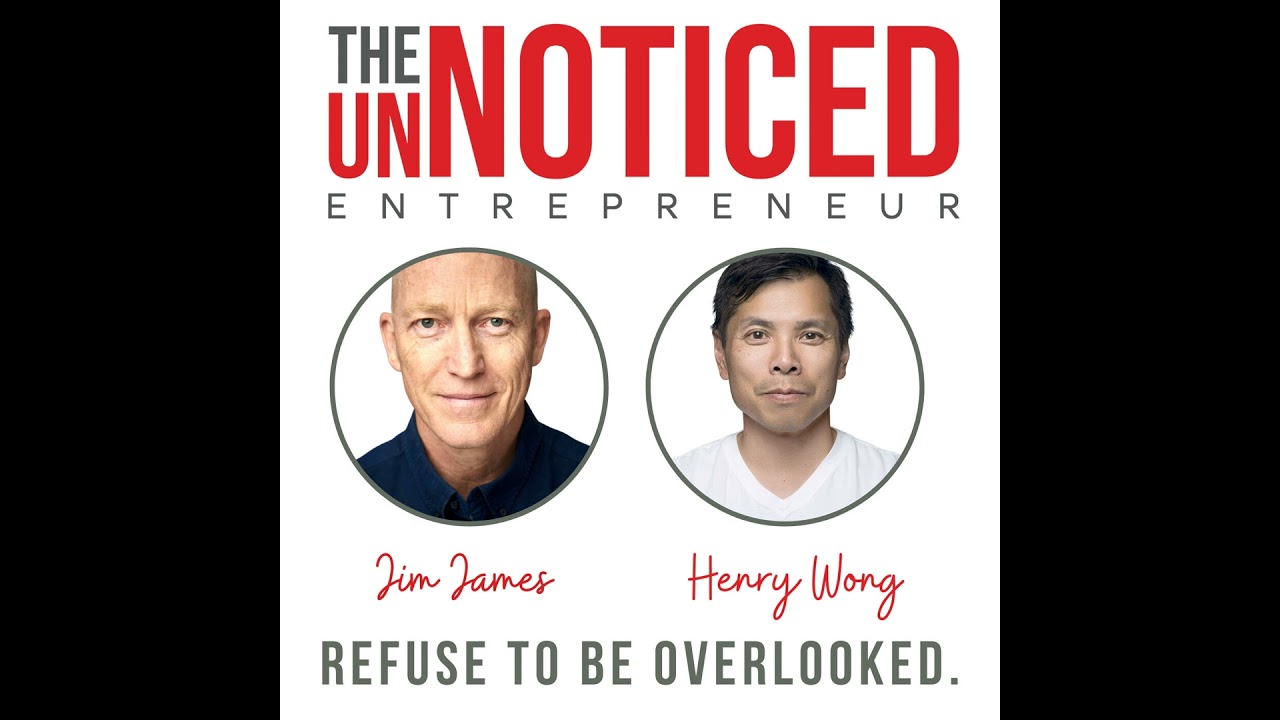
Henry Wong, an ad executive from Saatchi & Saatchi, explains how to build a personal brand using advertising techniques. Start with self-discovery and interviews to find recurring keywords, then distill your story into six words, expanding it into messaging and visual identity. A food founder's authentic story helped land Gordon Ramsay as a brand ambassador.
Chapters
Hello and welcome to this episode of The Unnoticed Entrepreneur. Today we're very blessed to have an experienced ad man who is going to tell us about stories. He's written a new book called Telling Your Story. Henry Wong is joining us from Toronto, and we're going to talk about the difference between a story and a brand. We're going to talk about what happens if you don't know how to develop your story and you don't know how to tell your story, but we're also going to talk about how Henry and a client managed to get Gordon Ramsay to be involved as a brand ambassador with a product that they've been working on, just as a result of the power of story. Henry, thank you for joining me today.
Jim, wonderful to be here. Thank you for having me.
Well, thank you for joining us all the way from Toronto, Henry. And, you know, you have very many years in the ad agency business. You've built businesses, you've sold businesses, you've been with big companies like Saatchi& Saatchi, and you've got your own agency called View. So, tell us a little bit about you, but then we're going to talk about your new book, Telling Your Story.
Well, interestingly enough, I think my roots are very humble, actually. I grew up in the back of a Chinese restaurant. And when I became of age and I was able to speak English, I was put at the front of house. And really, a lot of my time was spent behind the counter, interacting with customers, sharing tales, sharing stories. And I think that made for a natural evolution into the world of advertising. Then a lot of TV watching. But I spent many years, as you said, in the ad agency world before really coming onto my own consultancy and being able to share this knowledge with people.
And what I love about your story is you've managed to package that and it's very evocative. And I can think of this young man coming out to the front and presumably peering over the counter and telling stories and getting customers to fall in love with you. And buy more, Henry. Is that how that happened?
Very much on point. You really learn a lot about people within the restaurant business. Anyone who's ever worked there will see the range of customers, everything from families to truck drivers to single people, different personalities, you know, different times in their life. You have a remarkable opportunity to see the human condition from behind that counter.
Well, and to nourish that human condition as well, presumably. And, you know, I lived in Asia for 25 years and my wife, uh, is from Shanghai, so I've been very blessed to, uh, love Asian food. But we're here to talk about you and the book and the stories that you're able to tell within advertising. And we're here to talk about telling your story, your book, because tell us, how do you take what you've learned from advertising big brands that have got big budgets and creative treatment from big teams? How do you help the entrepreneur? To take their own background and make that into a compelling story, Henry?
Well, so much of it really does come from the techniques of advertising. And most companies and most brands really don't have the budget. But what they do have the ability to do is to tell the story itself. So from my days in advertising, 30 seconds of a television commercial often made for a story. So using the same sort of techniques, I've been able to help many founders and their brands be able to articulate it within a short amount of time.
30 seconds to tell your story. Many of the frameworks outline this kind of hero's journey and this ABT, for example, and it becomes almost like a screenplay in its own right. And yet, for example, on my podcast, I kind of want people to tell their story in 30 seconds so we can move on. Henry. How do people take their whole life story and make it into 30 seconds so that they can then move on to what the subject matter is for the moment?
Well, if we do take what we have from our commercial world, there within that 30 seconds, you often set out a problem and you deliver the solution to it. In that sort of simple type of narrative, it's not difficult to maybe trace it back to the way you tell your own story. So often, we will create story based on a little bit of that narrative structure, very similar to Hollywood. You have a hero, something causes him to go on his journey, there's an obstacle along the way, the problem, there's a solution, and there's a climactic moment or really the call to action. So, if we think of it in that terms of framework, it's not difficult to sort of fit those pieces within the story that each of us have in some way.
Henry says it's not so difficult, and you've outlined that in a very articulate way. Why do so many people struggle, me included, with articulating our story within that framework that's proven to work and proving that it can be done in such a short amount of time? What do you see as the bottlenecks or the obstacles for the entrepreneur to, to get that story down?
I, I think you've hit on it exactly. Too many people jump immediately to the format and try to all the pieces into it. There's really a bit of a methodology. So, in the ad agency world, there are people who try to construct those stories ahead. So, there's a lot of work that gets in that is involved from the very beginning. So, for many people, whether it's a product or a person, it's really understanding the essence of what your brand is. So, within products, you do a lot of research. You do connections with consumers. You understand where the product could potentially fit in people's lives. So, it's very much the same. The first And it is, you know, I don't mean to tout the book too much, but a lot of it is in there. And the first step is really to get to know yourself. And that could be through a series of exercises as outlined. It could be some self-examination. It could be personality tests, interviews with people around you, some feedback from colleagues and so forth. Once you form that, you have an essence of where you are. So, that forms really the foundation and the basis from it. So, from that, we begin to draw out What you're all about? Where do you exist in the marketplace that might be a unique position amongst everybody else? And that often connects to just a simple, wonderful human insight that has you sort of sit well above everybody else. Once you understand that, then you can begin to formulate the messages. And those are the steps, the initial steps anyway, that lead to that storytelling.
But Henry, Henry Wong, author of Telling Your Story, you, you dropped in there something that in the conventional story frameworks people don't include, and that is asking other people what they think of you or how they perceive you. Tell us, how, how do— would— how would one do that? Because there's always an anxiety, uh, that if you ask other people to reflect, that maybe you You're not going to like what they say or you're not going to agree. How are you creating the structure, the environment, the conversation that gets people to give you some feedback for your story?
Depending on how in-depth the person may want to go, and we've done this with many clients where it's done as sort of a blind survey. So that could be done. I do it as in-depth interviews where we speak one-on-one. For the individual, it could be simply turning the quiz around to the other person and simply asking them. We as human beings shy away from criticism. Of course, it is not something we particularly enjoy. Those who work on themselves, those who look to better themselves are very open to criticism. It doesn't necessarily mean you have to listen to it, but you acknowledge it. You understand what people are saying to you. So, you may adjust your behavior based on that. For the purposes of creating your brand, it does give you another perspective because as we know, our own perspective is just one dimension. We only see things through our eyes. And few of us really have that objective viewpoint when it comes to looking at ourselves. So, seeking some input based on that really helps. Those who have worked within companies often will have employee performance and it's an analysis of yourself from another person. Take that into account. It doesn't again necessarily mean you have to acknowledge it or follow everything that's said there. But you take that into account as you begin to formulate Who you are to people.
Henry, I love that. And it does take some courage to go out and ask those questions. What would be another step then once you've done that, if you like, the audit or that investigation, Henry? I know you don't want to tout the book, but I've invited you onto the show to tell us about the book. So people will still want to get the book, I'm sure.
Absolutely. Yeah.
So tell us, what else are we going to learn from reading the book?
Yeah, so I think the next step after you've gathered a lot of that information from people, often we'll work with transcripts in which we take the interviews. One of the exercises we do is we begin to highlight keywords that keep showing up again and again. And what that begins to formulate, particularly if you ask me, well, tell me a little bit about Jim. And if I ask several people, there will eventually be a pattern and there'll be common words that will be used. So, you begin to highlight those. And those are your keywords that are Or attributes that help to describe you. In the exercises we do with clients, what we do set up is a little bit of a pyramid. It's a hierarchy in which there is the top tier, and we use a series of Post-it notes with these words, and you just simply put them on the board. And you can do this for yourself as well. You have all these key attributes, and you begin to see which word begins to stand out a little bit more. Now you have the formation of what you you might be and how you're being perceived by people. Once you understand that, then that again be becomes the next step in furthering what you're all about. Because understanding what you're all about helps to determine what makes you unique in the marketplace or unique among your peers or in business. And then from there, a message will hopefully evolve in which you begin telling the story. Because in order to get to who you are at this point, you've gone through a number of steps.
So Henry, you, you talked about dimensions and formats. At the moment, you talk about text, for example. With your background in advertising, um, what do you help people to do to start to visualize that story that they've got? Because we're communicating in text, but it's also, uh, maybe in what we're wearing, maybe it's in colors, uh, maybe it's in music, sonic branding. How are you helping people to start to If you like, format that story into the brand?
I think a couple more steps actually occur before we even get to how that brand is dimensionalized. So, what you're referring to is often the— could be the logo. It could be the mnemonic that you have as an individual brand. But that is often the reflection of the person's personality. Once you begin to understand what you're all about, you need to begin to articulate that message. So, so much of us tend to try to write a long story around it. My thought is really, let's start with 6 words. And how I got this idea was based on a little bit of a story I heard about Ernest Hemingway. Apparently, as the story goes, in a bar, he was sitting with a number of other patrons in a Cuban bar, and he bet someone else that he couldn't tell a story in 6 words. And the people took the bet. On a little napkin, apparently he wrote, baby shoes for sale, never worn. And that's always stuck with me. 6 words that tell this amazing story. Everything's so well built into it and so well constructed. But it's the same essence of what we do in advertising. That is, if you have a billboard or a message in an ad, you essentially only have 6, 7, 8 words in which to connect to the person. So using that as a little bit of a technique, if you can begin to articulate what you're all about or what your story is in those 6 words, you really have the beginnings of a strong way of short-forming what you're all about. Once you understand that, then it becomes really the essence of what your story is. You can begin to expand upon it very much like the body copy within an ad itself or the website after you click on the digital ad to get you a little bit further. But the idea is really to be able to sum that up. And if you can do that and really get across what you're all about, your proposition in those 6 words, then you really truly understand what your story is. And from there, it's easy enough to grow.
Henry, that is an amazing challenge actually to people to sum up your life story in 6 words. As you say, that Hemingway story is legendary. I actually worked in advertising as my first job out of university. And we were also tasked with trying to get what a company does into a headline and a little bit of copy to go into a small magazine ad. So brevity is perhaps one of the sort of key attributes that you've been able to take from the ad world and bring into the personal branding world. Henry, I'd love to also get your view on the difference between having a story and having a brand. If we move that conversation along a little bit, because people talk about their story and then building a personal brand. How do you see that transition from having a story to actually representing or being a brand?
If you think of the story, it really is the conduit to the brand itself. It should be thought of as a medium, not the brand in itself. So, you can articulate your story, but really what it is is allowing people to connect with who you are, what your brand is all about. A story is really all those key elements that allow people to identify who you are, come along along for the journey, have a high level of empathy for what you've done and certainly connection for what you're all about. Stories should convey a certain amount of emotion that will allow you again to make that connection with your audience. That brand that you're leading them to is really the solution for what they, you know, perhaps that ails them, that problem that they may have or that solution. We know from business that selling is really about providing people a solution rather than pushing a product. If you can identify that and understand how your audience is within your sphere and be able to connect them by sharing that story. And again, it's really just a medium by which we can get people there. So that's really the difference between the two. One is really a bridge to the other.
Wonderfully put, Henry. Well, and Henry, that's why you've written the book Telling Your Story, is because you're the expert on all of this Henry, we've talked about, you know, story and branding and story being a conduit really for the brand. Can you give us any examples of work that you've done where a story has been so compelling as to help build, you know, a business relationship or build a business in itself?
Yeah, as a matter of fact, it may be related to one of your own countrymen we had. With one of the companies I work with, a food company, to connect with Gordon Ramsay. In our meeting, it was very easy to talk about the company and talk about its background and that. But when we got to the idea of what the company represented, that little bit of a story about how the founder of a company who was a former doctor in another life, who would volunteer in the villages of India during his time with Doctors Without Borders, began to formulate this, the essence We told a little bit about that. We talked about how the company itself is on this wonderful mission to try to feed people with healthy, affordable food. And at that point, it was very easy for Gordon to identify what we were doing because it was very much aligned with his own journey. So rather than talk a lot about, you know, eventually there were contracts and everything that came out of that. Of course, it wasn't about, well, how much will you be paying me? It was really about, what do you believe in? Really, how can we align and do some great work together? And that's the power of a story because if we began simply as a transaction, then it would have stayed there. By moving it to more of a story-based connection with someone, now it got to a very deeper relationship. And that's often what we want as business people, to connect with people on a deeper level. So, it moves beyond just a price strategy and moves more to a brand strategy where they want to take on your brand, buy your brand, or be part of the movement you've created because they so well identify with what you're all about.
And I think, as you said there, really sort of a brand becomes what other people become emotionally involved with, isn't it? So you have your own story and the brand is almost a shared story, isn't it? Everyone comes together with their own story, united by a brand, which is almost a common purpose, a common set of beliefs. And then that carries the momentum of that business forward. And that, and as you say, that mission, that's amazing. And so congratulations on, on doing something with Gordon Ramsay, who's Thank you. An amazing, an amazing man, an entrepreneur in his own right. Henry, you've run your own businesses and you've written this new story telling your story. I'd like to ask people if there's something that they see that doesn't work. You know, there's lots of stories about what works, but also a cautionary tale when it comes to telling stories or building your own brand story. What would you say people should be aware of or mistakes they might make?
You know, I think for many people, it's often being something they're not. And many of us think that, well, I need to create this persona that can connect with my audience. And quite often we see that it doesn't align with their own personal beliefs. So the cautionary tale, what I see often happening to a negative effect, is when people begin telling or being something that they're not, and it creates a lot of unhappiness and disharmony in their life because they're projected in such a way that people can't necessarily identify with.
Henry, I've got to ask you the question, why do people do that? Because when you explain this sort of lack of alignment between, if you like, maybe their core values and their represented values, why do people make that error, do you think?
You know, within the world of marketing, it's often identifying with your audience. And there's 2 ways. You either set forth who you are, what you believe in, or the product development, or you go to the market and see what people need and try to figure out that product. That in itself is a bit of a transaction. When we're dealing with personal brands, because it is personal, because we are humans, it's very much a deeper psychological connection that you're having. So, the inability to be true to yourself is really what often disconnects you from your audience. So understanding that in the beginning, to me, it creates that ability to be happy within the business sense.
And Henry, I am gonna ask you what you think makes a great story. You've worked in advertising, so you've witnessed some of the great brands being built and you've been involved in building some. What would you say makes a great story, a great personal story?
It really is that emotional connection because when you can connect with people emotionally, they are vested in your journey, they're vested in your product. And it doesn't necessarily mean that you have to do something very warm and fuzzy. It really just is being able to satisfy some form of emotion that the person has in solving the issues in their life. And that could be adding some laughter to them, making them feel good, making them feel less anxious about things, any number of things. And it is really classic advertising in that way, problem solution. You have the worry about maybe your personal hygiene, so therefore I better buy this deodorant. It's sometimes as simple as that, but in human relationships, it can be a little bit more complex, particularly when it comes to ourselves.
Henry, with your book, Telling Your Story, Do you mention AI or what's your view on the role of AI and people's storytelling?
Yeah, I think it's a wonderful shortcut for some people. They can just enter a number of words, put in their resume, their background, and, you know, hey, ChatGPT, give me a story around myself. The problem with that is that it is the accumulation of everything that is really just boiled down. And that may be be a good way to get started. But what it does lack is the human emotion that AI can provide. It's that human touch that we have. It's that human connection that we have. Perhaps in the future that may emulate it, but so much of what we are all about is emotional beings and that can't be replicated. You can use it as a tool. You can use it as a wonderful research and first draft. And, you know, for many of us, and I think we touched on it prior to the show, how difficult it is for many people to write a story for themselves because many of us aren't writers. But even myself, who is a professional writer, I am a better editor. So that first draft is often important. So perhaps AI is a good tool to give you that first draft and you use it as a way to shape, edit, you know, retell it, take it into the format that you need. So it's not discounting it, but I think we just simply have to understand what it is that we have at this point in our society. lady.
No, but Henry, I think, um, as you've shown, really it's, it's the empathy and also this idea that you need to reach out to other people to get their observations about you that contributes to the story. And no amount of AI is going to be able to replace your friends, your colleagues, um, and your family in helping you to do that. Henry, if there's one piece of advice, you know, we're very blessed to have you because you've, you've worked for big companies, you've been an entrepreneur, you've got your own Vu Agency, which we haven't talked about today, but you've got your new book telling story. If there's one piece of advice that you'd like to give me and my fellow unnoticed entrepreneurs about telling our story, what would that be?
You know, I'm very much about living a life of happiness. So one of the things I often talk about is really to thine own self be true, which is quoting a Shakespeare line. And that really is the essence of it. And that goes to your earlier question because too much of what we do can be very manufactured and that will create that disconnect from who you are as an essence of a person. So, my advice is always be true to yourself. You know, make sure that the brand that you're building is really what you're all about and true to your heart.
Henry Wong, author of Telling Your Story. If you want to find out more about you and also to buy the book, where can they do that?
So, I think in your country, Blackwell's, it's available It's available on Amazon UK. If you're looking for other stores, certainly my website, henrywong.co. If you're looking to connect with me in any way, always happy to open up conversations, but there's a listing of where to obtain the book there as well.
Henry Wong, thank you so much for joining. And I know the book is published, isn't it, by the Business Experts Publishing? So you've managed to get a full-blown publisher for your book, for which congratulations.
Thank you.
Yeah.
Thank you so much for having me, Jim.
It's been a pleasure. Well, for those of us that have been here today listening to Henry, who's all the way in Toronto, I'm sure that you've also learned that your whole story is going to be really what powers your business journey. And therefore being true to that story is essential for your success and not being sort of interested in other people's story or in short-term fads, which can lead us off our path. So thank you to Henry. for joining us. And thank you to you for listening to us today. And if you enjoyed this, please do rate it on the player of your choice, review it, but also share it with a fellow unnoticed entrepreneur, because I'm on a mission to help you and people like me who are unnoticed for what we do to get the recognition. And I'm here to find people like Henry who have got amazing skills and amazing experience who are willing to share that with us and to share it with you. So until we can meet again, just to encourage you to keep on communicating.
More from Jim











2 people, infinite agents, 1 billion dollar idea #AIAgents #Startup #Productivity