Brilliant SPEAK|PR finds its VOICE Image; find out how you can find yours!
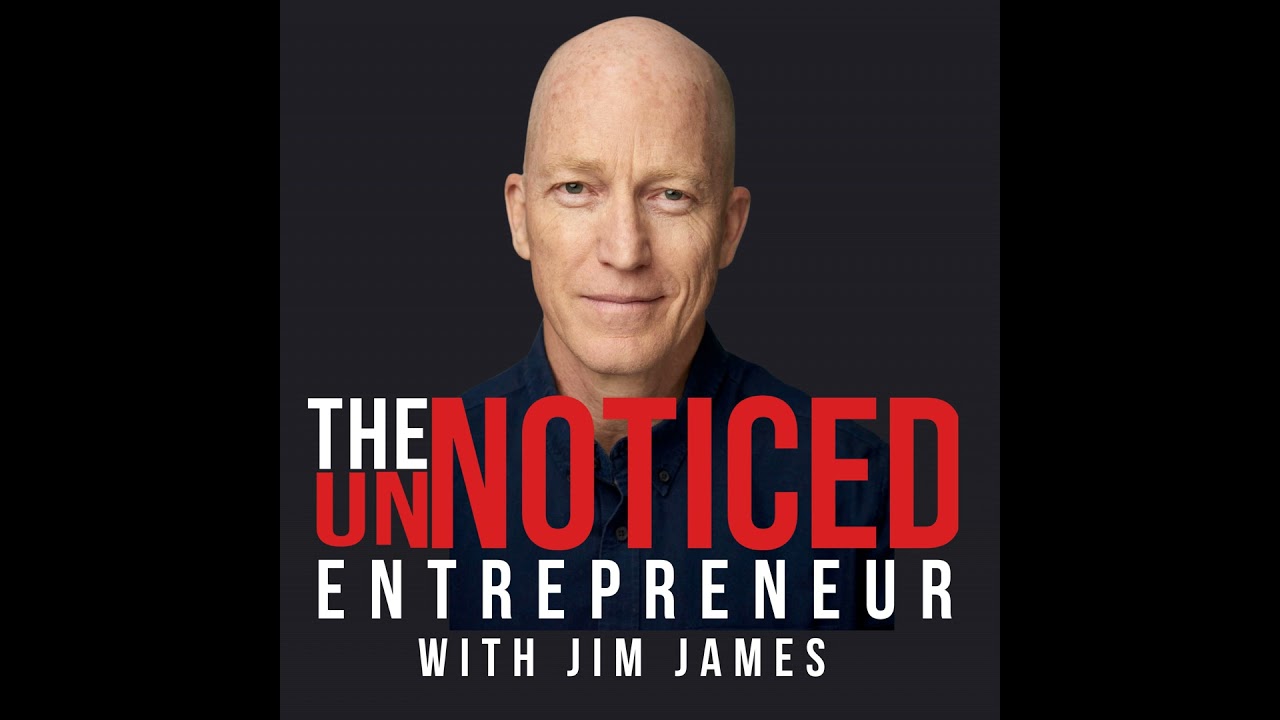
Jim James, a PR entrepreneur, examines why his video delivery felt laboured despite having a strong product. He shares insights from voice coach Ed West, including how Donald Trump's speeches score at a 4th-grade reading level, and outlines key vocal techniques like breathing, pacing, and articulation that change how audiences receive your message.
Chapters
Hello, my name is Jim James, and I am your host on the Speak PR Podcast. I've been an entrepreneur for over 25 years, and on this show, I like to share thoughts and tips and technologies that will help business owners and small business managers and marketing people. Tips and tricks that we use in the industry of public relations to get our clients noticed. Now, today I'd like to talk to you about voice. And about the voice that we have, because I received my videos back today from the editor of my Speak PR series, and I have to say these are brilliant. My series, which is five episodes, are seamless and they're brilliant. Now, did I say they are brilliant? Now, Speak PR is probably the most brilliant toolkit that any entrepreneur could hope to find. And to use. And I would be your trainer and your coach on that brilliant Speak PR Mastermind course. Now, this is all sounding great because I have got my radio voice on. Now, the truth is that when I watched the video, I was pretty disappointed and pretty shocked. I thought, oh, do I sound like that? I look very laboured and sound quite shopworn really. The, the conversation then that I had this morning with an old, old friend called Ed West of FoxWest led me to talking about this with Ed. Now, Ed is a coach and a voice trainer, and he's been giving media training for over 25 years. And Ed and I knew each other and worked with one another in Singapore all those years ago. And Ed runs a company called FoxWest, and he's coached 7 of the 10 Singapore Stock Exchange CEOs and hundreds of other leaders. And he and I were chatting about what it takes to present well. This is what Ed does, and he kindly shared with me an article that he's written recently on the subject. And one of the case studies for him, of course, is Donald Trump. So in his article, he says that Donald Trump has perfected the art of the use of simplicity and of simple words. Now, there's a test done by a group called Rudolf Flesch and Peter Kincaid. It's known as the Flesch-Kincaid Readability Score, and these are one of the most widely used measures of readability, and they're used also by the US military to evaluate manuals and so on. Now, in doing the test of Trump's speeches and his spoken word, they found that Donald Trump speaks at the level of a 10-year-old, of a 4th grade student. And in comparison, Hillary Clinton speaks at the level of a 13-year-old, and Bernie Sanders does at a 16-year-old. So as an example, in one of his speeches, he used the words, I used To use. I used to use the word incompetent. Now I just call them stupid. I went to an Ivy League school. I'm very highly educated. I know words. I have the best words, but there's no better word than stupid, right? Forgive the bad accent, but it sounds a little bit more plausible than my my British accent there. Anyway, so they found obviously that in in his debating style. That Trump was very quick and to the point. And of course, this is the audience that he is appealing to. So a Huffington Post review of the second presidential debate noted on average that Trump's sentences were far shorter. In fact, he had less than 10 words per sentence, whereas Clinton had over 15. For example, he said Obamacare will never work. It's very bad, very bad health insurance. So Donald Trump has perfected the art of many things, but one of the things he's perfected the art of is simplicity in his approach, both in his sentence construction and in his words. So I had to look and see how am I doing on my own score. So I used a website called webfx.com to check my own score. And my website has the average grade level of grade 7 American. So anyone that goes to my website, if you're older than 12 to 13-year-old, you should be able to understand the contents of my website. So I don't mean to be dumbing down to my, my business partners and colleagues and clients, but it seems as though we've written a website that can be easily understood by young people. So how is it that when I listen to the presentation of my brilliant Speak PR episodes on the video that I don't recognize myself? So one of the issues, of course, is that of pace. So when we're talking to our friends and our colleagues, we have a certain pace, and then when we're talking on like a podcast or to other people, uh, in a more formal setting, we tend to slow down. So there is this idea that we can test our own speech and we can read out what's called the rainbow passage, and it's used by language therapists to see how much of that passage that you can get to. The, the issue is that native speakers— I speaking in English now— We have a sort of a continuous stream of sounds, often without clear-cut guidelines and borders between words. It kind of all becomes seamless. Now, this then creates problems for 2 groups of people. One is for all of these AI tools like Otter, for example, which I'm using now, which of course identify those words, what they call weak form words like and, can, of, and have. That we don't properly articulate. But the other area and the other audience that this causes problems for are non-native English speakers or non-language, if you're speaking in Spanish or German or French or any other language. So when I looked at myself speaking on my Speak PR course, which if I mentioned already is brilliant, the Speak PR videos, I'm speaking quite slowly. Now I'm wondering whether that's because I have been away in Asia for over 25 years, often, in fact, the majority of time working with people that don't speak English as a first language. So have I started to modify my own language presentation style? Because the assumption is that I'm talking to people that are not going to understand me unless I slow it down. So when we're speaking in a media interview, and we're speaking also maybe online at the Zoom call or conference, we have to think about our articulation of the words and to think of these weak form words, how well we are structuring those, and about the sort of speeds. Now slow speed is usually regarded as about 110 words per minute. Conversational speed is between 120 at the slow end to 160 to 200 words per minute in the fast range. And I suppose if you hear people arguing, perhaps for example Italians or Spanish and some of these Romance languages, you hear them moving very quickly, or even the Mandarin when it's spoken at speed in anger or in jest, in comedy, for example. Now, people who read books for the radio are often speaking at about 150 to 160 words. So in other words, trying to speak at the top end of conversational so that it keeps the passage going. Now, auctioneers and commentators, as we know from sports, for example, are like— for motorsports, are speaking, for example, at 250 to 400 words per minute in the range. So if we're giving a speech or a presentation, the concept of normal speaking quite possibly doesn't really apply because we have to moderate our speech to the audience. And this is, of course, the beauty of public speaking or speaking with Zoom and video, is that we can see whether the audience are coming with us. So experience and audience reaction will tell us that one size of delivery, presentation, and speed isn't going to fit all. So this is something that we have to think about. And when we give a presentation on audio only, for example, like radio, and I've done some radio, for example, with BBC Radio 4, we have to also then be aware of what our own voice image is. And maybe just think about if you're doing radio, or if you're then communicating to your staff on voice messages, for example, or giving them a podcast to listen to, what do you sound like? There's an old saying that people have a great face for radio, Uh, and of course, when I worked at the BBC as a student at Manchester, that used to be the old gag, that that was why we did radio, not TV. But of course, our, our voice presents an image as well. So those of you that haven't seen me will have a sense of who I am by my voice. How we articulate our voice gives the impression of who we are where we're at in our life journey, where we're at in our professional journey, how seriously we're taking our audiences, and so on. So if we're doing media interviews, for example, one of the worst things that I've experienced is where a client is pretty much talking down to the journalist. In one case, I had one client telling the journalist, you know, that they really didn't understand and they were not up to the job. So the voice and the tone of voice, especially when language is, is not shared is really important. Now, professional presenters will have a professional voice that they, that they like to put on. So the voice image is a collection of different parts. Now, it's your breathing, it's your articulation, it's the volume, it's the pitch, it's the tone, it's the pausing. And how often. I want you to listen and to take note. But if I want to talk about the brilliant SpeakPR program, this is what I might do. I might race ahead and make it much faster and much more interesting because— and we find this a lot with the TV commercials— they've got all those T's and C's to get in within the 30-second package so that you don't miss anything. And so that when you ring up to buy the product, they can't be accused of not telling you all the details of what may or may not be in the second clauses on the third page. So we find now, going back to Donald Trump, that we have the simplicity, we have the repetition, and we have finally hyperbole, or the, the use of great words that are kind of out of context of the sentence or of the narrative but make the audience kind of buy into the conversation. Winston Churchill, at the age of 23, apparently wrote that The scaffolding of rhetoric is a tendency to wild extravagance of language, to extravagance so wild that reason recoils and is evident in most preorations. Now, you could say that's something that Donald Trump would, would never say. So what Donald Trump said instead about this is that in The Art of the Deal, the final key to the way I promote is bravado. I play to people's fantasies. People may not always think big of themselves, but they can still get very excited by those who do. That's why a little hyperbole never hurts anybody. So people— and Trump carries on— he says, people want to believe that something is the biggest and the greatest and the most spectacular. I call it truthful hyperbole. Now obviously we've moved on and Trump has created this new term of fake news, which of course in itself is hyperbole. So as you are going for interviews, or if you're doing podcasts, what can you do to think about the tone of voice that you're delivering in order to reassure or excite or placate the, the listeners? This is something when I was talking with, um, a chap called Scott just yesterday about this podcast and saying, well, how is it? Is, is my pace okay? And he said actually he thought this was okay. Now for me, when I listen back, I almost don't recognize myself, and I wonder if I sound too pedestrian, too plodding. But if I look at the words I'm using, if it's anything like the words I'm using on my website, then I'm pitching at a level for Grade 7, and if you're over 13, then obviously you can understand everything I'm saying, which is fantastic. But am I using enough excitement, enough engagement, enough hyperbole? So I think about my own correspondence and what I'm sharing. Am I being too British? Am I being understated? And as you're thinking about your own articulation of your messages and your speaking of your messages, to your audiences. Remember, we have the 3 different ones. We have the internal, we have the partners, and we have the external. Different audiences might need a different tone of voice. Some may need a disciplinary tone of voice. Some may need an exciting, engaging kind of voice. And some may need just a sales voice that really makes them want to reach out and put their arms around you, give you all your money, and say they want to be your customer for life. So the use of voice and the coaching of our voice is something that we should think about if we're giving interviews live. Now we have a client which is a university, Queen's University of Belfast, and their vice chancellor is going to be giving an interview with some Chinese media this week. So I'm on a call with them this week to talk about not only the messaging but also the expectations of the Chinese media. A large part of what I've done in my 25 years is to ensure that my clients, who are by and large Westerners, are able to communicate in a way that the Chinese media will be able to understand. And I don't mean that because the Chinese media are not smart, because they're very smart, but they are operating in a second language. So we have to be careful not to use jargon. We have to be careful to pace the delivery to ensure that what we're saying can be understood, parceled away, and then the next point is being made. So I often emphasize the use of pausing, for example. So as you are preparing yourself for any interviews or any discussions with staff, with partners, or clients, can you think about the tone of voice you're using? The depth of your voice, the pace of your voice, your breathing technique, because these are all ways that we can communicate more about ourselves. And because everybody has a judgment, whether you like it or not, about what they're listening to, then it's important that we listen back to ourselves in preparation for the next outing. Now George Bernard Shaw, the playwright, wrote that it's impossible for an Englishman to open his mouth without making some other Englishman hate or despise him. Now, that may be something that isn't just limited to the British condition. Think about it. We really want people not to hate or despise us, but we want people to love us and to engage with us. And that, of course, is the essence of PR. And just before I go, I'd like to say that The Speak PR program that I've just finished recording the videos for will be launched next week is brilliant. It's a brilliant piece. I can't believe how brilliant it is. Not only is it brilliant because I've written it, it's brilliant because it's going to help you to shine and to master all of these techniques. So thank you very much indeed. My name is Jim James and I am here to help you. You can find out where I am at eastwestpr.com. Find the Speak PR program. Download it, watch the videos, listen to the podcast. With that, I pray that you have a great business, a tremendous business, outstanding business, that you have super health, brilliant health, outlasting health, and that you keep communicating tremendously, brilliantly, and wonderfully. Now folks, wasn't that brilliant? I think that's brilliant. I I'm so happy about that. Thank you so much for listening. That's brilliant. Thank you.
More from Jim











2 people, infinite agents, 1 billion dollar idea #AIAgents #Startup #Productivity