Building a billion dollar travel meta search engine in Asia. 🛫
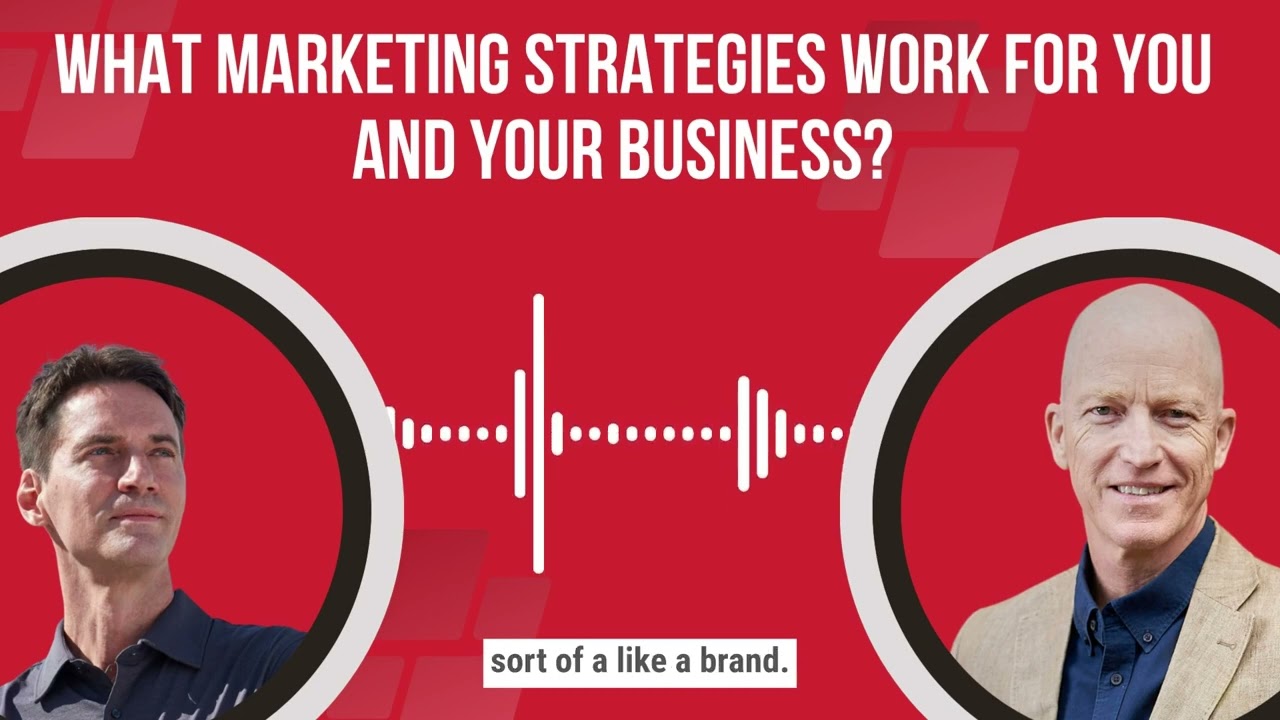
In this episode of The Unnoticed Entrepreneur, host Jim James interviews Ross Beach, CEO of Wego, about how the company grew from a 2005 startup into a $1 billion‑GMV travel meta‑search and OTA platform operating across Southeast Asia and the Middle East. Ross explains Wego’s dual‑model (metasearch plus online travel agency), its early focus on mobile apps, and the geographic expansion strategy that moved from Southeast Asia to the Middle East. He describes the classic cold‑start marketplace problem and how Wego solved it by white‑labeling its platform with large portals such as Yahoo and MSN. The conversation then shifts to brand building: a balanced spend between performance marketing (paid search, display, PR) and long‑term brand investments (TV, influencer, content marketing). Ross details the content strategy during COVID—shifting from inspirational travel pieces to practical, real‑time travel‑requirement guides, leveraging a robust blog and rapid‑response team. He also outlines partnership tactics, including pre‑install deals with phone OEMs (Xiaomi, Samsung, Huawei), joint campaigns with tourism boards, and revenue‑sharing with airlines and OTAs. The interview touches on Ross’s personal branding philosophy (preferring to stay behind the scenes) and ends with his advice to entrepreneurs: pay close attention to AI as a generational inflection point. Contact information for Wego is provided at the end.
Chapters
Welcome to The Unnoticed Entrepreneur. This show will tell you how to get the recognition you and your business deserve. Our guests share their practical insights and tools which you can use straight away. Your host is international entrepreneur, podcast host, and author Jim James. Welcome to this episode of The Unnoticed Entrepreneur with me, Jim James. I'm here with Ross Beach. Ross, fantastic to be here with you here in Singapore, the amazing WEGO offices. Tell us just a little bit about WEGO.
Sure. Great to have you back in Singapore, Jim. So WEGO is an online travel company. Yeah, we are sort of dual headquartered Singapore, Dubai. We do a lot of our product tech data science work out of Singapore. We run the commercial marketing side of the business out of Dubai. We run a metasearch and an online travel agency model side by side. We also have a sort of a media advertising business. We're about 220 people worldwide. We've got offices apart from Singapore and Dubai, from west to east, Cairo, Lahore, Bangalore, KL, and Singapore, Dubai.
So for those people that don't understand what a metasearch engine is, Ross, just give us a quick guide to what it is. What does the company do? What do people get by working with Wego?
Yeah. So we're a sort of B2C online travel company, metasearch side of the business. So people come to us and they are comparing They're shopping the market for flights and for hotels. We show 'em the price if they book direct with airlines or hotels. We also show 'em all the different online travel agency prices, the global guys, you know, the Booking.coms and Expedias of the world through to the, you know, the local champions, those they've heard of, those they haven't heard of. And if they come to Wego, you know, they know they've exhaustively shopped all the, shopped the market. We, you know, when we first launched back in 2005, Long time ago.
Long time ago. Yeah. You've got to learn to survive.
Yeah. You know, it was a web game. You know, mobile apps didn't exist at the time. You know, you know, we jumped on the mobile app opportunity pretty aggressively, relatively early. And most of the business is now mobile apps. When we first started the business geographically, you know, we saw Kayak and Sidestep with the same business model get started in the US. We saw Tuna and, you know, the guys up in China and we sort of said, yeah, that's a good idea. Somebody should bring that to the rest of the world. And, you know, by rest of the world, we originally were thinking about Southeast Asia because, you know, Craig and I, my co-founder, we were both based in Singapore. You know, I'd been working over at Yahoo, getting Southeast Asia up and running. He was with InterContinental Hotel Group on the e-commerce side. And we thought, you know, this metasearch model, it's a great customer experience. You know, it's a better mousetrap. The suppliers love it, throwing more money at it. So this is sort of went to the top of my list of life after Yahoo projects. And 2005, we kicked it off. The original geographic ambition was to, you know, bring it to Southeast Asia. We were a little bit early, you know, timing is everything. And rather than sit around and wait for the market to develop, you know, we looked further afield and realized there was a big untapped opportunity in the Middle East. And originally we sort of discovered that just by throwing a whole bunch of stuff against the wall and sort of seeing what stuck. You know, we started seeing sort of an exponential growth in traffic. A lot of it was originally organic. So then we started paying attention. So we properly localized the product, we properly localized the marketing, we built local team and You know, fast forward today, a decade later, we are the biggest, you know, online travel app across the Middle East. As a brand, we're as well known as Booking.com. You know, good friends of ours, but, you know, competitors too. Travel industry's kind of interesting in that everybody partners and competes with everybody else up and down the value chain. We're doing over $1 billion a year in GMV going through the platform.
Yes.
And happy to say that, you know, we survived COVID. It was a little bit touch and go there for a while, but, you know, yeah. You know, in March 2020, everything came to a screaming halt, you know? So over the space of 2 weeks, we went, you know, our revenue run rate dropped to about, you know, 0.2% of what it had been, you know, the previous month.
Yeah. Well, very few people could have survived in the way that you and Craig have done. And, you know, these amazing offices down in Harbourfront. So you've built this, you know, amazing engine. And having used WEGO myself, you know, you can find both the bookings and comparisons for flights and accommodation and a plethora of other things. You know, with the Unnoticed Entrepreneur Show, love to just find out about how you've got WEGO noticed as a brand, because obviously you've got the technology dimension, you've got a lot of different aspects of this business, but I'd love to focus on, you know, how have you built the brand? How have you got people? Because you've got to get consumers to come, but also presumably you've got to get partners to come and so on. So which one was the biggest problem and how did you solve it?
Yeah. So back when we first started, we had a sort of a classic cold start marketplace problem, right? So at its heart, Metasearch is a 2-sided marketplace. On one side, you've got consumers looking to buy travel or search for travel. And on the other side, you've got merchants looking to sell travel. And in the absence of a large number of consumers, the merchants aren't interested in working with you, right? Because there's a cost to You know, engaging and signing up and connecting. And we kind of got around that problem by white labeling our platform with Yahoo, with MSN, and a whole bunch of other big sort of horizontal portals that were significant drivers of traffic at the time. And a little bit of it was, you know, selling, convincing them to sign up for something and then scrambling to build it, you know? Uh, so we had to do a little bit of tap dancing in the old days, but, you know, but you had a great reputation with your Yahoo days anyway, right?
So you already had as an individual an amazing track record in building out things that would work.
So. Yeah. So we leveraged some of the relationships.
Yeah, yeah, sure.
And yeah, once you get over that sort of chicken and egg problem, it becomes a bit of a flywheel. We think of ourselves as a primarily technology company that just happens to be operating in the travel industry. And as such, we spent a lot of time using all the standard sort of digital marketing channels. So, you know, we did a lot of organic search optimization.
We did a lot of paid search.
We did a lot of, uh, display marketing across all the different publishers, do a lot of PR.
Right.
Do a lot of content marketing, a lot of influencer marketing. And, uh, the marketing mix has evolved. Originally it was like pure digital and a lot of it, you know, just sort of performance driven. As we got bigger, we were, you know, we spent a lot of time actually building the brand. Um, it's just different to a lot of online travel companies, a lot of Yeah, really don't care. You know, they're happy to take the arbitrage. But yeah, we sort of were thinking longer term. So if you look at where we spend our money, it's roughly half on brand, half on sort of performance or tactical stuff.
Okay.
And on the brand side of the ledger, you know, we do TV, good old-fashioned TV.
Oh, you do? Okay.
We try and do it in a sort of fairly scientific measured, you know, we sort of measure the direct response, we measure the uplift, we try and do split testing wherever we can. But we do, yeah, we find that works and we've got a great strategic partner in the MBC Group out of the Gulf who operate the biggest satellite TV network in the region. So we do a lot with them. Yeah, we do a lot of YouTube, a lot of other digital video. We have a lot of marketing partners. So in the travel industry, there's a sort of an old-fashioned partnership model where the travel agent works with the national tourism organization. So travel agent doesn't really care what they sell as long as they sell something. The tourism board obviously cares about their destination, right? So typically it's sort of, you know, you both put some money into a pot and you promote the destination. So we do this with several dozen different tourism boards, you know, over the year. And this is, it significantly augments our own marketing budget.
Okay.
So we do a lot of, we've got some good partnerships with some of the people who make mobile phones. So, you know, we work with— How does that work? Xiaomi and Samsung and Huawei. So we find ways to preload our app onto their phones so that when you buy your shiny new phone and you first boot it up, you know, we're already there.
So how does that deal work? What's in it for them?
So they like to associate themselves with big brands in each market.
Really?
And in the markets where we do these deals, we're sort of a big brand. And yeah, there's obviously a commercial element to it as well.
Yes, I see.
And that takes several different flavors.
Well, that's really smart. You get to be pre-installed. I guess that was the whole thing about with Netscape and Microsoft Windows Explorer, wasn't it? That Windows were preloaded and Netscape couldn't get on. So smart that you're playing that card. Can we also just look at the kind of content that you created? Because you mentioned quite a few different things, one about sort of destinations, but also about the WEGO brand. And I know that you've talked about influencers. Do you want to just break down for us, you know, what role those different kinds of content play, if you can, or how do you get them to somehow be unified around the WEGO brand? Because you've got so many channels and so many content types. Yeah. Potentially it could run away and not all reinforce the brand. So how do you do that?
Yeah, so importantly, it's all directed by our VP brand marketing out of Dubai. And, you know, she looks after what you would traditionally think of as brand marketing, but also all of the sort of newer manifestations of that. So, you know, the social media, the influencers, and, you know, there's sort of a, like a brand, a set of brand guidelines and there's sort of creative templates we try and stick to and there's messaging we try and stick to. And then on the, you know, with respect to content marketing specifically, this is Something we've always done a little bit of it, but during COVID we really cranked it up to 11. So we sort of made a decision, you know, when COVID hit to keep going with all of the unpaid channels. Like we obviously zeroed out all the paid marketing.
Yes.
But, you know, we kept going with the content marketing, with the social media, with the PR to keep the brand in people's mind, but also to be helpful, right? So if you did any travel during COVID you would know what a sort of logistical nightmare it was.
So yeah.
Pre-COVID, we used to do a lot of content marketing around inspiration. So trying to inspire you to go places, give you new ideas. We kind of flipped the script a little bit and just tried to be practical, you know? So if you need to get from Hong Kong to Singapore or from Dubai to London, you know, sort of tell you what the COVID travel requirements were on the, you know, at the time, because there were shifting targets, right?
Yes, exactly. Yeah. That's why I was interested in Well, how you've managed the content.
Yeah.
Because content generation is, if you like, the strategy, but I'm interested also in the content type. What's the messaging that you've been using for the audiences?
Yeah. So a lot of that was just trying to be helpful, but you know, and by doing so, we keep the brand sort of top of mind. What we found is as COVID sort of disappeared into the rearview mirror and the travel restrictions were lifted and people were able to travel again, we found our business basically came back. You know, we're above our pre-COVID levels now without us having to crank up the paid marketing.
So it just came back.
Yeah. So awesome.
You kind of, by embedding yourself and I guess becoming a more trusted advisor beyond just a sort of portal to buy as a brand to consumers.
Yeah. So a lot of travel brands went dark during COVID They just disappeared. But a lot of travel companies also sacked half their team, which is kind of one of the reasons they went dark.
Yeah, that's right.
Yeah, we trimmed around the edges, but we made a, you know, with the support of my board, we sort of decided that, you know, we would keep the team intact. You know, we spent years building it, building up the team, hiring them, training them, meshing them together. And so, you know, during COVID we kind of doubled down on product development, built a lot of stuff that, you know, we've recently released, you know, and we kept the foot down on all the unpaid marketing channels and that's sort of paid off for us big time now. So we're seeing market share gains.
Yeah.
Yeah.
Okay. That's wonderful. So there's a crisis often requires a greater cadence of communication, not a lower one. Which of those channels have you found most effective when you talk about content marketing? Is it the sort of TikToks or the YouTubes or the Instagrams or the Facebooks? Can you give us any indication of which ones have generated the most For you, or?
So if you're talking about pure content marketing, right? So stuff that we are writing and pushing out, our own blog has actually worked the hardest for us.
Very interesting.
Okay. And yeah, we obviously syndicate that and make sure it's picked up by, you know, Google News and, you know, some other republishers. But, you know, we spend a lot of time, you know, responding. So we've got sort of a rapid response team. So anything that's trending in travel, you know, we make sure we hit it. it pretty quickly and exhaustively.
Yeah.
So that's worked well.
What sort of content are you putting on the blog and where is the blog? Is it on the homepage for someone that's looking or is there a separate place for the blog?
Yeah, so it exists in the website, it exists within the app and that's served us well. More broadly, it's the mobile app install base, which is sort of the most powerful channel for us.
Right.
You know, if you think back to the Web before apps, you know, basically, you know, Google was kind of acting as a tollkeeper one way or another.
Yes.
For pretty much, you know, all businesses unless they're really strongly branded. It's changed a little bit with mobile apps, right? So once you have your app installed, you're able to push message to a user to remind them you exist, to, you know, incentivize 'em with a coupon or with a new idea or with some information that might be useful to them. That's quite powerful.
Yeah.
Also, I, I think once somebody has gone to the trouble of installing your app, You know, there's already a sort of a strong relationship between the brand and the consumer. So yeah, we've spent a lot of time building up that app install base over the years, and that's sort of one of the major assets we have.
Okay. And you mentioned before about, you know, the cold start and that you've got the vendor part of the industry, you know, travel authorities like Singapore Tourism Board, for example, airlines. What do you do in terms of partnering with them? I mean, you mentioned they might give you funds, but do you just want to Give us a little bit of what might be a sort of a package or how might you engage them?
Yeah, I mean, so it's kind of 2 steps. So for the people that are selling travel, so the airlines, the hotel chains, and the online travel agencies, sort of the Expedias, Agoda, Booking.com. So we are driving business to them and yeah, we take a clip of the ticket.
Right.
For the tourism boards, we're typically, you know, putting cash Or cash and services into a pool. And then we go out and market the destination together. And yeah, we drive people into Wego to convert.
And that'll be what maybe if you like an influencer going to a destination, enjoying a holiday, taking pictures of themselves, showing what they're doing, that kind of content.
Yeah. So we use a whole bunch of different channels. Sometimes, you know, it involves influencers, sometimes, you know, it involves Yeah, we got a big campaign going on at the moment with Visit Britain. If you go to Dubai or Riyadh, you'll find, you know, taxis wrapped with, you know, Wego and Visit Britain, you know, book on Wego.
Nice.
You go to the cinema, you'll see, you know, joint promotion. You go to YouTube, you'll see joint promotions. So we use both the offline and the digital channels and we try and sync them up.
And I think it's a really important point.
You know, we only have 20 minutes. We're nearly done.
As an entrepreneur yourself, do you have your own brand strategy, Rob Beach, founder and CEO? Well, it's an interesting question because I'm finding some CEOs have like a dual brand strategy. They have a personal brand and a company brand. They run side by side. So just wondering what's been your approach to that.
Yeah, I honestly, I should, but I don't. I'm by nature, I'm rather private.
Yeah.
And I'd be quite happy never to Has to appear in public.
Yeah. Ross has kindly granted me this interview because we know each other for so long. Yeah.
I have a brand, a social media PR team who do most of the heavy lifting. I'm fine to sort of disappear into the background.
Okay.
But, you know, I do public speaking when it's helpful. But if you've got Richard Branson or Elon Musk on one side of the spectrum, I'm way over the other side of the spectrum, quite happy to be in the background. And frankly, there's people in the company who do it. you know, better than me as well. And we also operate in a part of the world where, you know, English is spoken, but Arabic is the primary language. And, you know, not one of my strengths.
No, no, no. When you're strong, so no, okay. Well, I think I agree with you on that as well. So Ross, if there's one tip that you can give my fellow unnoticed entrepreneurs, and I know you're noticed, but you like to be very discreet, but as a company, What would you say is the one thing that you've done that you'd say to other unnoticed entrepreneurs that are building a business? If you've got one thing to do this to move the needle.
So what's happening at the moment with AI is a sort of like a, you know, once in a generation inflection point in technology. You know, you and I lived through the creation of the internet and we saw how that revolutionized life and business.
Yes.
And, you know, impacted everything, right? I think what's happening with AI now is going to be as big, if not bigger. So if you are not already paying attention, I highly recommend you do. It's literally gonna, you know, reshape every industry. It's going to impact an overwhelming majority of, you know, white-collar workers. And you want to be early. You really don't want to be late. And, you know, it's going to change companies, but it's also going to change, you know, the way individuals work. So yeah, lots of different ways to, you know, dig in and figure out what's going on. But if you're not already paying attention, you know, now is the time to do so.
Sage words. And coming from you as an innovator and a visionary on both in the internet and now as well with the travel business, Ross Beach, if you want to find out more about you and Wego, where can they go?
Wego.com is the website. Look for Wego in the Android or iOS App Store. Ross@Wego.com if you want to get in touch.
Ross, thank you for letting me come to the amazing offices you've got down here in the Harbourfront in Singapore to join me on the Ununderstood Entrepreneur interview today. Thank you so much.
It's an honor. Thanks, Jim.
Thank you. So you've been listening to Ross Beach and I. Talking about how he's built WEGO from really, you know, humble beginnings into a billion-dollar business that's leading the travel business in the Middle East and also leading it in Southeast Asia. So if you've enjoyed this, do please review it, but also most importantly, share it with a fellow unnoticed entrepreneur. And until we meet again, I just encourage you to keep on communicating. Thanks for listening.
More from Jim











2 people, infinite agents, 1 billion dollar idea #AIAgents #Startup #Productivity