Check out this this free text based video editing application developed by 4 German students
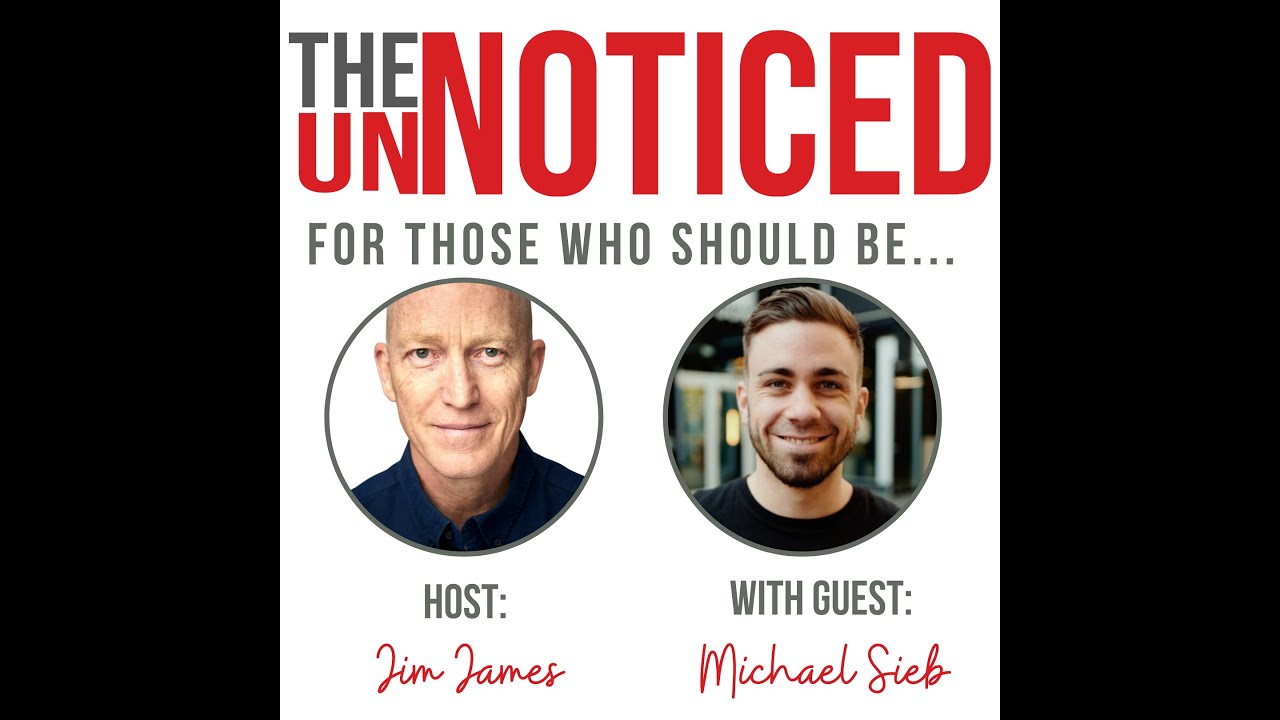
Michael Sieb co-founded Type Studio, a Berlin startup that lets you edit video by editing the transcript instead. Upload a file, it transcribes automatically, delete words and the video cuts. They've hit 20,000 users and offer subtitles, translations, and repurposing for different social platforms.
Chapters
I see that brands start to have people in their companies who really create this kind of content where they have like personality behind, not just like stock images or footage or like animated stuff. They really want to have the personal feel.
Michael, welcome to this episode of The Unnoticed Show. I'm delighted to have Michael Sieb join me today from Berlin. Michael, thanks for joining me on The Unnoticed Show.
Thanks for having me.
Now, Michael, you're the founder, one of 4 founders of a company called Type Studio. Tell us, how do you help business owners to get noticed?
Yeah, absolutely. So we started with Type Studio because we struggled ourselves to create really video content. And we noticed that there's like a very lack of like the functionality for these advanced video editors out there. And we, we wanted to make it much easier and actually build software where really people can get access to video editing and lower the entry barrier so that everybody is possible to create great, outstanding content.
Yeah. And it's amazing because you've actually been going only 4 years and you and your co-founders are still at university, as I understand.
Yeah, absolutely. We are still all studying in different areas. But yeah, we Nowadays we mostly concentrate on building Type Studio rather than finishing our studies, but we will, we will do that in the future as well.
Not surprising though, because you've got 20,000 users already, Michael. So tell us about how Type Studio works and the problem that it's solving, because more and more people are having to create content. And yet, as you rightly say, a lot of these applications and desktop programs are getting more and more complicated. And harder for people to use. So just walk us through how Type Studio works.
Yeah, sure. So it all starts with your, your content. It doesn't matter if it's video content or audio content. We like support both, both files. And you just upload it into Type Studio. So just go to Type Studio and sign up and make an account. Just drag and drop your, your file into our editor where it will then get automatically uploaded and also transcribed. So what we are doing is transcribe your spoken words, your audio into text, and then make the text editable. So you can, for example, if you have any bloopers or mistakes in your recordings, you can just go in the text, highlight it, click delete, and you just delete the words in the text and the video or audio will adapt the changes and cut automatically. And yeah, that, that is how Type Studio basically— and then there are like features around since we already transcribed your whole video. You can easily add subtitles with one click or translate it into different languages, stuff like that.
So Michael, it sounds both elegant, simple, and yet doing quite a lot of heavy lifting. Have you built the transcription software yourself? Because there are some, you know, Rev, like Otter. Like Temi out there already. Are you, have you built a whole new engine or are you using somebody else's? Because transcription quality is a key element, isn't it, in usability?
Yeah, it is definitely. And it's the core product of ours, like getting the video or the audio transcribed. And to be honest, it would be like almost impossible to build that by ourselves, all the AI stuff we have to do. We use like Google speech-to-text transcription API, which, yeah, helps us to transcribing the spoken words into text.
Okay, so leveraging an existing huge company with AI, that sounds a really smart idea. In terms of some of the practicalities of like video editing, for many of us, me included, I have 2 people on one podcast. How easy is it to If edit the 2 people together, because editing one narrative is one task, but joining and, and mixing 2 guests, for example, can be more complicated. Can Type Studio do that also?
That is unfortunately one feature that is on our roadmap, which is also pretty large. We still have to, to implement a bunch of cool features in the near future, in let's say 1 or 2 months. And we will definitely have to implement it because I can tell that it's very valuable to have this speaker detection, especially when we record like podcasts like these or like other Zoom recordings or whatever. It's very helpful when you have more than one speaker to actually see who is talking.
Michael, let's then just talk about the 20,000 people that are making videos and some of the lessons that you've been learning as a result of watching all the data pass through Type Studio. Can you give us some clues what's making good video? For example, are there some tips and tricks that you've seen content creators using that you could share?
Yeah, so we basically have like content creators from all kinds of industries. So it's more like a vertical, like a horizontal business model, I would say, rather than like we specifically target a very niche vertical. But in general, what all have in common is that they create like content-focused videos or audio or podcasts in general. And what I can observe is that we have— most people are from the marketing space being influencers and publishing their content on all the social media channels or on YouTube. And what I noticed is that with tiny tweaks, you can really leverage your output, your quality of the video. You want to post. For example, when you just put like subtitles on your video, it definitely performs much better on all the social media channels because most people are listening without turning on the sounds. That really helps. Give it a nice frame, a proper headline that stands out, that people get the attention from the people who are scrolling through the newsfeed. So yeah, that really helps like with kind Tiny tweaks, you can leverage really your output.
And with Type Studio, can you add images into the video and make those sort of frames that you just mentioned, or do you need to make them somewhere else? How do you support that requirement?
Yeah, sure. You can do that with Type Studio. We— so it's not all about just cutting the text and cropping the video, but you can also put images or Or like headlines, whatever you want on the canvas itself and create like a very nice looking video or change the background color, stuff like that. So you can really like interact and design your video.
Okay. That's fantastic. Are you enabling people to export to multiple formats? Because Instagram is always my bugbear because it's a square. YouTube, LinkedIn. Do people have to spend time on that, Michael, or does Type Studio also help with that?
Oh yeah, that's one another great feature we offer the people that they easily can create like from one single video, they can repurpose their content for all the different social media channels. They have different requirements, like in kinds of the aspect ratio, for example. So you can easily take your one video that you uploaded and duplicate it and have multiple versions out of it and not only cut different parts out of it or like tiny snippets. that you want to post, but also change the aspect ratio.
Are you connecting to any of the sort of distribution or amplification platforms like Hootsuite or Buffer or Zoho? Because otherwise one would have to download the video or picture and re-upload it. So tell us about your integration, Michael.
Yeah, so in from like the beginning, we already implement that you can like just upload your video by just dropping in a YouTube link or your Dropbox or Google Drive link. So you can upload your video from there. But like on the other end, when you are done with the editing and want to share it on your social media channels or wherever on your YouTube or somewhere else, we are still working on that. And also another feature that's coming in the future that you can easily share it immediately and schedule it even for being posted on, yeah, on your channels. And, but other than that, we have the ability to, you can share your video already with our sharing page. After the rendering, you get to our sharing page, which you also can embed into your website or your blog. And you have then like this interactive transcript down below your, your media file, and you can share it with the link. So nobody has really actually to download it.
Oh, I see. Okay, that's a smart move. So rather than moving files around, you're really building links and backlinks across the internet, which saves time and bandwidth, doesn't it? So really a full-on internet play from editing through to distribution.
Exactly. We want to build up like the whole process and everything should be online so that you don't have to deal with downloading, uploading and stuff like that. It's living all in the browser.
Yeah. Yeah. And are there some trends that you've noticed? You've gone from 0 to 20,000 users in 12 months, which is astonishing by any accounts. Any particular industries or fields or trends that you've noticed that would provide some insight to To the unnoticed audience?
We have very vertical approach, like people from all kinds of areas or industries are using Type Studio. But what I really observe is that like this kind of influencers, or I guess you, you like to call them—
The subject matter experts. Yeah.
Exactly. That are like people who are like experts in their field and publishing content as well. And these people really like to use Type Studio. Be able to create content like big companies on the frequency term. And yeah, that's really one thing I can see. And then there's also another industry that is coming up, which I also observed during the pandemic. Obviously the whole education sector changing or switching even more into the digital world and therefore also teachers and all the online course creating, yeah, even more video content online, and therefore they are also happy to use a very lean and easy-to-use video editor that gives them the power to actually create their content.
And Michael, are you finding that customers, subscribers are coming mainly from Europe, or is it global? These trends that you're noticing, do you think they're national, regional, or global?
Yeah, we started in the beginning, we only supported like English as as a language that we can transcribe. But nowadays we have, I guess, almost 30 different languages implemented. So there are people all around the world with all kinds of languages using Type Studio, but the main target group we started is in the US and they are like, so our main, most users are based in the US.
And what sort of trends do you see, Michael, for like business owners and entrepreneurs when it comes to content creation? You've mentioned about, for example, the need for putting subtitles and the nice graphics. That's, you know, some of the packaging. But what about the content itself? Have you noticed any trends about what kinds of content people are producing? I know you're saying about education, but any sort of guidance at all on what people are creating that's different?
Yeah, since we definitely concentrate on this kind of content-focused videos, or for example, talking head videos where you actually have like personality. And I see that brands start to have people in their companies who really create this kind of content where they have like personality behind, not just like stock images or footage or like animated stuff. They really want to have the personal feel. And therefore like Type Studio is a great fit because we definitely have an advantage for adding these kind of videos. And then I also see that You have to really put content on the frequency, on a high, on a higher frequency out there so that you get noticeable. And so that's very important that you post your content frequently. And therefore, as I already said, you can like easily create like multiple snippets or like different kinds of contents from your one video. So you don't have to hire a big agency who creates all this content for you.
But yeah, that's a trend I can I'm wondering whether also the content is moving from purely promotional, as you say, to educational. And then maybe now we'll also start to see organizations using video for internal training.
Oh yeah, definitely. Like customer success is a huge thing, also nice through video. And then also internal like presentations, or even if it's just like a Zoom recording, what you have with your team and you want to share with like your whole company or like with anybody inside your company, that's massive.
Yeah, so I guess if people aren't going to go back to the office, but they still need to retain, as you say, their personality within the company, PowerPoint doesn't do it, does it really anymore?
I'm not sure if— do you mean if they can transfer their personality through like a PowerPoint presentation?
Yeah, I think that the old idea that you'd be in a meeting room and you'd present with your PowerPoint and you're in the room, so your personality But now if you're not in the room and you just send a PowerPoint to somebody, I'm finding this in sales, that if I'm doing a video of me presenting the PowerPoint and editing that and providing a document alongside it, and that's proving remarkably successful for people. In fact, it's amazing how many people say they haven't seen it before, and yet it must be the trend to be there with video.
Yeah, 100%. That's definitely also a great way to do presentations or like explainer videos for internal Use cases. Yeah, that's pretty neat.
Yeah. And do you think that we're going to see in healthcare, for example, the impact of COVID changing how video is used?
What's your view on the impact of COVID Like for the healthcare sector industry, I, I don't really know, or I don't really see there any, or don't see myself. Maybe there is already a trend going on, but I'm not sure about that. I don't have any insights for.
I guess what we're seeing in England is more sort of public information.
Videos that I would say that definitely happens. It would also happen without COVID, but I guess that's a nice— it's an accelerator of this situation or like growing this kind of stuff.
Yeah. Yeah. So with Type Studio then, Michael, if people are interested in having an easy-to-use functional editor for their video and their audio, What sort of costs are we looking at? Because more and more software is sold on subscription. Adobe is now doing the Adobe Creative Cloud on subscription. Tell us about the Type Studio business model.
Yeah, we are also like a subscription model. We start with the free plan where you can upload up to 10 minutes every single month, can use it for free forever with all major functionalities except like the translation feature. But rather than that, you can do everything. You have the whole power of Type Studio. And then we have a basic plan, which starts at $12 per month, and then a pro plan, which starts at $28 per month. And then both of these plans have a discount when you subscribe for an entire year. And then also we already released an enterprise plan where we are just about to onboard our first enterprise. customers, like companies who want to use it with their entire team and you need many licenses, and that starts at $45.
Okay, so really giving people an on-ramp into the Type Studio that makes life a lot easier for people. And in terms of the kind of clients that you're looking for, are you really aiming at influencers, subject matter experts? as a business and building the software for business owners or really heading towards those enterprises that then demand much more? Just give us some guidance on the future path for Type Studio.
Yeah. So far we just built like Type Studio for B2C case, like really this kind of creators, single users. And yeah, since 2 weeks we rolled out the enterprise plan where we onboard companies because like they reached out to us and asked for, do we have, can we get an enterprise plan? We have like many people who need a license. And honestly, it definitely helps like when you onboard a company with 20 licenses because you have to do really hard work to get like 20 single creators for the, like the same, like bringing the same amount of money. And yeah, but what we really love and we are always focusing on the end consumer level because there we get like the user feedback, the direct user feedback. And we can implement new features that people really want to see in Type Studio. So we really like to interact with our users and being close to them rather than just build software with what some companies are using or may not, and you don't never know. So yeah, that, that's definitely the plan to stick to our end consumers.
Nice, Michael. If people want to find out more about Type Studio and to get in touch with you, where can they find you?
Yeah, you can just visit our website. It's typestudio.com. And you can find me on, on my LinkedIn. It's Michael Sieb. I guess you will link it down below. And also you can just shoot me an email whenever you like. It's michael@typestudio.co.
Michael Sieb joining us all the way from Berlin. I should say auf Wiedersehen.
Auf Wiedersehen. Danke fürs Interview.
Thank you so much. Dankeschön for being on the show. All right, thank you so much to Michael Sieb all the way in Berlin, one of the 4 co-founders, young entrepreneurs changing the way that entrepreneurs can become content creators by using accessible technology. Wonderful. It's lovely to see how technology is democratizing content creation for us all.
More from Jim











2 people, infinite agents, 1 billion dollar idea #AIAgents #Startup #Productivity