Don't Let Your Customers' Ever-changing Minds Drive You Crazy! Here's How To Keep Up With Them.
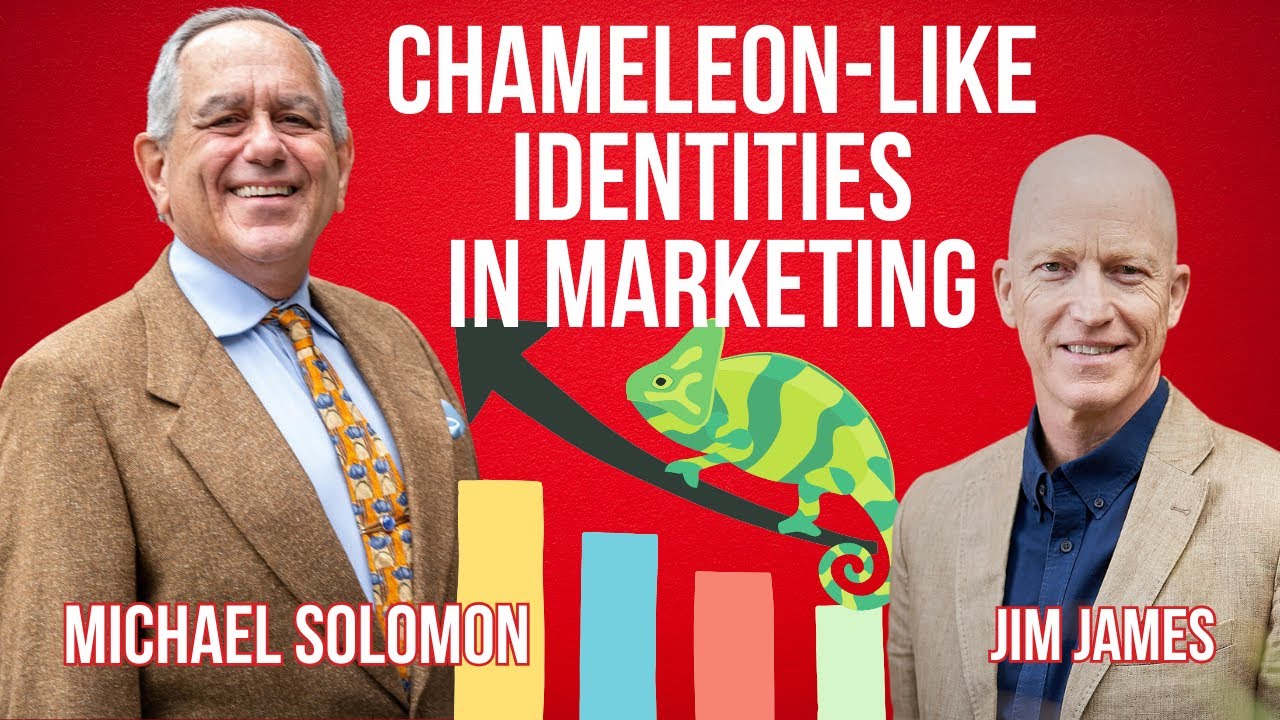
Marketing professor Michael Solomon explains why consumers constantly shift identities across digital platforms, making old mass-market strategies obsolete. He points to LEGO's fan community and Sony's failure to evolve the Walkman as proof that successful brands must listen to loyal customers and stay agile as preferences change multiple times a day.
Chapters
Hello and welcome to this episode of The Unnoticed Entrepreneur. Today, actually, we're very lucky because we're going to have a session with a professor. That's right, we are talking to Michael Sullivan, who is in Philadelphia, and he's the professor of marketing at St. Joseph's University, uh, at the Evren K. Haub Business School. And Michael, you've got a new book out Welcome to the show.
Jim, thanks so much for having me on.
Well, you've got a new book out called The New Chameleon, so you're more than welcome because I wanted to ask you about the new chameleons. And you're going to talk to us about the same topic. You've just actually come back from, I think, Madrid doing a keynote. So we're very blessed to have you, uh, on the show. Talk about how consumers are now chameleons and what that means for entrepreneurs. And I think you've got some good good news for us as entrepreneurs as we try and compete for business, and also some words of wisdom. So, Michael, what do you mean when you say the new chameleons? What do you refer to and how does that impact business?
Well, first of all, I assume everyone knows what I'm referring to when I talk about chameleons. We're talking about— I'm not saying that we've become reptiles that change color several times a day, but Many of us are becoming chameleons in the sense that we do change our identities several times a day, perhaps just the way a chameleon, you know, strategically changes its skin color in order to survive in different environments. Consumers today are doing much the same thing. And it's a fascinating process because it goes against Everything we ever teach our students in marketing, and mea culpa, I do it all the time, but what do we teach our students? That the way to reach your audience is to identify one or more large homogeneous market segments, groups of people that share some characteristic like age or gender or something like that, put them into a big bucket, and assume that because they're in that bucket or in that cage, as I call it, that they're all going to be the same. Anyone who gets put into that cage is all going to be the same. And so we teach our students that this is how you create economies of scale. You know, you don't create a different advertising message for every consumer. You do one for a huge group. And you know what? For 40 or 50 years, that strategy worked really, really well. The problem is that that strategy was created, actually General Motors in the US was the first big company to really implement the idea of market segmentation when they created different models of cars for people with different income levels, like a Chevrolet versus Cadillac, et cetera. Those were the days when, first of all, we had, we lived in a mass broadcast environment. You know, we might have had, you know, in England you had what, BBC One and BBC Two, and that's about it. You know, we had maybe 3, eventually 4 TV networks. And so the landscape for many years has been dominated both by big communicators, like the TV networks, and by big brands, you know, the big companies like Procter& Gamble that make all these large brands that are based on these principles of market segmentation. But when you fast forward to today and you realize we no longer are in a broadcasting environment, we live in what we call a narrowcasting environment where it is in fact possible to communicate with individual consumers. That's what database marketing is all about, customizing how you reach out to someone based on the interactions you've had with them before, etc. And so today consumers are much more adventurous. They have, you know, that internet thing has popped up. It seems like it's here to stay. It's no longer just a fad. And what it means is that everyone can be sitting at their computer, whether they're in London or Philadelphia or Taiwan, what have you, they can be exposed to and get access to products and services from all around the world. And of course, the other great part of this is that they don't necessarily know if you're a one-person shop or you have 1,000 employees because they're dealing with websites and blogs and so on. So that, to a large extent, levels the playing field for entrepreneurs. But entrepreneurs still kind of throw up their hands sometimes because they say, how can I compete with Procter& Gamble? You know, they have these huge brands with all this messaging behind them. But again, in the, in the time of the chameleons, when we are changing our identities much more quickly, much more quickly, we, we need to fit into certain situations, we need different products when we're maybe at work versus going on a date versus going to a sporting event, etc. That creates a lot of opportunities for smaller brands, and especially because The smaller brands, you know, the strength that they often ascribe to the big companies is actually often a weakness. And that strength is their size, you know, their resource base. But when you have to make changes quickly, when you're not creating a brand that's basically going to be untouched for 5 or 10 years, you've got to be able to move very quickly. And that's where entrepreneurs have a big advantage. So I like to compare it to, you know, turning a sailboat versus turning an aircraft carrier. It's just a totally different process. And, you know, if you, if you know what you're doing, you kind of zig in and out, you know, zigzag in and out of those big guys, um, and, and based on much more immediate feedback from your customer base, if you're properly staying in touch with that base, of course, which unfortunately some entrepreneurs are too busy to do.
Well, so you've got a, a wealth of information there, Michael. So thank you for that. You're just picking that apart a little bit. So Individual consumers now are chameleons in that not only are they no longer in one category forever, they're switching categories, aren't they? Over even a day or a week or a month, making them kind of harder to define. But as you say, that nimbleness that an entrepreneur may have, and proximity to the client will give them maybe an opportunity, whereas a big company will have to make decisions and will have a huge sort of decision-making tree to follow.
Michael, what's— And excuse me, and adjacent to that, remember that these big brands, you know, they, in the old days, they were able to lock in large numbers of customers. And it was very difficult for an upstart to penetrate that. But today that is no longer the case. So ironically, you know, some of the things that are plaguing the big marketers create advantages for the little, littler ones. I mean, brand loyalty in general is declining precipitously and has been for a long time. So whereas 10 or 20 years ago, you might have had a very loyal, you know, diehard Coca-Cola drinker, today that drinker is much more willing to sample other things from other places, and it creates an entirely new landscape.
Michael, what about the landscape that is now on social, which is, you know, brands participate in marketing, don't they? Because we have influencers and also people repost things, and we have social proof as a big driver now, especially for startups to get those early clients in the door. You know, with your book on the chameleons, what's your view on, if you like, participation by consumers in brands?
Well, this is, you know, what I've said is this is the biggest marketing story I think in the last 10 or 20 years is that we've moved from, well, we've moved from what used to be called Internet 1.0, which is very much a you know, one-way communication top-down from the company to the customer, but that was it. Today we're in this period that we call Internet 2.0 where it's much more of a back and forth, and the customer's feedback and communication with the source, with the company, is vital. And there are some companies that understand that their customers are probably their best inspiration for new product ideas, new promotion ideas. I'll give you an example of a company that's done this very successfully, and that's Legos, you know, the building block. They were, they were kind of on their last breath for maybe a decade or two ago, they were really not doing well. And then they changed their orientation and began to much more aggressively engage with their heavy users, with people who are these Lego fanatics. I don't know how they have the patience for it, but people do that. And so they started to evolve a community, and I think they have well over 10,000 members, probably more, of active Lego users who actually can contribute ideas. They can suggest an idea for a new Lego product or something like that. And they— and LEGO will recognize them, you know, they— so they're consciously bringing these customers in underneath this umbrella. You know, too many companies don't want customers to see what's going on behind the kimono, as we used to say. They love for things to be secret. Apple is actually most famous for that. But many, many companies have recognized that in fact, what they are creating is always in beta, just like software is always in beta, right? We're always mutating to it or evolving to the next version. Products are always in beta as well. We're never totally finished. And if you change that orientation, what I like to say is, you know, it's a matter of switching out a very, very simple word. And that is we've evolved from a marketing to our customers orientation to today where we have a marketing with our customers. And if you just transition, it's not as easy as it sounds.
Yeah.
But if you go from to to with, your entire perspective on the role of your customers, the role of your customers as evangelists for your brand, I'm talking about your really loyal customers. Your viewers may know about the 80/20 rule. In marketing, which is, you know, a generalization that 80% of your revenues come from 20% of your customers. What that reminds us of is that a relatively small number of our customers doesn't have to be 20%, but a small proportion are really driving or creating the energy behind our brand. And so it's tempting Well, small business or large, you always are under the gun to expand your customer base. But the problem that I think a big mistake that companies make, and this is where smaller companies can really, really do something amazing, is that once we have acquired a customer, there's sort of a tendency to say, okay, check that box. We have that guy. Now we're going to move on to the next one. And to kind of take for granted the people who are really giving you the dynamism that's driving your brand, because it's always about how do I get more and more and more. But for me, I would rather have, you know, to get back to the 80/20 thing, I'd rather have 20 amazingly loyal, enthusiastic customers who tell everybody they see about how wonderful I am than 80 customers who might drop in to buy something from me every year.
Um, what about the implication on the customer journey? Because, you know, you've, you've been a marketing professor now for, for nearly 40 years, right? So you follow this, and, and your client list is an amazing number of blue-chip companies. And we've— those of us who've been working in marketing have talked about customer journeys in B2B and consumer. If these consumers are now chameleons, you know, they're going to be blending in as much as anything else to the landscape, let alone be following particular paths. How do we now address this path through to our own business and through the funnel?
Yeah, well, there is no such thing as one customer journey. I mean, it's a great concept. Frankly, it's old wine in new bottles. I mean, we've been talking about this in academia for many, many years, but now the executives are starting to wake up and realize there's something to this. The main value of it that I see is the recognition finally that the experience is not determined only by what happens at the moment of the transaction. The experience is something that is being created and modified as the customer you know, navigates various touchpoints with the business. And of course, it's often the most minor touchpoints from the manager's point of view that are the disasters, right? It's often, you know, as I like to say, in retailing, for example, the paradox is that, you know, they put millions and millions of euros or dollars into building up an amazing image, say, for a department store. But the reputation of that business rests on the shoulders of the most poorly paid employees, you know, the hourly employees who really aren't invested in the company at all. And that's the person that we tend to have a contact with at the store. So, you know, that's part of the paradox. But the journey concept reminds us that we need— the most important thing you can do as an entrepreneur is to put yourself in your customer's shoes and take the journey. Don't just try to identify the journey your customers take. Take the journey yourself. And when you do that, you'll start to see how, you know, a minor annoyance like a salesperson who doesn't want to be bothered will totally derail everything you've put together. And that might not have been obvious if you're if you're just reading a report or something like that. And again, as a small business person, you can do that. I mean, you can actually— what you should be doing is kind of jumping over the counter, if you will, and talking to your loyal customers saying, hey, I appreciate you, but why? You know, what is so wonderful about me that you keep buying? Because you want to— that's the secret sauce that you want to keep replicating. And it's only your customers that can tell you that because very often, The things that we're selling are not the things that customers are buying. That's kind of the heart of what I study in consumer behavior. You know, and as I like to say, we don't buy things because of what they do. We buy them because of what they mean. And so customers, at least to some extent, are not just buying functionality. If you make a tangible product, for example, it's likely that it's going to work. You know, it's going to function as are the other 3 or 4 or 10 competitors in that category, probably not gonna blow up in your face. Yet in every category, there's 1 or 2 brands that are way, way beyond everybody else. And it's, and of course they work well, but you can't explain that level of loyalty just by looking at functionality. So if you think about, you know, the usual suspects, Nike and Apple and so on, what you start to see is that the way they're differentiating themselves is that the functionality is kind of the cost of admission. It's a given that that's what it takes to sit at the table. But now the brand story becomes what is driving people. And customers today, these chameleons, especially younger ones, they are not just buying that product, something in a box or a tube. They're buying a story of that company. They want to know how the company was created. They want to know where the supplies and resources come from. You know, were any children, you know, was child labor involved in the production of this, et cetera. And so what they're buying is, you know, even though they're bringing home that functional product in here, what they're bringing home is a story. So if you have a story, I always say this when I give keynotes to brand managers, If your brand has a unique story, tell it. People want to hear that. Now, with entrepreneurs, almost every company has a unique story, you know, and it might be, you know, 2 sisters who couldn't find soap that was gentle enough for their babies, so they invented a soap, you know, something like that. There's lots of compelling stories like that. If your brand has some kind of a founder story, And you'll notice how important these are. If you think about like in Silicon Valley, you can visit the garage, you know, where Hewlett-Packard was formed or the garage where Apple was, you know, people want to go back to the source today. And so again, as an entrepreneur, that I think is your biggest asset. Your story, I would bet, is more interesting than Procter& Gamble's story.
Well, I'm sure there'll be many people listening to the show who'll take heart in that, Michael, because If you're saying really the biggest asset is the story, every entrepreneur, as you say, has got a story to leverage from and finding those chameleons out there will be key. Michael, in your nearly 40 years of experience as a professor and with all the case studies and the clients you've coached, is there, if you like, a recurring error, something that you think companies do that seems nonsensical because it's so obvious? and people keep doing it, but that you'd like to just say to entrepreneurs, hey, look out for this. Don't make this obvious mistake.
Yeah, that's a great question. I would say one thing is resting on your laurels, ticking the box and thinking that you're done. And there's some great examples. I'll give you a quick one. Maybe you're old enough to remember this. Most of your listeners won't, but I'm going to say it anyway. The Sony Walkman. You remember that?
I do remember that. Yeah, I'm afraid I'm old enough to get—
Yeah, '70s and '80s, you know, an amazing breakthrough because it's providing a benefit. It's not just functionality, it's providing a benefit. This notion of, you know, mobile music, this was something that we had never experienced before. Today, kids take it for granted. So anyway, you know, Sony invents this and there's a great story apparently behind this, basically the One of the top executives at Sony apparently was a, in Tokyo, was a huge opera buff. And he had to keep flying back and forth to Europe and the US. He called his chief engineer in one day and he said, I need on these long flights, I need to have my opera with me, make it so. And they did. Is that right? But what happened now, you know, when I stand in front of my students today and they're all, they've all got something in their ears. Say, how many of you are listening to a Sony Walkman? And they look at me, what is that? So Sony had that market cornered, but they kind of let down their guard and they stopped realizing that the benefit that they're selling, this mobility, could be in fact activated in other ways as well. And so they didn't anticipate streaming, of course. They didn't anticipate— You know, it's like the evolution that Netflix went through where they used to have, you know, bricks and mortar stores. Now there's only one left in the world. But they, in contrast, they were able to pivot and understand the technologies coming down the line and deliver that same amazing benefit but in a different way. Sony didn't do that. And so, you know, when you have a device that where you put, do you remember something called a cassette, Jim? You put the tape in for that Sony Walkman. Well, that's kind of hard to find these days. So yeah, resting on your laurels because, you know, the challenge in marketing is that your day is never over because tomorrow is going to be a totally different, you know, situation. And just creating what you think is a strong brand and then letting it sit for 5 or 10 years without, and especially without getting feedback from your customers and mutating the brand Along with them, that's a big mistake.
Michael Solomon, well, luckily we've got professors like you out there in the world and your new book. Tell us, where can people buy the new book, The Chameleons, from?
Oh, sure. Thank you. I mean, you can buy it on Amazon or any site, any bookseller site. It's just called The New Chameleons. Oh, you've got it up there. Great. Yeah. So if anyone wants to read it and give me some feedback, I'd certainly love to hear from you. And you can also find links on my website, which is just michaelsolomon.com.
Michael Solomon, you know, thank you so much. And I love the concept of consumers being chameleons now and these, you know, the opportunities that those create for entrepreneurs as well. And that we really, we have to keep you know, building on our story as entrepreneurs and using that to communicate and to continue to create and stay honest and true to that. Michael, thank you so much for joining me all the way from sunny Philadelphia today.
Thank you. It's been a pleasure.
It has been a pleasure. So we've been listening to Michael Solomon, who is the professor of marketing, as I mentioned, at the St. Joseph's University. It's the Erevan K. Haub School of Business. I think I pronounced it. incorrectly before. He's also a contributor to Forbes and a keynote speaker. So we're very, very blessed to have Michael come and share about his new book. And if you've enjoyed this, do please show this to a fellow unnoticed entrepreneur. And if you've got a chance to leave a review, that would also be fantastic. And until we meet again, I just encourage you to keep on communicating. Thank you for listening.
More from Jim











2 people, infinite agents, 1 billion dollar idea #AIAgents #Startup #Productivity