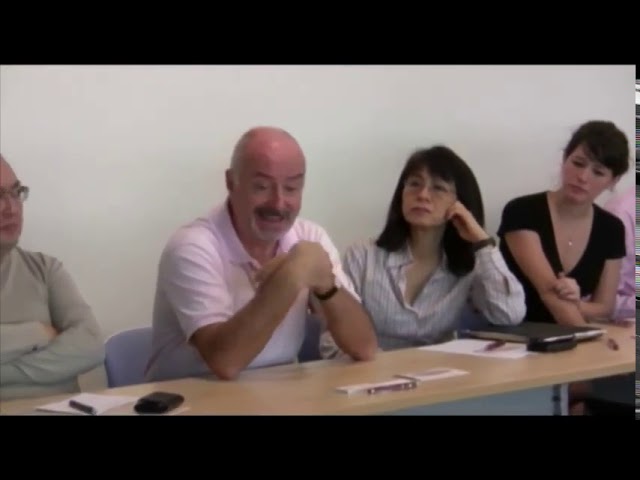
In this round‑table discussion, a panel of marketing professionals debates the evolving role of media in B2B engagement. Speaker A highlights social media’s capacity for confidential, long‑tail expert conversations that traditional magazines can’t provide, positioning micro‑blogging as a major opportunity. Speakers B and C argue that email marketing is in decline, citing spam overload and poor execution, and suggest that the era of bulk EDMs is over. Speaker C also cites Nielsen‑style studies to assert that personal recommendations are the most powerful brand driver, and that social media merely amplifies this word‑of‑mouth effect for both positive (Amazon) and negative (Nestlé) brand outcomes. Speaker D raises practical concerns about balancing traditional and social channels, questioning cost, audience relevance, and the perceived complexity of a mixed‑media strategy. Finally, Speaker E probes the panel’s stance on “media” itself, referencing historic media‑driven product launches (e.g., Bill Gates promoting Windows) to explore whether the skepticism is about results, marketing angles, or the medium itself. The conversation weaves together strategic, tactical, and philosophical perspectives on how brands should allocate resources across traditional, email, and social platforms.
Chapters
And I see social media as a way to have those very specific expert discussions at a certain level of confidentiality with the customers, because with the traditional media that you can Why, if you're looking to target someone with a very specific knowledge, maybe you could put one article in an already specialized magazine, press— sorry, subject matter magazine on that matter. But you won't get into the details of that exchange of information that you would actually like to get. So all this long-tail dimension, microblogging, microtweeting, is I I think a tremendous opportunity in the B2B area to establish a conversation with potential counterparts among the customers and potential customers.
The other way we're looking at social media is purely as a marketing tool. So I'm interested— I mean, I've come to the opinion that email as a marketing tool is actually dead. I think the days of the email EDM are over.
I do agree with you that email is, as a communication tool, is on the decline. With the amount of email and the spam, spam blocking, and all of the other issues. Sadly, that's because so much of the email marketing that's being done is so badly done.
Bob used a balance of traditional and social media. And I think that wheel actually amplifies the problem people have had. You look at it and think, oh my God, how the hell am I going to get into that? What's it going to cost me? And I think it's got to be, is it something that my— the markets and the segments that I'm targeting, are they people who are actually using it? Because there must be an awful lot of people, it's not relevant. But nobody actually asks that question because they all know you have to be in there.
Study after study, from Nielsen to anyone else, has proven that there is nothing more powerful for your brand than a personal recommendation from one friend to another. Social media simply allows you to amplify a naturally occurring process that will work very powerfully for you if you're a brand like Amazon, or if you're a brand like Nestlé who've been buying palm oil from unsustainable forests, has worked very powerfully against them. So it's, it's about a conversation between people, not necessarily between But isn't that a form of marketing, not just a conversation?
Because earlier you said when you started off, not to be contrarian, but you said, I don't believe in media. But if Microsoft didn't have Bill Gates going around 15 years ago explaining Windows, you know, we wouldn't have had large events. That would be media. We didn't have social media. We had social media between business partners and B2B, but really it was out in media launching large events that helped us came to events like that, launching Microsoft, et cetera. But when you say, I don't believe in media, is that because you don't believe in the results or the marketing angle? Without media, we wouldn't really, a lot of us, be sitting here.
When you say media, you mean the traditional media?
Well, that's not what I'm saying. It's what you said.
Yeah, so I'm trying to clarify.
You didn't say traditional media. You just said, I don't believe in media. I'm not trying to be contrarian. I'm just trying to see what's your perspective on that, because obviously you said it.