Empowering Youth Through Innovation with Audo's Founder, Milan Kordestani
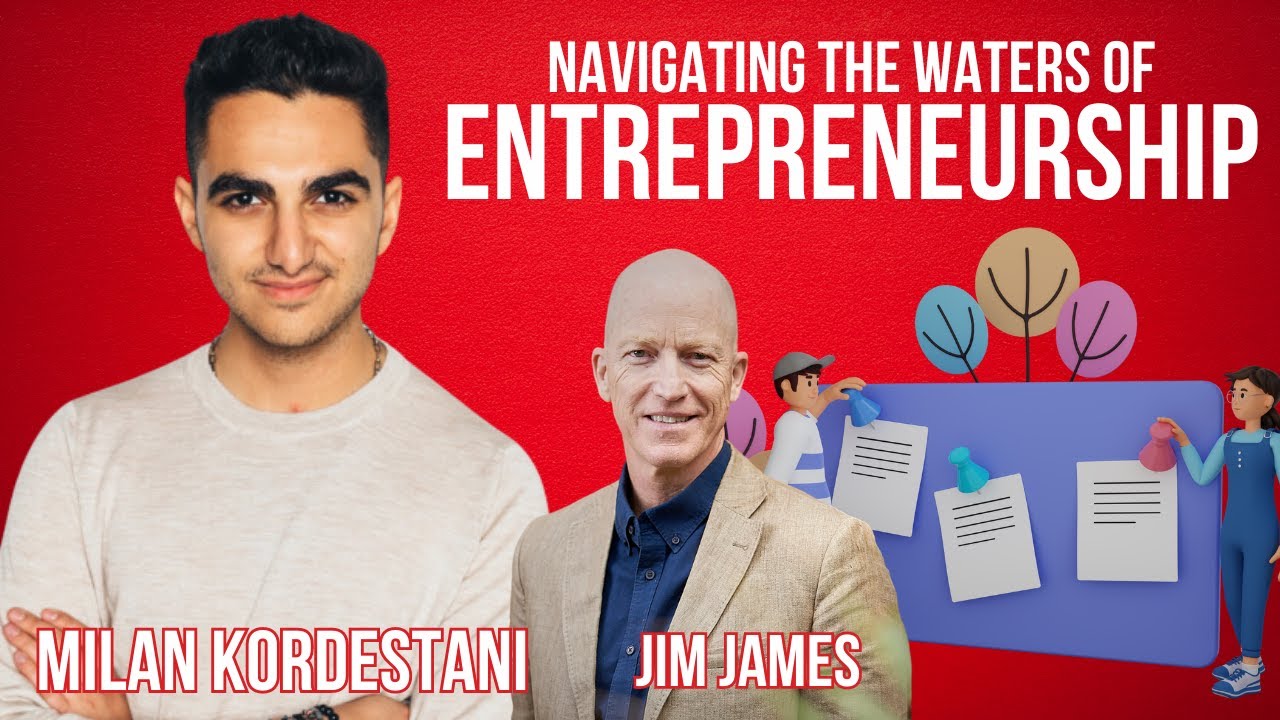
Milan Kordestani built Ordo, a platform that combines free courses from Coursera and edX with AI to create personalized learning paths for Gen Z. The platform validates skills through gig work and matches students to jobs from LinkedIn and Indeed. Kordestani stepped down as CEO to focus on product innovation rather than scaling metrics.
Chapters
Hello and welcome to this episode of The Unnoticed Entrepreneur. Today we're going to Los Angeles, California to meet Milan Kordistani. Milan, welcome to the show.
Thank you so much for having me, Jim.
Well, I'm looking forward to talking with you because we're going to talk about a platform that you've got called Ordo. And Ordo is helping young people, Gen Z, and now I believe even Gen A, Gen Alpha, to get the kind of education that they actually need and can afford to go into the workplace and the workforce of tomorrow. So, Milan, we're going to talk about how you've been building partnerships with some really amazing universities and learning platforms, how you've been gaining new young people to take your courses, and also we're going to touch a little bit about why you were the founder but now you're the chairman and you decided to relinquish the role of CEO. So, Milan, welcome to the show.
Thank you so much for having me. I'm excited to get into it.
Me too. Well, first of all, tell us about the platform and the purpose that you've got.
Sure. So I founded the company starting out when I was in college myself, and it was this clear moment of realization that myself and all of my peers were paying for an education that was just not corresponding to what the job market is demanding. And you know, there needed to be an alternative, and that alternative seemed pretty present. There's so much free information on the internet, um, from courses to education, and, and then of course there's the premium content as well that is just so accessible and helpful. And so the idea was, why don't we get— gather all of that course content together and use AI to tailor that material, um, you know, to the individual and their ideal career outcomes?
That's great. So, Odo, as in audacious, just take us through what you've got because I can see here you've got learn from today's biggest industry leaders like Google, Meta, IBM, MIT, Stanford. Interesting sort of corporate and established tertiary education.
So you've got—
yeah, so take us through what people can get. And for those people that are listening, Odo, it's odo.com. And for those of you watching, I'm just scrolling through the website so people can see it.
So we, we're partnered with a lot of these course creators like Coursera and edX and Alison Learning and even smaller providers, individuals, individual course creators. And they each have a different focus. Some of them are creating course content with companies like Google and Amazon and IBM and Meta. And, you know, there are courses that provide certifications and skills like SEO. And then there's others like edX that are working with large universities like MIT. And so we really went to these providers, whether it was Coursera or edX, and we were telling them that we believe that all of their course material needs to be able to be paired together to compound and become more effective. A lot of them, like Coursera, have really low course completion rates. And we believe that's because students are only going to want to be incentivized to complete courses when they can see the correlation to outcome. How much money am I going to make in exchange for the time I'm spending right now gaining this new skill or certificate that you're providing? So that's really the data that these providers want to get from us as a partner. And our sell to them, of course, was when we pair the courses together and we bring them from across providers, there's more value inherently in what that student is gaining to then be able to, you know, get a job on the other end.
Milan, I, I love that, and I think that is so prescient because so many courses in established tertiary education are A, very expensive, and B, very traditional in terms of the subject matter and the way they're taught. And yet, as you say, on Coursera, uh, on Thinkific, on Kajabi, there's all these courses, but they're very disparate, aren't they? How are you unifying the experience for the student? Because one of the problems is sort of patchwork quilt of certificates that are not recognized by the employer. And therefore they take the course, maybe get the skill set, but really don't have anything credible to demonstrate when they go and get a job.
So part of our work is trying to validate that these certifications have value. And the way that we do that is through gig work. We believe that certifications provide you enough validity in the job market to be able to get your first gig and demonstrate that you can create some asset to exemplify in your portfolio or your next resume that you can do the work at hand. We also have, you know, different projects that we offer that are provided from our partners as well. And these like projects and milestones allow you to create those sample pieces for your portfolio or resume. So You know, our ultimate goal is to help people land their first job. And along the way, we believe gig work is a part of that career path along with education.
Oh, how interesting. So are you tying up with also, for example, like Fiverr and Upwork and finding people the sort of gigs that they can use the certificates they've got from Ordo in the validation process for companies that are paying freelancers in that marketplace?
We're working on it. Right now we have the end of the funnel, which is we're pulling different job opportunities from places like LinkedIn, from Indeed, and so on. And those based off of, we use natural language processing to read that information and match it back to the skills that we know people are getting from completing the courses. But we are in the works of trying to figure out ways to integrate the gigs because that is, that is the last puzzle piece, I believe.
Yeah, well, look, I mean, forgive me, you've, um, already, I think, addressed an amazing, amazing need for the next generation of students. Quite a few things, Milan, there to try and talk about. I'll do it, try and do it one at a time. I'm pretty excited about what you're going doing with this. First of all, tell us, how difficult has it been to get the courses to surrender, if you like, their brand and sometimes their sense that, you know, people come to my platform or my university rather than a marketplace for education?
You know, I think it's taken— part of it is just like the right time in the market. And, you know, I think these course providers, it was for us, we had to recognize a need that they had. Which was that they had low course completion rates. Coursera, you know, they're spending all of this money creating course content. And we recognized really early on as a company that we don't want to spend money making course content when there's so much of it already out there in the world. And the problem was instead navigating that. And so we came in and said, look, we're going to solve this problem for you. We believe that we're going to go and get Gen Z in the door and show them that this course content can actually correlate to making money and landing your first job. And a lot of people graduating high school, you know, that's what they're after, a first job. They're not necessarily saying, I want to go to college because the barrier is really high, right, to go to college. And the outcome is just not what it once was.
Yeah. And I think, Milan, the completion rate at university is also not that high anymore, right? And certainly getting jobs relevant to the subject you studied, it's a very low percentage, isn't it? Tell us about the challenge then of getting your target audience, the young people, on board, because they have a lot of competition for their attention too, don't they? And they'll be anxious about whether Ordo is worth their time and their investment.
It's, you know, we started with nonprofit organizations, like we worked with nonprofit organizations that were helping students who were in this exact demographic. They don't want to go to college or they can't afford it, and they're just trying to find ways to quickly upskill, whether that's community college or, or trade schools or whatever programs that they can get into to basically get a first job. And we came in and said, there's a whole world of job opportunities that are a bit higher paying actually than just trade schools, like becoming a software engineer, where we can actually help teach you these skills online and do it affordably for $39 a month, all access. So, you know, that was, I think it's an ever-growing, you know, part of our company, right, that we have to pay attention to is acquiring new users, new customers and Gen Z and doing right by them. But it starts with going after the community and just really trying to understand their problem. And, you know, we call this product market fit in tech.
Yeah, exactly. And Milan, for those of us that are not so familiar with all the different categories, do you want to just run down the difference between a, you know, there's a boomer or a Gen X, which is, you know, I'm just in that category, the millennials, Gen Z, and Gen Alpha. What dates of birthdays are you targeting here?
So we are targeting right now 18 to 24-year-olds, which is the upper cusp of Gen Z, but also heavily millennials. I say millennials because a lot of millennials have already gotten gig work and they've, they have their first one or two jobs already and they're just looking to find their next gig or their next opportunity. And they might just be one course, one certificate away from being able to connect to that opportunity. And we really want to be able to recognize that gap and optimize for it super quickly using AI.
Okay, and then in terms of the sort of brand awareness of Ordo, as you know, the show is about getting noticed. What are you doing? You've identified those people. You've mentioned you've gone to some places where other you know students and so on are being sought. Are you having to go to TikTok? Is it Instagram? Because plainly LinkedIn isn't. necessarily going to be where you find your millennials, or is it? Where are you finding them and what are you doing to get them engaged?
So a lot of our early users were from TikTok, and we found that marketing from our own company's brand page on TikTok did not work. What did work on TikTok was finding influencers who are within that age demographic who, you know, had a similar narrative. For example, we went after individuals who were influencers as freelancers, or they were influencers because they self-taught themselves how to become a software engineer and then didn't go to college, or they were a dropout of college. And they had built an audience of, you know, maybe 30,000 people, not massive influencers, but those types of individuals. And they, you know, we worked with them to affordably create some content and that worked for us there. Whereas on Instagram, our brand page actually did work a bit better. And a lot of that content was myself making reels or, you know, just generic content about our product. I shouldn't say generic, you know, just highlighting videos of our product, of what we do, talking about the problem in the market. But that stuff worked more on Instagram for, I think, millennials, whereas TikTok was Gen Z.
Oh, how interesting. So you see the 2 platforms really cleaving for the 2 generational groups?
Yes, I do. And I also see a different way of resonating with each of them. On TikTok, you know, individuals instead of brands are able to help sell products better. Whereas I think on Instagram, there's a little bit of, maybe people are tired of influencers, but I don't know, people are willing to just support brands, it seems, and follow brand pages and follow companies. Um, so there's a bit of a difference, you know, like people will follow the New York Times on Instagram, but then on TikTok it's like, no, I don't, I want to get my news information from a human, uh, which is different.
Well, interesting. So, so the older group are supporting brands on Insta and the younger group are supporting influencers on TikTok. Is that, is that correct, Milan? Have I understood that correctly?
Yes. I mean, at least that's what we've seen resonate with our How very, very interesting.
Now, as an entrepreneur, Milan, you started this business. You are the founder, but now you're the chairman as opposed to the CEO. I'd like to hear about how that happened, why it happened. Start there.
So it happened You know, in the process of fundraising for the company, this moment of realization that I as a founder was more invested in the innovation and the creation of our product and talking to customers and all of that than I was in just chasing metrics and user growth and, you know, the fundamentals of just scaling a business and a company. And, you know, I had a co-founder at the time who was, and, you you know, who had that interest and that skill set. And so, you know, over a period of, I think, a couple months and conversations about what that could look like, if, you know, I transitioned to this position of chairman and got to focus more on being that founder and in that role, and for him being able to take over the business and focus on the, you know, the fundamentals of scaling the business, we would ultimately be more successful as a company. It's a, you know, a win-win for everyone. So, you know, it's a little bit of like an ego death. You have to kind of like get out of your own way. But I think at the end of the day, it brings peace of mind for everyone involved, especially myself as well.
Milan, that's breathtakingly mature of you though, as well, to do that. How did you communicate that to, I think you mentioned you had investors, but also the marketplace? Because One aspect of that, if you like, withdrawal and moving to a different place, it can be seen as an expression of, you know, disinterest in the business. So how did you communicate this change in role to demonstrate that you were still, if you like, vested and interested in Ordo, but just it was no longer the role that you wanted to play?
It's a great question. I think, um, I think it's just by showing up in the right ways, you know, like you have to actually show up and be present in the roles that you want to be playing. And I think communicating that constantly, communicating like what the intention is. So for me, it was really communicating that I didn't believe I was the best person to to just, you know, scale the company and focus on user growth. I wanted to focus on new features. I wanted to focus on, um, new partnerships, bring in new types of content. And, you know, that was a bit different of a goal, I think. So, um, it's, it's the recognition of that, communicating that, and saying, that's okay, I'm allowed to be interested in a different part of my business. And as we grow and those different parts grow, um, that's allowed. Yeah, it doesn't have to be the way everyone else runs their business, I guess, is the way that you run yours.
Yeah, no, I think that's wonderful and inspiring. I'm sure that your co-founder has appreciated that as well. Must have made life a lot less tense, I'm sure. Yes. Milan, is there anything that you've done with Ordo that has not worked from a PR or marketing you know, getting noticed perspective. Um, love to hear, you know, without embarrassing yourselves in any way, you know, anything that you've tried that just kind of didn't really work out as planned.
Yes. Um, from a PR and marketing standpoint.
Yeah, because there are so many things in a startup that we all know don't work. But, uh, I've only got 20 minutes. I mean, you've been very, very successful already, but yeah, just from a You know, way that you tried to get partnerships or way that you tried to get the students into the platform, ordo.com, and the things that you've learned that didn't go right?
I think early on, we just, we tried to run ads on Facebook and on Instagram thinking that that would be just the easiest way, right? You generate ads, you put it in front of who you think will be your user. And we didn't give the algorithm enough of a chance. this idea of creating organic content and seeing what it feeds you, you know, or like where you get fed up to and then iterating on that. And that really is the, like, the mindset I think that is so important in a startup is seeing data, seeing feedback come in, iterating on it and leveraging that. And marketing, I think, is the same to gain momentum. It's, you know, like seeing a couple people resonate and saying, okay, that could be my user, even though that wasn't who I thought it was. and going after it. But with advertising, you don't always get that. You just sometimes will say, okay, well, this didn't work. Maybe it's the creative that was wrong. And, you know, the idea with chasing the algorithm is it's not the creative that's wrong. You have to just be consistent, keep putting out creative, keep iterating, keep coming up with new ideas until, you know, you eventually build an audience.
Right. So just the AdWords in themselves, or Google advertising and Facebook advertising, Isn't a golden bullet in that sense. No.
Right. Especially not for startups who need to figure out who their audience is and figure out who their customer is. You know, once you've figured it out, then I think, of course, it's very helpful. But until then, it's not necessarily the best tool to figure it out.
Milan, when you mention about there being the best tool, you know, you've already built this company up and moved on. For the fellow unnoticed entrepreneur, what would you say has worked in terms of moving the needle and getting the company, you know, off the bench? And now with some amazing partnerships and a growing number of students, what would you say would be the number one tip you'd give to a fellow unnoticed entrepreneur in my seat?
I think being able to really articulate the problem and why everything else in the market hasn't solved the problem. I think that helps a lot because once you can articulate that well, I think it gives you a sense of confidence in your problem solving when you start to think of the solution, when you explain it to other people, and ultimately when you want to then sell it to your customer as a solution.
And do you want to just express that as an example with Ordo.com? What would that sound like to us that haven't been familiar with that?
Sure. So for auto, you know, we could think of all of these different problems that exist. Well, resumes might be broken. Well, job boards maybe are broken. You apply to them and they don't tell you why you didn't get the job. Well, the education can be broken. And so you start to see all of these different disparate parts and you could think, well, okay, maybe I'd need to just Create bite-sized content piece and teach people content. And you know, like that's an example of a company that types of companies that do exist. But for us, we said, you know, people have a problem navigating the content that already exists, and that is the issue. And when we look at our target customer, we think, okay, you know, they're 18 years old, they're leaving high school, and the standard route that society has pushed as college is no longer as appealing as it once was. That's a scary feeling. What do I do now? Do I do I want to go to community college? Do I want to go to trade school? How do I even make that decision? So we really focused on the navigation piece, and that was kind of what we that's our secret sauce, you know. And then that that allows us to then understand everything else that we offer, whether it's resume support or the education. They're tertiary to this. this goal of navigating your career path.
And Kordistani, you've navigated our conversation beautifully and given me a wonderful education. Thank you so much for joining me from Los Angeles today.
Thank you so much for having me, Jim. It's great talking.
Yeah, it is great to listen and hear your story. So for those of you listening, and especially for those of us with younger children who are coming through A-levels and going to university, Odo.com sounds like just The sort of approach that Ken Robinson, the great educational theorist, would have really celebrated as well about giving young people new tools to embrace the new future. So really inspiring and really positive. And so if you've enjoyed this, do please share it with a fellow unnoticed entrepreneur. And until we meet again, I just encourage you to keep on communicating. And thank you once again for listening.
Thank you, Jim.
More from Jim











2 people, infinite agents, 1 billion dollar idea #AIAgents #Startup #Productivity