Free marketing advice for entrepreneurs given by other entrepreneurs.
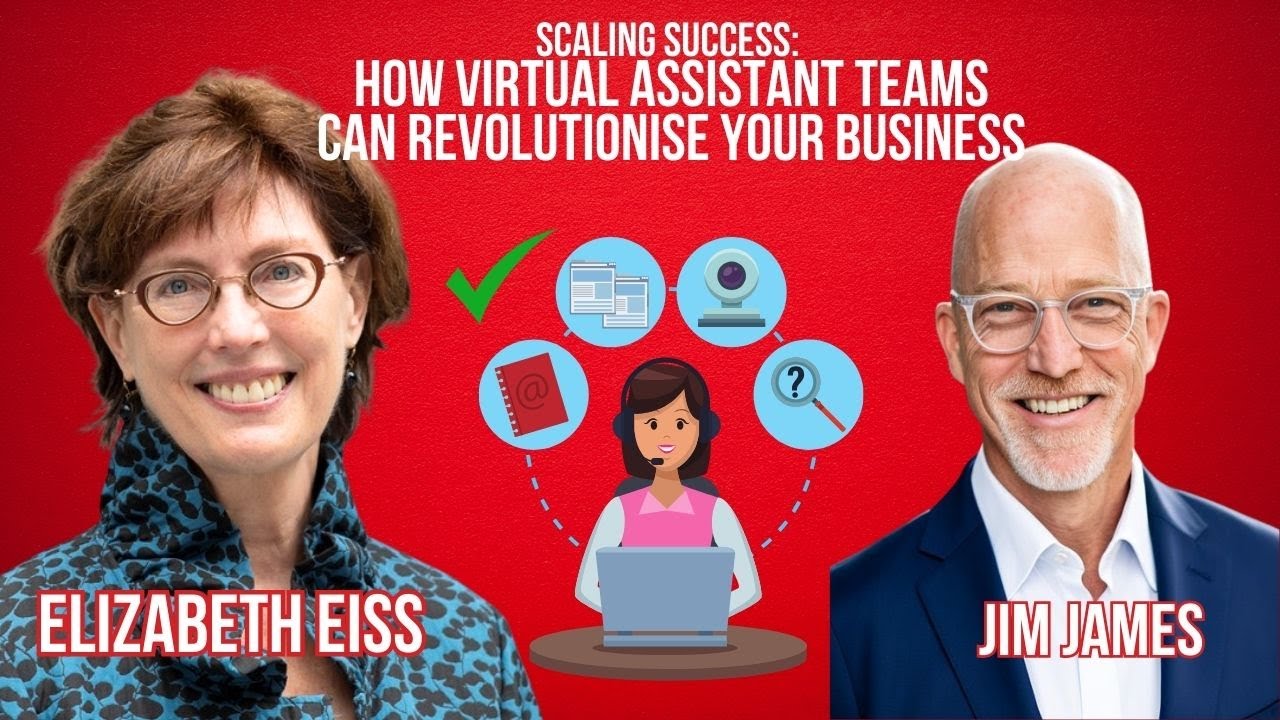
In this episode of The Unnoticed Entrepreneur, host Jim James interviews Elizabeth Ice, founder of Results Resourcing, about how solopreneurs and small businesses can leverage virtual assistants (VAs) to scale. Elizabeth explains her company’s mission to source, vet, and curate pre‑vetted VA teams rather than individual freelancers, emphasizing the benefits of skill breadth, capacity, and rapid 24‑48‑hour deployment. They discuss the pain points of traditional freelance platforms (Upwork, Fiverr), the shift from task‑oriented to outcomes‑oriented VA work, and how AI will automate low‑level tasks while human VAs provide critical thinking and oversight. Elizabeth introduces an “ROI of Time Calculator” that quantifies an entrepreneur’s hourly value (average $166/hr) versus the cost of a US/Canadian VA ($45/hr), illustrating the potential revenue boost when non‑core tasks are outsourced. The conversation also covers pricing rationale, the importance of cultural fit, effective communication over tools, and a strategic hiring mindset—advocating an offensive, value‑driven approach rather than defensive cost‑cutting. Elizabeth recommends Thomas Friedman’s book Thank You for Being Late as a source of inspiration for adaptive entrepreneurship. The episode concludes with contact information for Results Resourcing and a call to action for entrepreneurs to consider VAs as strategic partners.
Chapters
Our question for you in this age of AI is the VA DOA. I know, forgive me for all the acronyms or the TLAs. Too many years living in Singapore. I'm joined by a guest today in New York who has a company called Results Resourcing. And for over a decade, she's been working in the virtual assistant space. Got a unique slot and angle on that. So Elizabeth Ice is joining me. We're going to talk about really the power of virtual assistants. We're also going to talk about how that's changing due to the impact of AI. And also she's going to show us a very interesting calculator that helps us to understand the real cost of not having a VA and trying to do the work ourselves. Elizabeth, welcome to the show.
Thank you so much, Jim. Great introduction.
Thank you so much. Well, I had a second, uh, chance because Elizabeth and I actually were on the mic a couple of weeks ago, and then we had trouble. And in fact, turned out that her router was down, so she's back, which is wonderful. Uh, and a real person came and fixed it. No AI, no VAs. There's still a role, Elizabeth. And you serve real people who are entrepreneurs, don't you? Um, so Tell us a little bit about Resource in the whole VA space and why entrepreneurs come to you to get their virtual assistant needs met.
Well, you know, at the bottom line, I'm all about helping small businesses scale, in particular solopreneurs, as well as small businesses with, say, maybe less than 10 employees. And it's the backbone of most economies. 99.9% of businesses in the US, for example, are solopreneurs or small businesses. So, they're really what makes the economies tick. And so, that's my particular focus is how do I help those entrepreneurs get noticed and have the impact that they want? And I really discovered over time that really by helping them have the resources, the talent they need, to help them achieve their mission is the way to scale. And one of the best ways to really bring that talent on cost-effectively is by hiring freelancers because they're skilled, they're available, they're flexible, and they don't come with all the burdens of employment and the commitments of employment. So really, the key is finding the good ones. And that's really what I've been focused on. And that's what they come to me for, is to find, vet, and curate freelance talent for them, specifically virtual assistants.
I was going to say, because finding a VA on Upwork, for example, or Fiverr, it's a bit of a lottery, isn't it? And if you post a job on there, you can get 101 applicants. I personally had a bit of a battle a little while ago with some people who look great in their portfolio, and I think it was just like a different person entirely actually doing the work, right? And you put the money in escrow, and then the didn't turn up and they didn't do the work. Elizabeth, how does Results Resourcing save entrepreneurs like me going through what in the end was quite an expensive exercise in terms of time? I managed to battle and get my money back, but, um, it was an unpleasant experience. So how do you help with that?
Well, honestly, that was kind of my inspiration for creating Results Resourcing. I was hiring freelancers myself And I found the process frustrating because solopreneurs and small businesses, they talk to technology, just what you described. You type keywords in and that's more than 100 profiles show up, thousands of profiles show up, and you use whatever filters are available to sort through. And then you try to interview, do all this work to find out, try to find out if it's the right person. And it is a crapshoot. And so, my motivation was how do I use my background, which is I have a large corporation background running operations, very much an operations expert, workflow expert. How do I make that simple, easy, and quick for small businesses? So that's what Results Resourcing is. We want to resource results, which is why we named the company that. And we find, vet, and curate virtual assistants. And in the early days, we actually curated individuals. But small businesses kept coming back to us saying, well, we like that first individual because you interviewed them. You made sure they were a good fit for what we needed, kind of like a staffing agency does, but focused on contracting. And then we were also very efficient because we're a technology platform. But they came back and what they said to me is they wanted competent, reliable, nice, and they wanted it right now. And I also noticed in the course of serving these clients that they would come to me with something on fire. And that was what they needed, put that fire out, and we would help them do that. Then when that fire was out, they needed something else. But that first freelancer they hired to put the fire out wasn't the right person to fight the next fire or prevent the fire. And so what that really led us to do was to focus on matching people with teams of Preformed teams, basically virtual assistant agencies. And what's powerful about that is that, A, we pre-vet them so we know their quality, and many actually have done work for me. But essentially, they have broad skills. So, it's not just one person that could do something well because there's no such thing as a unicorn. But they have separate people that are really skillful. It might be bookkeeping, CRM specialists, copywriting, blog writer. SEO, WordPress web developer, they're all on virtual assistant teams. And so as a business owner comes in, they get matched with the right team. And as their needs shift, that team understands their business and can seamlessly make the change to a different freelancer that might be needed for a short-term project. And so that it's just really a terrific way to get access to skill breadth. skill depth. And what I haven't mentioned is capacity. Because if you hire an individual, that person wants to work a reasonable number of hours every week. And perhaps they have other clients. So, if you need suddenly 10 or 15 hours for a project, they don't necessarily have it. They also get sick. They want to take vacation. You know, all kinds of things like that. And the team structure enables capacity and the flexibility of hours as you need them. So, we've built a model around competent, reliable, nice, and now. We can stand up these pre-vetted teams in 24 to 48 hours.
Elizabeth, you've hit on a number of different pain points for entrepreneurs like me. You know, I've been working with the same entrepreneur, uh, or same VA who actually became an entrepreneur, you know, 2 years now. And, and she's wonderful. She's just taking maternity leave and she's hired, you know, a new person. Then there's been the training and the pain of, of that. Um, and then if I want to scale, If I had my own company, I'd be hiring and training, and then those people would be training. Um, so when my individual VA hires new people, that new person is actually kind of out of my control. The hiring process, uh, and the performance continuity is actually really a challenge, isn't it? You— I didn't realize that you can hire, if you like, teams of VAs. And is that Companies that have got sort of a group of VAs, or is it individuals and you're bringing them together, if you like, as a virtual team, if I can use that expression, by picking sort of a dream team and collating them? How does that work?
Well, you know, both are possible, but we have really focused on finding business owners that have those agencies. And the reason I've chosen that is because, you know, I personally don't want to get involved in the day-to-day operations, you know, of a client engagement. And I think it's more powerful to have a business owner, another entrepreneur that owns and runs the agency, the ownership, the common experience with the business owner they're supporting. That's really powerful. And to your point about, you know, your VA being out is part of what I vet is the leadership and management abilities of the leaders of these companies. So I understand their methodology, how they train people, how they— what their processes are. So I'm confident that when I match you to somebody, they're going to follow a familiar process that I have faith in. And so, you know what, while I may not know all of the team members, I know how the team members came about. And some of these team members are actual employees, but actually the vast majority are preferred contractor relationships they have with other freelancers of the quality that they expect. And that makes those teams really dynamic because a couple years ago, did anybody know about AI? No. But VAs are— I'm looking for future-looking VAs that are anticipating what's coming into the market. So they can help the small business navigate those changes.
Well, Elizabeth, you have mentioned the dreaded word AI, and I think we have to talk about that because some people are thinking about replacing the VA who's maybe in the Philippines or in Latin America, for example, or in Africa, with AI. I've got to get your view on the difference that AI is going to make to this sort of opportunity to outsource your work.
Well, I would not use the word dreaded AI. I think it's using AI appropriately. So my view of this topic is this. First of all, I view virtual assistant as a professional service. It's not clerical work that's done over the internet, regardless of where in the world it's done. You know, what you're looking for are professionals that you can have confidence in, trust in to do your work, because virtual assistants are great at backroom support, operational, operational. But if your operation doesn't work right or is unprofessional, it's going to affect your brand and your business. So it's very much a professional service. And I think that people need to expect more. from the virtual assistants they hire. And if you hire a better quality virtual assistant, there's less management because they're going to have a sense for your, your brand, your process, your values, whatever it might be. So back to the AI question. I think about virtual assistants, you know, as this spectrum. And on the low end of the spectrum are task-oriented work, you know, a workflow, data entry, stuff like that. And that's a lot of work that's often been outsourced overseas because the labor is less expensive. And on the other end of the spectrum is outcomes-based virtual assistants, which is really where I'm focused because that's the work that will help an entrepreneur to scale. Somebody that's creative, a critical thinker that will think outside the box but still check in, you know, and do, do work as, as, as is requested, but it's very much— there's a lot of ownership of the results and very professional. So back to AI, what I see happening, and in fact, as I believe I mentioned to you earlier, if you type into ChatGPT, what's a virtual assistant, they're going to tell you a digital virtual assistant. And it's Microsoft, Amazon, Google, and Apple. And people don't even think twice about Alexa or Cortana or Siri. But those are digital virtual assistants. On people's phones or in speakers or whatever it might be. And it is a multi, multi-billion-dollar opportunity for these big companies. And they're the ones with the money to invest truly in AI and, you know, all the chips and the training that's required. Well, I think what's going to happen is those digital AIs are going to become more and more powerful and they're going to take over the lower end of the spectrum. The task-oriented stuff, workflow, that's all stuff that computers are great at because at the end of the day, no matter how you personalize AI, it's a computer and it is following programming instructions and it's going to use the information it's trained on. And there's some interesting things happening in that arena as well. But back to— I don't think human virtual assistants are dead on arrival because There's always going to be that frontier where you need a human to step in and fact-check, or frankly, even to ask the right questions of AI. Because if you don't ask the right questions, you're not going to get the right answers. So I think there's a huge— I think it's the power is in the two combined, and it's knowing when to use AI for efficiency and to gather the broadest set of information to make decisions upon. But ultimately, I think that's the human sorting through all that. And to hand it off to the entrepreneur to decide.
Well, I think also, as you've mentioned, you know, AI is great at doing tasks, but if you're growing a business, your management of those individual AI bots can actually become quite overwhelming. And it's possible to take a huge amount of time to try and train these bots and other tools, isn't it? And still not get quite what you're looking for. Elizabeth, what about the opportunity cost that you sometimes talk with entrepreneurs about? Because there is a strain in all of us. This is like, I'll just do it myself. I've got an extra, got a couple of hours away, or I could do it this weekend when no one's watching. What do you do for entrepreneurs that are struggling with the concept of using VAs? And I think your concept of using teams is really good because It makes it seem less tactical and more structural in terms of how you want to build your business rather than just solve a particular task.
Well, I think one of the things I admire most about entrepreneurs is how scrappy they are, how resourceful they are. But at some point, that skill is actually a liability because what I think entrepreneurs need to be focused on is What's their big idea? What, what is the value they're trying to bring to the world? And that's where they should be spending the bulk of their time. So we actually developed this little tool called the ROI of Time Calculator because it helps people to actually put a number to the value of their time because time is finite. And, you know, you want to spend it a number of different ways on your business, but also in your family or relaxing, whatever it might be. All those things are important to a healthy human being. And so with the ROI of Time Calculator, it's— it'll be in the show notes. So welcome anybody to use it. But basically, it starts with what's an hour of your time worth? And no one ever says $10. And the average actually is $166 US. And after that, we ask what, what is it you deliver to your clients? And it's not that I particularly care, but I want that person to be focused on the value they deliver. And then we ask how many hours a week you work. And then what percentage of that, how many hours a week do you work on working with clients or delivering that value? And the average is 43%. So, 43% of everyone that's ever taken this survey is spent on the core value of their business that develops revenue and delivers value.
Wow!
And it's 57% is on invoicing, customer service, blog writing, social media. Researching AI tools, whatever it might be. And so my philosophy basically is if you can convert some of those hours that you're doing it yourself to an expert that will do it better for you, whether it's researching AI tools, which high-quality VAs are very good at, or it's your bookkeeping, or it's your blog writing, or it's social media, whatever it is, you know, outsource to somebody that loves to do that backroom stuff that's actually a burden to you. Elizabeth, and creates time and allows you to create more value.
Yeah, that's a wonderful tool, and we've got it, uh, on the website. It's resultsresourcing.net. And if anyone wants to see it on the YouTube channel at Jim A. James, you can also see it. So I think that's brilliant. If it's 43% on average is spent actually delivering the value, plainly you can double your revenue For doing no extra hours, if you then outsource, and presumably, Elizabeth, if the average value per hour is $166, what would be the average VA cost? That's the missing bit of this equation.
Yes. Well, for us, we specialize in US and Canadian freelancers, and that's a choice we made because, again, our clients came to us looking for people that understood, grew up in the culture here. Understood how business is done here, knew the difference between Arizona and Maine, you know, or Toronto and British Columbia. And, and, you know, it's not a matter of intelligence, and tons of people speak and write English super well all over the world. But it's just like, I wouldn't be particularly effective in the Philippines or in Africa. I mean, it's just, it's just the nature of the beast. And so that's, you know, so our focus is there, and the talent is higher price, you know, our Our basic virtual assistant rate for our basic program is $45 an hour. So, it's more than offshore, but you get a different value proposition, an outcomes-oriented value proposition. But even at $45, if you compare that to $166, that is the margin you can capture by converting more time.
Yeah.
And that's how you afford a virtual assistant. 'Cause a lot of people do say to me, I don't think I can afford it, but they need to take that leap of faith that they can convert those DIY hours into delivering revenue.
Well, and I think also what you've identified there is that a VA isn't necessarily a low-cost replacement. It is a contractual replacement to hiring someone that you would maybe hire for your own business, but for maybe you haven't got the office space, Maybe you haven't got the ambition to have overhead fixed because the revenue's not consistent, right? So it's viewing virtual from the concept— from the context of not just out of sight and out of mind and therefore low cost, but rather more of a variable cost to your business, isn't it, Elizabeth? So it's a mindset shift in how we perceive that support for business.
Totally true. And looking at it as, As I said before, it's a professional service that can help you really add to the value of your business. And another funny example, but I mean, one thing that's important in terms of a business, especially if you ultimately want to sell it, is documenting your process. That's a business asset. But most people will tell me, I'm not process-oriented. Well, a VA is. They will literally interview you. to get your process ideas into some sort of a document. And then, then you've got it. Makes it easier then to choose tools, to delegate. I mean, it's just to me, it's a perfect circle of how VA skills complement the entrepreneur that wants to focus on that unique value they deliver to the market.
Yeah, that's wonderful. And you use VAs with a tool like Loom, for example, to record. Why don't we just think then about how an entrepreneur best manages the VA? Because at Results Resourcing, you help to find that VA individual or team. Are you then managing the workflow between the client and the agency, or is the client needing to use a tool, whether it's Asana or Zoho Projects or something like that, Monday, any one of these many platforms? Just tell us, how does that work? Because I think for many people, adding VAs sometimes can take as much time as not having them because you end up with more systems and you have to do more documentation and more meetings to train them. So do you want to just tell us what makes an effective working relationship? What should be in place?
Well, you know, those are all problems that crop up all the time. And to me, the secret is picking the right VA. Because if you pick the right VA, they, they will know the business skills that you need. They will know the tools that you have, if you have a CRM system or don't, a mail, mail newsletter system, and whatever, whatever systems you have. And you don't need to have an Asana, you know, to manage a VA. It can To me, it's humans, it's talking, it's meeting regularly, it's clearly articulating priorities. And frankly, the VA will onboard the client. They will— I mean, they support so many clients professionally, they've got processes for onboarding. So even if it's an entrepreneur's first time, they're working with an experienced virtual assistant team that does this all the time. And so there's a process that they follow to, you know, clearly get the work plan together, to meet regularly, to send invoices that are clear. So, there's line of sight between the work that was done to the invoicing that the invoice that they get. I could go on and on. But at the heart of it, it's, it's a communication. It's not a tool. And then you use tools to document and drive results. But it's not required to do all that. And but you do, you do raise a really good point that in the DIY world, entrepreneurs will see ads for this, this, this, and it's a silver bullet for everything. But then you end up having 10 silver bullets and which one do you use? And so, you know, a lot of times a good VA team will help you sort through that and even consolidate your tools. And many people come to us with, say, a CRM system and they have it set up to the bare minimum. And what the VA team can do is help you optimize that. So now you're leveraging the contacts in that system. You're using— you've built workflows with the help of the VA team to send mailers out, to follow up with clients, to all sorts of things these systems can do. So you don't necessarily need another new tool. You need to optimize the ones you already have or buy one that will really help set you up for success. And since VAs do this all the time, they're familiar with the tools that work the best and what the problems are and the insights for how to take them to that next level.
And I think also what you're identifying there really is that the VA can be a guide as much as the recipient of the work because, you know, my experience of exporting work to Asia and the Middle East has been very much that I have to, in a way, have a junior member of staff, you know. And I used to run a company in Singapore, China, and India, and I had layers of management, and I didn't really get involved in what the junior staff were doing after a few years. You have people in between, and I found the frustration with the VAs that I found on Upwork, for example, is that I was back to managing what felt like very junior members of staff.
And that's— That's exactly what they are. And, and again, This, that's one of the reasons we've emphasized outcomes-oriented professionals as well as US and Canadian for our, for our market, because it doesn't require that level of management. They know how to manage. They run, they run a business themselves.
Yeah.
They are entrepreneurs. So they, in a sense, are standing in that client's shoes and they're supporting multiple clients and they've got really this broad base of experience to draw upon. And the goal is to minimize the nonproductive, non-revenue-generating management time. So it's just more collaboration time and making sure that work's getting done the way the business owner wants.
That's really a revelation, to be honest, Elizabeth, because VA for me had always been a bit of a slippery slope. And I'm sure for many people listening to the show, We've almost now got to the stage where I have, where I, after my last experience, said, I'm not going to hire a VA. I'm only going to use AI because I can find an AI tool somewhere that does 80% of what the VA was doing. But seeing it as a strategic partner that can take operational parts of the business away from me is an entirely different way of viewing. The VA experience. Elizabeth, if there's a, if you like, a number one tip that you would give people, entrepreneurs looking to use a VA and a VA team, importantly, with all your experience at Results Resourcing, what would that advice be?
Well, I think it goes back to the value of time and really taking a hard look at how you're spending your time. And letting that be the driver of some of your decisions. Because if you want to scale your business, you can't do it yourself. Or if you've got 1 or 2 people, you've got to be able to grow that in a sustainable way, in a way that's got resources you can count on as you grow. And so, I think doing that, they're going to come up with a cold hard fact that they're not spending enough time growing their business. They're doing all this other stuff. Because they technically can do it. And then it's frankly what you just described about the VAs that you've used. That to me is a defensive hiring decision. Oh, I'm going to get somebody cheap because it's not going to work well. So, I'm going to minimize my loss as opposed to, okay, I'm going to find somebody great that can make a difference to my business and I'm willing to pay a little bit more for it. not ridiculously more for it, but pay a little bit more for it because that person is going to have my back and help me build my business and bring experiences that person has across industry over the years and as a fellow entrepreneur to help scale the business. And so, I think that's kind of the frame I put on it is valuing your time and stepping up and finding the right person to help you step up your business because it's They're there, you know, but being defensive is not going to get you where you want.
I love that. Great advice from New York. We should be more— offensive sounds a bit wrong, but a bit more assertive probably is the word I'm looking for. More assertive. Elizabeth, you're plainly someone who thinks a lot about, you know, all of these matters and others. If there's a book or a podcast that you'd recommend that you find stimulating, what would that be?
Well, of course, you would be a podcast I would recommend.
Oh, you're too kind. I didn't pay Elizabeth to say that, by the way.
I didn't expect to say that, but I couldn't resist. But I would say the book that has been profoundly influencing to me is a book from 2016. And it's called Thank You for Being Late: An Optimist's Guide to the Age of Acceleration. And it's by Thomas L. Friedman, and he's a New York Times columnist, and he writes actually a lot about politics in the Middle East. But he's also a really terrific writer and very interested in the world and technology. He also wrote the book, Thank You for Being— The World Is Flat.
I was going to say he wrote The World Is Flat, right?
Yeah. So this is a later book. But there's 2 things about the book that I found so inspirational. The first is that he talks about the best entrepreneur that he knows of, and that's Mother Nature. And Mother Nature just adapts, doesn't judge, just adapts. And whether we like the human impact on the planet or not, Mother Nature is not judging. Mother Nature is just adjusting. And I think that's a great lesson for entrepreneurs because the world's always changing. We don't control. And it's like, okay, if we want, if we're purposeful about whatever we do, how do we deliver on that purpose no matter what's happening around us? So, that's lesson number 1. The second really leads us back to the AI question because, again, bear in mind this book was written in 2016. But early in it, he talks about this interview with Astro Teller of Google at the time. I don't know if he's still there or not. And he basically put it on a napkin. The Age of Acceleration. And on the— so there's a chart, and the upward curve is what he called technology, which would equate to artificial intelligence because it's all these things are artificial computer systems that produce results. And then on the lower axis was humans' ability to adapt to technology. And it's not a flat line, but it It's not— it doesn't keep pace with the age of acceleration. And so what he talks about is if this steep, you know, hockey curve is artificial intelligence, then that delta between that and a human's ability is what is the opposite— intelligent assistance. And that's what I'm all about, is I want to provide intelligent assistance, which only can be provided by flexible, creative, problem-solving humans to fill that gap. So, that was one of the things that inspired me at the very beginning in 2016. I read that book. I started my company and launched my platform in 2017. So, that's a fabulous book.
Elizabeth, thank you for that. Well, and we were saying at the beginning about how to pronounce your surname is Eiss, E-I-S-S. And you are as cool as ice. Thank you for coming on the show. If you want to find out, where can they get you?
Obviously, on resultsresourcing.net or .com. It works both. And the easy way to remember that is because we resource results. That's why we named the company that. I'm also on LinkedIn. Happy to see you there and would love to— we always start with a free consult. So, whether you choose to work with us or not, I love helping entrepreneurs figure out how to scale, so please connect and let's have a call.
Elizabeth, thank you for connecting with me and coming on the show. Thank you so much for joining me today.
Thank you.
Well, we've been all the way to the Big Apple to talk to Elizabeth Ice, wonderful as well. And for me, really a mindset shift about VAs not being a low-cost, slightly anxiety-ridden hiring process and really being the potential to being a variable contractual arrangement with professionals. And I think that's a great takeaway, and that those people will be essential with AI or not AI, because business will always need people to solve problems, just like Elizabeth needed someone to come and fix her router for her a couple of weeks ago. Right. Thank you for joining me, Jim James, on this episode of The Unnoticed Entrepreneur. If you've enjoyed it, do please leave a review on your player and do share it with a fellow unnoticed entrepreneur, because we're We don't want to let any entrepreneur go unnoticed. Until we meet again, keep on communicating.
Thank you.
More from Jim











2 people, infinite agents, 1 billion dollar idea #AIAgents #Startup #Productivity