From Air Force to Millions How Eronica Dev | Conquered Government Contracting
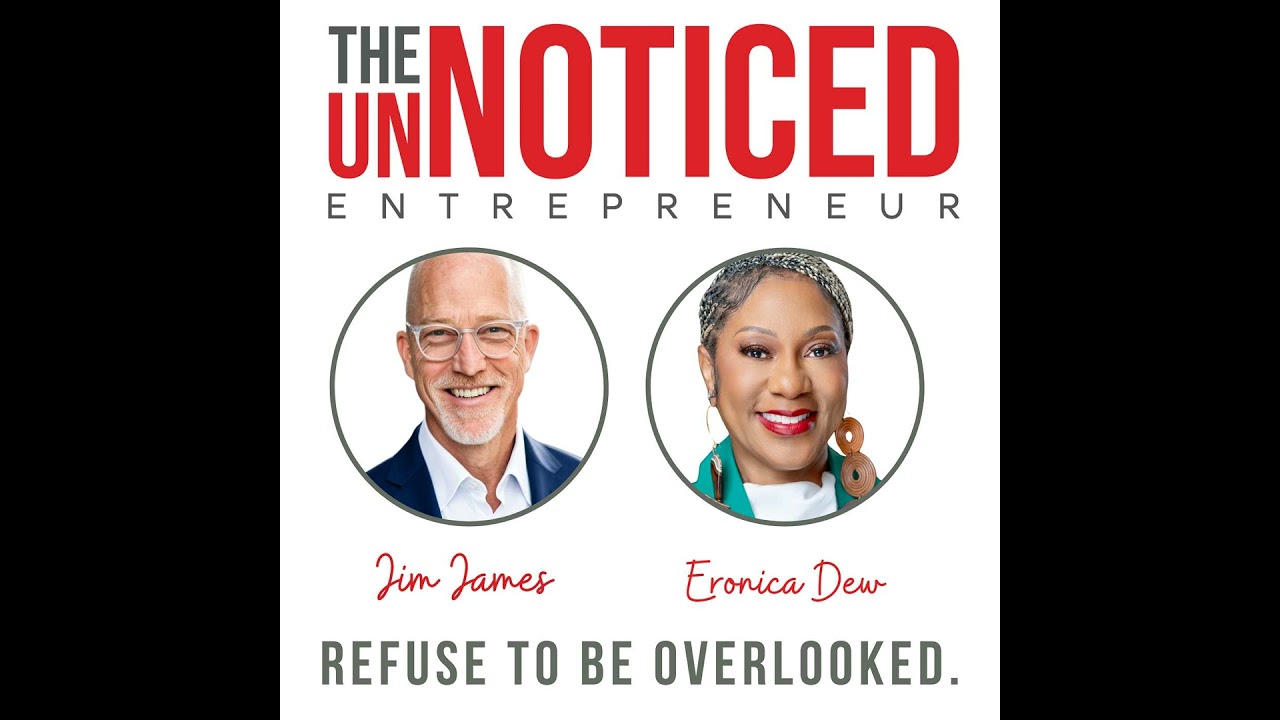
Eronica Jew, a former Air Force officer, built B.E.S.T. Solutions into a multimillion-dollar federal contracting firm by leveraging her SDVOSB certification and proposal-writing expertise. She won a USDA contract during COVID by recycling consulting revenue to cover payroll, then scaled through disciplined hiring and a win-plan process adapted from major contractors.
Chapters
If you're interested in winning large government contracts or B2B contracts, then my guest today is someone that you're going to want to listen to. She started her business in 2018, just before lockdown, but managed to build a business winning millions of dollars worth of government contracts. And she's going to share with us today how, as a Black woman in Maryland, She has managed to build a multimillion-dollar contracting business serving mainly government and defense contractors. Eronica Jew, welcome to the show.
Thank you, I appreciate you having me on.
Well, it's wonderful to have you on the show because you've managed to transition from corporate to winning contracts from home without an infrastructure, without a backing. You've managed to overcome the cash flow crunch because you managed to win a contract And you had to then hire the people. So we're gonna talk about how you navigated the early, early days of winning a business that frankly was bigger than your company, right? And then how also as a woman entrepreneur, you've managed to build as a Black woman in what I imagine is a fairly male-dominated industry, you've managed to succeed. You've got one minor mistake that you share with me that you've made. We're gonna talk about that, but we are gonna talk much more about your successes. So, Eronika, tell us first of all about BES and which clients do you serve and why did you start the business?
Yes. So, I started the business in, well, I created the business in 2018. I was still in corporate America working for Lockheed Martin and Lockheed Martin decided to sell our service line to Leidos. And I made up my mind that I didn't want to go to Leidos. I was going to go home and do something else, take care of my kids, because I worked in the proposal world where I worked 12, 16-hour days just to get a proposal to the finish line for the client. I went home. I was home for about a month, and I got a call from another colleague who did not move to Leidos. They moved to IBM. And they said, hey, Aronica, we could use you over here. We need your help as a proposal manager. Would you like to join the team? So I joined Lockheed Martin for an additional 3 years and worked in their business development department as a proposal manager, helping both Lockheed and IBM win over $3 billion in federal contracts. And The only reason why I left IBM at the time was I was passed over for promotion, and I was thinking to myself, that wasn't fair. So I said, you know, I'm just going to do the same exact thing I'm doing for IBM for myself. And I became a consultant working for large firms, medium-sized firms, as well as small firms. As their proposal manager, because most companies don't want to carry that overhead cost. So they hire consultants to come and do their proposals for them when they decide to pursue a deal. So I was consulting and this was September of 2019. I was doing well. I had done 3 deals for this one particular company, and then COVID hit.
Yeah.
And everybody was home and I was in the consulting work, had slowed down. And I said, well, I'm going to pop open my computer and see if I can bid on a deal for myself. And I did that. I went to SAM.gov, I opened it up, the SAM.gov, looked at all the opportunities, and I narrowed my search down to service-disabled veteran-owned. Because B.E.S.T. is a service-disabled veteran-owned company. I am a former Air Force veteran of 10 years. And so when I was— when I created the business in 2018, it took me about a year to get my business certified. And so when I jumped ship and left in 2019, I leaned on that certification and I won a deal with the Department of Agriculture in the state of New York. And it was a contract with 13 full-time employees. It eventually grew to 16 employees around the state of New York supporting district conservationists who would go out to the farms, test the soil, and also give farmers loans. So I had general clerks, That, that I supported. I had never met them in person. I recruited my entire team virtually because it was in the height of COVID Um, and when I initially won the deal in 2020, I think it was September of 2020, I was like, oh my God, I won. But then I said, I don't have the money to make payroll. How am I going to do this? And then I said to myself, oh, this should be easy. I have a $2.9 million contract in my hand. I'm going to go to the bank and surely they're going to give me a line of credit so that I can make payroll. Well, I found out really quickly that was not the case.
Yeah.
Banks were like, okay, your credit is good, but you want a line of credit of, you know, $80,000 to $100,000. I'm sorry, we cannot help you. We don't know who you are. You don't have a business. Uh, credit score, uh, you're a new business to the market, you have no past performance, so we don't want to take the risk. So what I had to do to make that payroll, um, was to continue consulting for my clients. And I took that consulting money and I recycled that cash so that I can make payroll.
Wow.
And, and that is what I did for pretty much the last 3 years was building revenue or making profit and never spending the profit and just recycling the cash so that I never had a hiccup on the payroll because the government could at any day, you know, not pay an invoice and then what would I do, right?
So, to some degree, well, it's amazing That you managed to pull that off, Veronica, because as you say, you almost got a fish that was too big to swallow, right? I mean, and that classic challenge of overtrading where you've got more business to serve than the size of your business is amazing. How did you go about then recruiting the staff? Because if we just go through the background of that, when I started my first business a long time ago now, but in Singapore, People didn't want to work for a company with someone who didn't have a track record, same as the banks. So why don't we just talk about, from a recruitment point of view, how do you get people to trust Veronica Ju, who's got this company, Best, that's won a contract from home to serve the government?
That is a very good question, and I have a very good answer. So, Sales. I'm a very good salesperson. And then I hired my partner who was a recruiter in the Air Force for 16 years. Right. And if you can recruit folks to go into the Air Force to, you know, whether it's do supply, be a police officer, work with the bombs, I believe, you know, I really trusted he could hire general clerks. To support USDA. So, we used several tools. Our main tool was Indeed. We posted job descriptions and folks would respond to those job descriptions. But in the meantime, I was in the background building the infrastructure. I was looking for healthcare plans. I was looking for 401. I was looking for our payroll system and I stood all of those systems up and it became very desirable for those who were looking to work for our company because one, although we were tiny and small, they were on a federal contract and in the federal government they observe all holidays. So at the time before we added Juneteenth to the list, there were 10 holidays. So it was 10 paid holidays because you were working for the federal government. That was one benefit. We pay 50% of your healthcare. The employee would pay the other 50%. We pay 100% of your life insurance. And then we have 401 participation and bonuses and incentives. So that is how we got folks to say yes to our company.
Nice. So to some degree, you back-to-backed the government benefits to your employees, right? So they were in effect working for a government, but maybe with some of the flexibility of working for, for BES. That's amazing.
Yes.
Obviously, you've built a company, you know, and you've gone on to win more contracts, Veronica. It's not just the one contract that, that you won in 2018.
That's correct.
Tell us then, how have you been building the brand for BES? And that's besolutioninc.com is the web address, isn't it? So, yes, tell us about how you've gone about building the brand so that you can win more clients and scale, because now you've got a bigger team and a bigger organization. I'd love to hear how you've gone across the chasm to build the brand.
So building the brand has been a bit of a challenge, but we're getting there. I was able to eventually get that line of credit that I needed to help make the payroll. So the capital that I had, the cash on hand, was able to bring in a marketing team as well as expand my corporate staff to free me up to Start attending networking events. So I started with the county in which I lived in Prince George's County, Maryland. Although my office is in Oxon Hill, which is inside of Prince George's County, I started attending networking events and making connections, getting my name out there, handing cards out. Every single card I received, I made sure I sent a message back. And to this day, I follow up with those Very same people that I receive cards from. But I, I sell that I am a proposal manager. I know what winning looks like, and that has helped my marketing and the branding because now people are like, oh, she knows how to parse a federal RFP. She knows how to build the artifacts to win a deal. She knows how to price it because I did it for Lockheed. I did it for IBM. And so, in my marketing strategy and branding as a thought leader, I talk about how to procure government contracts. And it grabs the interest of not only the federal clients who I'm targeting, but it also grabs the attention of small, medium, and large companies that are considering partnering with me.
That's fantastic. Veronica, it would be remiss of me not to ask you to give us some insight into what is that process that these big companies like Lockheed have that you've learned? What are some of the ingredients that maybe, you know, an entrepreneur running their own business selling in B2B could use in their own business? I'd love for you to break that down for us.
Yes. What we use in the large companies, and of course, I've adopted the same processes for my small company, is building a win plan, right? You need that. You need to think about what is your value proposition. You know, usually there's typically 3 to 5 value propositions that you develop before you start writing and developing your proposals. And those are things that you are going to offer. to the client and to make you different from other competition, right? So you start with your value proposition, and then you do a SWOT analysis where you start looking at your competition's strengths and their weaknesses. You kind of know who's going to go after the work, especially when you're as large as Lockheed Martin and IBM. You know, you have your same defense contractors that kind of go after the same work. So you find intelligence, right? What their weaknesses are. And then when you find out what their weaknesses are, specifically if they are the incumbent on work that you're going to compete on, you, you, you do what we call ghosting the competition. So if they're weak in something and they've heard through the grapevine that the client's not happy with A, B, or C that the contractor is doing, you kind of write to that in your proposal about how you can do it better and what you would do differently and improve and reduce the risk or save money, right? So, that is also a concept that you use when you are thinking about or you're beginning to pursue a deal. Also, I believe in what they call storyboards. A lot of folks will look at an RFP and will automatically just start writing, right? And what we have found, which is a proven process, is if you start with a storyboard, meaning you have defined the, the issues and concerns, the hot buttons the client has, and you have thought through your value proposition, you've thought about the risk to your company, the risk to the government, and you've developed the mitigation plan. And then you go through college class, you know, English 101, where you develop your outline, you, you have your major header, and you have your bullet points of the things that you're going to talk about. And you always go through each one of those paragraphs And you say, we're going to talk about the who, the what, the how, the frequency, and where I've done it before. And then once you have all of those things in order, then you will allow your writers to go in and write and fill in the blanks, right? To tell a story and to develop a process or a methodology of how you're going to solve the client's issue. And so that is how companies are successful in winning deals.
That sounds, well, very methodical, but also creative within. And does WIN stand for something? Is it an acronym?
WIN is just WIN. WIN.
Oh, it's just WIN.
Okay.
It doesn't stand for we impact numbers or something like that. It doesn't have some kind of— okay, perfect. Then when you talk about the, the value proposition at Bess, what would be your value proposition? How do you differentiate? And we, we talked before we started recording about, you know, being a Black woman in what presumably is fairly male-dominated space.
Yes.
Um, I think we discussed it's okay for you and I to just go into that a little bit because You've overcome challenges as an entrepreneur, but also as a woman and also a Black woman. So how have you done that, Veronica? Any examples of where you've managed to turn that around that would be informative and insightful for us?
Well, value propositions are not just standard for every deal that you do. Your value propositions change with the deal that you're responding to because every client's issues are different, right? And so you have to go to the whiteboard, bring in your team, and whether, you know, we're competing on IT work, construction, facilities management, program management, or logistics, every proposition will be different. Because your offerings will be different. So it takes a team effort to kind of think about what is it that will make us different in this particular opportunity.
Okay. I will ask you about the issue of price because my experience when I ran my own agency pitching for large clients like Nortel, for example, and AT&T was we went through procurement, but then it still came down to the numbers.
Yes.
So how do you address that? Because certainly in Asia, it was kind of a race to the bottom often. So—
That's a good point. And in America, we have contracts that are what we call lowest price technically acceptable, which is a race to the bottom. I try, although that was one of my first contract evaluation criteria that I won, was the lowest price technically acceptable. But the issue with those particular contracts is the contractor is not making a lot of money. It's almost like you're performing work at zero cost, right? No profit.
Yeah.
So, I try to avoid those contracts now that I've learned that it's not a moneymaker and we are in the business of profit. For-profit business. So we try to stay away from those. I'm not saying that I won't compete on those because some companies will compete if it's a strategic win, right? You want to get into an organization. So it's like, well, at least I'm in there, I can create the relationships. So I would say to entrepreneurs that are coming into the space, and want to just get past performance, I believe the lowest price technically acceptable proposals are a way to go to get you in because they do sometimes, they won't even read the technical piece. They look at the price first. And if you're the lowest price, you're the automatic winner. And so that's advice I would give to someone who is trying to be strategic and get into the federal space.
Yeah. Okay. So they go for it. You've got to have the cash to cover if it's— if there's going to be a shortfall, if it's on the margin, you've really also got to look out for the cash flow because you funded it out of a salary, didn't you, at the beginning? And if the contract is taking so much time, you can't do anything else, you can end up overtrading and just end up in debt, right? Which is not a great way to go.
Yeah. So, so to avoid that, you definitely need to price At a minimum, your direct labor, right? So when you are thinking about your pricing, use— I use, you know, um, applications like salary.com and other tools to figure out what is the labor rate for X position in the state of Missouri, for example, right? And you can either go with your lowest rate, your mid rate, or your highest rate. And so it's a statistical game that you play when you, one, you wanna be good on your price, but you still wanna make a profit, right? So you have to decide, you know, what am I gonna pay the individual? And you definitely have to write in your price proposal those type of costs because you don't want to work at a deficit where you don't have enough money to pay. So the government, even in a lowest price technically acceptable type of evaluation, you still would get the invoice to break even.
Yeah.
So I would never tell anybody to take a deal where you are at a loss. Yeah.
Then, then, then you really are a cash flow issue. And I think we used to find big companies would take those Because they had spare capacity, right? So they already had the members of staff, and so an extra job was better than the person hanging around doing nothing.
Mm-hmm.
Veronica, now you've got the business up and running, already successful. What are some of the sort of contributions that you're making in the community that help to move Bess from startup into They feel like an established member of the business community.
We'll be back after a quick break.
Would you like to double your salary without starting another business? The easy way to do this is to join the board of another company. You get well paid for a part-time role. You get all the credibility that comes with being a board member. Plus, you get to hang out with some very cool people and learn how other businesses are dealing with their problems. If you'd like to know more, if you'd like to learn how you get your first board seat within 60 days, Just click on the link below as Unnoticed is a gold sponsor of our summit, so you get free tickets.
Enjoy. I'll see you there. That's a good question. So I have joined the Maryland Chamber of Commerce. I have joined the Prince George's County Chamber of Commerce, and I support the police department in Prince George's County. So B.E.S.T. participates in the annual back-to-school supply giveaway, which we absolutely love. And we, right before school starts, about 2 weeks before school starts, the police are giving away the backpacks. B.E.S.T., Best Solutions, is bringing in pencils, papers, folders. And it's such a lovely event because you get a huge turnout. I live in one of the underserved communities. So the turnout is enormous from, you know, the Latino population or Hispanic population, excuse me, and the Black population. And it's just a joy to see the families come out and get the supplies that they need for their children for the school year. I also volunteer and do additional events. I'm a member— or excuse me, a board member of the Hispanic Chamber of Commerce in Prince George's. And not that I have Hispanic heritage, which I don't. However, I'm really good friends with the president of the organization. And one day we were talking business and she said, Aronica, I think you are a value add. Will you become a member of our chamber? to help Latino small businesses get up and running in the country. So those are the things that I do when I'm not working to give back to my community.
Which is amazing. And I see also on your website that you do have some media relations work as well. Do you wanna just tell us about your media relations outreach strategy? Because that's plainly been successful for you. As well.
Yes. So I have been featured in 4 articles now. This is the podcast with you. It is my 3rd podcast.
And thank you.
I am trying to break barriers. That is my one mission, my only goal, because I didn't grow up in corporate America with a mentor, right? I worked in a male-dominated industry and there were not a lot of women that looked like me that wanted to help me progress to the next level in my career. So I've kind of scraped my knees and had to learn the hard way. It was almost going through, like going through boot camp, right? And some of the corporations that I've supported, And so I want to be that individual in my community to share the knowledge. And that's why I'm here today. I want to give information where others will not share to help you grow.
And I can see that. Well, and having been in the military for a decade, you're used to boot camp and plainly perseverance as well. So, If there would be then some sort of a piece of advice that you would give to, let's say, a, uh, a Black woman who wants to start a business in, in any industry, what would that be? What would be one of the maybe sort of the learnings, Veronica, that you would, you would share?
My number one, uh, which I I wish I would have curated relationships before I left corporate America. I was former military, and in the military I left as a noncommissioned officer, which is an E-6. I was an E-6. I had airmen that worked for me, and our leadership style is very direct. Get it done right. Ask questions later or don't ask questions at all. Right. Because If you're asking questions, someone could die in the military. So, when I went into corporate America, that same mentality, of course, did not resonate well because I needed to work on my soft skills.
Yes. I can imagine.
Yeah. So, it took me a while to work on my soft skills. However, when I was given an assignment, In my career in corporate America, you gave me my assignment. I worked my assignment throughout the day. There was no smoke breaks. There were no visiting other people's desks. And there was no after-hour cocktails because I'm a mother of 5 and I was— I'm married. And so I didn't have time to socialize at work. I needed to get my job done and then go home and take care of family. So I would say to women like me to stop, take a break at work, socialize with your colleagues, find something in common. Because what I've learned is if folks don't like, know, and trust you, they are hesitant to do business with you, right? They won't pick up the phone because they don't know you. And so I found when I left corporate America, although I was putting numbers on the board, We were winning contracts. People didn't really know me as a person. And so sometimes I beat myself up about it, but I'm trying to make a comeback with all of the networking that I'm doing now that my kids are young adults and they've gone off to the military themselves or to college. So I'm working my way around and creating and cultivating real genuine relationships. So that would be my number one advice to other businesses. Cultivate the relationships. People need to like, know, and trust you.
Veronica, that is wonderful advice. And thank you, by the way, for allowing me to be one of the first people to have you on a podcast. I'm really flattered by that. So Veronica, I will ask you, I mean, obviously you're an amazingly accomplished woman. You've had a career in the military, you built a business, 5 children.
Wow.
I mean, I'm just about managing 2. Um, so you're plainly a very efficient, uh, person as well. If there's a book or a podcast that you found inspiring, uh, what would that be?
Um, I'll start with a book. Um, the book was— it's called 4-Hour Workweek. And 4-Hour Workweek Changed my entire life and how I thought about efficiency and how I did things. I am a Type A personality. I believe in the zodiacs and I am a true Capricorn. If you look it up, you might see my picture. So I'm a workaholic and 4-Hour Workweek allowed me to loosen up a bit and learn to delegate. And that's what I wasn't doing. I was working from sunup to sundown, have dinner, come right back to my desk and continue working. So I have learned to outsource tasks, you know, especially if I can afford to pay someone, you know, whether it's minimum wage or $25 an hour, I offload those administrative tasks that bog me down. And keep me from, one, having an interview with you or attending a networking conference. So, I just— 4-Hour Workweek, I would recommend folks to kind of read it and execute.
That's great. That's the Tim Ferriss one, isn't it? Yes, it is. Sort of a pathbreaking one. And okay, well, let— Eronika, that sounds fantastic. And if people want to get a hold of you, Eronika, where would they go to do that?
I am— I have a huge presence on LinkedIn, which is my name. So if you put in LinkedIn and Erinica Du, no spaces, you'll find me on LinkedIn. Or you can go to my website at besolutionsinc.com, excuse me, and you can contact me that way, or you can email me, and my email address is also on the website.
Veronica, thank you so much for coming. What a great story, and a very brave story as well, to tackle that and to, to start a business. So I love your ambition and your dedication. I love the success you're having. Thank you for coming on The Entrepreneur Show with me today.
Thank you for having me. I appreciate it.
Oh, we appreciate you. And so Veronica's story is just the kind that I love to find and to share because it really has all the hallmarks of someone that has had the courage to set up on their own and the, really, the perseverance to keep going through the tough times. And then within a very short period of time is already giving back to her community and to communities that have invited her into them because of the value that she can offer. So a wonderful, wonderful story. So do encourage you, of course, as always, to share this episode with someone that you think will find it useful. I'll put Eronika's details in the show notes. And until we meet again, I just do encourage you to keep on communicating.
More from Jim











2 people, infinite agents, 1 billion dollar idea #AIAgents #Startup #Productivity