From Unnoticed to Unforgettable: A Journey in Podcasting
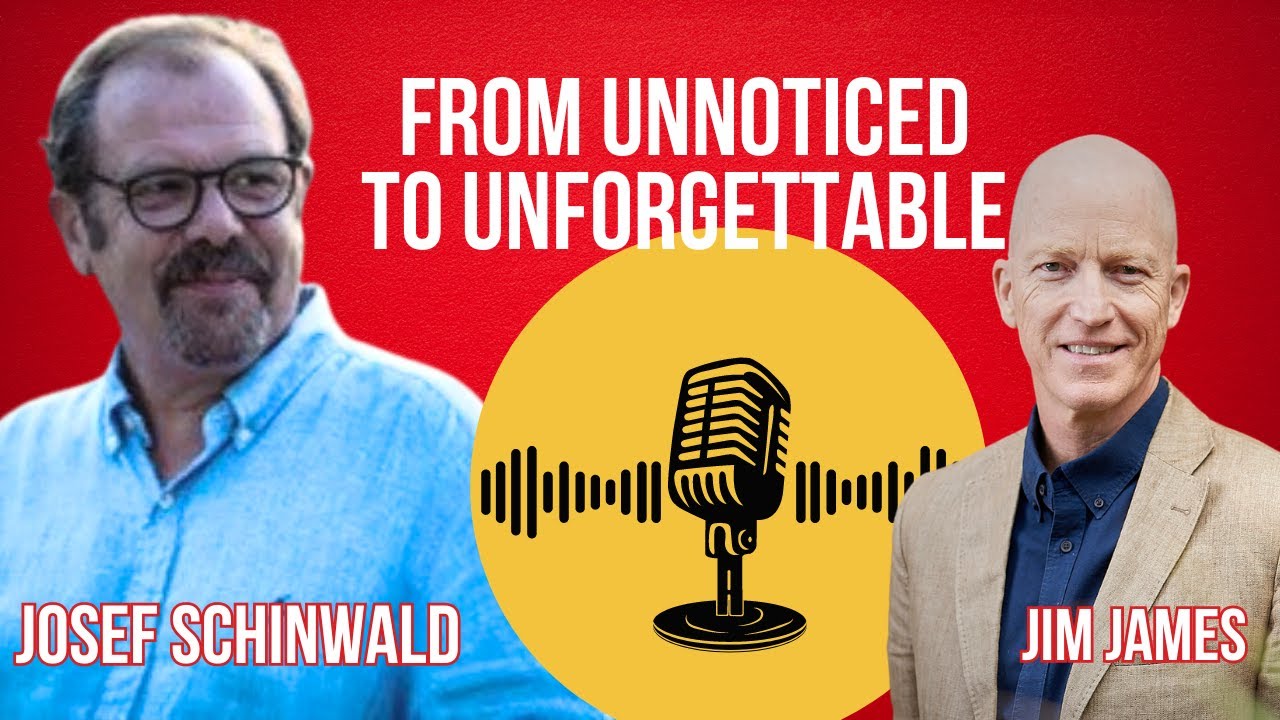
Joseph Schinwald runs Guest Experts On Air, which books high-profile guests on premium podcasts. His firm charges $2,100 for a ten-interview tour and evaluates shows using metrics like listen scores and host social presence. He emphasizes that podcast marketing works through human connection, not automation.
Chapters
Hola, welcome to this episode of The Unnoticed Entrepreneur. Today we are going to magnificent Mallorca in Spain to meet Joseph Schinwald, who runs a company called Guest Experts On Air. And this is a podcast agency I've been working with for many years. Joseph, welcome to the show.
Hello, Jim. It's such a privilege to be on your world-class show.
Well, it's a privilege to have you because you are the, the man that brings experts to shows like mine. And today we're going to talk about what makes a good guest on a show and how you help them to get prepared, and also what you look for in a podcast so that people like your clients can understand which are the good shows to go on and not to waste their time on the shows that are not going to bring them an ROI. So Joseph, tell us about Guest Experts On Air and how you help business experts get noticed.
Well, we focus only on High-profile professionals. I take others also, as long as they have a real compelling story, a good framework, and, uh, good expertise. And if it's really unique to the table of discussion on podcasts, so I know it will be interesting, maybe even they don't have that perfect ecosystem of profitability in the background on the website or their marketing funnel, that, but mostly I, I, I'm just rational. If you get really fantastic experts who have really something, a message, and they're passionate about it and they're interesting to many, many high-end podcasts, then I also get the high-end podcasts for them. So that's basically my philosophy. And I don't have to prepare them because they're already very experienced in, they're already very experienced in what they do. They had already like keynote speakers, they were keynote speakers They wrote a book, so they have a good framework and they have been on podcasts before.
Now we're sharing, for those people that can see it, we're sharing some of the podcasts that Josef gets his clients on. But Josef, tell us, what do you look for in a podcast? Because as you said, there are literally millions of podcasts, but not all of them are actually very active and they're not necessarily all the right profile for the level of clients that you've got. So how do you decide what kind of show to position your clients on?
Yeah, there are many indicators we use, you know, between 7 and 12 indicators to determine whether it's a good podcast. Uh, first of all, it has to be an active podcast. So when they have every week episodes, and then there are those indicators that come from algorithm like, uh, listen score, the, the world score, the, the score, uh, whether they're in the top 1%, 2%, 3%, 0.5% of the podcasts out there. So I only take those ones. You are number 3, so you're one of those.
Yeah. Thank you.
Yes. And listen, listen score also, how many people listen to it. But it's very important also to look at the, uh, the guests, the quality of guests they have in. interview. And, um, sometimes I look at the social media platform of the, uh, host and also I look at their website and how they presented in social media and on how they are present, how they represented on the website. So it's just the main distinction I would say, Jim, is when you looking at the podcast landscape, there are 3 million out there, 3 million podcasts. Only 400,000 are interview-based. And from those 400,000, there are only 40,000 active, really active ones. That means they have, they have always new episodes coming out and they are, they've worked like you many years. They've built up their audiences. They come to 300. I think you have 600 episodes already. You're very busy and very, you know, very diligent and, and disciplined here. Yeah. But the quality goes up, of course, because most of the podcasts, they have maybe 10, 20, 30 interviews, and then they go, of course, to these podcast matching services. They build up their audiences. But what happens also is the, you see the interviews, they're often spaced out. So they're not like good for the expert, not good for their audiences because they don't subscribe when there are topics that are always different and completely in, in wild directions. They like to subscribe to a specific podcast where they, every week they hear something specifically about the topic of interest. And they are subscribed to several podcasts a week usually. And they can go in different directions. They can be sports, they can be business leadership, they can be spirituality. However, they want that, that, uh, unique and a focus, focus of the podcast host. That's why they subscribe. And so I look at that because when my clients go on a podcast show, just imagine what can happen, uh, is that, uh, let's say I chose an average podcast, uh, that first of all, the podcast host doesn't ask poignant questions because they might not even wrap around their head, around the head of the, of the, of the interviewee. They don't understand that expertise. So it's very frustrating for my clients to go on such. I like it when they come back to me and say, I had a wonderful experience. They talk a lot about the host. And they say, he asked me a real nice question. It was such a great atmosphere. I loved it. That's what I want. And then I want them to reach, uh, audience because you have the distinction to go to, uh, like very niche down podcasts. Sometimes that's good if you get 1,000 listeners, but many times you get very, very few listeners. It's a roll of dice. You're sitting there, you're talking, and you don't even know whether people actually listen to it. Then you have the high end where Their podcasts have up to half a million, uh, downloads, one episode, or at least let's say 10,000 to 50,000 per episode. But then when you are an expert, let's say, and you're helping people overcome limiting beliefs or imposter syndrome, whatever it is, what the expertise is, you are, when, when it's more or less right, that podcast, but it's a, it's a very popular one, your, the audience will be in your target. And there will be your wider audience. And that is important. So the numbers are very important. How many people do you talk to?
Joseph, that's great. You said you got, excuse me, 7 to 10. So thank you. I'm glad that, that I'm meeting some of the criteria so that you're still sending me some of your amazing guests.
Thank you for accepting them because they are all very happy about, about the interview with you.
Oh, well, thank you. And me, that's absolutely mutual. So Joseph Schinwald, you know, with your business, One of the things I'd love to ask you is your view on whether guests should pay to be on podcasts, because that's a little bit of an industry question. I'd love to get your perspective on that.
Yeah, you see the 40,000 active podcasts with almost 3 million exists, 400,000 interview-based and 40,000 only like the top level ones. Many of them are actually run by influencers. So they get paid, they get paid by companies often, they get paid by their sponsors. They don't have like an advertising in the, but they do determine often the kinds of guests. Let's say if it's a big consulting company, then they don't want competitors to be on their guest. And I have this great experts in business management or, or business leadership, and they don't, they're not accepted sometimes because they see, okay, that's not from our circle of influence. And even though it would be a great guest, like, you know, somebody who just published, uh, Wall Street Journal, 3 books are number 1 in USA Today and all this, and they're on every airport, uh, all over as, as fantastic books, but they don't take them because there's this self-interest. Now, if, if we get a podcast, they say, I would like to ask $200 per episode. That's fine because I feel, I feel personally because it's a lot of work to edit it and they have to outsource. They need a freelance. To do it. This is a lot of work actually, but it doesn't look good for the guest. The guest wants to be invited. If he's high ranked, let's say a real caliber, they wanna be as the expert, not because they pay for it. They pay our, our service because we do the heavy lifting for them. They are represented. They don't wanna have that, um, that image that they doing this every month, 30 hours for themselves because they are supposed to be very busy with their clients and with their activities. So they just want to put on their headset and talk about their expertise. That's what they need because everybody needs continuous marketing. However, when we get these people asking for a lot of money because they want, they say the waiting list is 2 years and if you wanna be right on the show, then you can pay us, uh, $2,000. Then the guest asks us, should I pay it? And I say, well, sorry, there are many out there and we get you on another one. If you want, please pay. If you really like the podcast so much. Favor. So, but it's not very professional. I think, I think the podcast hosts, they have been developing new models of profitability more and more, and the right ones will appear. And so it will be very lucrative. But the last years they have been still struggling with all these things. How do I make money with it?
So it's interesting from your perspective as an agency that's booking, you recognize there are costs attached, but Ultimately, the clients, the guests on my show, uh, would, would see it sort of devaluing. It becomes advertising rather than PR, doesn't it, Josef?
And yes, anybody could go on a show, a good one. And if the people find this out, you know, and then it's not a real good, uh, client because he just wants to sell his products. He wants to pitch and nobody wants— when they listen to an episode, they want to hear about deep expertise. They want to hear about a compelling story and they want to hear about a framework and they want to have entertainment and all this, but not somebody who just goes there to you with an entitlement. You know, I paid $3,000 for this so they can talk. No, I'm talking only about my product.
Yeah. And I think it's a very real difference that if people pay, they expect a display, right? And yet if you're listening to a podcast, you want to be told, not sold. So fundamentally it doesn't work. So Joseph Shin, well, that's good insight. You did mention about the work you do for your clients. Why don't you just explain what Guest Experts On Air does as a, as a package and also explain how affordable it is for people?
Compared to other, you know, you need traffic, you need paid traffic usually in order to get traffic. We all know this from advertising, from marketing. It's an investment if you do it right. It's a cost if you do it wrong. I remember Peter Drucker, one of the most famous, and you know him. Uh, management, uh, consultant and author of books. He said, advertise, uh, marketing. So first, the purpose of a business is to create the client, to create the customer. That's the purpose of a business. Then he says that all things, all activities in a business are cost except marketing. Marketing is not a cost in his eyes. And I believe if you do it right, then it is not because you're getting clients from marketing. It opens the door to sales. And then it's an investment because you spend, let's say in my case, if you go on a, on a podcast tour and you choose the package of 10 podcasts, it only costs $2,100. That's per interview, $200, $210. But you're reaching huge amounts of targeted listeners in your wider audience. While when you do other advertising and you can and you should, everybody should have several marketing channels. It's not the only one. It's a good one for solopreneurs. It's a good one for those who have a business where the mark— the branding story is important because you get 45 minutes a month, 30 minutes, right? 20 minutes. But you get to talk about you and your business and your services, and you're creating your brand if you do it over a period of time. So that investment usually comes back really fast because my clients have coaching sessions and, uh, they have online courses. They have Uh, retreats. Uh, it depends also what they want to do. Some people just want to, uh, advertise, uh, market their book, and that's not necessarily bringing a lot of money, but it's worth it to them. And then after 10, uh, bookings, they can choose another 10 after they give me their nice customer testimonials and all this. But many times I get referrals also because, uh, when they're really excited about the impact they had, and you know, the impact they only have if they have a good That for, for what their goal is, for what their goal is. So they have also a good marketing funnel and a good, uh, ecosystem of profitability. Because when you are on those podcast shows and you talk about your expertise, the host will ask you at the end, so how can people get in contact with you? How can they relate with you? How can they learn more from you? And then even an email signup for a future product, a waiting list is good. Or just an email if they're really good, but you have to have something where they connect with you. Many times it's a sophisticated marketing funnel. And then I, to say it shortly, I also, I understand sometimes when somebody's new to this, they don't want to right away commit to a 10-interview podcast tour. So I offer a free interview experience package and that is, uh, for, it doesn't break the bank.
Yeah, that's wonderful. So really flexible and just showing there some of the testimonials that you've got as well, because you really do the heavy lifting and the storytelling for the clients, which saves them a huge amount of time. They get on with what they get paid to do. Joseph, what would you say are some tips that you give your experts before they go on air? Because you yourself have been on air a great deal. So you give some counseling. What advice would you give? Maybe one or two key tips for your experts before they go on air.
Jim, most of my guests don't ask me for that advice because they're so self-confident. They know exactly what they do. And, uh, you know, you know that some of them, like, let's talk about Donna Griffith. She raises billions of dollars for her, um, expertise, which is corporate storytelling. And, um, you know, she knows networking. She found this other podcast host in Australia and he helped her launch her new book. And then I connected them with, with So, Weiselbrock, who is a New York Times bestseller, Pulitzer Prize-winning bestseller right now, because he has such, such incredible success with launching his books. And she wrote her first book and she wanted also to have that success, connected them. So they, they know, my experts, they know all the benefits really from this, uh, networking and from getting all these audiences. And they love to talk. So I don't usually have to do this. Um, And I don't have those kind of clients usually, but when I have somebody like in spirituality or like, uh, spiritual psychology, because I do attract those kinds of clients because of my studies, I'm a little bit overstudied. So I like business leadership and spirituality stuff. Under spirituality, there's a lot of other categories. Even mental health can go in there. Under business leadership, there's a lot of other categories as well, of course. But I sometimes have somebody I really like. Yeah. And they don't have a great website and they don't have, uh, but they have a great story. They have, let's say, a real nice framework already and expertise. And I know they can help a lot of people, which is my mission, you know, in my business. I want to help them get their message out. That is valuable to me to do this in my life. So then I help them and then they ask, we, we talk about like the importance of having a silent note in music. So when you're finished talking, then just, uh, you just have this silent note and you wait for the host again to talk. And then equipment stuff, it's, you know, all, all these things they, they want to know. I have a little bit experience in it because as I said, I was in Buenos Aires 50 times on television. Uh, there, there was a lot of experience there.
Yeah, Joe, so you, you've had a, a life full of range as well, which is fascinating. Now you've been building your business, so as an entrepreneur, I'd like to ask you, how have you managed to build guest experts on air from Mallorca, of course, you know, so you're an Austrian who's lived in Latin America, now in Mallorca, getting guests onto podcasts around the world. How are you building your own brand?
Well, it started out with this, that I had a lot of fun doing those interviews. And I realized the importance of storytelling. I would speak about my expertise, which I taught in universities and 3 universities about Uh, the balanced scorecard measurement, business measurement, and profit patterns and profit models. But I had to package it. You can't talk like this on television. So I packaged it in the amazing stories of, uh, paradigmatic business founders. Let's talk about Phil Knight with Nike, you know, and you, you, you know a lot of those also. So I, I studied them very well, and each time I was on television, I talked about how they started out. Like again, Phil Knight, Phil Knight and Bill Bowerman, they had, they developed their own shoes for running and they sold them from the station wagon, from the back of the car. And then it became a cult, you know, and all this was a funny, great story and how it ended up with that incredible value in the stock market. And so I, I knew that it's important to package my framework and my, uh, my expertise in really entertaining stories. So I loved Interview. And I'm— how I prepare myself, I'm Austrian, I had to do it in Spanish. So I had, I wrote an article first, it went out, uh, on the internet. And then I, from an assistant, I got it translated in Spanish. Then I rehearsed with, uh, people from my office and then with my Christian Dior suits, I took off to the studio. However, this was all so much fun and I did other things. I was a channel manager for Hemisphere at the time, so. But nothing, nothing was better in my life than giving interviews. I felt good before, I felt good afterwards. So when I heard of, when I saw this opportunity, podcasting, and it's amazing stuff what is going on nowadays. I mean, you can, you can hear experts from all over the world and you would never listen to them if there wouldn't be podcast interviews. And it's amazing for brands and for experts also who sell books or to position their marketing by creating the branding story. So I knew immediately it was attractive to me. It resonated with me. I knew I could be a great mirror for those experts, experts. And I'm, you know, a seasoned media expert. So for me, this became kind of a lifestyle business. I just like to hang out with extraordinary individuals. And so when I, when I did it a few times and I found them easily, I cannot like I mean, we are a mirror. We attract sometimes these people which, uh, you should attract and you should actually talk to and with each other. So then I, I, I, I just started to, uh, organizing myself, the processes, and there is a lot always to improve. I, you know, I do not like to have big expectations of something. I just like to love what I do. And then with the processes getting better and better and better, you got an email pitch from me and you accepted already many. Of those. And I never went down, let's say, always start at the top. And, uh, that was very important for me also, that uniqueness, because people are hungry for interviews from the rather beginners of podcast, podcasts, and they come and they go and sometimes they go out of business very fast also, but they're always new ones. And of course, a, a very important person who starts a podcast Uh, will be rather interesting for me as well, because that podcast has future, but many times it's a waste of time for my clients. So I, I did this. I hope I could be of value to your audience now.
Okay, that's wonderful. Now, Josef, you know, I always like to ask one question, which is if there's something that you've done for marketing your business as an entrepreneur that hasn't worked, something that you would suggest people don't try at home without supervision of an adult, but what would that be? Is there anything that you've done Have you ever done one with guest experts on air that really didn't give you an ROI?
Yes. Yes. You make your mistakes. You make lots of mistakes because really you have to learn quickly, right? I mean, you have to adapt quickly. You have to be always with the tools and with the philosophy behind it. You have to be always like a mover, first mover, 2 steps ahead of everybody else. That's a very important thing that you learn fast because you will make mistakes. So my mistakes was In the beginning, I knew I had to come back to the beginning because in the beginning I was always very personal. Everything was totally personal. The way I reached out to, uh, my clients, the way I reached out to the podcast. I was always very interested in the person, heart to heart. Later on, I got more, uh, people working for me. It became scaling. I wanted to scale. I was kind of influenced by some people that said, wow, you have such great podcasts. Uh, uh, a business idea, you can get such a big business, millions of dollars, whatever. And I wasn't very happy with this because I started to automate too much. I started to become less personal, you know, and that was my mistake actually, uh, which I learned fast from it. So I do it with tools. I use all the tools available. However, I always make sure that every communication is on a heart-to-heart level.
Yeah.
With the host and with the actor. That is for me the biggest mistake somebody could make in the digital era, to think that just numbers. We are not numbers, we are people. And you know, nowadays more and more with AI and with all these things you can do with software nowadays, it's more and more important if you wanna really have success, I think, and a meaningful business. You have to be saying personal. People want to be treated like a human being, even at the end of the world, you know.
Transition. Well, you know, end of the world. We've got to the end of our amazing podcast. If you wanna find you, where can they do that?
Uh, it is my website, which is guestexpertsonair.com. And it will be in the show notes. But if you repeat it, it's even better because my Austrian accent is sometimes hard to— people make fun of me. I'm talking like Arnold Schwarzenegger on the phone. It's nice. I can say, yes, I do. I also have the same body like him. Just the face is different.
Yeah. For those of you listening, I'll let you go to the YouTube to make your own decisions. Josef, of course, we'll have to ask you whether you'll be back later. Thank you. Uh, so much for joining me today on The Unnoticed Entrepreneur.
Thank you, Jim. It was a real pleasure to be here with a person like you who wrote a book on, uh, this topic, Unnoticed Entrepreneur, and who has a fantastic podcast. And I love this relationship I have with you, and it's so important to nurture it and to be, to see this as a, as a long-term relationship. Thank you very much, Jim. It was a wonderful interview. Thank you.
Thank you so much for the warm words and, yeah, for plugging the book. I appreciate that. And, um, the book is available on Amazon and, and also in some bookstores. And the second volume of The Unnoticed Entrepreneur is coming out shortly as well. So Joseph Schinwald, thank you so much. And I will put a link to guestexpertsonair.com in the show notes. So you've been listening to Joseph, who's in the rather lovely environs of Mallorca. I'm still here in sunny Wiltshire in the UK. And wherever you are, do encourage you to Keep on communicating. And if you've enjoyed this show, please do share it with a fellow unnoticed entrepreneur. And if you've got the chance to rate it on the player that you listen to this show. And until we meet again, just God bless and stay safe.
More from Jim











2 people, infinite agents, 1 billion dollar idea #AIAgents #Startup #Productivity