How did this Punk Rocker build a 90,000 fan base worldwide by creating a chronicle of the fan base?
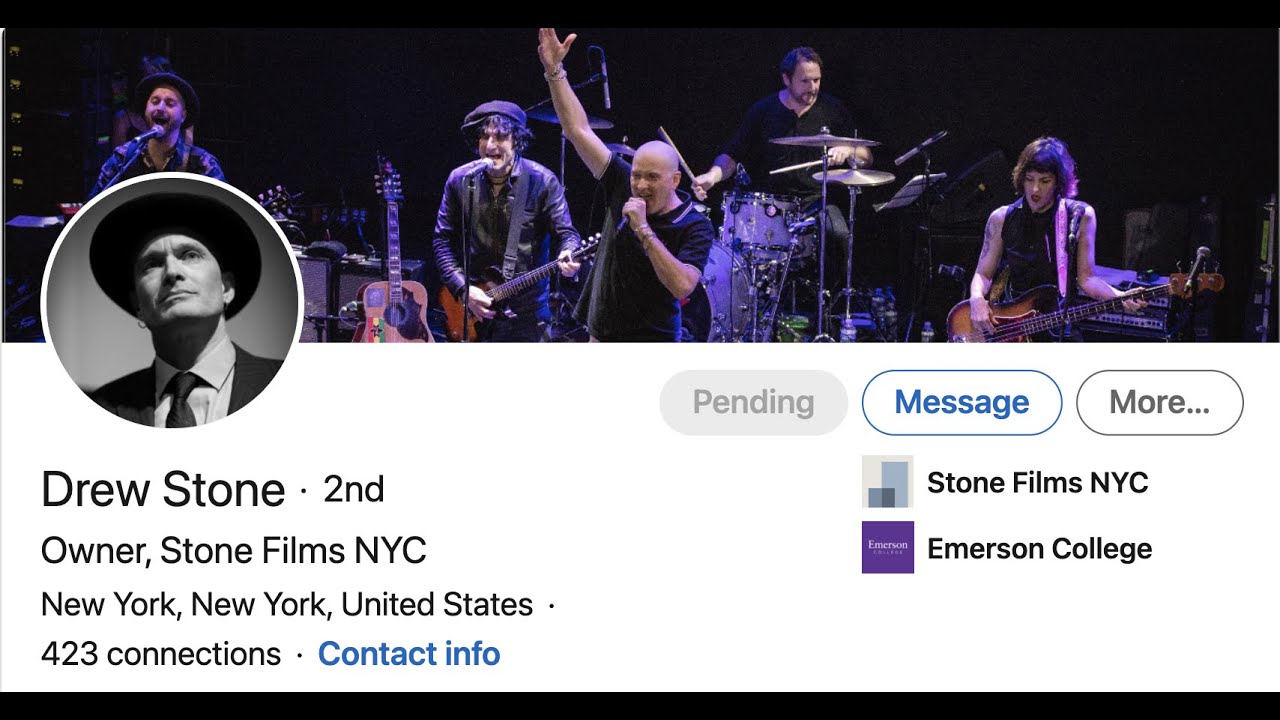
Drew Stone built a 90,000-person hardcore punk community on YouTube and live streams by posting consistently, timing shows for European viewers, and staying authentic. He monetizes through Patreon, YouTube ads, sponsorships from a record store and comic shop, and merchandise like shower curtains and mugs.
Chapters
Hello and welcome to Speak PR. Today I am absolutely delighted to have Drew Stone, who's joining us from Upper West Side in New York. Drew, hi.
Oh, what's happening, Jim? Thank you for having me and welcome to everybody from New York City, lovely New York City in the midst of the zombie apocalypse.
Well, I have to say, New York is a city full of glamour and you are living a life full of glamour because you're running your own business. And I wanted really to talk with you today about how you've managed to create a business online through a passion, through the New York Hardcore Chronicles Live. Tell us how you're combining technologies like Patreon and live streaming like StreamYard to build a sustainable business around your passion, which is punk music.
Absolutely. Let me just set the table a little bit and say that by nature, I'm a filmmaker and a musician. As a teenager, I came up in the American hardcore punk scene. And the ethos of that early American scene was, it was a real DIY, do-it-yourself ethic. And what I took away from that mostly was get up, get out, and make it happen. Don't wait for a record company. Don't wait for, you know, don't wait for someone to hand you something. You can do it. You know, you wanna put a record out, you know, put a record out yourself. You know, make flyers, push the shows. And that was the environment and the ethos, you know, that I came up in. When I got into filmmaking, you know, I come from a filmmaking family, but I ended up having a career doing music videos. And I was also— I also sing for one of the early American New York hardcore bands, a band called Antidote. So playing music with a lot of other bands and meeting a lot of other bands for a couple years, And then people started asking me to do music videos for them, and that led into, you know, a career in film. Of course, I still do music. I directed a couple films. One of them was a film called the New York Hardcore Chronicles film, which is on Amazon Prime right now. And I've done, I've done a couple of music documentaries, uh, one of them that was on Netflix for a couple years. And so, so in doing that, I kind of garnered a bit of a fan base. People know who I am, what I've done through the music and through the film work. At a certain point when the pandemic hit, somebody asked me to come on their show, very similar to what we're doing here today. And I came on his show, and afterwards he, you know, he said to me, hey, you know, could you subscribe? Now it was a video streaming show, and he said, hey, could you subscribe to my YouTube channel? Because, you know, you, you know, you want to, you want to gather up subscriptions so, you know, people will get alerts, you know, when your show is on. So I looked on his YouTube channel and I saw, oh, okay, he's got a couple hundred, um, subscribers on his YouTube channel. And then I thought to myself, well, wait a second, my Stone Films NYC YouTube channel that I've been, you know, posting clips on for a couple years has almost 10,000 subscribers on it.
Wow.
Just from me, just from me posting up you know, video clips and every— you know, through the years. He also told me that the show that I just did with him also streams out on Facebook. And I looked on his Facebook page and he, you know, he had a couple thousand people on Facebook. And I thought to myself, well, wait a second, my Facebook page, the New York Hardcore Chronicles page, has 90,000 people on it.
Wow.
So I did his show and that got me thinking. I didn't set out to be a podcast host or a video host. You know, I did go to college for acting. That didn't last long. I got into music, you know, and away I went. But, you know, the pandemic was just starting at that moment, and I knew I was going to be locked in for a while, and I thought, you know what, let me start a show. I'll call it the New York Hardcore Chronicles Live, and I put it on the platform, the platform that he turned me on to. It's a platform called StreamYard. StreamYard is a platform similar to Zoom, but you pay a couple bucks. I think if I remember correctly, you know, there's different tiers, but I pay I think $24.95 a month, and it streams— StreamYard puts it out onto 3 platforms. The 3 platforms that I chose to put my show out onto was YouTube, Facebook, and, and I, I was going to do LinkedIn, but I really— but instead I also stream it out onto my Facebook personal page as well. I chose to go that way, but of course the next tier up on on StreamYard, you could stream to, I think, 5 or 6 platforms. And there's other tiers, but I felt that some of them didn't pertain to what I was doing. I think one of them is, I forgot the name of it, it's more of like a gamer sort of platform for people that play—
Twitch?
Thank you, Twitch. And that's, I felt that that wasn't really, you know, my audience. My big audience is on Facebook, And is on YouTube. Now, let me just say that after the show streams live, it's archived on YouTube. So if someone can't watch my show live, then it streams live onto YouTube. Also, like I said, it's a live video streaming show. And what I've been very fortunate in, in, in getting here is is that I didn't realize this at first. My show comes on at 3 o'clock PM New York time. I had no idea, I didn't think it through, but that's prime time in Europe.
8 o'clock, 9 o'clock here in Europe, right?
And there's a live chat room during my show. My show's very interactive. And people were saying, hello from Italy, hello from Germany, what's happening? And I'm like, what, where are all these? More people outside the country were watching the show than inside. And it was thrilling. And I realized that what a stroke of luck, you know. Right away, the show garnered a worldwide audience. And part of the reason, I have to say, for its success is because it's a live interactive show. So people have made it a destination. They come to my show and there's a little community and, and they inter— and they interact with each other. Sometimes in my show I say, hey, hey, excuse me, by the way, uh, I'm doing a show here, you know, because, you know, sometimes they, they have, they have their own thing going on.
Yeah.
And I've been very fortunate that I've, that I've garnered, uh, this worldwide you know, hardcore punk community that is, that is very interactive and very social.
Drew, that's kind of where you're at now, which sounds amazing. Can you just tell us a little bit about how you got that community of sort of 90,000 in the first place? Because many people, including me, have got some content and maybe a few thousand followers. But what did you do over how much time to get that many people to watch your videos? Was it to do with tagging? Did you promote the videos? Because that's often a big part of people's challenge from a marketing point of view.
Sure. Well, for me, you know, I'm a music lover. And I'm a music historian at this point. You know, and what started as a passion as a teenager, you know, has developed into, you know, quite an obsession. You know, I think of myself as a musical— as a music archaeologist in a lot of ways, you know, in the stuff that I do. And When I started putting up film clips on YouTube, tagging, I would hashtag, you know, the bands, the scenes. And another thing that was important is continuity. It's important to have continuity when you do this kind of stuff with, you know, what your brand— you know, my brand happens to be Stone Films NYC, right? My name is Drew Stone. My film production company was Stone Films NYC, and my YouTube channel's called Stone Films NYC. So that's my personal brand, and I started getting that out there as early as possible and getting that in there. And I encouraged people to subscribe to my YouTube channel and to the Facebook page. And brand continuity is extremely important. I directed the film called The New York Hard— well, first off, I started on Facebook the New York Hardcore Chronicles page. When I started the page and I saw the, the enthusiasm for it, as a filmmaker, I, I decided, you know what, I'm gonna make a film about pretty much about the scene here in this page. It's gonna be called The New York Hardcore Chronicles Film. The show that I've had success with now that's streaming live is called the New York Hardcore Chronicles Live.
Right.
So, having that brand continuity has served me very well. People identify with it at this, this point and know what it is. Also, with the New York Hardcore Chronicles Live, I like to say that I'm a sum of all parts. And what I mean, what, what I mean by that is, at this point, there's a couple of things that contribute to me actually being able to pay my rent and bills here. And that would be, that would be what first is I created a Patreon page.
Mm-hmm.
And, you know, for the, for those out there that may not know, Patreon is a platform that enables people to support you as an artist. And there's different tiers. Like, for instance, you know, with my Patreon, there's a $2 tier, a $5 tier, a $10 tier, $25, and $100. And on each tier There's, there's different incentives and people get different things. Now, what I— how I describe my Patreon on my show is it's our community within a community. And it's within this community, which at this point I think I have, I have close to maybe 200 patrons, people, people who enjoy my show, which is free. And I tell people, hey, the show is free, you know, but don't be a lurker.
Mm-hmm.
Don't lurk out there. support the show. I love doing this. You love watching the show. Let's keep it free. If you enjoy it, please contribute and, and support the show. And people, people contribute to Patreon. And one of the biggest things I do on Patreon is I post never-before-seen photos and never-before-seen video clips, and I do short private shows that I post in Patreon. I, I provide unique special content. So the Patreon thing is one thing. The other thing is sponsorship. I have a couple of sponsors that have come on board, and like I said, it's keeping with the ethos and the vibe of what I do. You know, I got, you know, a record store in, in Denver, Colorado is one of my sponsors. I have, I have a comic book store up here in New York. And, you know, it's sort of, as we say, as we say in the hardcore world, I'm keeping it real, you know, with these kind of sponsors. They, they, they, they— it, it really keeps it, it keeps it really with a real do-it-yourself kind of feel to it. I've been, I've been approached by one single sponsor about, hey, let's do— let us be your only sponsor, let's put this thing in a studio. And I feel like I'm not ready for that, and that's gonna Sort of, that's, I feel like that's going to take away from, in a certain regard, from what people really love about the show.
You raise an interesting point. At what stage does it become commercial to the degree that it's no longer kind of the specialness of it? And we see some of these big life coaches now moving from sort of intimate to corporate.
Yes.
And, and it changes the dynamic entirely.
And I see that and I'm wary of it, but The finish is the sum of all my parts. We have Patreon, we have my sponsorship, I have my YouTube monetization. After many years, I have monetized my YouTube page. I never wanted commercials on my clips back in the day. There was no need for it. I didn't want it. But when I decided to go all in with this, I, I went through the process and turned on my YouTube monetization. Now in my case, okay, I'm not hitting any big, crazy upper deck home run balls here, but I have a huge body of work and a lot of posts that I've made on YouTube, and they're all monetized now. So I'm making up for it in volume, really. You know, I'm sure it would be great to have a million hits on something, but you know, I've got a lot of little things that bring in a couple cents here and there. And then the last thing that is connected with my show is I have a little merchandise line and a little merch line with, you know, with some t-shirts, a couple unique items. That's through a platform called Teespring. Now Teespring connects to YouTube. So when you watch my show, I can say, now underneath there's a, you know, you'll see the link. They show a couple of the products. So as I'm doing my show, I could literally point and say, you know, check out down below there. And, you know, what I've tried to do is make some unique products that not everybody has. Like, I have, I have the New York Hardcore logo shower curtain and, and, and the girls' leggings, and I have the mug, you know.
Very cool.
And it's a little off the beaten path than what usual— what usually people do. So my sort of catchphrase is, I'm a sum of all parts.
True. It sounds like you're really becoming a 360-degree brand, right, of this content. And what about getting your name out? Are you relying on people coming to your show and through word of mouth, or are you doing some traditional media relations, or are you going on other people's shows like mine? How are you building the network beyond the If you like the organic growth.
Well, you know, I've been told by my sister who, who, who is really my media manager that I should go on as many other podcasts as possible because that kind of cross-pollinates things. I don't, I don't particularly believe 100% in that. I feel that I like going on, you know, a couple of them, but actually getting a little tired of hearing myself talk about myself. But another way, of course, is traditionally I'm on, I'm on Instagram. I, you know, I, I've done the whole Instagram dance. And, you know, Facebook, you know, Facebook has been very good to me. I know for a lot of people, they— a lot of the younger people shun Facebook these days. It's, it's, you know, it's for older people, you know.
Yeah.
But, but I have— Facebook has been very, very good to me. I've created a couple of Facebook pages, and, and I just try to, you know, cross-collateralize everything.
Tell us about this merchandise. You talked about Teespring. Can you show us an example? How is it working? What's the strategy there?
Yeah, sure. So like I said, you know, I come from the background like give it away for free. You know, this is my attitude. It's worked for me a lot of times. Give it away for free. Develop the community. People will come. Develop a community. And then sell a couple of t-shirts. And, you know, Teespring is a company that they're like a fulfillment house. They're in China. And they put your logo on, on all kinds of different products. They do it one at a time and they ship anywhere in the world. So I've developed this community and created this merch line. And, and people, you know, people, people buy a couple t-shirts, people buy a couple sweatshirts, and that's just one of the things that I do. I'm a sum of all parts.
And you do that really well. Drew, if people want to find out more about you and maybe buy some of your cool-looking merchandise, how do they find you?
Sure, I can be found on YouTube. My channel is Stone Films NYC. That's the name of my YouTube channel. The show I do is called the New York Hardcore Chronicles Live, so, uh, check that out. I'm also on Instagram @stonefilmsnyc. Please check me out. I'd love to hear from you. Don't be shy. Say hi.
Drew, thank you for saying hi to me. I know that you're in demand and luckily your sister gave you some instructions to talk to me. Otherwise, you may not have come down to my level. But really fascinating as well to hear how you've really built this amazing ecosystem all the way from Upper West Side in New York. Drew, thanks so much for joining me today on the Speak PR Podcast.
My pleasure. And thank you to everyone out there. And I wish you, I I wish you all the best. And like the way I close my shows, do good things and good things will come to you.
And I can't top that. So we're going to close on Drew's comments. Best regards from the UK and from New York.
Take care, everyone.
More from Jim











2 people, infinite agents, 1 billion dollar idea #AIAgents #Startup #Productivity